
The signing of a security pact by Saudi Arabia and Pakistan in September 2025 had raised concern in world capitals, particularly in New Delhi, where the stated declarations – ‘attack on one as attack on all’ and ‘extending nuclear umbrella’ – were seen as detrimental to India’s interests. These concerns were aggravated when a replica of this pact, co-opting Türkiye, was signed early this month in Mecca. While many observers had rejected the feasibility of both these guarantees, the Iran War invariably turned out to be a test for the Saudi-Pakistan accord. With Pakistan refusing to involve militarily and facilitating a truce between the US and Iran, besides condemning the killing of the Ayatollah, it might have become evident to Riyadh that a guarantee is only as good as the guarantor’s willingness to honour it when most needed, argues Vipul V. Tamhane, pointing out how the Iran War could have exposed the limits of such ‘mutual’ defence pacts.
Home page image: The Saudi crown prince Mohammed bin Salman and Pakistan Prime Minister Shehbaz Sharif sign the Strategic Mutual Defence Agreement on September 17, 2025, in Riyadh
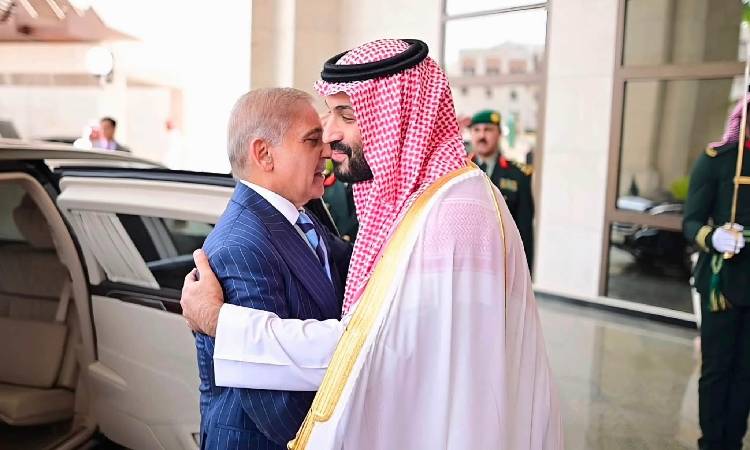
Text page image: Saudi Crown Prince Mohammed bin Salman greets Pakistan PM Shehbaz Sharif on his arrival at the Al-Safa Palace in Makkah (Mecca) on August 7, 2026
Banner image: Saudi and Pakistani leaders at the Al-Safa Palace
On February 28, 2026, the United States and Israel launched Operation Epic Fury, a joint air campaign of nearly 900 strikes against Iran in a single day. The opening salvo killed Iran’s Supreme Leader, Ayatollah Ali Khamenei, along with dozens of senior commanders and officials.
Tehran struck back. Over the following weeks, it fired hundreds of ballistic missiles and launched thousands of drones, not only at Israel, but at the Gulf Arab states that host American bases, including Saudi Arabia.
Some of those missiles fell on Saudi soil. They landed on the outskirts of Riyadh, on the approaches to Prince Sultan Air Base, and on the town of Al-Kharj, where two migrant workers were killed.
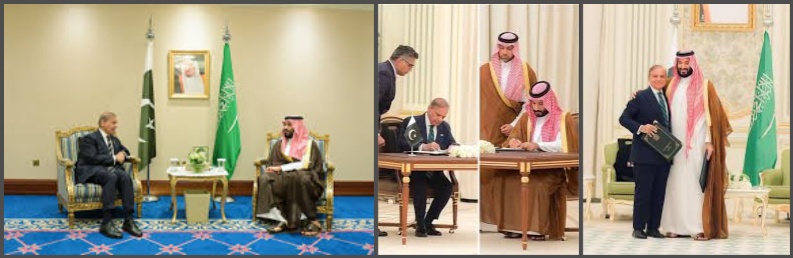
Pakistan Prime Minister Shehbaz Sharif in conversation with Saudi Crown Prince Mohammed bin Salman (left), and both leaders sign the Strategic Mutual Defence Agreement in Riyadh on September 17, 2025 (centre and right)
As the missiles came down, the Kingdom held a document in its hand that it had waited half a century to use. Signed in Riyadh in September 2025, the Strategic Mutual Defence Agreement declared that aggression against either Saudi Arabia or Pakistan would be treated as aggression against both.
Pakistan’s leaders had gone further in public, suggesting that Islamabad’s nuclear shield could be stretched over the Kingdom. Here, at last, was the exact emergency the whole arrangement had been built to meet. And Pakistan did not come.
Islamabad condemned Khamenei’s killing as a violation of international law. Its foreign minister shuttled between capitals as part of an intense mediation effort, reminding Tehran of Pakistan’s obligations to the Kingdom while supposedly assuring Iran that Saudi soil would not be used to attack it. That quiet assurance may well have spared Riyadh a heavier bombardment.
What Islamabad conspicuously did not do was fight. No squadrons scrambled to intercept Iranian missiles. No warships sailed. No Pakistani soldier fired a shot in Saudi Arabia’s defence. The guarantee Riyadh had financed for fifty years, when finally tested, produced diplomacy and condolences.
It is tempting to call this a betrayal. That is the wrong word. Betrayal implies a promise that was honestly meant and then broken. What the war actually exposed is that the promise was never what Riyadh’s fears needed it to be, and, read closely, never claimed to be.
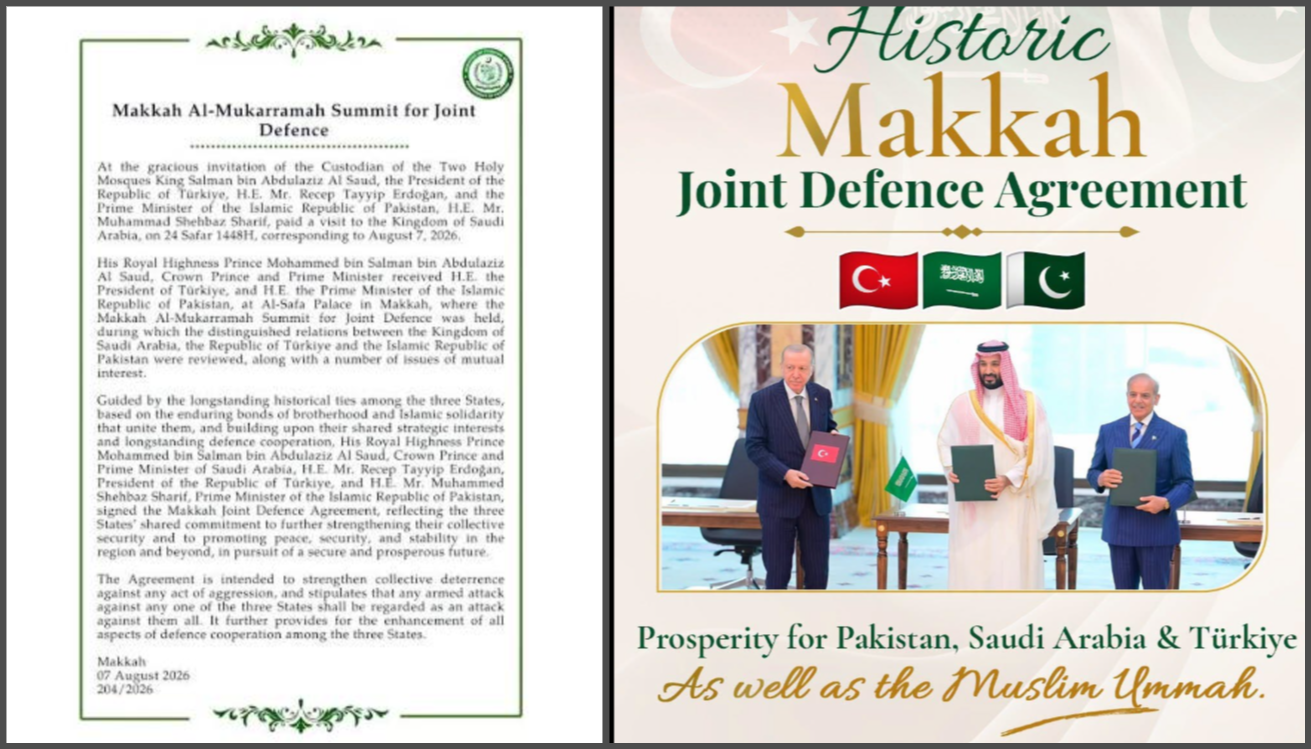
For all the alarm the pact caused when it was signed, its text never promised an automatic military response. Like the wider Mecca agreement that followed, it spoke of treating an attack on one as an attack on both, while stopping carefully short of any duty to send troops. It was a declaration of solidarity written in the language of alliance.
That distinction, invisible in the celebratory coverage, turned out to be everything. Pakistan complied with the letter of the agreement: it consulted, it condemned, it coordinated. But it refused to take the military action that Saudi Arabia had assumed it was paying for.
A wait of five decades
The gap between those two things is where Riyadh’s almost fifty-year investment quietly vanished. To understand how the Kingdom came to expect so much from so unreliable a partner, you have to understand what the bargain was really for.
The relationship was forged in the fear of a single year. In November 1979, armed militants seized the Grand Mosque in Mecca and held it for two weeks, an assault on the very basis of the Al Saud claim to rule as custodians of Islam’s holiest sites.
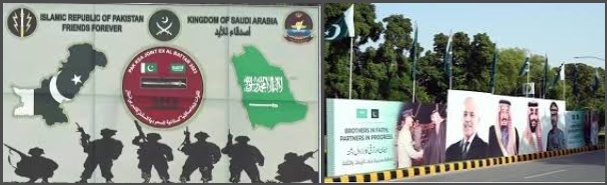
Various banners showcasing the Saudi-Pakistan friendship
Saudi forces, untested and outmatched in the tunnels beneath the shrine, needed help. It came from French gendarmes, who devised a plan to gas the rebels out, and from Pakistani special forces, who fought alongside the Saudi National Guard.
Weeks later, the Soviet army rolled into Afghanistan. Riyadh looked at a map that showed Soviet troops or Soviet allies on almost every frontier. The Kingdom had bought the finest Western weapons in quantities that embarrassed far larger states, and found it had nowhere near the trained manpower to use them.
Pakistan had the opposite problem: a battle-hardened army, a formidable intelligence service, and empty coffers. The match was obvious.
There was a sharper irony buried in that founding moment. The revolution that had just triumphed in Tehran gave the Kingdom its lasting nightmare: Ayatollah Khomeini branded the House of Saud unfit to guard the holy cities and urged the faithful to take Mecca from them.
Iran, in other words, was the original threat the Saudi–Pakistani bond was built to answer. That it was Iranian missiles, forty-seven years later, that finally tested the guarantee and found it wanting is a symmetry no strategist could have planned. The menace that created the bond was the menace that exposed it.
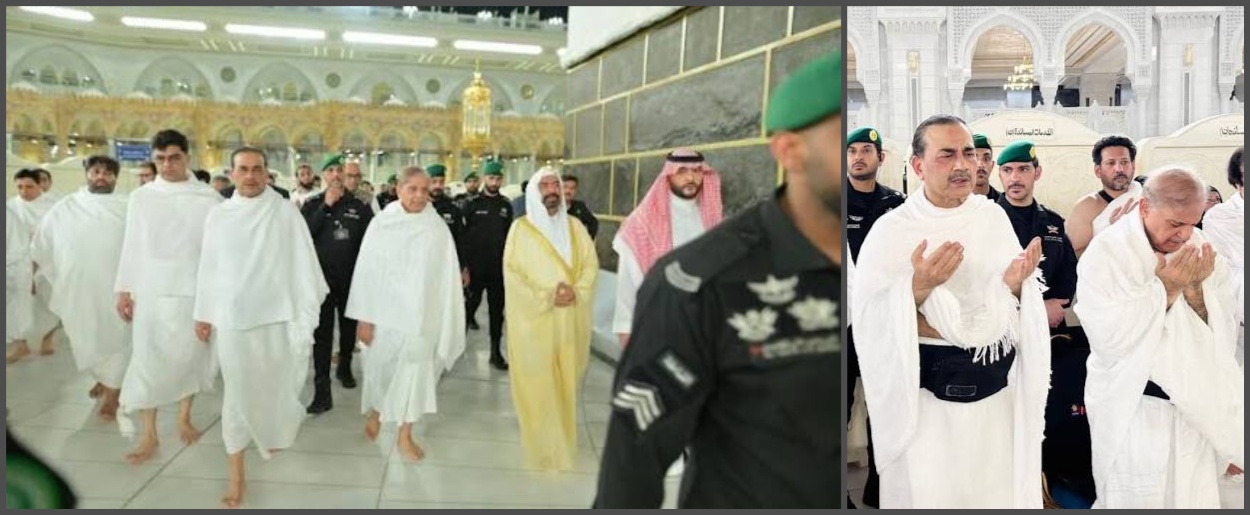
Pakistan PM Shehbaz Sharif and Chief of Defence Forces Field Marshal Asim Munir at the Makkah (Mecca) holy site
So, the arrangement took shape – the Saudi-Pakistan Armed Forces Organisation Agreement of 1982. As per this understanding, through the 1980s, Pakistan stationed tens of thousands of troops inside Saudi Arabia. Its soldiers trained the Kingdom’s forces, guarded its borders and its holy cities, and when Saddam Hussein seized Kuwait in 1990, Islamabad again sent thousands of troops to the Saudi front.
In return came oil on favourable terms and cash deposited into Pakistan’s central bank each time its economy cratered, a pattern that continues to this day. Most consequentially, Saudi money is widely reported to have helped fund the nuclear programme Pakistan tested in 1998, in exchange for an unwritten understanding that the resulting umbrella might, if the worst came, be stretched over Riyadh.
This was the true nature of the bond. It was not an alliance of equals, nor even of allies in the Western sense. It was a transaction: manpower and menace, rented by money.
And rented things behave differently from owned ones. A transaction holds only as long as both sides calculate that keeping it serves them better than walking away. For almost fifty years the numbers worked, because what Riyadh needed – troops for a parade, deterrence against a conventional enemy and muscle for a border – cost Pakistan little and paid it well.
The 2026 war was the first time the bill came due in blood. And the arithmetic changed.
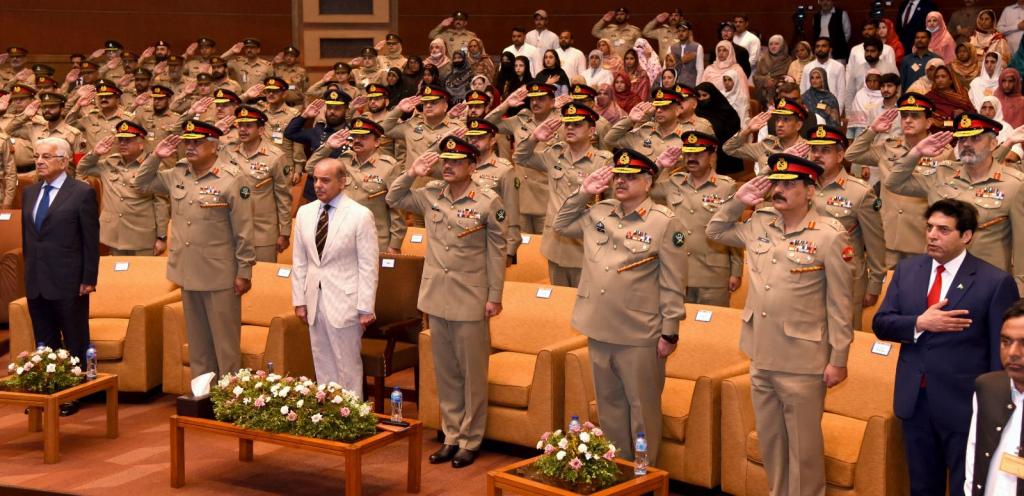
Pakistan Prime Minister Shehbaz Sharif at the Pakistan Army's General Headquarters in Rawalpindi with Field Marshal Asim Munir by his side
Pakistan’s strategic playbook
Consider what fighting would have cost Islamabad. Pakistan is home to the world’s second-largest Shia population, tens of millions of people for whom Ali Khamenei was not a foreign head of state but a spiritual authority.
When American and Israeli bombs killed him, Pakistan did not merely disapprove; it erupted. Protesters attacked the American consulate in Karachi. For a country that has never once seen a prime minister complete a full term, ordering the air force to bomb Iranian targets on Saudi Arabia’s behalf would have risked igniting sectarian conflict at home.
Add the strategic trap Pakistan already sits in, a hostile India to the east, a hostile Afghanistan to the west, and a simmering insurgency in Balochistan, and opening a fourth front against a nuclear-threshold neighbour, for a foreign paymaster, becomes not merely unattractive but close to suicidal.
There was also a far more profitable option on the table, and Pakistan took it. Rather than fight the war, Islamabad brokered the ceasefire. It became the main channel of communication between Washington and Tehran, and helped negotiate the arrangements around the reopening of the Strait of Hormuz.
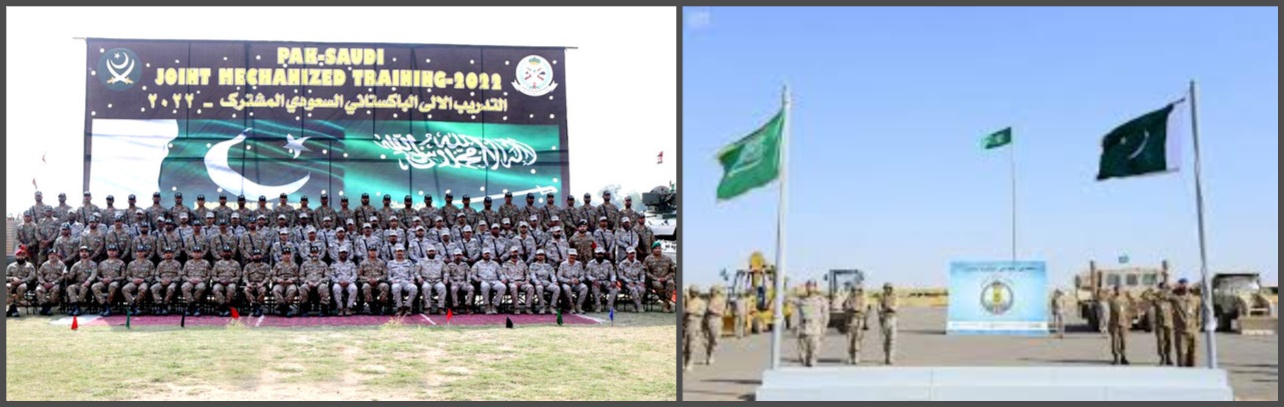
Pakistan-Saudi mechanised training 2022 (left), and flags of the two countries hoisted at another joint exercise (right)
From that role it has extracted more than any battlefield could have offered: warmer ties with Washington, a US Export–Import Bank commitment of more than a billion dollars to its mining sector, and the standing to ask the United States for a ten-billion-dollar financial lifeline.
A country that had gone to war for Riyadh would have earned Riyadh’s gratitude. A country that made peace for the US earned Washington’s chequebook. Pakistan, as ever, followed the money.
None of this should surprise anyone who studied the guarantor rather than the guarantee. This is a state whose defining strategic trait is a willingness to play every side at once.
Around the turn of the millennium, even as it drew Saudi financing for its bomb, the network run by A.Q. Khan, the very father of that bomb, was selling nuclear technology to Iran, Libya and North Korea. Pakistan took the Kingdom’s money to build a deterrent, and at the same time let the blueprints reach the Kingdom’s principal adversary.
Duplicity is not a lapse in Islamabad’s conduct. It is the strategy. To expect single-minded loyalty from such a partner in a real crisis was always to misread it.
Why, then, does Pakistan pay no price – not for the proliferation, not for the hedging, not for leaving its patron exposed? Here lies the grim genius of its position.
With around 170 warheads, Pakistan holds the world’s fifth-largest nuclear arsenal, larger than Britain’s or France’s. But the deterrent that matters most is not aimed outward. It is the threat of its own collapse.
A failed Pakistan would be the nightmare scenario. Its arsenal loose amid a coup, a civil war or a jihadist surge is the single prospect that most reliably keeps intelligence chiefs awake at night.
Hence, the world has built an elaborate machinery of forbearance around it: the IMF cheque that arrives, roughly once a decade, as bankruptcy looms; the strongly worded protest that substitutes for sanctions; the aid that follows the outrage.
Libya surrendered its programme, and its leader died in a ditch. Iraq was invaded over weapons it did not possess. Pakistan proliferated to three states and received, for its trouble, a bailout. It has turned its own fragility into an asset, the most perverse insurance policy in the history of statecraft.
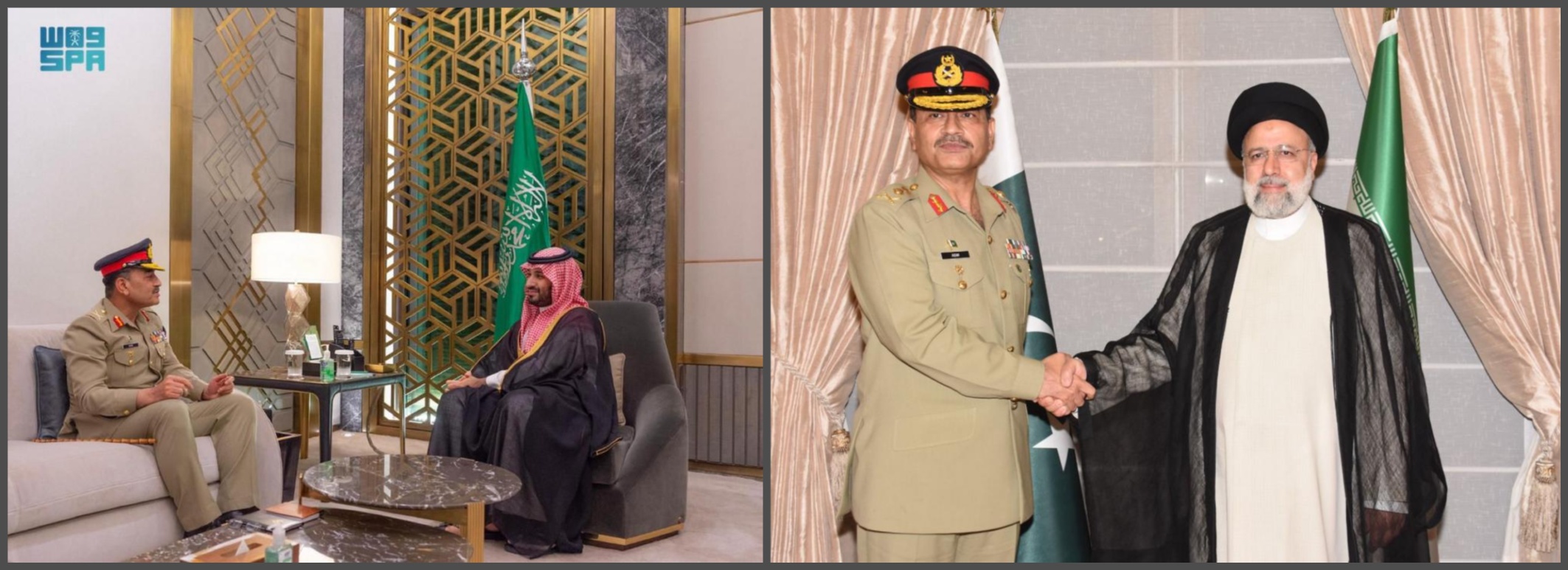
Field Marshal Asim Munir with Mohammed bin Salman (left), and with Iranian President Ebrahim Raisi in April 2024 (right)
Which brings us to the lesson Riyadh has now learned at the worst possible moment. Rented deterrence is only ever as reliable as the landlord’s self-interest on the morning it is called upon.
A cheque can buy a great many things: troops for a ceremony, technology, the appearance of an alliance. What it cannot buy is another nation’s willingness to bleed for yours when its own survival argues against it. That willingness is not for sale, and Saudi Arabia has just paid, in exposure and embarrassment, to relearn it.
Riyadh’s response has been characteristically pragmatic: if one rented guarantor proves unreliable, add another. The Mecca Joint Defence Agreement, signed in August 2026, folds Turkey into the framework alongside Pakistan. It is the diversification of a landlord who has realised his tenant may not pay.
But it repeats the flaw rather than fixing it. Turkey, too, will weigh its own interests before it honours the pact. More signatures on more paper do not create the one thing collective defence actually needs: a credible expectation that partners will fight.
That expectation is earned over decades of genuinely shared threat, as the one that was raison d'être for the North Atlantic Treaty Organisation (NATO). It cannot be bought in a palace over a weekend.
India can wait and watch
For New Delhi, watching from across the Arabian Sea, the episode should be clarifying rather than alarming. When the pact was signed, the anxious reading in India was that its “attack on one is an attack on both” language might drag the Kingdom into a future India-Pakistan confrontation, or extend a Pakistani nuclear umbrella in ways that limited India’s options.
The war has quietly deflated that fear. A Pakistan unwilling to fight for the patron that bankrolled it for almost fifty years is hardly going to risk a war with India on Riyadh’s account. A guarantee that dissolves into shuttle diplomacy the moment real missiles fly is not one Delhi needs to lose sleep over.
India’s course is the steady one it has already chosen: deepen its own considerable partnership with Saudi Arabia, which values New Delhi as a market and a stabiliser far more than as a counterweight to Islamabad, and treat the paper architecture of a so-called “Islamic NATO” with the calm it deserves.
In the end, the Kingdom’s long wager rested on a category error: the belief that loyalty, like oil infrastructure or air-defence batteries, could be bought with enough capital.
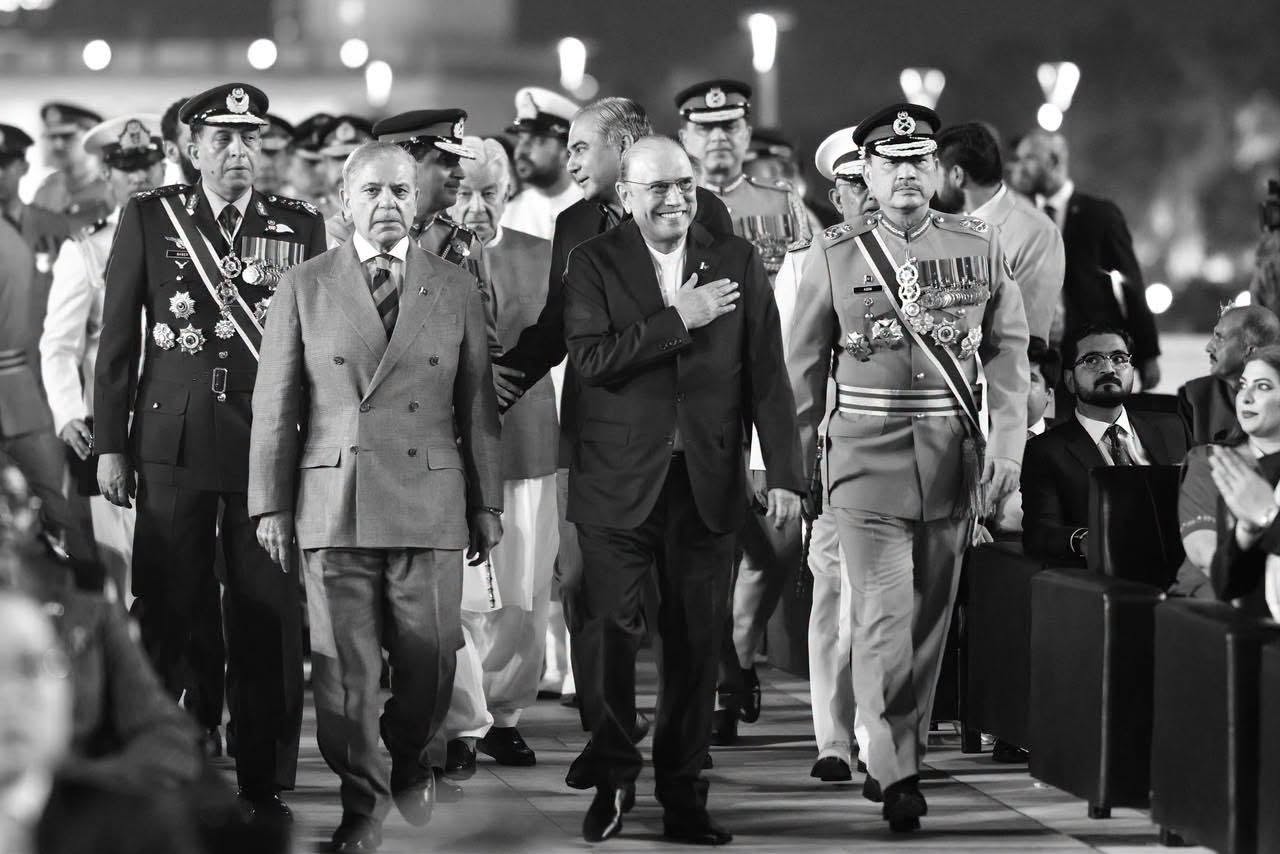
All in one frame: Pakistan President Asif Ali Zardari with PM Shehbaz Sharif and Field Marshal Asim Munir by his side
For half a century the error went untested, and the illusion held. Then the missiles came, and the umbrella that almost fifty years of Saudi money had bought stayed folded.
A guarantee, Riyadh has learned, is only as good as the guarantor’s willingness to honour it on the day. And that willingness was the one thing the cheque could never rent.
(Views expressed in this report are the author's own.)
Follow us on WhatsApp
Follow us on Facebook
Follow us on X @vudmedia
Follow us on Substack
