
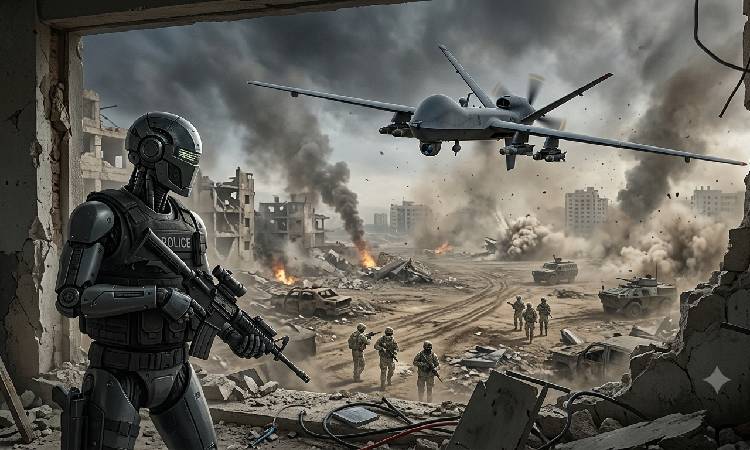
The world saw it in Ukraine, Gaza, Iran and even South Asia. Like its pervasive impact on all walks of life, Artificial Intelligence (AI) is also making a decisive imprint on the battlefield. As humans increasingly give way to machines over many aspects of warfare – from surveillance, targeting, command and control to decision-making – the advent of lethal autonomous weapon systems, or killer robots, is adding lethality to this evolving autonomous nature of warfare. If any, this could have the most ominous implications for the nuclear domain, with a high risk of miscalculation in volatile theatres. As AI sweepingly takes over the domain, there could be a steady erosion of human judgment to operate under timelines increasingly determined by AI. Humans are in the loop, but would not be in control, warns Vipul Tamhane in this evaluation of the deep impact of AI and autonomous weapon systems, explaining how the collision between machine speed and political restraint may become one of the defining security dilemmas of this century.
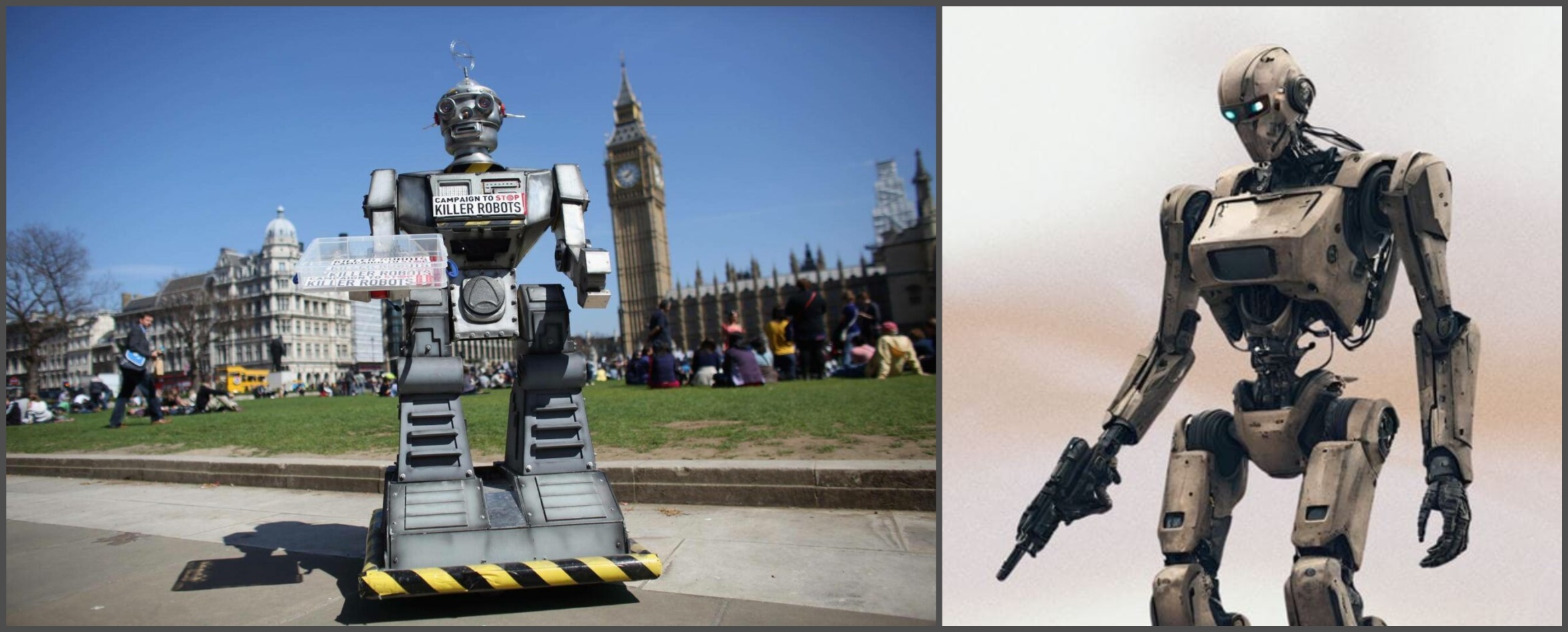
Home page image: A science-fiction movie of yesteryear depicting a giant killer robot; image courtesy – ExtremeTech
Text page and Banner images are AI-generated, for representational purposes
The most dangerous decision in the next major war may not be made by a machine. It may be made by a human who has been given only seconds to disagree with one.
For more than a decade, the international debate over military artificial intelligence has fixated on ‘killer robots’: lethal autonomous weapons that select and engage targets without human intervention.
The concern is legitimate and no longer hypothetical. But the focus on the machine that pulls the trigger has obscured a quieter and arguably more consequential transformation.
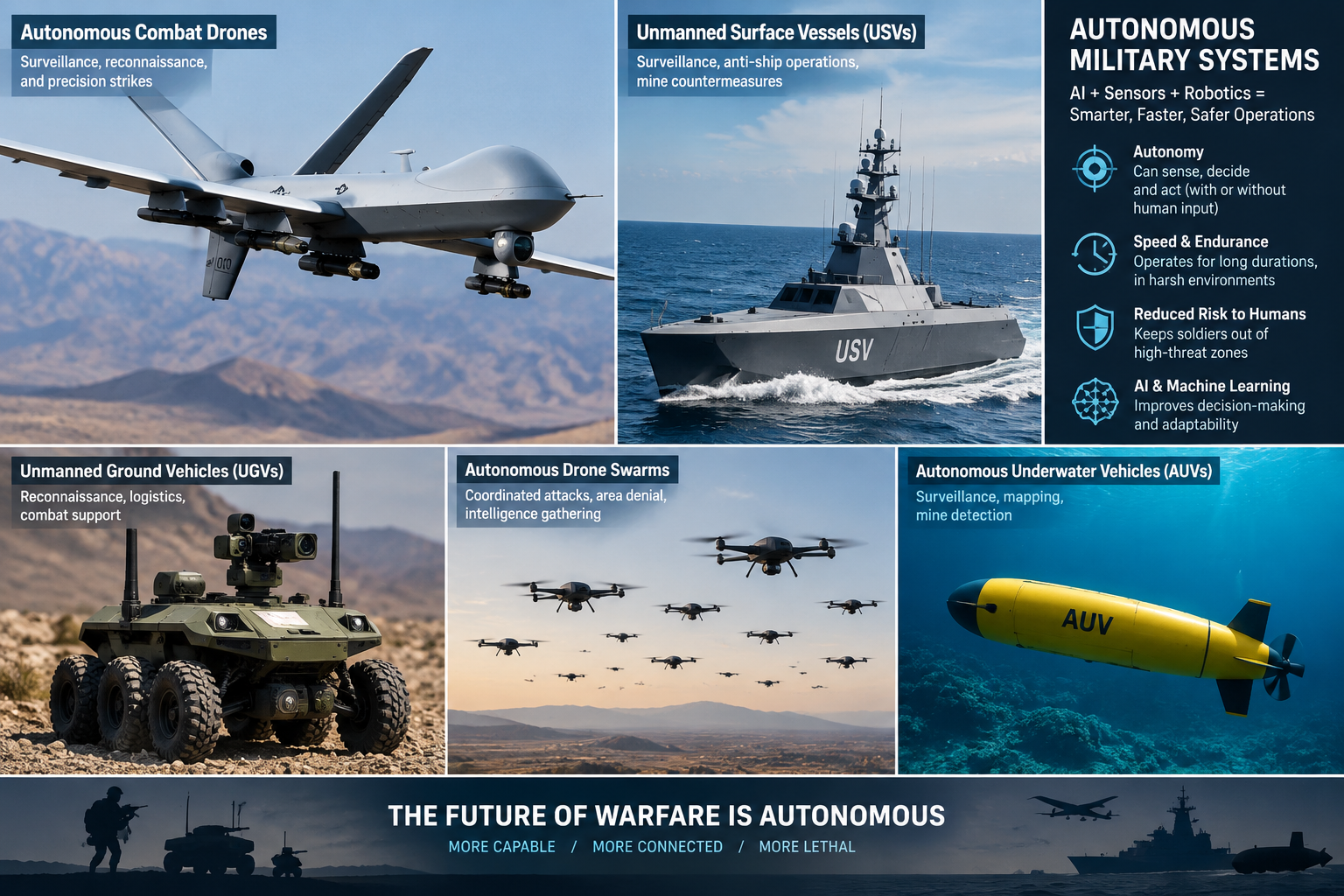
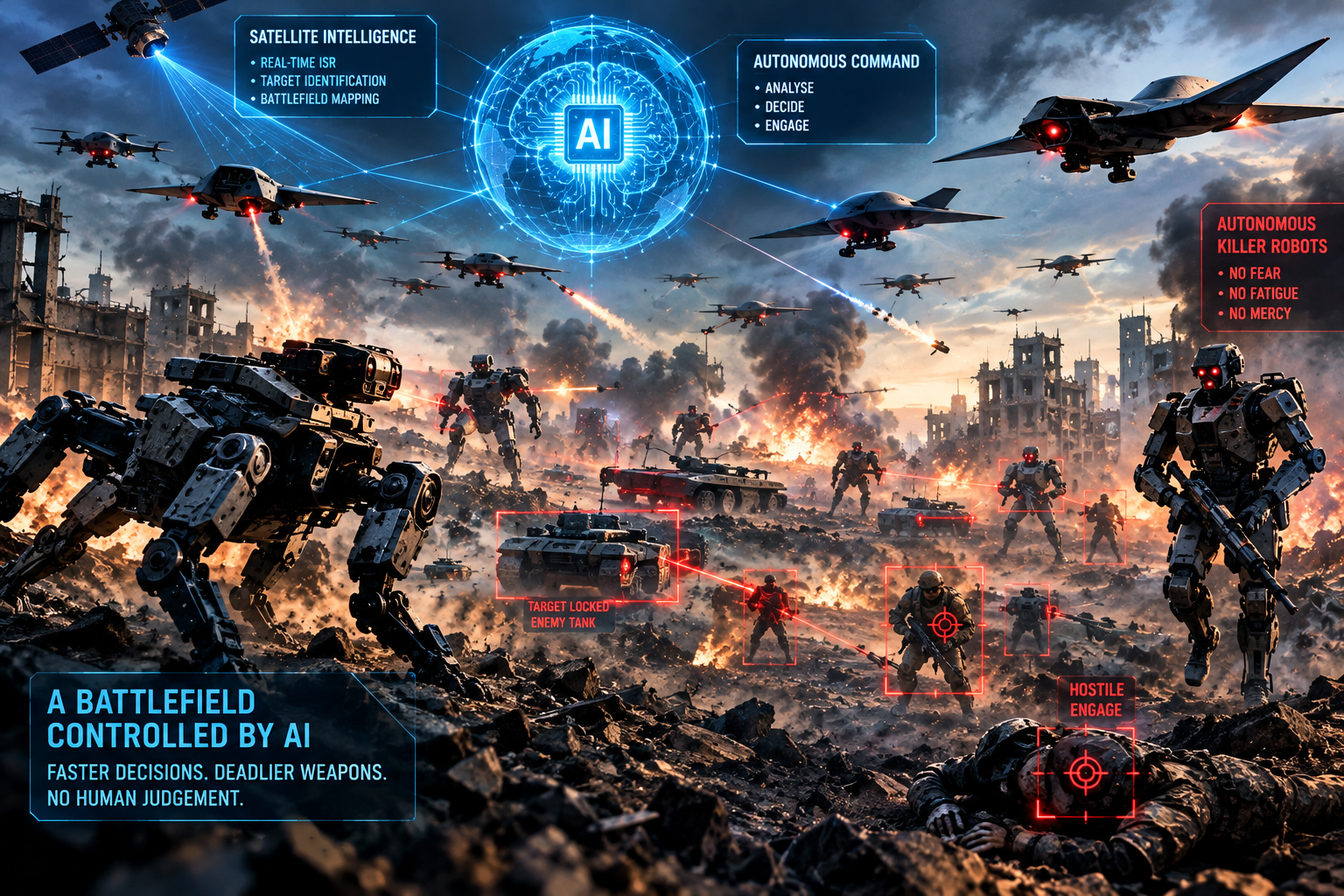
An AI-generated infographic showing the extent of technological transformation
Artificial Intelligence (AI) now shapes how militaries perceive threats, process intelligence, and recommend responses. It shapes what commanders see, what they believe, and how quickly they must act.
The result is not autonomous warfare so much as automated escalation: the steady erosion of human judgment under timelines too compressed for judgment to operate. Keeping a human “in the loop” does not, by itself, keep humans in control.
The collapsing clock
Start with speed. Ukraine’s Delta battlefield management system pulls drone video, radio intercepts and satellite imagery into a single picture, then distributes targets across thousands of reconnaissance and strike drones.
According to Ukrainian commanders quoted in a recent New York Times report, the system has cut the time from spotting a target to striking it from roughly 20 minutes to between three and five. The effect is a kill zone several kilometres deep, in which almost anything that moves can be detected and hit within seconds.
Kyiv is not stopping there. Ukraine’s defence ministry is developing an AI assistant called SPECTR, designed to help commanders digest incoming data and decide faster still.
None of this should be read as criticism of Ukraine. A country fighting for its survival against a larger adversary has every reason to shorten its kill chain, and speed has saved Ukrainian lives.
That is precisely the point. The incentive to accelerate is real, rational, and overwhelming, and every military watching this war has taken note. A human remains formally responsible for each strike.
The shrinking part is the interval in which that human can think independently.
The rubber stamp
Elsewhere, that interval appears to have shrunk almost to nothing. Investigative reporting on Israel’s Lavender system in Gaza, based on the accounts of Israeli intelligence officers, described a database that at one stage marked some 37,000 people as potential targets.
One officer said he would invest about 20 seconds in each. “I had zero added value as a human,” he said, “apart from being a stamp of approval.”
The Israel Defence Forces (IDF) rejects this account, insisting that it does not use an AI system to identify terrorist operatives and that its information systems are merely tools for analysts, who make every final decision.
The dispute matters. But even on the IDF’s own terms, the reported review times illustrate the core problem. Procedural human control – a person formally approving each decision – can coexist with a near-total absence of actual deliberation. A signature is not the same as a judgment.
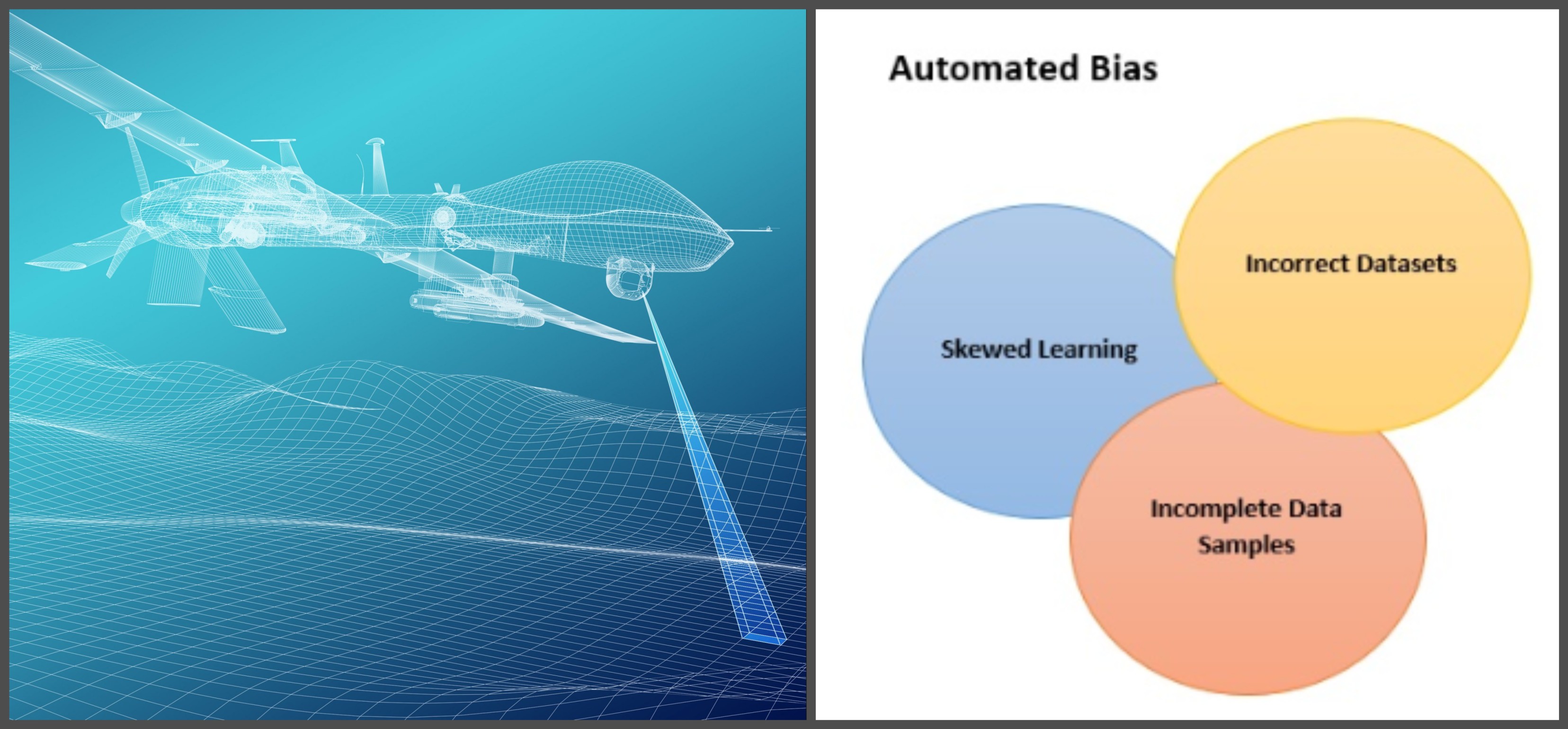
This is what the psychology literature calls automation bias. The International Committee of the Red Cross (ICRC) defines it as a propensity to rely on machine outputs “even when other available information may call those outputs into question.”
The same ICRC submission warns of the operator who launches an attack based solely on an AI system’s output, “effectively serving as a human rubber stamp.” Speed, volume, and institutional pressure make that outcome more likely, not less.
When the human steps out
At the far end of the spectrum, the human has already stepped out entirely.
On 6 July 2026, a Russian Molniya drone struck near a gas station in Zaporizhzhia, killing three civilians: a 19-year-old university student, Tetiana Bubynets, and two men aged 41 and 48.
According to Ukrainian air defence commanders and forensic investigators who spoke to The New York Times, operators sent the drone toward the station while the final target was chosen on board by software running on an Nvidia Jetson Orin, a commercial AI minicomputer that sells for a few hundred dollars.
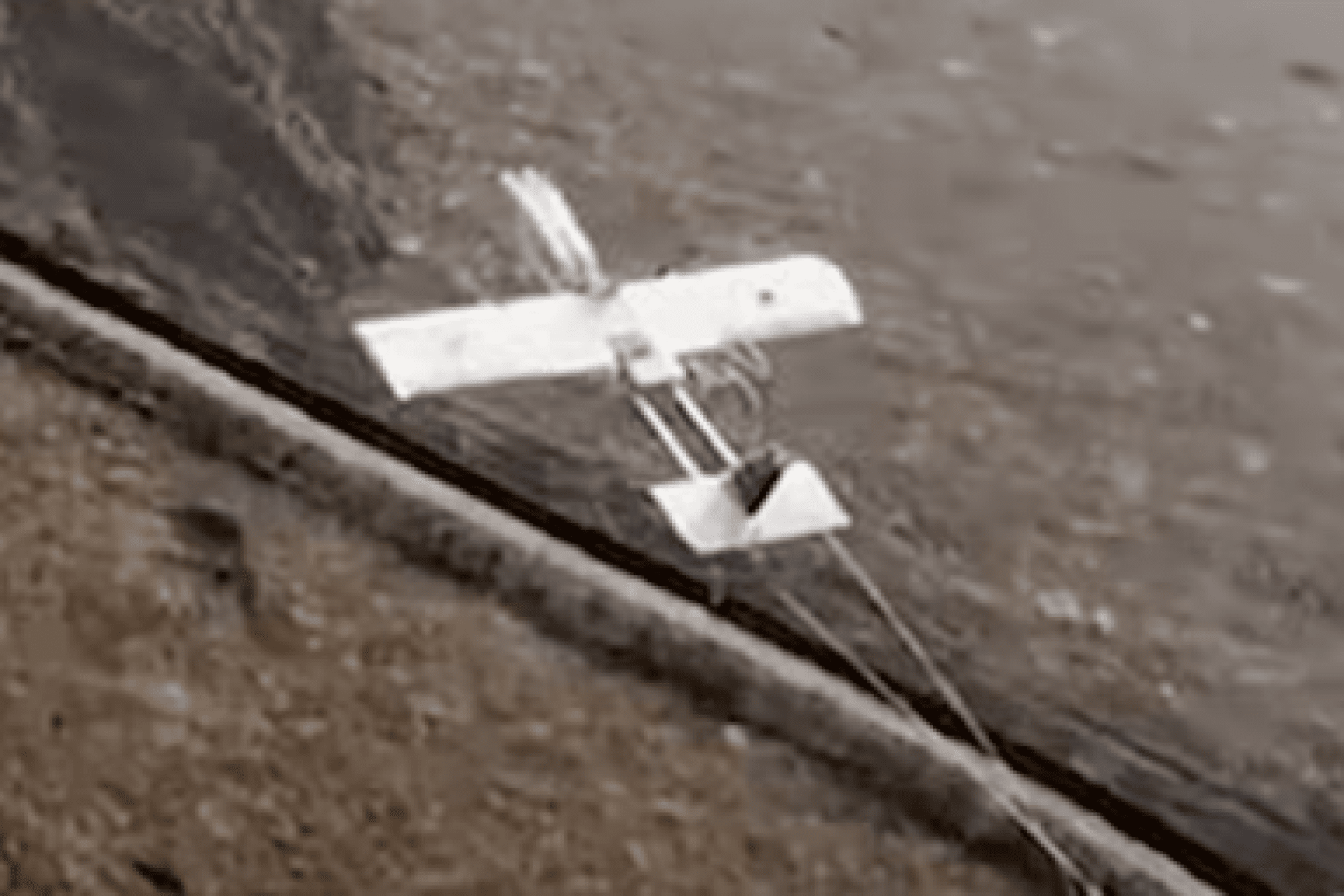
A Ukrainian FPV interceptor drone deploying a net to bring down a Russian Molniya-2 attack drone Ptashka Drones
The drone carried cameras but no antenna for talking to an operator. As the module was unencrypted, investigators could examine the terrain imagery loaded into it.
Kateryna Bondar of the Centre for Strategic and International Studies called it the first documented instance in which a Russian drone using an autonomous system caused civilian deaths. The precision of her wording matters.
Ukraine too has used autonomous modes. The lesson is not that one side has crossed a line the other has respected. It is that the line is being crossed in practice, by hardware available to anyone, before anyone has agreed where it lies.
Beyond states: the terrorist learning curve
If states are struggling to keep humans meaningfully in control, the picture among non-state armed groups is starker, because there is no doctrine to lose.
The University of Cambridge’s Programme on AI Science and Policy conducted a study in 2025-2026 on 57, based on in-person interviews with 27 former Boko Haram members.
The study found that both of the group’s factions, the Islamic State West Africa Province (ISWAP) and Jama’atu Ahlis Sunna Lidda’awati wal-Jihad (JAS), created dedicated AI units staffed by bomb-makers, engineers, and technical specialists.
Operatives of the Islamic State of Iraq and Syria/the Levant (ISIS) delivered in-person training to ISWAP commanders, supplying laptops, virtual private networks (VPNs), and encryption tools. “The white guys came and taught us,” one former commander recalled, describing sessions in which senior fighters watched demonstrations on a projector.
The uses were operational, not experimental. According to reporting on the study, fighters consulted commercial chatbots on weapons problems, drone payloads, and tactical planning. One commander uploaded chest-camera footage from the battlefield for analysis.
When assaults had repeatedly failed against military defensive trenches, commanders asked AI how to get motorcycles across them. One former member summed up the appeal: “Trial and error can kill you. AI gives you accuracy.”
This is not yet autonomous warfare. It is something that may prove more widespread: AI as a force multiplier for groups that once learned only through costly failure. Among states, AI compresses the time available for judgment. For insurgents, it compresses the time needed to acquire competence.
From the battlefield to the brink
These are battlefield cases. The strategic stakes are larger.
A June 2025 SIPRI study warns that AI “has the potential to influence nuclear escalation even when that integration occurs outside nuclear weapon systems.”
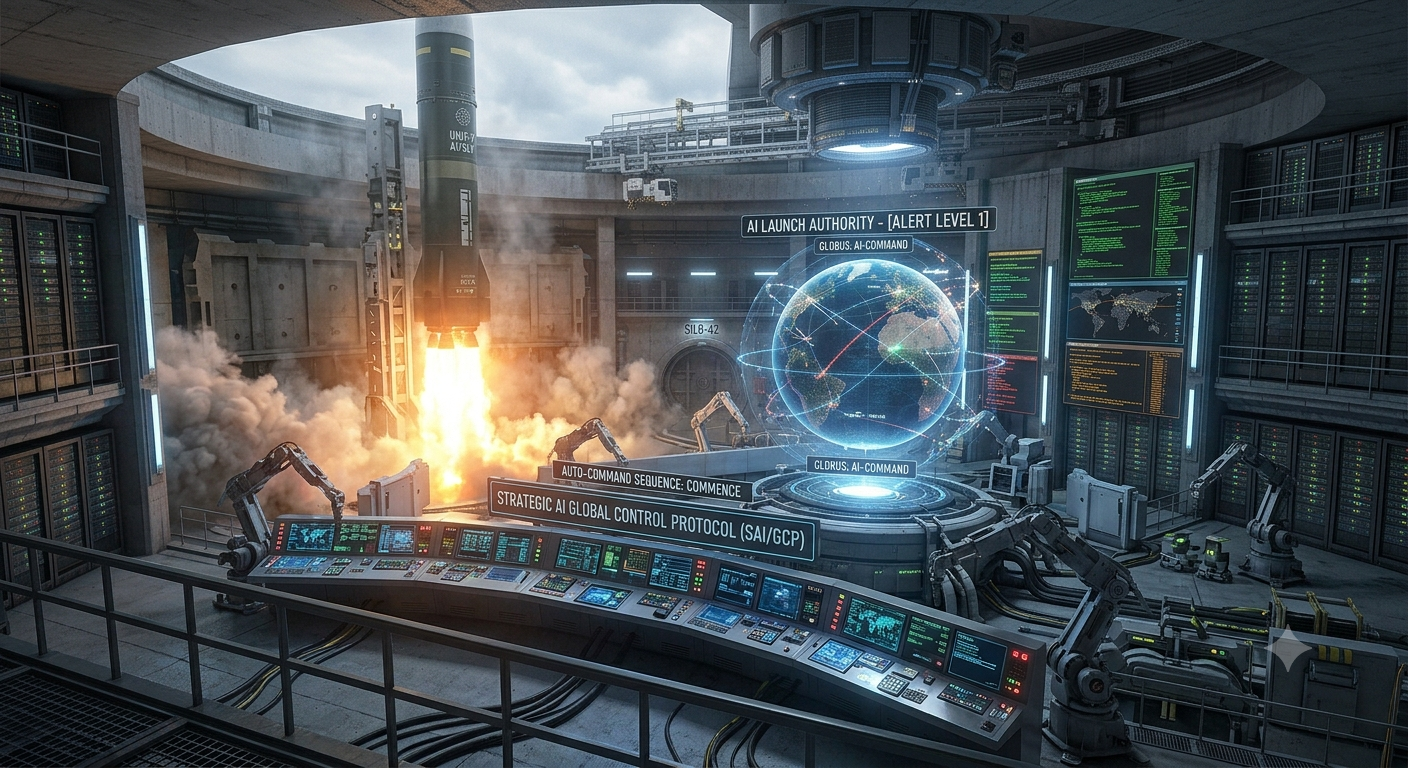
An AI-generated image representing an AI-driven nuclear command and control centre
Non-nuclear AI, it finds, may compress decision-making timelines, “potentially increasing miscalculation risks during a crisis,” while “opaque recommendations from an AI-powered decision-support system can bias a decision-maker towards acting.”
The same study identifies automation bias, “the tendency of users to accept a system output without critical scrutiny,” as a central risk.
Consider what that means in a crisis between nuclear-armed rivals. An early-warning or intelligence-fusion system flags what it assesses, with high confidence, as preparations for an imminent strike. The leader receiving that assessment cannot see how it was produced.
The adversary’s intentions are ambiguous. The system’s designers have promised speed. Every institutional incentive points toward acting before the window closes. The machine has not pressed any button. It has simply made restraint feel reckless.
An uneven playing field
The risk is also unevenly distributed.
A small club of states, including the United States, China, Israel, Russia, Ukraine, the United Kingdom and South Korea, fields high-end AI targeting and battlefield systems at scale. A wider circle, among them India, Iran, Pakistan, Saudi Arabia, Türkiye, and the United Arab Emirates, has both the capacity and the incentive to follow.
Not every state will bring equal testing infrastructure, data quality, trained personnel, or institutional safeguards. Some will deploy systems they cannot fully audit and whose recommendations they cannot confidently override.
In regions where nuclear-armed neighbours already operate on short fuses, South Asia most obviously, the combination of compressed timelines and unverifiable algorithms should concern every capital, not only the ones with the most advanced systems.
An AI-generated image for representational purposes
For middle powers, the temptation is obvious. Buying or building AI-enabled targeting looks like a shortcut to parity with larger rivals. But a system imported without its training data, its testing history, or the institutional habits that grew up around it is a black box with a trigger attached.
The states best placed to shape the rules are those still deciding how to adopt the technology, because they can build restraint into doctrine before speed becomes a habit. Waiting until the systems are fielded, and the incentives entrenched, will make every safeguard harder to add.
Governance running behind
Diplomacy is trailing the technology. The United Nations General Assembly (UNGA) adopted its first resolution on AI in the military domain only in December 2024.
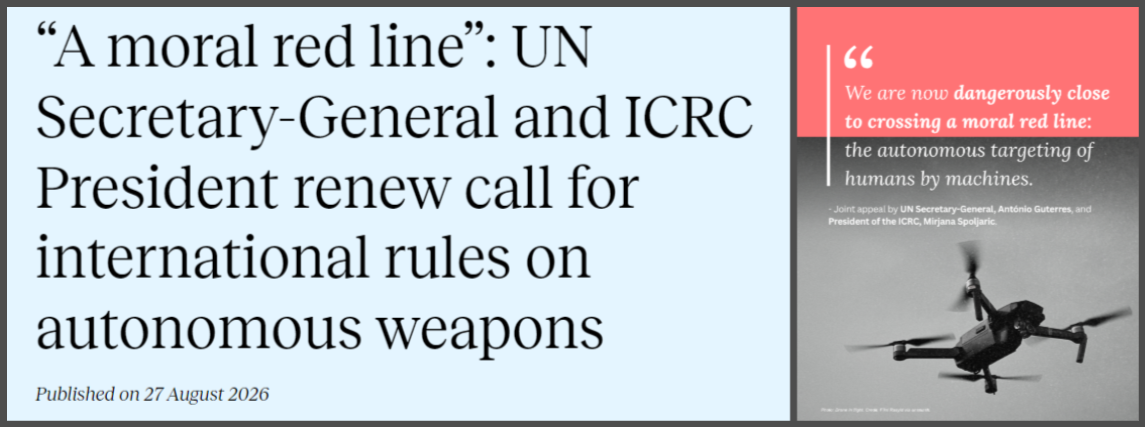
In July this year, opening the first UN Global Dialogue on AI Governance in Geneva, Secretary-General António Guterres called machines that select and kill without human control “morally repugnant.” He urged a ban by international law, and insisted that “some decisions must remain forever human, none more than taking a human life.”
The principle is right. But operational tempo in Ukraine and Gaza shows practice being reshaped far faster than the frameworks meant to govern it. Talks on lethal autonomous weapons remain focused on the weapon itself.
The larger problem, the silent reshaping of human judgment by decision-support systems, has barely entered the negotiating room.
Four scenarios worth planning for
Policymakers should stress-test their institutions against at least four plausible scenarios. Each point to the same conclusion.
The first is cheap autonomy in asymmetric hands: An armed group fits commercial drones with off-the-shelf computer vision, of the kind already recovered from Russian wreckage, and sets mission parameters in advance so the drone can keep going if its link is jammed.
Jamming, the standard defence, stops working. Prevention depends on export controls and supply-chain monitoring for dual-use AI modules, intelligence sharing, layered counter-drone defences, and passive protection of likely targets.
After an attack, forensic attribution of recovered components matters as much as the physical response, because the supply chain is the most practical place to intervene.
The second is manufactured certainty: An adversary does not attack a state’s weapons; it attacks the data feeding its decision-support systems, poisoning training data or spoofing sensors to produce high-confidence false warnings of an imminent attack. The aim is to shrink the defender's decision window until a mistake becomes likely.
The defence is procedural as much as technical: mandatory verification from multiple independent sources before escalatory action, formal “human challenge” protocols that require a named officer to argue against the machine's assessment, and regular red-team exercises.
If an incident occurs, affected sensors must be isolated, the investigation made transparent enough to reassure adversaries, and confidence thresholds adjusted.
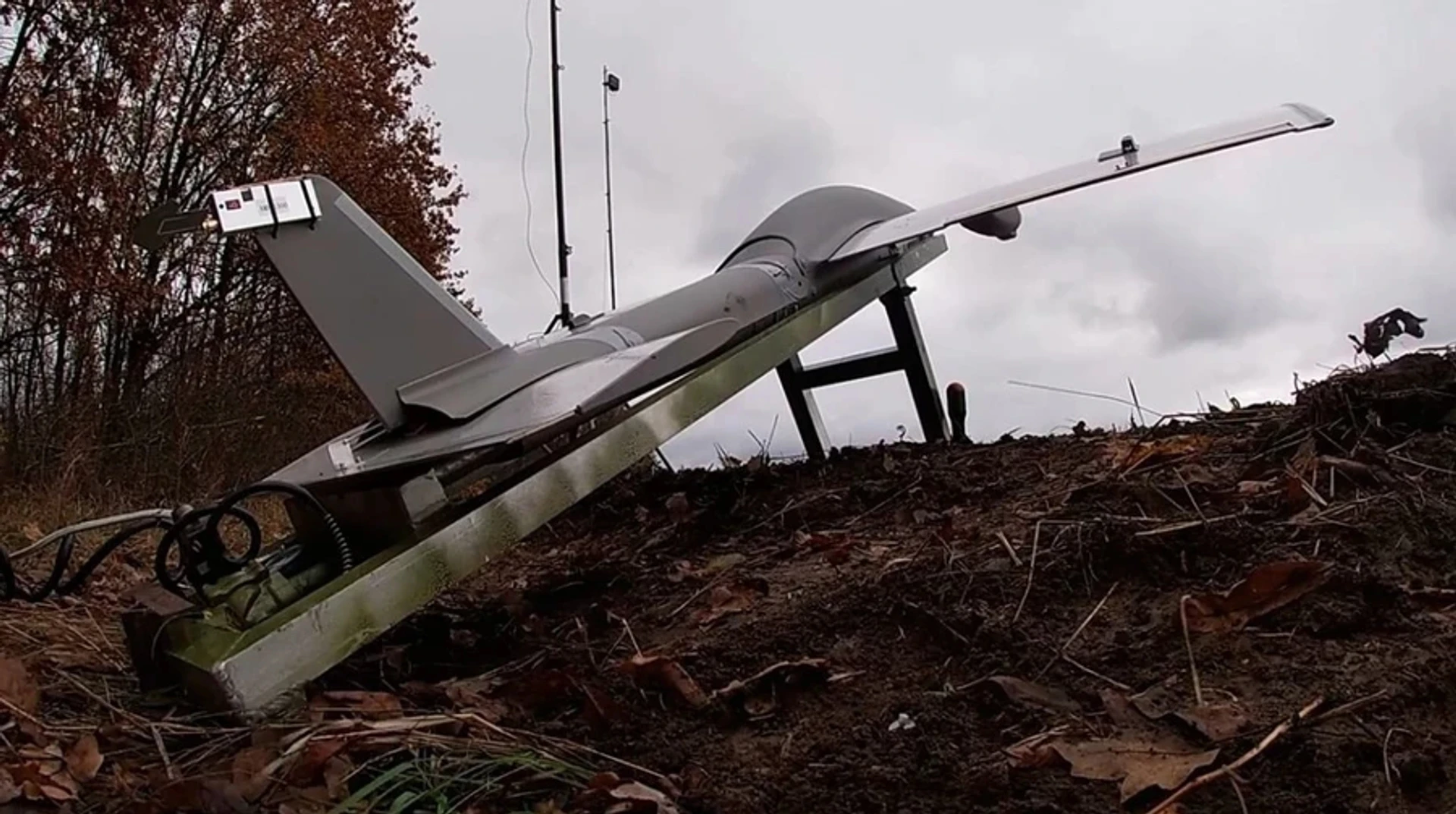
A Russian Molniya drone, which could be launched from any surface; photo credit - Pravda
The third is the proliferation of higher autonomy: A non-state group obtains or reverse-engineers a system that, once launched, selects and engages targets within a defined area without real-time human control.
Here the answer lies upstream: stronger international legal and normative commitments, technical safeguards built into systems at the design stage, and capacity-building for states least equipped to detect and counter such weapons.
Afterwards, recovered systems must be neutralised and examined, legal reviews conducted, and human-command protocols reinforced so that the incident is not taken as a precedent.
The fourth is the one closest to home for states: their own systems working as designed, at a speed their people cannot match. It needs no adversary. It needs only a tired officer, a confident screen, and twenty seconds.
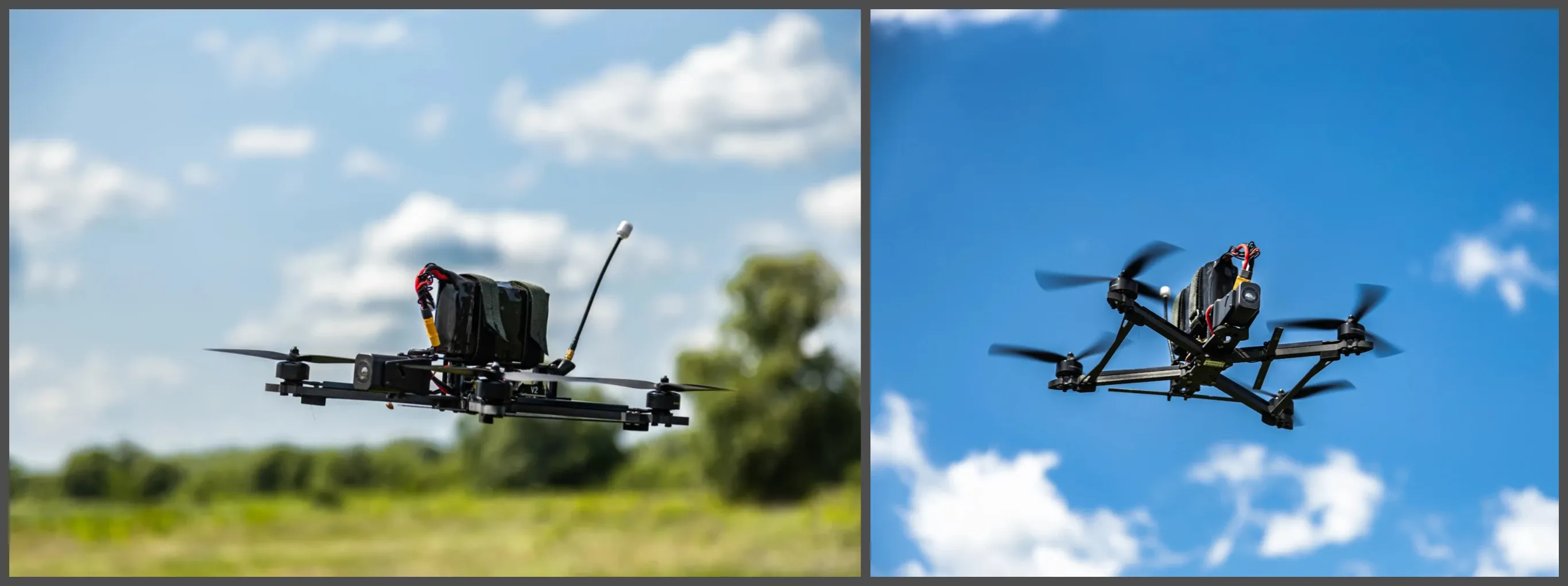
Ukrainian interceptor drones from the AIR range; photo credit - General Chereshnia via Pravda
Three rules for the age of machine speed
What follows is not a call to ban military AI, but for three rules that would preserve the one thing the technology erodes: time for human judgment.
First, certain decisions should be protected from algorithmic acceleration: Nuclear command and control is the clearest red line. The ICRC has urged that AI decision-support tools “must never be incorporated into nuclear-weapon command-and-control systems.”
SIPRI’s research shows why the line cannot stop at the launch order: AI in early warning, intelligence fusion, and conventional operations can push a crisis toward the nuclear threshold long before anyone reaches for it.
Nuclear-armed states should commit, jointly and publicly, that decisions capable of catastrophic escalation remain under meaningful human authority, and that the systems feeding those decisions are built to support deliberation rather than to eliminate it.
Second, states need an AI-era hotline: Cold War crisis channels rested on a simple insight: misunderstanding between adversaries can be as dangerous as deliberate aggression. When an AI-enabled system warns of imminent hostile action, states need rapid, human-to-human means of checking whether the warning reflects reality.
The ICRC recommends that armed forces preserve the practice of tactical patience, which may mean “purposely slowing down at certain points in planning and decision-making processes.”
What holds for a platoon commander holds for a head of government. Rivals may disagree on almost everything, but they share an interest in ensuring that corrupted data, algorithmic error, or a misread signal does not become a cause of war.
Third, accountability must never disappear inside an algorithm: If an AI-assisted recommendation contributes to an unlawful or catastrophic decision, “the system recommended it” cannot end the inquiry.
Governments choose to deploy these tools. Militaries write the doctrine. Commanders exercise authority.
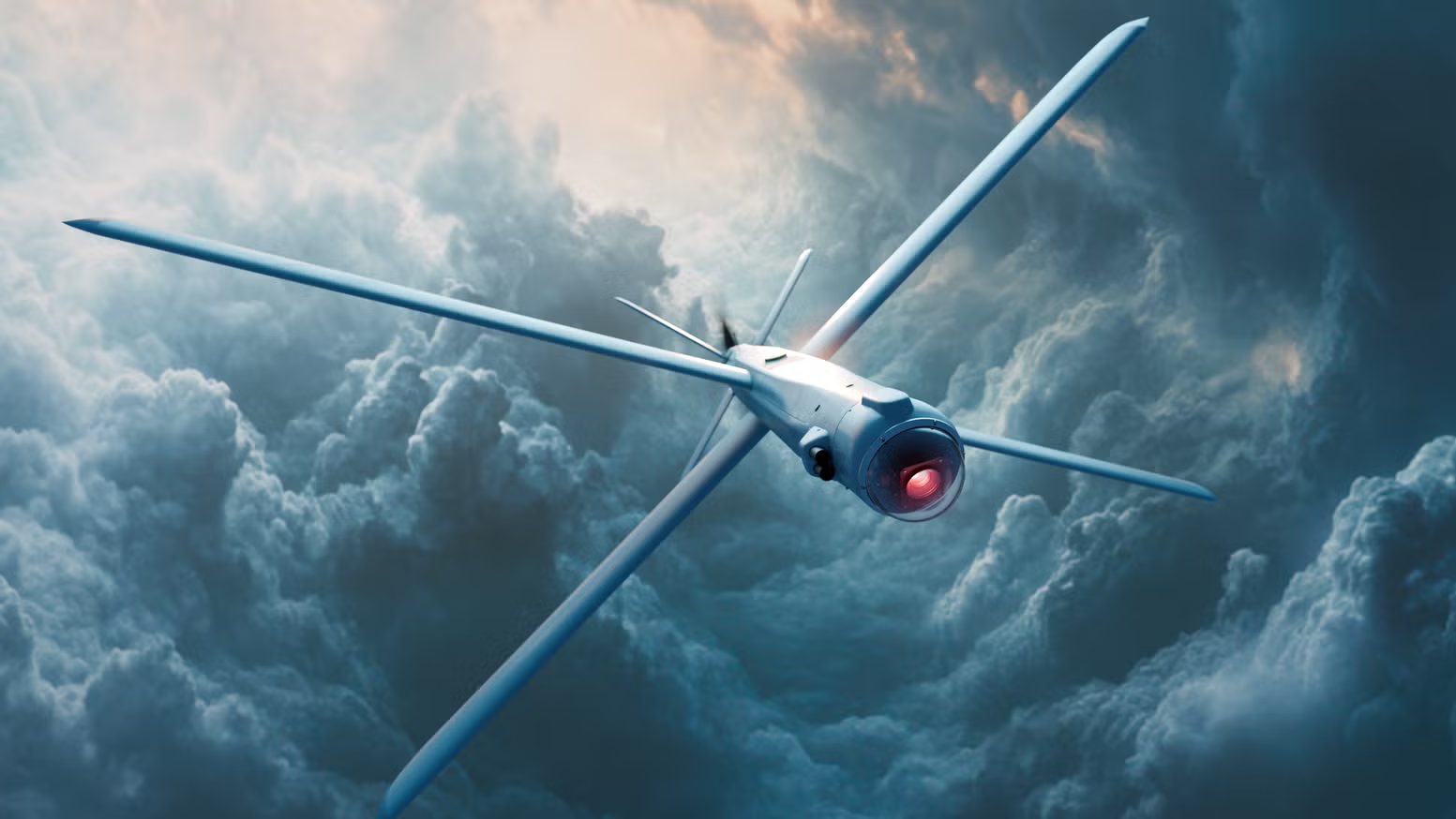
The ZALA Lancet is an unmanned aerial vehicle and loitering munition developed by the Russian company ZALA Aero Group
The ICRC is explicit that AI outputs must not be the sole basis for legal assessments in targeting, and that users “must assess information from all sources reasonably available.” The more capable the machine, the clearer the human chain of responsibility must become.
As Guterres put it in Geneva, “machines can inform, but humans must decide, and answer.”
The value of a pause
None of this is an argument against artificial intelligence. AI can strengthen early-warning systems, support humanitarian operations, improve the analysis of emerging conflicts, and help leaders make sense of chaotic crises. Rejecting it outright is neither realistic nor necessarily desirable.
The challenge is subtler. Humanity has spent generations building institutions designed to insert time between political disagreement and irreversible violence. Diplomacy creates time. Mediation creates time. Military hotlines create time. International institutions create time.
Even the painstaking procedures of international law matter partly because they force governments to justify their decisions before the consequences become permanent.
Artificial intelligence carries the opposite instinct: eliminate delay, process faster, predict sooner, respond immediately. That collision between machine speed and political restraint may become one of the defining security dilemmas of this century.
Meaningful human control should not be measured by whether a person sits somewhere in the chain of command. It should be measured by whether that person retains the practical ability to understand, question, delay, and ultimately reject what an algorithm recommends.
The states that master military AI will gain power. Mastery alone will not make them wise. In the age of artificial intelligence, one of humanity’s most important security mechanisms may prove to be something deeply unfashionable in the technology industry: the ability to pause.
(Views expressed in this report are the author's own.)
Follow us on WhatsApp
Follow us on Facebook
Follow us on X @vudmedia
Follow us on Substack
