
US President Donald Trump’s impulsive persona, whimsical approach to policymaking and infantile rants are often blamed for many global crises. On October 9th, Trump and his administration lowered this bar through multiple, stunning actions. While his administration continued its ongoing attack on the International Criminal Court by imposing new sanctions, Trump amplified this ire by mocking a former ICC judge, who was declared the Nobel Peace Prize winner this year. In the same vein, Trump expressed his displeasure at being repeatedly overlooked for this coveted recognition, which he proclaims to be most deserved. Trump capped the day with another startling move - striking an oil deal with Russia, weeks after signing a sanctions law on countries that purchased Russian fuel. The stark paradox forced commentators to ask whether ‘America will sanction America?’ Call this the new normal of American foreign policy, the peak of the Trump phenomenon, or a sample of more chaos to come. Vipul V. Tamhane explains Trump’s idiosyncrasies of October 9th.
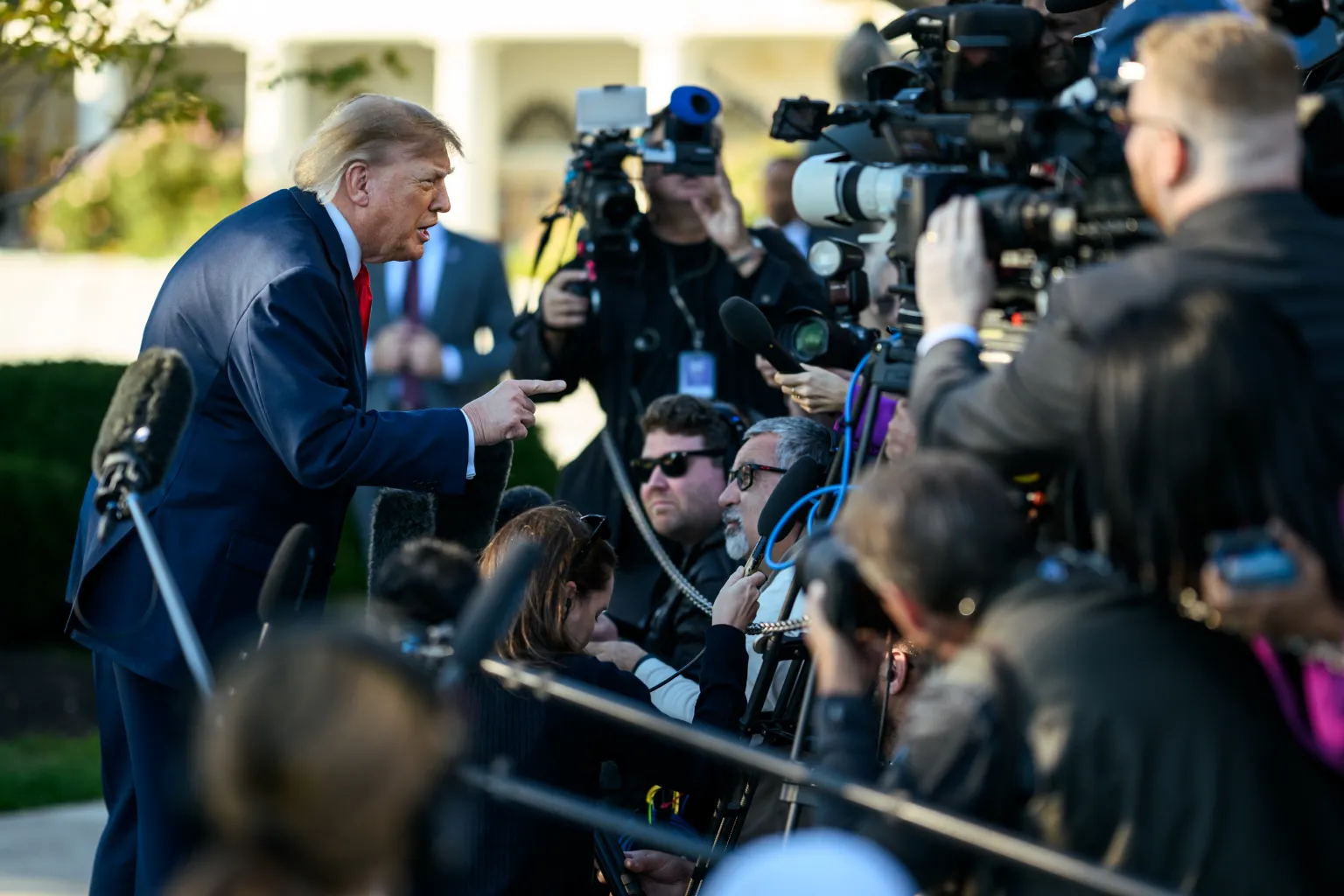
Home page image: A Marine One chopper takes off from the White House lawn
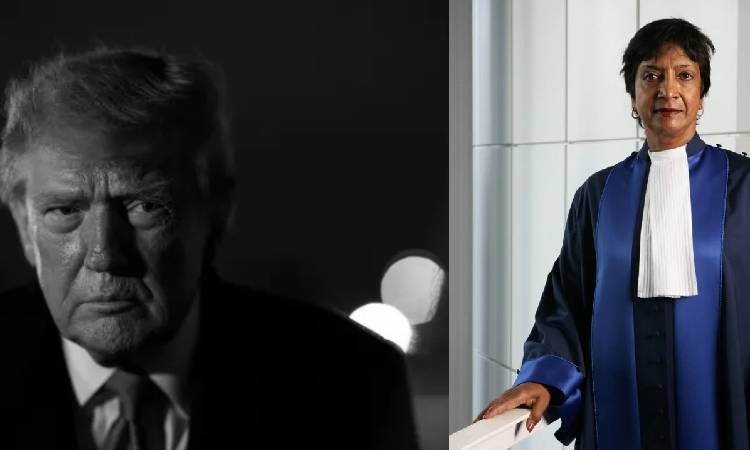
Text page image: US President Donald Trump (left) and Navaneetham Pillay as International Criminal Court (ICC) Judge (right)
Banner image: The ICC Building (left), Presidents Vladimir Putin and Donald Trump at Alaksa (centre), and an illustration of 'Navi' Pillay (right)
On the morning of 9 October 2026, the Norwegian Nobel Committee awarded its Peace Prize to Navanethem “Navi” Pillay, an 85-year-old South African jurist who has spent half a century building the machinery of international justice.
By evening, the President of the United States had told the world he knew nothing about her, that she “very obviously, hates Israel,” and that the decision was “an indelible stain on Norway.”
Within the same news cycle, his administration imposed sanctions on the International Criminal Court, where Pillay once sat as a judge, and announced a deal with Russian President Vladimir Putin to import Russian diesel.
It would be easy to file this under wounded vanity. That misses its significance. What happened on October 9th was a collision between two worldviews. One holds that peace depends on law and on accountability for those who break it. The other treats peace as a deal, a trophy and a personal brand, and law as an obstacle for others.
The three events cannot be viewed separately. The attack on the laureate, the sanctions on the court and the diesel deal with Moscow come from the same school of thought. In American foreign policy, principle is a tool for domestic politics and personal grievance, but discarded the moment it costs anything.
That is not mere inconsistency; it is a pattern. And it is measurably damaging American credibility and the international order the United States helped build.
The Nobel snub and assault on international justice
Pillay, born in 1941 to an Indian Tamil family in Clairwood, Durban, became the first woman of colour to open a law practice in Natal in 1967, defending anti-apartheid activists and exposing torture in detention. She earned a doctorate from Harvard Law School and, in 1995, became the first Black woman to act as a judge of South Africa's High Court.
That year the UN General Assembly elected her to the International Criminal Tribunal for Rwanda. As a member of the chamber in Prosecutor v. Akayesu (1998), she helped deliver the first genocide judgment by an international court and a ruling that rape and sexual violence could constitute genocide.
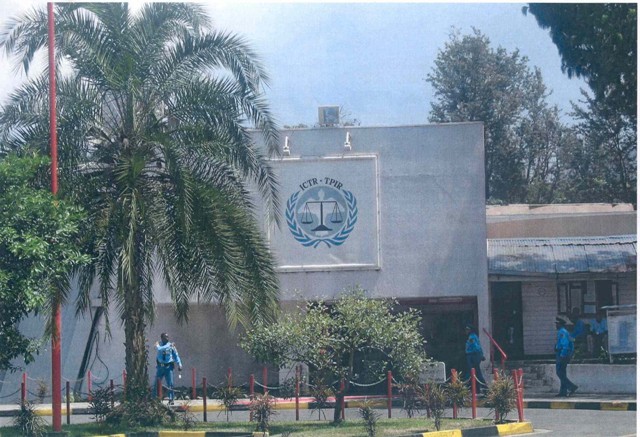
The building that hosted the International Criminal Tribunal for Rwanda
She served on the ICC's Appeals Chamber (2003--2008) and as UN High Commissioner for Human Rights, then chaired the UN Commission of Inquiry on the Occupied Palestinian Territory, which concluded in 2025 that Israel was responsible for genocide in Gaza.
Pillay, receiving a standing ovation at the Nuremberg Palace of Justice in Germany to the Nobel announcement, answered with wit. “If you clap a little bit more, I may share this prize with Trump,” she said, adding that as a lawyer and judge she still wanted “to verify this.”
The President answered with fury. On Truth Social he declared: “In actuality, I should have won 8 Nobel Peace Prizes, not just 1.” Of the laureate he wrote: “I know nothing about this woman, and neither does anyone else!” adding that nobody had heard of her “other than the fact that she, very obviously, hates Israel.” The award, he concluded, was “an indelible stain on Norway, one that will never be forgotten.”
Trump's post does not argue that Pillay is unworthy; it asserts that she is unknown, which is false, and that she is biased, which is a way of saying that any judgment against an American ally is illegitimate by definition. The target is not one jurist. It is the authority of the committee, and behind it the idea that an independent body can confer moral standing without the President's endorsement.
The most revealing claim, forcing a ceasefire on India and Pakistan during Operation Sindoor vs. Operation Bunyan Marsoon, following the Pahalgam attack of 22 April 2025, itself qualified for a Nobel. Pakistan had then nominated Trump and credited his “timely intervention,” which gave Trump every reason to inflate his record.
The President then amplified a harsher attack. He reposted a message from David Schoen, his lawyer in the 2021 impeachment trial, which called Pillay “an unabashed hater of America and Israel” who “celebrated terrorists and rewarded Hamas,” dismissed her Gaza inquiry as a “phoney ‘investigation’,” and claimed she “has never done a thing to foster peace.”
For the woman whose tribunal made rape a crime of genocide, the last charge is almost comically wrong. But the purpose is not accuracy. It is to establish that international criminal justice is acceptable when it pursues Rwandan génocidaires and intolerable when it examines the conduct of Washington’s friends.
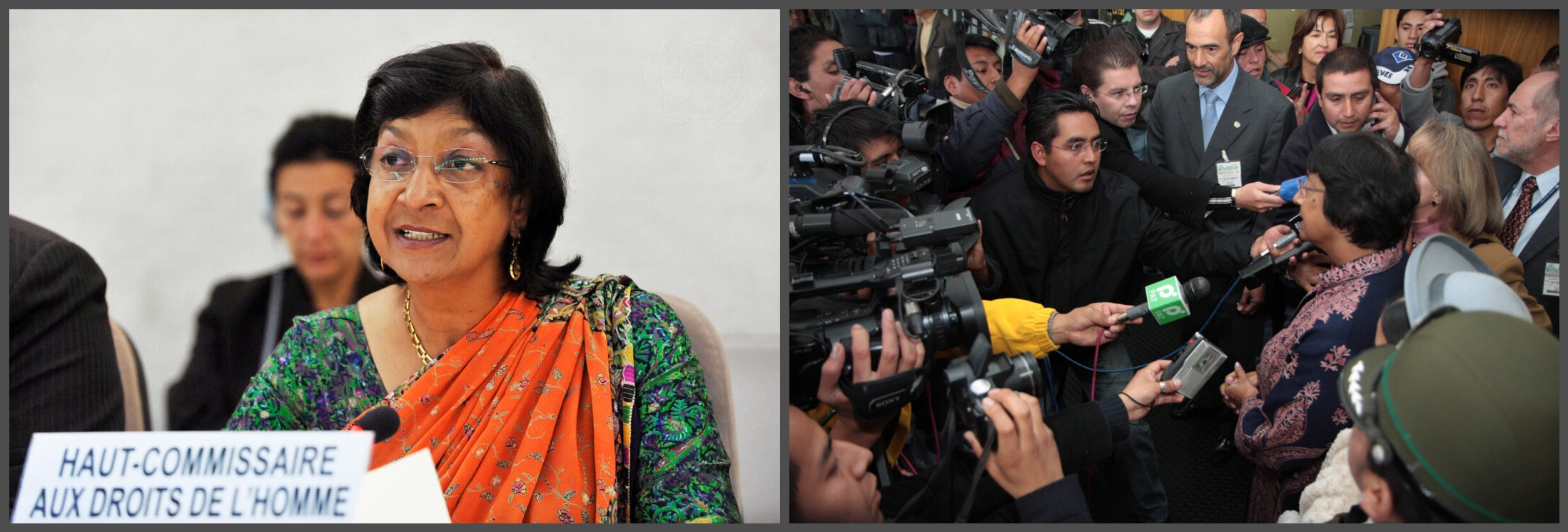
Naveneetham 'Navi' Pillay at a meeting as UN High Commissioner for Human Rights (left), and addressing the press (right)
The ICC sanctions: a war on accountability
Hours after the Nobel announcement, Secretary of State Marco Rubio announced that the United States was sanctioning the International Criminal Court itself. “President Trump will never allow the International Criminal Court to prosecute Americans,” he said.
“That is why, today, the United States is sanctioning the International Criminal Court. We will ban transactions with this rogue court, cutting off its resources and crippling its ability to operate.” He added a line that leaves little room for interpretation: “Either the ICC will end its threats, or we will end the ICC.”
The administration will say the timing was coincidental, and the measures were plainly prepared in advance. It hardly matters. When a government announces, on the day a former ICC judge is honoured for defending international law, that it intends to cripple the court, the message is received whether or not it was intended.
The scope is new. Earlier rounds targeted individuals: ICC judges and prosecutors, a UN special rapporteur, Palestinian rights groups that supplied evidence. This time the court as an institution is the target. Its property and interests in the United States are frozen, and anyone providing funds, goods or services to it risks penalties.
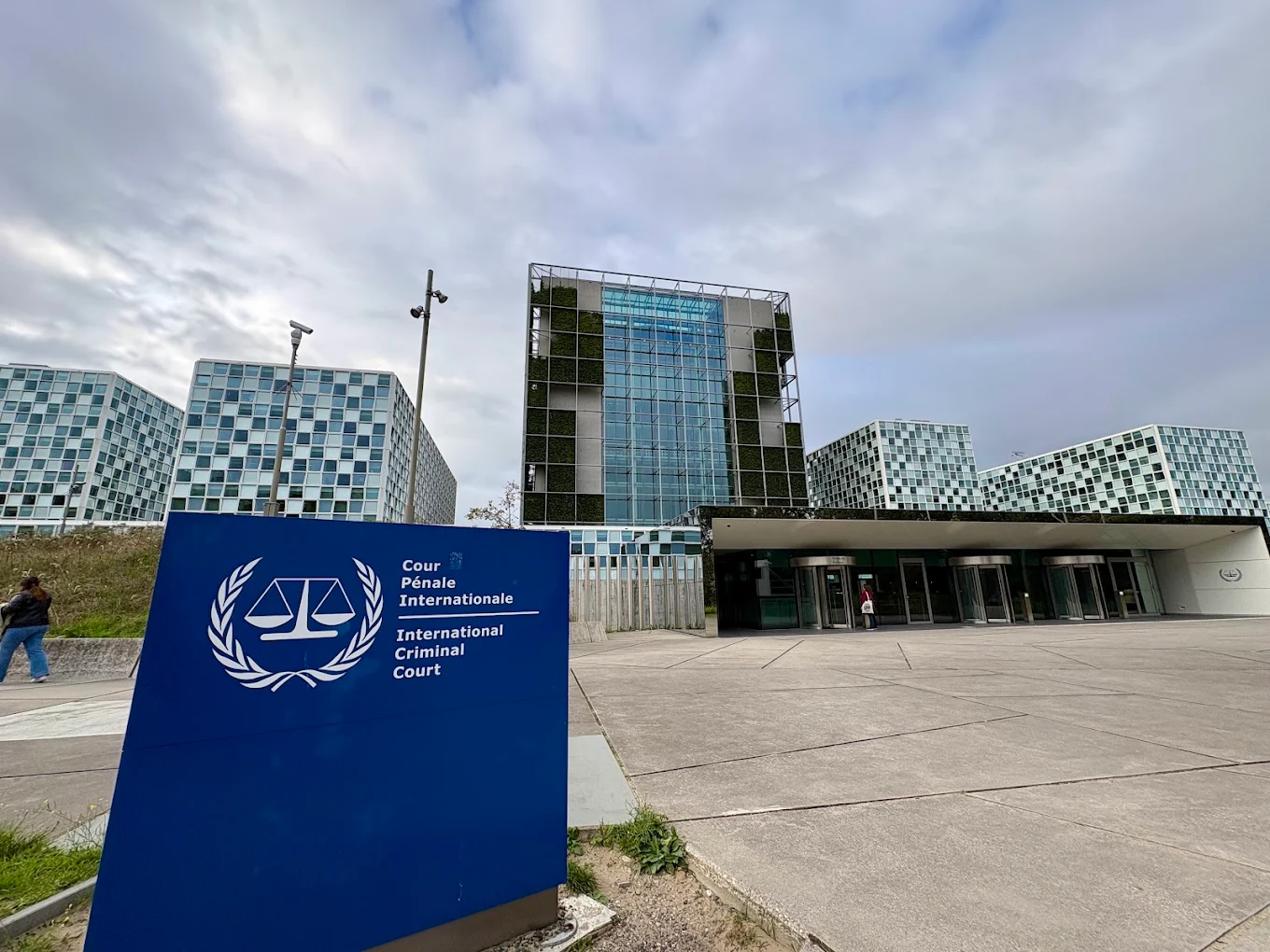
The International Criminal Court building; photo credit - Kohwei Sasaki
Banks, software vendors and contractors are now the pressure points. Temporary exemptions for some services exist, the State Department says, to give member states time to show "meaningful progress" on American concerns. That is the language of a hostage negotiation, not of a dispute between partners.
The grievances are not new. Washington has long resented the court's Afghanistan investigation, which could have reached American personnel, and its arrest warrants for Israeli Prime Minister Benjamin Netanyahu and former Defence Minister Yoav Gallant over the war in Gaza.
Trump's first administration sanctioned ICC officials; Joe Biden rescinded those measures; Trump reimposed and widened them after returning to office in January 2025. The United States is not a member of the court, and it is entitled to argue that the ICC has no jurisdiction over its citizens.
It is not entitled to pretend that strangling a court of 125 member states, including every EU country and every NATO ally apart from Turkey, is a defence of sovereignty rather than an attack on everyone else's.
The reaction was telling. The European Union called the sanctions regrettable and urged their reversal. UN Secretary-General António Guterres described them as a “serious blow.” The ICC's Deputy Prosecutor said they “must be condemned” and that the court's work would continue. Netanyahu thanked the administration for its leadership.
That last reaction captures the problem. Every authoritarian leader who fears a future indictment now has an American precedent. If the world's most powerful democracy may financially strangle a court because it dislikes the court's caseload, so may anyone.
The Nobel Committee warned that international law was “under political attack.” On 9 October, the United States answered the question of who is leading that attack.
The Russia diesel deal: hypocrisy as policy
Will the United States sanction the United States? The question, asked in an Indian headline and echoed by Scott Lincicome of the Cato Institute (“Can America tariff America?”), is less flippant than it sounds.
On the same day, Trump announced that after a call with Putin, Russia would release fuel “over 300,000 tons of Diesel Fuel” immediately, with another 500,000 tons in November and a million tonnes after that.
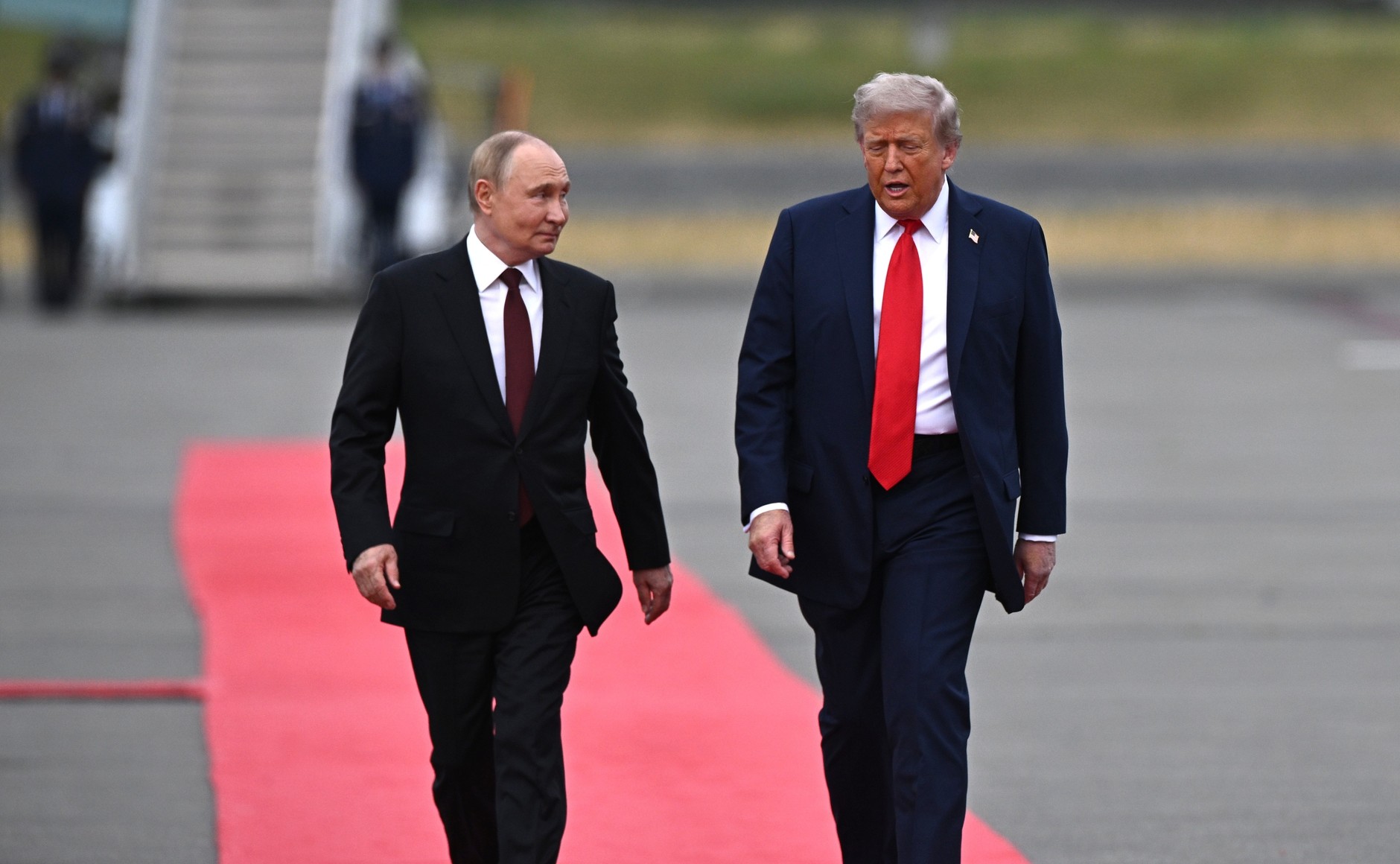
President Vladimir Putin and President Donald Trump on the airport tarmac in Alaska, before their August 2025 summit
The Treasury issued a temporary general licence under which US sanctions will not apply to such diesel until April 2027, the first easing of that kind to run beyond the standard 30 days since the Ukraine war began. “Lower prices for Americans, especially our Great Farmers, Ranchers, and Truckers, is my Greatest Priority,” the President wrote.
The motive is not hidden. Fuel prices have soared since the war with Iran and the closure of the Strait of Hormuz; retail diesel has hit record levels, punishing truckers and farm states. The midterm elections are on 3 November.
Set this against the treatment of India. In August 2025, Washington added a 25 per cent tariff to Indian goods, raising the total to 50 per cent, because India's purchases of Russian oil were funding Moscow's war.
Trade adviser Peter Navarro called India a “laundromat for the Kremlin” and described its crude imports as "blood money". The penalty was lifted in February 2026 only as part of a trade framework.
Three weeks before the diesel deal, Trump had signed the Lindsay O. Graham Sanctions Act -the Lindsey O. Graham Sanctioning Russia and Iran Act of 2026 (Graham Act) - a sanctions law that authorises tariffs of up to 100 per cent on countries that buy Russian oil and gas, with India and China the obvious targets.
India, which imports most of its energy, never answered the insults in kind. It argued that its purchases were guided by national interest and the need for affordable supplies for a vast population. That is precisely the argument Washington now makes for itself. The difference is that India was punished for it.
Evan Feigenbaum, a former senior State Department official, put the consequence bluntly on X: “The message to India especially, after 14 months of threats related to purchases from Russia, is awful.”
The United States, he noted, retains the power “to coerce, threaten, and penalise India” under the new law “while the President now buys diesel from Russia for the US,” a hypocrisy that “will help to further tank US-India relations” and that comes “on top of the sheer absurdity of the US itself seemingly having to rely on Russia.”
Kyiv's response was harsher. Ukrainian President Volodymyr Zelensky wrote that “gifts to Putin will not bring peace,” and that allowing Russia to sell petroleum products is “an investment in a war that must be ended, not prolonged.”
The result is a strategic own goal on three fronts. It tells India, the partner Washington most needs to balance China in Asia, that American rules are instruments of coercion rather than principle.
It tells Moscow that sanctions pressure will ease whenever American voters feel pain at the pump. And it tells Ukraine, and every other state counting on American consistency, that commitments last only until the next election. A superpower can survive being disliked. It cannot easily survive being seen as arbitrary.
The real stain
Put the three episodes side by side, and the pattern is unmistakable. A laureate is smeared because her career implies that power must answer to law. A court is sanctioned because it might hold the powerful to account.
A rival’s oil is condemned as blood money when India buys it and welcomed as relief when Americans need it. In each case, the deciding factor is not doctrine but the President's standing, his grievances and the electoral calendar.
This is not chaos but method. Principle is invoked to discipline others and waived for oneself and one's friends. International institutions are respected when they serve, and attacked when they constrain. Peace is measured not by whether wars end but by who receives the credit.
The cost is cumulative. The post-1945 order, with its courts, treaties and multilateral bodies, was built in large part by American diplomacy and sustained by American credibility. Every act of selective enforcement erodes that credibility a little further, and every erosion creates room for others.
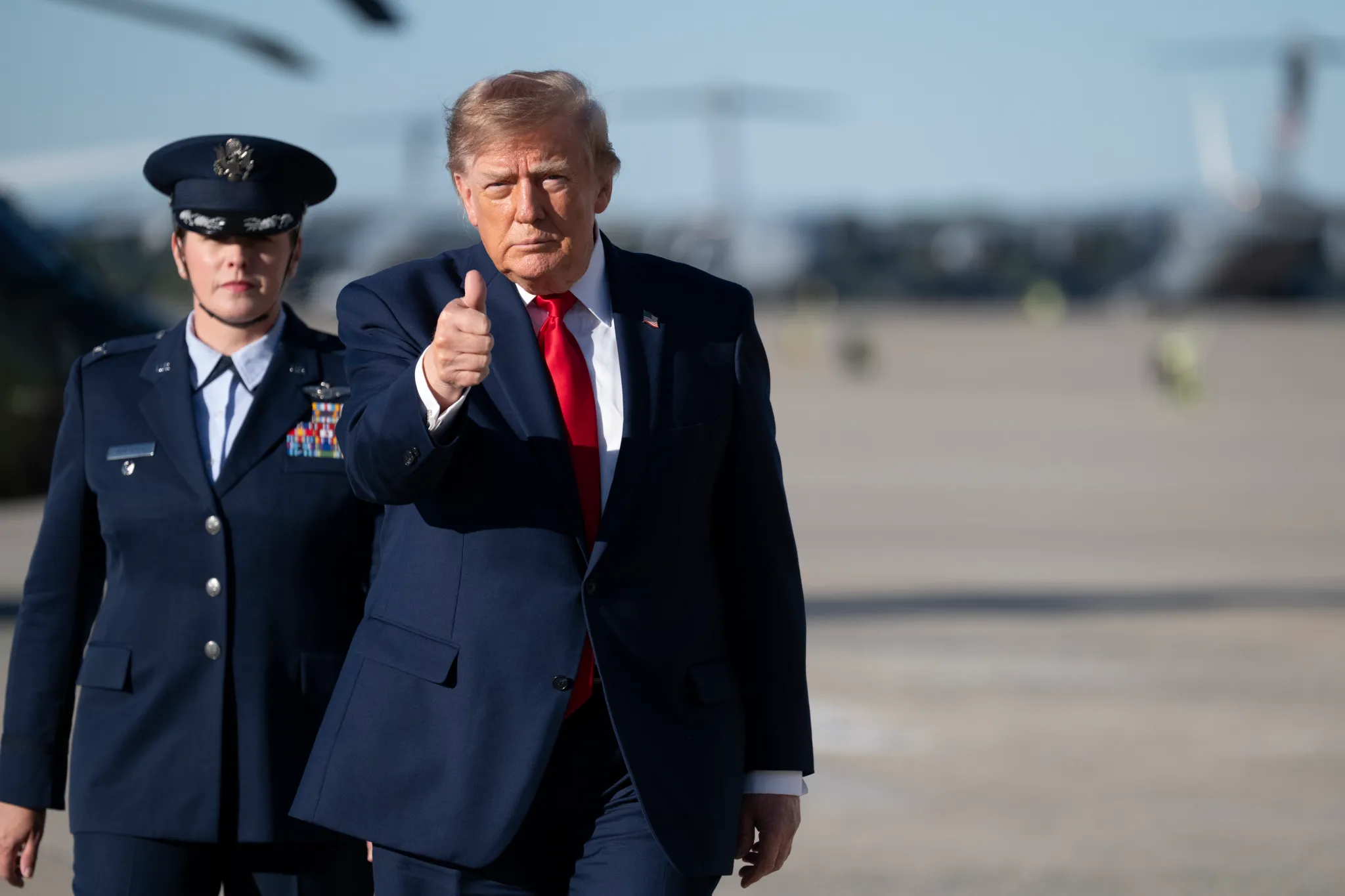
China and Russia have long argued that the rules-based order is merely a cover for American interests. On 9 October, Washington did more to prove their case than any propaganda could.
Navi Pillay’s legacy is a body of law: judgments that turned rape into a crime of genocide, commissions that documented atrocities, institutions that outlast the people who built them. The legacy of this administration, on current evidence, will be the dismantling of such institutions for short-term advantage.
The President was right that something on 9 October left an indelible stain. It was not on Norway. It was on the reputation of the United States as a steward of the order it once claimed to lead.
(Views expressed in this report are the author's own.)
Follow us on WhatsApp
Follow us on Facebook
Follow us on X @vudmedia
Follow us on Substack
