

There is an alternate history of Indians that is rarely narrated or feted: the thousands of Indians who were shipped out as indentured labour (girmitiyas) to British colonies across the globe. While India commemorates its ‘lost people’ at its annual Pravasi Bharatiya Divas, especially by honouring the leaders of many smaller republics, who are descendants of the ‘girmitiya’ forefathers, the Nobel Peace Prize to Navanethem Pillay, whose ancestors went from Tamil Nadu to colonial Africa, is probably the first-ever global acknowledgement of India’s indentured labourers. Theirs is a saga of not just the struggles and perils of survival in the 19th and 20th centuries, in imperial colonies, but also of how they rose unitedly to fight for their rights and integrate with the marginalised communities where they helped build post-colonial nations and societies while preserving the culture of their motherland. Through this spotlight on Navanethem Pillay’s journey, Rejimon Kuttappan provides this touching short history of Indian indentured labourers.
Home page image: An undated photo of Indian indentured labourers; photo source – Flickr via Dhaara Magazine
Text page image: Navanethem Pillay as judge of the International Criminal Court (left) and a dossier issued by the Nobel Committee
Banner image: Various images of Navanethem Pillay
On 9 October 2026, the Norwegian Nobel Committee awarded the Nobel Peace Prize to Navanethem “Navi” Pillay. The South African jurist has spent six decades turning international law into a tool for victims.
The description by the Committee chair, Jørgen Watne Frydnes, stated that Pillay had, with exceptional courage and integrity, led the way towards a more comprehensive global legal order. He added that she had been instrumental in ensuring war crimes, crimes against humanity and genocide are prosecuted.
Pillay’s career runs from defending anti-apartheid activists to serving as a judge on the International Criminal Tribunal for Rwanda, whose landmark ruling recognised rape as an act of genocide. She later sat on the International Criminal Court and served as UN High Commissioner for Human Rights from 2008 to 2014.

Yet the woman honoured by Oslo carries a family story that began far from any courtroom, in the sugarcane fields of the Colony of Natal. Her Tamil grandparents came from India as indentured labourers to work on Natal’s sugar plantations in the 1890s. Her grandfather, she has said, lost both his arms in a sugarcane mill accident.
In a 2013 interview, Pillay recalled that her grandparents were “shipped” from India, and that Mahatma Gandhi described the life they were forced to live as “semi-slavery.” She has said they laboured on a cane farm for five years before they were allowed to buy a piece of land. The family settled in Clairwood, a neglected Durban suburb set aside for Indians, with potholed roads and no sewage system.
The next generation moved one step up. Her father drove a bus; her mother raised eight children. Her teachers collected money from the neighbourhood so she could go to university. In her 2025 Sydney Peace Prize address, Pillay credited the poor indentured community that built its own schools for the change that took her family from cane fields to the courts of the world in three generations.
Hers is one of the millions of such stories.

Why it began: sugar after slavery
The indenture system was born out of the end of slavery. When Britain abolished slavery across its empire under the 1833 Slavery Abolition Act, sugar planters feared they would lose their cheap workforce. Under pressure from them, colonial authorities devised a scheme to ship Indian workers abroad on fixed contracts.
Mauritius was the test case. UNESCO describes the immigration depot at Port Louis, now Aapravasi Ghat, as the site the British government chose in 1834 for its “great experiment” in using indentured rather than slave labour. The first labourers arrived on 2 November 1834, barely three months after abolition took effect.
The experiment was judged a success, and other colonies followed. In British Guiana, the planter John Gladstone obtained permission to recruit Indians, and 396 arrived in May 1838. The first ship to Natal, the Truro, reached Durban from Madras on 16 November 1860 with 342 people.
The last major colony to join was Fiji, with the Leonidas leaving Calcutta in January 1879.
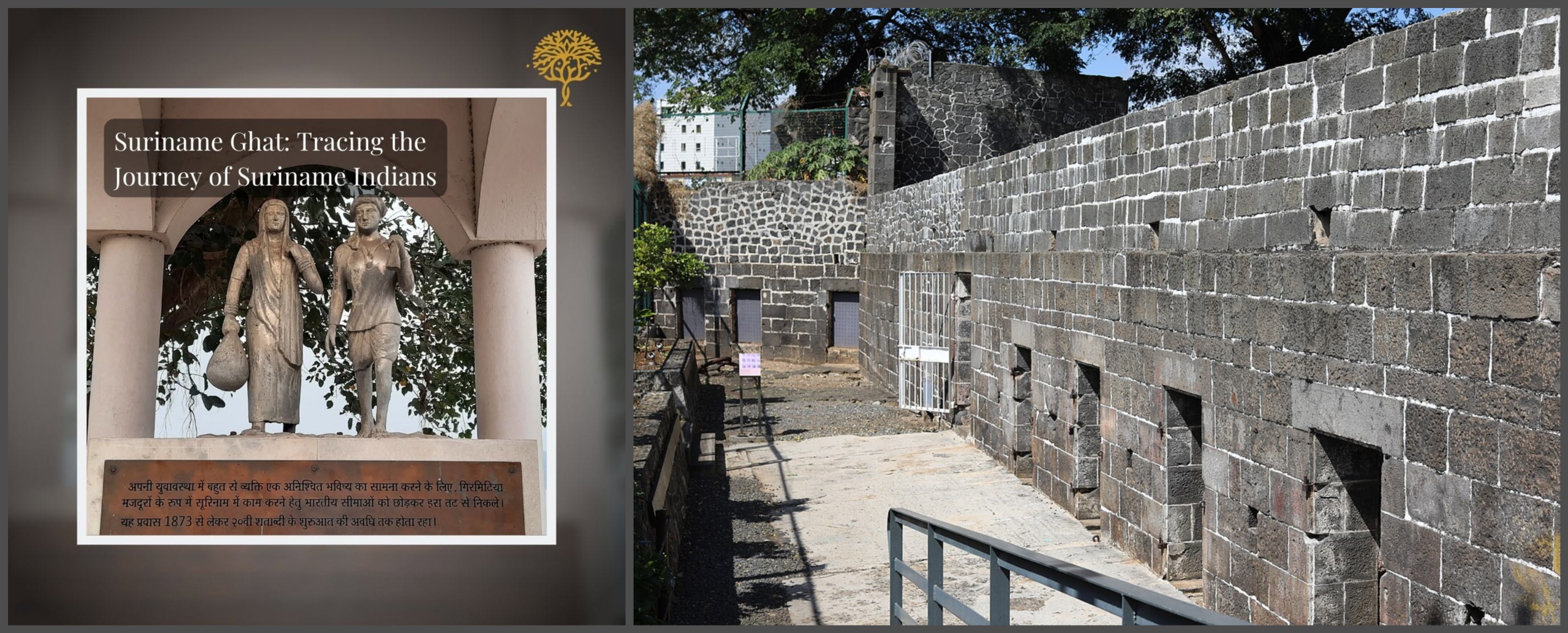
A memorial to the girmitiyas in Suriname (left), and Aapravasi Ghat Museum at Port Louis in Mauritius (right); photo credit - Suyash Dwivedi
How many were sent
About 1.2 million indentured Indians passed through British emigration depots, according to the UNESCO World Heritage nomination dossier for Aapravasi Ghat. Counting labourers of every origin, the system moved more than two million people across the world.
Mauritius alone received almost half a million, some of whom were sent on to other colonies. The Caribbean took an estimated 551,395 between 1838 and 1917, mostly to British Guiana and Trinidad. Natal received 152,641 between November 1860 and July 1911, of whom 104,619 were men and boys and 48,022 women and girls.
Fiji took 60,537 between 1879 and 1916. The Dutch colony of Suriname began recruiting in 1873; the French took Indians to Réunion, Martinique, Guadeloupe and French Guiana. Many workers never returned to India.
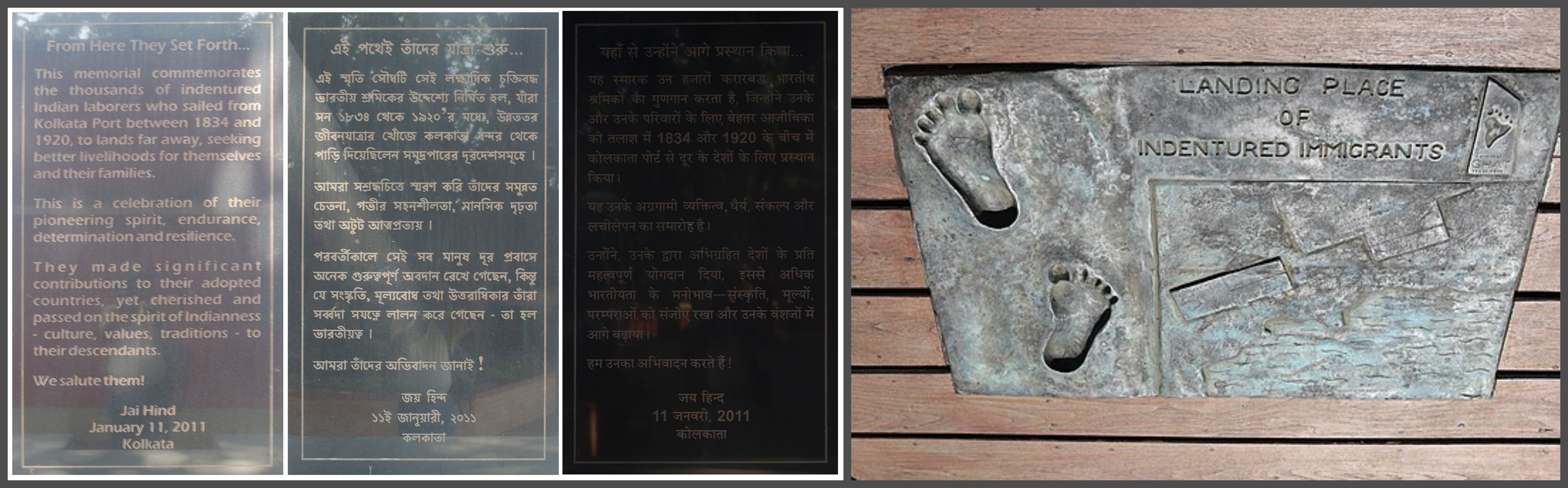
Plaques of Indenture Memorial, Kidderpore, Kolkata; photo credit - Rangan Datta (left), and Footprints plaque at Apravasi Ghat (right); photo credit - Syuash Dwivedi
Who went, and why
Most recruits came from the poorest corners of British India. Before the 1860s, the main sources were Bihar and the Chota Nagpur plateau; from the 1870s, the eastern districts of the United Provinces dominated.
Fiji’s historian Brij Lal traced the push behind the departures to rising rents, evictions, shrinking landholdings, debt, the collapse of artisan trades and recurring famine. A severe famine in 1908 coincided with peak recruitment from Basti, Gonda and Sultanpur. In the south, Tamil and Telugu speakers sailed from Madras, as Navi Pillay’s grandparents did.
Between the village and the ship stood the recruiter, the arkati. Lies were common from the very first shipment. In 1834, the 36 Dhangar tribal men recruited in Calcutta for Mauritius were told the pay would be so high they would only have to stoop down to pick up money.
On paper, the system had safeguards. A magistrate read out the contract, the recruit pressed a thumb impression on it, and an emigration pass certified that the migration was voluntary. In practice, recruits were often registered far from their home districts, in towns where nobody knew them.
The contract they signed promised a five-year term, decent wages, and a free return passage after ten years of “industrial residence.” The promise of a return ticket kept many going. Yet the journey home was not guaranteed in practice: by 1870, only about one in five emigrants (21 per cent) had returned, though the share rose in later decades.
Colonial planters wanted men, but India’s emigration rules demanded that 40 women be sent for every 100 men.
Crossing the dark waters
For many Hindus, the voyage across the kala pani, the “dark waters,” carried the fear of losing caste. In the crowded depots of Calcutta and Madras, and below deck, those barriers began to crumble anyway. People of different castes ate and slept side by side. Shipmates came to call one another jahaji bhai, ship brothers, a bond that often outlasted the voyage.
The sailing ships took months. The Leonidas, carrying about 500 people to Fiji, left Calcutta on 28 January 1879 and reached Levuka on 14 May. Cholera and smallpox broke out three days after leaving the Hooghly. Nineteen people died at sea, nearly four times the usual rate for Fiji voyages, and fifteen more died in quarantine.
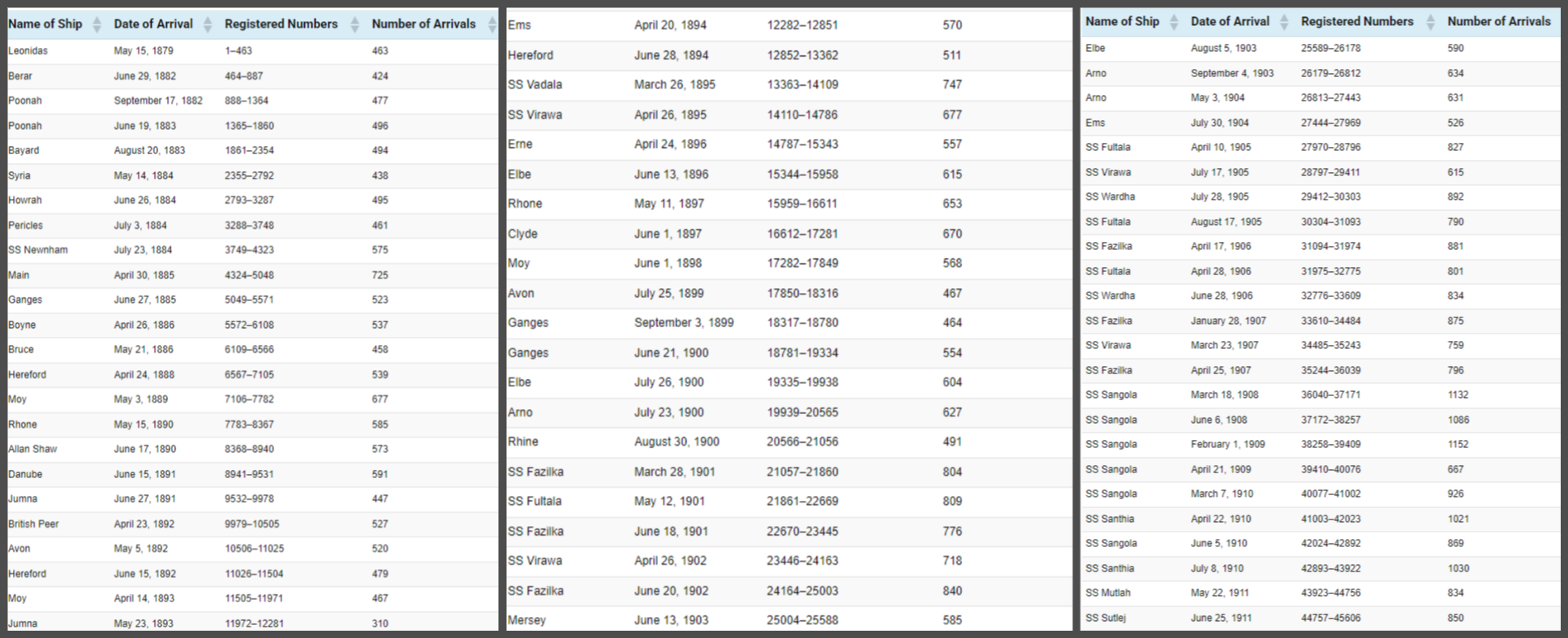
List of ships that carried indentured labour from India to various British colonies
The crossing changed the people who survived it. After landing, 290 of the 450 adults on the Leonidas applied for repatriation, but many never went back. Some had married across caste lines on the journey and knew their home villages would not take them in.
Other voyages were no kinder. Of the 396 Indians who reached British Guiana in 1838, 48 were dead by January 1839. Ships to Natal recorded 180 deaths on board between 1860 and 1866.
Life under girmit
The contract, known among workers as girmit (from ‘agreement’), usually bound a labourer for five years to a single employer at a very low, fixed wage far from home.
In Fiji, the standard contract demanded nine hours of work on five weekdays and five hours on Saturday, for one shilling a day. Under task work, a man earned a shilling per completed task and a woman nine pence.
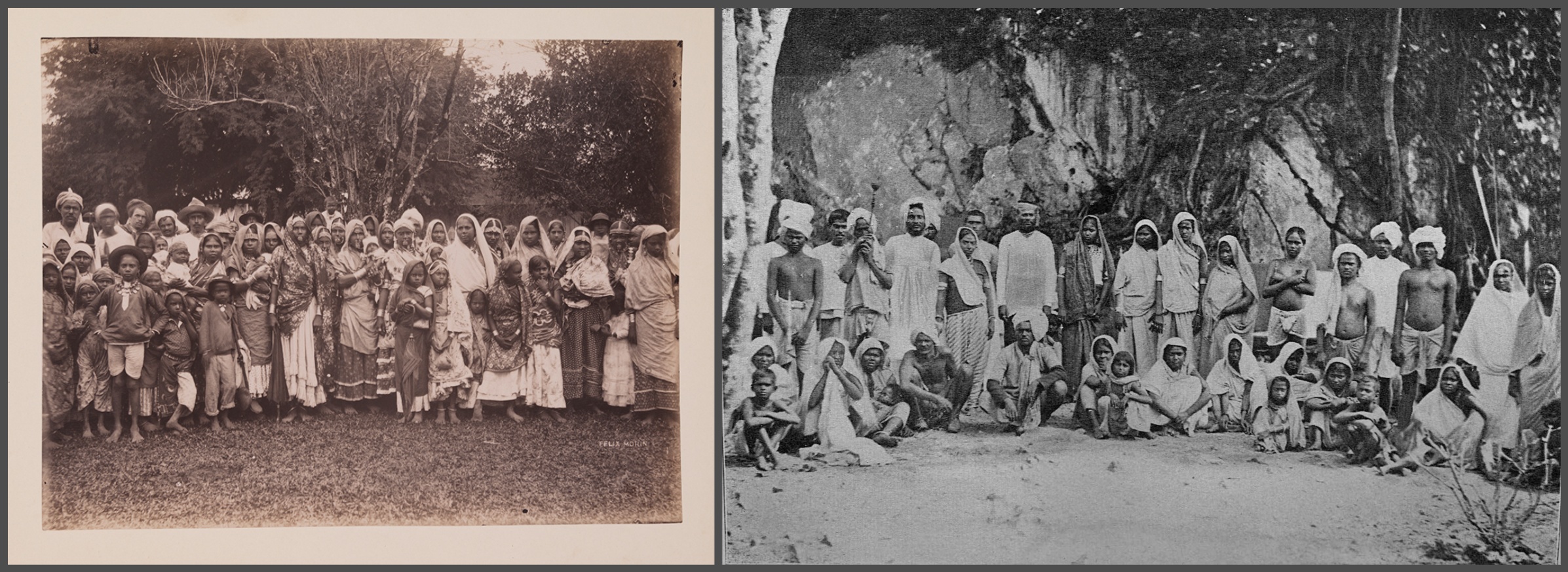
Indentured labourers and families, including women and children in Fiji in 1900 (left), and Trinidad in 1897 (right)
The working day began at 4 or 5 in the morning. Labourers lived in the “coolie lines”: barracks of sixteen rooms, each until 1908 just 10 feet by 7 feet, without windows and sometimes without floors. Three single adults, or a couple with two children, shared each room. In Natal, a man was due ten shillings a month under the 1859 law, and a woman half that. Women and children who could not or would not work could be cut to half rations.
A colonial inquiry, the Wragg Commission of 1885–87, found polluted water on most estates and widespread bilharzia. It judged the Durban depot hospital “totally unsatisfactory,” with no female nurse and no separation of men and women. The commission was also highly critical of the Protector of Immigrants, the official meant to shield labourers, and recommended stripping him of some of his judicial powers.
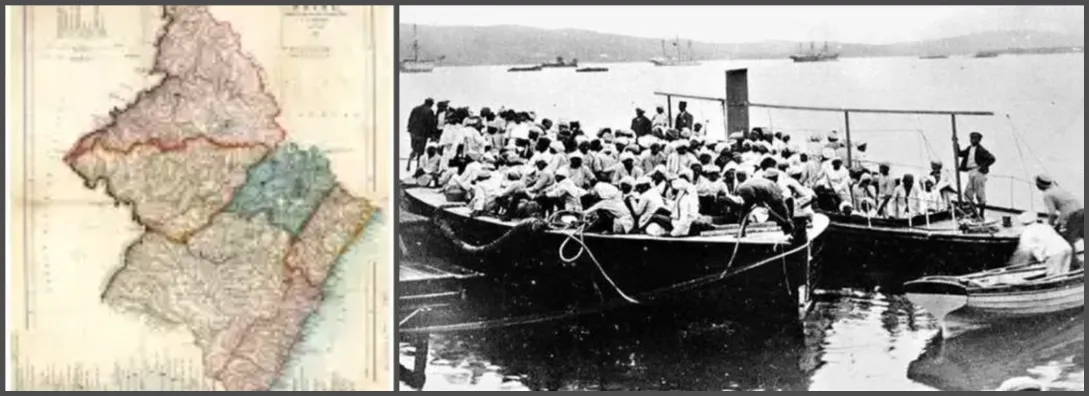
Natal in the southern part of Africa (left), and indentured labourers arriving by boat at Natal (right); photo credit - South African History Online
The law as a whip
What made indenture more than a harsh job was that the contract was enforced through criminal law. Historians call it the penal contract system. A worker who missed a day, left the estate without a pass, or refused a task could be fined or jailed.
In Fiji, a labourer who refused to work could be fined a shilling or sentenced to 48 hours' hard labour, a full day's wage for a single act of defiance.
Mauritius shows the scale. Between 1861 and 1871, an estimated 206,000 workers were arrested for vagrancy, about 18,700 a year. Planters filed some 209,000 complaints against workers between 1860 and 1886, mostly for absence and desertion.
Workers fought back the only legal way they could: they filed 110,940 complaints against employers, nearly three-quarters of them over unpaid wages. They also protested the “double cut,” under which a day’s absence cost a worker two days’ pay.
Overseers and sirdars
Daily control of the lines lay with European overseers and Indian sirdars, or gang foremen, and both could be predatory.
Records from Fiji show one overseer, J. Gore Jones, convicted three times for assaulting labourers; by August 1900 nine complaints had been made to police against him, but only three were prosecuted, and his fines were as little as 30 shillings.
One sirdar extorted GBP70 from his gang through gambling, and another collected a shilling a week from every man and sixpence from every woman for eleven weeks.
Wages owed were often not wages paid. In one 1881 Fiji case, each labourer was legally owed GBP8 and 4s; the most anyone actually received was GBP6 and 7s, and the least GBP2 and 3s.
Small wonder that absenteeism ran high. On the Rewa estates in 1884, workers were absent an average of nearly nine days a month, about 108 days a year, and Fiji’s labourers put in about 202 working days a year against 246 in Mauritius.
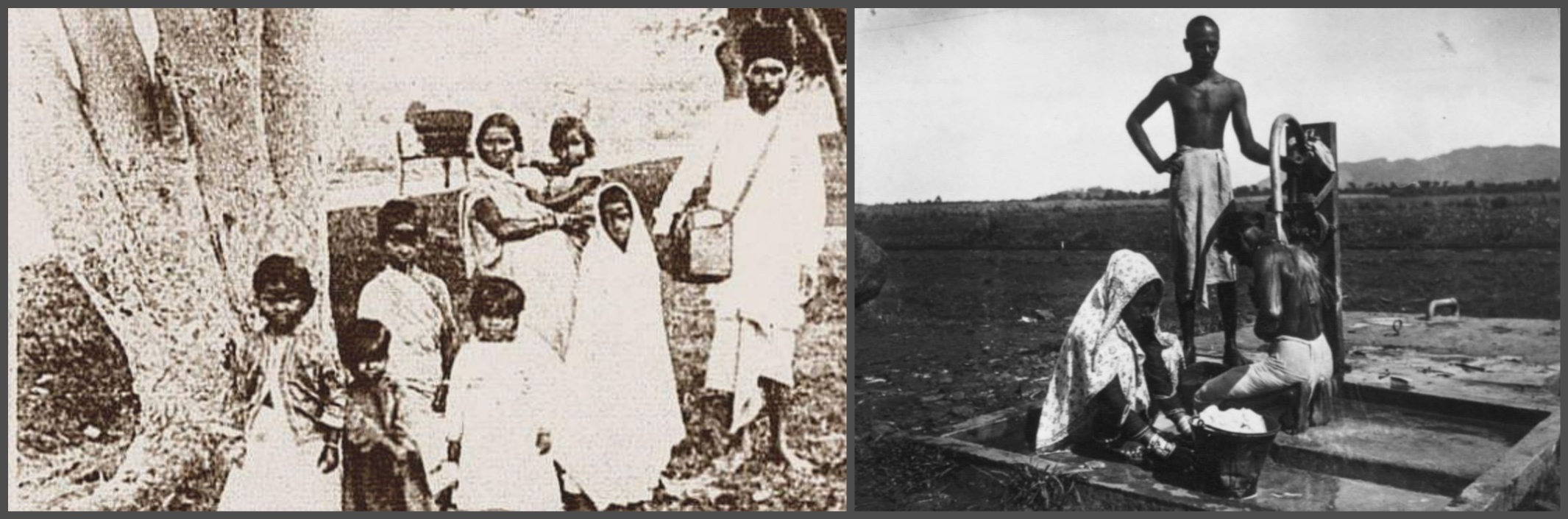
The lives of the girmitiyas; photo source - Girmit.org
The burden on women
Women carried a double load. In Natal, they were paid half what men earned and denied rations when there was no work. Colonial courts did not recognise Hindu and Muslim marriages, and a legal marriage licence cost GBP5, far beyond a labourer’s means.
Jo Beall’s research on Natal records shows women being traded between men for as little as a shilling, often with the tacit approval of overseers, and courts routinely took the employer's word over a woman's complaint.
In Fiji, pregnant women had to keep working in the fields for at least the first seven months of pregnancy. Women, far fewer than men on the estates, faced sexual exploitation from overseers and sirdars, and jealousy over the scarce women was linked to murders in the lines.
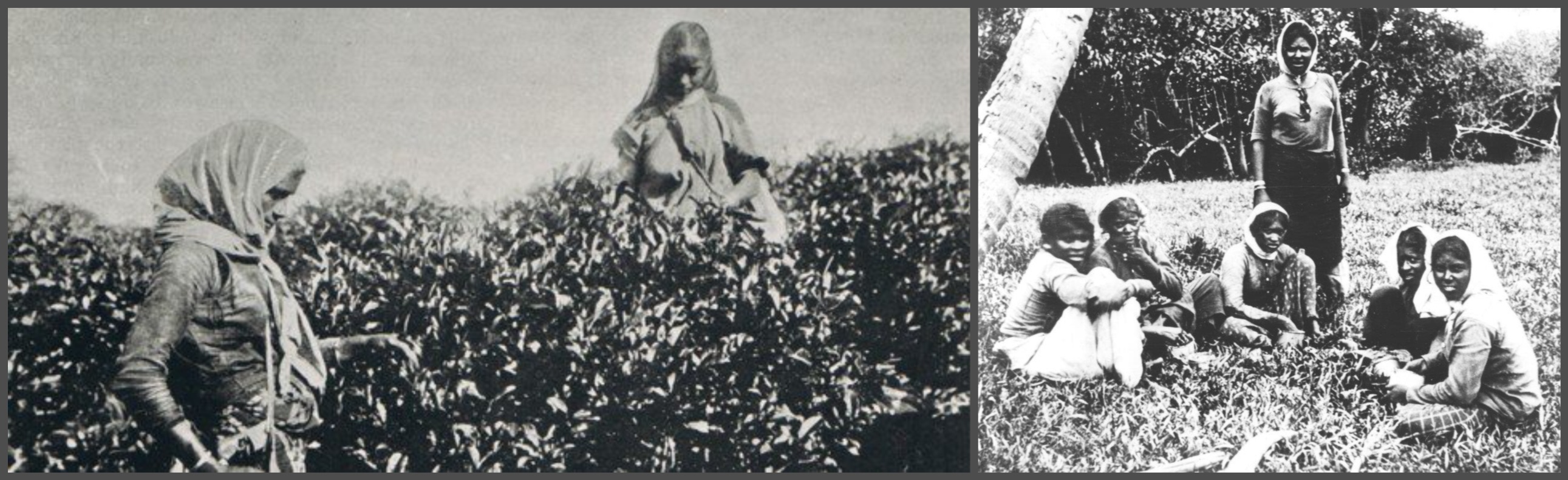
The women girmitiyas; photo source - Girmit.org
Despair, resistance and abolition
Fiji, historian Brij Lal noted, was widely reputed to be one of the worst employers of indentured labour in the world. One study cited by researchers puts the suicide rate in 1902–1912 at 926 per million in Fiji and 400 in Trinidad, against 51 in British India.
Even freedom came at a price. In 1895, Natal imposed a GBP3 annual tax on every ex-indentured Indian over sixteen who stayed on, a sum meant to force them back into contracts or out of the colony.
The girmitiyas did not suffer in silence. On 29 September 1872, police at Devonshire Castle estate in British Guiana fired on striking workers protesting low pay, long hours and wage deductions, killing five.
In Trinidad on 30 October 1884, colonial forces fired on a banned Muharram procession in San Fernando; the Hosay massacre left at least nine dead and more than 100 wounded. On 13 March 1913, police at Rose Hall estate in British Guiana killed fifteen labourers who had struck over low wages, beatings and sexual abuse by a head driver.
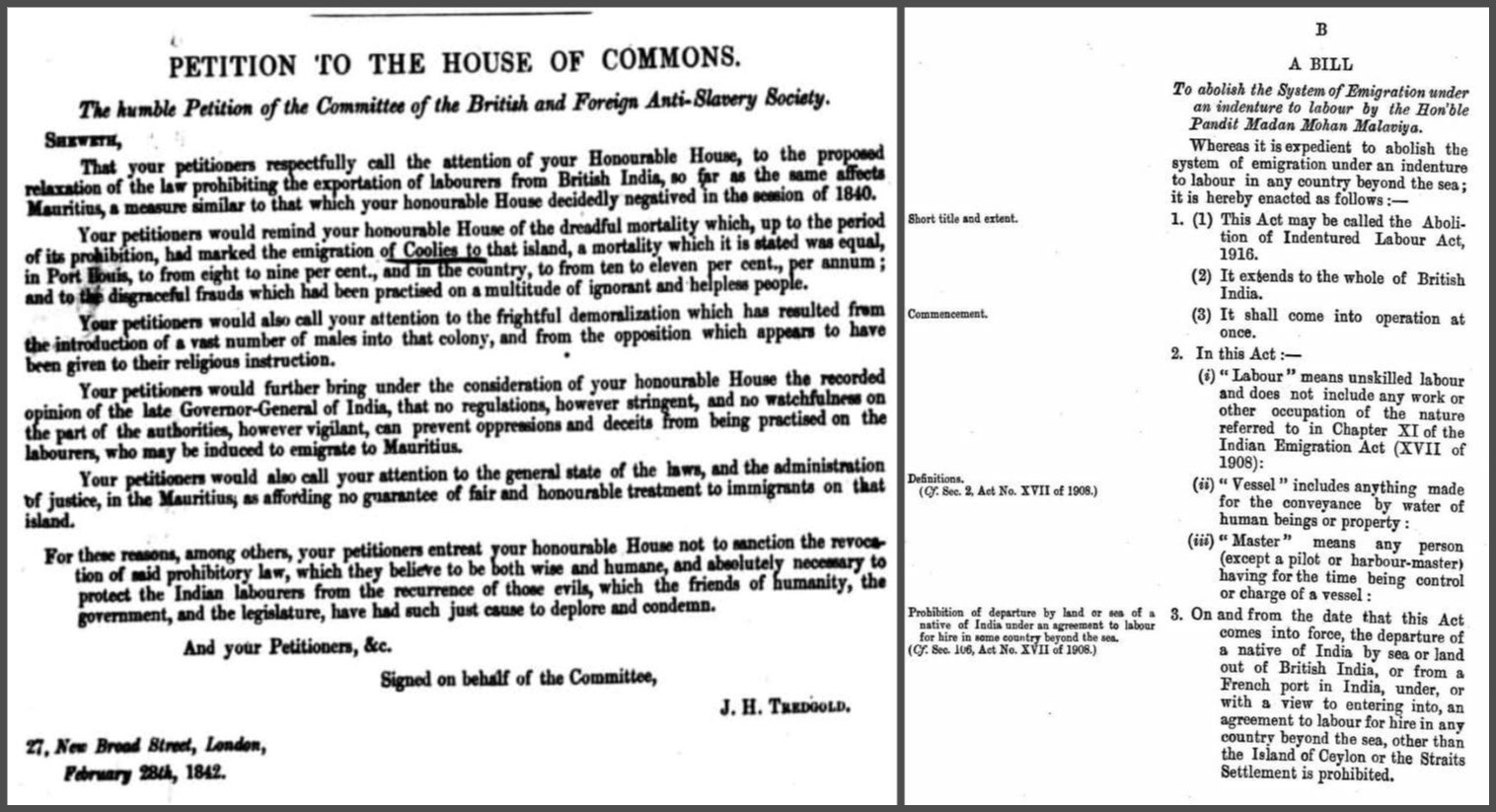
That same year, the GBP3 tax became the spark for one of Mohandas Karamchand Gandhi’s defining campaigns. In October 1913, Indian miners in Newcastle, Natal, went on strike against it, and the action spread to railway workers and plantations.
On 6 November 1913 Gandhi led marchers across the Transvaal border and was arrested. The settlement that followed saw the government abolish the GBP3 tax and recognise Indian marriages.
Workers’ own testimony did the rest. Totaram Sanadhya, who arrived in Fiji in 1893 aged seventeen and returned in 1914, published My Twenty-One Years in the Fiji Islands. The colonial government in Fiji banned the book, but in India its accounts fed a nationalist outcry.
Indian leaders carried that outcry into the colonial legislature. A resolution by Gopal Krishna Gokhale ended indentured emigration to Natal in 1910. His 4 March 1912 resolution to abolish the system altogether was defeated, as was Madan Mohan Malaviya’s in March 1916.
Under that pressure, and with the First World War under way, Britain suspended recruitment on 12 March 1917. In Fiji, the remaining contracts were cancelled on 1 January 1920.
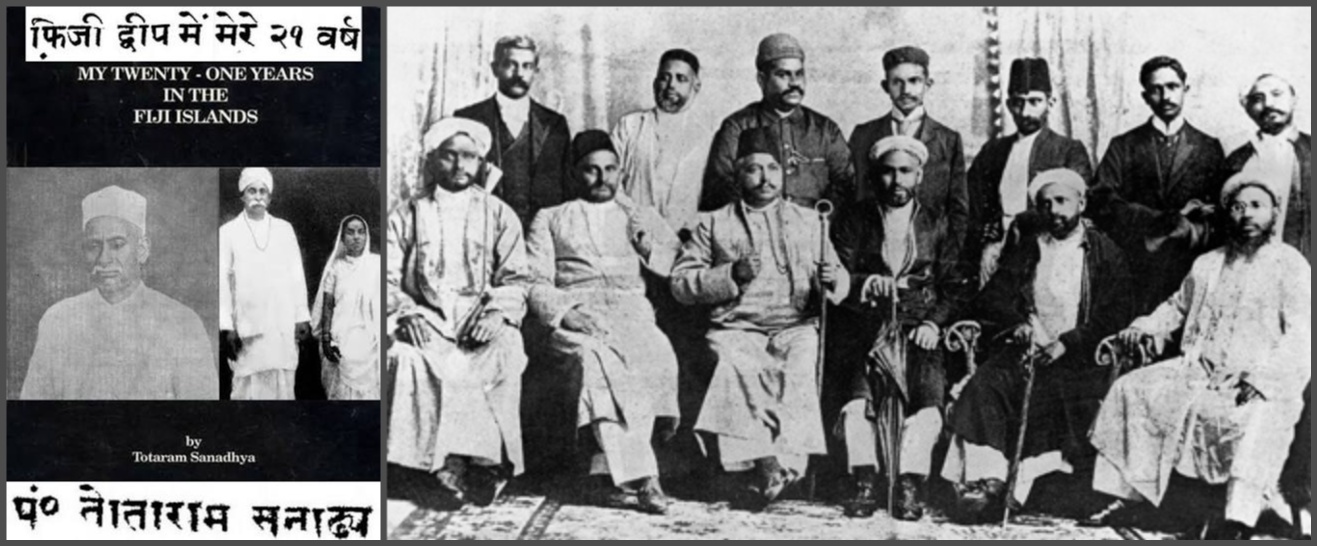
The cover page of the book by Totaram Sanadhya (left) and Mohandas Gandhi with founding members of the Natal Indian Congress
From the cane fields to high office
Within a few generations, the children and grandchildren of girmitiyas were leading the countries their ancestors had been shipped to. In Guyana, Cheddi Jagan, the son of indentured workers from Uttar Pradesh, was born on a sugar estate at Port Mourant and became President in 1992.
Across the border in Suriname, Chan Santokhi, whose grandparents were taken from Bihar, took his presidential oath in Sanskrit in 2020; he died in March 2026. In Mauritius, Sir Seewoosagur Ramgoolam, whose father landed at the Port Louis immigration depot in 1871 and rose from labourer to estate overseer, led the island to independence in 1968 as its first Prime Minister.
In Trinidad and Tobago, Kamla Persad-Bissessar, the great-granddaughter of a man who left Bihar’s Bhelupur village in 1889, became Prime Minister in 2010 and returned to office in 2025.
Jagan’s own words capture the world he grew up in: he wrote that everything revolved around sugar and the sugar planters.
When Persad-Bissessarvisited Bhelupur in 2012, her message to villagers echoed Pillay’s: give education to children, as her ancestors did.
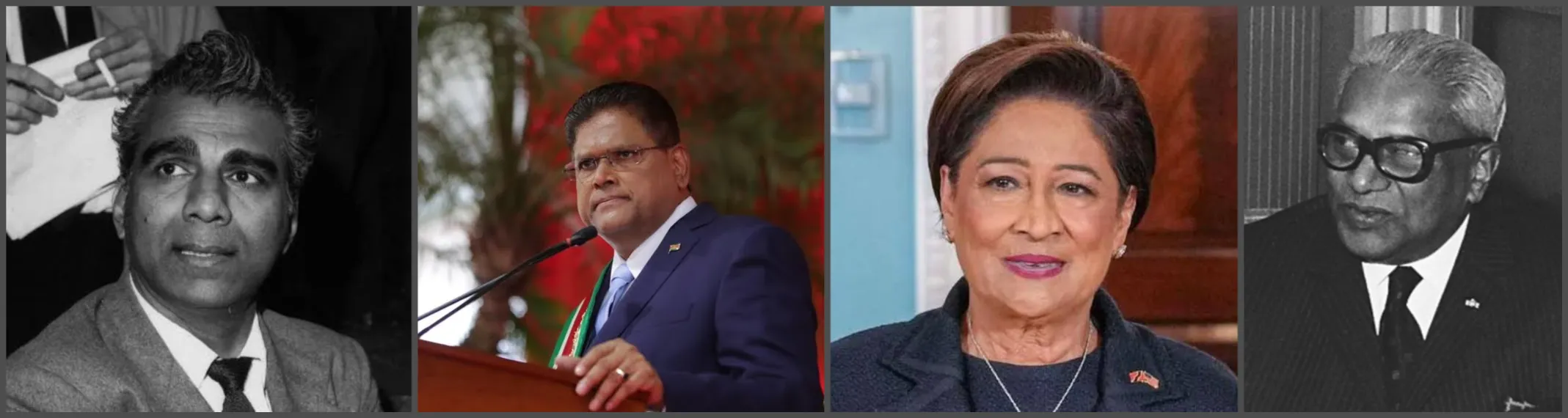
The famous 'girmitya' descendants (from left): Cheddi Jagan, Chan Santokhi, Kamla Persad-Bissessar and Seewoosagur Ramgoolam
A debt still unacknowledged
The indenture system ended more than a century ago, but its descendants now make up large parts of the populations of Mauritius, Guyana, Trinidad and Tobago, Suriname, Fiji and South Africa. Durban today has one of the largest Indian-origin populations outside India.
The arc from Navi Pillay’s armless grandfather to a Nobel laureate, or from a Bihari labourer’s ship ticket to a presidential oath in Sanskrit, is often told as a triumph. It is that.
But it is also a reminder that the wealth of the sugar colonies was built on contracts that Gandhi called semi-slavery, enforced by jail, fines and the gun, and that the people who survived them did so largely through their own schools, savings and struggle.
(Views expressed in this report are the author's own.)
Follow us on WhatsApp
Follow us on Facebook
Follow us on X @vudmedia
Follow us on Substack
