
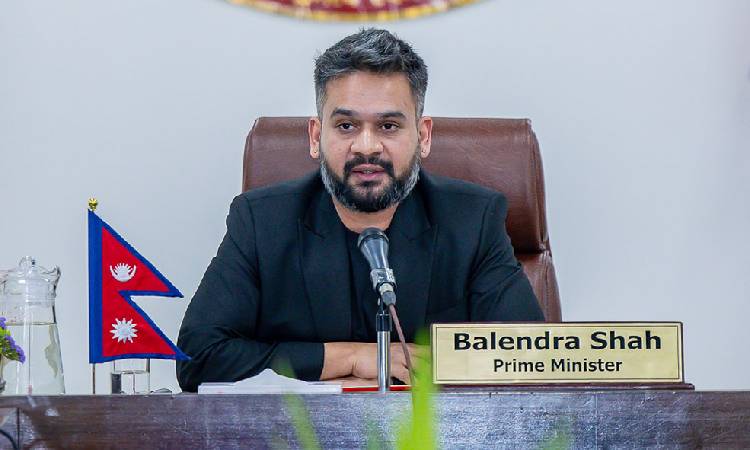
When an engineer-turned-rapper-turned-politician in Nepal took on a former prime minister in the latter’s bastion and obtained a sweeping victory, it marked a new dawn for the Himalayan nation’s politics and the promise of a radical transformation, after decades of corruption, institutional failure and constitutional breakdowns. Balendra ‘Balen’ Shah rode on the wave created by the Gen-Z protests in September 2025 and took his party, the RSP, to a landslide victory in March 2026. With his advent came hopes of structural reforms and a new culture of governance. In the first 100-150 days, PM Shah’s actions led to disenchantment among various sections, besides raising questions about his ‘contrarian’ style of functioning. While six months is too early to judge a new leader and his government, there is a mix of scepticism and hopes for a brighter future, along with calls for a change of style and approach by the new leader. In this two-part series, Dewkala Tamang and Tapas Das examine the Balen era in Nepal.
On September 17, 2026, Balendra ‘Balen’ Shah, the prime minister of Nepal, marked 175 days in office. Shah took office on March 27, 2026, after a ‘game-changing’ election that followed the Gen Z protests of September 2025. The unrest forced the resignation of then Prime Minister KP Sharma Oli, and an interim government under former Chief Justice Sushila Karki took charge.
In the election of March, the Rastriya Swatantra Party (RSP), riding a wave of youth-driven disillusionment with Nepal’s traditional parties, won 182 of 275 seats in the House of Representatives, an unprecedented result for a party barely four years old.
Balen Shah, who rise was closely associated with the Gen Z protests, led the RSP as its prime ministerial candidate, defeating Oli in the Jhapa-5 constituency with a huge margin and coming to power, driving huge expectations among the youth and with the promise of massive transformations in the country.
Six months down the line, Shah seems to be facing the heat, including from the same constituency that propelled him to power. Shah’s distinct style of governance is reported to be causing widespread discontent with governance lapses, diplomatic missteps and his distancing from Parliament, as well as his party, among the reasons cited for the discontentment.
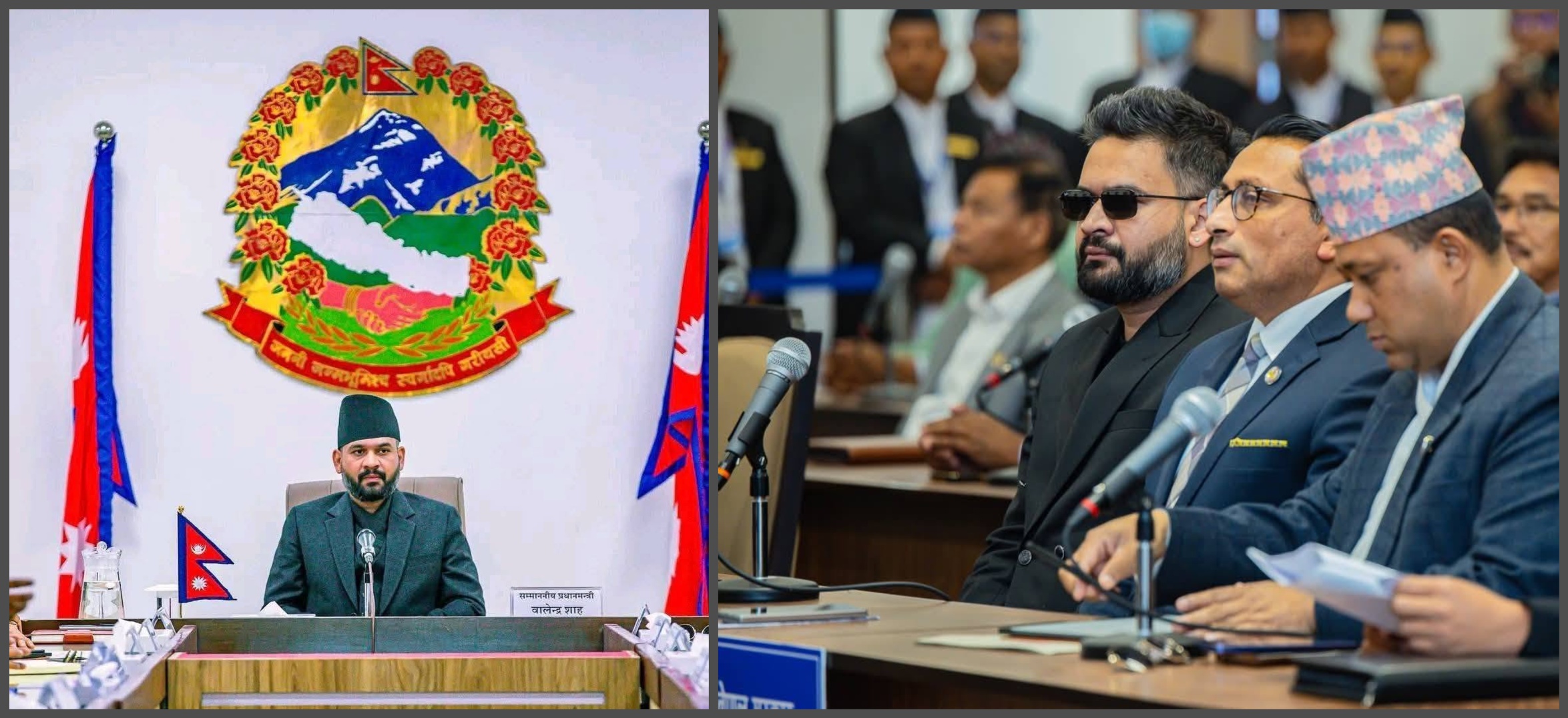
In early July, the death of a 25-year-old shared taxi driver, as a result of burn injuries from his self-immolation attempt before the Department of Passports, led to youth protests in Kathmandu, also lamenting the failures of the Shah government in its first ‘100 days.’
Balen Shah’s long absence from Parliament, having attended only 5 of the first 39 sittings, led to the opposition outcry, forcing the Speaker Dol Prasad Aryal to summon the prime minister to the house to answer the questions of lawmakers.
Similarly, Shah had to also reverse his decision to distance himself from the foreign diplomats –other than one group meeting he held in April – and ended up meeting the Indian and Chinese envoys in August. Shah is also travelling to the US this week for his first address to the United Nations General Assembly.
While the flash floods in Nepal earlier this month could be testing the Shah government’s ability to make an impact through decisive disaster management and recovery initiatives, though possibly also providing reprieve from political troubles, the swift loss of glaze in the first 150 days for a new government that is radical in tone, character and promises, may not augur well for the Himalayan nation.
This report examines the first few months of the Shah government, including the central issue of whether Prime Minister Balen Shah has effected substantive changes in Nepal, particularly in areas he had campaigned against the government during the protest movement.
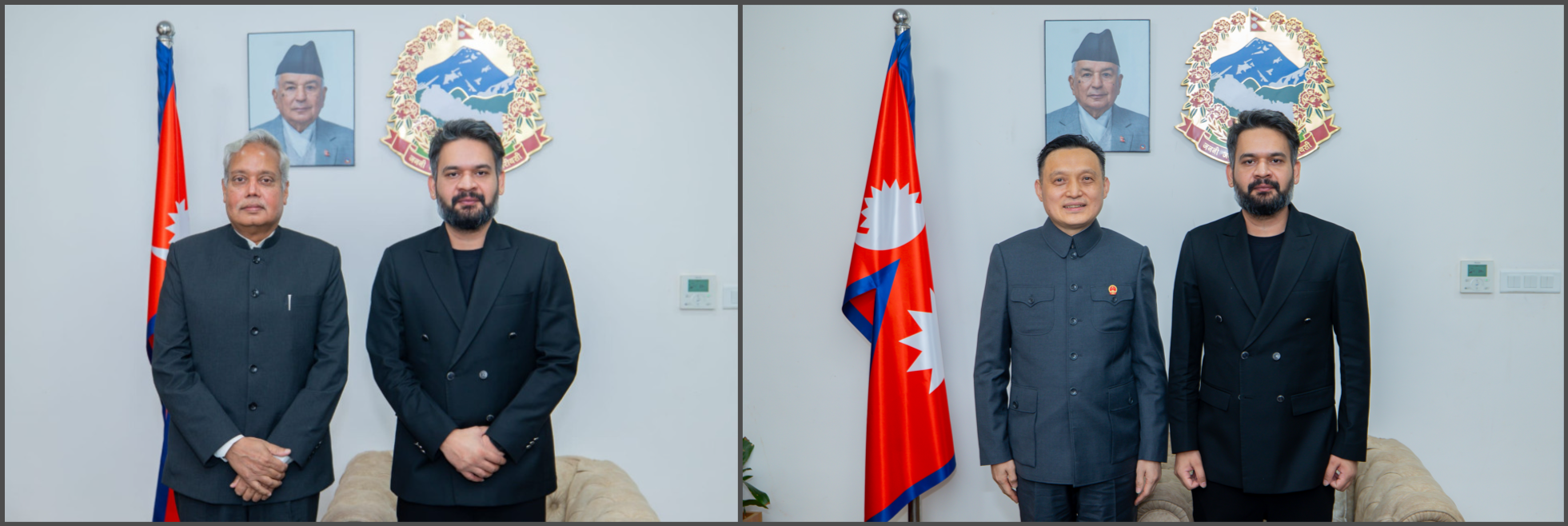
PM Balen Shah meets the Indian Ambassador Naveen Srivastava (left), and Chinese Ambassador Zhang Maoming (right)
A disruptive start
In this first cabinet meeting, PM Shah decided to act on the recommendations of a high-level inquiry commission led by former special court judge Gauri Bahadur Karki, which had investigated the security response to the September 8 and 9, 2025 Gen Z protests.
The commission held K P Sharma Oli, the then prime minister, and home minister Ramesh Lekhak, criminally negligent for failing to prevent the use of excessive force that killed 19 unarmed protesters on September 8, recommending charges under the sections of the criminal code dealing with negligent killing.
While a Kathmandu court had approved a five-day remand, 12 days later, Nepal’s Supreme Court ordered their release on bail after their wives filed a habeas corpus petition. To date, no formal charges are reported to have been filed against these opposition leaders.
The Shah government pursued a similar pattern with several prominent businessmen – arresting Deepak Bhatta of Infinity Holdings, Shanker and Sulav Agrawal of the Shanker Group, industrialist and former President of the Federation of Nepalese Chambers of Commerce and Industry (FNCCI) Shekhar Golchha, and Nepal Investment Mega Bank chief executive Jyoti Prakash Pandey, over the disputed auction of Smart Telecom’s seized assets.
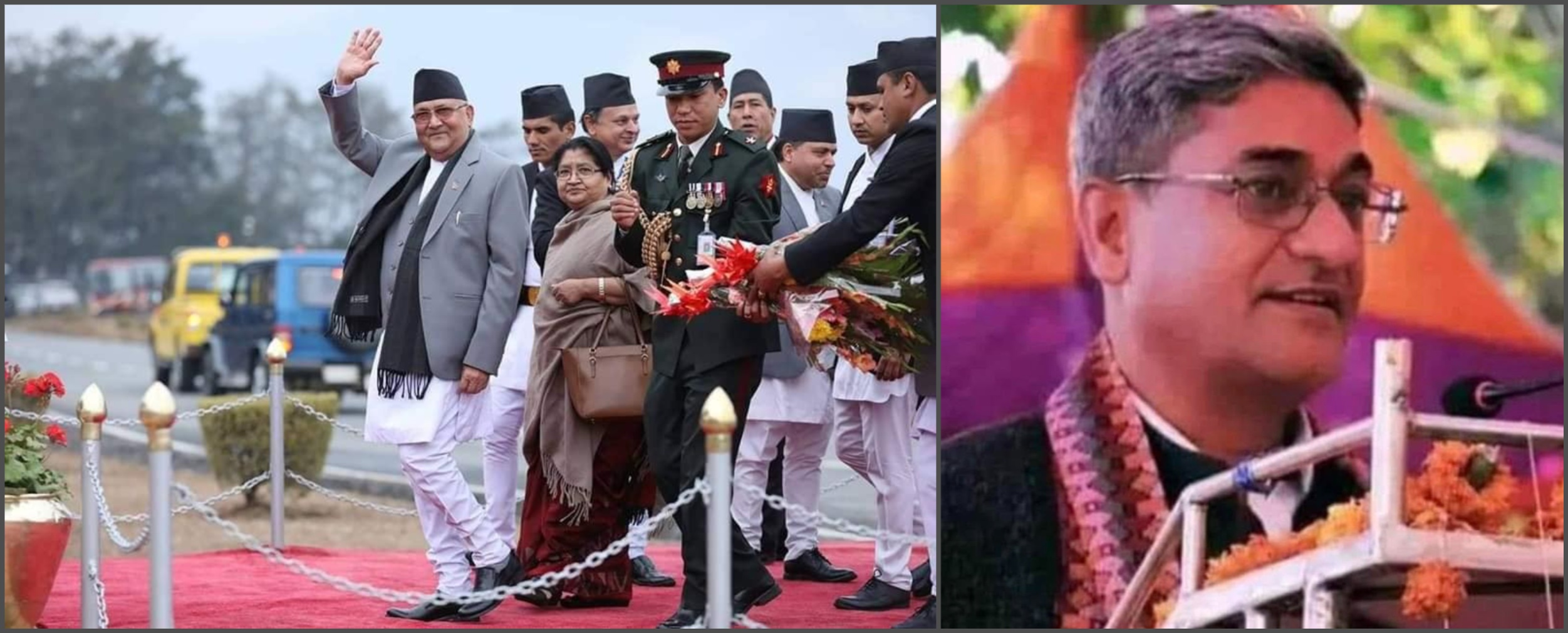
Former prime minister K P Sharma Oli (left), and his home minister Ramesh Lekhak (right)
A month into office, PM Balendra Shah sent in security forces on a sweeping demolition drive of settlements in Kathmandu and across the country, evicting hundreds of landless Nepalis from the capital city – a move that echoed his days as Mayor.
The evictions were aimed at separating ‘fake’ squatters from the ‘real’ landless. The homes were reportedly bulldozed on short notice, without any process to detect ‘fake squatters.’ The government’s efforts to verify who is genuinely landless, relocate them, and compensate them were stated to be slow.
The evictees were reportedly housed in temporary housing without basic facilities, a move decried by rights groups, though the Shah cabinet had allotted Rs 15000 to each family for ‘rehabilitation.’ In July, the government had reportedly instructed the landless families in the holding centres to return to their home districts and contract local government for the land allocation process.
Yet to master the political diction
Even as Mayor Balendra Shah was known to be not much of a talker, to have a short fuse, be impulsive, reclusive, and reticent. That persona served him well as a doer and helped him get elected prime minister.
However, his disdain for the Parliament, his decision to walk out during a speech by President Ram Chandra Poudel, disregard for the international community, and indifference to his own party were starting to tarnish his carefully cultivated cult of personality.
Since assuming office, Shah has been sharply criticised by opposition parties for what they describe as an unprecedented pattern of avoiding direct parliamentary accountability. His political advisor, Asim Shah, initially claimed the prime minister was unwell before deleting the statement.
Moreover, while the House took up debate on the policy and programme days later, the government confirmed that Finance Minister Swarnim Wagle, not Shah, would respond to lawmakers’ questions, a decision that triggered protests from the opposition parties, arguing that parliamentary tradition and constitutional accountability require the head of government to answer directly to the House.
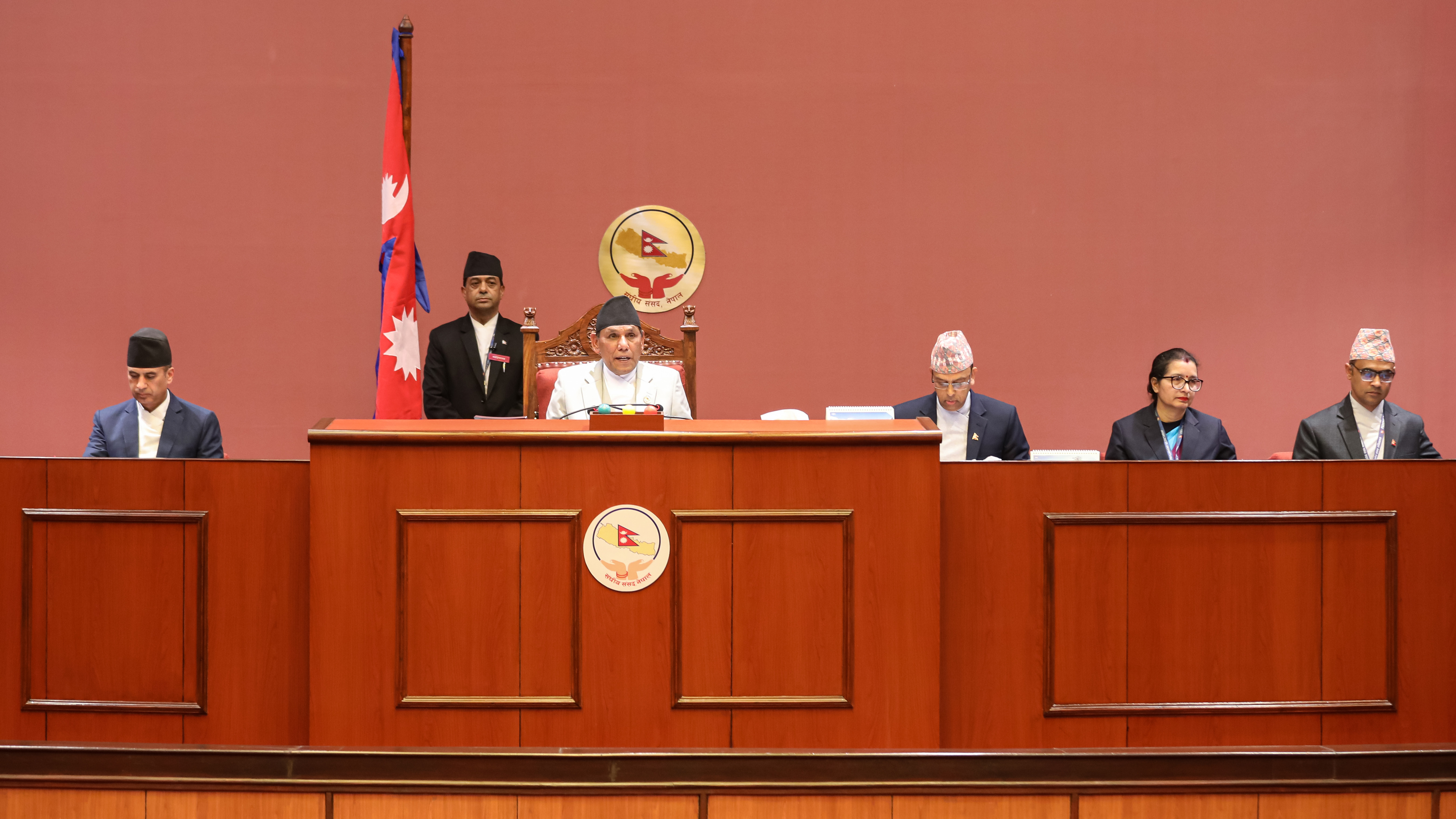
The Nepal Speaker Dol Prasad Aryal chairing a session of the National Assembly
RSP’s own chief whip countered that parliamentary rules do not mandate the prime minister’s personal presence and that authorising a minister to respond is legitimate. The dispute dragged on for weeks, with opposition lawmakers picketing the well of the House and even demanding Shah’s resignation.
Critics and commentators framed PM Shah’s continued absence as either an authoritarian disregard for democratic norms or, in a more sympathetic reading offered by some columnists, a deliberate choice to avoid further missteps of the kind that produced the border remarks controversy.
Constitutional expert Bhimarjun Acharya opined that the prime minister is bound to answer questions raised in the discussion on the government's policy and programme. Another expert, Bhadra Prasad (Swagat) Nepal, states that in Nepal, the head of state presents the government’s annual policy and programme, but it can also be presented by the prime minister as “the President is not the government.”
On the 63rd day of Balen’s Government, his May 29 address did not sit easily with parliamentary norms. He was not scheduled to speak that day and ended up speaking off the cuff, on a sensitive topic. This episode was seen as part of a pattern visible in his use of ordinances, centralisation of authority, diplomatic refusals, and disregard for parliamentary procedure.
Despite having an overwhelming mandate, Shah has tried to bring about laws through ordinances. The decision-making process in the constitutional council, which recommends officials in state institutions, was tweaked to give the prime minister final authority to appoint a new chief justice, raising the spectre of the judiciary being controlled by the executive.
Likewise, under another ordinance, the government removed 1,500 senior civil servants without any declared plans to replace them. This affected vital functions like the regulation of civil aviation and the conduct of school-level examinations.
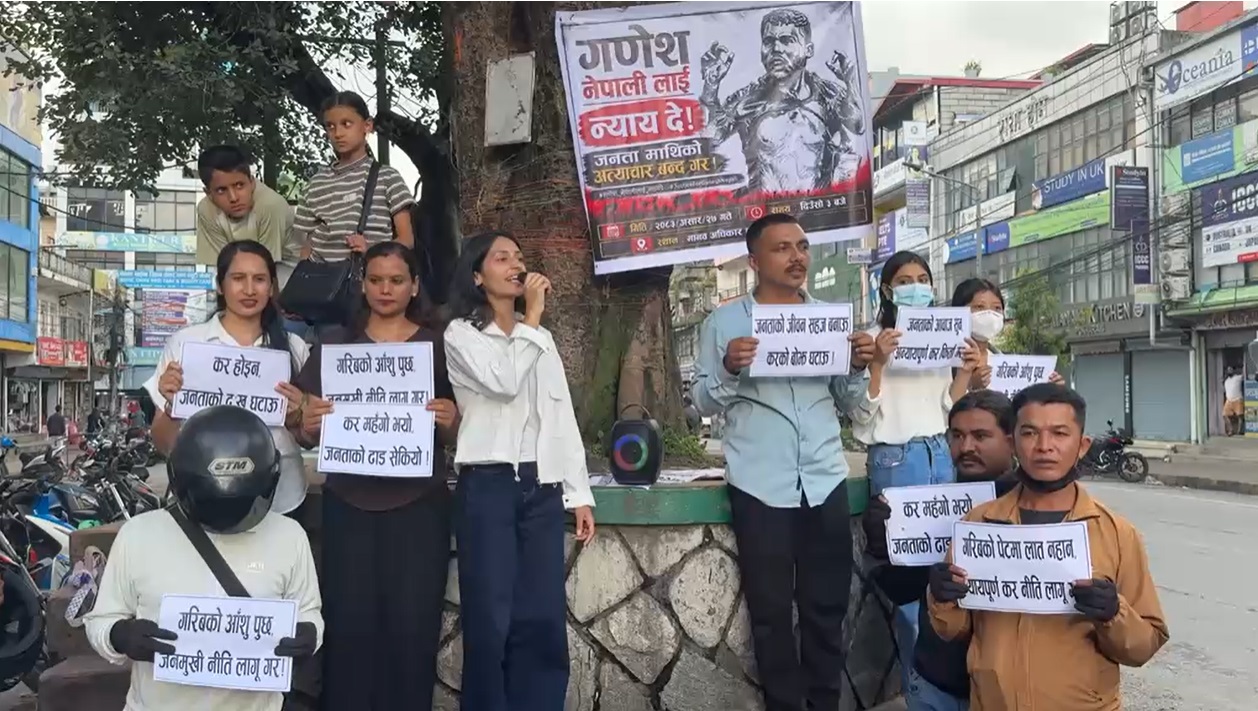
Protests in Kathmandu after the self-immolation of a 25-year-old shared taxi driver who succumbed to his injuries; photo courtesy - Nepal News
The first 100 days
Balen Shah’s government completed its first hundred days on July 4, a milestone marked by arrests of former leaders, sweeping bureaucratic changes, a stunning statement in the Parliament on the border row with India and sharply divided verdicts on whether the RSP’s promised transformation has actually begun.
The early days of his administration were marked by a parliamentary uproar over a claim that border encroachment is ‘not one-sided’ and that both sides have encroached.
As for his administrative expenditure reduction targets, Shah had cut down the number of ministries from 22 to 18, and formed a cabinet of only 17 members. This is despite Article 76 (9) of the Nepal Constitution allowing for 25 ministers.
Signalling sweeping reforms, Shah dissolved many government bodies and abolished trade unions that have made the bureaucracy a battleground for party politics for years through an ordinance.

An online 'reforms agenda' monitor showing progress in the 100-point agenda of PM Balen Shah
Another notable step was the confiscation of 672 government vehicles which were in the possession of ‘influential’ people for years, which was seen as a determined pursuit of financial discipline. Similarly, the 600 per cent increase in complaints to “Hello Sarkar” and the resolution of 60 per cent of complaints indicated rising public trust in the government.
The campaign to deliver essential services like passports and driving licenses to the doorstep via post, started as a pilot in some districts, along with the mandatory online system for mortgage registration and release, was intended to reduce reliance on middlemen and bureaucratic hassles.
Furthermore, the practice of publishing SEE results within one month, Class 12 results within 40 days, and university results within 65 days is seen as a major achievement for the education sector.
Recovering approximately 132.6 million rupees from 400 Tribhuvan University professors for failing to return from study leave further reinforced the Shah government's ‘zero tolerance’ policy towards economic crimes and corruption.
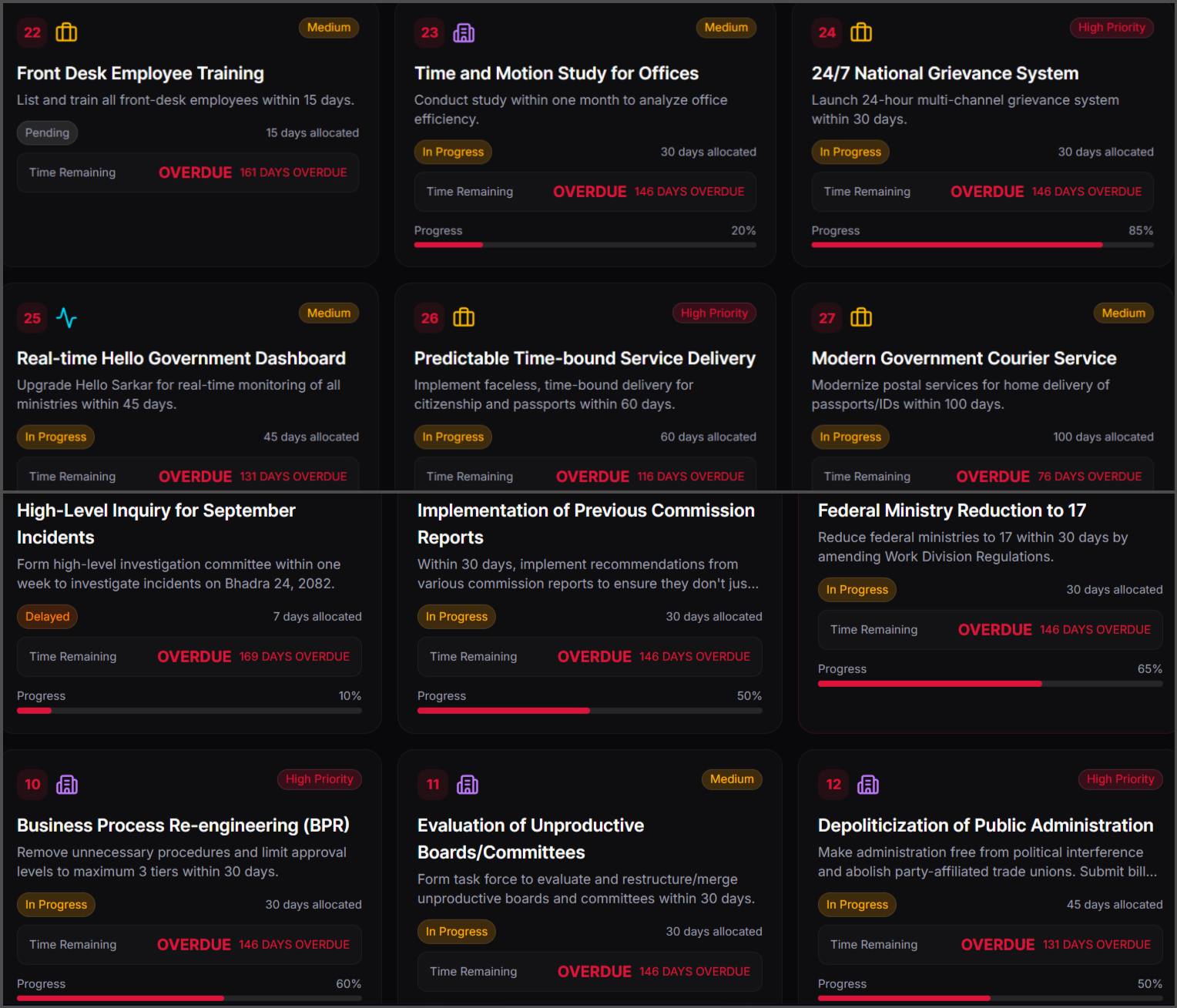
The online monitor shows that most programmes of the 100-point agenda are running 'overdue'
Fiery start, and missteps
That the Balen Shah government had initiated notable work on administrative reform and anti-corruption efforts is seen among the positive aspects of his government.
However, despite such commendable efforts, the first 100 days appeared mired in populism and political vendetta rather than in mature political foresight and the rule of law. Some steps taken from the very first day had raised questions about its democratic integrity.
Shah started by introducing a 100-point governance reform agenda to modernise the government. However, after a few months, a significant gap seems to have emerged between his promises of a modern government and his actual achievements.
A serious deviation could be seen in the government’s working style, particularly in its insensitivity to public issues and indifference to democratic processes, the most notable one being the aggressive manner in which people were displaced from Kathmandu.
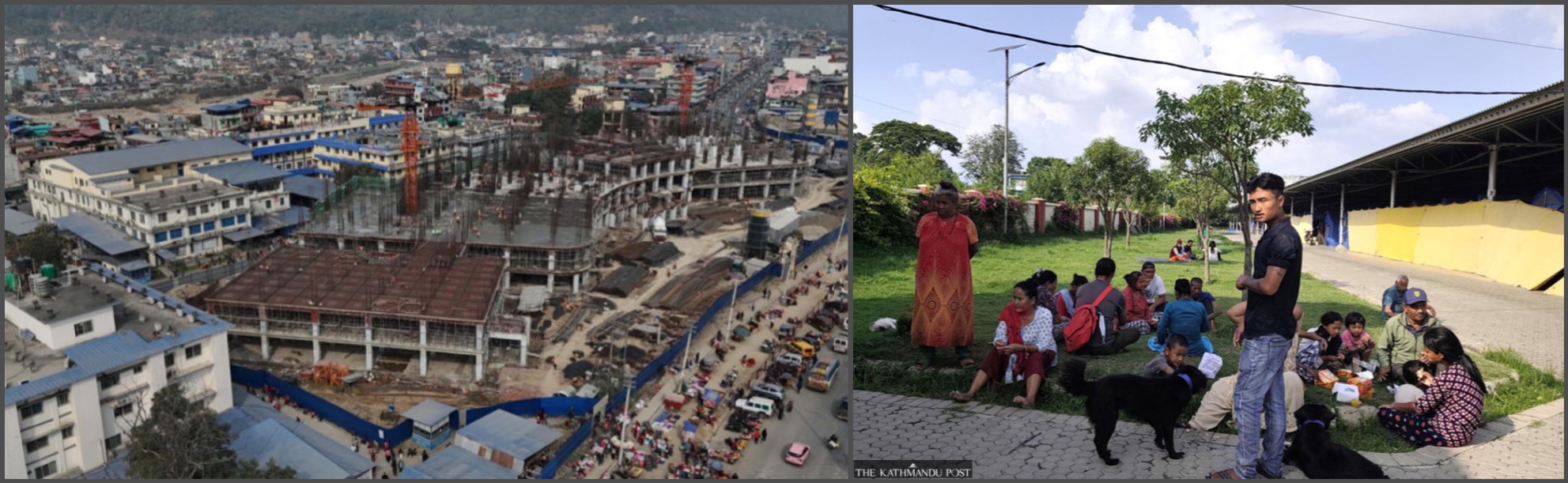
A settlement along the Tinau riverbank in Butwal, built on public land (left), and a holding centre (right); pictures courtesy - The Kathmandu Post
While demolishing settlements in the risky riverside areas and creating parks is environmentally commendable, the fact that only 388 of 2608 displaced families were known to be accommodated in holding centres, and for a limited period, raised questions about the Shah government’s commitment to welfare and doing so with a democratic character.
The contrasting demands of ‘development’ and ‘urban beauty’ being forcibly imposed on Kathmandu’s slumdwellers had raised questions of basic rights to shelter and the credibility of the resettlement measures. The reports of suicides in the squatter settlements during the first 100 days also affected the image of the Balen Shah government.
On the other hand, the crisis in the cooperative sector in Nepal, which has been hit by fraud and financial crisis, has come under scrutiny for the failure of an apt response. On April 30, 2026, the Balen Shah government promulgated the Cooperative Ordinance 2083 to deal with cooperative fraud, regulating the sector and delivering justice to the victims of financial fraud.
Yet, even a government report noted that only the funds of 1,452 small depositors from eight cooperatives have been returned, out of millions of victims. This pace does not match the speed of a government with a two-thirds mandate.
Another weak point of the government is its relationship with the private sector. The arrest of some business houses has created fear in the private sector. During the election campaign in Janakpur, in his first speech, while speaking in a mix of various languages spoken in the Madhesh region, Balen Shah had declared, ‘ ?????? ?? ??? ???? ????? ?? ??’ (We need to make the province even stronger).
Similarly, during the election campaign in Sudurpaschim, he expressed his affinity and emotional message towards the culture and geography of Sudurpaschim by declaring, ‘????? ?? ??? ???, ?????-????? ???? ??????’ (Sudurpaschim is not far now, much, much love to you).
While these statements had signalled his commitment to federalism, it was precisely this position that pleased the people of Madhesh, Sudurpaschim, and Karnali, prompting them to shift their votes in his favour.
Yet, Balen Shah’s own party, the Rashtriya Swatantra Party (RSP), adopted a policy to ‘abolish provincial assemblies’ during its very first general convention, which sparked widespread opposition from the Madhesh region, including senior leaders like Baburam Bhattarai.
The contradiction between promising to strengthen federalism during the election and vowing to abolish it after winning has exposed the dual nature of the government and its leadership.
Thus, while Balen Shah’s first hundred days in office appear bold and result-oriented compared to the recent governments, Shah’s tenure has proven quite weak in terms of legal maturity, policy stability, and democratic conduct.
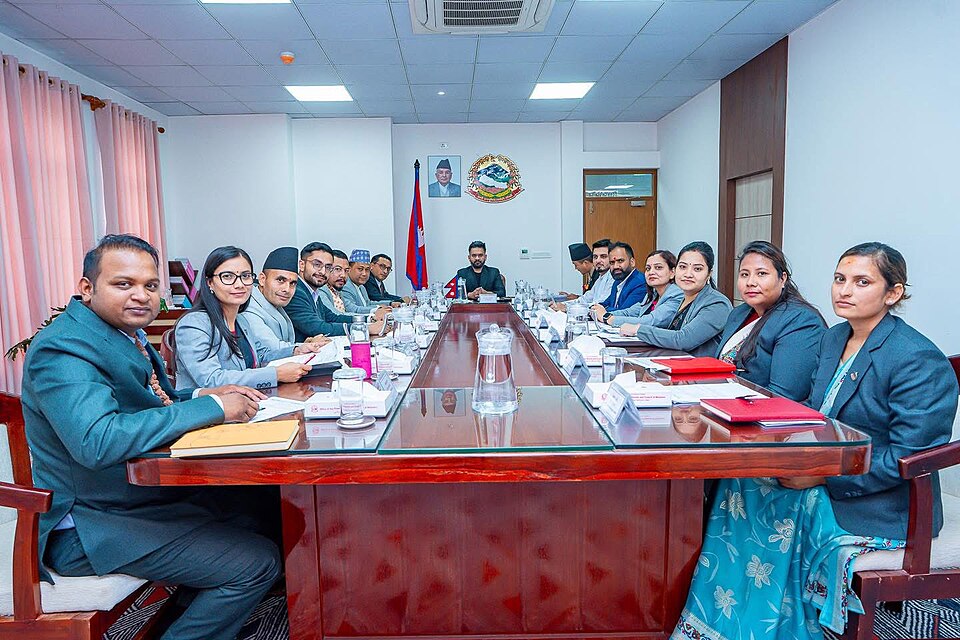
PM Balen Shah chairs a cabinet meeting
Shah is also drawing sharp criticism following revelations that his secretariat has expanded into a large, high-cost operation, contradicting his pledge to deliver lean governance. After initially forming a five-member ‘kitchen’ cabinet, reports reveal that his secretariat has since swelled to 27 personnel.
In the face of the opposition’s blunt criticism, Rabi Lamichhane, the leader of the ruling party, offered a more measured, cautiously supportive assessment. Stating that the government’s first hundred days had been a good start, he affirmed that it would take two to three years for the results of its reforms to become visible to ordinary citizens.
Nonetheless, the set of political developments that happened in the first 100-150 days has shown that the Balen Shah government, which came to power by challenging previous rulers, is now trying to silence those who question it.
The high-handed actions against landless squatters, the business community, political opposition, as well as the media and bureaucracy, could be a recipe for disaster, especially if disgruntled sections of society come together for another round of rebellion, like the Gen-Z protests, which could lead to constitutional breakdown and political turmoil.
(The second part of this series will examine the ground situation by around the 200th day of Balen Shah in office.)
(Views expressed in this report are the authors' own.)
Follow us on WhatsApp
Follow us on Facebook
Follow us on X @vudmedia
Follow us on Substack
