
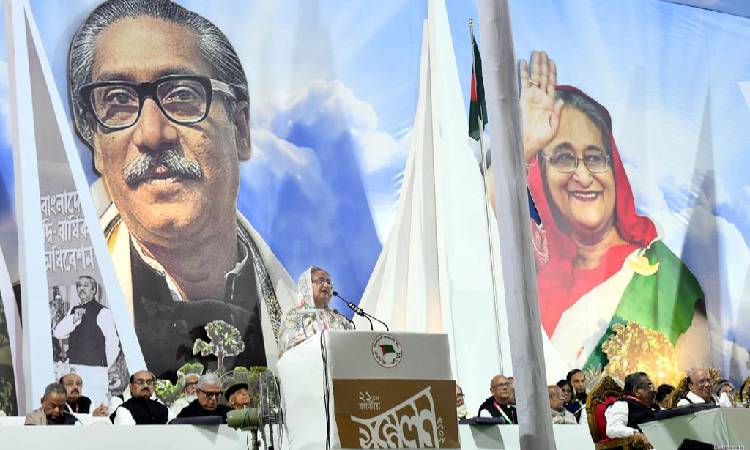
The pivotal question about Bangladesh today is whether Sheikh Hasina will return to the country where a death sentence awaits her. Ironically, it was the same International Crimes Tribunal, established by her in 2010, that had pronounced her death sentence, though without a fair trial. While the BNP-led government and other parties describe her as a “convicted genocider,” indicating a resoluteness to pursue the sentence and dismissing any possibility of lifting the ban on Awami League, Hasina might be counting on international intervention and public support, both of which seem nominal or absent, to make a re-entry into Bangladesh’s politics, as in the past. This fluid situation also raises questions about the future of the Awami League, which remains banned and whose cadre continue to be targeted, prosecuted, and marginalised. Is the Awami League broken up forever or only temporarily dormant, and will its fortunes change if Hasina survives her impending return? Tapas Das explores these questions in part II of this series on Sheikh Hasina and her party’s future.
Following her ‘virtual’ media interaction on August 5, 2026, in New Delhi, coinciding with the second anniversary of her exit from Bangladesh following the July Uprising of 2024, former Prime Minister and Awami League leader Sheikh Hasina continues to stir the waters in the nation’s politics while in exile in India.
In an interview published by The Print on September 2, Sheikh Hasina said she will return to the country in December and challenged the Tarique Rahman government to lift the ban on the Awami League and hold fresh elections. “I have said that I intend to return to Bangladesh around December. The specific date, time, and route will be announced in due course,” Hasina told The Print.
In the same vein, Hasina cautioned against calling former Chief Advisor of the interim government Professor Muhammed Yunus a ‘puppet’ and instead described him as both a “beneficiary and active participant” in a “political project to damage Bangladesh.”
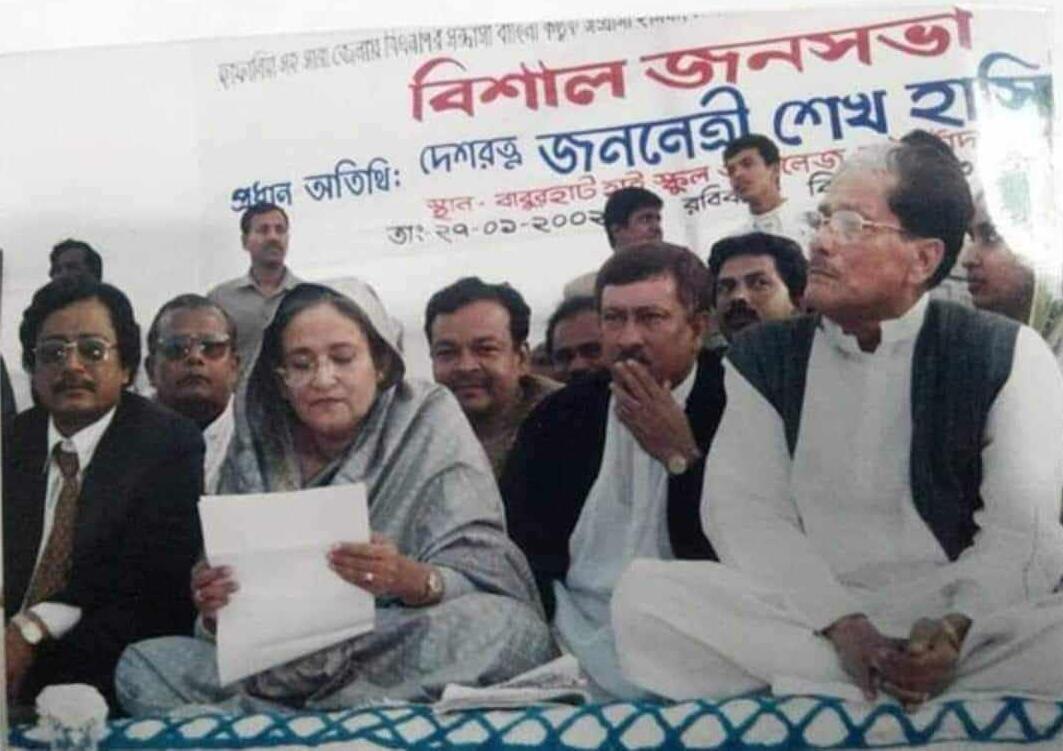
Sheikh Hasina as the leader of opposition at a party demonstration in 2002; photo credit - Faiyaz Mizan
The former prime minister also alleged that democratic space has been closed in Bangladesh, and that “the judiciary is being used for political revenge. Media freedom has been restricted. Law and order have weakened. Minorities feel unsafe.”
In another telephonic interview with Hindustan Times, she said, “I want to return because Bangladesh is being pulled away from the path of development, democracy and stability.
Hasina claimed that Bangladesh’s economy grew from about USD 70 billion to around USD 450 billion during her time, and that per capita income rose from USD 482 to USD 2,784. That progress, she contended, is now being damaged with GDP growth falling to 2.22 per cent from 6.80 per cent during the Awami League period.
Such statements, through regular media interactions, have led the Bangladesh government to censure India for giving a platform to a “convicted genocider,” which the Indian government has reiterated that it had no involvement in the event. Bangladesh’s leading opposition party, the Jamaat-e-Islami, termed Hasina’s Delhi press conference a ‘gross violation’ of diplomatic norms.
With Hasina, who has a death sentence in Bangladesh, seeking to influence the country’s politics from India, many important questions now arise:
- Does Hasina really wish to go to Bangladesh when she is aware that she could be executed?
- Will the BNP government resist the temptation to hang her?
- What is the future of the Awami League if Hasina is executed?
- Does AL have the organisational power and mass support to bounce back to centre-stage?
- What other prospects does the party have if the ban is not lifted and Hasina is executed?
This analysis attempts to address some of these questions.
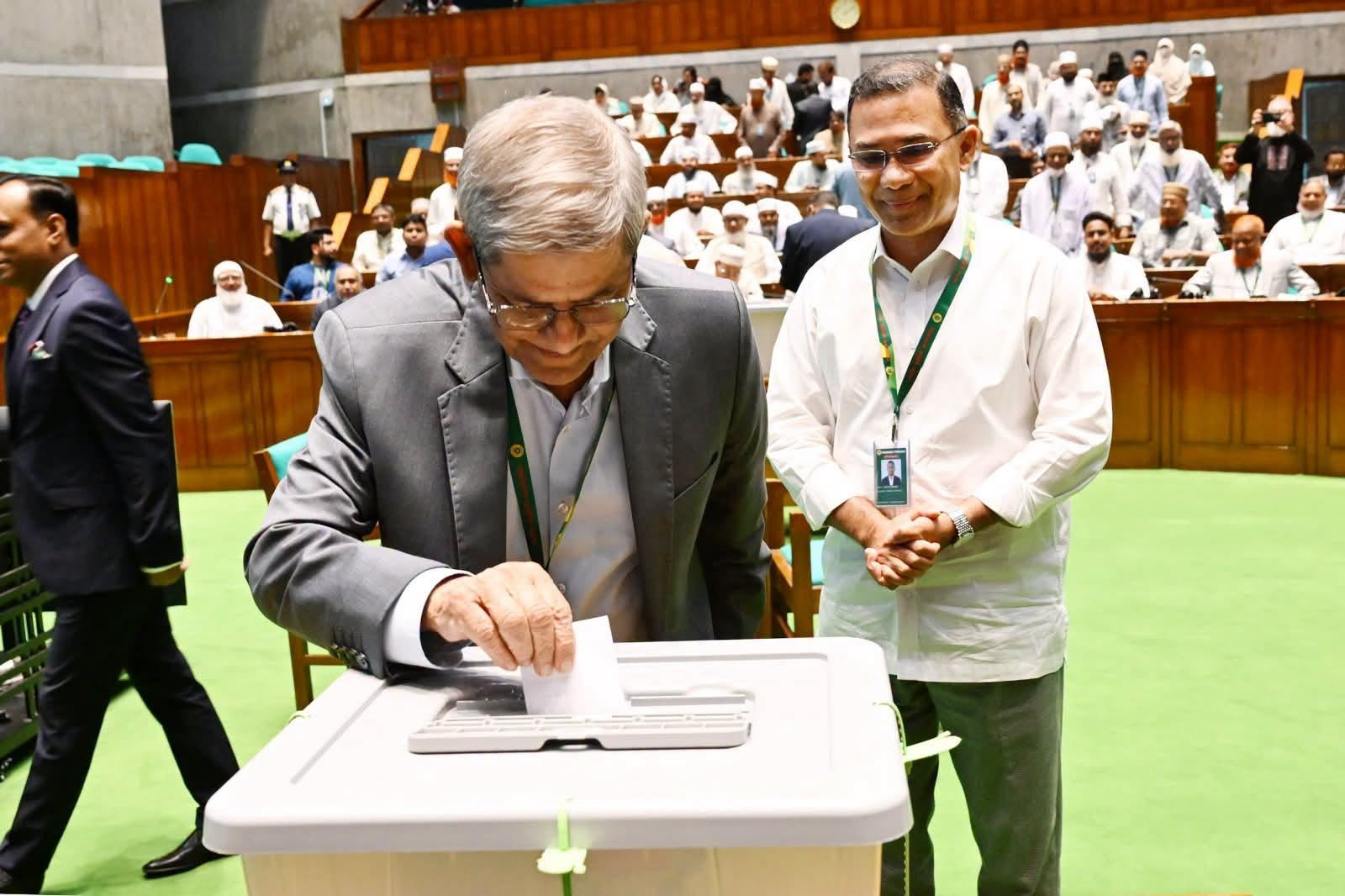
Mirza Fakhrul Islam casting his vote for the presidential elections in August 2026 as Prime Minister Tarique Rahman looks on
The new political dispensation
The new government elected by the Bangladesh Nationalist Party (BNP) has a mandate to rule. Sheikh Hasina categorically rejected the results of the February election, deeming it as not being free, fair, inclusive or credible. She pointed to the ban on Awami League as one that “denied real choice” to the voters.
The new President of Bangladesh, Mirza Fakhrul Islam, who, as the BNP’s Secretary General, had led the party when Khaleeda Zia was in jail and Tarique Rahman was in exile, and was elected in the first contested poll in 35 years, announced at a public event in Dhaka what everyone had suspected: nothing would change.
The AL ban wasn't “legacy Yunus,” as he explained; the ban was not up for review.
In February this year, as head of BNP, he had stated that there was no government approval to reopen the AL offices, as done by some party workers, and that anyone attempting to do so would face penalties. As Minister of Local Government then, Islam had stated that the reopening would be handled legally.
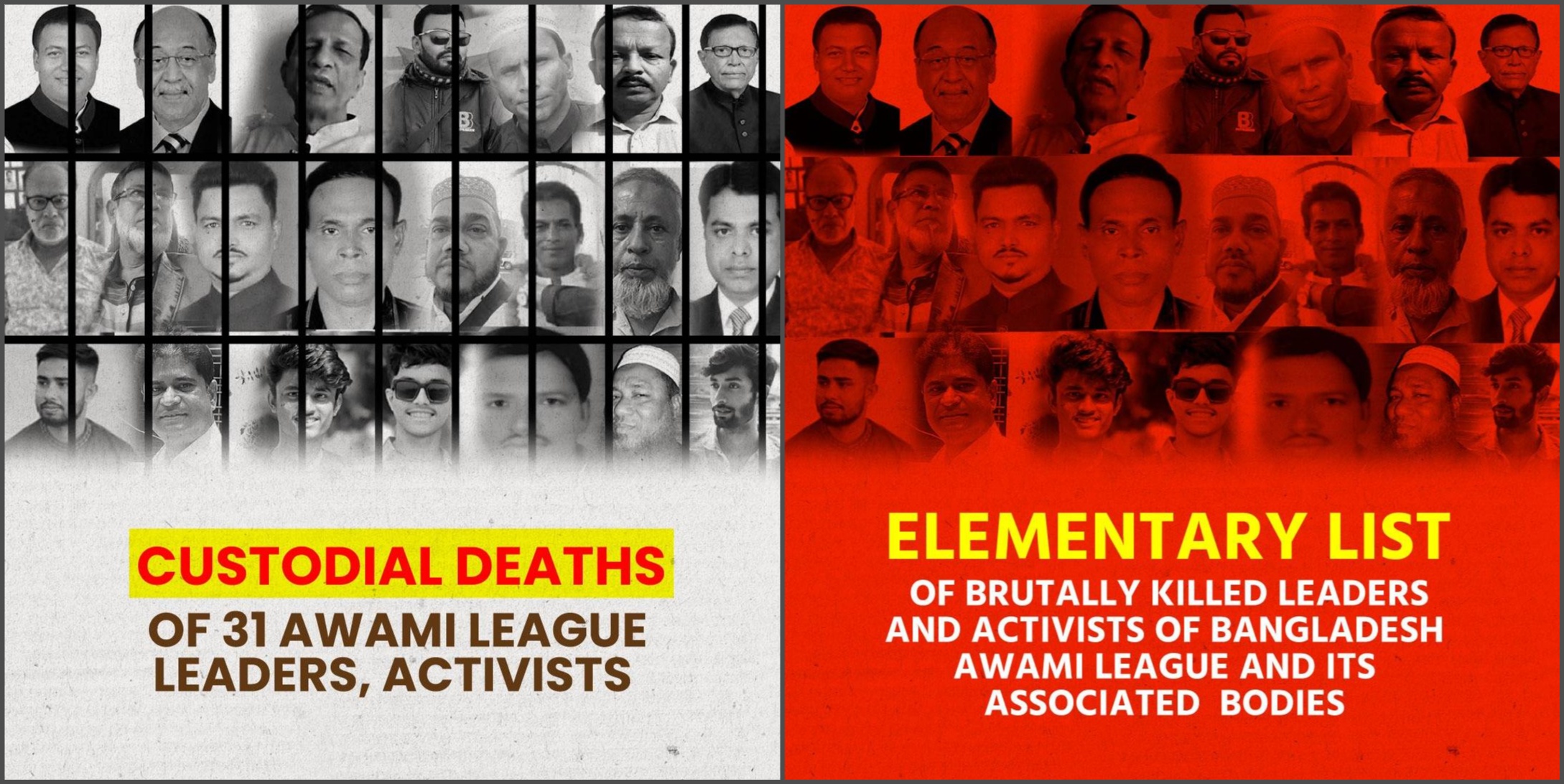
Posters released by the Awami League of its cadre members killed
Other ministers, including Salahuddin Ahmed, have insisted that the government plans to guarantee constitutional security for those who participated in the uprising that drove the previous government from power, rather than reintegrate the AL.
In anticipation of Hasina’s return or otherwise, the Tarique Rahman-led BNP government seems to be relying on welfarism with an eye on gaining public trust, having been out of power since 2006. Among the populist schemes are “Family Card,” which integrates social assistance services on a single digital platform for 40 million households over five years, with the female member of the family as the pivot.
Another initiative is the Farmer Card scheme, providing direct agricultural subsidies to some 27.5 lakh farmers. Similarly, the signature policy of the BNP founder, Ziaur Rahman – developing 20,000 km of waterways in five years – was kicked off in Dinajpur in March.
Thus, the focus shifts towards concrete economic advantages and ecological improvements, which could help the BNP consolidate its mandate while imposing a legally deadlocked political opposition in the near future.
While many of these initiatives may help in establishing public trust, politically, they seem designed to win back votes and effectively shove the nation’s largest opposition into a corner, leaving no legal alternatives.
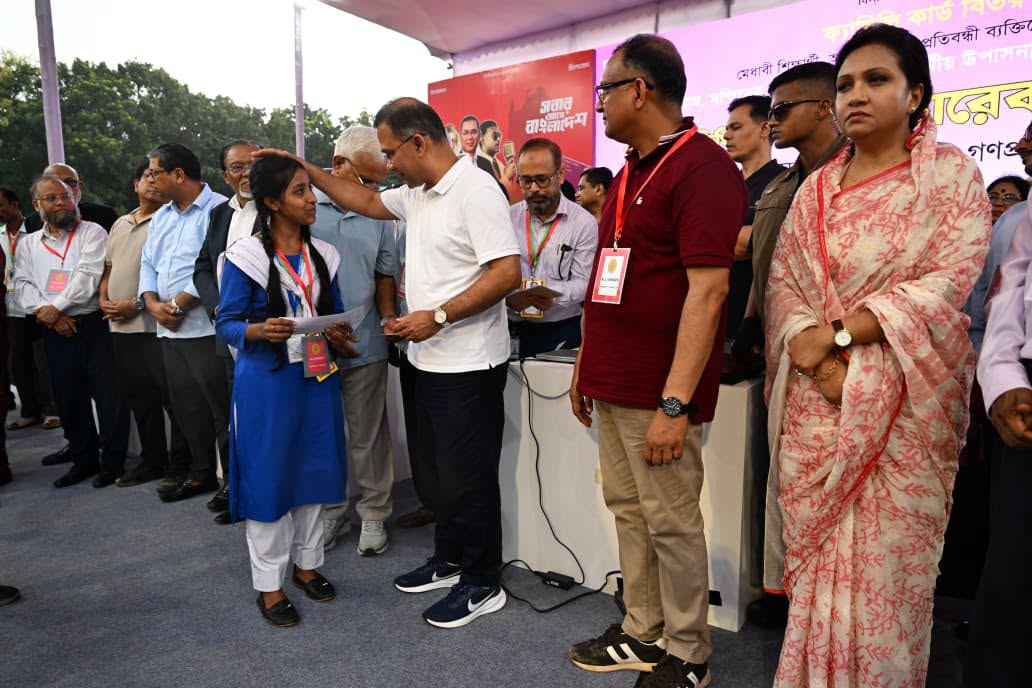
Prime Minister Tarique Rahman distributing the 'Family Card' to beneficiaries
The Awami League’s existential question
The Bangladesh Awami League, as the country’s long-standing political party, celebrated its 77th anniversary in June this year, with party supporters organising processions, despite the ban, to remain relevant in Bangladesh’s politics.
Although Hasina promptly announced her return to the country, it is not a new phenomenon. Previously, Sheikh Hasina warned in an e-mail interview on May 17, 2026, that she has survived 19 assassination attempts, but nothing has been able to stop her. She added, “Since the Almighty has kept me alive, I will return to the soil of Bangladesh very soon. “
In her online speech on the 77th Anniversary, Hasina said: “As for returning by 2027, I do not see it as a matter tied to a specific timeline. The larger issue is the restoration of democracy, political rights, freedom of expression, and the rule of law in Bangladesh. Those conditions are essential not only for my return, but for the future of the country itself.”
She added: “ At this moment of the 77th founding anniversary, there is but one pledge: not fear, but courage; not division, but unity; not vengeance, but justice; not darkness. The illuminated path of the spirit of the Liberation War, Bangladesh, must be steered forward along this path.”
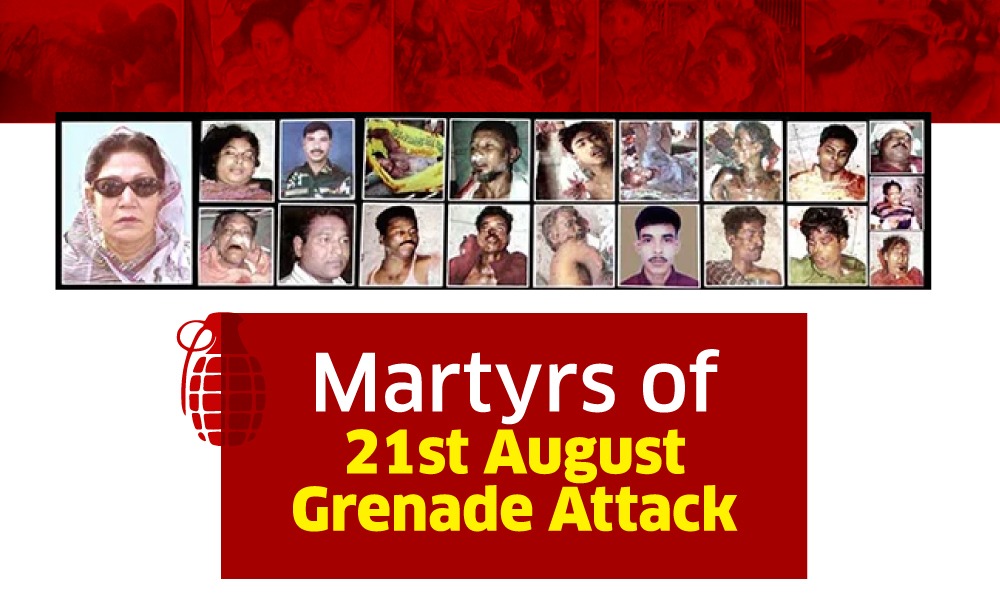
An Awami League poster on those killed in the grenade attack of 21 August 2004 at an 'anti-terrorism' rally organised by Awami League with Sheikh Hasina having a close shave
The party itself is not finished. Despite the ban, the Sheikh family’s influence within the AL’s internal politics has remained strong. Decisions continue to be communicated downward from the central level. The vast majority of the party’s leaders and workers are striving to remain politically active while preserving their allegiance to the established leadership.
The former prime minister has yet to take a sabbatical from the party and continues to post regularly on her social media platforms. Most importantly, the party’s loyalists and ground cadre have not disappeared entirely.
Following the fall of the government during the July mass uprising of 2024, 1,868 cases have been filed against the party’s leaders, activists, and supporters, as well as its associate organisations. Around 225,000 individuals have been named as accused in these cases, with many facing multiple charges.
Still, since the 13th national election in February, AL offices have reportedly been reopened in at least 15 districts. During the Eid holidays, for the first time in roughly 18 months, a group of 25 to 30 banned Chhatra League members, the student wing of the AL, staged a procession on the Dhaka University campus, concluding with a demonstration at the Raju Sculpture in the TSC area.
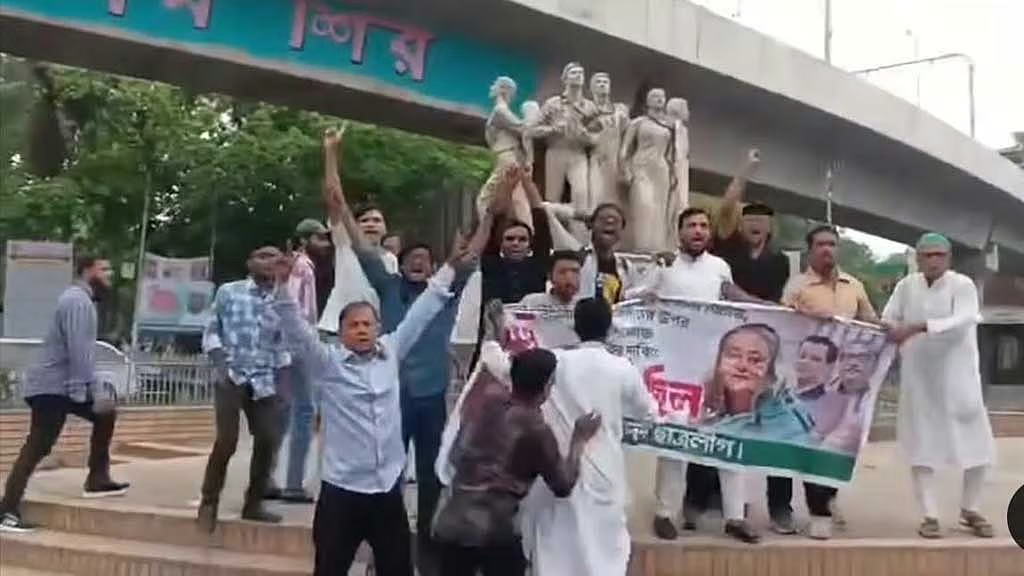
The Chhatra League students holding a procession in Dhaka University on the 77th anniversary of Awami League; photo credit - BanglaBD News
In the Brahmanbaria Bar Association elections, AL-backed candidates secured six of the 15 contested posts, while BNP candidates took seven, a reminder that the party retains a meaningful institutional presence even under constrained conditions. The JeI and the Jatiya Party won the remaining posts.
More recently, in the capital city of Dhaka, Awami League activists attempted to organise rallies at multiple locations, prompting tight surveillance around the party’s central office. Authorities aggressively curbed these gatherings, resulting in the arrest of at least 26 activists in the capital alone.
Beyond Dhaka, major unrest flared in Barishal, where extra police in riot gear were deployed following unauthorised flash processions by party supporters. Tensions also escalated in Faridpur and Gopalganj, the latter being Sheikh Hasina's hometown and a traditional stronghold of the party.
This wave of nationwide street action was heavily triggered by the recent custodial death of an activist in Faridpur on June 20 and another death following a police chase in Barishal on June 21, which culminated in brief highway blockades and heightened military enforcement across five targeted districts.
Furthermore, leaders and activists of political parties were seen holding protest marches and sit-in programmes outside Dhaka, centring on the founding anniversary of the Awami League. Dozens of activists were arrested overnight as they staged sporadic street marches to mark the party’s 77th founding anniversary in defiance of a nationwide security ban, authorities said.
Upon returning to the country after living in hiding in India for nearly two years, over a hundred activists, led by Nasir Morol, the General Secretary of the banned Gazipur District Chhatra League, staged a protest march and blocked the Dhaka-Mymensingh Highway on July 3.
Last August, the Swechchhasebak League, the volunteer wing of the Awami League, whose activities are now banned, also held a procession in Dhaka’s Uttara.
An important development is the reported return of around 52 mid-level leaders, who are preparing to surrender in court. On the other hand, some of the important leaders have also obtained bail. Former Narayanganj City Corporation Mayor Selina Hayat Ivy has been released on bail after being incarcerated for over a year.
Police had arrested Selina Hayat Ivy from her Narayanganj residence on May 9, 2025. She was subsequently shown to have been arrested in a total of 12 cases, including three murder cases and two attempted murder cases, related to the 2024 anti-discrimination student-led mass uprising. Despite securing bail in several of these cases, she was repeatedly arrested in new cases.
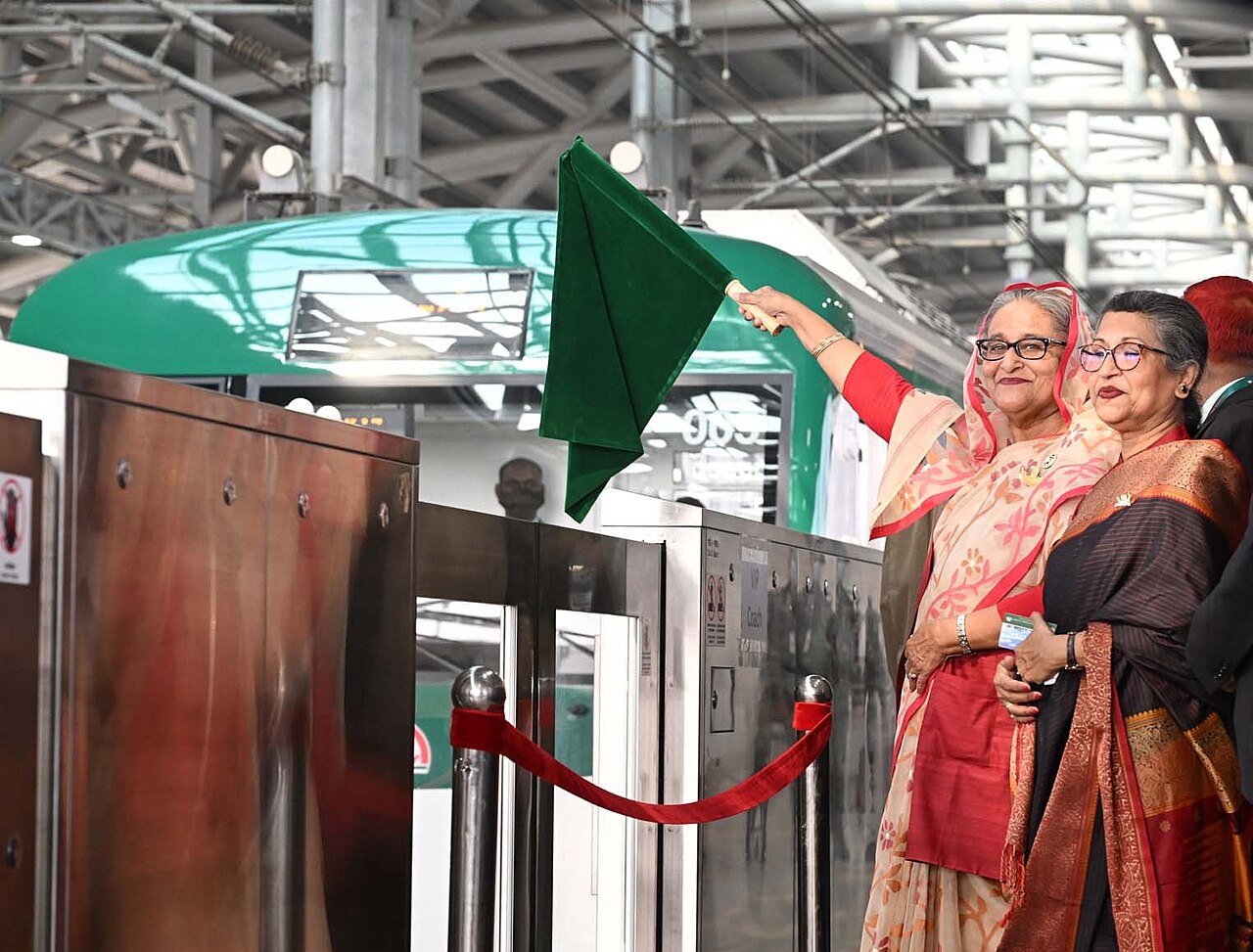
Sheikh Hasina flagging off the Dhaka Metro System in 2022
Where does the contradiction lie?
Hasina has already proclaimed to the international media that she will return by the end of this year. The question is whether BNP will be able to control the situation if Sheikh Hasina enters her country. The only positive aspect for BNP is that they are in power and can use the state’s coercive apparatus, despite limits on controlling the public sphere apart from the state.
Still, university campuses are not under the control of the BNP’s students' wing, Chhatra Dal. The fact that the government frequently got embroiled in clashes with Chhatra Shibir across various campuses bears witness to this. Controlling the campuses is one of the major factors in Bangladesh, where the BNP lags.
While the BNP government has implemented many social welfare schemes, the scarcity of fuel, inflation, unemployment, fall in foreign investment, and, above all, the shutdown of garments and other factories have increased dissatisfaction.
Moreover, recent instances of load-shedding, gas and fertiliser crises make the government vulnerable and drawn to comparisons with the supposed ‘prosperous life’ during AL, which adds extra mileage to AL.
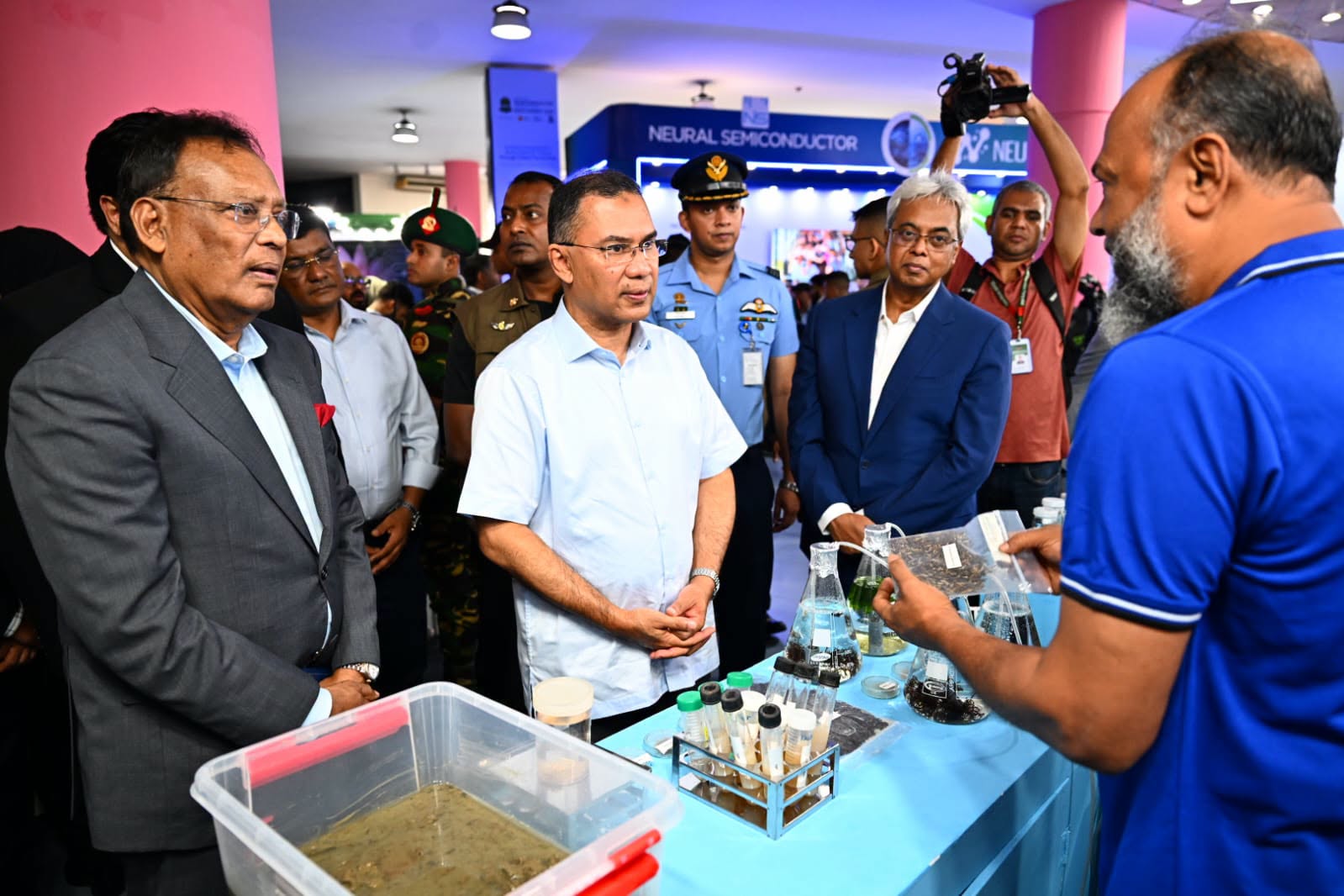
Prime Minister Tarique Rahman at the Semiconductor Summit 2026 in Dhaka
Conversely, it is clear that Tarique Rahman has avoided travelling to the nation’s interior regions after taking charge, with most of his visits limited to metropolitan areas or established BNP strongholds. This suggests a disconnect between the prevailing political discourse in Bangladesh and the reality on the ground.
Accordingly, a combination of diplomatic drivers, bureaucratic hurdles and business interests might constrain the BNP’s ability to stop the Awami League resurgence if Hasina enters.
Furthermore, Sheikh Hasina’s potential return hinges less on the BNP and more on international diplomatic pressure, the strategic political calculations of Jamaat-e-Islami and the military’s positioning in political affairs, which cannot be ruled out.
What if she returns …
This is not the first time that Hasina has faced challenges of returning to her country. In 1981, she returned to the country when Zia-ur-Rahman was in power, and, most importantly, JeI relaunched into Bangladesh’s politics. The present situation is quite similar in that the army-Jamaat nexus still exists; but the main difference is that the viable civil society in 1981 and 2026 is not the same.
Does Hasina really wish to go to Bangladesh when she is aware that she could be executed? The probable answer is yes. It is noteworthy that Hasina declared her intention to return to her country at the very beginning of her departure from her nation.
Since May this year, she has been declaring her resolve to return in various media interviews, and on August 5th, she announced that she would return by the end of this year. It should be noted that she has strong connections with diplomats, having served as prime minister of her country for 16 years.
From the time of her exit and seeking refuge in India, Hasina has been holding consultations, via online platforms, with her party colleagues and has maintained regular contact with citizens nationwide to understand their grievances.
Subsequently, she unveiled a reconstituted committee for the Awami League and indicated her intention to grant interviews to international and Indian media outlets. Hasina’s declared intent to return to her homeland is in spite of a clear appreciation of potential dangers.
Though she might be confident about regaining political support in Bangladesh, the Islamisation of the Army and the presence of militants in the country could still trouble her return considerations.
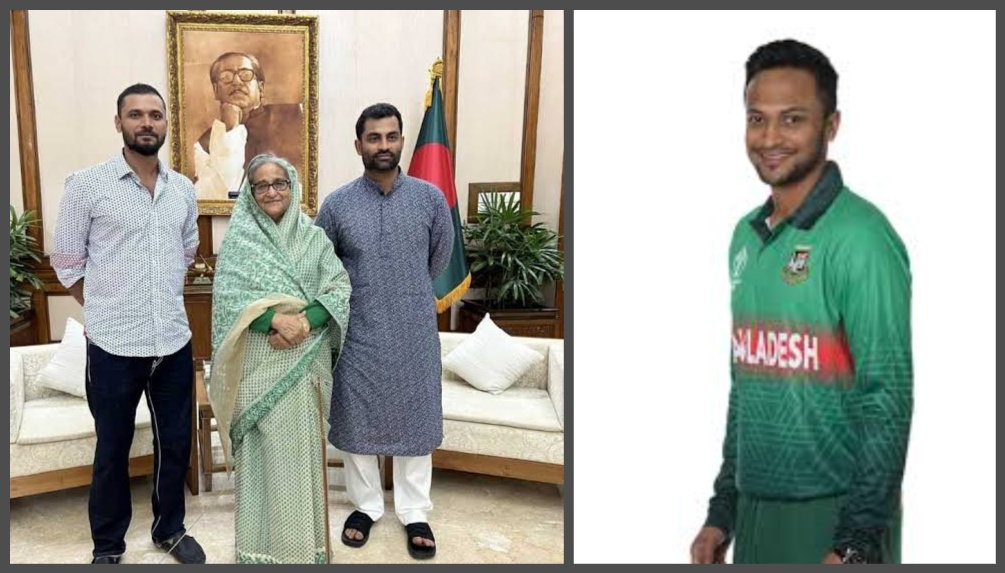
Mashrafe Bin Mortaza with Sheikh Hasina (left) and Shakib Al Hasan (right)
It is likely that before deciding to re-enter the country, Hasina might despatch some popular faces to create a support wave, hailing her return and creating a public mood against her possible execution or incarceration, with the latter being a certainty.
Bangladesh’s cricketing heroes, Shakib Al Hasan and Mashrafe Bin Mortaza, are likely to be her favourable choices. Both were Awami League parliamentarians who had supposedly left the country after the July Uprising, with Hasan known to be in the US and Mortaza’s whereabouts unknown, especially after his house was torched by the protestors.
With Hasan declaring his intent to return to the country and face trial for charges he alleges to be false and politically motivated, the decks could be cleared for his return, as well as Mortaza's, both of whom have a large fanbase in the country.
Soon after the Tarique Rahman government took over, his sports minister Aminul Haque was reported to have stated that cases against both cricketers could be “resolved so that they could return to cricket.” Hasina could be banking on this eventuality and may expect a public support for these cricketers to turn in her favour as well.
Yet, the pivotal question remains: if Hasina returns to Bangladesh, will she face execution or assassination? If so, what lies ahead for the future of the Awami League?
The historical trajectory of the Awami League demonstrates a profound resilience. Even after the assassination of Sheikh Mujibur Rahman, the organisation successfully navigated its way back to the seat of governance.
While the current political landscape suggests a daunting leadership vacuum following Sheikh Hasina’s exit, with no immediate familial successor mirroring her stature, her younger sister Sheikh Rehana remains a viable alternative for the party’s hierarchy.
Crucially, the ideological legacy of the Liberation War remains an enduring foundation, providing the political vitality needed to sustain the party for as long as the sovereign state exists.
In the event that Sheikh Hasina is unable to enter the country and the party’s ban remains, it is left to speculation on the probable options for the leaders who are still in the country and their supporters.
As the Awami League used to be a centre-left party, many of its leaders are known to maintain close liaison with local Jammat-e-Islami leaders. With JeI emerging as the main opposition, it could be easy for Awami leaders to join JeI. Besides open calls made by BNP leaders for merger, there are reports of Awami League cadre joining the ruling party in large numbers.
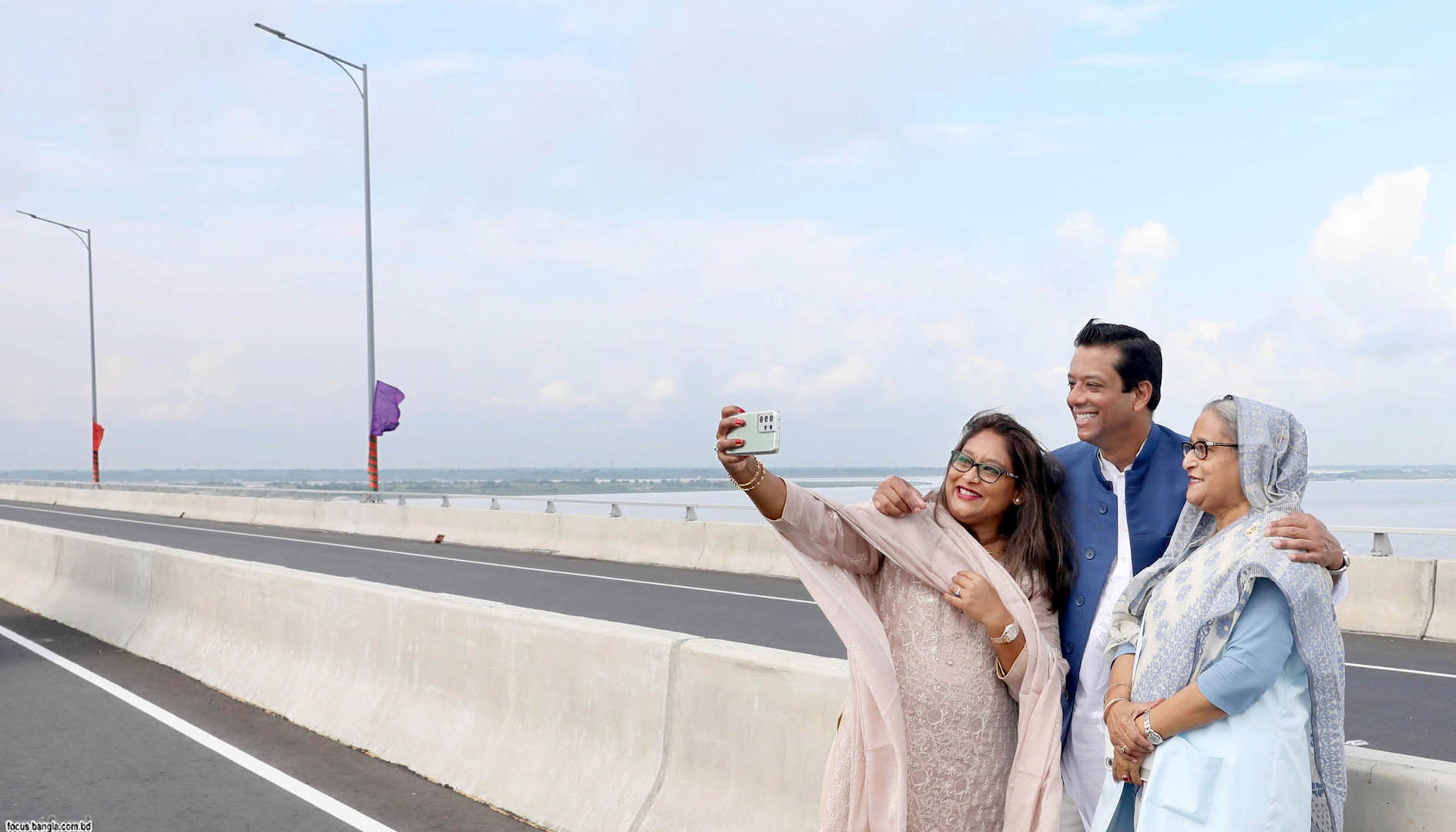
Sheikh Hasina with her son and family take a selfie
On the other hand, many new political parties have emerged since Sheikh Hasina’s departure. Some left-wing alternatives also came to the fore. Though not yet having any mass base, they found traction in the alternative media and acceptance among the youth. A section of the Awami League, especially the student cadre, might also find refuge in these political groups.
International intervention be the key
The letter sent to the United Nations by the Awami League, calling on efforts to ease the ban, is considered highly significant in the political, administrative and diplomatic spheres.
It has thrust a new challenge into a discussion that the BNP government will be ardently seeking to keep secret: whether Bangladesh has democratic legitimacy when its most prominent political rival is banned, prosecuted, and barred from elections.
The letter does not, in itself, change the government’s stance, but has certainly put the issue on the international agenda and makes it difficult for the Tarique Rahman government to treat it as a matter solely between the law and the judiciary.
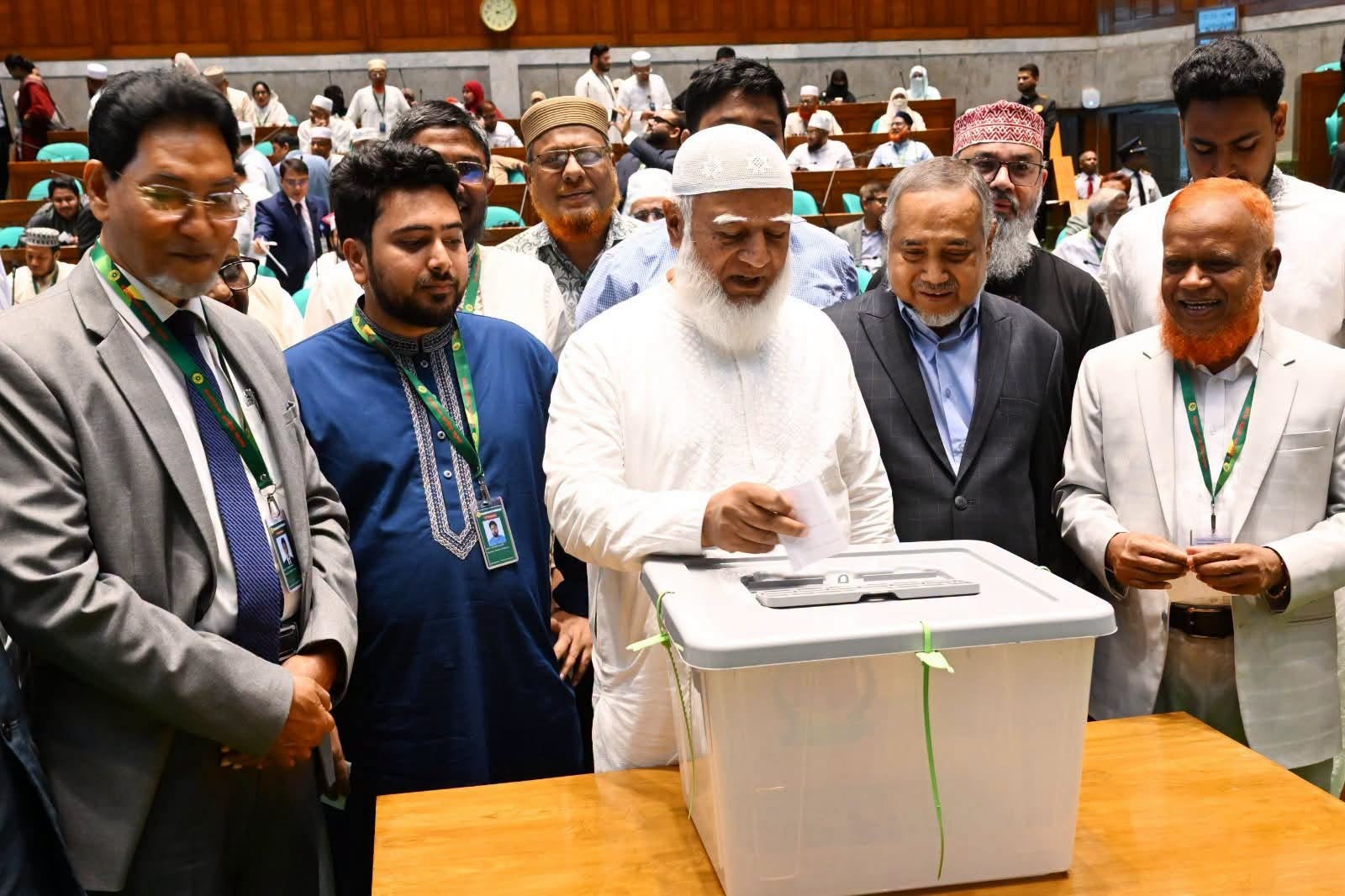
Jamaat-e-Islami Emir Shafiqur Rahman casting his vote during the presidential poll in August
At the same time, many factors could decide the political future for the Awami League: how and under what circumstances the prohibition will be lifted, the party’s capacity to advocate for a credible campaign of internal improvements while in exile, and whether activists can sustain continued prosecution, arrest, and surveillance.
It will also rely on domestic and/or international pressure on the BNP, and how it will tackle the questions over the credibility of the election where its main rival party was shunted out of the race. Therein, the question of allowing Awami League’s return to mainstream politics would remain a millstone for the ruling party, especially if it decides to prolong the ban for eternity.
Accordingly, the potency of international intervention might be the biggest hope for Sheikh Hasina.
The Awami League continues to be organisationally strong, especially in the traditional bastions of Gopalganj and Faridpur, where party sentiments come to the fore despite state pressure. The party’s grassroots network has not been eradicated, as evidenced by online activity, symbolic events marking the party’s founding, and street mobilisation in a few places.
This loyalty to Sheikh Hasina is also a key factor in this resilience. Although she faces many challenges, especially the death sentence and the cases related to the July Uprising and state repression, there are few signs of a serious leadership challenge within the party.
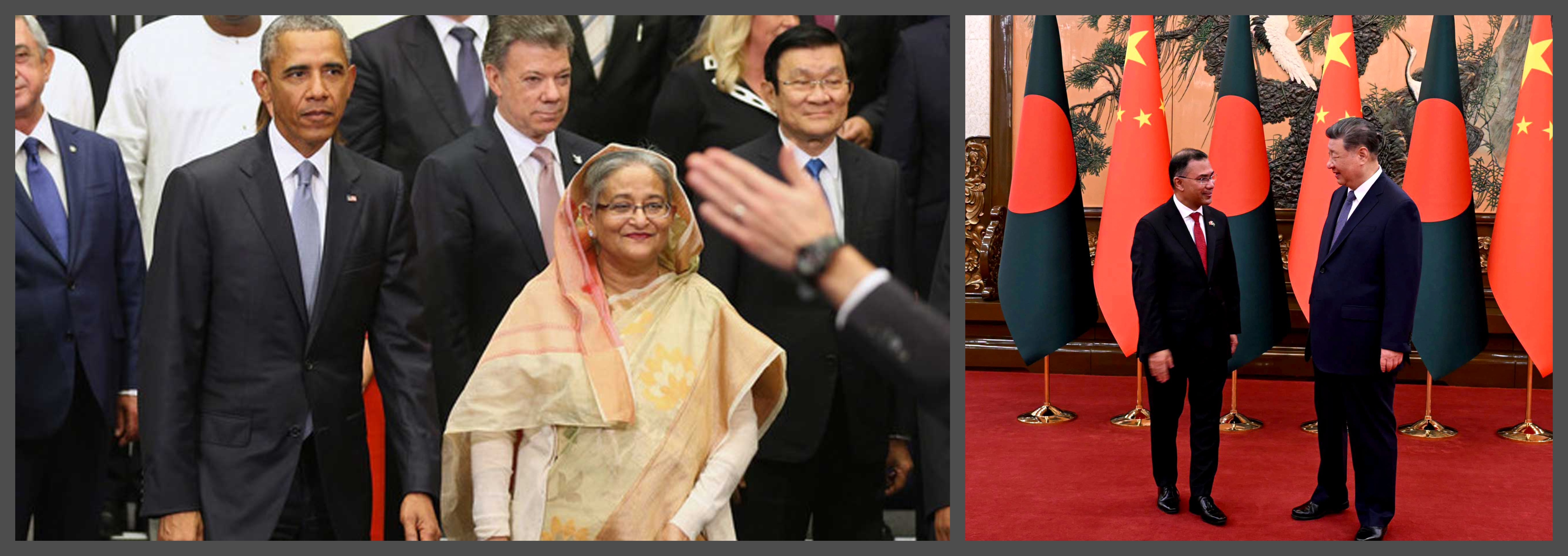
Sheikh Hasina with US President Barack Obama in November 2017 (left), and PM Tarique Rahman with Chinese President Xi Jinping in Beijing (right)
Hasina is the predominant figure among many grassroots supporters and the emotional heart of the Awami League’s political mystique.
Even if weakened, marginalised, and excluded from formal politics, the party’s prospects will be determined by the extent to which people can translate loyalty into effective organisation within the party, the adaptability of the party leadership to a new political world, and the readiness of the governments in power in Bangladesh to open up for a fresh political contest.
Until then, the Awami League could exist in a liminal yet precarious condition, between repression and possible revival, between formal institutions and the indomitable debate on democracy.
(Views expressed in this report are the author's own.)
Follow us on WhatsApp
Follow us on Facebook
Follow us on X @vudmedia
Follow us on Substack
