
US President Donald Trump’s ‘transactional diplomacy,’ which prioritises bilateral bargaining, economic leverage, personalised negotiations and reciprocity over permanent strategic commitments, has emerged as the organising logic of contemporary US foreign policy. The broader nature of this transformation is the shift from rules-based engagements to a deal-oriented statecraft, which has implications for American foreign policy, regional geopolitics, and the future of the liberal international order. West Asia, which has historically constituted a zone of American strategic influence, has emerged as the principal setting for Washington’s transactional diplomacy, points out Subhakshi Manna, who also explains how this model of statecraft is being institutionalised under the Trump administration.
Home page image: US President Donald Trump with Secretary of State Marco Rubio and Secretary of War Pete Hegseth at White House
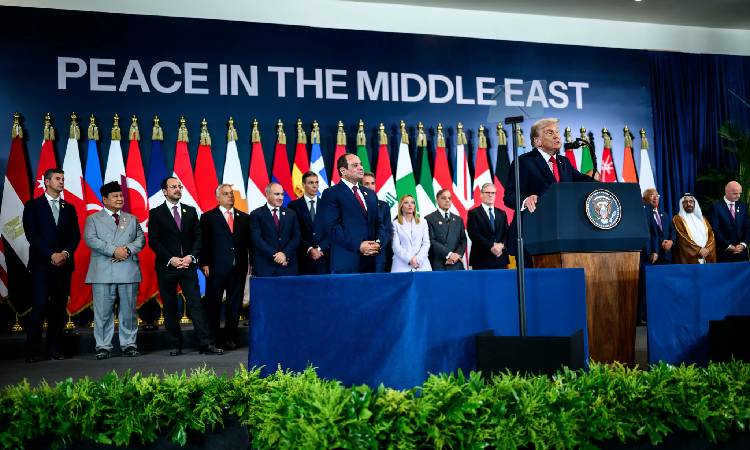
Text page image: President Trump along with leaders of West Asian nations at the signing of the 'Gaza Peace Plan' at Sharm el-Sheikh in October 2025
Banner image: President Trump addresses American troops at the Al Udeid Air Base in Qatar, in May 2025, one month before the Twelve-Day campaign against Iran
The chaotic turn of events in West Asian geopolitics has led to an intense discussion about American foreign policy, particularly the manner in which incumbent President Donald Trump is practising it.
The US has long been entrenched in the West Asian region with numerous instances of military interventions, right during the Cold War period. Consecutive US presidents were instrumental in shaping the political structure of nations in the region, besides maintaining a formidable military presence in the territories of US allies.
From installing regimes in Iran and Lebanon to the Yom Kippur War, the Suez Crisis and the Islamic Revolution during the Cold War, and from Operation Desert Storm, followed by multiple invasions and military campaigns in Iraq (and Afghanistan), to the military campaigns against Iran since 2020, the US has been deeply entrenched in the region.
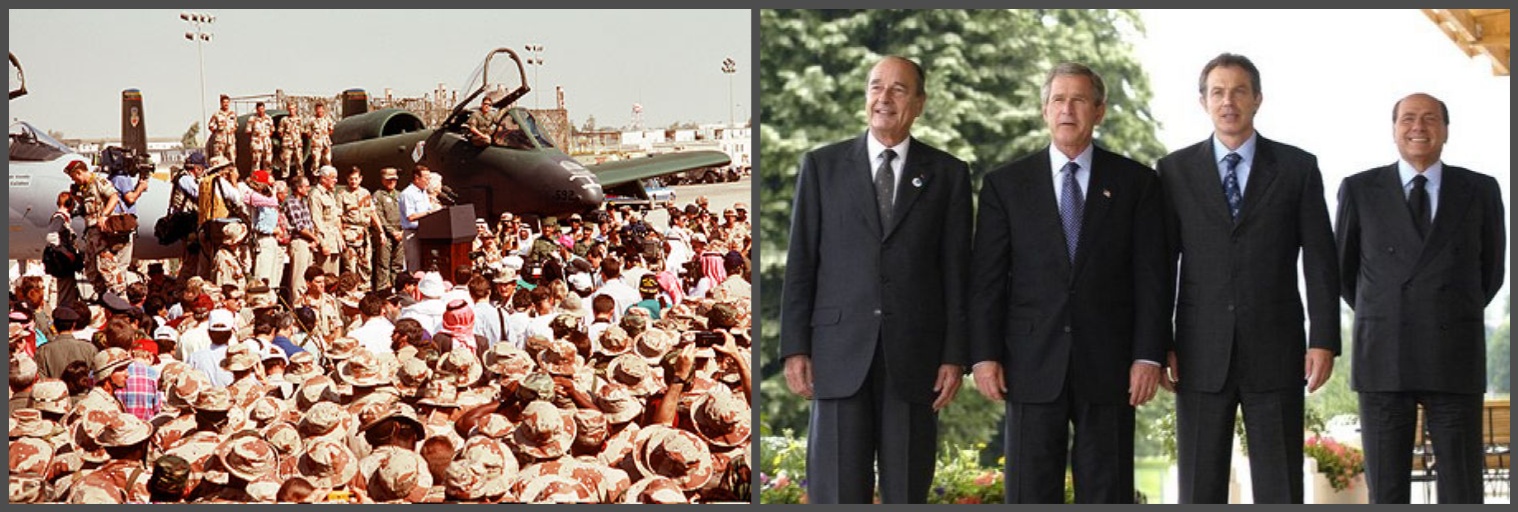
President George H W Bush speaks to US troops gathered for his Thanksgiving holiday visit during Operation Desert Shield (left), and US President George W Bush with French President Jacques Chirac, British Prime Minister Tony Blair and Italian Prime Minister Silvio Berlusconi, representing the 'Coalition of the willing' during the 2003 Operation Iraqi Freedom (right)
The genesis of the US inroads into the region could be traced to the Baghdad Pact (1955) and the Central Treaty Organisation (CENTO), which made West Asia a front in the Cold War, with Washington garnering allies in the region to undermine the Soviet Union’s clout. With the end of the Cold War, the US emerged as a stakeholder in the stability of the oil-rich region and as a security guarantor for its allies.
Such role conceptions justified the multiple missions in the post-Cold War period: Operation Desert Storm to ‘liberate’ Kuwait from Iraqi forces; Operation Iraqi Freedom of 2003 launched in the name of supposed Weapons of Mass Destruction (WMD) in possession of the Saddam Hussein regime but ended up in regime change, and his execution; Operation Inherent Resolve of 2013-14, against the Islamic State of Iraq and the Levant (ISIS) in Iraq and Syria; the 2025 air strikes on Houthi rebels in Yemen; the targeted assassination of Qassem Soleimani in January 2020; Operation Midnight Hammer, the 12-day campaign of June 2025 with Israel targeting Iran’s nuclear sites; and Operation Epic Fury, the military strikes launched on February 28 2026, which led to the ongoing conflict in the region.
All military campaigns were justified on one ground or another, with some holding traction and others falling by the wayside, like in the case of the WMD argument made in 2003, for which no conclusive evidence could be presented. Yet, political objectives like regime change, eliminating terrorist groups, and counter-proliferation were seen as the enduring pursuit of declared American grand strategy by consecutive administrations.
However, no such reasoning could aid the justifications propounded for the military campaign against Iran in February. Having declared the complete “decimation, destruction and obliteration” of Iran’s nuclear programme through Operation Midnight Hammer, there was no justification to launch another military campaign citing the same rationale.
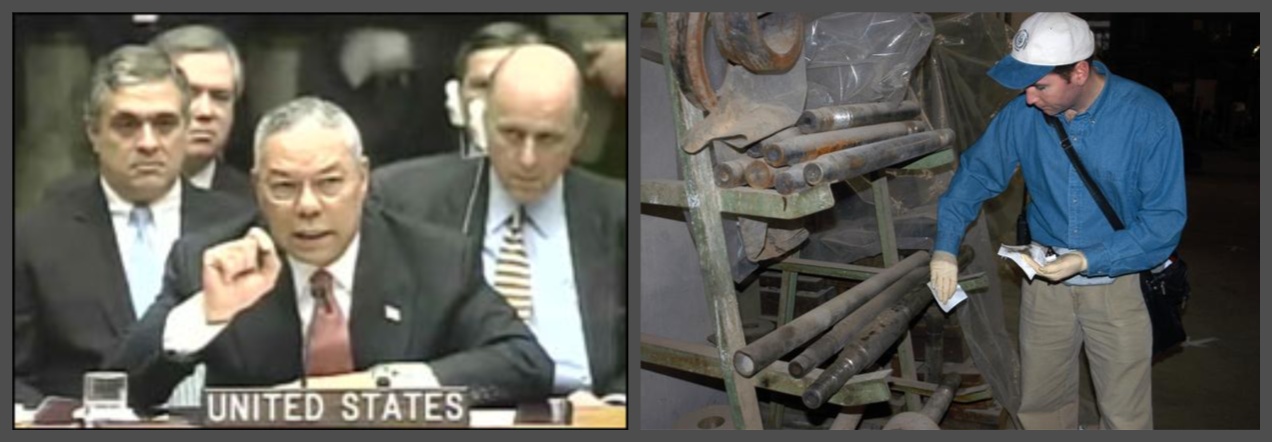
US Secretary of State Colin Powell holding a model vial of Anthrax during his presentation to the UN Security Council in February 2003 (left), and a UN weapons inspector at an Iraqi facility (right)
Alongside this, President Trump also declared ‘regime change’ as the objective of the mission, only to deny it during the course of the campaign. The constantly changing goalposts, wavering approaches to the mission, premature declarations on ceasefires followed by threats of massive bombing and destruction, and an eventual agreement through a Memorandum of Understanding (MoU) on June 17, only to be declared withdrawn a fortnight later.
All of these had added to the global discussion on Trump’s pursuit of statecraft, which, far from being bohemian, was seen in many quarters as reflective of the American president’s whimsical and maverick ways. Observers often tend to describe Trump’s approach as ‘transactional,’ involving some element of bargaining and dealmaking, with unpredictability being a hallmark.
Notwithstanding the personalised and leadership-centric character deeply shaping American foreign policy under Trump, it is important to ascertain how much of this transactional diplomacy has been institutionalised, particularly in Washington’s West Asia policies and strategies, and whether it will sustain as a structural model.
Understanding transactional diplomacy
Rooted in the Realist theoretical tradition in the discipline of international relations, predicated on national interests and realpolitik considerations, ‘transactional diplomacy’ offers a new foreign policy model centred around strategic concerns and economic bargaining. However, transactional diplomacy should not be conflated with Classical Realism.
Classical Realism emphasises long-term strategic calculations and balance-of-power politics. Transactional diplomacy, on the other hand, privileges immediate gains, tangible outcomes, and personalised negotiations.
In contrast to the traditional normative model of diplomacy, transactional diplomacy is characterised by prioritising short-term, immediate gains over long-term, value-based alliances, rebranding the whole exercise of foreign policy as an act of quid pro quo exchanges and economic bargaining.
This form of diplomacy is manifested in negotiations where support, alliances, and diplomatic actions are contingent upon immediate reciprocal advantages. Diplomacy becomes a deal-making enterprise that maximises immediate strategic gains, minimising concessions.
The engagements with partners are filtered through the narrow lens of cost-benefit analysis and bilateral returns, with considerable disregard for the existing rules-based international order and multilateralism.
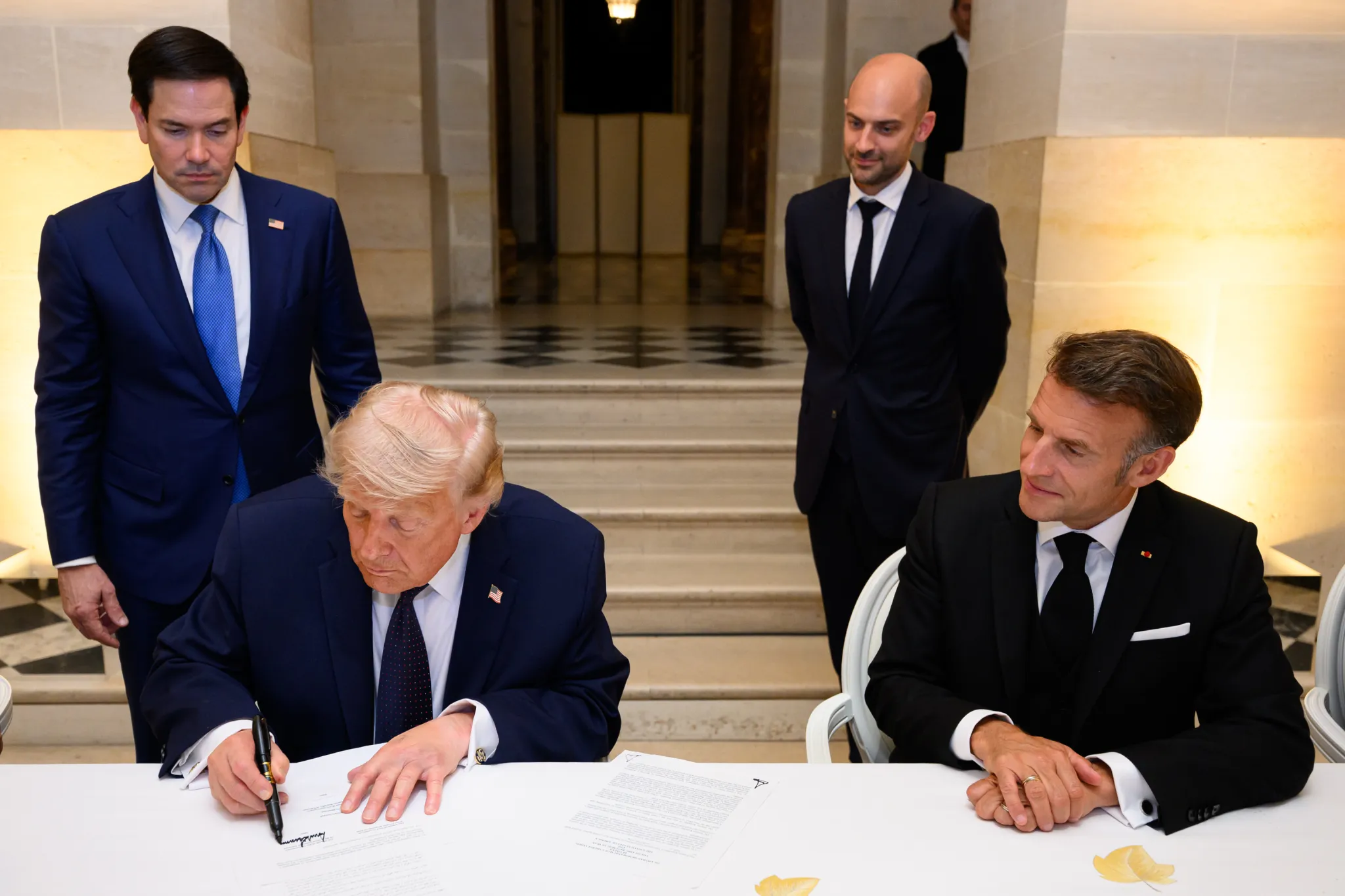
US Secretary of State Marco Rubio and French President Emmanuel Macron look on as President Trump signs the MoU on the ceasefire with Iran, in June 2026
The transactional turn in American foreign policy
Although traces of transactional practices can be mapped in American diplomacy even earlier, it was only under President Trump that transactional diplomacy transformed from an occasional instrument of diplomatic bargaining to the organising logic of contemporary US foreign policy.
With the ascension of Trump to power, US foreign policy has undergone a radical transformation into a diplomatic exercise characterised by principles of conditionality and unpredictability. Consistent with his proclaimed commitment to “Make America Great Again,” US foreign policy under Trump underscores the overarching objective of securing greater, tangible gains for the US through reciprocal exchanges.
In contrast to the earlier US presidencies, which rested their faith in multilateralism, collective security guarantees and the liberal international order, Trump’s foreign policy prioritises bilateral bargaining, economic leverage, and personalised negotiations.
The US perception of alliances also has undergone a paradigm shift under Trump. What were earlier viewed as permanent strategic commitments have now become reciprocal arrangements contingent upon measurable gains.
The question of the North Atlantic Treaty Organisation (NATO)’s relevance in US foreign policy priorities, evaluated in terms of a cost-benefit analysis, supports this claim. This represents a departure from the earlier conception of alliances as long-term strategic partners.
The distinction between foreign policy and economic statecraft has significantly blurred under President Trump. Tariffs have been weaponised as instruments of statecraft to gain political leverage. The imposition of “punitive tariffs” on countries for political gains has changed the rules of the game for friends and foes alike.
Another defining feature of Trump's transactional diplomacy is his considerable mistrust of multilateralism and the retreat from international institutions.
The withdrawal of the US from international institutional frameworks, including the Paris Climate Agreement, the Joint Comprehensive Plan of Action (JCPOA), UNESCO, and the World Health Organisation, demonstrates his underlying belief that association with institutions should be evaluated in terms of cost-benefit analysis of tangible outcomes and not normative values.
Trump’s transactional diplomacy has also introduced a new personality-centred model of conducting international politics. Side-stepping administrative and bureaucratic procedures, Trump has preferred directly engaging with individual leaders.
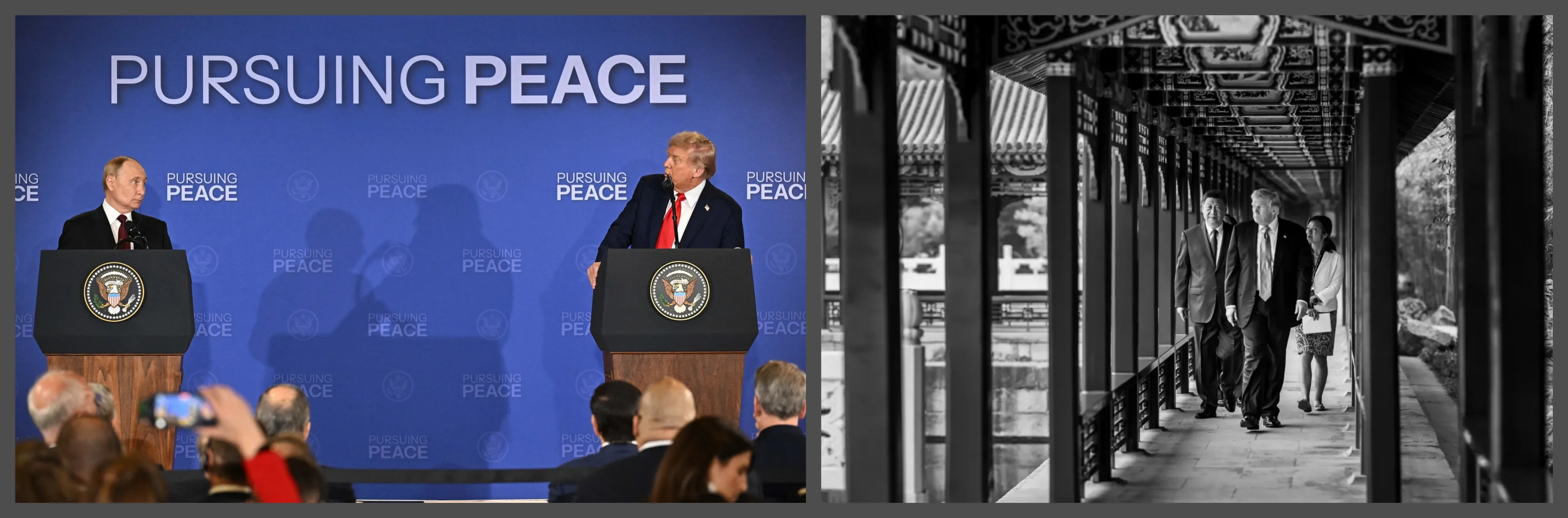
President Trump with President Putin at the Alaska Summit of August 2025 (left), and Trump with Chinese President Xi Jinping during the former's visit to Beijing in May 2026 (right)
Personal rapport and direct negotiations with leaders like Kim Jong Un, Vladimir Putin, Xi Jinping, Benjamin Netanyahu, and leaders in the Arab world underscore his preference for leader-centric diplomacy over established institutional mechanisms.
Therefore, contemporary US foreign policy under President Trump increasingly evaluates diplomatic relationships through the lens of reciprocity, measurable returns, and immediate strategic advantage.
Under this new model of transactional diplomacy, allies are expected to contribute more, adversaries are subjected to coercive bargaining, and the relevance of international institutions is judged less by their normative value than by whether they constituted a “good deal” for the United States.
Notwithstanding its growing visibility across regional contexts in US diplomatic relations, this model can be best understood in the context of US engagements with the West Asian region.
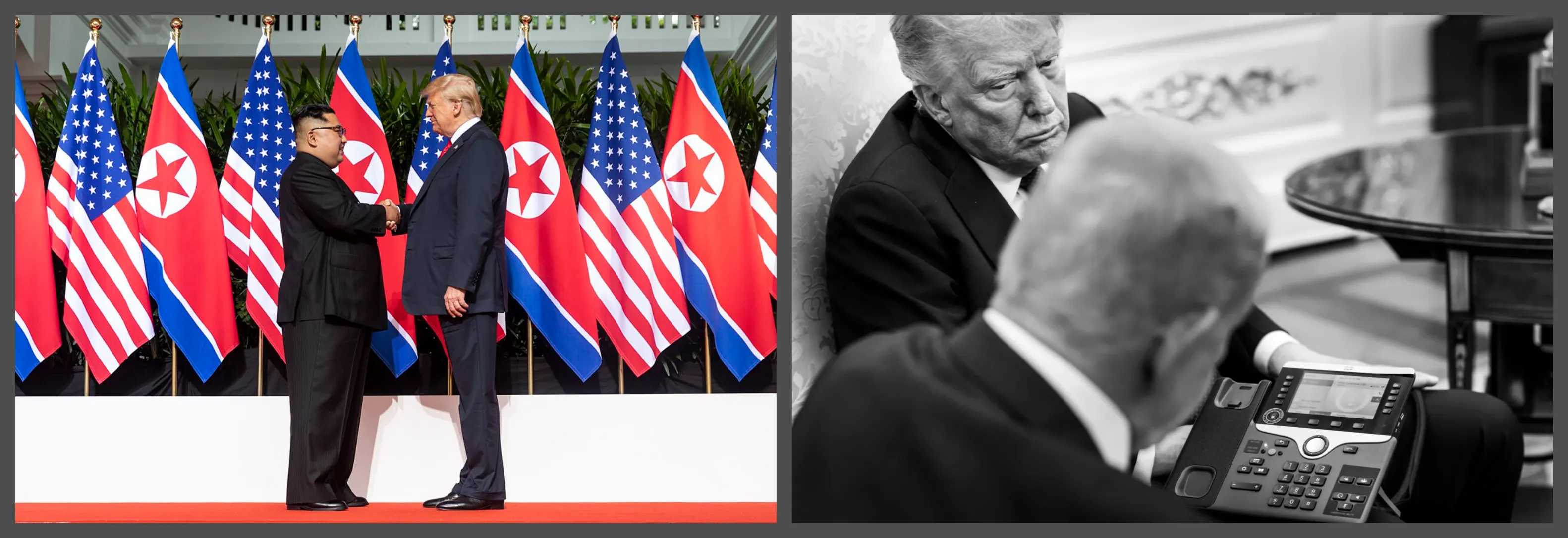
North Korean leader Kim Jong-Un greets President Trump at their Singapore Summit in June 2018 (left), and Trump holds the telephone for Israeli Prime Minister Benjamin Netanyahu as the latter speaks to the Qatar Emir following Israel's air strike on Doha in September 2025 (right)
West Asia: Testing ground for transactional diplomacy
West Asia is one of the few regions globally where multiple strategic interests intersect simultaneously. The geographical centrality, fragmented regional politics, asymmetric security relationships, overlapping strategic interests and the relative absence of an effective regional institutional framework have collectively transformed the region into an arena of geopolitical significance.
From US Presidents Jimmy Carter to Ronald Reagan, from Barack Obama to Donald Trump, West Asia has consistently been configured as a top foreign policy priority of the US, transforming the region into a dynamic theatre for great power competition and a region that falls within the American zone of influence.
The presence of the US as the sole extra-regional hegemonic power on the basis of military pre-eminence has been a historic reality of West Asian geopolitics. What was earlier rationalised as a “policy of containing Communism” during the Cold War period gradually evolved as a strategy to “check Islamic Radicalisation” in the aftermath of the 9/11 attacks by American policymakers.
Within this broader historical trajectory of America’s foreign policy behaviour in West Asia, a discernible pattern emerges: American engagement with the region has largely been guided by a transactional logic rather than purely normative or ideological commitments.
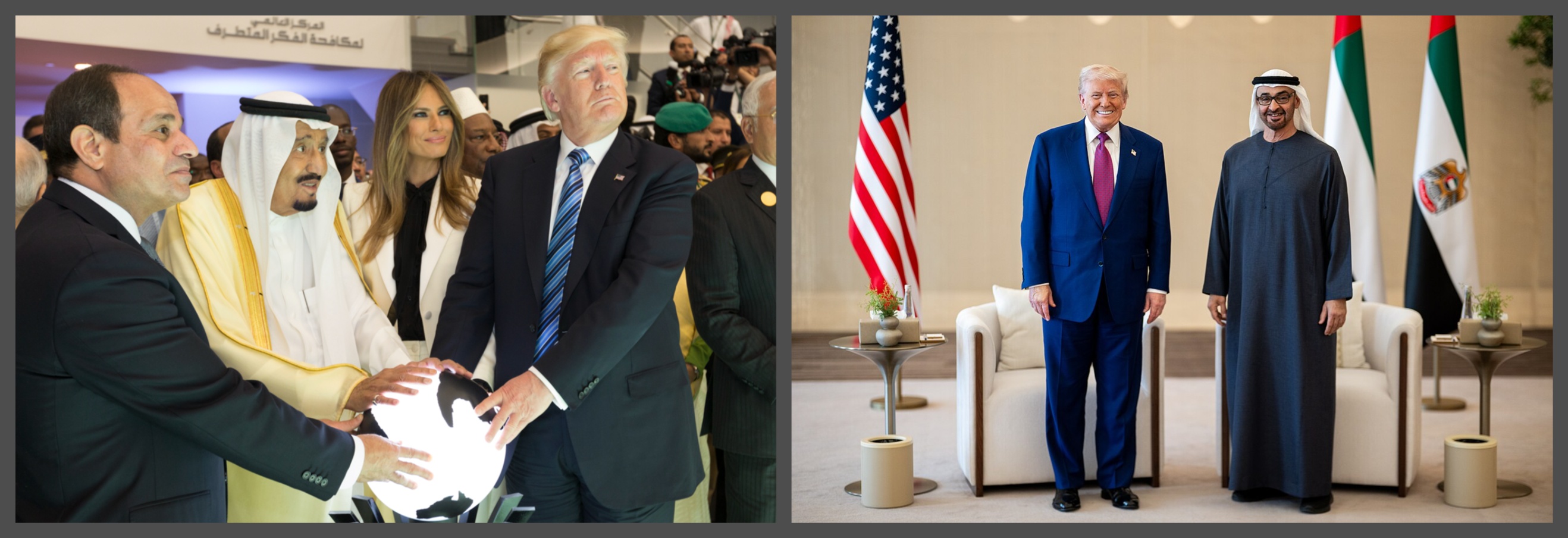
President Trump with Saudi King Salman, and Egyptian President Abdel Fattah el-Sisi in May 2017 (left), and Trump with UAE President Sheikh Mohamed bin Zayed Al Nahyan in May 2025 (right)
It is within this background that understanding Trump’s foreign policy becomes essential.
To begin with, the Abraham Accords represent a notable illustration of Trump’s transactional diplomacy in the West Asian region, driven by explicit quid pro quo incentives. Beyond the purported objective of normalising Arab-Israel relations, the agreement reflected the ‘transactional’ logic of engagement between the US and the concerned parties.
Emphasising strategic interests, each party involved was incentivised to engage in the agreement to maximise particular gains. While the United Arab Emirates (UAE) obtained access to advanced weapons, including the F-35 fighter jets from the US, Morocco secured formal recognition of its sovereignty over the Western Sahara region.
Similarly, Sudan was removed from the US State Department’s list of state sponsors of terrorism, and Bahrain gained American support and cooperation in matters of intelligence sharing and security imperatives in exchange for joining the agreement.
The shared objective of countering regional threats such as the “Iran factor” and the opening of new channels of economic and strategic cooperation in the region rationalised its transactional logic of brokering the agreement.
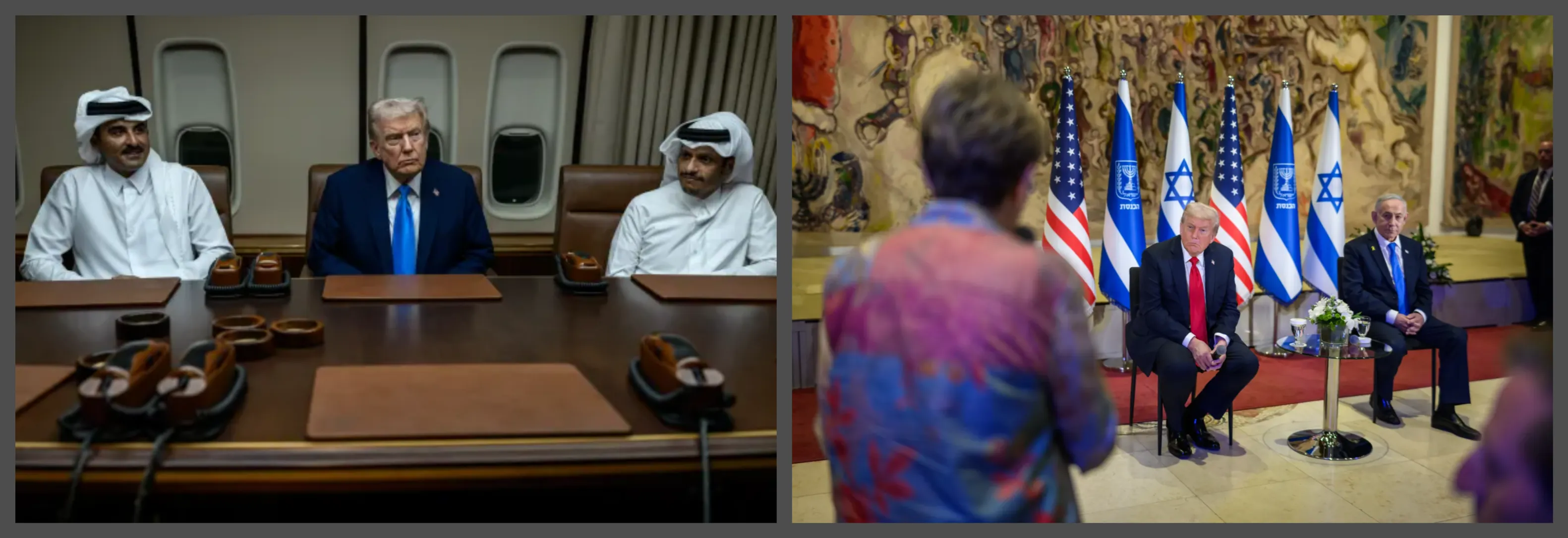
President Trump with Qatari leaders (left), and attending a press conference with Prime Minister Netanyahu (right)
Similarly, President Trump’s Gaza Peace Plan in the aftermath of the conflict between Israel and Hamas relied heavily on transactional diplomacy. The Peace Plan was intended to usher in a new era of peace in the region by resolving a conflict that is over seven decades old.
However, what made the deal unique was neither its objectives nor the substance, but the diplomatic model on which it was predicated. The deal reflected a broader shift in America’s foreign policy behaviour in the region – from a diplomacy based on international rules and political legitimacy, to one based on economic incentives, strategic bargaining and transactional appeal.
The underlying motivation behind the deal was the logic that economic reconstruction, infrastructure development, and regional investment could become tools of diplomatic bargaining and could even be leveraged to resolve long-standing geopolitical issues.
Therefore, the peace plan was less a pursuit of normative political settlement and more a process of negotiated exchanges involving territory, security, economic incentives, and regional burden-sharing.
The sustained coexistence of coercion and negotiations characterising US engagements in the region further helps in extrapolating the transactional logic entrenched in American foreign policy. The consistent pursuance of the “Maximum Pressure” strategy on Iran by the Trump administration represents perhaps the clearest manifestation of transactional diplomacy in practice.
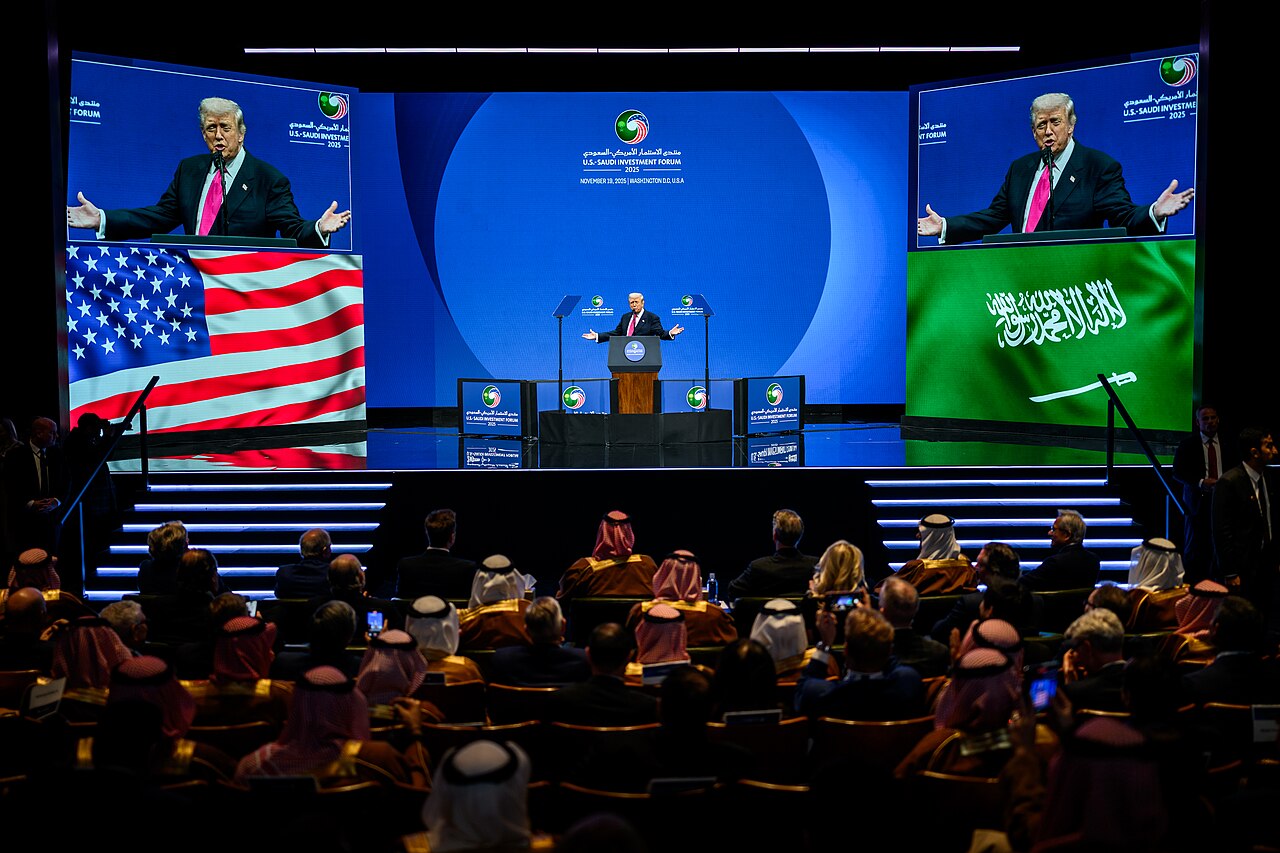
President Trump delivers remarks at the U.S.-Saudi Investment Forum in November 2025
Trump’s unilateral withdrawal from the JCPOA in 2018, followed by coercive economic sanctions on Iran, was more than “punitive measures.” This strategy was apparently intended to persuade Tehran to agree to a “better deal” with the US, including additional restrictions on Iran's nuclear programme and ballistic missile capabilities.
Irrespective of the debatable consequences of the exercise, along with the widespread global criticisms associated with it, the “Maximum Pressure” strategy on Iran served as an exemplary case demonstrating the broader transformation of American statecraft under Trump, in which coercion, negotiation, and economic leverage were integrated into a single transactional framework.
US–Saudi nuclear deal: New grammar of transactional diplomacy
The greatest articulation of transactional logic entrenched in American foreign policy under President Trump in recent times can be witnessed in the recently announced US-Saudi Nuclear Deal, which aims to lay the foundation for a 30-year multi-billion nuclear partnership between the US and Saudi Arabia.
Beyond being a conventional nuclear partnership, the proposed deal (known as a 123 agreement) represents a reciprocal strategic bargain, wherein the factors of technology, security, economic interests, and geopolitical considerations are simultaneously negotiated.
It intends to enable the transfer of civil nuclear materials, technology, and equipment from the US to Saudi Arabia. This will help Saudi Arabia diversify its economy and reduce its dependency on oil and gas.
Apart from deepening the strategic partnership between the US and Saudi Arabia, the deal will expand American nuclear technology exports, benefiting American industry, workers and supply chains, while helping to meet Saudi energy needs.
Technology transfer is not simply a matter of energy cooperation, but it also becomes a diplomatic currency.
For Washington, the deal will not only restore its competitive edge in the global civil nuclear marketplace, but also will strengthen deterrence against regional adversaries, preserving its stronghold in the Gulf region. For Saudi Arabia, access to advanced civilian nuclear technology, strengthened security commitments, and enhanced international legitimacy serve important national interests.
The proposed arrangement therefore reflects a diplomatic style in which cooperation is structured around reciprocal strategic benefits rather than normative commitments alone.
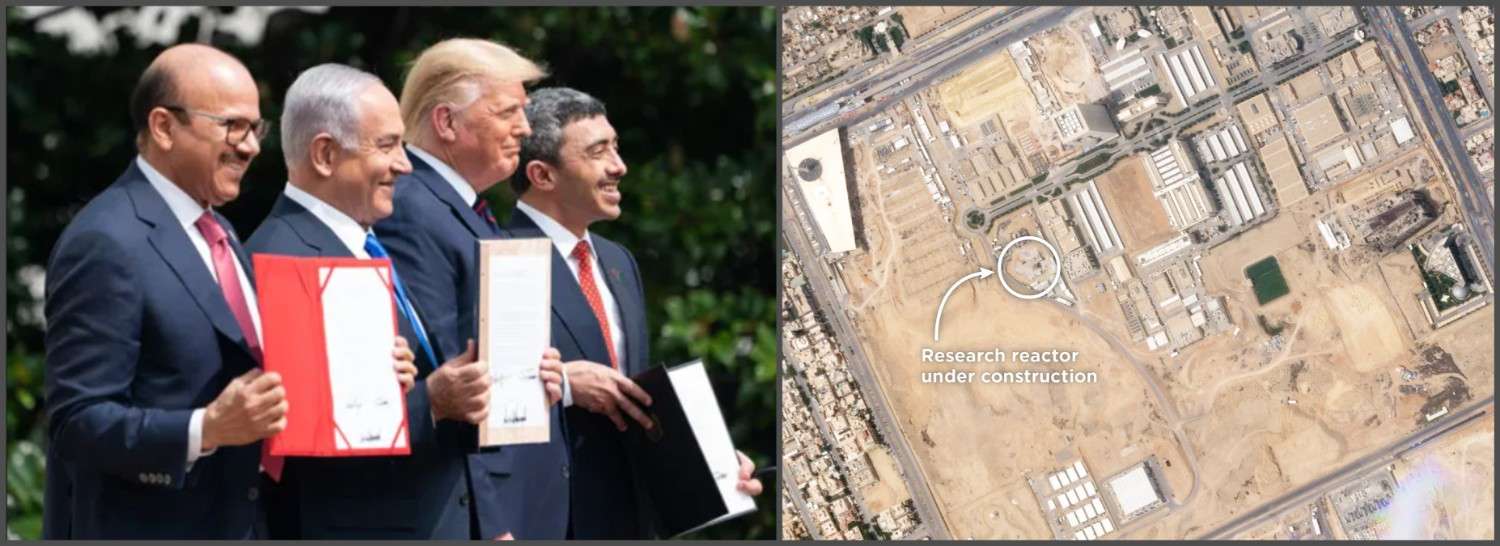
Leaders of Bahrain, Israel and UAE with President Trump holding the Abraham Accords at the White House lawn in September 2020 (left), and a satellite image from Planet Labs Inc showing construction of a small reactor at the King Abdulaziz City in Riyadh (right)
Further, Washington’s late linkage of the deal to Saudi Arabia’s joining of the Abraham Accords and normalisation of relations with Israel reflects not only Trump’s unpredictability enshrined in his foreign policy doctrine, but also his transactional approach towards “the art of deal-making.”
Rather than treating nuclear cooperation, regional normalisation and security partnerships as isolated policy domains, the Trump administration sought to combine them into an interconnected framework of reciprocal concessions.
US diplomacy and future of the liberal international order
The observable patterns in America’s engagement with Israel, Iran and other Gulf countries in the West Asian region reflect a broader transformation not only in the conduct of US foreign policy, but also raise significant questions regarding the future of the liberal international order beyond West Asian geopolitics.
The post-1945 rules-based international order predicated on international institutional frameworks, multilateral cooperation, collective security arrangements, and mutual reciprocity was pinned on the US, with its hegemonic leadership as the fulcrum on which the systemic architecture rested.
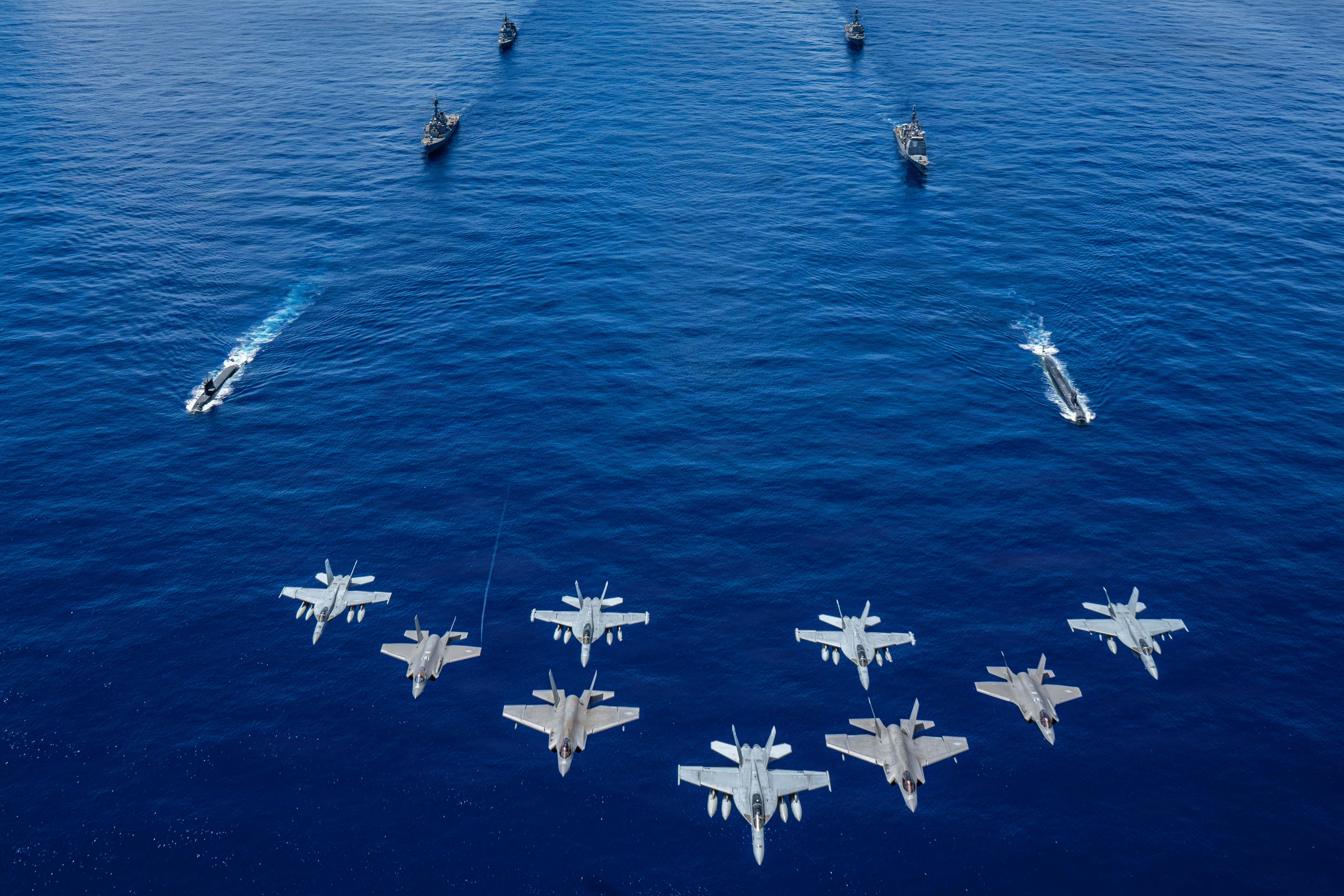
US Navy and Japan Maritime Self-Defence Force vessels during the Valiant Shield exercise in Philipines sea in June 2026
Historically, since the end of the post-war order, this liberal international order has survived the test of time and demonstrated remarkable resilience amidst structural challenges including geopolitical ruptures, global economic crises, and humanitarian upheavals for around eight decades.
However, President Trump’s foreign policy posture, focused on a transactional understanding of diplomacy, presents perhaps the most articulate structural challenges to this liberal international order.
The Trump administration has framed its relations with allied states as a kind of zero-sum bargaining, moving security and trade relations beyond the principle of reciprocity into demands for concessions and impositions of financial burden-sharing.
As alliances and institutions are increasingly evaluated by their cost-effectiveness and comparative advantage, multilateral institutions and cooperative frameworks like the United Nations, WHO, NATO, and others are losing their relevance to polarising rhetoric and ethno-nationalist discourses.
Also, with transactional diplomacy sidelining multilateral institutions, the emerging or middle powers like India find themselves confronting a strategic predicament in their diplomatic engagements. While remaining committed to preserving the rules-based international order, they need to simultaneously engage in pragmatic bilateral bargaining with powerful states like the US to leverage their own interests.
This heralds a paradigm shift not only in American foreign policy, but also places the future of the liberal international order into a state of uncertainty as the world witnesses the most chaotic geopolitical realities unfold.
Whether transactional diplomacy should be seen as a leader-centric foreign policy outcome or whether it will emerge as a durable paradigm of 21st-century statecraft, sustaining beyond the presidency of Donald Trump, remains debatable.
However, the lessons learnt from the West Asian experience resonate even beyond the region and reflect a broader transformation in the practice of contemporary US statecraft.
Diplomacy is increasingly being redefined from the management of international order through shared responsibilities and institutional frameworks to a continuous process of calibrated bargaining, negotiated reciprocity, and strategic exchange.
If the 21st century is witnessing the transition from a ‘rules-based order’ to a ‘deals-based order,’ then West Asia has offered the world its earliest and perhaps most consequential glimpse of this transformation.
(Views expressed in this report are the author's own.)
Follow us on WhatsApp
Follow us on Facebook
Follow us on X @vudmedia
Follow us on Substack
