
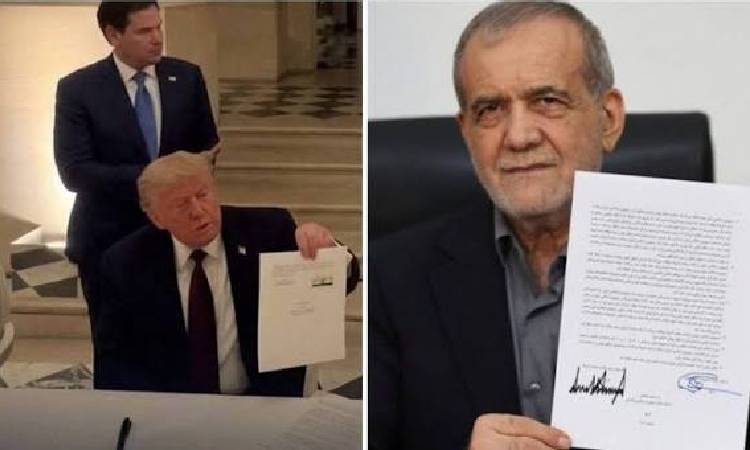
Even as the US and Iran continue their deliberations to fructify their 14-point MoU into a concrete deal, skirmishes are recurring in the region. The temperaments from both sides invariably indicate the fragility of peace, whose durability continues to be doubted. While Trump declared victory and fulfilment of the objectives of his unreasonable military campaign, Iran gained the pathways for its political and economic integration with the global mainstream, without having to make painful commitments on its nuclear programme or reversing its strategic legacies. While Pakistan gained as an implausible and effective peacemaker, Israel continues to fume over the deal and may seek to be a spoiler. But the more significant question remains: Will the 'irrational' politicians who forced this unjust and gratuitous conflict be made accountable by the international community?
Home page image: US President Donald Trump signing the MoU with Iran, at the Palace of Versailles, France, on June 17, 2026, in the presence of French President Emmanuel Macron and US Secretary of State Marco Rubio
Text page image: Collage of President Trump and Iranian President Masoud Pezeshkian signing the MoU
Banner image: President Trump unveils the new Air Force One, an aircraft gifted by the Qatar royal family
On April 17, 2026, exactly 49 days after the first air and missile strikes were launched by the combined forces of the US and Israel against Iran, from the morning of February 28, 2026, the US President Donald Trump declared on his Truth Social page that the “Strait of Hormuz is completely open and ready for business and full passage.”
Many assumed the war was officially over and that a deal had been struck by both sides, though Trump had indicated in the same post that the naval blockade would remain until “our transaction with Iran is 100 per cent complete,” adding that “this process will go very quickly in that most of the points are already negotiated.”
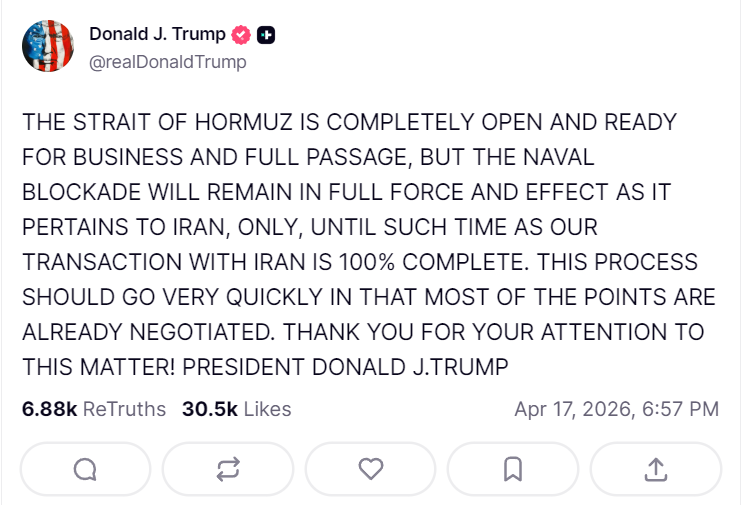
As it turned out, a deal could not be agreed upon within those 50 days. Most of the points claimed to have been “already negotiated” were not the ones Iran seemed to have agreed to. What seemed palpable by the 50th day, instead, was the fatigue of war setting in, and both sides inclined towards reaching a truce, but not without declaring themselves the victor.
As Professor Swaran Singh noted in his Asia Watch column of March 12th, this West Asian conflict theatre was experiencing a ‘credibility trap’ with the “contests of reputation making compromise and concession difficult and escalation remaining the sole pathway to restore prestige.” This condition not only affected the warring states, but also the ringside players in the Arab world who were sucked into the conflict, by design or consequence.
The prominent emirates of West Asia (UAE, Qatar and Kuwait), and the kingdoms (Saudi Arabia, Jordan and Bahrain) and sultanate (Oman) of Arabia have largely remained insulated from recurring conflicts in the region, mostly revolving around Israel’s military hostilities against militant groups like Hamas (Palestine) and Hezbollah (Lebanon).
The Gulf Wars of the 1990s (liberating Kuwait) and in subsequent decades were part of the American campaign, especially against the Saddam Hussein regime, and in the post-Hussein years, against the Islamic State of Iraq and the Levant (ISIS).
The predominant Sunni Arab leadership – despite their theological rivalry with the Shia-centric Iran and customarily critical of the Israeli occupation of Gaza, West Bank and other Palestinian territory – has largely stayed aloof from the region’s conflict praxis.
The bulk of Arabian monarchs have been part of the Abraham Accords, facilitated by the first Trump administration, which meant a definitive thaw with Israel, and Iran was seen as a common adversary.
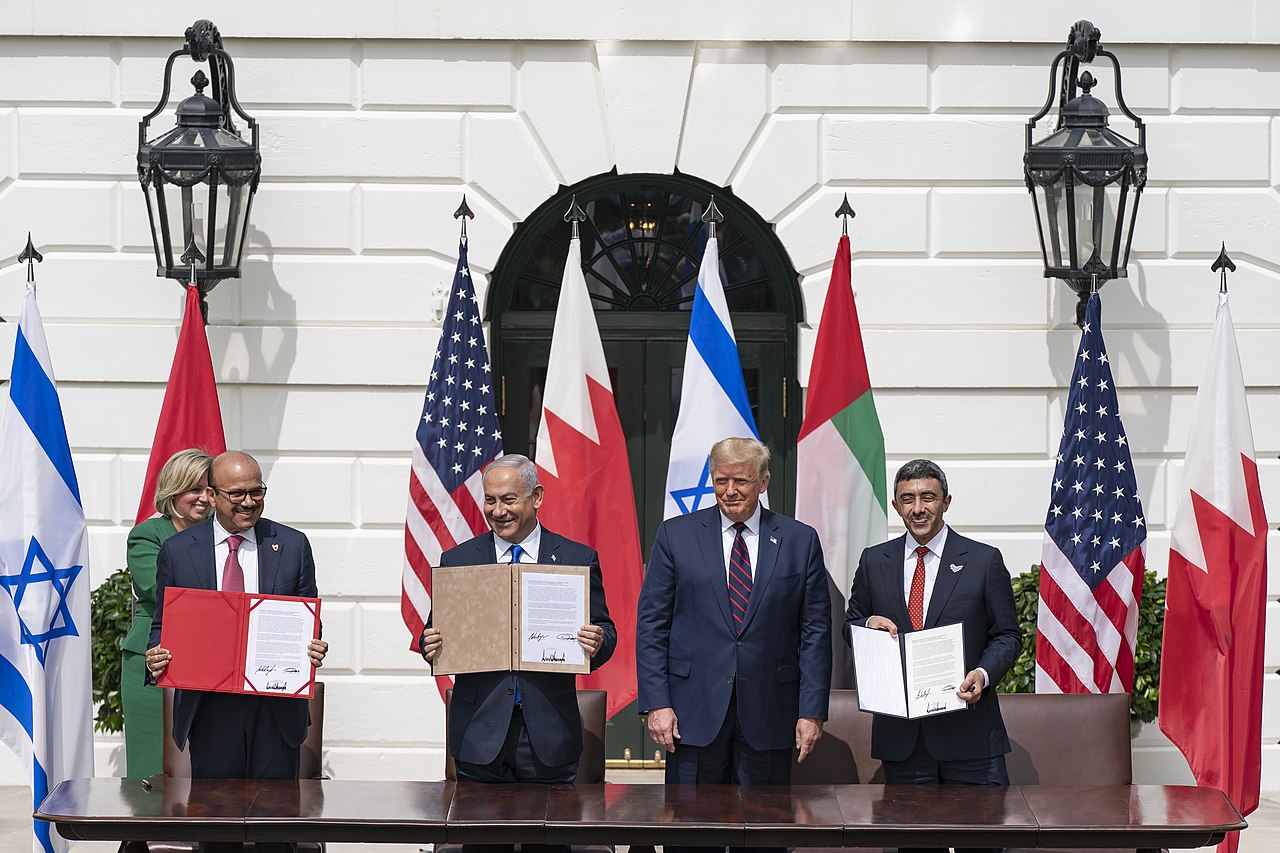
The signing ceremony of the Abraham Accords on September 15, 2020: President Trump with Foreign Minister of Bahrain Dr Abdullatif bin Rashid Al-Zayani, Israel PM Benjamin Netanyahu, and UAE Foreign Minister Abdullah bin Zayed Al Nahyan
That insulation peeled off in the immediate days after the US-Israel military operations were launched, with the Iranian leadership deciding to hit the Arab nations, chiefly the Gulf Cooperation Council (GCC) majors like Saudi Arabia, UAE, Qatar and Kuwait – all well within target on the other side of the Persian Gulf.
Tehran’s objective of targeting these Islamic neighbours was two-pronged: (a) as hosts of American bases in the region from where the US forces targeted Iran, signalling a tit-for-tat, and (b) unequivocally announcing to the GCC nations that they are direct targets as long as they remain allies of the US in the region, especially the military alliance.
The US, after all, has been the security guarantor for the Arab states in the region since the beginning of the Cold War, being a theatre for the superpower competitions.
The Iranian attack on GCC cities like Dubai and Qatar, along with their major ports, was not merely a below-the-belt assault on its Islamic neighbours, who might not have expected to be in the line of fire or a retaliatory strike targeting them.
These unprecedented strikes were also intended to increase the costs of war for Trump, whose miscalculations about Iran – be it the belief that Iranians will rise up once Ayatollah Khamenei was taken out, or Iran’s missile stocks and strike capability being diminutive – led to one of the biggest military setbacks for the US since the Vietnam War.
It was not just the pressure from the GCC allies that could have pressured President Trump to talk about ending the war and pushing the Iranians towards negotiations. Rather, the rampant Iranian drone attacks had caused extensive damage to US military installations in the UAE, Saudi Arabia, Qatar, Iraq, Kuwait, Jordan and Oman.
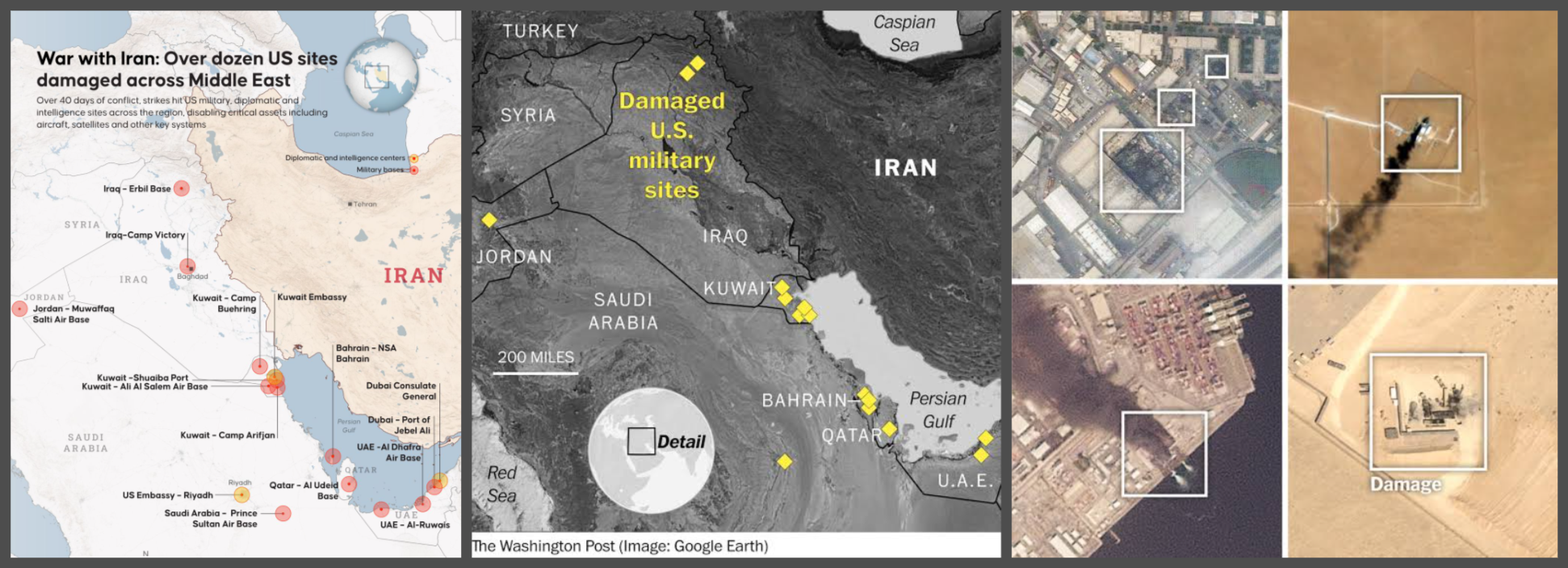
Maps and satellite images from Anadolu Agency (left), Washington Post (centre), and New York Times (right), show the US sites targeted by Iran in the Middle East
The bulk of Iranian drone attacks was known to have decapacitated the ability of US forces to retaliate from these bases, which hosted not just fighter jets, bombers and reconnaissance aircraft but also theatre defence systems including the Patriot Advanced Capability-3 (PAC-3) and Terminal High Altitude Area Defence (THAAD) batteries.
An assessment by the British Broadcasting Corporation (BBC) claimed that over 20 military sites across the region were badly hit, including missile defence batteries at the Al Ruwais and Al Sader air bases in UAE and the Muwaffaq Salti Airbase in Jordan, the refuelling and reconnaissance aircraft, including the KC-135 Stratotanker and E-3 Sentry AWACS aircraft, at the Prince Sultan air base in Saudi Arabia, along with fuel storage depots, aircraft hangers and satellite communication systems at the Ali Al Salem base and Camp Arifjan in Kuwait.
Separately, the US Congress had listed the losses as including over 42 aircraft – fixed-wing, rotary-wing (helicopters) and unmanned platforms – being lost as part of Operation Epic Fury. Based on estimates from the Department of War, US Central Command (CENTCOM), and open sources, the Congress dossier pegged the total losses at USD 29 billion.
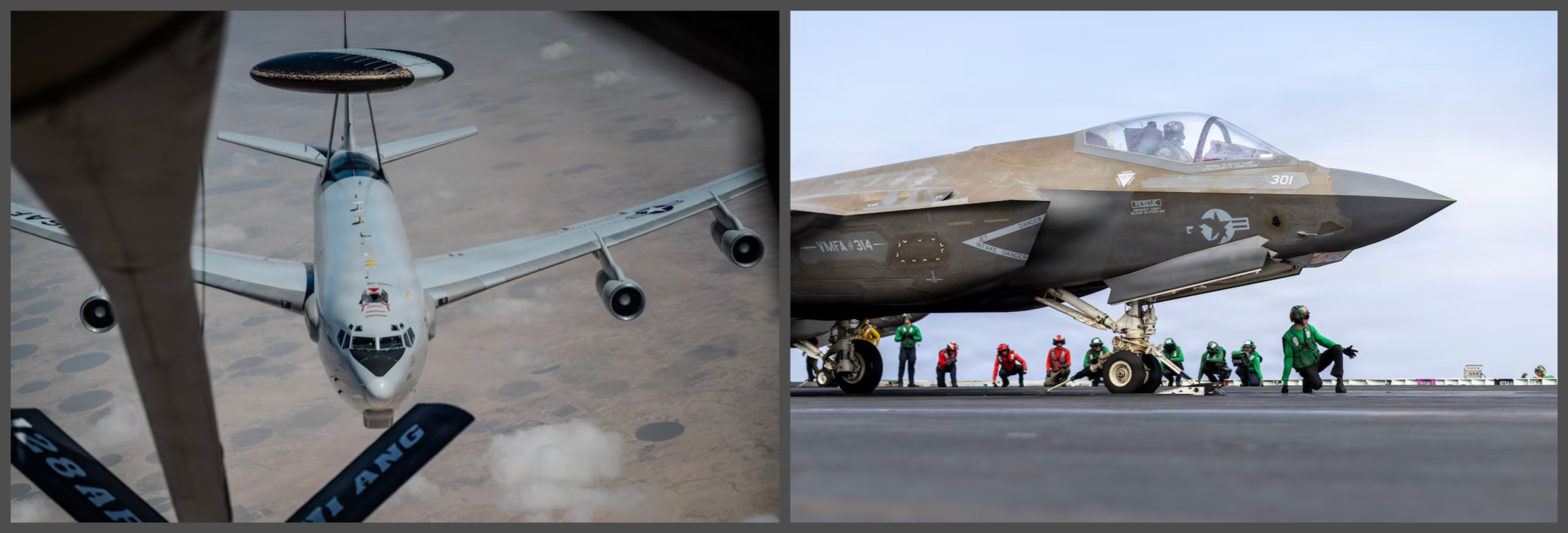
A KC-135 Stratotanker refuelling an E-3 Sentry AWACS aircraft mid-air (left), and an F-35 about to take off from a flight deck; images - US CENTCOM
More alarming for the Trump administration was how Iran used the Strait of Hormuz as strategic leverage by closing the maritime chokepoint for the first time since partially doing so during the Iran-Iraq war, notwithstanding the many disputes over the channel in subsequent years.
On March 22, close to a month after he launched Operation Epic Fury, President Trump posted on Truth Social that “if Iran (sic) doesn’t fully open, without threat, the Strait of Hormuz, within 48 hours, the USA will hit and obliterate their various power plants, starting with the biggest one first!”
Rejecting Trump’s implicit assertion that the one who launched the war also sets the terms of negotiations, Iran was unyielding before Trump’s threats. Instead, it was seen to be lampooning Trump with numerous cartoons depicting the US President as a loser, stuck in a war quandary of his own creation, desperate for a ceasefire, and shown as being played by Israeli Prime Minister Benjamin Netanyahu.
A month into the military campaign, President Trump was seen as desperate for an exit strategy. That desperation was evident in the Truth Social post of April 17th when he unilaterally declared the war to be over without any supportive statement from the regime in Tehran.
Like the ceasefires he unilaterally declared in the previous weeks, this self-imposed truce of April 17th also did not hold, as Iran continued to maintain its stranglehold over the Strait of Hormuz, launch sporadic attacks across the Persian Gulf towards the GCC countries and continue to spew its most potent missiles, including the hypersonic Fattah I and II, at Israel.
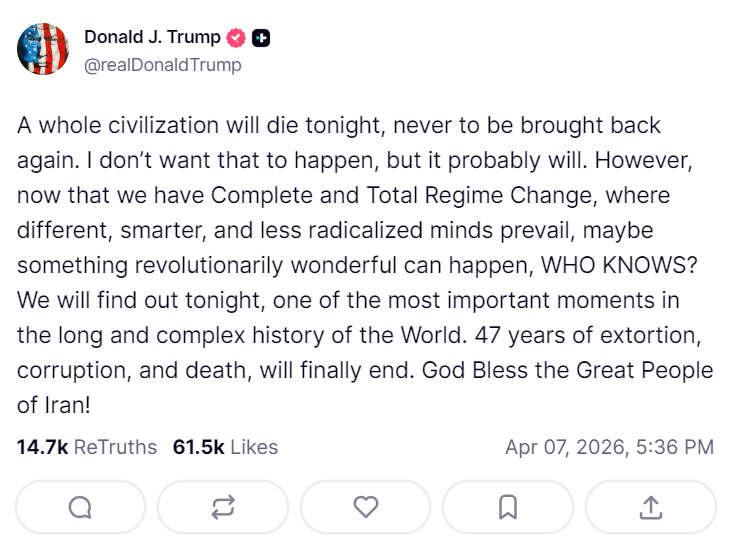
Trump’s desperation peaked around early April, as evident from his April 7th incendiary on Truth Social:
A whole civilization will die tonight, never to be brought back again. I don’t want that to happen, but it probably will. However, now that we have Complete and Total Regime Change, where different, smarter, and less radicalized minds prevail, maybe something revolutionarily wonderful can happen, WHO KNOWS? We will find out tonight, one of the most important moments in the long and complex history of the World. 47 years of extortion, corruption, and death, will finally end. God Bless the Great People of Iran!
The implication was a massive bombing campaign against the Islamic Republic in response to its refusal to come for negotiations, end the blockade over the Strait of Hormuz and continuing attacks on Israel and GCC nations.
Pakistan, the implausible ‘peacemaker’
While it seemed the war was then entering the next phase that could see greater bloodshed and destruction, a sudden initiative spearheaded by Pakistan seemed to have tilted the game, with the politico-military leadership using their good relations with President Trump to desist from the planned escalation.
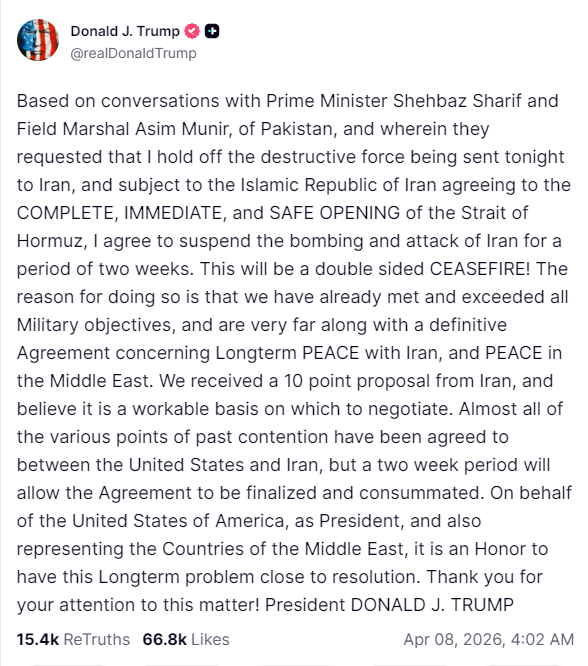
Declaring a ‘ceasefire’ on April 8th, Trump endorsed the Pakistani initiative in his Truth Social, stating: “Based on conversations with Prime Minister Shehbaz Sharif and Field Marshal Asim Munir, of Pakistan, and wherein they requested that I hold off the destructive force being sent tonight to Iran, and subject to the Islamic Republic of Iran agreeing to the Complete, Immediate and Safe Opening of the Strait of Hormuz, I agree to suspend the bombing and attack of Iran for a period of two weeks. This will be a double-sided Ceasefire!”
Pakistan, which was known as the ‘global hub of terrorism’ and widely treated as a ‘failed state,’ had suddenly emerged from the shadows as the most unlikely peacemaker. By invoking the lineage of Muslim fraternity, the Shehbaz Sharif-Asim Munir duo acted as a bridge between not just the US and Iran, but also between the historically sparring Sunni and Shia worlds.
The journey from those initial deliberations of early April to the signing of the Memorandum of Understanding (MoU) by President Trump and his Iranian counterpart Masoud Pezeshkian might find its unique space in the annals of global conflict resolution.
For all its notoriety as theatre of military coups, nerve-centre of interstate conflict – be it India-Pakistan, Pakistan-Afghanistan or US-Pakistan disputes – Islamabad emerged as the ideal ‘neutral’ venue where the Americans could meet the Iranians, unlike the earlier preferred locales in the Middle East or Europe.
The many trips made by Field Marshal Asim Munir, the Pakistani Chief of Defence Forces, to Tehran and Washington formed part of the negotiations that eventually led to the 14-point peace deal. A return to hostilities, even if in limited terms, in the previous few weeks led to apprehensions about whether a lasting peace is ever possible.
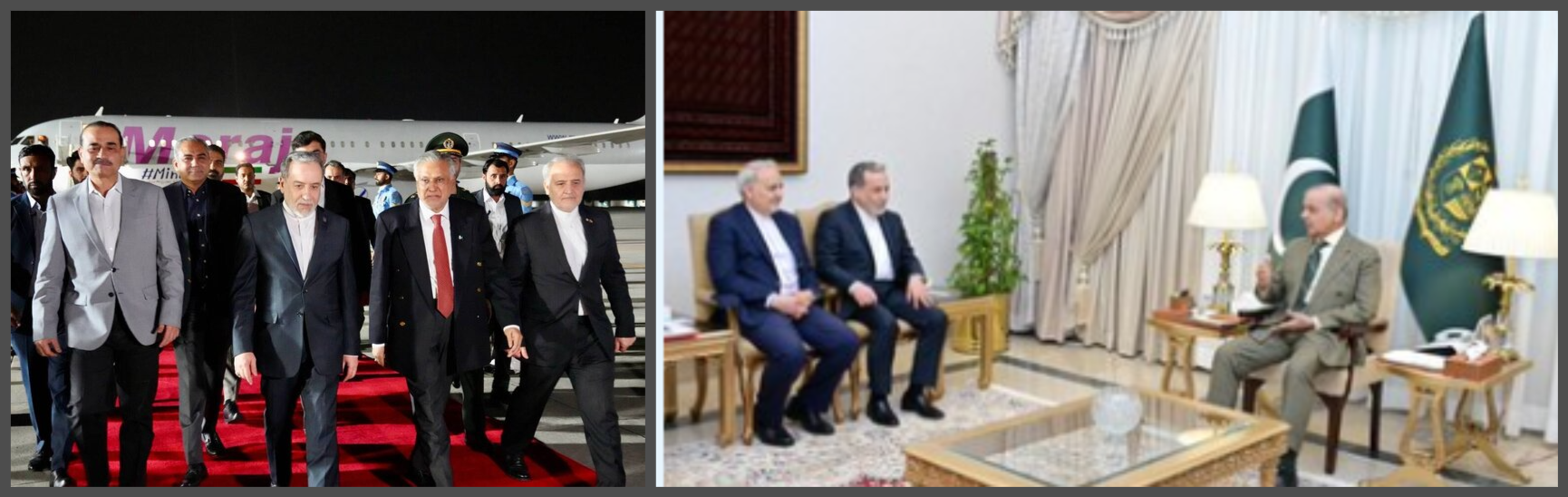
Pakistan Chief of Defence Forces Field Marshal Asim Munir received the Iranian Foreign Minister Abbas Araghchi at the Islamabad airport (left), and Pakistan Prime Minister Shehbaz Sharif with Iranian Parliament Speaker Bagher Ghalibaf and Araghchi
Mavericks and their deal-making
Even as the MoU was signed on June 18th, the continuing Israeli attacks on Lebanon and Trump’s pronouncements holding the deal to his personal whims had led to the Iranian delegation declining the photo-ops in Geneva during the first round of negotiations. The Iranians also announced the closure of the Strait of Hormuz on June 20th.
Trump, for his part, also keeps upping the ante. Days after chastising Netanyahu for his ‘disproportionate’ military attacks and unwanted destruction in Lebanon, Trump again changed his mood towards Tehran by remarking two days after the MoU signing that “we’ll hit Iran very hard again,” if they don’t “immediately stop their highly paid proxies in Lebanon from causing trouble.
The mercurial President of the US (POTUS) had, soon after signing the deal, declared that he could “bomb the hell out of Iran” if the latter was not seen to be adhering to the deal. Such ranting episodes, apart from capricious and impulsive decisions, Trump’s decision to go into the war, beyond the Israeli prodding, continues to be parsed in the US.
A latest report in the Wall Street Journal laments about Trump’s shifting rhetoric throughout the campaign, which started with a pronounced objective of ‘dislodging’ the hardliner theological regime in Tehran, or regime change, and then advanced to claim goals of eliminating Iran’s nuclear programme, along with its missile capabilities.
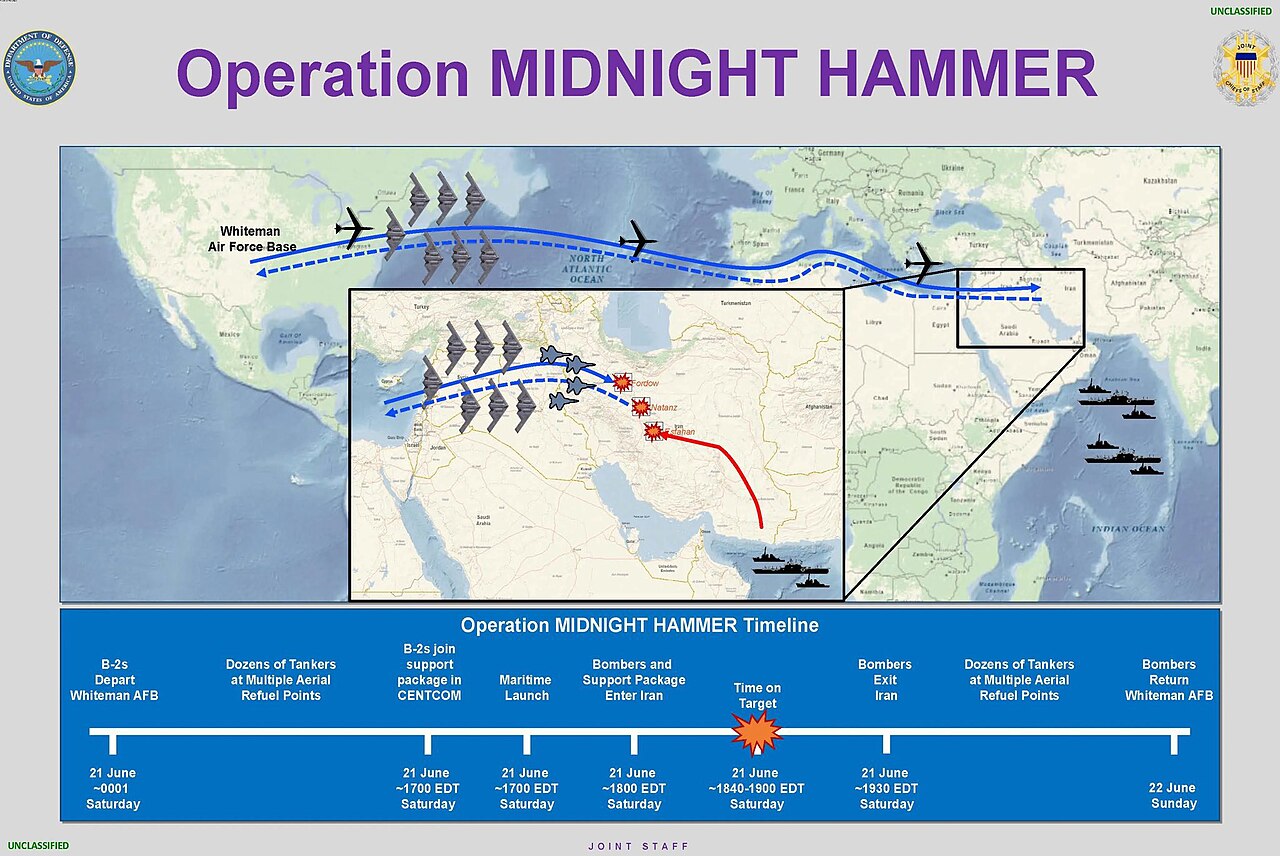
This is despite claims made by the Trump administration that Iran’s nuclear capabilities were ‘completely destroyed’ after the twelve-day US-Israeli bombing campaign of June 2025. Christened ‘Operation Midnight Hammer,’ the campaign targeted key nuclear installations in Fordow, Natanz and Isfahan.
Declaring the Operation as ‘historically successful,’ the US Secretary of War Pete Hegeseth had remarked that the “…most complex and secretive military operation in history,” was a “resounding success, resulting in a ceasefire agreement, and the end of the 12-day war.” Because of decisive military action, President Trump “created the conditions to end the war, decimating – choose your word – obliterating, destroying, Iran’s nuclear capabilities.”
Having declared the operation as a resounding success and claiming complete decimation, obliteration and destruction of Iran’s nuclear infrastructure – with a generous choice of adjectives given to the beholder – there was no sound logic to raising the nuclear bogey again to justify Operational Epic Fury.
Yet, that is what the Trump administration did, drawing all around ridicule for going into a war with such contradictions.
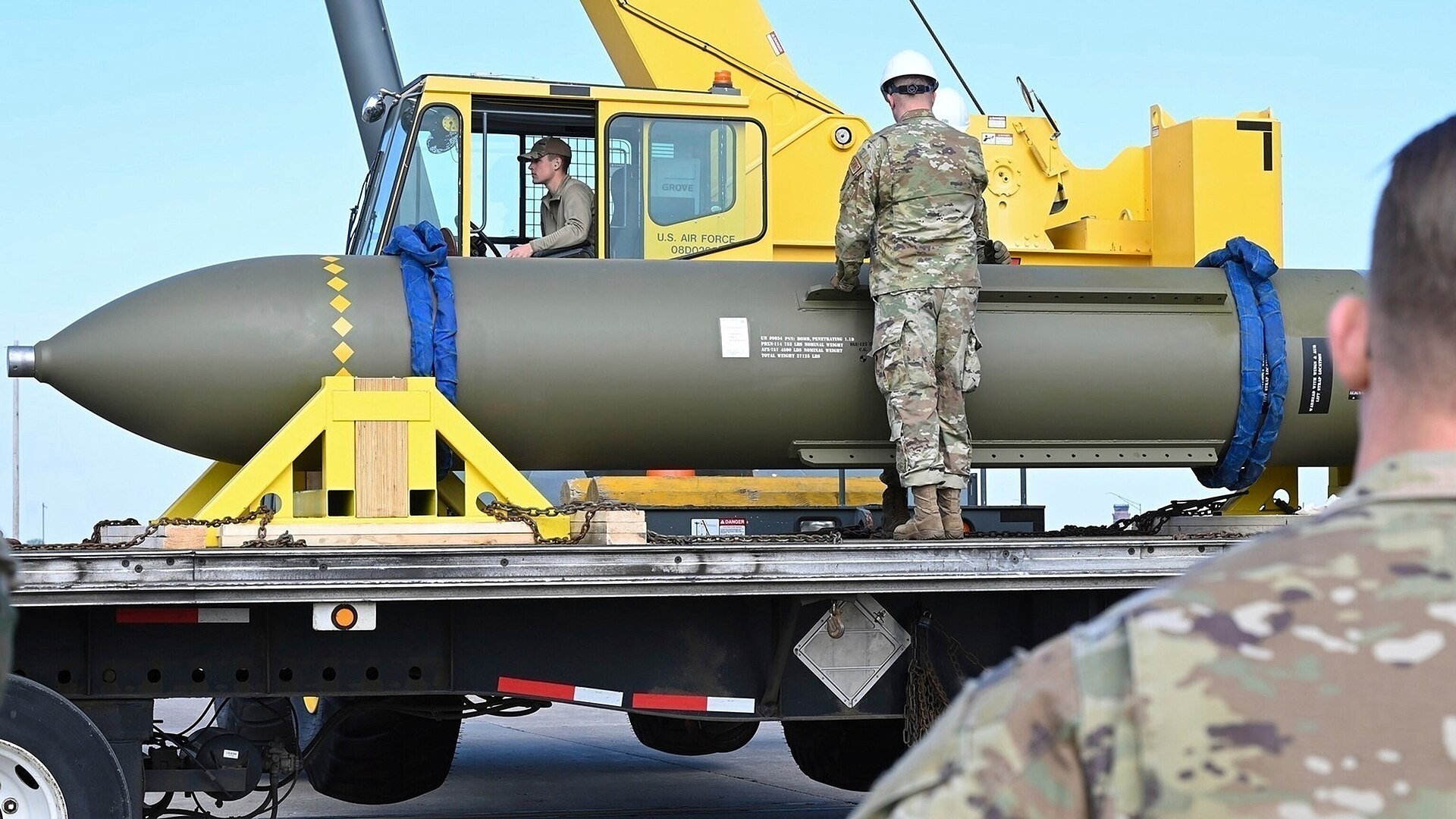
Operation Midnight Hammer, targeting Iran's nuclear sites in June 2025, saw the first combat use of the 30,000-pound (14,000 kg) GBU-57 MOP
Regime change as the fig leaf
However, reverting to the nuclear cause was after the objective of ‘regime change’ fell by the wayside. The massive wave of protests against the Ayatollah Khamenei-led regime that started in late 2025 had intensified around early January 2026. Trump had repeatedly declared support for the protestors.
On January 2nd, 2026, Trump posted on Truth Social, “we are locked and loaded and ready to go,” implying some military action to support the protestors. This was followed by an imposition of a 25 per cent tariff on countries doing business with Iran. On January 11th, Trump claimed that the Iranians “want to negotiate,” because “they are tired of being beat up by the US.”
In response, the Iranian Foreign Minister Abbas Araghchi declared that Iran was fully prepared for war, if attacked, but also added that it was ready for “fair negotiations.”
On January 13th, when the Iranian regime had begun a heavy crackdown on the protestors, Trump declared that the regime “will pay a big price,” while warning the regime of “very strong action” if protestors are executed. In the same vein, Trump assured Iranians that “help is on its way,” urged them on to continue protesting, “take over your institutions,” and “save the names of the killers.”
Despite these assurances, Trump did not intervene politically or militarily, which led to the protests being clamped down on, with many being killed and detained by the Iranian regime.
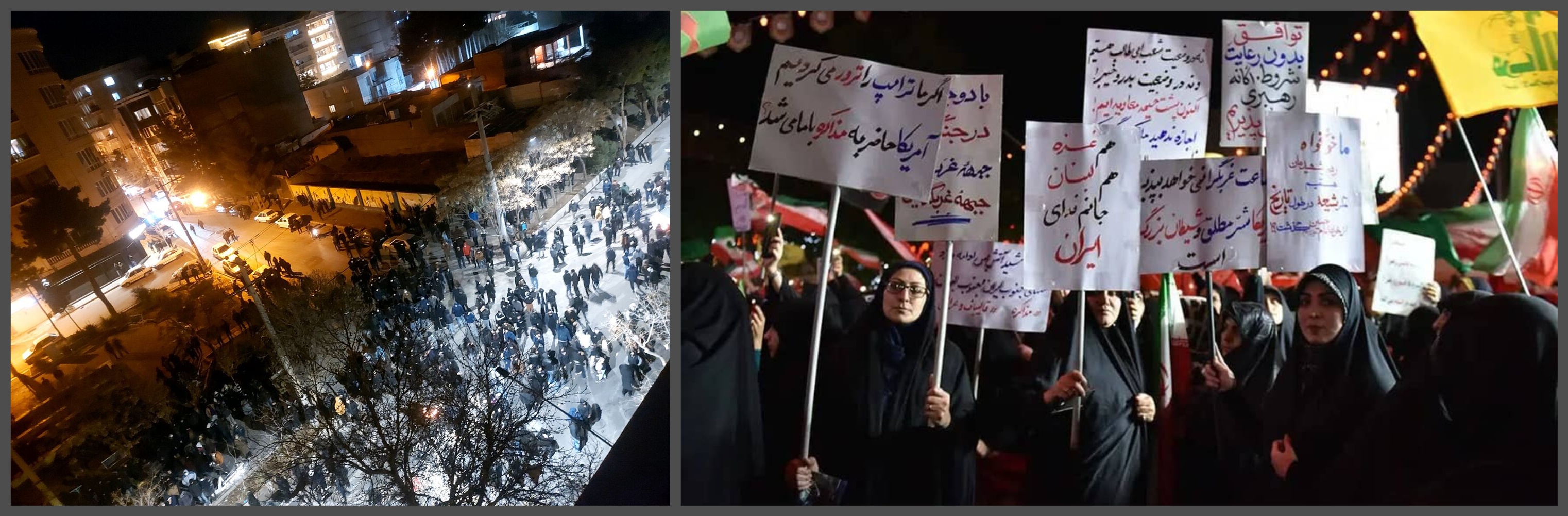
Protests in the Nishapur province of Iran on 19 January 2026 (left); photo source - Wikimedia Commons, and a pro-regime protestors rally against negotiations with the US, with one sign reading: "Had we assassinated Trump, would the US seek negotiations with us?" photo source - National Council of Resistance of Iran
While it is unclear why the US and Israel chose February 28th for launching the campaign, the Trump administration went into Operation Epic Fury by claiming ‘regime change’ as its pivotal goal. In his video of February 28, Trump exhorted the Iranian people to take over their government and vowed to confront the “wicked, radical dictatorship” in Tehran with devastating force.
The US-Israel joint force, assisted by the Central Intelligence Agency (CIA), however, made the pivotal mistake of targeting and killing the Iranian Supreme Leader Ayatollah Ali Khamenei on the first day of the campaign.
The Ayatollah’s killings evidently enraged the Iranian population, including those sections who protested against the regime in the previous months, and enabled the surviving and transitioning leadership to mobilise national support for the resistance against the US-Israeli action.
Along with ensuring national unity and support from all sections of the population to the political transition, including the accession of the new Ayatollah, Khamenei’s son Mojtaba, the Iranian Revolutionary Guards Corps (IRGC) also spearheaded the retaliation with the armed forces and its formidable, and hitherto concealed, missile inventory, able to make a swift counter-offensive against the US and Israeli forces.
The Iranian retaliation caused not just extensive damage to US military infrastructure and widespread destruction in Israel, but also forced Tel Aviv to retreat from its offensive posturing, and negated the possibility of gaining battlefield superiority to the extent of having to withdraw the potential plans to deploy ground forces inside Iran, expecting an internal upheaval in the Islamic Republic.
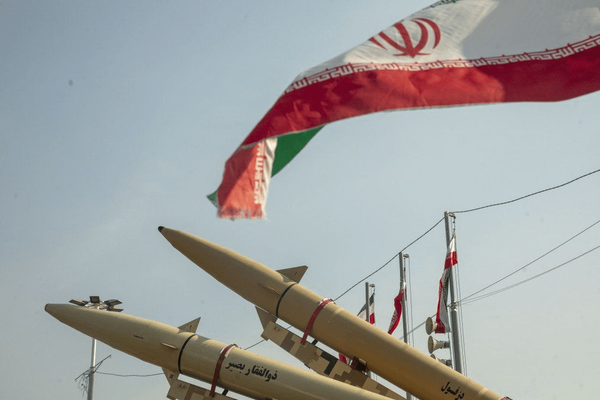
The Iranian flag flutters over the display of missiles in Tehran
With the Iranian offensive, using hypersonic missiles and precision targeting, causing extensive damage to civilian and military areas in Israel, even Prime Minister Benjamin Netanyahu was at one point seen to have withdrawn from public appearances, raising rumours about being injured or killed.
Visibly stunned by the Iranian resilience and expectations of a regime change being belied, the Trump administration was desperately searching for an exit strategy since early April.
Trump also failed to muster support for the military campaign in the US, with even his hardline MAGA (Make America Great Again) base severely censured the US President for this ill-conceived and ill-timed war that sent gas prices shooting up, following the global oil crisis caused by the war and the closure of the Strait of Hormuz.
Legality, on thin ice
On the other hand, the unprovoked military action raised questions about the legality of the military campaign.
In his 8-minute video of February 28th, Trump sought to present Iran as a “state sponsor of terror,” a ‘radical dictatorship’ threatening America’s “core national security interests,” and Iran’s nuclear ambitions as the key catalyst for the campaign, conceived to “eliminate imminent threats from the Iranian regime.”
Thus, the military campaign was projected as a ‘pre-emptive’ mission, despite no direct or demonstrated threat from Tehran.
Instead, Trump concocted a story on Iran’s nuclear weapons, notwithstanding his repeated claims, even in this video, that Operation Midnight Hammer “obliterated the regime’s nuclear program at Fordo, Natanz and Isfahan.” Trump then claimed that the US sought to repeatedly make a deal to ensure that Iran did not resume “their malicious pursuit.”
“They wanted to do it. They didn’t want to do it. Again, they wanted to do it. They didn’t want to do it. They didn’t know what was happening. They just wanted to practice evil. But Ian refused, just as it has for decades. They’ve rejected every opportunity to renounce their nuclear ambitions, and we can't take it anymore. Instead, they attempted to rebuild their nuclear program… and can now threaten our good friends and allies in Europe, our troops stationed overseas, and could soon reach the American homeland.”
These were the incoherent rants used to justify and impose a war on the Middle East, which had global reverberations, affecting almost every nation dependent on global oil and gas networks and shipping supply chains. Even Netanyahu had justified the military campaign as a ‘preemptive’ mission to ensure that Iran did not annihilate the Jewish state.
A dossier published by the US State Department sought to justify the campaign as adhering to international law by framing it as an act of self-defence mandated by the United Nations Charter.
The dossier released by Reed D. Rubinstein, Legal Adviser at the State Department, stated that Operational Epic Fury was meant to “[d]estroy Iranian offensive missiles, destroy Iranian missile production, destroy [Iran’s] navy and other security infrastructure,” and, finally, ensure that Iran “will never have nuclear weapons.”
Rubinstein claimed that the US was engaged in this conflict at the “request of and in the collective self-defense of its Israeli ally, as well as in the exercise of the United States’ own inherent right of self-defense.”
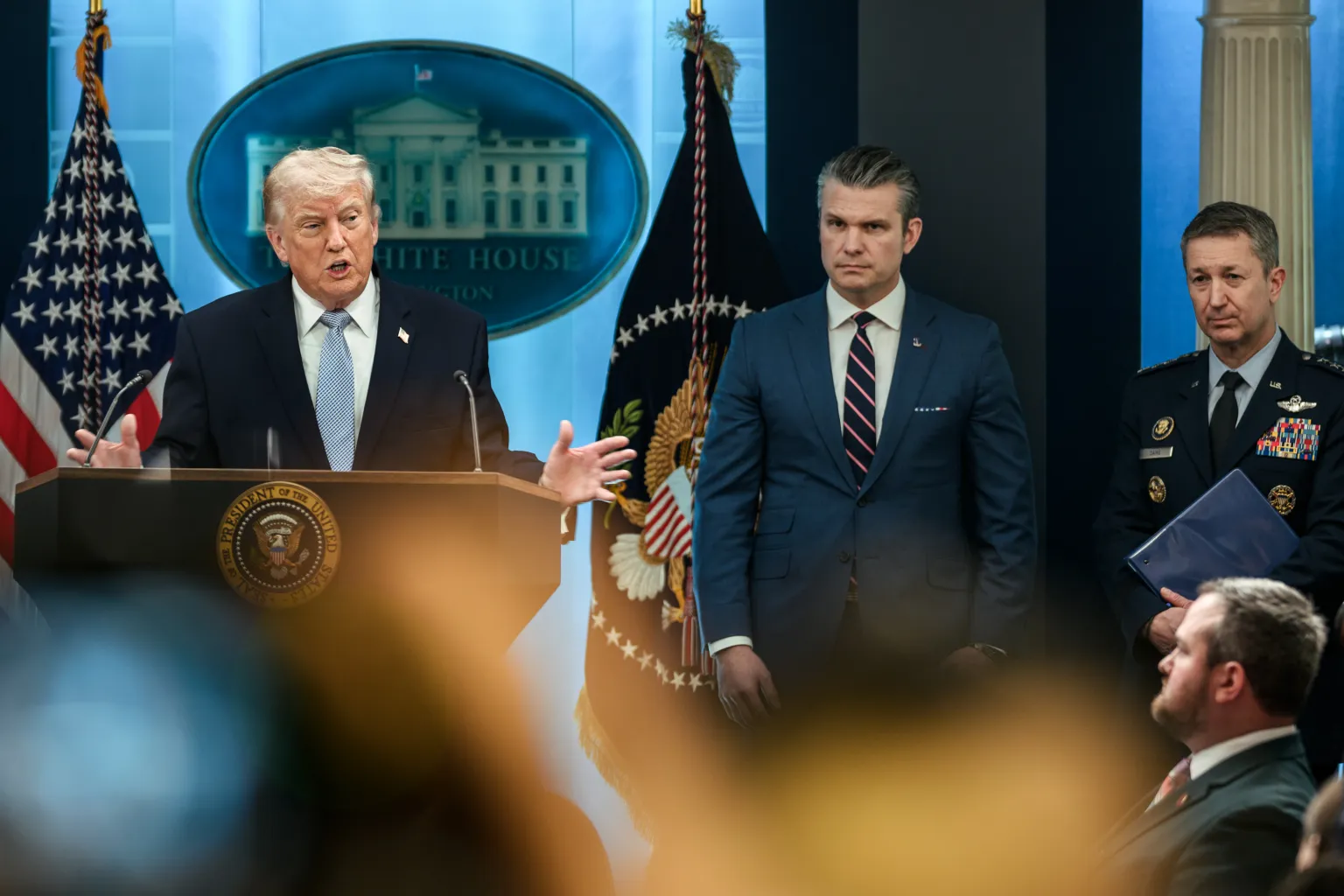
President Trump at a White House presser with Secretary of War Pete Hegeseth by his side
Describing the Operation to be part of an “an armed conflict with Iran that has been ongoing for years and, at the very least, since June 2025,” the dossier claims that Iran had directly and through its proxies targeted the US and Israel over the years. However, the instances of direct attack on the US were the events of 1979 (during the Islamic Revolution), the bombing of US Marines in Lebanon in 1983, the Khobar Towers assault in 1996, and IED attacks against the US soldiers in Iraq over a period of 8 years, and so on.
These incidents, and other hostile actions involving alleged Iranian proxies against Israel, were supposedly “demonstrating Iran’s malign aggression over decades, particularly in its escalatory attacks against the US, Israel, and others in the region for years, which precipitated an international armed conflict that predated US combat operations on February 28 and that continues to this day.”
And, by treating this as an ‘ongoing armed conflict,’ the dossier claimed, “it is not necessary as a matter of international law to reassess whether an armed attack is imminent prior to every subsequent action taken against an adversary… nor to reapply jus ad bellum (conditions under which states are legally permitted to go to war or use force) standards of necessary and proportionality.”
Thus, by the US State Department’s own description, there seemed to be no immediate or imminent threat that necessitated Operation Epic Fury (US) and Operation Roaring Lion (Israel), nor could any imminent threat be demonstrated or justified even as the Trump administration had to resort to age-old rivalries and animosities to justify and unwanted, unjust and avoidable conflict in a region rife with conflict and bloodshed.
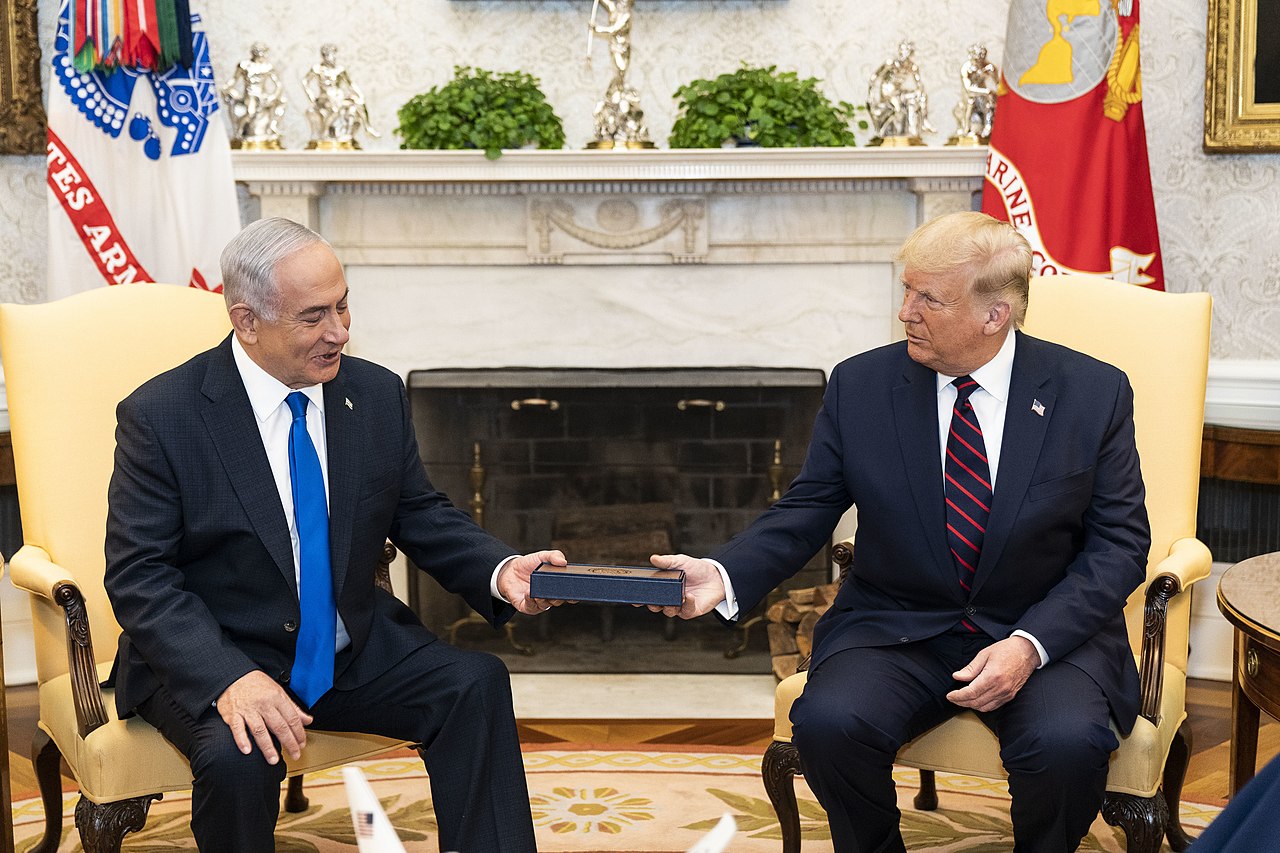
Israeli Prime Minister Benjamin Netanyahu with President Donald Trump at the White House
Making the war mongers accountable
The International Criminal Court (ICC) had issued arrest warrants for Israeli PM Benjamin Netanyahu and his former Defence Minister Yoav Gallant in November 2024, for the alleged war crimes and crimes against humanity committed in Gaza.
Similarly, the ICC had issued an arrest warrant for Russian President Vladimir Putin, accusing him of individual criminal responsibility for the unlawful deportation and transfer of children from the occupied areas of Ukraine to the Russian Federation.
It is unlikely that the ICC could issue a similar arrest warrant against President Trump. However, the possibility of legal proceedings could not be ruled out if Iran or any other entity seeks to prosecute Trump for war crimes, especially the bombing of Shajareh Tayyebeh girls’ primary school in Minab, Iran, on the first day of Operation Epic Fury.
The school bombing, attributed to a US missile strike, killed over 175 people, including over 120 children. This massacre has potent grounds to hold Trump and his Secretary of War, Pete Hegeseth, for war crimes, especially since White House and US government records clearly show Trump as having ordered Operation Epic Fury.
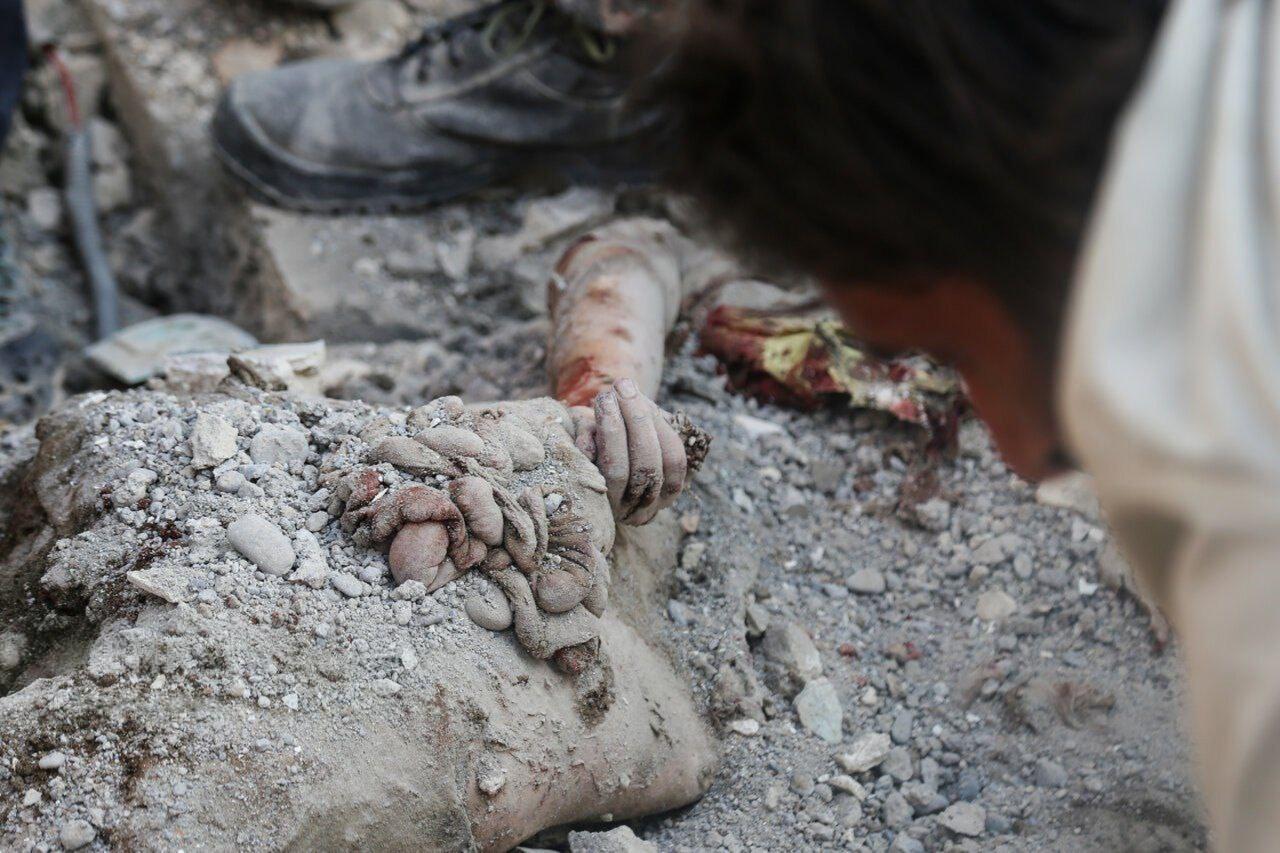
The body of a girl trapped under the rubble of the Shajareh Tayyebeh school in Minab following a US air/missile attack on 28 February 2026; photo source - Mehr News Agency
Interestingly, the US is not a member of the ICC and has earlier rejected its rulings, besides imposing sanctions on some ICC officials, investigating US actions in Afghanistan. Also, three ICC judges – representing Canada, Uganda, and Benin – had filed a lawsuit in Manhattan against President Trump and his administration, citing the sanctions as an unlawful attempt to coerce judicial decisions.
The actual costs of the Iran war for Trump will be in the domestic US politics. The MAGA universe, which initially admonished the US president for imposing costs of the war on Americans, especially the gas prices, is now censuring the deal with Iran, stating that Trump had given up too much.
According to a report in Time, only 24 per cent of Americans think that the Iran war was worth the costs, and only 23 per cent felt that the US was in a stronger position with Iran now than it was before the war. Fifty-seven per cent surveyed by CBS stated that the war leaves more problems than it was intended to solve.
While the Republican-dominated US Senate has now voted in favour of invoking its war powers to force the US President to halt his military campaign against Iran or seek congressional approval before any further action is taken, many Republican senators clashed with Trump and switched their vote on the Iran War Powers Resolution.
Trump has also been criticised for giving a long rope in the Iran deal, especially limiting to 60 days the toll-free passage through the Strait of Hormuz, the USD 300 Billion fund for reconstruction and economic development of Iran, which many argued was akin to war time reparations for the ‘victor,’ removal of all sanctions, unfreezing of Iranian funds, allowing Iranian oil to be sold on international markets, and, most significantly, not concrete proposals on removal of uranium from Iranian soil, or any other stringent conditions beyond that agreed in the Joint Comprehensive Plan of Action of 2015.
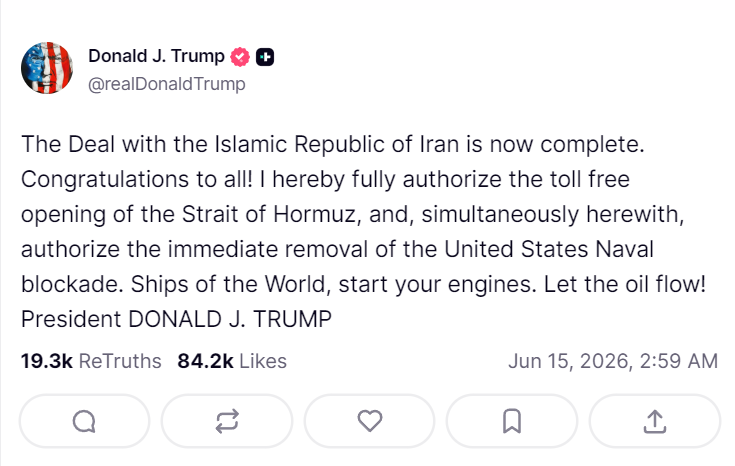
In other words, the MoU, electronically signed by both presidents on day 111 of the conflict, is seen as a grand victory for Iran, including untying it from the decades-old sanctions, freeing up its frozen assets, and the ability to sell oil in the international markets – all of which enables Iran to return to the global political and economic mainstream.
In return, Trump was not seen to have gained any assurances, particularly on the objectives stated at the beginning of Operation Epic Fury. Beyond reaffirming its age-old commitment not to develop nuclear weapons, all Iran and the US agreed in the MoU was to devise a mechanism to deal with enriched material (uranium) and a ‘satisfactory framework’ on enrichment, even as Iran is allowed to maintain ‘status quo’ on its nuclear programme.
Besides these big achievements for Iran, there has been no reference to ‘proxies’ or ‘terrorism’ in the MoU, which too was a major giveaway for the US, considering the descriptions of Iran as a ‘state sponsor of terror’ in the February 28th and subsequent dossiers.
While Israel is known to be fuming over the MoU and might be relentlessly seeking to scuttle the deal, especially by maintaining the offensive in Lebanon, the talks in Switzerland, though progressing well, are still seen to be dicey with the kind of whimsical temperaments seen on both sides.
What remains pending is the need to bring justice to the hundreds of innocents killed in Iran, Israel and GCC countries, for a war that emerged as a result of irrational, and suspectedly unhinged, politicians pursuing unreasonable and whimsical political and strategic goals that are self-defeating, pervasively destructive and turn the clock back for the world.
Follow us on WhatsApp
Follow us on Facebook
Follow us on X @vudmedia
Follow us on Substack


