
The India-US strategic partnership since the early 2000s transformed a historic relationship that was for long described as ‘estranged democracies’ into deep engagement and an inevitable partnership between the world’s largest democracies. Erased in that process was the long-held ‘hyphenation’ of India and Pakistan as a South Asian binary in Washington’s calculus. However, that legacy of the Cold War years seems to have returned with the second Trump administration’s spontaneous tilt towards Pakistan’s politico-military leadership, whose catalysts remain mired in confusion – whether it is driven by a personality-driven transactional approach of President Donald Trump or, instead, underlines a strategic gameplan that discards the great power balancing of the first Trump administration. The result is a complex rewiring of the South Asian strategic matrix, with India, like many other American allies hit by Trump’s whimsical policies, seeking new options and pathways, says Professor Stephen Burgess.
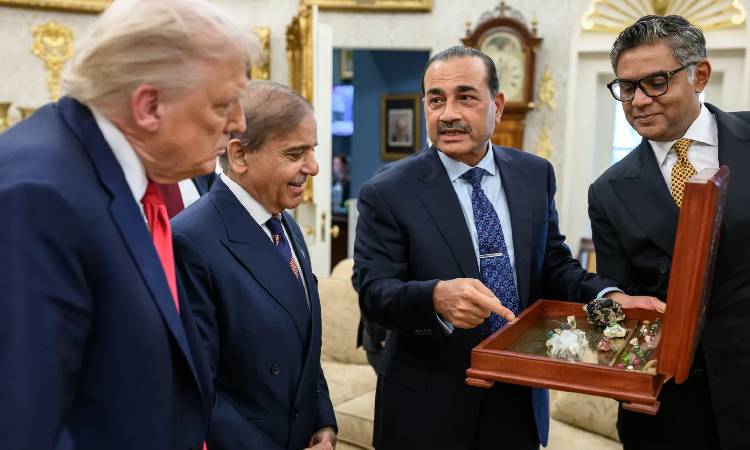
Home page image: US President Donald Trump, Pakistan Prime Minister Shahbaz Sharif and Pakistan's Chief of Defence Forces Field Marshal Asim Munir during their visit to the White House in September 2025
Text page image: Field Marshal Asim Munir shows a box supposed to be of 'rare earths' to President Trump with PM Sharif by his side
Banner image: The Malabar naval exercise of 2020 by the navies of the US, India, Japan and Australia
It is now widely perceived that Pakistan’s politico-military leadership has been able to successfully woo the United States of America (USA or US) under the second Trump administration towards its side.
By doing so, the Pakistani leadership also seems to have weaned the leadership in Washington away from India, notwithstanding the strategic partnership and close ties between the two largest democracies since the beginning of the millennium.
This outcome is seen as the result of Pakistan’s skilful lobbying with the campaign team of Donald Trump during the 2024 presidential election, and following up with the second Trump administration, besides the known susceptibility of the US President and his associates to influence campaigns.
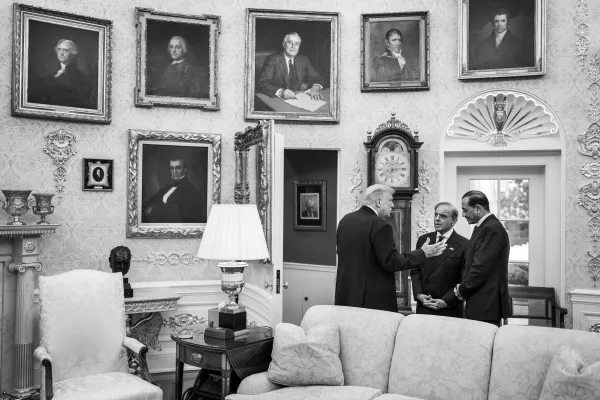
President Donald Trump in a one-to-one discussion with PM Shahbaz Sharif and Field Marshal Asim Munir at the Oval Office in the White House, September 2025
Pakistan’s leadership had hired American lobbying and public affairs firms to reach out to Trump’s political network and enlisted individuals close to him, including Trump Organisation notables. This had helped Pakistan gain access to the administration's inner circle and exert influence.
Pakistan spent millions in contracts with high-powered Washington firms, with some being paid hundreds of thousands per month to influence campaign and administration leaders as well as members of Congress and policy insiders.
These firms played up a positive image of Pakistan, including its supposedly dynamic, reformed economy, and countered the long-held perception that the country was a hotbed of terrorism, economically backwards, an abuser of human rights, and a close ally of China.
They proposed that Pakistan and, especially the Army, could be a reliable ally of the United States and that the country was open to US investment, deserving of reduced Trump administration tariffs.
Pakistan and its lobbyists portrayed the country as a future major power with its young population and growing tech sector. They tied its lobbying to Trump Organisation’s interests in cryptocurrency, including stablecoins, and digital payments.
There was an aggressive effort to attract US investment and build financial ties. Pakistan offered access to its critical minerals and claimed openness to trade. Pakistan’s senior leadership, including the Prime Minister Shahbaz Sharif and the Chief of Defence Forces Field Marshal Asim Munir, made frequent visits to Washington to meet with Trump administration officials.
Pakistan also backed Trump’s emphatic quest for the Nobel Peace Prize and claimed that he had brokered a cease-fire between Pakistan and India in their 2025 conflict. Pakistan also asserted that it was assiduous in handing over terrorism suspects, especially the Islamic State of Iraq and the Levant (ISIS) mastermind behind the 2021 Kabul Airport bombing of US Marines, besides promoting counterterrorism in South Asia.
Pakistani-Americans also played a key role in building support within the US civil society and business circles and with the administration.
Finally, Pakistan’s initiative to mediate between Iran and the United States and trying to bring about a settlement to their 2026 war also testified to Islamabad’s increasing clout and assumed role as a ‘peacemaker’ as opposed to the earlier years as ‘troublemaker.’
The combination of the aforementioned factors has, evidently, made Pakistan a favourite of the Trump administration.
The US Foreign Agents Registration Act (FARA) submissions indicate that Pakistan hired firms connected to people in Donald Trump's orbit, including former Trump associates. Their stated goals included improving US-Pakistan relations, attracting investment, and shaping policy discussions on South Asia.
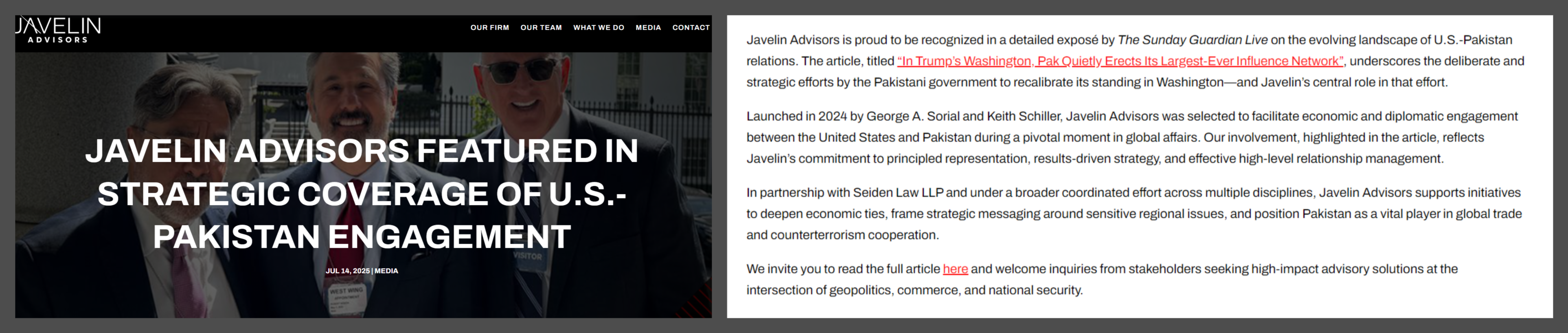
The firms mentioned in this reporting include:
(1) Javelin Advisors (leaders include Keith Schiller, a former White House official and longtime security chief for Donald Trump) was contracted to provide “strategic and advisory services to establish long-term economic partnerships with the United States through collaborative efforts and a strong alliance with the private sector and the US Government, specifically to facilitate the representation of the Islamic Republic of Pakistan.”
(2) Sorial Consulting (led by George Sorial, a former White House vice counsel), was provided a mandate similar to Javelin Advisors, which included “strategic and advisory services to establish long-term economic partnerships,” with the private sector and the US Government, and to facilitate the representation of the Islamic Republic of Pakistan.
(3) Seiden Law (led by Robert Seiden), assigned to provide “professional consulting services to the Islamic Republic of Pakistan,” which included “strategic and advisory services to establish long-term economic partnerships with the United States through collaborative efforts and a strong alliance with the private sector, the White House and the US Government, specifically to promote the exploration and sale of rare earth/critical minerals,” and “advising on meetings and strategy with both private equity firms, banks, businesses and key United States officials as needed.”
(4) Orchid Advisors with focus on commercial, business and security interests and subcontracting with other lobbying firms. However, the FARA reporting showed a bigger mandate provided by Pakistan for Orchid which included “strategic review of Pakistan’s current economic, political, and social policies and the implications for Pakistan business and other strategic interests, assessment and actionable advice regarding Pakistan-US relationship with the goal or resetting the Pakistan-United States relationship with respect to political, diplomatic and defense related matters, monitor proposed executive and legislative proposals, in order to provide “early warning of legislative proposals that may impact Pakistan,” as well intelligence, analysis and direct advocacy efforts, among others.
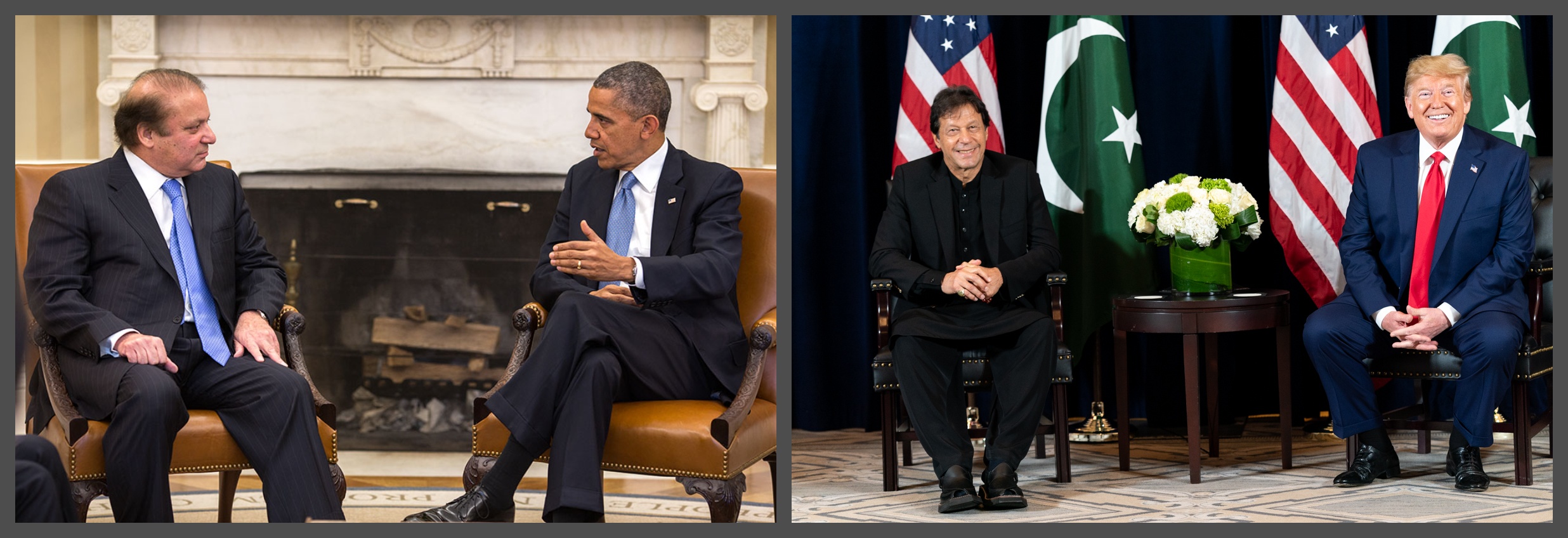
Pakistan Prime Minister Nawaz Sharif with US President Barack Obama in 2013 (left), and Pakistan Prime Minister Imran Khan with US President Donald Trump in 2019 (right)
The contract with Orchid laments that “Washington can be a difficult and confusing place to try to get things done,” and that “we would assist you in developing positive and constructive ties with the Administration (including the White House, the State Department, the Pentagon, the National Security Council and the Treasury Department) and the Congress (the Senate and the House of Representatives).”
Pakistan dramatically increased lobbying in 2025, with a sharp increase in lobbying expenditures in Washington after Trump’s return to office. The FARA accounts revealed contracts totalling several million dollars, which amounted to the largest influence campaign by Islamabad in the US capital ever.
Pakistani diplomats, lobbyists, and advisors conducted dozens of contacts with US officials, lawmakers, and journalists. The FARA reports also indicate considerable economic diplomacy concerning trade and critical minerals. These lobbying efforts emphasised economic opportunities for the US and focused on critical minerals, mining projects and energy cooperation for negotiation.
Finally, Pakistan exerted considerable diplomatic and lobbying effort, pressuring the Trump administration to intervene diplomatically in the crisis with India.
Many commentators insist that Pakistan’s lobbying has produced positive results. President Trump’s willingness to play a larger role in Pakistan-India disputes, the trust reposed in Islamabad to mediate in the US-Iran war, the warmer rhetoric from the US President towards Pakistani military and political leaders, as well as the softening of tariffs (from 29 per cent to 19 per cent in 2025) are cited as instances of such favourable outcomes for Islamabad.
On the other hand, it is too early to judge how much US investment in Pakistan has materialised and benefited the latter, as much as whether other economic interactions, especially the ones that were supposed to have been facilitated by the lobbyists, have realistically increased.
Sceptics argue that Pakistan has merely been able to rebuild ties with the US after decades of strained relations and has not significantly changed the positions of administration officials. Some commentators have asserted that Pakistan has exercised outside influence on Trump personally through flattery, buying access or even bribery.
However, this must be considered political commentary rather than proven findings. Also, too much weight may have been placed on the impact of Pakistan’s lobbying, given Washington’s interest in using Islamabad to pressure Iran to surrender its enriched uranium and forswear its nuclear weapons programme.
Furthermore, the United States has not been able to pry Pakistan away from its eight-decade alliance with China, often termed the “all-weather friendship.” Therefore, the jury is still out on whether the Pakistan-US honeymoon is actually happening, and could be sustained, beyond what might seem as personal equations between the leaders on both sides of the aisle.
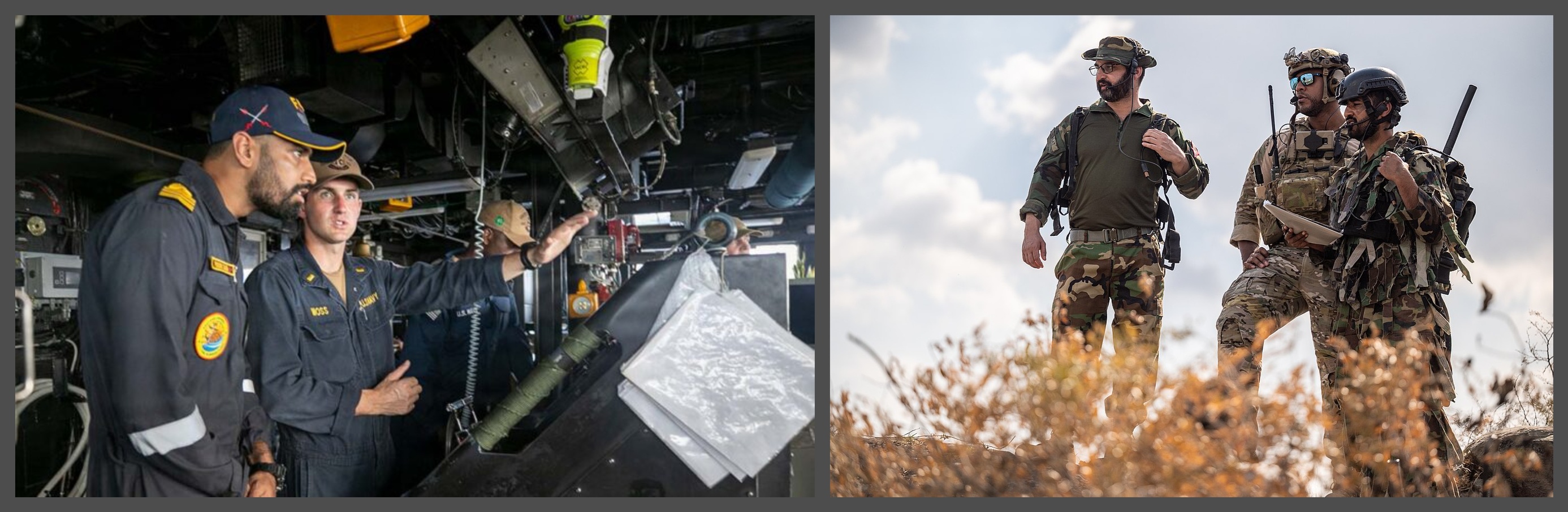
Indian and US personnel review watch station aboard the USS Fitzgerald during Exercise Malabar 2025 (left), and US and Pakistan special forces during a joint military exercise (right)
Has Pakistan really outmanoeuvred India?
In comparison to Pakistan, India has continued its lobbying activities in the United States as well, including efforts by the powerful Indian-American community, though not making any significant increases even after political changes in Washington.
Prime Minister Narendra Modi seems to have assumed that his personal relations with President Trump and India’s anti-China stance would sustain the strong relations enjoyed during the first Trump administration and the Joe Biden administration.
However, the second Trump administration had, early on, placed the spotlight on India as an unfair trading partner, deserving stronger tariffs. Additional tariffs were imposed in reaction to India’s import of sanctioned Russian oil.
In addition, India did not support the idea that Trump had brokered a cease-fire between India and Pakistan, causing much consternation in both capitals, and a brief tiff between the leaders. Further, the Modi government did not show any inclination to support Trump’s quest for the Nobel peace prize.
When these patterns and developments are factored in, it might seem that Pakistan’s dramatic increase in lobbying has enabled it to outmanoeuvre India in emerging as a favoured partner of the United States in South Asia, and certainly a personal favourite of the US president.
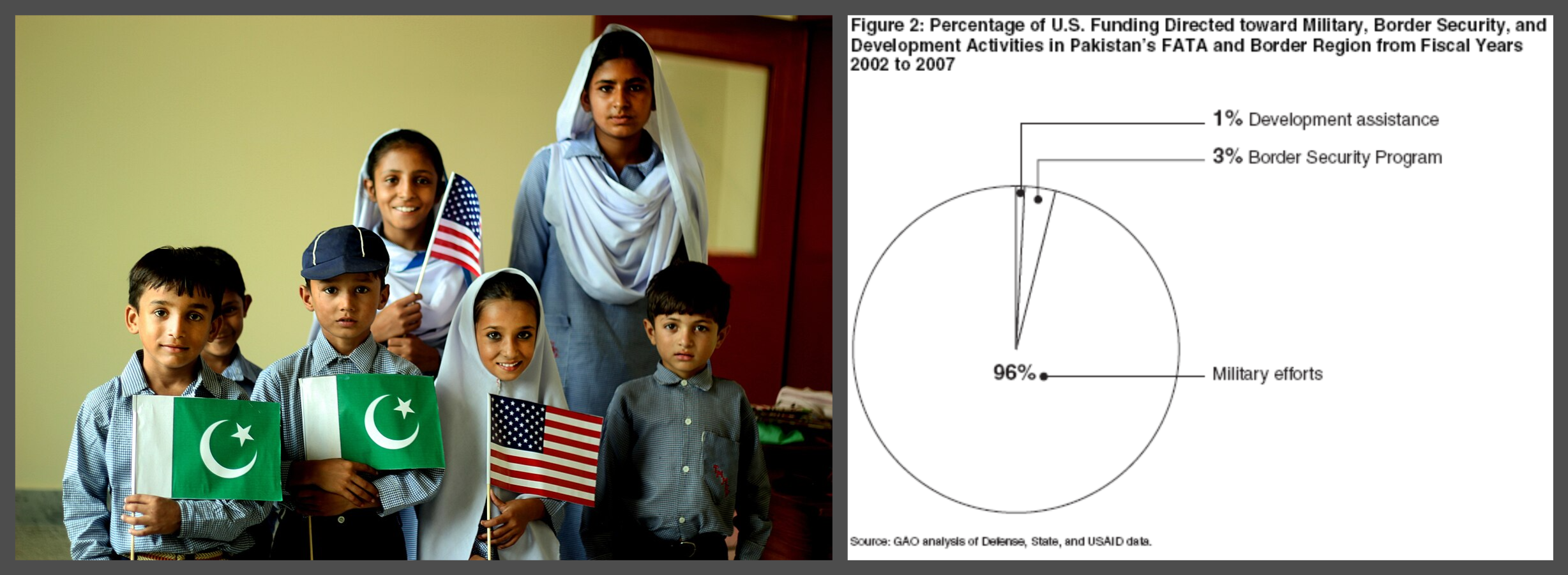
Pakistani children hold the US and Pakistan flags (left), and an image illustrating the percentage of US military and development aid to Pakistan between 2002 and 2007; images courtesy - GAO/USAID
This shift could be illustrative of how different the foreign policy of the second Trump administration has been from the first.
With experienced foreign policy and national security officials by his side, the emphasis of the first Trump administration was on great power competition and the role that India would play in balancing against China and its Pakistani ally.
In contrast, the second Trump administration has diminished its focus on great power competition, reflecting more of a personalist and transactional foreign policy.
Will the pro-Pakistan shift be sustainable?
While there is evidence that Pakistan has regained some tactical relevance during the second Trump administration, it is important to distinguish between short-term influence and long-term strategic alignment.
During Trump’s first presidency, the relationship with Pakistan fluctuated sharply. Early on, Trump accused the country of duplicity regarding militant groups and suspended some security aid. Later, Pakistan regained importance because it helped facilitate negotiations with the Taliban during the Afghanistan withdrawal process.
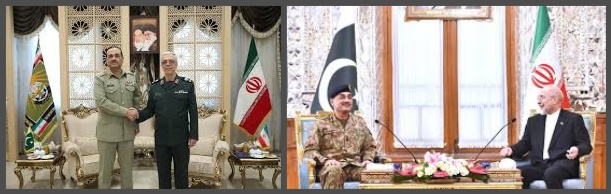
Field Marshal Asim Munir with Major General Ali Abdollahi, a senior commander of the Iran Revolutionary Guards Corps (left), and with the Speaker of the Iran Parliament, Mohammad Bagher Ghalibaf (right)
That gave Pakistan leverage again in Washington, especially through intelligence and military channels. And since 2025, Pakistan has regained relevance through its lobbying activities and role in negotiations over the Iran war.
In spite of Pakistan’s manoeuvring, the US strategic relationship with India remains intact. Over the past two decades, defence agreements expanded, technology cooperation deepened, and military exercises increased.
Rising concerns about China pushed both countries ever closer together. The great power competition theme continued through the first Trump administration and the Biden administration.
The United States took India's side in its border disputes with China and provided assistance that provided a form of security guarantee. The formation of the Quadrilateral Security Dialogue or ‘Quad’ and joint naval exercises of India, the United States, Japan, and Australia were highlights of strategic cooperation.
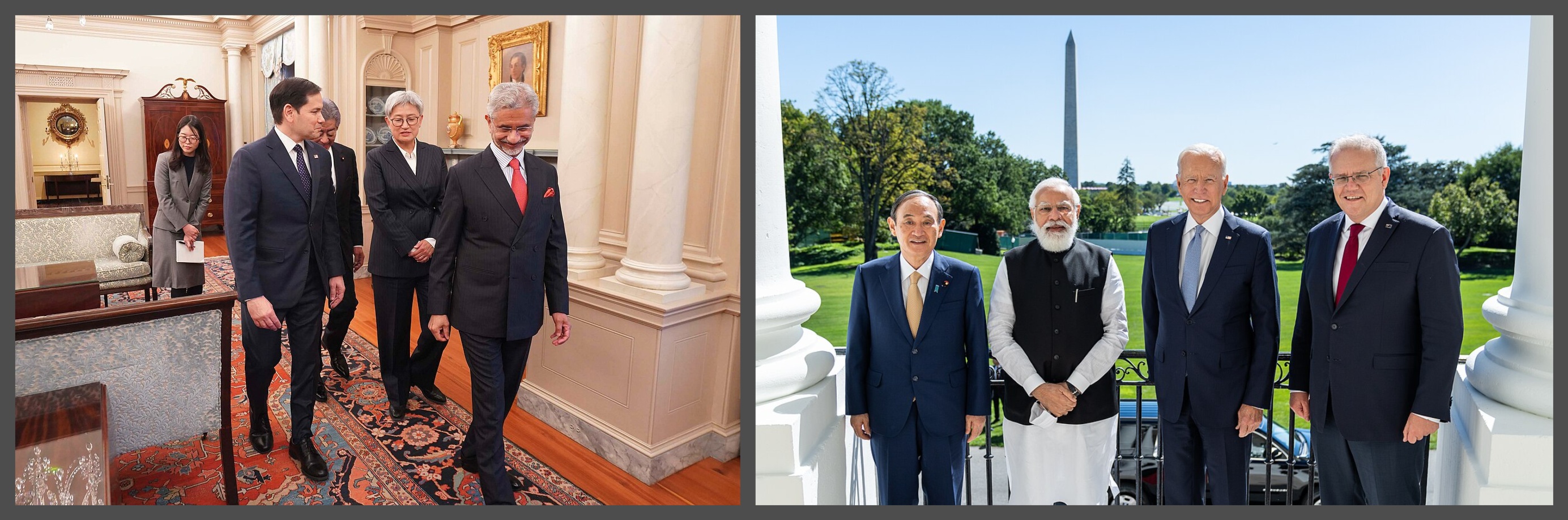
Foreign Ministers of the Quad after the second inauguration of Donald Trump in January 2025 (left), the Quad heads of state at the White House during their 2021 meeting (right)
However, the second Trump administration seems less concerned with great power competition and more concerned about unfair trading practices and President Trump’s legacy. The administration’s personalist and transactional approach has weakened alliances in Europe and elsewhere and has called into question security guarantees and trading relations.
President Trump’s threats to take over Greenland and Canada have led countries to distrust the United States. Administration officials have lectured the North Atlantic Treaty Organisation members of Europe, Japan, South Korea, and the Philippines about becoming more self-reliant in defending themselves, lowering confidence in the United States.
The administration’s punitive tariffs against India for unfair trading practices and for the purchase of Russian oil, as well as the war with Iran, have resulted in a cooling of the relationship between Washington and New Delhi.
This has manifested itself in India’s distancing itself from the United States in the Quad and strengthening relations with Japan and Australia. India is concerned that the United States might hyphenate India and Pakistan in security discussions and dredge up the Kashmir issue.
This concern was evidenced in the disagreement over Trump’s role in negotiating the ceasefire between Pakistan and India in 2025.
For India, the US approach has created uncertainty, but has not affected the balance of power in the region. In the larger picture, India today is in a much stronger geopolitical position than in earlier decades. India’s economy is vastly larger than Pakistan’s, and it has broader international partnerships, stronger naval potential, and greater importance in regional balancing against China.
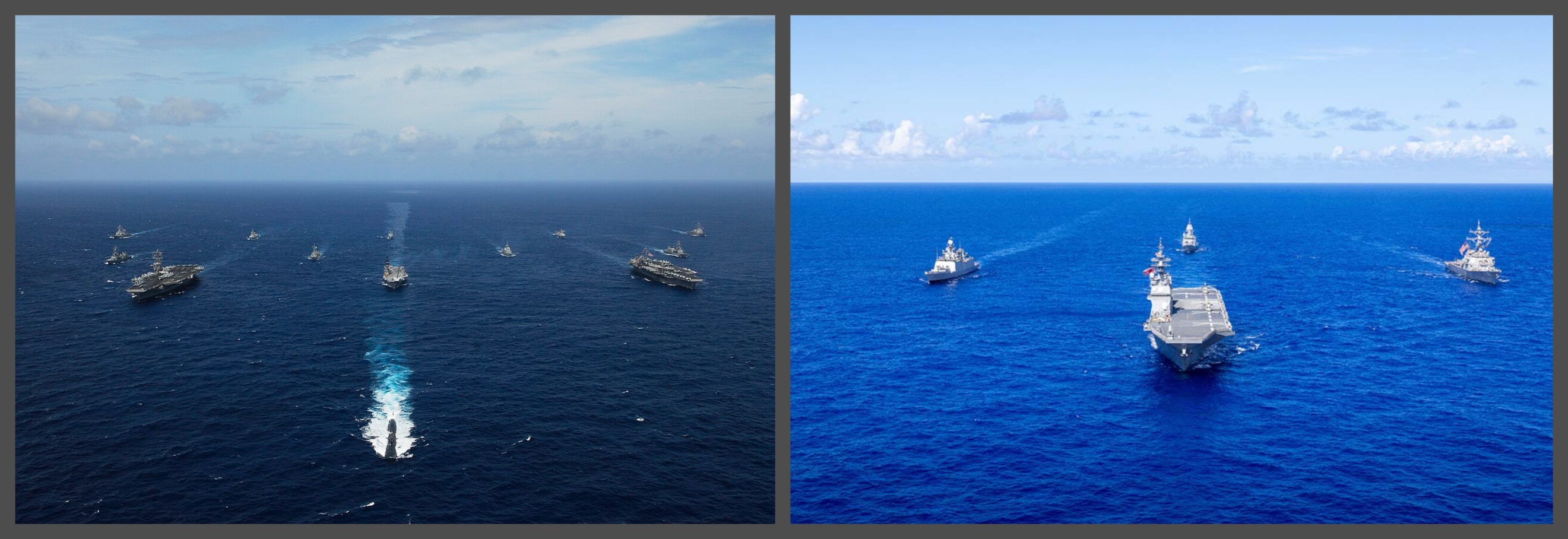
A submarine leads the naval vessels of the US, India, Japan and Australia during the 2007 Exercise Malabar in the Bay of Bengal (left), and the Japan Maritime Self Defence Force destroyer JS Hyuga leads the Quad naval vessels during the 2025 Exercise Malabar off Guam (right)
Meanwhile, Pakistan must confront violent disputes with Afghanistan and India, as well as internal constraints, including debt crises and political instability. The country is dependent on the International Monetary Fund and Gulf countries to deal with debt problems and economically reliant on China.
So even if Pakistan exerts influence over the Trump administration over the next two years, that does not necessarily restore the power disequilibrium that has existed for decades.
The larger Asian theatre remains increasingly shaped by China’s growing predominance and uncertainty about long-term American commitment. The prevailing uncertainty forces India, as well as other countries across Asia, to hedge and diversify alliances and prepare for a multipolar regional order rather than relying on Washington.
(Views expressed in this report are the author's own.)
Follow us on WhatsApp
Follow us on Facebook
Follow us on X @vudmedia
Follow us on Substack
