
The whole world is already aware of China’s hard power, illustrated by its fledging military machines, including the long-range missiles that were on full display at the 80th anniversary parade last October. Pervading media, digital and mass communication spaces across the globe currently are the imagery of China’s ‘great leap’ in high technology, robotics, AI and high-speed trains – all of which form the Communist regime’s immaculate execution of its soft power prowess, which manages to not just represent an expeditionary mission like the Belt and Road Initiative (BRI) as one for global economic welfare but also of ‘autocratic’ China being far more appealing than the downsliding democracies, especially the one led by President Donald Trump. In the first of the series on China’s soft power, Ajaya Kumar Das explains how China’s moment of soft power ascendency coincides with the decline of the “post-liberal” superpower.
Home page image: Artists performing at the Spring Festival Gala
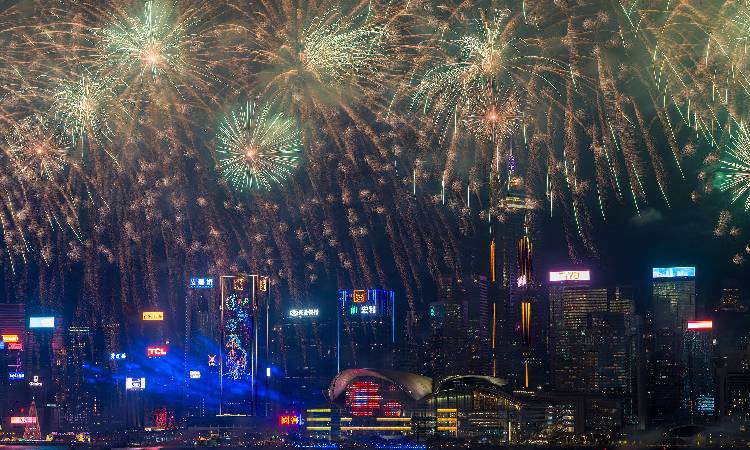
Text page image: Fireworks light up over a Chinese city during the Spring Festival Gala
Originating on TikTok as a meme-like trend among the Western Gen-Z users, the term “Chinamaxxing”— often appearing with phrases like “Becoming Chinese” or “You met me at a very Chinese time in my life” —has recently made its way into mainstream American and Western media as a cultural talking point.
They describe it as a trend in which the younger generations in the West, particularly Americans, are increasingly showing an online fascination with Chinese culture and lifestyle.
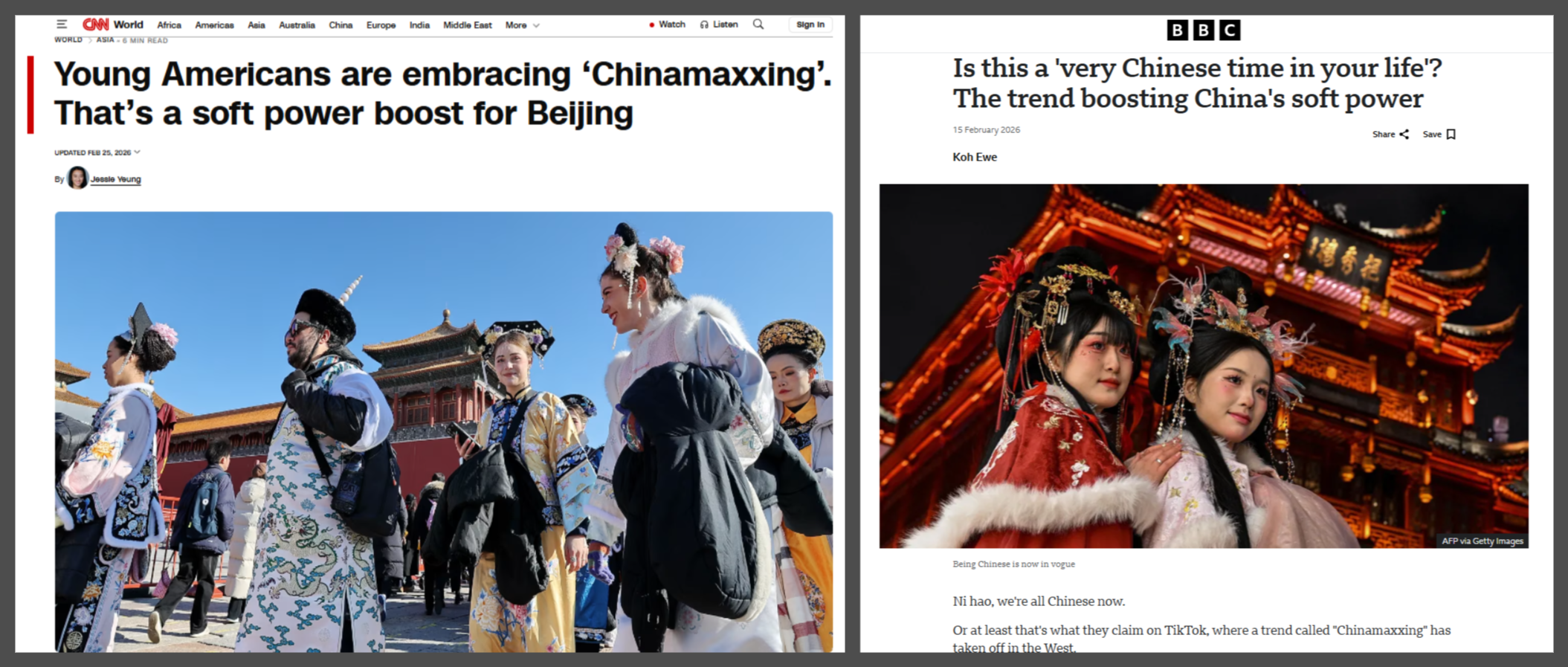
Beginning with “China is cool” and extending to Chinamaxxing, it is argued that these viral trends on social media boost, “without a script,” China’s soft power.
This ability to influence through attraction rather than coercion appears to be like ‘‘a city on the hill effect” of daily Chinese lifestyles: from drinking hot water and eating boiled apples to indoor slippers and longevity exercises.
The Chinese state media is framing these trends both as an indication of China’s growing soft power and as a reaction “against their [Western] failing governments, bleak economic prospects, and fractured social fabric.” It is also appropriating the Chinese video gaming phrase, “kill line,” to project what is “wrong with America and right with China” as part of state propaganda.
Beyond propaganda, Chinese cultural content is increasingly finding global resonance. It is not just the craze for Pop Mart’s Labubu dolls; the Chinese video games, movies, and trinkets are making their mark globally.
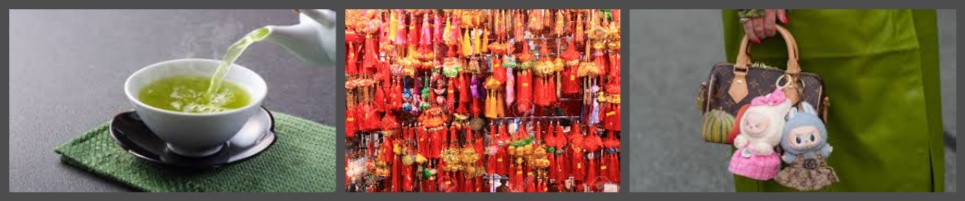
Chinese green tea (left), trinkets (centre), and Popmart's Labubu dolls (right) are globally recognised symbols of China's soft power
These are not attempts to influence, which may be labelled as China’s corrosive sharp power, but signs of positive and voluntary attraction, which is an important mechanism of soft power.
It is believed that what nearly 500 Confucius Institutes, China has built around the world, could not have been achieved over the last two decades, may have been accomplished over the past few years by a legion of technocrats, entrepreneurs, and social media content creators and influencers.
China has surely come out of the global wave of Sinophobia following the COVID-19 pandemic, when a Chinese laboratory was alleged to be the source of the virus that caused the global epidemic, and is rapidly emerging as a rival to America’s dominance in soft power.
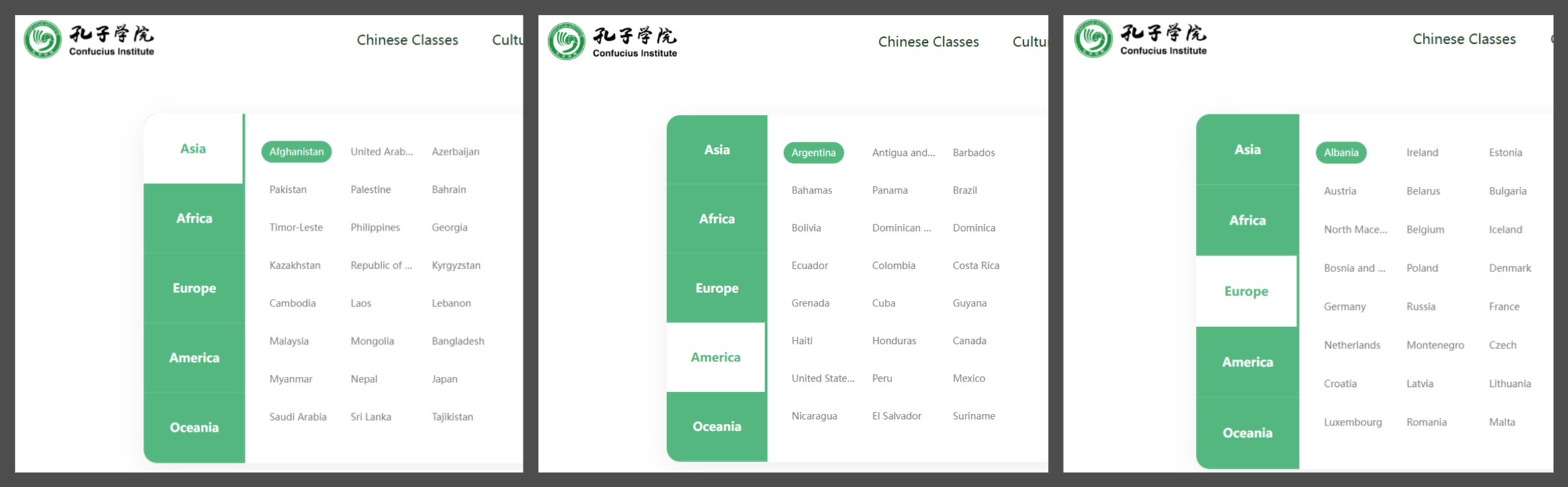
List of countries that host Confucius Institutes in Asia, America, and Europe
America’s soft power goes downhill
According to the Global Soft Power Index 2026 published by the London-based Brand Finance, the US is facing its sharpest decline in soft power, while China, in contrast, is strengthening its standing. With a narrow margin in the soft power score of less than 1.5 points, China is positioned alongside the US at the top of this Index.
Liberal values, ideas, culture, music, cinema, foreign aid, rules and institutions—understood as the key elements of soft power—have been under the dominance of the US, since at least the Cold War. American soft power is attributed to having played a role in the collapse of the Soviet Union by undermining the appeal of its communist ideology.
In the unipolar era, following the end of the Cold War, the defence of the liberal international order, buttressed by a broad base of willing allies and partners, complemented American might on the global stage.
The strategic projection of this mission, along with the glorification of America’s domestic liberal norms and institutions, elite universities and technological innovations, generated a powerful global appeal for the “American Dream.” This was pivoted through popular cultural messaging tools of soft power—such as Hollywood, MTV, McDonald's, and Coca-Cola.
Aided by its liberal immigration policies, the US saw a major influx of global talent from across nationalities in pursuit of this “American Dream.”
As the world shifted from unipolar to a lopsided multipolar configuration—or perhaps, more accurately, a bipolar one—the US President Donald Trump has chosen to unilaterally upend rather than reform the rule-based international order.
In particular, his tariff war with American allies and partners has forced them to develop options beyond the US and are seen today courting China, which provides “predictability” in contrast to uncertainty under Trump.
Washington’s global reputation has further suffered due to its democratic erosion, tighter emigration policies and foreign aid cuts. Trump’s regime change operation in Venezuela and other predatory security policies—in particular the ongoing Operation Epic Fury in Iran—threaten to further erode American soft power amid geopolitical tensions and strains on the world economy.
China stands poised to gain by emerging globally as a “credible alternative” in this geopolitical conditioning.
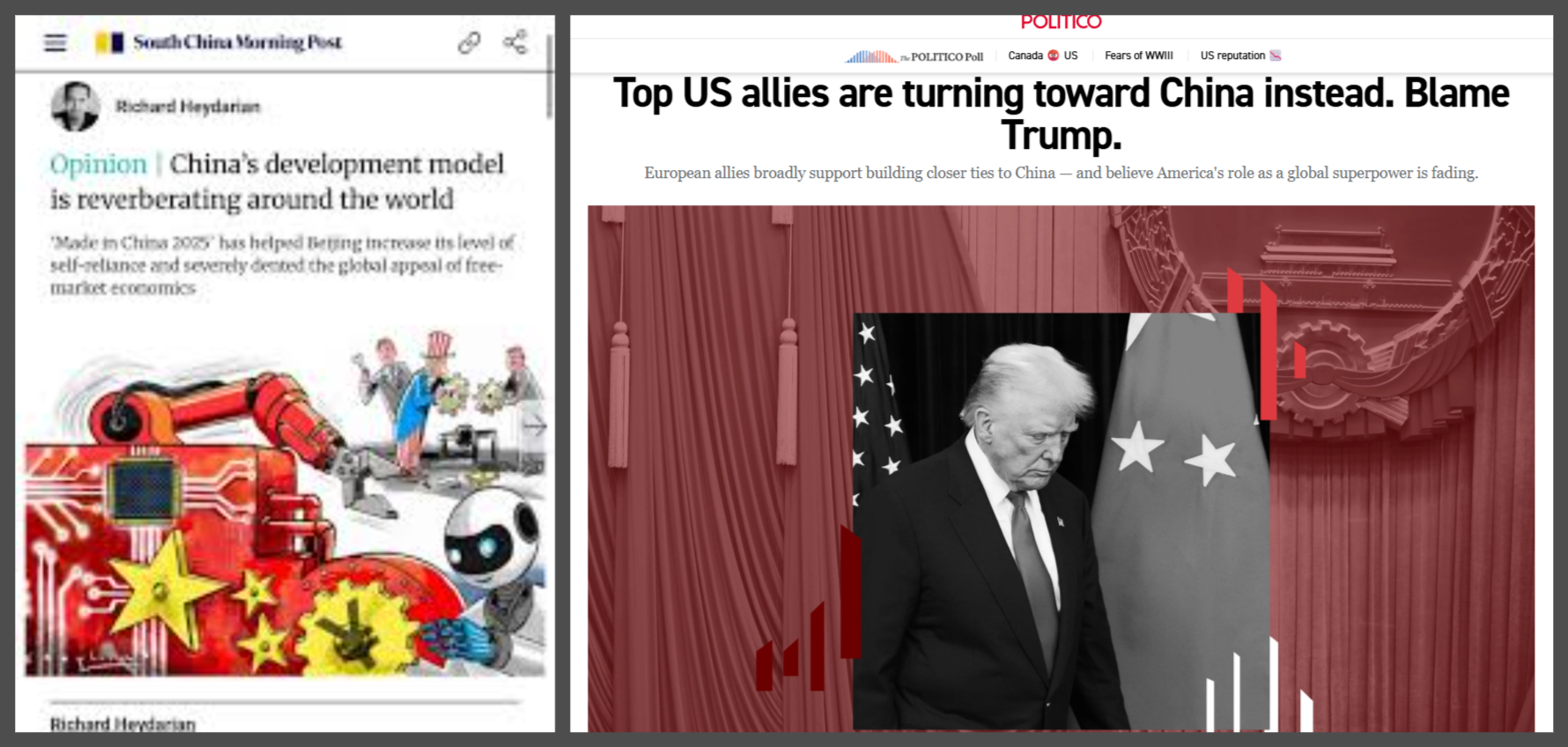
As its legitimacy wanes, the US is growing lonelier, creating opportunities for its power to be balanced rather than deferred to. According to an assessment based on UN voting records of 169 member-states, the global diplomatic alignment has recently moved closer to China than the US, with a major shift taking place during President Trump’s second term.
The POLITICO’s Poll, in partnership with the UK-based polling firm, Public First, conducted an online poll from February 6-9, 2026, which found more respondents in America’s top allies—Canada, Germany, France and the UK—considering “China as a more dependable partner than the US.”
The Pew Research Centre survey in mid-2025 found that there was a more negative turn in international views of the US, whereas China was gaining in favourable views. Similarly, according to the 2025 Democracy Perception Index, published by Nira Data and the Alliance of Democracies Foundation, China was viewed more positively than the United States across 100 countries in the world.
In the Lowy Institute’s 2025 Asia Power Index, China ranked higher than the US in diplomatic influence. In Africa, China is viewed more positively than the US, according to Afrobarometer’s 2025 survey.
Across these indicators, there is a uniform trend: China is gaining ground, whereas the US is losing in global perception.
“Smart authoritarianism” boosts soft power
Following Joseph Nye’s conceptualisation of soft power in the 1990s and early 2000s, China, like many other countries, began projecting its soft power by establishing Confucius Centres, promoting educational exchanges, providing foreign aid, and expanding media outreach, among other measures.
Increasing soft power, President Xi Jinping believed, would create a ‘favourable Chinese narrative’ and facilitate ‘China’s message to the world.’ From online trolls to investments in Hollywood and European football, China has sought to build a positive image and shape world public opinion. It has also sent giant pandas to many countries as a part of this strategy.
Nye identified China’s traditional culture and economic success as the two key sources of its soft power. According to Brand Finance, China’s growth in soft power is today supported by programmes such as the Belt and Road Initiative (BRI), scientific and technological progress, sustainability reforms, making global product brands and active cultural engagement.
Besides leading in ease of doing business, future growth potential, technology and innovation, and advanced science, China now ranks above the US in 19 of the 35 nation brand attributes, according to Brand Finance.
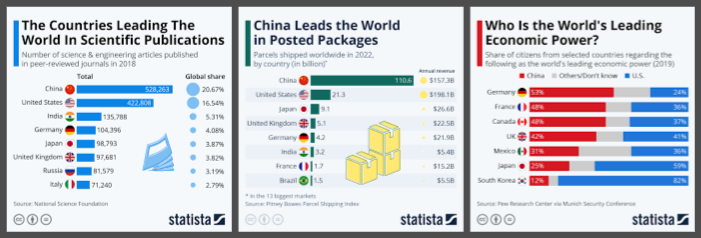
It was among the world’s top five destinations for international students before the pandemic and is projected to recover by 2026 with a growth of 2.5 per cent between 2025 and 2030, whereas the US will see a decline by 1 per cent annually through 2030. The target of China’s “education diplomacy” is the neighbouring and BRI partner countries.
In alignment with BRI, China—already Africa's largest trading partner and creditor—has announced to provide tariff-free access from 1 May for imports from 53 African countries that face Trump’s tariff assault. No wonder China is viewed more positively than the US in Africa.
Contrary to the assertion by Nye and others that authoritarian rule is one of the major limits on China’s soft power instincts and capabilities, China, in turn, seems to have found a way through the “King’s Dilemma” by developing a balance between state control and innovation through what Jeniffer Lind calls “smart authoritarianism” or “autocracy 2.0”.
Shedding its earlier image as a “copycat nation,” it has emerged today as a technological leader at a scale never before achieved in human history by any authoritarian state.
Heavy investment in research and development, and human capital, has seen China advancing significantly in high-tech sectors to emerge among the top-10 global innovators. China leads today in patent filings and has the most among the top 100 innovation clusters in the world.
Besides producing more undergraduates per year (about 1.9 million) majoring in a science, technology, engineering, and mathematics (STEM) degree, China also produces more PhDs than the US in the STEM field.
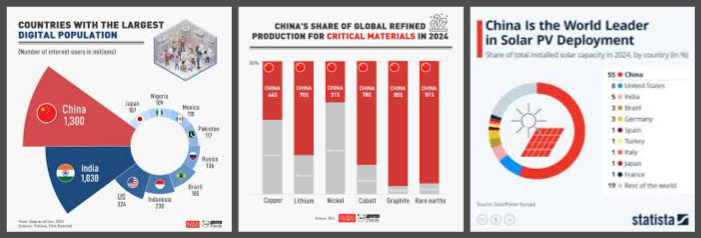
According to a newly published report by the American think-tank, the Centre for Strategic and International Studies, when it comes to advancements in high technology sectors relative to the US, “China is ahead in some areas (like Electric Vehicles, solar energy, and so on), a peer in others (like mobile phones and Artificial Intelligence), and gaining ground quickly in still other areas (like pharmaceuticals)”.
In 2025, China was home to over 80 per cent of global humanoid robots and more than half of the industrial robots in the world. China has expanded its renewable energy capacity more than the rest of the world combined. It has roughly 70 per cent of the world’s high-speed rail.
China, emerging as a high-tech economy, now boasts about its soft power by showcasing its modern cities marked by glitzy skyscrapers, electric and driverless vehicles, an extensive high-speed rail network, growing renewable capacity and dominant physical AI.
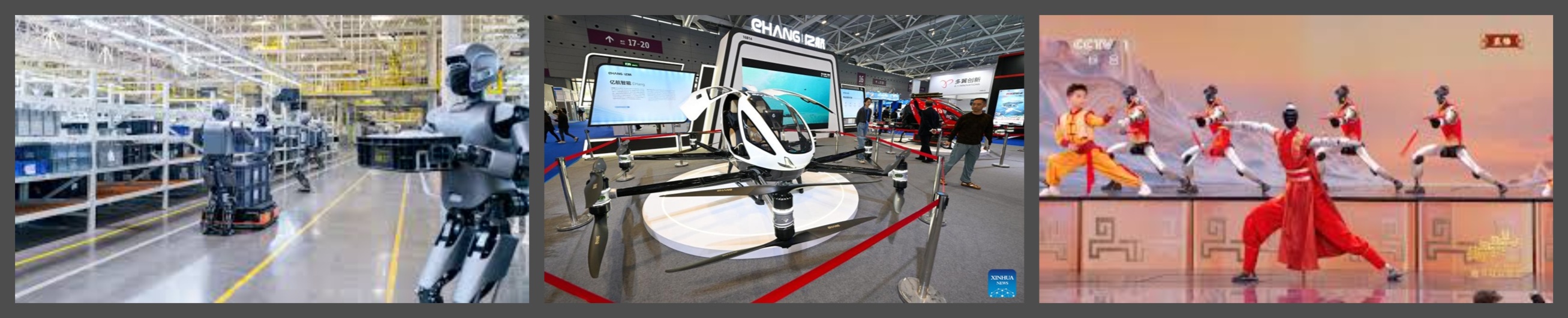
Chinese robots have taken the world by storm: a robot-run factory (left), an autonomous air taxi (centre), and the humanoid robots performing at the Spring Festival Gala (right)
At the 2026 Spring Festival Gala, which became one of the most-watched cultural events worldwide, the humanoid robots danced, performed a comedy skit, executed parkour, and demonstrated martial arts. This fosters an image of China that is culturally modern, innovative, and fashionable.
China today accounts for more than one-third of the global manufacturing, whereas the US accounts for 15 per cent. Riding largely on a sustained double-digit GDP growth for over two decades following the reforms since the late 1970s, it has emerged today as the second-largest economy and is poised to overtake the US by 2035.
China’s economic growth and consequent emergence as a technological leader are attributed to its ‘smart authoritarianism.’ After all, Soviet Communism had a lot of soft power appeal in the newly decolonised Third World countries, for its rapid economic success during the Cold War.
The scale of China’s economic success, soft power and great power status outweigh that of the Soviet Union during the Cold War.
China, having learned successfully from Singapore’s playbook, is now, as Jeniffer Lind observes, promoting this model both passively—by setting an example—and actively by supporting other authoritarian regimes. China’s reinvention of autocracy coincides with a “democratic recession” around the world, including in the US.
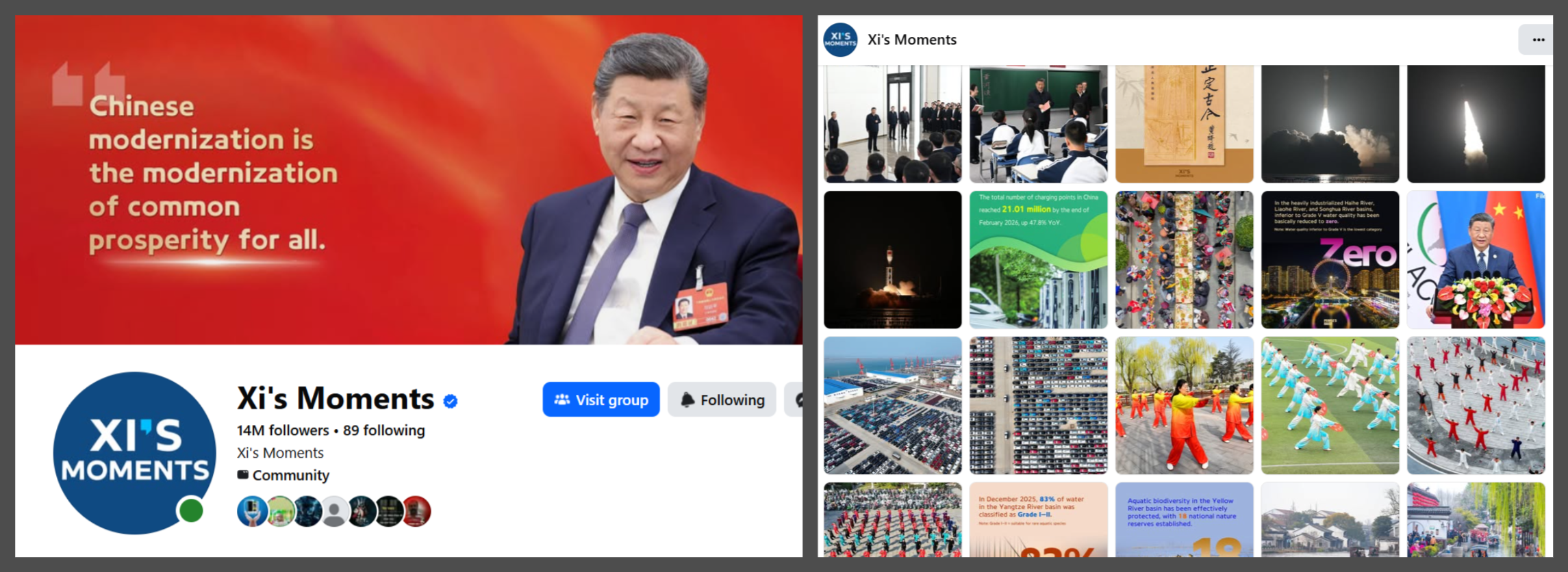
Chinese President Xi Jinping's Facebook page has 14 million followers and is a key platform that projects China's soft power prowess through extensive imagery and visuals
Liberal democracy, which has long been a key source of American soft power, is losing some of its appeal due to Trump’s democratic backsliding and the broader discontents with liberalism.
How ‘democratic’ America and ‘autocratic’ China fare against each other—mainly across technology, trade, industry, and global leadership—in the coming years will not only shape the future of the ‘balance of soft power’ but also the trajectory of great power politics in the unfolding strategic competition between the two great powers.
Nye notes about another weakness of China’s soft power, which is its territorial disputes. Beijing has such disputes with 17 of its neighbours, including India, over land and sea borders. According to the 2024 dataset from the Asia Society Policy Institute’s Global Public Opinion on China (GPOC) project, China was viewed negatively in India and Northeast Asia, while it received positive views in most of the ASEAN countries.
Public opinion polls, however, only suggest the trends in popular perceptions. Such perceptions, translating to soft power influence, are complex. Soft power, unlike hard power, is volatile and difficult to measure in terms of influence produced through attraction.
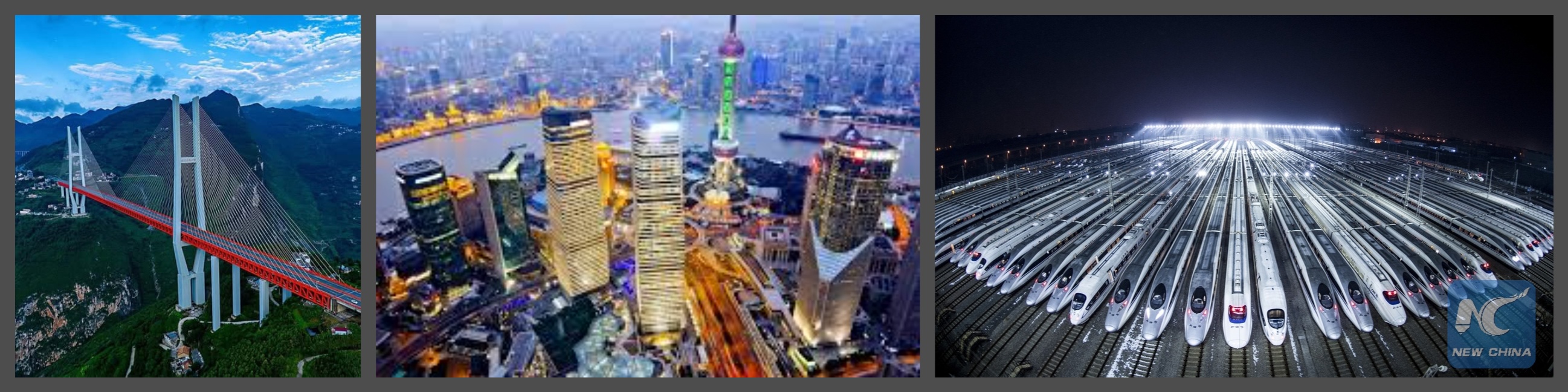
China's majestic bridges (left), advanced cities (centre) and high-speed rail network (right) are increasingly showcased as symbols of China's rising power profile
The opinion polls and indices, however, give us a useful approximation of soft power. Soft power is, after all, power and can be zero-sum. Its effects are not always benign. Trends like Chinamaxxing, for that matter, are more than a passing meme.
As the “post-liberal” superpower faces a decline in soft power, China is experiencing its own moment of soft power ascendancy.
(Views expressed in this report are the author’s own)
Follow us on WhatsApp
Follow us on X @vudmedia
Follow us on Substack
