
Tarique Rahman took over as Bangladesh Prime Minister with all the right vibes, with New Delhi sending across positive signals to create a thaw in India-Bangladesh relations. While PM Rahman’s ‘Bangladesh First’ policy might sound like an aggressive pursuit of its national interest, inherent in this approach is the dictum that geography gives smaller states certain natural rights that stronger powers cannot always override. At stake are not just pending issues like renewing the Ganga Water Sharing Treaty, reviving the Teesta River accord and pursuing pending economic assistance projects in Bangladesh, but also addressing historic irritants like illegal migration and border security, while enabling smooth cross-border trade and movement of people, goods and culture. In this comprehensive analysis of where India-Bangladesh relations are headed under the Tarique Rahman regime, Tapas Das evaluates the tapestry that binds the neighbours and lists a blueprint for robust ties.
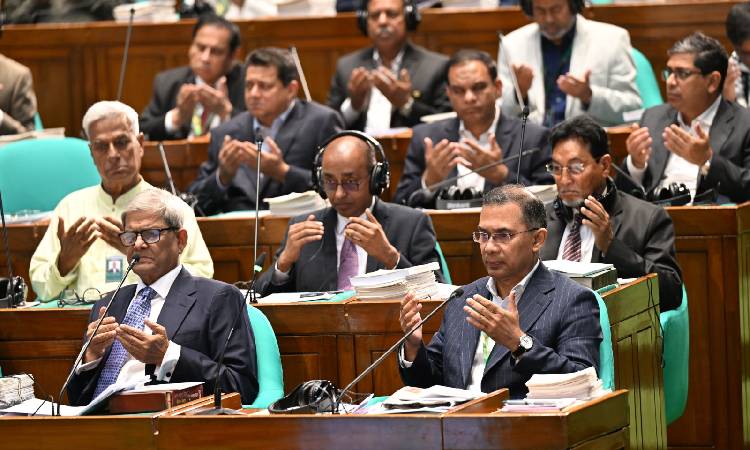
Text page image: Prime Minister Tarique Rahman leads prayers before the first session of the Bangladesh Parliament
Banner image: An aerial view of the Farakka Barrage on the Ganges between India and Bangladesh
Bangladesh’s 13th parliamentary election marked a turning point in both the country’s recent history and the geopolitics of the Bay of Bengal, where many states are watching Dhaka closely.
On February 17, 2026, Tarique Rahman became the country’s eleventh prime minister, returning after seventeen years in exile in London to lead a nation still grappling with the aftermath of the August 2024 upheaval.
The Bengali saying “even the small fish owns the river” captures a common belief: geography gives states certain natural rights that stronger powers cannot always override.
Prime Minister Narendra Modi was the first foreign leader to congratulate Bangladesh’s new premier, issuing a carefully worded message. India’s earlier reliance on a single party and family in Dhaka left it vulnerable when that political order shifted.
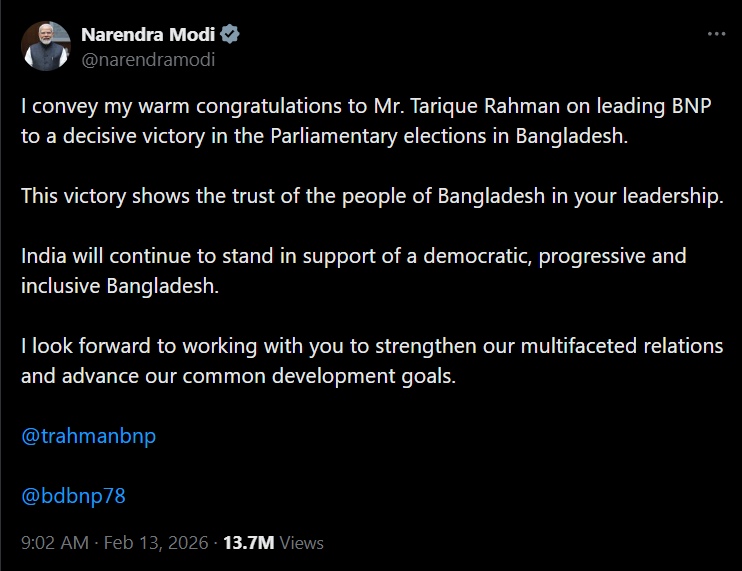
With a new government in Bangladesh and the permanence of neighbourhood geography, New Delhi is now attempting a clear, though still cautious, course correction in its approach.
This analysis looks at the emerging “Bangladesh First” doctrine from Dhaka’s point of view. It outlines the doctrine’s main principles and the arenas in which they will be tested, including relations with India, China, the United States, and Pakistan; the Rohingya crisis; SAARC; and the broader challenge of translating national ambitions into a consistent foreign policy.
At the centre lies one question: under Rahman, will Bangladesh’s foreign policy show the confidence and clarity needed for genuinely independent action?
Delhi and Dhaka: A diplomatic reset
India and Bangladesh’s diplomatic relationship is undergoing a quiet reset, as evidenced by symbolic gestures from both New Delhi and West Bengal. Prime Minister Modi has restated India’s commitment to “peace, progress, and prosperity.”
At the same time, West Bengal Chief Minister Mamata Banerjee sent flowers and sweets to “Tarique Bhai,” underscoring deep cultural and regional ties. This outreach has been backed by high-level engagement, including External Affairs Minister S. Jaishankar’s presence at Khaleda Zia’s funeral, followed by a condolence motion in the Indian Parliament.
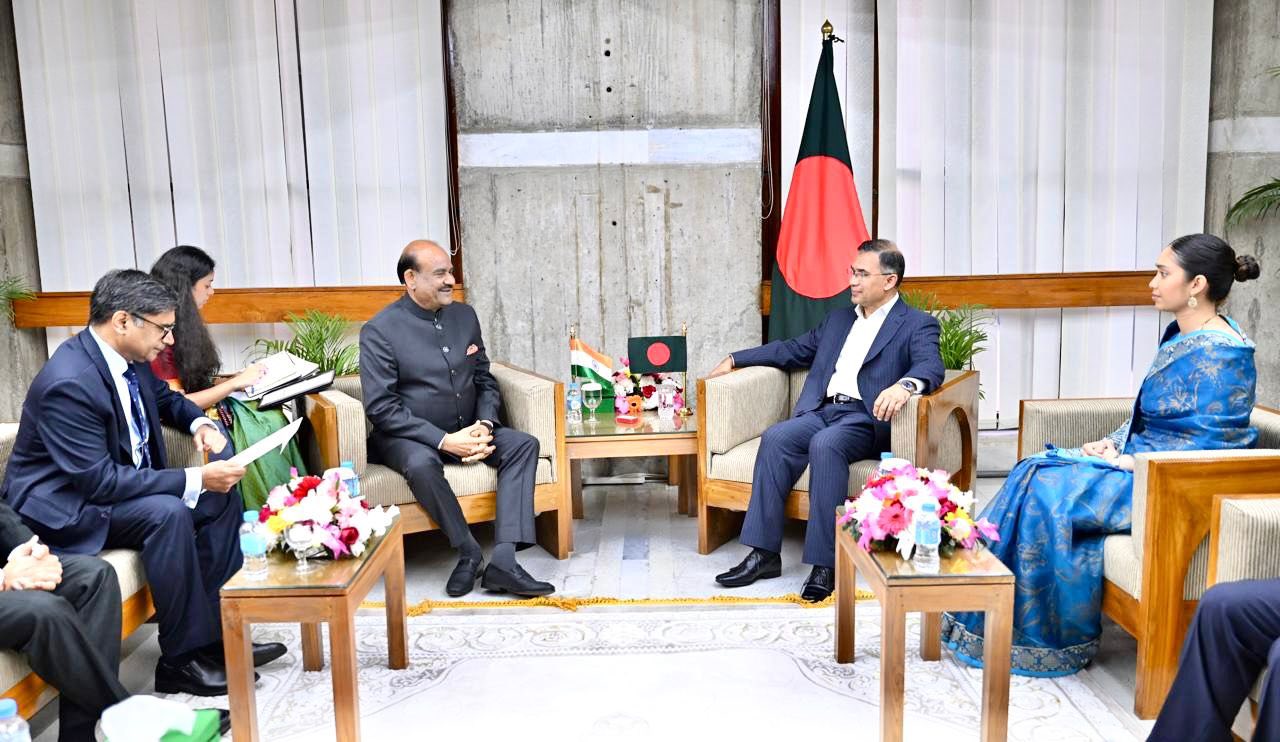
PM Tarique Rahman with Lok Sabha Speaker Om Birla, when the latter visited Dhaka to attend the swearing-in ceremony
Lok Sabha Speaker Om Birla’s attendance at the swearing?in ceremony, along with an invitation for Tarique Rahman to visit India, suggests that New Delhi wants to move beyond “playing favourites” and instead support a more inclusive, pluralistic democracy in Bangladesh.
Yet, despite these gestures, serious obstacles remain, not least because Sheikh Hasina is still in India. Relations deteriorated after the 2024 uprising, with the situation worsening over trade restrictions and legal debates over her possible extradition following the death sentence handed down by the International Crimes Tribunal.
Even so, hints of a strategic thaw are emerging as both sides increase their engagement. The meeting between Indian Foreign Secretary Vikram Misri and Jamaat?e?Islami (JeI) leader Dr Shafiqur Rahman reflects this new pragmatism.
Former Foreign Secretary Harsh Vardhan Shringla has argued that such “strategic pragmatism” mirrors India’s twin concerns: curbing radicalisation while accepting that long?term stability depends on respecting the choices of the Bangladeshi electorate.
For West Bengal, the BNP’s return to power offers a chance to revive long?stalled cooperation. Renewing the Ganga Water Treaty in December 2026 and fully restoring visa services are crucial for the region’s economy and social welfare.
By posting experienced diplomats such as Sandeep Chakravorty to Dhaka, India signals a more “responsible and bold” approach. The aim is to shift from a government?centric investment model to one focused on citizens, so that cross?border security and economic ties remain stable regardless of political turnover, thereby anchoring a stronger, more reliable partnership.
Alliances can shift, but neighbours do not!
Given the 4,097-kilometre border shared by India and Bangladesh, their relationship must remain a top priority rather than a secondary diplomatic concern. Geography does not change when governments do.
New Delhi must recognise the depth of its economic, transport, and energy ties with Bangladesh. Events from August 2024 to early 2026 exposed the dangers of “playing favourites”: when India tied its interests too closely to specific regimes, it paid a price when those regimes collapsed.
When the interim government led by Professor Mohammed Yunus took charge following the July uprising, it intentionally inflamed relations with India in order to tap anti?India sentiments for domestic gains. This chill opened space for rivals such as China, Pakistan, and even Turkey to edge closer to India’s borders, increasing pressure on both its eastern and western fronts.
Moves to build direct sea links between Chittagong and Karachi and talks on defence cooperation, including possible JF?17 fighter procurement, underlined this shift. At the same time, the perceived “Islamisation” of Bangladeshi politics and JeI’s victories in constituencies along the West Bengal border have alarmed New Delhi about illegal migration and demographic change.
Taken together, these trends signal a structural change in regional geopolitics that directly threatens the security and connectivity of India’s north-eastern “Seven Sister” states.
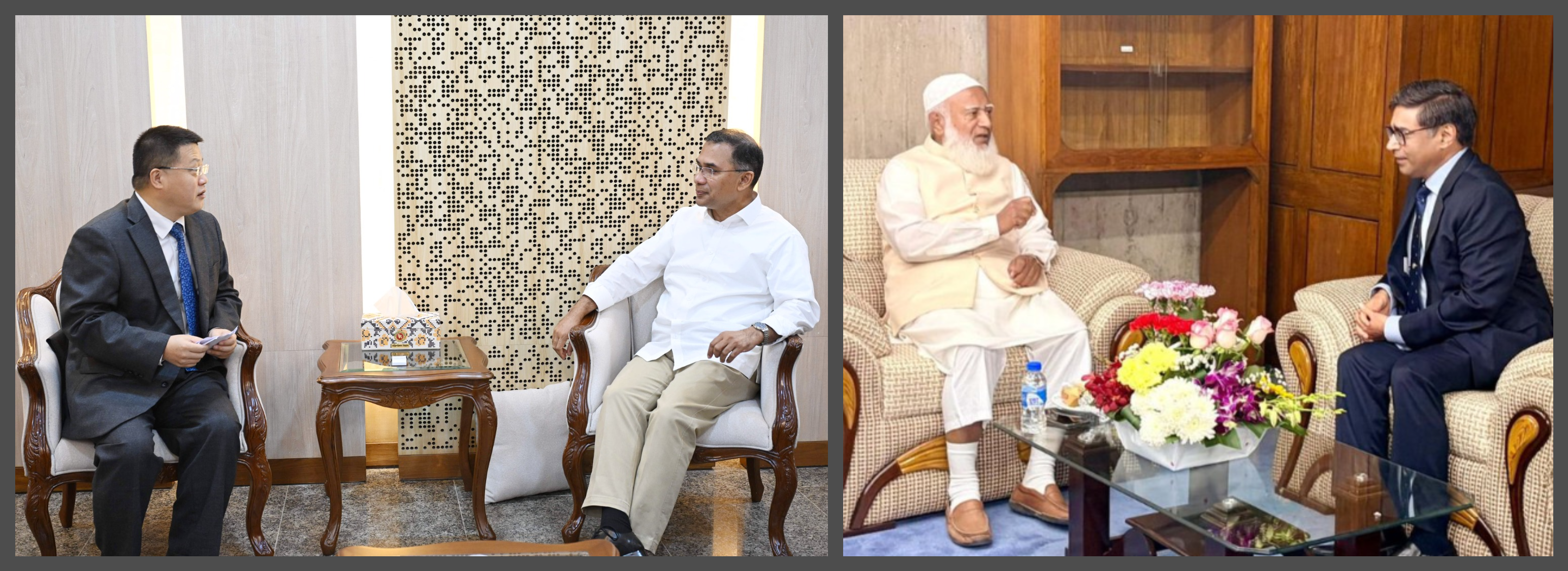
The Chinese ambassador meets the PM Tarique Rahman (left), and India's Foreign Secretary Vikram Misri meets the Jamaat-e-Islami chief Shafiqur Rahman (right); photo source - BNP and PTI
Former High Commissioner Pinak Ranjan Chakravarty has argued that the Yunus–JeI coalition has used the “Hasina factor” to stoke these fears. In response, India has cut financial assistance to Bangladesh in its latest budget, which reflects the complicated dynamics.
To counter a widening anti?India axis, New Delhi needs to broaden its network of supportive partners beyond Bangladesh. Although India and the United States share broad Indo?Pacific goals, their views on Bangladesh often diverge. To narrow this gap and maintain influence, India should work with relatively neutral actors such as Japan, South Korea, and the European Union.
Encouraging a multilateral economic framework in Dhaka can help present Bangladesh as a gateway to India’s North-east rather than as a staging ground for rival powers. India’s neighbourhood policy will have to rely more on consistency, patience, and long?term thinking so that regional stability is not constantly rewritten by domestic political swings.
Raising hopes
India’s “Neighbourhood First” policy remains a central pillar of its diplomacy, with Bangladesh serving as a key anchor due to its 4,097?kilometre land boundary and deep civilisational ties. This geographical reality creates unavoidable strategic compulsions for New Delhi, especially with the security element and connectivity of India’s Northeast as well as its broader “Act East” agenda involving Myanmar and Southeast Asia.
Despite the political transitions following the 13th National Parliamentary Election, the pragmatic foundations of the relationship are, however, re-emerging through concrete economic cooperation.
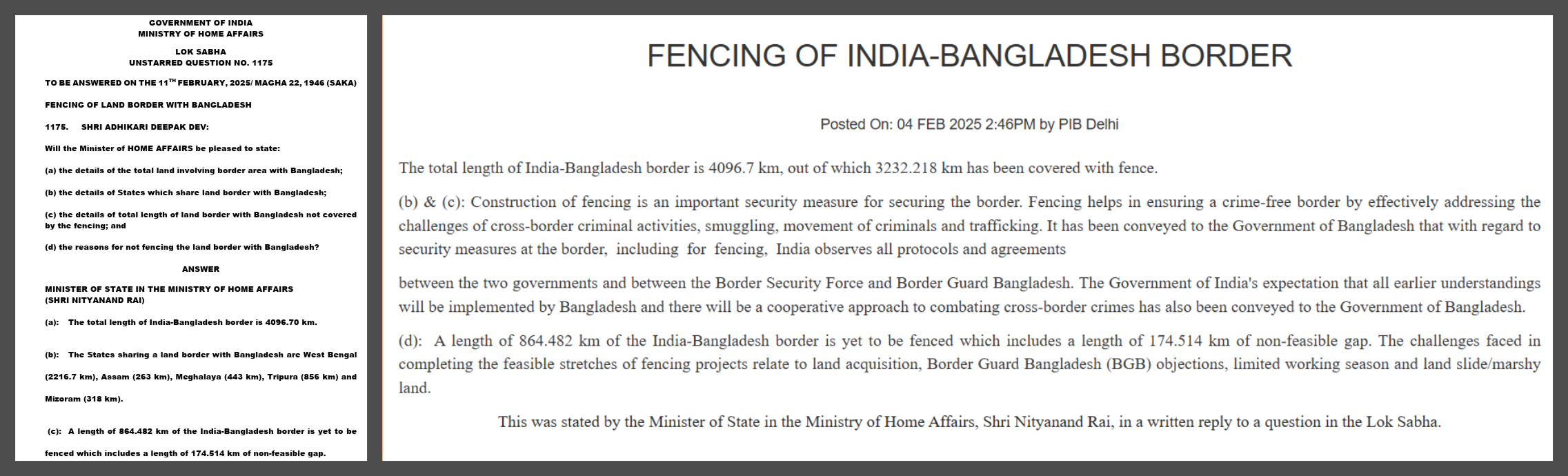
For instance, the prompt resumption of trade through the Hili Land Port, with 40 trucks daily transporting essential commodities such as maize and onions, underscores an interdependence that persists regardless of the administration in Dhaka.
This stabilisation is further evidenced by the restoration of the direct international bus service linking Agartala and Kolkata via Dhaka after an 18-month hiatus. This is beside the consistent supply of 5,000 metric tonnes of diesel through the Bangladesh?India Friendship Pipeline to mitigate global energy disruptions.
The return of the Bangladesh Nationalist Party (BNP) to power has, perhaps surprisingly, catalysed several positive overtures from New Delhi aimed at regional stability.
A significant gesture of goodwill was India’s decision to lift the wheat export ban for Bangladesh, which had been in place since May 2022. This has signalled a shift from “regime-centric” diplomacy toward a more interest-based engagement.
This diplomatic thaw is increasingly evident at the personal and administrative levels; Indian High Commissioner Pranay Verma recently expressed a commitment to a “forward-looking” partnership, while senior officials confirmed the imminent restoration of full visa services to facilitate the flow of people and ideas.
Even high-level security cooperation has seen a reset, marked by the visit of Major General Kaiser Rashid Chowdhury, Director General of the Directorate General of Forces Intelligence (DGFI), to New Delhi from March 1–3. This was the first such high-level engagement since Tarique Rahman assumed the premiership.
Although former Prime Minister Sheikh Hasina’s presence in India continues to complicate this tentative reset, there are signs of strategic restraint on both sides. BNP leaders such as Mirza Fakhrul Islam Alamgir have acknowledged the popular demand for her extradition, while stressing that the “Hasina factor” should not obstruct the deepening of trade and commercial ties.
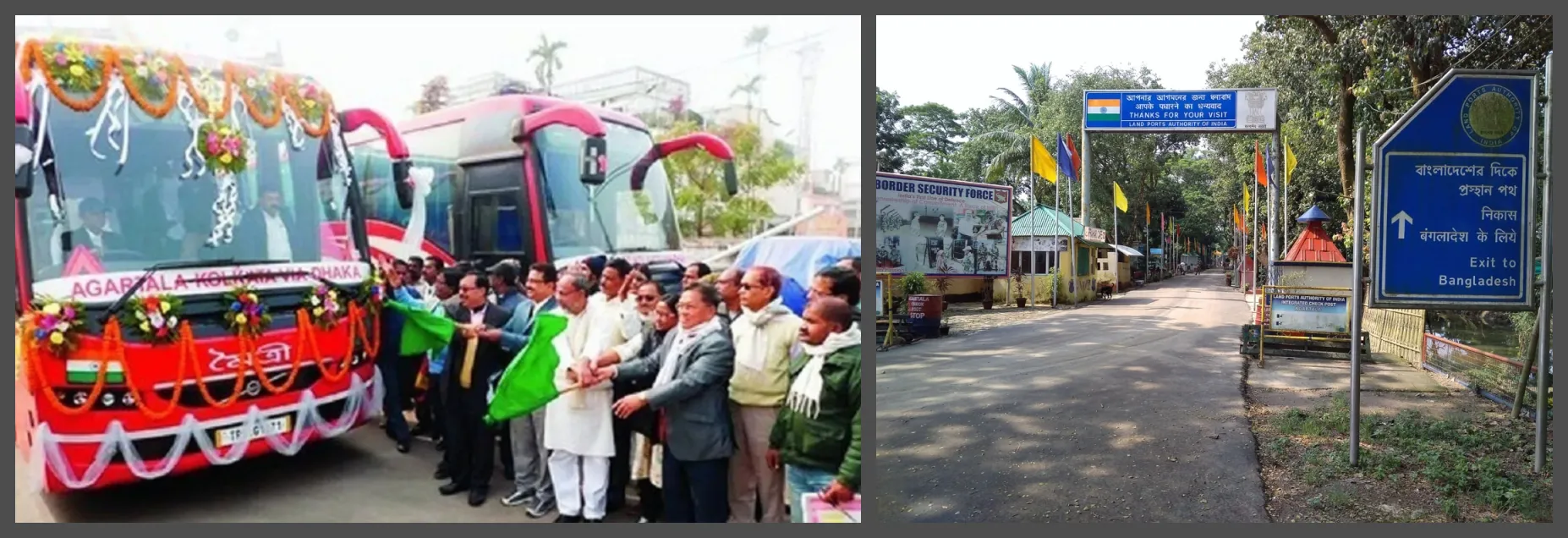
The Agartala-Dhaka-Kolkata bus flagged off (left) at the Akhaura border (right)
This preference for long?term stability over short?term confrontation is also visible in areas like sports and culture. Bangladesh’s State Minister for Youth and Sports, Aminul Haque, has begun “friendly and sincere” talks with Indian diplomats to ease cricket?related tensions. The Minister of Cultural Affairs, Nitai Roy Chowdhury, has likewise emphasised the enduring depth of the two countries’ shared heritage and history.
Alongside India’s recent agreement to supply 16,000 tonnes of rice, these steps hint at a relationship evolving toward a resilient, citizen?focused partnership that is better insulated from sharp partisan swings.
Bangladesh’s ‘new’ foreign policy
Soon after taking charge, Prime Minister Tarique Rahman has signalled a fundamental shift in Dhaka’s diplomatic calculus, moving toward a strictly “Bangladesh First” doctrine (Sobar Agey Bangladesh).
By adopting the slogan “Na Pindi na Dilli” (Neither Rawalpindi, nor Delhi), the BNP government is positioning itself as a sovereign, nationalist force that rejects the notion of being structurally beholden to any single regional power.
Rahman has explicitly cleared the administration’s stance, asserting that foreign policy will be dictated solely by the interests of the Bangladeshi people. This “interest-centric” framework, as echoed by the Foreign Affairs Minister Khalilur Rahman, pledges to safeguard national interests “to the last penny” through a responsible yet courageous diplomacy.
Guided by principles of independence, sovereignty, and non-interference, the new government seeks to replace previous regime-based dependencies with a relationship built on equality, mutual respect, and trust. Central to this new framework is the transition toward a more assertive bilateral engagement where interests are no longer viewed as a “one-way street.”
New Delhi remains a critical partner; yet, the BNP leadership has signalled that key “live” issues, such as the December 2026 renewal of the 1996 Ganga Water Treaty, will be approached with a firm focus on Bangladesh’s riparian rights rather than the domestic political interests of Indian border states.
Furthermore, the administration has indicated that “dignity in foreign policy” will involve speaking candidly on communal incidents or regional issues that affect the sentiment of the Bangladeshi populace.
This shift suggests that while the era of country-specific exclusivity has ended, it has been replaced by a balanced, multi-aligned approach that views regional neighbours as partners rather than masters.
Beyond bilateral ties, the Rahman government aims to revive the South Asian Association for Regional Cooperation (SAARC) to counter regional power asymmetries, underscoring its preference for multilateralism.
This pragmatic orientation also extends to global initiatives: participation in China’s Belt and Road Initiative (BRI), for instance, is to be judged solely by its tangible benefits to the Bangladeshi economy.
A more nationalist and potentially Islamabad?friendly stance will create new challenges for New Delhi, nonetheless. Yet the BNP’s emphasis on “national interest” also offers a more predictable, even if transactional, basis for engagement.
If India can align its connectivity and security goals with Dhaka’s tangible economic needs, the two sides may be able to reach a new balance grounded in shared prosperity and pragmatic realism, moving beyond the ideological preferences that defined an earlier phase of relations.
The West Bengal factor
The resolution of longstanding boundary issues between India and Bangladesh remains a landmark achievement, yet the Teesta River water-sharing dispute remains a primary source of friction.
The West Bengal government’s historical opposition has stalled a comprehensive agreement, emphasising the state’s role as a decisive stakeholder in South Asian diplomacy. Beyond strategic concerns, West Bengal is a vital medical and tourism hub for Bangladeshis, making the state’s active cooperation essential for a resilient bilateral partnership.
The February 2026 political transition in Dhaka has sparked cautious optimism in North Bengal's hospitality sector. Following the August 2024 ouster of Sheikh Hasina, India restricted visa services primarily to “urgent medical” cases, causing Bangladesh’s share of foreign tourist arrivals to drop from 22.26 per cent in 2023 to 17.59 per cent by late 2024.
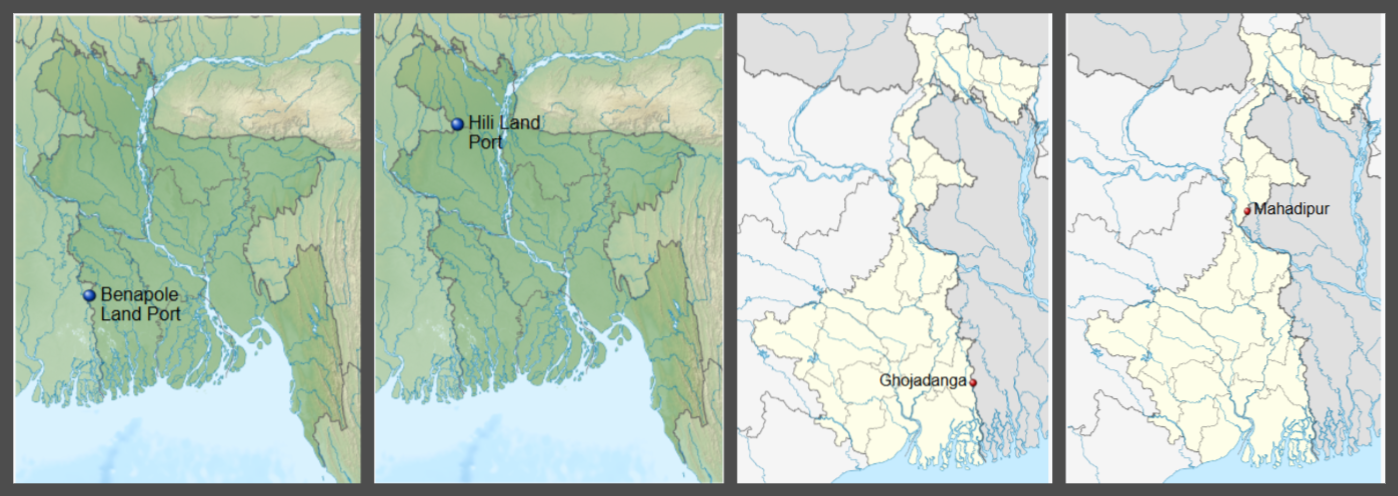
On the map: the border check points and land ports along the West Bengal-Bangladesh border; source - Wikimedia Commons
This decline allowed the US to surpass Bangladesh as India's top source of foreign visitors for the first time in recent years. Industry leaders, including those from the Himalayan Hospitality and Tourism Development Network, view the swearing-in of Tarique Rahman as a catalyst for restoring people-to-people ties, provided that mutual trust and national integrity remain the priority.
Ultimately, a sustained economic recovery depends on a delicate diplomatic reset. With the newly elected BNP administration taking charge, the restoration of full visa services, including for tourism and business, is the most anticipated milestone for the regional economy.
Traders at key land ports like Petrapole, Ghojadanga, Mahadipur, and Hili are hopeful that the end of the interim administration will normalise cross-border logistics.
If New Delhi and Dhaka can successfully navigate the “Teesta hurdle” through tripartite discussions involving the West Bengal government, it would not only revitalise the tourism sectors of Siliguri and Kolkata but also solidify the strategic stability of India's eastern border.

The border checkpoints are Sonamasjid, Petrapole and Hili
Bit of a smile, but eyebrows are still raised.
While the election result in Bangladesh has given New Delhi some grounds for optimism, serious strategic worries persist, especially around the resurgence of Jamaat?e?Islami. By winning 68 seats, its highest tally in more than twenty years, the party has consolidated influence in districts along the borders with West Bengal and Assam.
This resurgence is starkest in the Khulna division, where Jamaat captured 25 of 36 seats, forming a contiguous political arc stretching from Satkhira and Kushtia in the southwest to Rangpur in the north. This belt lies directly opposite the fragile Siliguri Corridor, India’s “Chicken’s Neck,” the narrow land bridge connecting the Northeast to the rest of the country.
The closeness of this consolidated zone to Indian districts such as Murshidabad, Malda, and North 24 Parganas means that electoral changes across the border could shape political narratives and mobilisation in adjacent Indian regions.
The main concern is less an immediate outbreak of violence than a slow?building ideological consolidation, which demands a more sophisticated approach to border management that includes intelligence cooperation, demographic monitoring, and strong local governance beyond physical fencing alone.
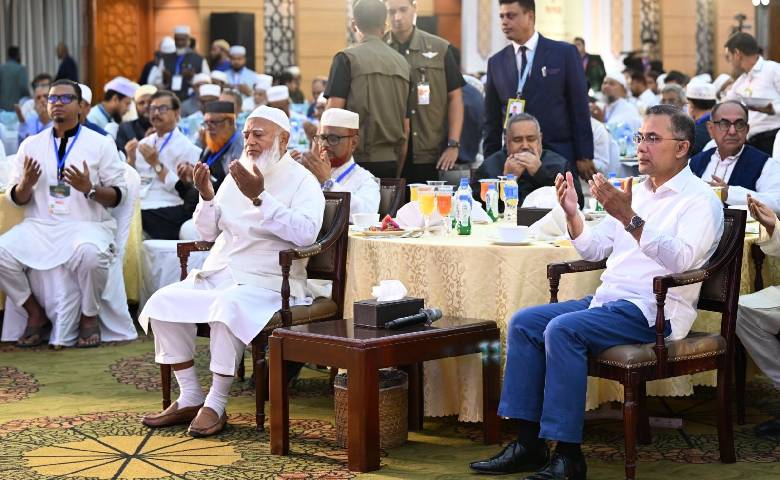
PM Tarique Rahman (right) attends an iftar organised by Jammat-e-Islami chief Shafiqur Rahman (left)
Complementing this internal political shift is a calculated exercise in soft power by regional and extra-regional players seeking to reshape their cultural footprint within Bangladesh. The high-profile visit of international football icon Mesut Özil to Dhaka and the recent tour of the Pakistan national cricket team are not merely isolated sporting events, but strategic efforts to build a grassroots foundation of influence.
For Turkey, Özil’s presence leverages his global stature and shared identity to strengthen bilateral affinities, while the resumption of sporting exchanges with Pakistan reflects a broader trend of normalising historically strained ties. By engaging the Bangladeshi public through the universal language of sports, these nations align with the current administration’s “Bangladesh First” doctrine.
For India, this evolving dynamic signifies that Bangladesh is increasingly becoming a contested arena where traditional diplomacy must now compete with sophisticated cultural and ideological influence.
The way forward
It is unclear how the BNP will navigate the complex regional and global geopolitical landscape, where bargaining and compromise remain the guiding principles for states. BNP also speaks of border killings and push-ins, and its leaders have said they will take legal measures against any foreign nationals living in Bangladesh illegally.
Bangladesh and India need to look at the issue of illegal migration and trafficking that takes place across the porous border. Most significantly, the Ganges Water Sharing Treaty, signed in 1996 for 30 years, is set to expire this year. Water-sharing issues will dominate India-Bangladesh relations, and there will be pressure on the BNP to sign the Teesta agreement.
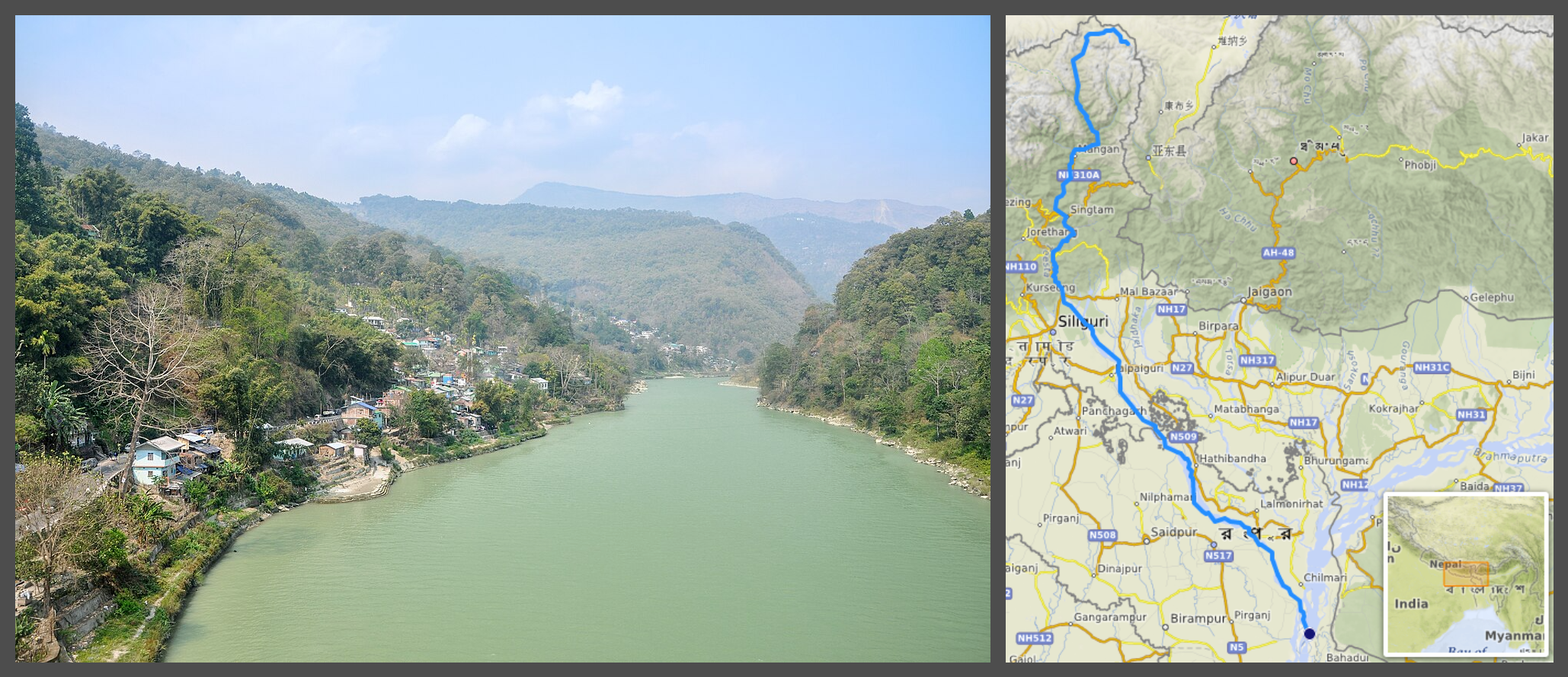
A picture of the Teesta River (left), and the map depicting the river's flow; photo credit - Joydeep and OpenStreeMap
India has already extended a USD 8 billion line of credit for development projects in Bangladesh, along with a USD 500 million line of credit for defence cooperation. After Sheikh Hasina’s fall, many Indian technical staff, particularly project engineers, left Bangladesh because of security concerns and growing anti?India sentiment.
Earlier this year, just before the elections, nine senior officials from India’s National Thermal Power Corporation (NTPC) working at the Rampal India–Bangladesh Maitree Power Station also departed amid fears of violence. Restarting these projects will be crucial.
The proposed Indian economic zones at Mirsarai and Mongla, cancelled by the interim regime, along with those in Chattogram and Bagerhat, in January, despite land having been allotted a decade earlier, likewise need to be reconsidered.
India has set itself a clear goal in its engagements with Bangladesh: to reset the relationship while honouring existing treaty commitments. Dhaka’s reaction so far has been broadly positive.
However, a major test for Tarique Rahman will be managing anti?India sentiment not only in the opposition and on the streets, but also within parts of his own party. For now, India–Bangladesh ties remain fluid and somewhat unpredictable. Even so, several policy options are available to both New Delhi and the West Bengal government.
To minimise border risks, India’s use of land east of the border fence, referred to as the “no-man's land” or land between the fence and the actual International Border, for medical and commercial hubs, is a proactive strategy to address multiple issues simultaneously.
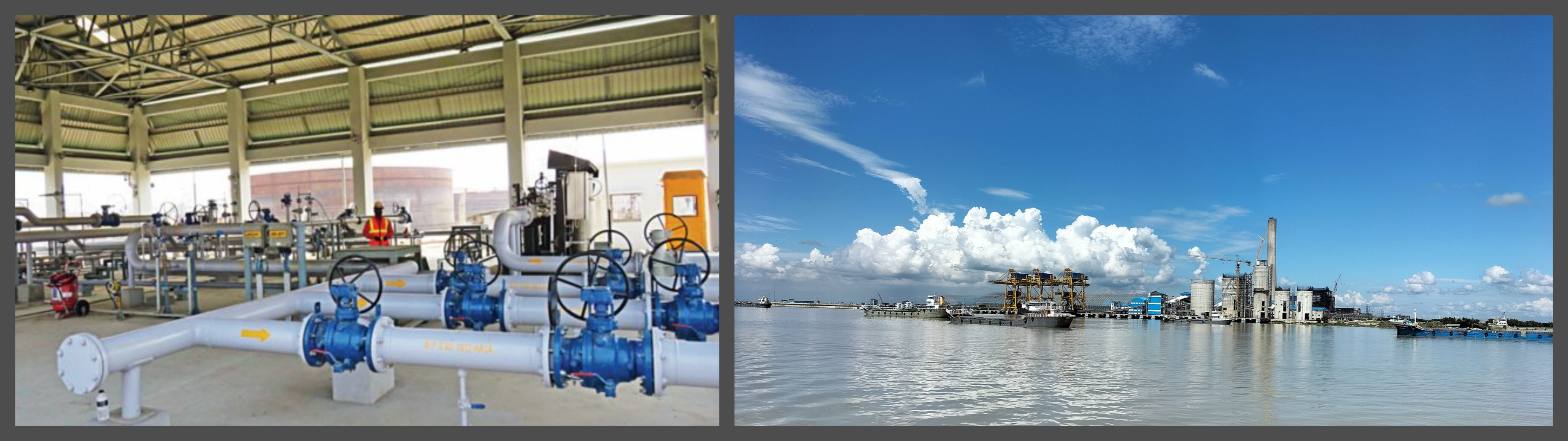
Numaligarh Refinery in Assam, from where diesel flows through the Bangladesh-India Friendship pipeline (left), and the Rampal Bangladesh-India Maitree Power Station (right); photo source - Wikimedia Commons
Developing shopping complexes and pharmacies in these zones creates a legally regulated revenue stream for Indian citizens living in enclave areas east of the fence. Establishing permanent, functioning medical and commercial infrastructure also acts as a physical deterrent, slowing encroachment and illegal infiltration, and transforming what was once “dead space” into a secure economic asset.
By adopting a “fortress economy” model at the border, India can protect its interests, generate foreign exchange, and reduce the risk of a more hostile or unpredictable Dhaka administration.
Secondly, while official diplomatic initiatives might be on hold, India can shift focus to direct empowerment. Expanding educational opportunities for Bangladeshi minorities and women through online scholarships or third-country programmes maintains a connection with the secular and progressive segments of society without requiring direct support for the ruling coalition.
Implementing a new, stricter visa policy should be the foundation of this approach, emphasising security vetting while facilitating essential trade and medical tourism.
Thirdly, with the Ganga Waters Treaty set to expire in December and joint measurements expected anytime soon, tensions are high. Allowing the treaty to expire or failing to renew it would significantly change regional hydropolitics.
Without a legal framework, India, as the upper riparian state, would gain greater control over flows from the Farakka Barrage to serve its development, irrigation, and port maintenance needs in West Bengal.
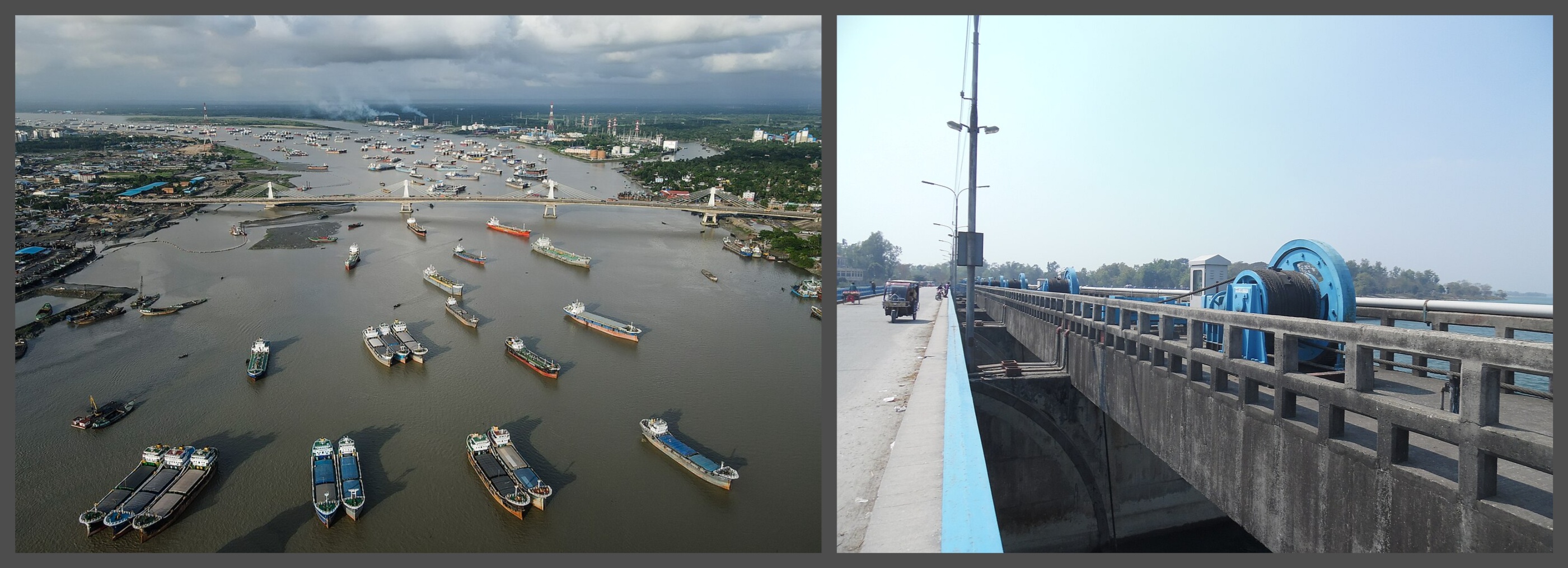
An aerial view of the Shah Amanat Bridge over the Karnaphuli river, which flows via Mizoram before entering the Chittagong hill tracts in Bangladesh (left), and a barrage over the Teesta (right); photo source Muhammad Amdad Hossain and Wikimedia Commons
For West Bengal, a stable and democratic Dhaka creates a crucial opening to rebuild the “civil consensus” that frayed during the turmoil of 2024. The spirit of 1971 once nurtured a feeling that West Bengal shared in Bangladesh’s struggles; the period after July 2024, by contrast, has been marked by mutual suspicion.
To restore trust, the West Bengal government, working with New Delhi, can draw on a multilayered strategy. A core element would be to re?establish Kolkata as a premier medical hub so that Bangladeshi patients continue to access the specialist care they have long sought there.
Rebuilding “people?to?people” diplomacy will also require breathing new life into shared urban and cultural spaces. Iconic locations such as Esplanade, long hubs of cross?border commerce and tourism, need to return to normal for the social and economic fabric on both sides of the border to mend.
Beyond trade, a broader “cultural reset” is taking shape through cinema, music, and literary exchanges. By encouraging joint film projects, musical collaborations, and book festivals, West Bengal can draw on the two Bengals’ common language and heritage to move beyond recent tensions.
Such soft?power initiatives can gradually shift the relationship away from high?level political caution and toward a resilient, citizen-centred partnership that preserves historic empathy even amid today’s partisan divide.
(Views expressed in this report are the author's own.)
Follow us on WhatsApp
Follow us on Facebook
Follow us on X @vudmedia
Follow us on Substack


