
With general elections in Bangladesh, the first after the July 2024 uprising and fall of the Sheikh Hasina government, being slated for February 2026, the political scene is heating up in the country with not just continuing turmoil but also mobilisation on lines unseen earlier. Electoral alliances are being stitched up at an unanticipated pace, with disparate political forces joining hands to make an impact in the election. In the first of this series on the Bangladesh elections, which will be the first without the presence of Hasina’s Awami League. Dipannita Maria Bagh and Tapas Das provide detailed insights on the electoral scene in three Bangladesh divisions bordering India. The nature of the political outcome in these areas will have cross-border implications for India.
Home page image: A scene from the July 2024 uprising
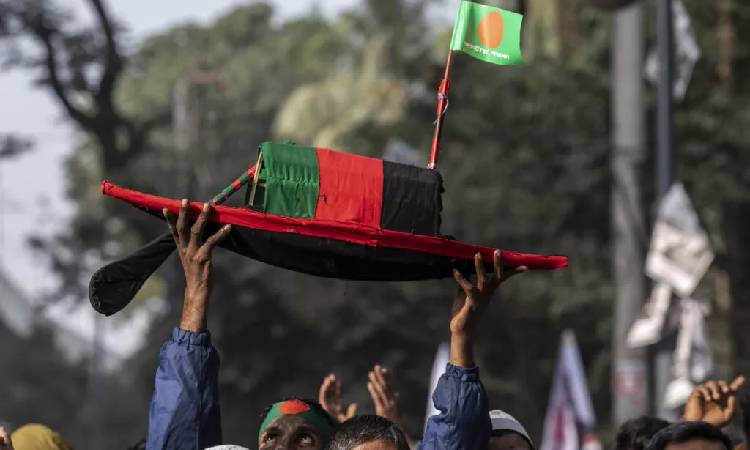
Text page image: BNP workers hold up a boat representing the party flag; photo source: East Asia Forum
Banner image: The election symbols of the leading parties, with the Awami League symbol showing the ban
Bangladesh is scheduled for twin polls: a general election and a referendum on 12 February 2026, the first since student-led protests led to the collapse of the Sheikh Hasina government in August 2024.
These 13th Jatiya Sangsad elections carry exceptional significance. The July 2024 political upheaval achieved more than toppling the Awami League (AL) government, in its third term: it fractured the longstanding electoral alliance between the Bangladesh Nationalist Party (BNP) and Jamaat-e-Islami (JeI), driving these former partners into opposing camps.
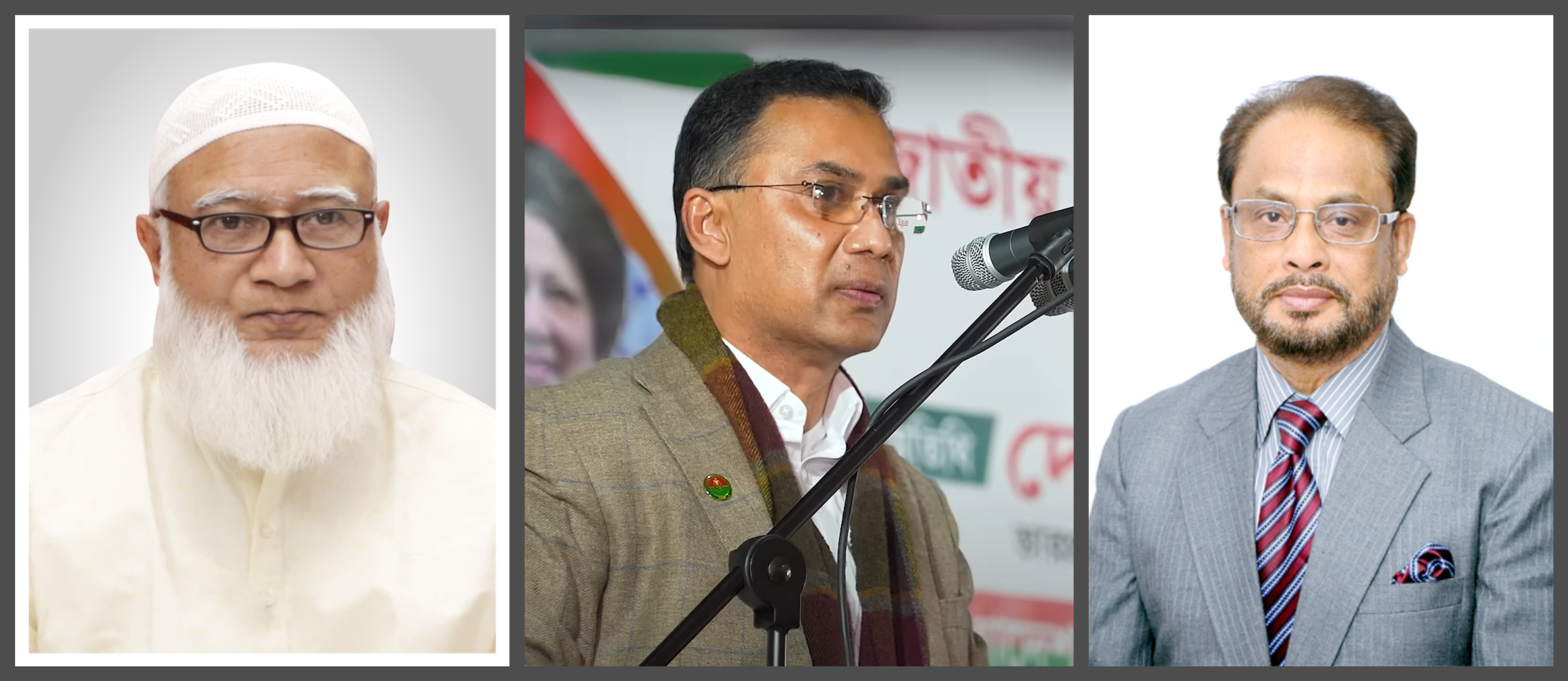
Image: The leading contenders - Jamaat-e-Islami Amir, Dr Shafiqur Rahman (left), BNP chief Tarique Rahman (centre), and G M Quader of Jatiya Party (right)
The referendum will determine whether voters approve the July Charter and its associated constitutional amendments regarding executive authority, judicial independence, the autonomy of the Election Commission, and law enforcement agencies.
The interim administration, led by Muhammad Yunus, has sought to reform the country’s institutions since assuming power, finalising the July Charter, and approving the Representation of the People Order (RPO) Amendment Ordinance.
This ordinance bars ‘fugitive’ convicts from contesting and voting, reintroduces paper ballots while abolishing electronic voting machines (EVMs), brings the armed forces under the definition of law enforcement agencies, and mandates all political donations exceeding Tk 50,000 to be made through banking channels.
The Election Commission has, meanwhile, suspended the Awami League’s registration, and the interim government has banned its activities.
The February 2026 general election is consequential for the country’s political future – electing new people’s representatives and determining the fate of the July Charter – and is also crucial for security in the neighbourhood and the region.
Since its partition from India in 1947, this will mark the first occasion on which Bangladesh elections coincide with state elections in the Indian states of West Bengal and Assam. Both states are geographically contiguous and have unaddressed issues of cross-border migration, which remains a lingering security concern.
There is widespread expectation that an elected government in Bangladesh will be on firmer ground and able to implement new policies on the country’s economy, relations with neighbours, particularly India, and other unaddressed domestic and foreign policy issues.
On 29 August 2025, the Election Commissioner, Md. Anwarul Islam Sarker stated that the upcoming general election will undoubtedly be the most risky in Bangladesh’s electoral history.
According to the Election Commission of Bangladesh, the total number of voters in the country stands at 127.7 million, representing an increase of nearly 2.6 million in the updated electoral rolls. Roughly 50.75 per cent are male voters and 49.25 per cent are female voters, with a near-invisible share of third-gender voters. Over 376,000 expatriates have registered for postal ballots, with the expected number being twice as many.
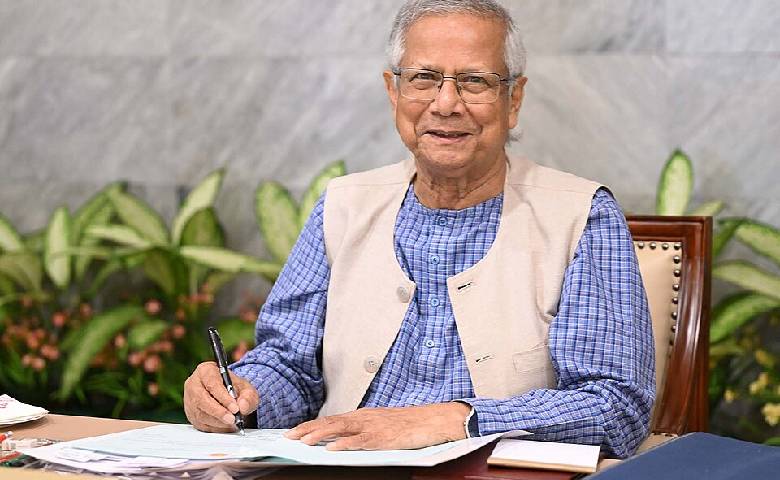
Image: Bangladesh's head of interim government, Professor Muhammad Yunus, signing the summary of the July 2025 National Charter Implementation Order, prior to its transmission to the President, on 13 November 2025, photo source: Press Information Department
A September 2025 nationwide survey conducted by Innovision Consulting, covering 10,413 voters nationwide, found that 30.4 per cent of voters are satisfied with the local political activities of the JeI. According to another survey conducted by Prothom Alo, 23.7 per cent expressed satisfaction with the National Citizen Party (NCP) and 21 per cent with the BNP.
While nearly 66 per cent of respondents said the BNP would win most of the seats, 26 per cent felt that the Jamaat would emerge the winner. In addition, a pre-election assessment by the US-based think tank, the International Republican Institute (IRI), revealed that over 70 per cent of respondents approved of the interim government, rejecting claims of a foreign conspiracy.
It also indicates that support for the Awami League has dwindled sharply (11-14 per cent), while the BNP, with over 33 per cent, and the JeI, with 29 per cent, remained the strongest contenders.
Meanwhile, amid economic uncertainties and mob violence, election campaigns are in full swing, even as political alignments are becoming evident in this landscape. While the Jatiya Party (GM Quader) is going solo, contesting 243 seats, the other major parties are aligned along two major alliances, one of which is likely to take over the reins of Bangladesh.
The BNP is leading the coalition of parties that include the Nagorik Oikya, Ganosamhati Andolon, Gono Odhikar Parishad, Revolutionary Workers’ Party, Bangladesh Jatiya Party (BJP), National People’s Party (NPP), Jamiat Ulema-e-Islam Bangladesh, and another of its factions.
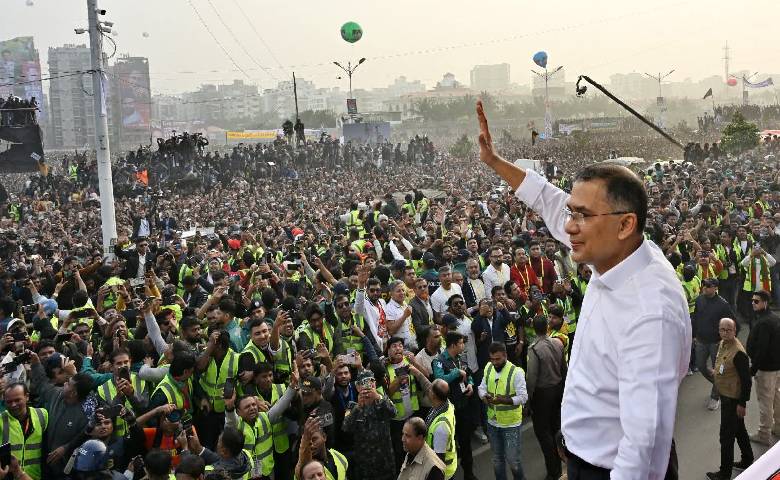
Image: BNP chief Tarique Rahman being welcomed on his 'home coming'
The Jamaat-e-Islami leads the other major alliance and notably includes the NCP, formed by the students who led the July 2024 uprising against Sheikh Hasina. Besides smaller parties such as the Bangladesh Development Party, Jatiya Ganotantrik Party, and Liberal Democratic Party (LDP), the JeI-led alliance also includes Islamic political groups, including Islami Andolan Bangladesh, Bangladesh Khelafat Majlis, Bangladesh Khelafat Andolon, and the Bangladesh Nizam-e-Islam Party.
We provide below an overall glimpse of the political scene in three divisions bordering India’s northeastern region – namely, Mymensingh, Rangpur, and Sylhet – in the run-up to the elections.
The Mymensingh Division has 38 parliamentary constituencies spread across Mymensingh, Jamalpur, Sherpur, and Netrokona districts. Following the announcement of the polling schedule, election fervour has gripped the region.
The country’s main political party, the BNP, holds a strong chance of winning 33 of these, whereas the JeI is poised to contest fiercely in the remaining five. In Mymensingh district, the BNP has multiple potential contenders across every constituency. At the same time, the JeI has finalised candidates for 10 of the district’s 11 seats, leaving one constituency to its ally, the Bangladesh Development Party.
The most significant race is unfolding in Mymensingh-4, where the Jatiya Party (JaPa) Co-chairperson, Rowshan Ershad, will be challenged by the BNP candidate Abu Ohab Akanda Wahid, general secretary of the party’s district unit.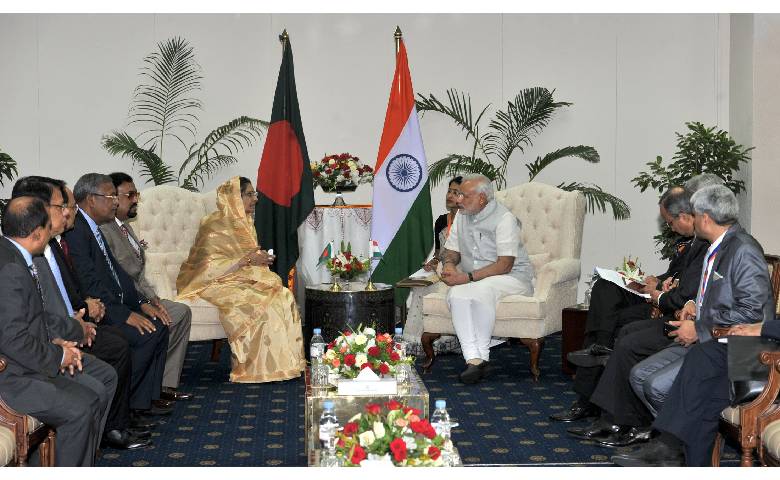
Image: Rowshan Ershad, Leader of Opposition, with Prime Minister Narendra Modi in June 2025 in Dhaka
Ershad, the widow of former Bangladesh President General Hussain Muhammad Ershad, had won unchallenged in the last general election and was the Leader of the Opposition in the Parliament. However, she appears to be struggling to retain her seat despite the notable absence of the Awami League in the race.
This development carries particular weight as the winning party or alliance in this constituency traditionally forms the government. The student-led NCP shows little momentum in this constituency.
Meanwhile, in Mymensingh-8 (Ishwarganj), former Upazila Chairman Ahmad Hossain Bhuiyan, who held the position in 1985 and 1990, is representing the Khelafat Majlis party. In Mymensingh-9, Yasser Khan Chowdhury, son of former MP Anwarul Hossain Khan Chowdhury and convener of Nandail upazila BNP, has secured the nomination, signalling the deep competition.
The Rangpur Division has 33 parliamentary constituencies spread across Rangpur, Dinajpur, Gaibandha, Kurigram, Nilphamari, Thakurgaon, Lalmonirhat, and Panchagarh. The election landscape in Rangpur, a stronghold of the Jatiya Party, has transformed, signalling both opportunity and uncertainty.
The stakes have never been higher for the competing parties. The main theatres of contestations will be Rangpur-1, a former JaPa stronghold, where the Awami League’s Assaduzzaman Bablu won this constituency in the much-questioned 2024 elections. For the upcoming polls, the NCP has nominated Al Mamun, former central president of the Jatiya Party’s student organisation Jatiya Chhatra Samaj.
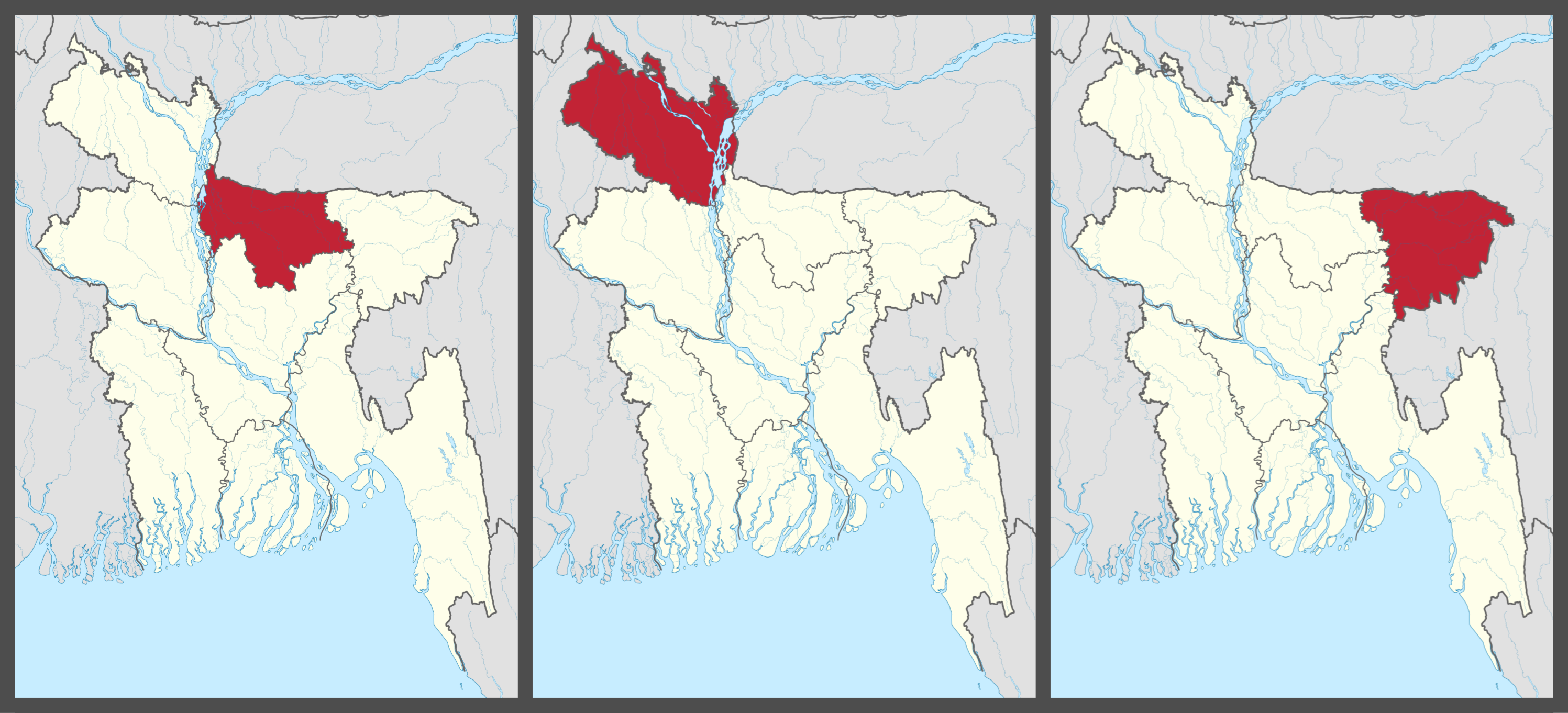
Image: Maps showing the three divisions of Mymensingh, Rangpur and Sylhet
In Rangpur-3 (Sadar Upazila and a part of City Corporation), former student leader and convener of the BNP’s Rangpur Metropolitan Committee, Shamsuzzaman Shamu, is pitted against JaPa chairman GM Quader and another independent transgender candidate.
Finally, in Rangpur-4 (Pirgacha-Kaunia), conventionally a swing constituency for the JaPa, BNP, and the AL, it also has a substantial voter share of the JeI. Here, the NCP has fielded its central member secretary, Akhtar Hossain.
The JaPa has reemerged with organisational strength, fielding candidates in 32 out of 33 constituencies in the eight districts of Rangpur. With the party fielding 234 constituencies nationwide, its secretary general, Shamim Haider Patwary, contesting from two constituencies in Gaibandha, its top leadership seeks to redeem from the years of subordination under the AL and BNP.
The JaPa expects to secure 12 to 15 seats in Rangpur.
The Sylhet Division has 19 parliamentary constituencies spread across Sylhet, Moulvibazar, Habiganj, and Sunamganj. Traditionally, party heavyweights contest in Sylhet’s six constituencies. In Sylhet-1 (City Sadar), five parties are contesting.
Since 1991, this metropolitan seat has maintained an unbroken pattern: the party whose candidate wins Sylhet-1 subsequently forms the government. This correlation is not merely anecdotal but represents a consistent anti-incumbency trend across multiple election cycles since 1991.
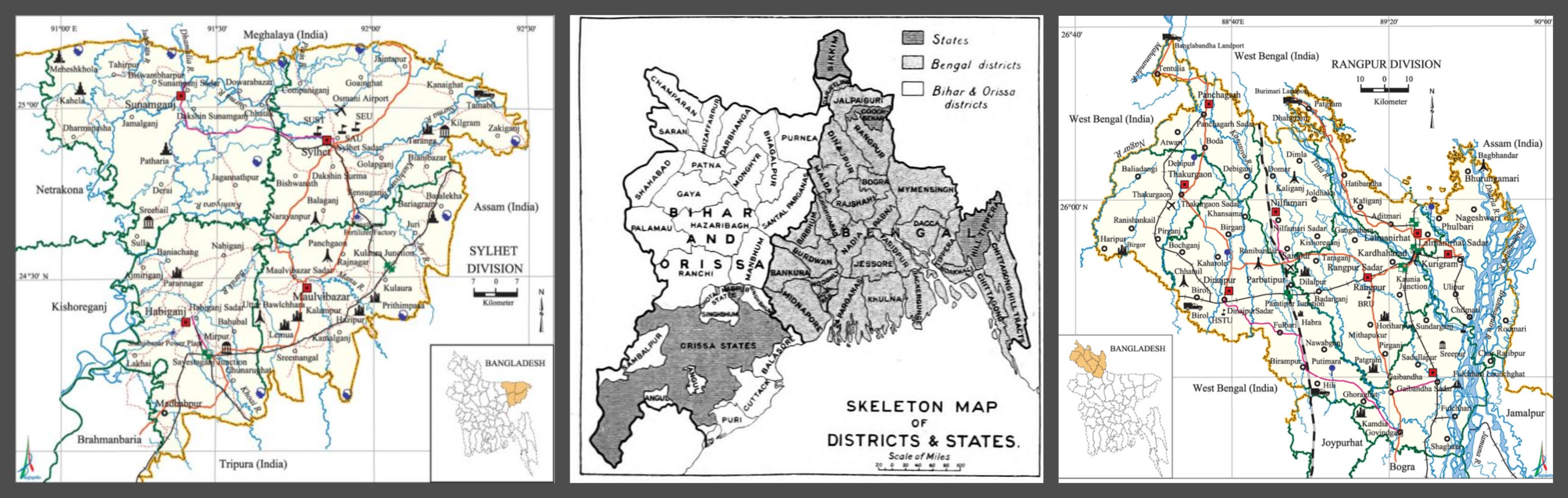
Image: Maps showing the contiguity of the three divisions with Indian states
When the BNP’s Khandaker Abdul Malik secured victory in 1991, his party formed the government. In 1996, Abul Maal Abdul Muhith’s win coincided with the Awami League’s return to power after twenty-one years. The pattern held again in 2001 when M. Saifur Rahman’s victory preceded another BNP government.
This predictive accuracy suggests that Sylhet-1 functions as a microcosm of broader national sentiment, possibly due to its diverse urban electorate and importance as a commercial hub. The constituency’s designation as a “VIP seat” in the holy land of Shah Jalal further elevates its profile, with political parties traditionally launching their national campaigns by visiting the shrine, acknowledging both its spiritual resonance and political weight.
The BNP’s nomination of Khandaker Abdul Muktadir Chowdhury, the son of the late former MP Khandaker Abdul Malek and adviser to the BNP chairperson, as well as the JaPa’s nominated former MP and freedom fighter Maksud Ibn Aziz Lama, reflect the parties’ understanding of the constituency’s historical and electoral significance.
Additionally, the JeI, Gono Odhikar Parishad, Bangladesh Socialist Party (Marxist), and NCP are also in the fray.
In all, the BNP has announced candidates for 14 constituencies in Sylhet. In the Sylhet-3 (South Surma-Fenchuganj-Balaganj), eight nominations have been filed by the NCP, Jatiya Party (GM Quader), JeI, BNP, Bangladesh Khilafat Majlis, Islami Andolan Bangladesh, and two independent candidates. The JaPa nominated Atiqur Rahman Atiq, a member of the party’s presidium.
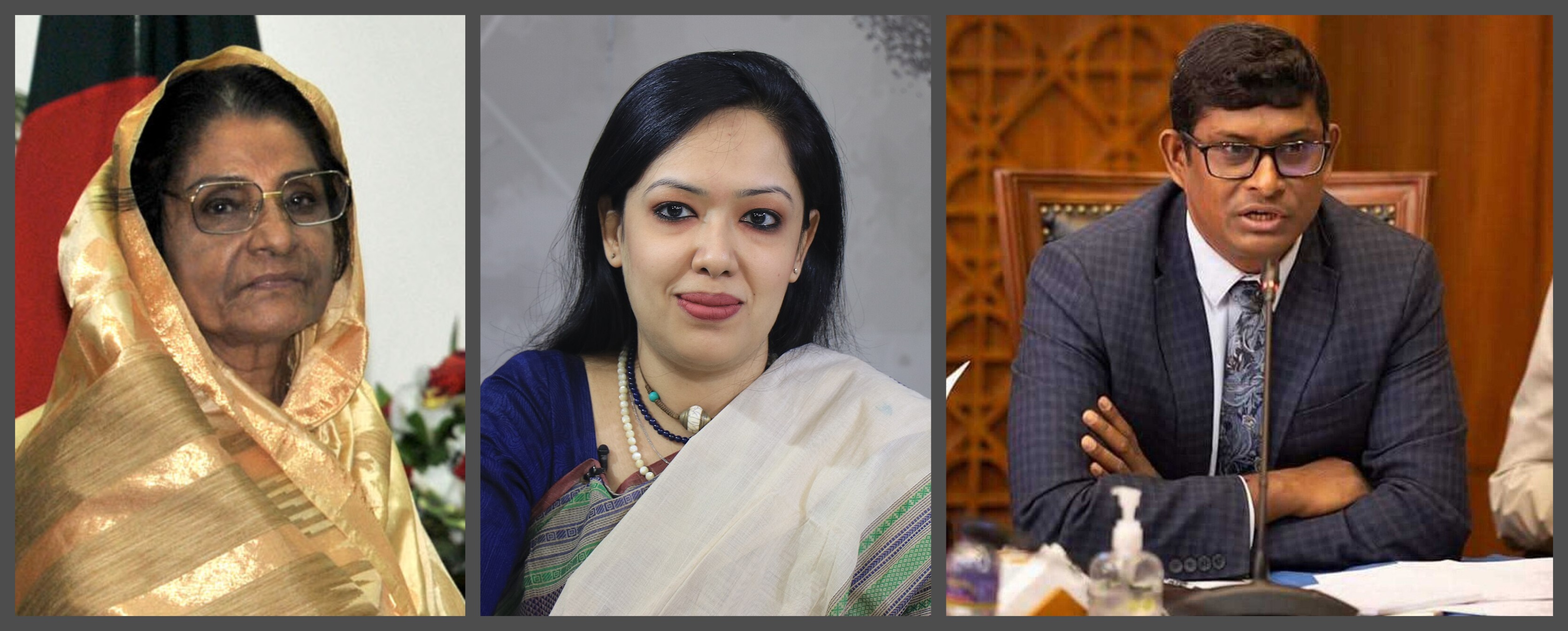
Image: Rowshan Ershad (left), Rumina Farhana (centre) and Shamim Haider Patwary (right)
In Brahmanbaria-2, Rumina Farhana, who was expected to be nominated, was not given the seat by the BNP. Farhana is the daughter of Oli Ahad, founder and general secretary of the East Pakistan Youth League and one of the organisers of the 1952 Language Movement.
Much like her father, Rumina Farhana, who was the BNP’s assistant secretary for international affairs, has met a similar fate – not considered a suitable candidate despite being high up in a national party’s organisation. Despite the threat of disciplinary action, she may contest independently.
The BNP has ceded the Brahmanbaria-2 (Sarail-Ashuganj and a part of Bijoynagar) to Maulana Junaid Al-Habib, the vice-president of Jamiat Ulema-e-Islam, who is the alliance’s candidate.
In Brahmanbaria-6, Jonaed Abdur Rahim Saki of Ganosamhati Andolan has received the BNP’s nomination. Saki is the former president of the Bangladesh Chhatra Federation and currently the Chief Coordinator of the Andolan, a leftist political party active in the joint movements against the Awami League government.
The evolving political scene
There has been a significant shift in the nature of leadership in the political parties, particularly at the grassroots level. This is partly due to changing demographics, a gradual shift in power from the elite to the middle class, and anti-incumbency politics.
However, some ground rules have remained the same. Despite party objectives, the BNP alliance does not reflect a cohesive policy, accommodating parties from the right, left, and even religious political groups, leading to ‘a plan’ of compromises.
The BNP, anticipating a path back to power, is placing its bets on achievable goals. This includes fielding the strongest candidates in Mymensingh and Rangpur, refraining from supporting Rumina Farhana’s candidature in the orthodox Brahmanbaria-2, and ceding the seat to an alliance partner, which can secure it better.
The Jamaat-e-Islami has played a masterstroke, uniting different ideological strands of the religious parties under its umbrella and by allying with the centrist NCP. These strategies help the JeI in broadening its voter base, where its candidates are placed for strength.
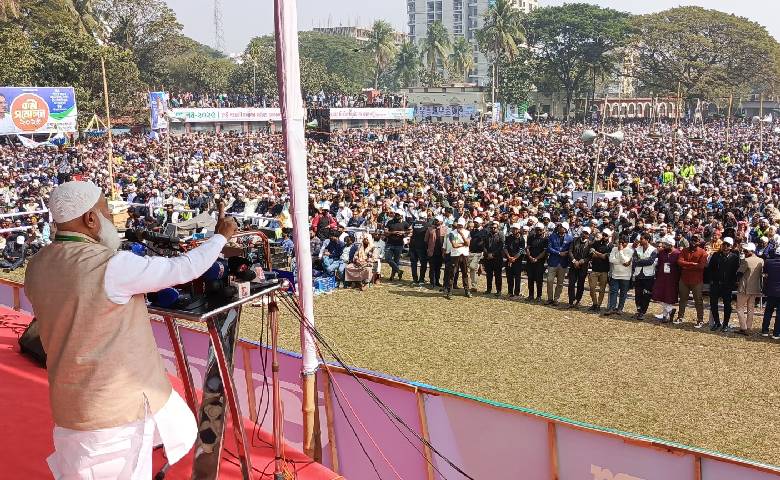
Image: Jammat-e-Islami Ameer, Dr Shafiqur Rahman, addressing a rally
The JaPa (GM Quader) is seeking to reestablish its stake in the country’s political landscape by going solo. However, its attempt to forge a third front has no precedent in the country’s history. Smaller political parties and individuals will swing into the frame, as and when the results are revealed.
Despite their domestic relevance, Mymensingh, Rangpur, and Sylhet are key divisions that share territorial borders with the Indian states of Assam, West Bengal, and Meghalaya. With the first two slated for their state elections early next year, stability in these Bangladeshi border divisions assumes heightened strategic importance for India to monitor.
Stable leadership in these bordering divisions of Bangladesh—whether from the BNP or Jamaat-e-Islami— will prove essential to maintaining security along the shared border during this politically sensitive transition.
(Views expressed in this report are the authors' own.)
Follow us on WhatsApp
Follow us on Facebook
Follow us on X @vudmedia
Follow us on Substack

