
On 21 November 2025, the Indian Government brought into force the four Labour Codes – covering wages, industrial relations, social security, and occupational safety and working conditions – which entailed the rationalising of over 29 existing labour laws that were formulated and evolved since independence. While the government claims that the four Codes are ‘pro-labour,’ and ensure better wages, welfare and social security for a ‘future-ready workforce’ and a modernised labour ‘eco-system,’ workers’ unions and opposition parties have termed it a sell-out to further corporate interests at the cost of long-cherished workers’ rights. Evident in the Codes are structural underpinnings that dismantle the principles of social welfare framed by B.R. Ambedkar, India’s first labour minister. In this Ground Report, Rejimon Kuttappan provides a glimpse of the realities of the vulnerable workforce, particularly those in the informal sectors that form the lower rung of India’s industrial landscape.
Home page image: The 'Triumph of Labour' monument in Chennai
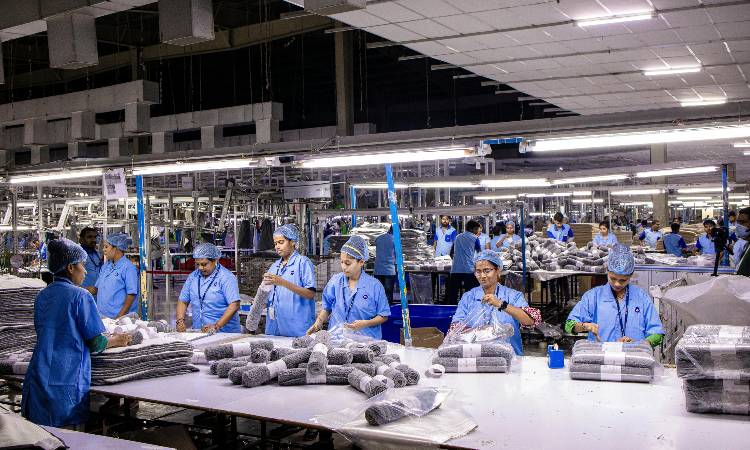
Text page image: Women workers at a factory, photo source - Pexel
Banner image: A protest by Calcutta Tram Workers in British India, photo source - CPI(ML)
In a sun-scorched village hugging the Bay of Bengal in Odisha, Lekha Malik (name changed) rises before dawn to gut and peel fish in a heavily guarded factory. The seafood she handles, destined for supermarket shelves in distant lands, fuels an export industry worth millions of dollars annually.
Yet, Lekha’s reward for a gruelling day—peeling up to four boxes of fish, each weighing 50 to 60 kilograms—is a meagre USD 5 (INR 450), or sometimes less. Her pay has inched up from USD 0.80 (INR 70) per box just months ago to a little over 1 USD (INR 90), but the gain feels hollow.
Back then, her employer dutifully chipped in to her provident fund, a small stake in her future. Now, with wages nudged higher, the company has abruptly pulled the plug: no more contributions, they say, as if the modest raise absolves them of any further obligation.
India's Employees’ Provident Fund (EPF) scheme, enshrined in the Employees’ Provident Funds and Miscellaneous Provisions Act of 1952, stands as a pillar of workers’ security in a nation where informal labour often eclipses formal protections. It mandates that factories and other establishments with 20 or more employees must enrol their workers in a shared retirement savings pool administered by the Employees’ Provident Fund Organisation (EPFO).
Both sides contribute 12 percent of the employee’s basic salary plus dearness allowance—mandatory for those earning up to INR 15,000 monthly, with higher earners having the flexibility of opting in. The employer’s slice splits further: 8.33 per cent flows into the Employees’ Pension Scheme (EPS) for post-retirement income, while the balance fortifies the core fund, which workers can fully withdraw at retirement, resignation, or death.
Partial advances are permitted for life’s urgencies—medical crises, a child’s education, a wedding, or even buying or building a home—offering a fragile buffer against precarity.
When I pressed Lekha on this provident fund denial, her response was a weary shrug. “They've increased the wages, so they’ve washed their hands of it,” she said, wiping salt-crusted palms on her sari. “I don't know much about this...”
Her words hang like the humid air of the coastal night, a quiet indictment of a system meant to safeguard the vulnerable but strained by evasion and exploitation.
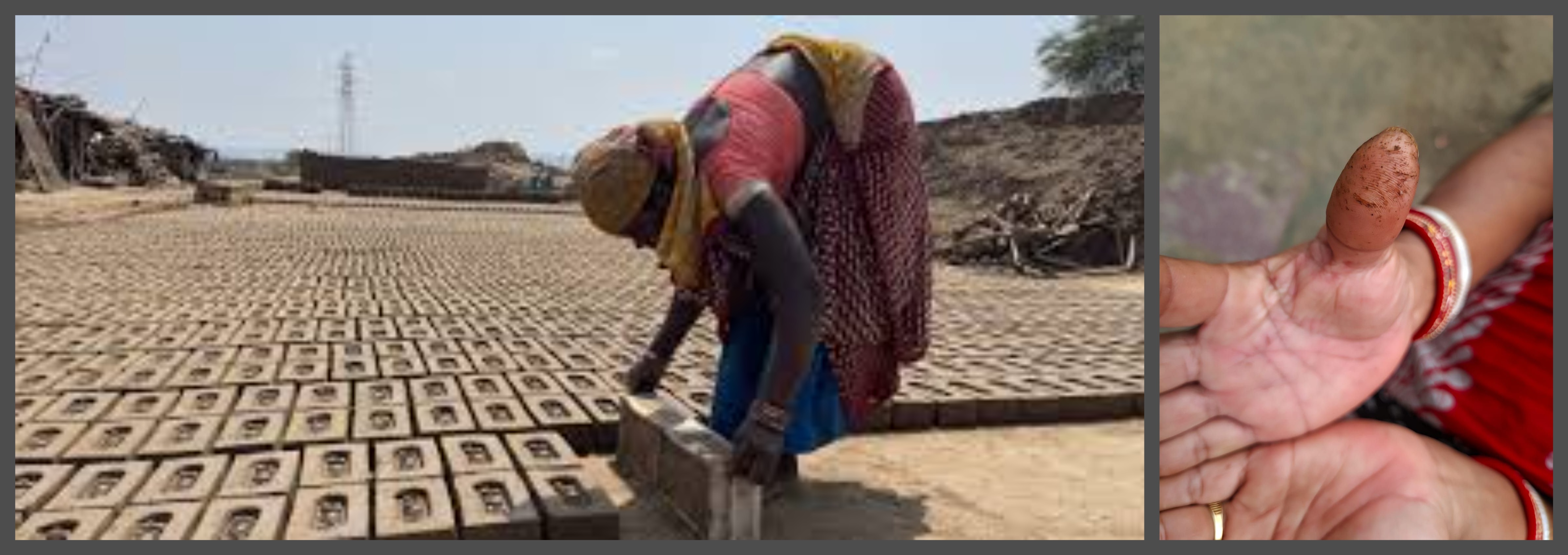
Image: A women worker at a brick klin (left), and the the brusied fingers of a woman worker in the Odisha factory (right), photo credit - author
Unfortunately, Lekha’s case is far from isolated. Nearly 200 women workers I met across those Odisha villages had been exploited in exactly the same way. None of them had written contracts, decent working conditions, or access to social protection schemes such as a provident fund.
This is precisely where the narrative pushed by Human Resources (HR) personnel and company Chief Executives collapses—particularly their claim that the newly implemented Wage Code and its “enhanced” provident fund provisions will benefit the workers.
The Wage Code asserts that mandatory retirement contributions, including provident fund and gratuity, are expected to increase. Under the new regulation, an employee’s basic salary must constitute at least 50 per cent of their total CTC (cost-to-company) or meet the government-specified percentage. This, in theory, would raise both PF and gratuity contributions, since both are calculated on basic pay.
But will any of this apply to Lekha or the hundreds of others like her? No. And it would not apply to the vast majority of India’s labour force either.
Now, let us travel about 80 kilometres from Lekha’s home to meet Rajendra Munda (name changed), a 20-year-old who happened to be on leave in his village. He works in the same factory as Lekha. A few days before I met him, a box of fish fell on his right hand, causing a serious strain. He was forced to continue working despite the injury, which only made it worse.
The factory neither took him to a hospital nor provided any medication. Instead, he was told to go home and return only when his condition improved.
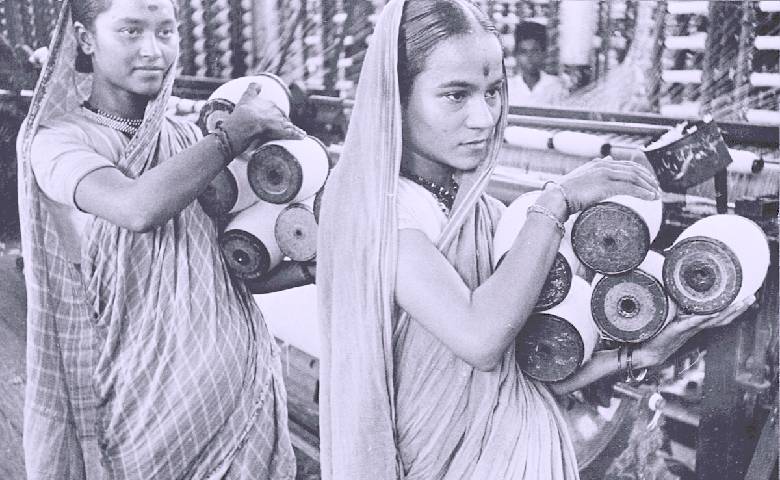
Image: Women workers at a Bombay textile mill, 1944, photo source - Library of Congress
Rajendra’s experience exposes how the Occupational Safety, Health and Working Conditions (OSH) Code, despite being promoted as a major labour reform, does little to protect workers in India’s vast informal and hazardous sectors. The OSH Code mandates that employers ensure a safe working environment, provide immediate medical assistance, report workplace injuries, and maintain health and safety standards across all establishments. It also requires employers to conduct risk assessments and provide protective equipment.
Yet, in practice, these provisions remain out of reach for workers like Rajendra, who operate in small, fragmented units that fall through the cracks of enforcement.
When the box of fish fell on Rajendra’s hand, the company was legally required—under both existing rules of the Factories Act (in force until OSH Code enforcement) and the OSH Code’s provisions—to offer first aid, document the injury, and refer him to medical care. Failing to do so is a direct violation of statutory obligations.
Odisha’s labour rules also require establishments to keep accident registers, offer medical facilities, and ensure that injured workers are not forced to work under unsafe conditions. By compelling Rajendra to continue working with an injury, the company breached these norms.
Furthermore, sending him home without treatment or wage protection contradicts the Code’s mandate for safe working conditions and violates broader Indian labour jurisprudence, which recognises an employer’s duty of care.
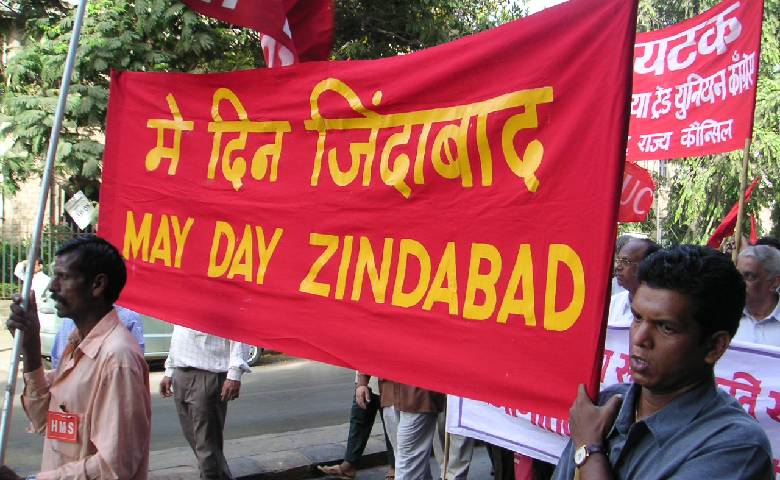
Image: It's really a May Day call - Workers commemorating the International Day of Workers, but literally symbolising a mayday (distress) call for workers in India
The reality is clear: without robust enforcement, monitoring, and protection for informal workers, the OSH Code remains a legal framework on paper—incapable of safeguarding workers like Rajendra who need it the most.
I met Lekha, Rajendra, and several others in Odisha last month. However, back in February, I had travelled through industrial areas in Maharashtra to investigate workers’ rights violations and instances of forced labour in the steel industry. There, I met hundreds of workers from various steel factories and spoke to many of them in detail.
Among them was Deepak Shourya (name changed), who had unwittingly joined a protest demanding bonus payments. Unfortunately, the contractor’s henchmen identified him. That same evening, while he was on his way home, they picked him up, thrashed him, and dumped him on the street. Deepak did not take any further action. He returned to work the next day with bruises, and a few weeks later, he quit the job, forfeiting part of his wages.
When I asked why he did not pursue any legal steps, his answer was painfully honest: “What I earn is about USD 90 (INR 8000) a month. Out of that, I may have to pay a lawyer USD 50 (INR 4500) to fight a case. And since there is no union in the factory, I won’t get any support,” he said.
Stories like Deepak’s underline a larger truth that Dr B.R. Ambedkar warned about decades ago.
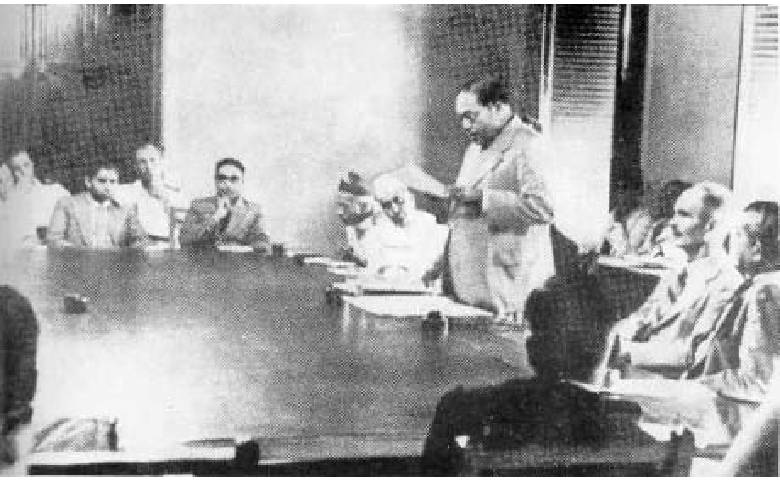
Image: The architect of the Indian Constitution, Dr B.R. Ambedkar, taking oath as India's first Minister of Labour, photo source - Wikimedia Commons
Ambedkar’s conception of labour laws
To understand why the new Labour Codes could be seen as anti-worker, it is important to revisit the foundations laid by Dr B.R. Ambedkar, who, as India’s first Labour Minister, envisioned labour laws as instruments of social justice, economic security, and collective bargaining power.
With his belief in the collective power of workers—especially the right to strike—as fundamental to economic democracy, Ambedkar, as Labour Minister, strengthened trade unions and introduced several landmark reforms between 1942 and 1947. These include the eight-hour workdays, leave with wages, maternity benefits, the establishment of employment exchanges, minimum wage proposals, and most crucially, the Industrial Disputes Act (IDA) of 1947, which recognised strikes as a legitimate tool for collective bargaining by the workers.
While the Act set various procedures to resolve industrial disputes, it ensured workers retained a real space to organise, protest, and challenge exploitation, and protection against arbitrary dismissals. Ambedkar believed that democracy without economic safeguards was incomplete, and that workers must have the ability to organise and challenge inequitable power structures.
Ambedkar’s labour policies were grounded in the idea that the state should act as a counterweight to employer dominance, ensuring dignity and fair conditions for workers. He repeatedly stressed that without the right to collectively withhold labour, workers would remain powerless against employer dominance.
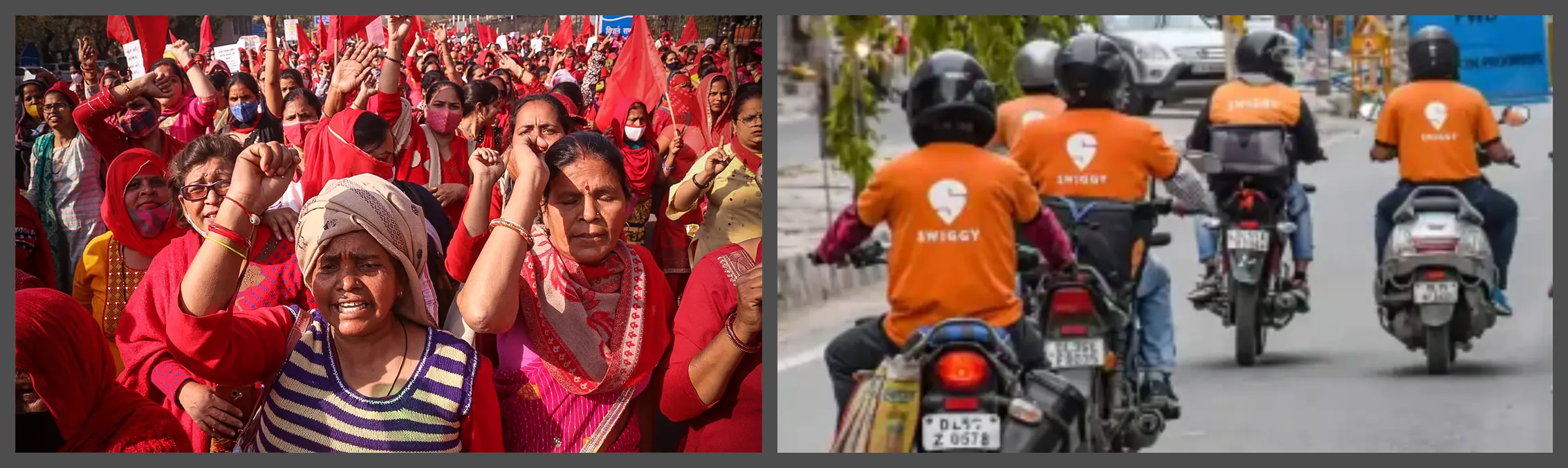
Image: Anganwadi workers (left) and two-wheeler borne delivery staff (right) - two faces of India's gig or low-paid informal economy
Today, that right stands significantly diluted. The Industrial Relations Code (IRC) of 2020, for instance, marks a departure from this philosophy. The provisions of the IRC make legal strikes almost impossible to practice, undermining the essence of collective bargaining that Ambedkar sought to protect.
Under the IDA, only workers in public utility services were required to give a 14-day strike notice. The IRC extends this requirement to all industries, whether public or private, with workers in all establishments having to give a 14-day notice and being barred from striking for 60 days thereafter. The expansion of the definition of “essential services” also widens what could be deemed as an “illegal strike,” along with these strict notice requirements.
The IRC further prohibits strikes during conciliation, arbitration, tribunal proceedings, and for long cooling-off periods (60 days after notice and 60 days after tribunal awards). The Code raises thresholds for union recognition and makes closures and layoffs easier, weakening collective bargaining further.
Collectively, the new Labour Codes—the Industrial Relations Code (IRC) 2020, the Code on Wages 2019, the Occupational Safety, Health and Working Conditions (OSH) Code 2020, and the Social Security Code 2020—notified in November 2025, severely constrain the very right to strike that Ambedkar fought to safeguard.
His vision of empowered labour is eroded when legal frameworks make collective protest nearly impossible—leaving workers like Deepak with neither protection nor a voice.
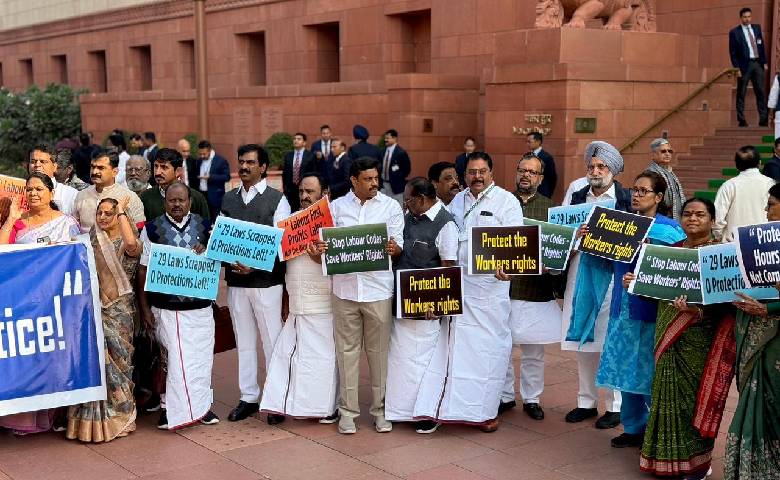
Image: Opposition legislators protesting against the new Labour Codes outside the Indian Parliament
Dismantling the legacy of workers’ rights
While the Indian government, for its part, has claimed the new Labour Codes to be “pro-labour,” which will “promote harmony and ease of doing business.” They have been widely criticised by labour unions and scholars for diluting workers’ rights and weakening labour protections that evolved over decades.
Beyond the question of strikes and collective bargaining, the Codes engage in a systematic erosion of workers’ rights and the frameworks that provided them with a social security net for many decades.
For instance, under the newly-implemented Code on Wages, 2019, Industrial Relations Code, 2020, Code on Social Security, 2020 and Occupational Safety, Health and Working Conditions Code, 2020, the legal structure around working hours has shifted. These codes standardise working-hour norms at 8 hours a day and 48 hours a week.
What Sushmitha described—working 10 hours a day with no overtime pay or formal protections—reflects a deeper structural problem: the violation of what used to be the normative right to an eight-hour workday. Under the previous labour law frameworks, reformers (drawing on the legacy of Ambedkar’s spirit) had helped establish norms that limited working hours, aiming to protect workers from exploitation and overwork.
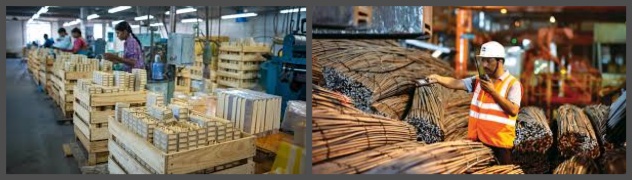
Image: Two extremes of India's industrial landscape - women workers at a matchstick factor in Tamil Nadu (left), and a factory worker at a Tata Steel plant (right)
However, the same laws also allow for a daily “spread-over” of up to 12 hours (including break times), giving employers the leeway to structure longer shifts—as long as overtime beyond regular hours is permitted.
In practice, for workers like Sushmitha, this legal flexibility can mean extended hours, often without proper compensation or documentation—especially in informal settings like small foundries. What was once a protective eight-hour limit thus risks becoming a legal endorsement of 10–12-hour workdays, eroding long-standing labour protections aimed at safeguarding health, rest, and fair pay.
This remains the case in many other states as well. For instance, I found workers at iron foundries in Rajasthan being forced to work until their daily targets—set according to cargo movements—were met. There, I met a migrant worker from Bihar, Biju Chandan, who often began his shift at 9 in the morning and did not leave till late evening. During my ten-day investigation of iron foundries in Rajasthan, I saw that this was not an exception but a routine practice.
What was witnessed in Rajasthan and some other states—long hours, no social security, no overtime pay—is not just an isolated misconduct: it dovetails with a broader shift in labour policy that, under the guise of flexibility, weakens the legacy of labour rights and makes workers more vulnerable.
The Industrial Relations Code also raises the threshold for requiring government permission for layoffs, retrenchment, and closure from 100 workers to 300 workers. This allows medium-sized enterprises to dismiss workers or shut units without state oversight, shifting the balance of power firmly towards employers. Ambedkar insisted that workers should not be left vulnerable to sudden retrenchment. Yet the Code eases employer flexibility while reducing job security—a clear step back from Ambedkar’s protective framework.
The OSH Code 2020, for its part, weakens another of Ambedkar’s important concerns: occupational safety and welfare. By raising the threshold for registration and compliance—often to establishments with 10 or 20 workers—it leaves vast numbers of small-scale and informal workers outside the scope of mandatory safety provisions.
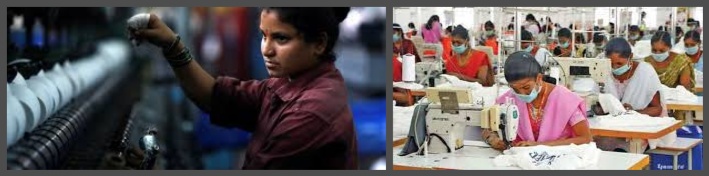
Image: Women increasingly form the workforce in India, often in the informal sector - at a textile mill (left) and a garments unit (right)
Ambedkar had argued that industrial safety was not a privilege but a right; the consolidation of laws into a single OSH Code, combined with higher thresholds, has reduced coverage instead of expanding it.
Similarly, the Social Security Code 2020 promises broader coverage for gig and platform workers, but in practice leaves implementation to future schemes with no guaranteed funding model. Ambedkar’s approach was the opposite: he believed in enforceable rights, not aspirational commitments.
‘New India’ shuns workers’ rights
Taken together, the Labour Codes dilute the right to strike, weaken unions, ease retrenchment norms, reduce regulatory oversight, and expand employer flexibility at the cost of worker security. They represent a shift away from Ambedkar’s labour vision, which placed dignity, protection, and collective strength at the centre of industrial relations.
By prioritising “ease of doing business” over the constitutional promise of social justice, the Codes mark a significant step backwards from the worker-centric reforms Ambedkar fought to establish.
For the majority of India’s 562 million informal workers identified by the 2024 ILO report, the new labour codes offer little real protection. Most informal workers—like Lekha, Rajendra, and millions of others in agriculture, construction, domestic work, small workshops, and unregistered units—remain outside the reach of the Codes because key provisions apply only to establishments meeting specific thresholds.
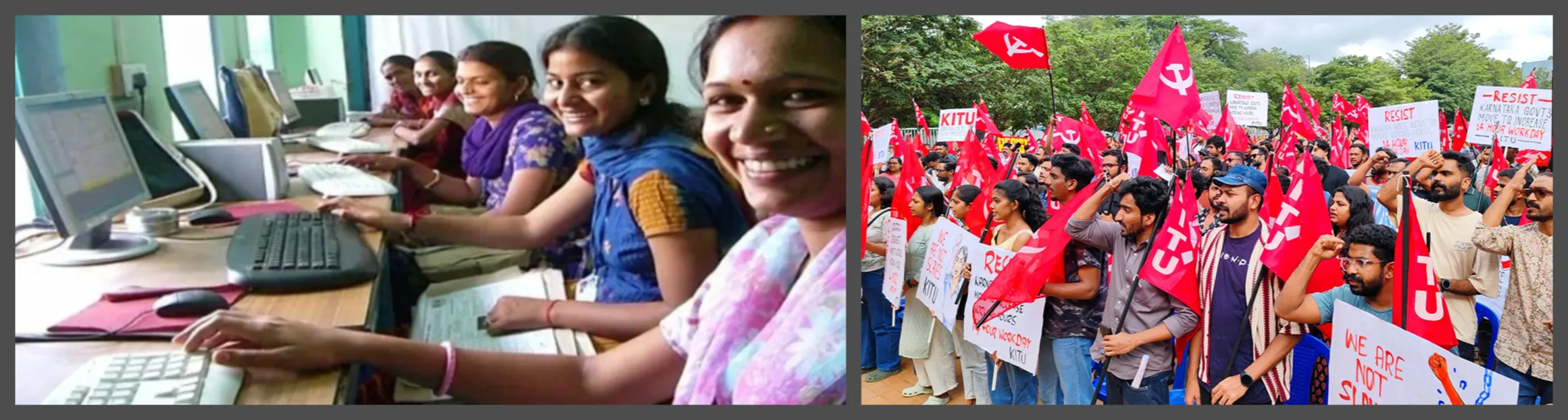
Image: The Information Technology (IT) sector, the flagbearer of India's post-liberalisation growth, has seen unionisation by employees (right) owing to the volatility and lack of job security in this sector, photo source - Karanatka State IT and ITeS Employees Union
By raising these thresholds for registration, safety standards, and employer accountability, the Codes effectively exclude vast sections of the workforce.
Without recognised employment relationships, these workers will continue to lack minimum wage enforcement, social security, grievance redressal, or safe working conditions. This stripping of rights marks a decisive departure from Ambedkar’s vision, which emphasised state responsibility, universal protections, and enforceable rights for the most vulnerable.
Instead of expanding Ambedkar’s reforms, India is moving backwards—towards a system where employer flexibility is prioritised over worker welfare, leaving informal labour even more precarious and unprotected.
Follow us on WhatsApp
Follow us on Facebook
Follow us on X @vudmedia
Follow us on Substack

