
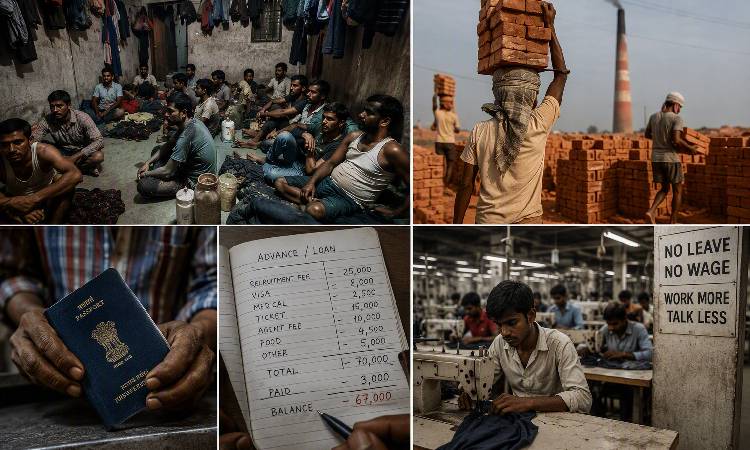
Seven UN agencies, four days and more than 80 sessions in Bangkok, brought together governments, companies, investors, trade unions, civil society groups and affected communities, deliberating upon governance, supply chains, remedies, and inclusion. The Forum produced no new treaty, outcome document or declarations. What came out was something rarer: companies admitting, in a UN room, that they found ‘forced labour’ in their own supply chains, and short shrift through recruitment fees, confiscated passports, wage deductions and unaccountable labour agents. Companies described their response strategies, though not all convincing and some being corporate theatre. But Bangkok showed that the baseline has moved. The one voice missing, however, was the Indian government, whose new Labour Codes did not get a single session. Rejimon Kuttappan, who spoke at the 8th UN Responsible Business and Human Rights Forum, files this report.
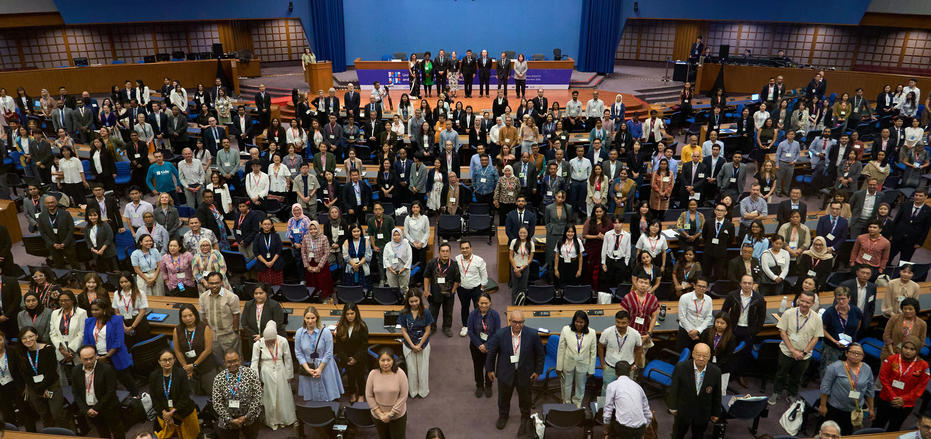
Home page: Delegates pose for a group photo at the UN Responsible Business and Human Rights Forum, Asia-Pacific in Bangkok
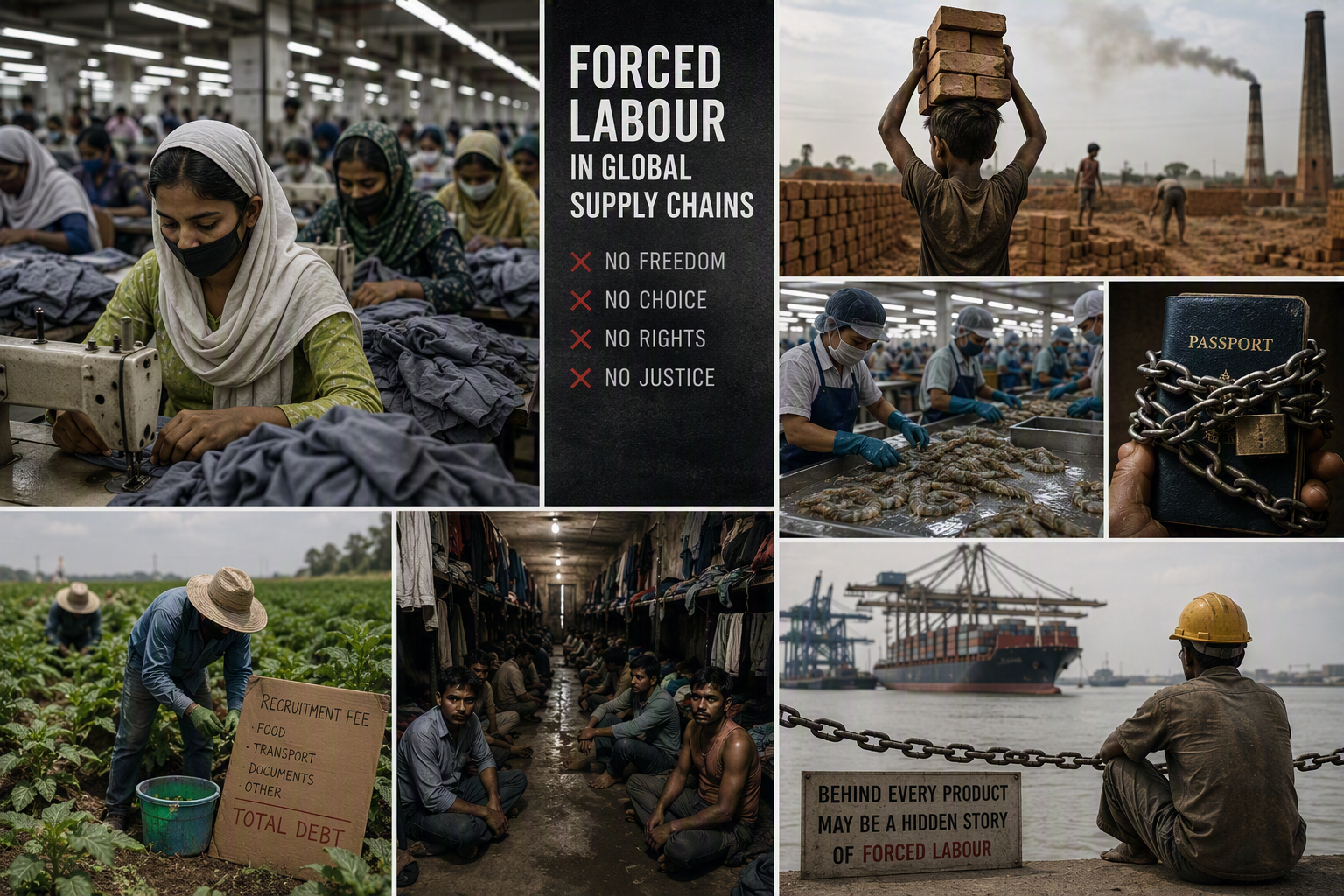
Text page and Banner images are AI-generated, only for representative purposes
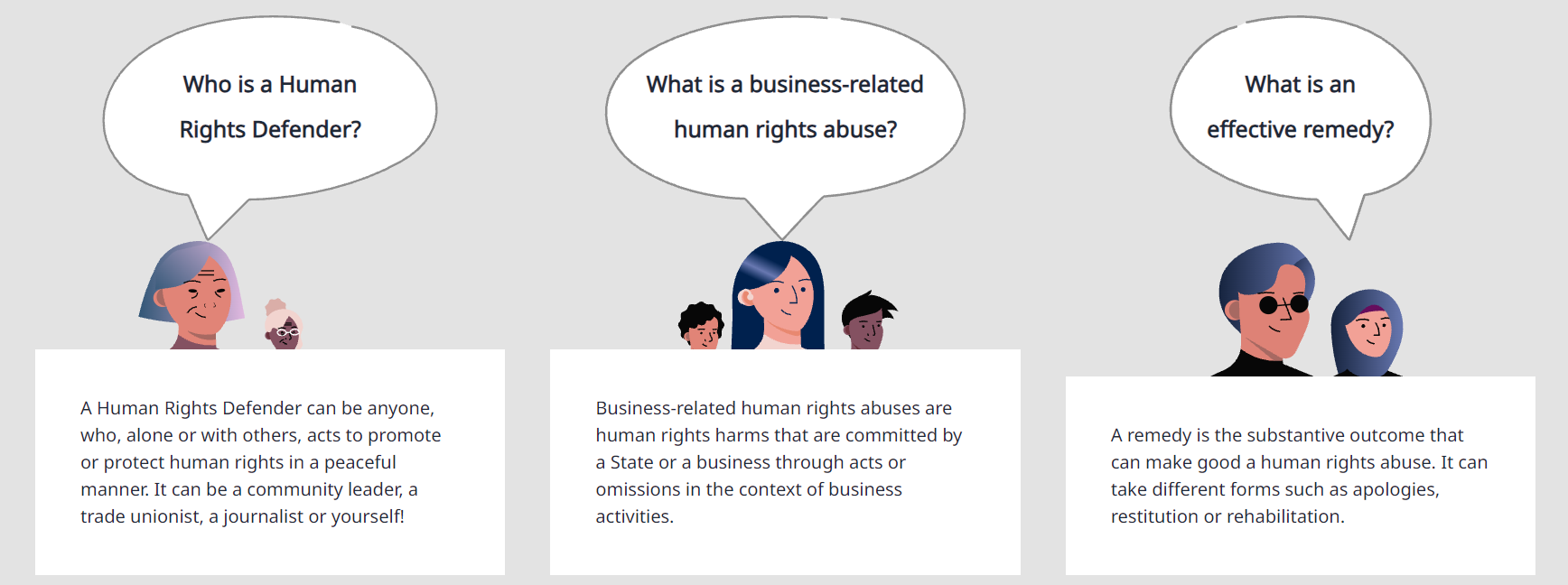
Every September, the United Nations Conference Centre in Bangkok becomes the Asia-Pacific’s busiest marketplace of arguments about business and human rights. From 14 to 17 September, the UN Responsible Business and Human Rights Forum, Asia-Pacific, held its eighth edition under the theme “Building Resilience, Advancing Rights.”
The meeting is co-organised by seven UN entities: the UN Development Programme (UNDP), the Office of the High Commissioner for Human Rights (OHCHR), the International Labour Organisation (ILO), UNICEF, UN Women, the UN Environment Programme and the International Organisation for Migration, working with the UN Working Group on Business and Human Rights.
It brought governments, companies, investors, trade unions, civil society groups, and affected communities together in more than 80 sessions across four tracks: governance, supply chains, remedy, and inclusion.
Bangkok is not Geneva. The UN Forum on Business and Human Rights, set up by the Human Rights Council in 2011 and chaired by the Working Group, is the global gathering. Its 15th session meets at the Palais des Nations from 23 to 25 November, and last year it drew more than 4,600 registered participants.
The Bangkok Forum, which began in 2019, is its regional counterpart. It sits closer to the factories, farms and fishing fleets where Asia’s supply chains begin, and its findings are meant to feed the region-specific sessions in Geneva.
Neither body negotiates binding rules. Both draw on the UN Guiding Principles on Business and Human Rights, endorsed this June unanimously, fifteen years ago: states must protect, companies must respect, and victims must have access to remedy.
The ILO is central to this work. Its conventions define forced labour, its 2014 Protocol requires states to prevent it and compensate victims, and its own research puts the illegal profits from forced labour at USD236 billion a year.
The World Trade Organisation, which is not part of the UN system, has stayed out. Since the 1996 Singapore ministerial conference, trade ministers have kept labour standards off the WTO table and named the ILO as the competent body.
That separation has not kept labour out of trade. It has pushed it into national law. The United States already stops goods made with forced labour at its border. The European Union’s Forced Labour Regulation will do the same from December 2027. Its due-diligence directive, cut back in the EU’s “Omnibus” simplification, will still bind the largest companies from 2029.
This is how global industry absorbs a forum like Bangkok. It does not act on communiqués. It acts through supplier codes, audit checklists and fee-repayment programmes, which buyers now need if they want to keep selling into those markets.
I went to Bangkok as a forced labour investigator in Indian supply chains, and I was given a 90-minute slot in the Forum's "Community and Trust" strand to talk about India. This is my account of what changed this year, what India missed, and what the Forum should do next.
An “AC fee” on the payslip
On the last morning in Bangkok, I asked an official from a global semiconductor company a direct question: what forced labour had they found in their supply chain?
She answered. The company had gone through the deductions taken from workers’ wages at a supplier in South-East Asia and found a line nobody had flagged before. The dormitory had air conditioning, and the workers were paying for it. An “AC fee” was taken at source, month after month, from people who had never agreed to it and could not refuse it.
Having documented violations of workers' rights in India and the Middle East for close to a decade, and forced labour for the last five years, I know what that line item is. It is not a facilities charge; it is the mechanism.
You do not need chains when you have deductions. You charge a man for his bed, his fan, his water, his transport and his "processing." By the end of the month, he owes more than he earned. He cannot leave, because leaving means walking away from wages he has already paid out to his employer.
The practice did not surprise me. I have seen it across the Persian Gulf, and in every part of India. What surprised me was that a global company said it out loud, in a United Nations forum, with buyers and investigators listening.
That was the shift I had come to Bangkok to look for. And I found it.
Naming it, at last
Read the session titles, and you can watch a field change its mind: Who Holds the Power; Left Behind; From Invisible to Invaluable; Organising Beyond the Factory Gate; Beyond the Audit Report, and so on. These are not merely the titles of a technical conference. They are an argument about who counts.
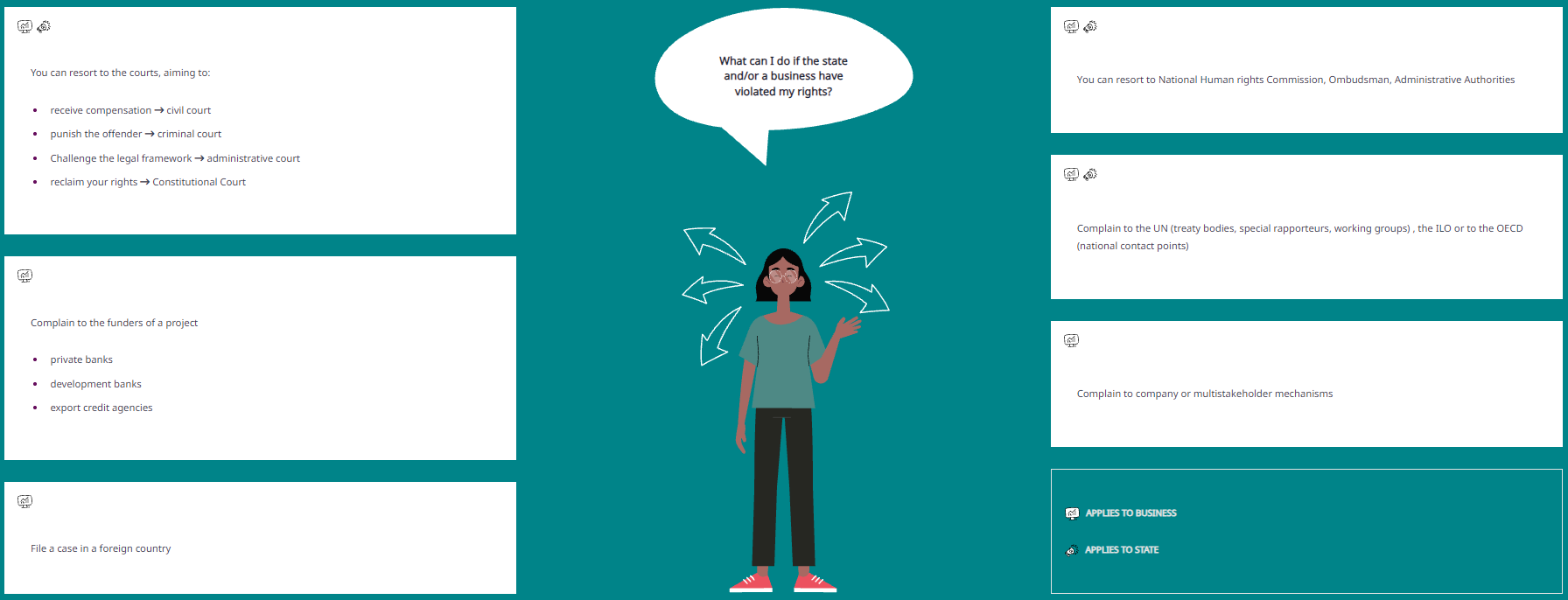
Indigenous organisations from South and South-East Asia, among them the Asia Indigenous Peoples Pact, Land is Life, the Indigenous Peoples Human Rights Defenders Network in Asia and the Network of Indigenous Women in Asia, led a session on free, prior and informed consent and community-led remedy.
It was not always like this. For most of the past decade, these forums, in Bangkok and in Geneva, were about architecture. Governments were urged to write National Action Plans on business and human rights; Thailand became the first in Asia to adopt one, in 2019, while India's is still a draft.
Experts debated the “smart mix” (the Guiding Principles’ term for combining voluntary guidance with binding law, at home and abroad), and companies presented due diligence as a form of risk management, a matter of policies, dashboards and certificates.
Everyone nodded, and the acronyms did the work. What rarely entered the room was the worker’s body: the hand caught in a press, the lungs filling with dust, the death that leaves no record.
This year, companies stopped performing. Session after session, businesses admitted, without being cornered, that they had found forced labour indicators in their own chains.
They found recruitment fees they thought they had banned, passports still confiscated three tiers down, wage deductions dressed up as services, and workers supplied by labour agents the brand could not even name.
Then they described what they were doing about it: repaying fees, mapping deep tiers, building grievance channels that do not run through the employer.
Not all of it was convincing. Some of it was corporate theatre in better clothes. But the baseline has moved. Companies used to start from “This does not happen in our supply chain.” Now they start from “We found it. Here is where. Here is what we are trying.”
You cannot fix what you will not name. Bangkok this year was full of naming. That is why I could say what I came to say.
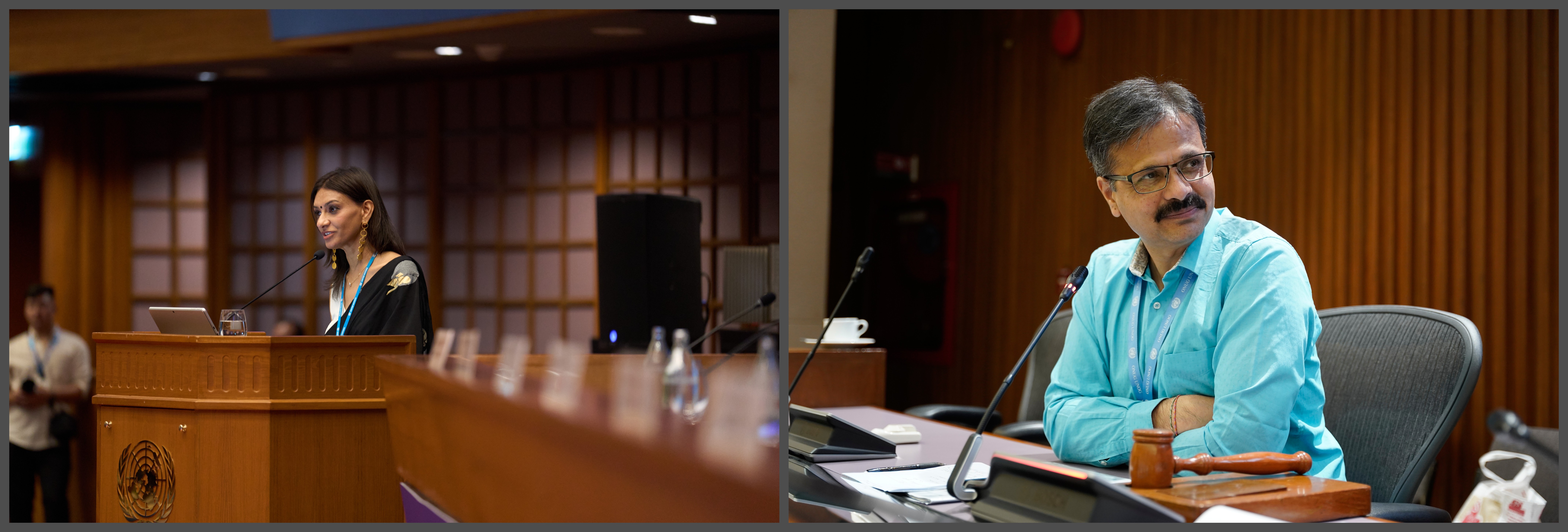
Harpreet Kaur, Asia-Pacific Lead: Business & Human Rights at UNDP (left), speaking at the closing ceremony, reflecting on a Forum shaped by diverse voices, lived experiences, real-world challenges, and a shared commitment to putting people at the centre. Surya Deva, United Nations Special Rapporteur on the Right to Development (right), at one of the sessions at the Forum.
“If I die, no stamp says I worked here”
On Tuesday, 15 September, I was given ninety minutes for a session I called The Body Outside the Gate. I did not present a framework. I presented what I have seen investigating forced labour across Indian industries, where most workers are employed informally, and their names never reach an official register.
Dr B.R. Ambedkar, as Labour Member in the British Indian government (Viceroy’s Executive Council, 1942–46), fought to make employers put the terms of employment on paper, through the Standing Orders law of 1946. Eighty years later, the paper is still missing.
I told the room about the sheds where India's shrimp is peeled for global supermarkets. Women stand in cold water through a whole shift, and the plant's register shows only a fraction of the people actually working.
I told them about Rajasthan's sandstone quarries, where the dust kills slowly, and the death certificate says tuberculosis, not silicosis, because silicosis would mean somebody owes something.
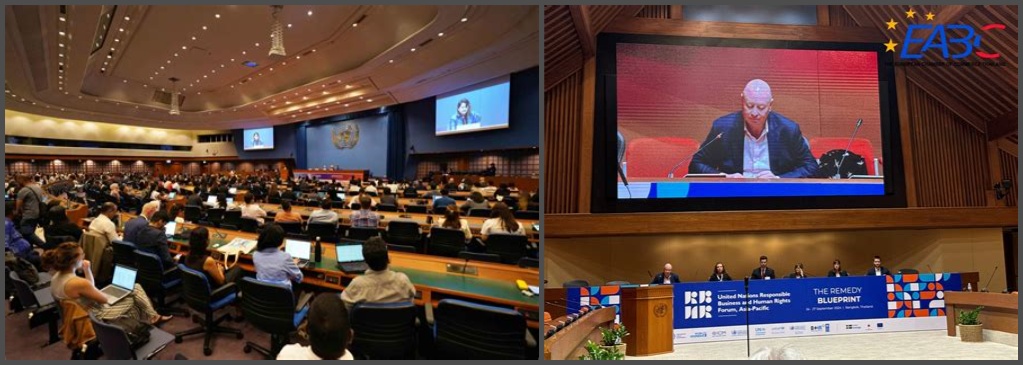
The 2025 UN Responsible Business and Human Rights Forum in session
I told them about the fastener units of Punjab. When a hand goes into a press, the man is taken to a private clinic, not a government hospital, because a government hospital creates a record.
And I told them about migrants from Odisha, Chhattisgarh and Jharkhand, recruited by a man from their own village who appears in no document as an employer, yet is owed money before the worker has earned a rupee.
Then I told them what one worker told me, which says all of it: “If I die, no stamp says I worked here.”
The India story
That is forced labour in India. It is not a story about cruelty. It is a story about paperwork. Each of those workers is hired through a contractor who stands between him and the company.
The company's register is clean because he is not on it. The audit is clean because it is announced, scheduled and carried out at the gate, and all a gate-level audit ever sees is the legal employer. The contractor screen is not a flaw in the system. It is what the system sells.
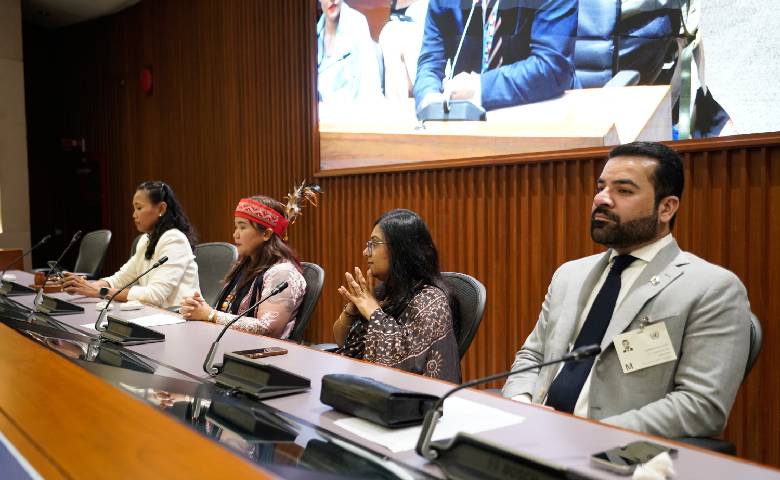
Closing plenary of the 8th UN Responsible Business and Human Rights Forum, Asia-Pacific, Bangkok, September 2026. Speakers (left to right) included Barrister Aqeel Malik, Pakistan's Minister of State for Law and Justice; Sheikh Shuchita Jahan Sneha of BGMEA's Responsible Business Hub; and Yiscka Binti Lasam of the Asia Pacific Indigenous Peoples Caucus, who called for binding corporate accountability.
I said this to a room full of people who buy from those chains, and nobody argued. That is what ninety minutes of testimony gets you that twelve minutes on a four-person panel never does: not agreement, but exposure.
They asked me how to find the layer they cannot see, and what an unannounced audit would actually catch. Later, auditors came up to me, and buyers, and people from brands that source from districts I have named in my reporting.
What I could not give them was the Indian government's side of the story. Nobody from New Delhi was in the room to give it.
Only a handful of the sessions had any Indian thread at all. No Indian ministry organised a session, and neither did any Indian industry federation. Meanwhile, South-East Asian government bodies co-organised sessions on mandatory due diligence and supply chains, and trade agencies from several countries took an active part.
India's South Asian neighbours were there, with a notable presence. Bangladesh's garment manufacturers came to talk about building a responsible business ecosystem. Pakistan's chambers of commerce ran a due-diligence lab.
India's absence is not new. The Guiding Principles were endorsed by consensus at the Human Rights Council in 2011. India published a zero draft of its National Action Plan in 2019; seven years later, the final plan has still not been released.
The Union Cabinet placed the ILO’s 2014 Forced Labour Protocol before Parliament in 2015; India has not ratified it.
New Delhi has tended to present its labour reforms as a domestic matter of ease of doing business, and to deal with the UN on labour through formal intergovernmental channels such as the ILO, not in multi-stakeholder rooms where buyers, unions and journalists can put questions to it.
The number of sessions on India’s new Labour Codes was zero. Not one. This is the largest rewrite of labour law in the region in a generation. The four Codes came into force on 21 November 2025, and their Central Rules were notified on 8 May 2026.
They are reshaping the legal status of tens of millions of workers inside the very supply chains the Forum spent four days discussing. They did not get a single slot.
So, I used mine.
Abroad, the Codes are sold as simplification: a tidy replacement for a thicket of old statutes, good for the ease of doing business. What they actually do is raise the point at which a worker becomes visible to the state.
Raise the threshold for needing government permission to retrench from 100 workers to 300, and a whole class of factories no longer has to explain itself before shutting down. Raise the contractor-licensing threshold, and the thekedar (contractor) slips further into a zone no register reaches.
Normalise fixed-term employment, and the permanent job stops being something a worker can hope to climb toward. Replace inspection with self-certification and an “inspector-cum-facilitator,” and the compliance report gets written before anyone has visited the shed.
Put those changes together, and you do not get flexibility. You get invisibility. And invisibility is not a consequence of forced labour. It is the condition that makes it possible.
That is what I meant when I told the room that India's Labour Codes risk turning factories into graveyards. It is not a metaphor about morale. It is a claim about what happens to a human body.
By India’s own official data, three workers die in registered factories every day, about 1,100 a year. Over a comparable period, just 14 people were imprisoned for violations. The distance between those two numbers is the whole argument. Nobody goes to jail, because on paper nobody was employed.
But I did not leave Bangkok in despair. I left with hope, and I mean it.
What Bangkok settled, and what goes to Geneva
The Forum is not a negotiating body. It did not end with a declaration or an agreed outcome document, and none was expected. The closing session of the Forum brought together global delegates from government, civil society, and industry to assess progress and confront continuing abuses.
At the closing session, a speaker shared reflections on behalf of Dr Pichamon Yeophantong, member of the UN Working Group on Business and Human Rights, underscoring that business and human rights require more than surface dialogue.
She stated, “Stakeholder engagement is not just a matter of consultation. What’s needed is an understanding of local realities and developing responses that are effective and grounded in the experiences of those most affected.”
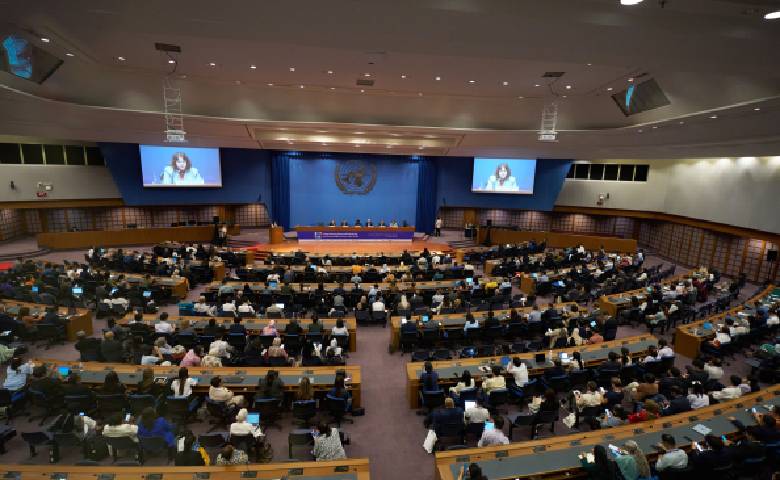
Pichamon Yeophantong, UN Working Group on Business and Human Rights member, speaking at the opening ceremony of the UN Responsible Business and Human Rights Forum 2026 in Bangkok. Her voice set the tone for conversations on business responsibility, human rights, accountability and the protection of workers and communities across the Asia-Pacific region. A powerful beginning to an important forum, on September 14.
Aqeel Malik, Pakistan’s Minister of State for Law and Justice, emphasised that adopting frameworks is merely the starting point. He noted growing momentum across Asia to transition commitments into enforcement, arguing, “Responsible business is not only a human rights issue, but it is also a development, competitiveness, and governance issue.”
Malik added that progress must be measured by genuine community protection, particularly for vulnerable groups and children.
From the private sector, Shuchita Jahan Sneha of the BGMEA highlighted Bangladesh's ongoing journey toward accountability, noting that responsible conduct defines the “future of an industry” and celebrating increased cross-sector dialogue.
In contrast, Yiscka Binti Lasam, representing the Asia Pacific Indigenous Peoples Caucus, delivered a scathing rebuke of unchecked corporate exploitation. Condemning land grabbing, militarisation, and violence, she stated: “We speak with frustration and anger over the continuing criminalisation, threats, arbitrary detention, attacks, and killing of Indigenous peoples linked to business operations.”
Lasam demanded binding accountability over voluntary compliance, urging delegates: “Rights over profit, consent before projects, and justice now.”
The first is disclosure. The company that found the AC fee found it because someone inside went and read a line on a payslip. That is not a framework; it is a person doing the work. Bangkok was full of people like that this year. Years ago, there were few of them.
The second is that the rules now come through trade. Across the four tracks, the question was no longer whether due diligence would become mandatory, but whose law would reach Asian suppliers first: Brussels, Washington, or their own capitals.
With forced-labour import bans spreading and the EU's directive narrowed but not abandoned, suppliers are being asked to prove, not promise. That is the channel through which Bangkok's conversations will reach the factory floor: through buyers' contracts, not UN resolutions.
The third is who speaks. Indigenous peoples, migrant workers and domestic workers spoke for themselves, not through intermediaries. Yet the harder path of binding international law remained at the margins.
By its organisers’ count, only one session, led by Manushya Foundation and partners, was dedicated to the proposed UN treaty on business and human rights. Voluntary due diligence is still the region's default.
When the UN Forum meets in Geneva in November, the test is whether these lessons travel. The Guiding Principles turn fifteen this year. They can be marked with another round of commitments, or with the harder conversation Bangkok began, about deductions, recruiters and bodies.
And the workers themselves have never stopped speaking. The women in the peeling sheds, the men breathing quarry dust, the migrants carrying debts to a village recruiter all know exactly what is being done to them. What they have lacked is not a voice. It is a room that will listen and a buyer who will act. For the first time in years, that room is starting to exist.
That is why I have proposed that India's Labour Codes be placed on the main agenda of the ninth Forum, with the Indian government invited to defend them in front of the buyers who depend on Indian labour.
New Delhi may well decline. If it does, the empty chair should be recorded, and the session should go ahead anyway. The buyers, auditors and investors in that room will still have to assess the Codes under the laws of the markets they sell into, with or without the government's account.
Staying away from Bangkok will not keep the Codes out of European and American due-diligence reports. It only means India's government will not be the one explaining them.
I have also asked the organisers to ensure that trade unions and migrant workers' collectives, the people who can speak for the quarries, the peeling sheds and the fastener units, take part, and that the Forum becomes a platform where they speak for themselves.
In September, the Forum showed it can hold a hard conversation about people instead of a soft one about instruments. Asia-Pacific’s largest workforce should not be left out of it again.
(Views expressed in this report are the author's own.)
Follow us on WhatsApp
Follow us on Facebook
Follow us on X @vudmedia
Follow us on Substack
