
Early this month, when the central government framed the Rules for the SHANTI Act for the nuclear sector, it also passed, without debate, a bill to amend the Mines and Minerals Act of 1957. Visible in the Act is an attempt to usurp the constitutionally guaranteed rights of Indian states over their mines and mineral resources. Through the Act, the central government could regulate mining, impose restrictions on states’ powers to tax mineral rights and mineral-rich lands. While the central government claims the new Act will enhance production without impinging on states’ rights, at the core could the impulse to fulfil the national and strategic demand for ‘rare earths,’ which, though, could open doors for greater industrial exploitation, facilitated and regulated from Delhi, with states ending up as mute spectators, says Professor V Bijukumar, also explaining the Act’s implications for India’s federalism.
Home page and banner images are AI-generated and only for representative purposes
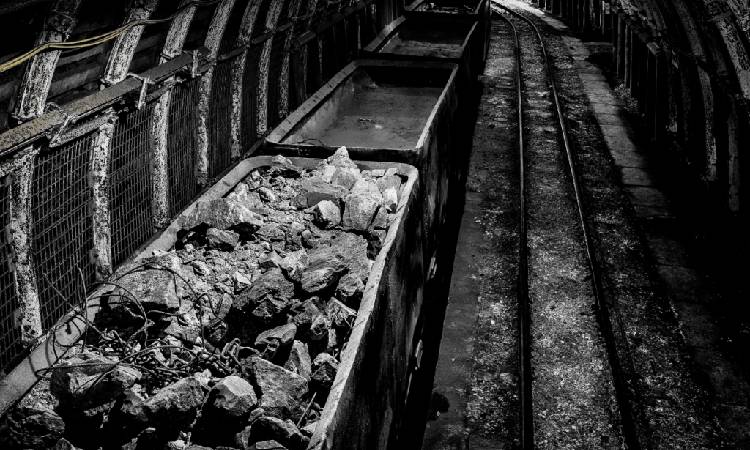
Text page image: A trolley transports raw coal in an underground mine; photo credit - CheggIndia
In August 2026, amid opposition protests during the monsoon session, Parliament passed the Mines and Minerals (Development and Regulation) Amendment Bill, 2026 (MMDR, 2026) without debate. The Bill seeks to amend the MMDR Act, 1957, which entrusted the Union government with control over the minerals in India and to secure mineral security.
The MMDR Act, 2026, the government claimed, could make India’s mining sector more efficient, investment-friendly, and better equipped to meet the country's growing demand for critical minerals. It claims that state governments' uneven imposition of taxes and other levies on mineral rights and mineral-bearing lands has imposed a heavy tax burden on the mining sector.
Aiming to establish a uniform, predictable mineral taxation framework by restricting state levies on mineral rights and mineral-bearing lands, it proposes certainty, stability, and predictability in the fiscal regime of the mineral sector.
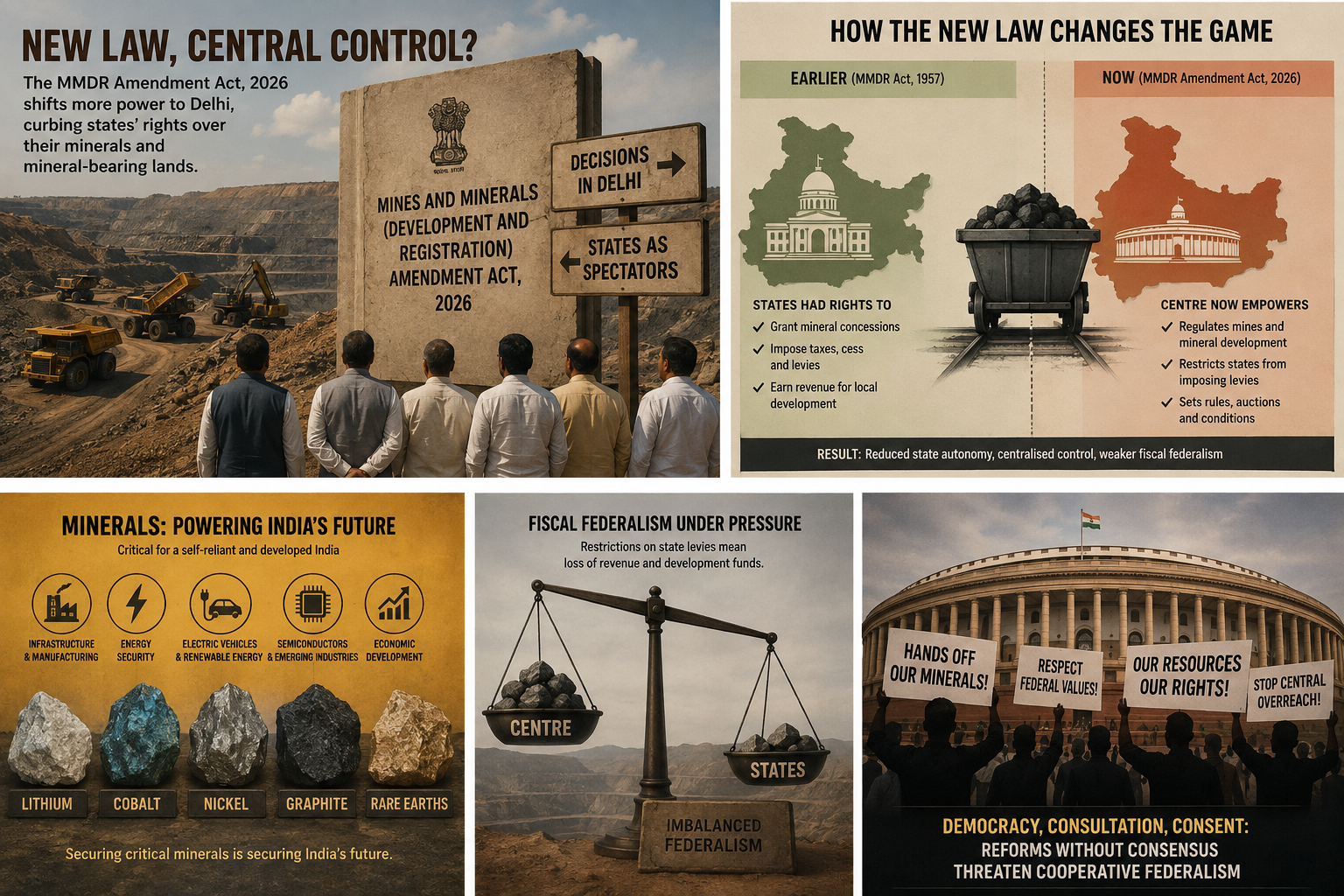
The Act encourages tapping unutilized mineral resources for self-sufficiency and reducing import dependence, which, over the years, has affected India's national interest.
It is to be noted that minerals are important natural resources critical to infrastructure, manufacturing, energy security, electric vehicles, renewable energy technologies, advanced manufacturing, and the country’s overall economic development. The strategically important minerals are used in semiconductors and other emerging industries.
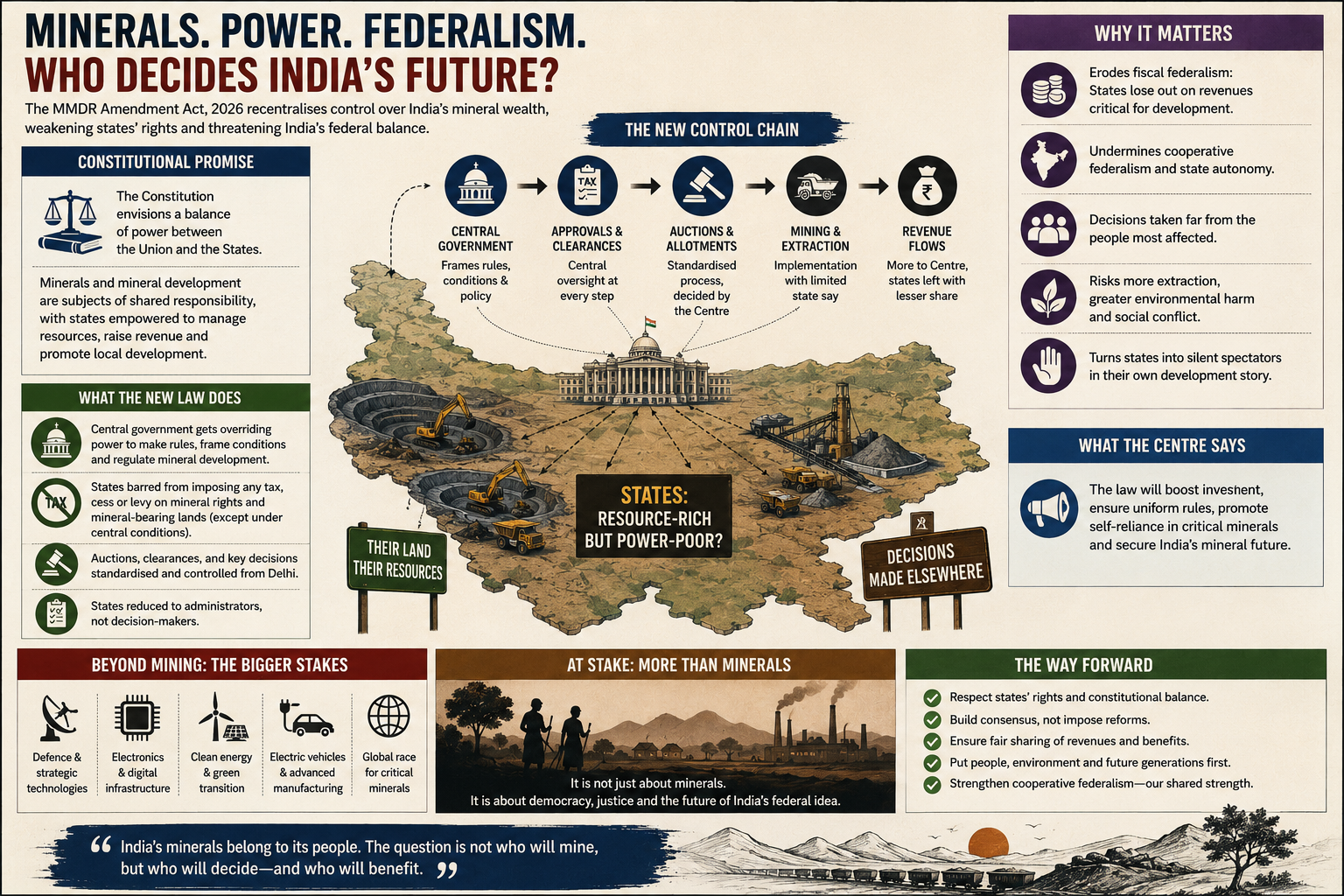
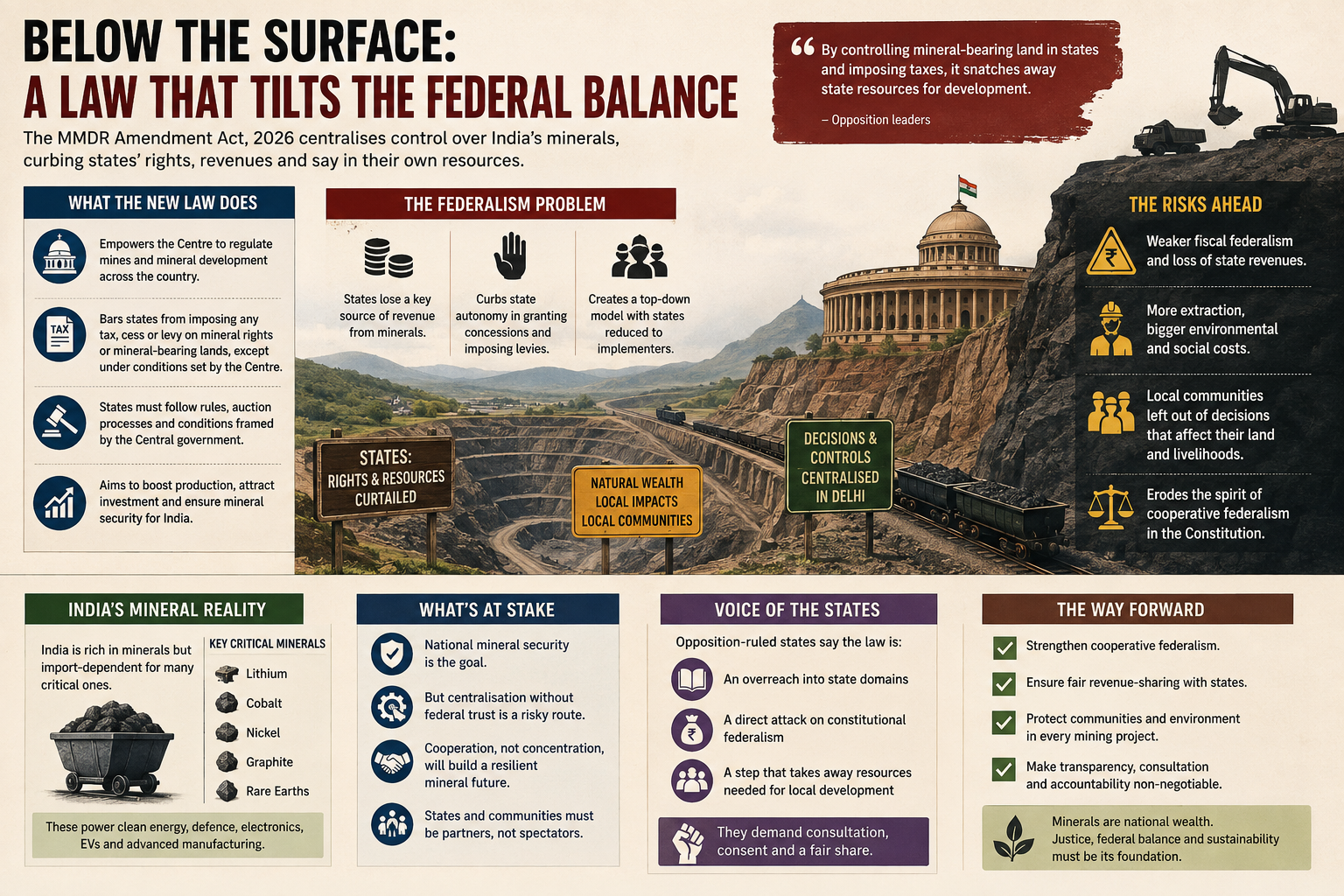
The Act aimed to meet the country’s growing demand for critical minerals and to strengthen domestic production of minerals such as lithium, cobalt, nickel, and graphite. It categorically provides that a state government shall impose no tax, cess, or other levy on mineral rights or mineral-bearing lands.
The state is permitted to impose such levies only if it complies with the conditions prescribed by the central government. The state governments, thus, have a minimal role: they grant mineral concessions, such as prospecting licenses and mining leases, and follow rules and auction processes set by the central government.
The Act empowers the central government to regulate mines and mineral development and imposes restrictions on states’ powers to tax mineral rights and mineral-bearing lands. These powers were held by the states, subject to the provisions of the Union List, along with the power to tax mineral rights, subject to any limitations imposed by Parliament by law relating to mineral development.
On expected lines, the opposition parties and the non-BJP-ruled states, however, criticised it as the central government’s overreach into state domains and a direct attack on federal values enshrined in the Indian Constitution. By controlling mineral-bearing land in states and imposing taxes, it snatches away state resources for development.
While the Act aims to secure mineral security, it introduces imbalances in fiscal federalism by constraining the rights of states to impose taxes, cesses, or other levies on mineral rights or mineral-bearing lands. This, particularly, would affect the economies of mineral-rich states, violate federal principles and states' rights, and deprive them of fiscal autonomy.
As a consequence, the centre’s taking over of ownership rights of minerals would affect the developmental expenditure of states and make them subservient to the central government in revenue matters.
Moreover, the Act violates earlier Supreme Court judgments on states’ rights over mining. It is worth remembering that in 2024, the Supreme Court held that states have the power to impose taxes on minerals and mineral-bearing land.
The state legislature has the power to tax mineral rights and land, including mines and quarries; mineral land can be taxed based on mineral value or production. The Parliament cannot limit states’ power to tax mineral-bearing lands. Evidently, the 2026 amendment seeks to overrule this verdict.
Unsurprisingly, the more vocal protests against the Act came from mineral-rich states like Odisha, Jharkhand, and Keralam.
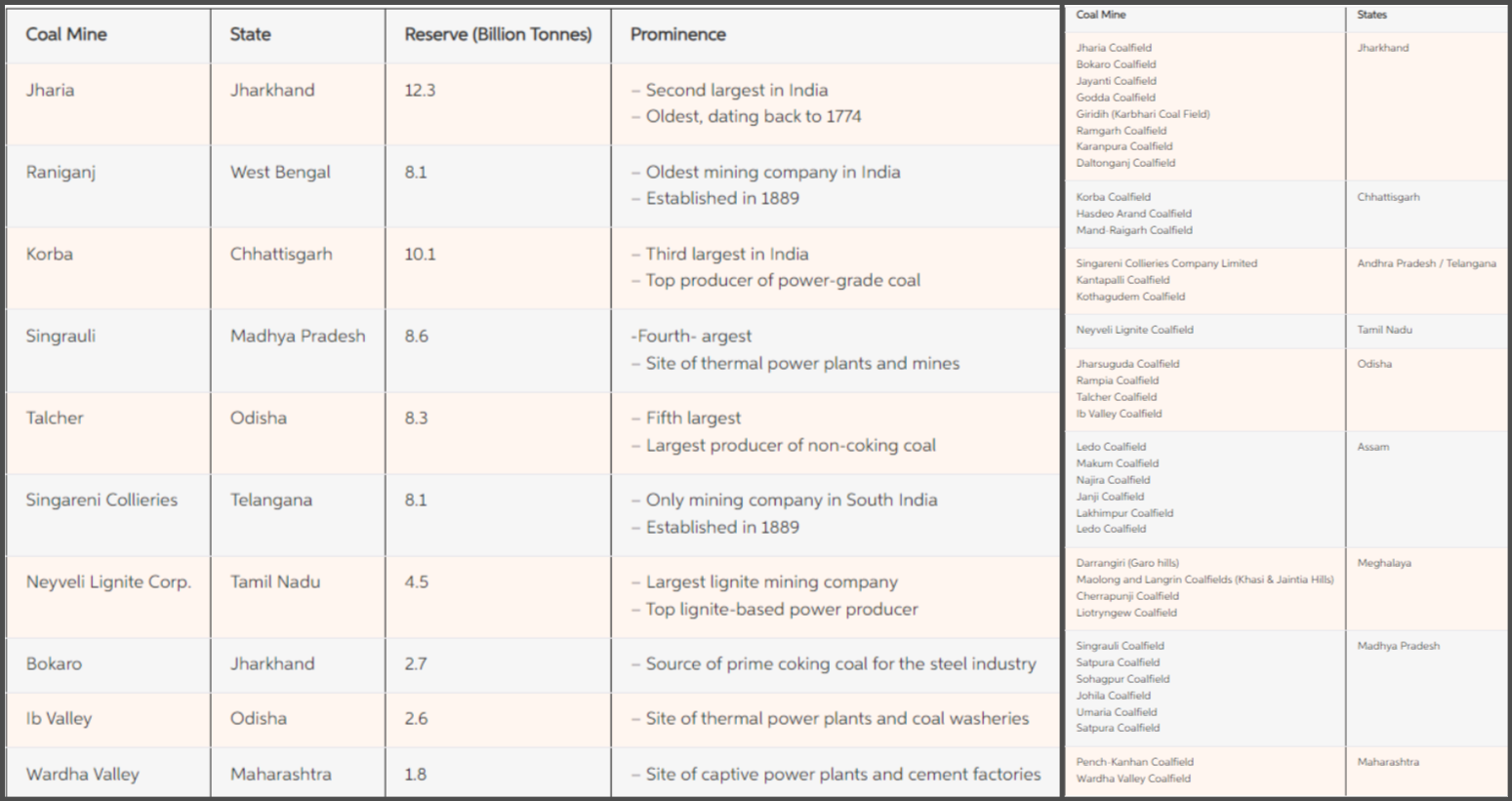
Odisha is one of the mineral-rich states in India with abundant reserves of iron ore, Coal, Bauxite, Chromite, manganese, nickel, cobalt, limestone, and Dolomite. The state contributes 98 per cent of Chromite, 59 per cent of bauxite, 28 per cent of iron ore, and 24 per cent of coal in India.
In his letter to Odisha Chief Minister Mohan Charan Majhi, his predecessor Naveen Patnaik asserted that the Act poses a serious threat to Odisha’s fiscal autonomy and constitutional rights over its natural resources.
The former Chief Minister termed it as the central government’s encroachment on the state’s land and fiscal jurisdiction, which, he alleged, would lead to massive revenue losses and stifle the state’s development agenda.
“Odisha’s natural wealth belongs to its people, and the revenue generated from mining operations is crucial for financing healthcare, education, social welfare schemes, and infrastructure development across the state,” Patnaik remarked, adding that by stripping the state of its power to impose taxes and cess on its own mineral-bearing lands, the central government has dealt a heavy blow to federalism, state autonomy, and fiscal stability.
Jharkhand, on the other hand, has large reserves of minerals and natural resources and contributes immensely to the country's economic growth, accounting for around 40 per cent of the country's total mineral output.
Terming the Act an injustice to its people, Hemant Soren, the Chief Minister of Jharkhand, asserted that the state’s minerals belong to its people and that the centre has no right to encroach upon states and their people’s rights.
He further argued that the provisions of the Bill would affect the state's social security schemes by curtailing its financial resources.
Keralam’s enduring concerns over resource extraction
Terming the Act a grave threat to India’s federal structure, Keralam Chief Minister V.D. Satheesan alleged that it encroaches on the state’s constitutional powers over land and finances. “The centre is attempting to expand its jurisdiction by defining mineral-bearing land without excluding coastal areas and forests,” he remarked.
Echoing the same sentiment, Pinarayi Vijayan, Kerala’s leader of the opposition, asserted that land falls under Entry 18 of the State List in the Seventh Schedule of the Indian Constitution, and the taxation on land is a state subject.
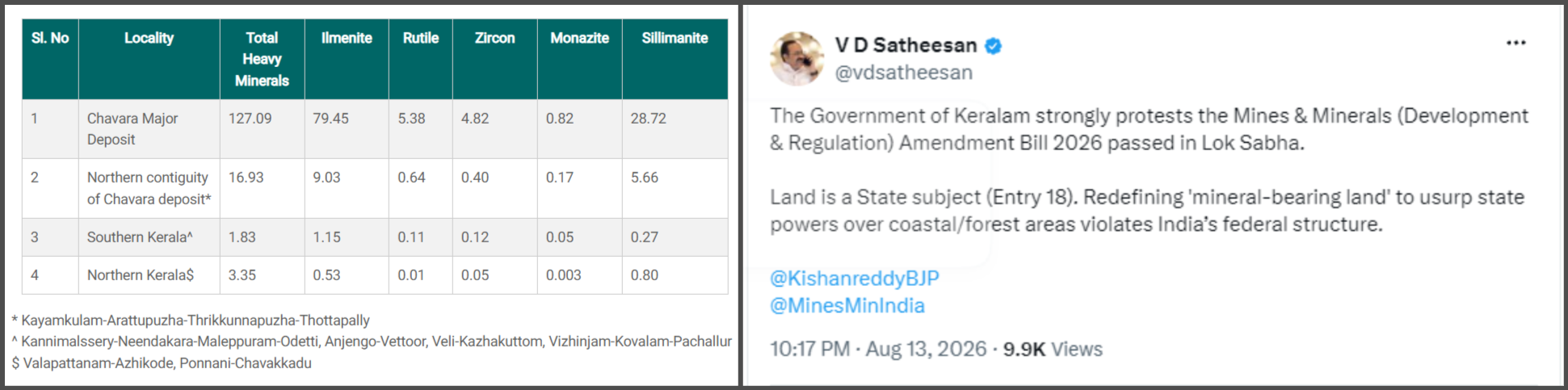
In fact, Keralam’s opposition to the Act has to be read in the larger context of the extraction of its natural reserves through extensive mining by both the state and private firms under the cover of public sector undertakings in recent years.
Kerala is a resource-rich state, with abundant mineral resources in its coastal regions, especially in the around 50 km Kollam-Alappuzha coastal belt, perhaps home to some of the world’s best black sand (locally called karimanal) deposits rich in Thorium, Neodymium, and Ilmenite, and natural herbal resources in the forests.
The Act generated grave anxiety that the central government's control over the mineral–bearing land would lead to resource extraction along the coast and the impoverishment of its fishing community.
Further, Keralam’s anxiety over resource extraction can be understood in the context of the central government’s proposal to set up Dedicated Rare Earth Corridors (DRECs) in the states of Keralam, Odisha, Andhra Pradesh, and Tamil Nadu, announced in the Union Budget 2026-27.
The plan focuses on mining, processing, research, and manufacturing to supposedly fulfil the priorities of national missions like Atmanirbhar Bharat, Net Zero carbon emissions by 2070, and Viksit Bharat @ 2047.
The central government believes there are vast untapped mineral reserves in these states, and that DREC can tap these resources, strengthen self-reliance in critical minerals, reduce import dependence, and enhance domestic capability in strategic sectors.
In fact, India aims to reduce its dependence on imports by strengthening domestic production and securing critical supply chains. Between 2022 and 2025, China accounted for 60–80 per cent of the value and 85–90 per cent of the quantity of India's permanent magnet imports.
However, many states have expressed concern about further resource extraction.
Northeast India’s unspoken concerns
Though many states in India are critical of the Act, opposition has yet to materialise in many mineral-rich states in Northeast India. Perhaps the lack of confrontation with the centre over the Act could be attributed to the unique ethnic protective mechanisms of these states, under the Sixth Schedule of the Indian Constitution.
However, the recent protest and assembly resolution in Meghalaya against uranium mining indicates the vulnerability of northeastern states to extractive mining. Meghalaya has one of the country’s largest uranium resources, making it the third uranium-rich state after Jharkhand and Andhra Pradesh, as it possesses 16 per cent of India’s uranium reserves.
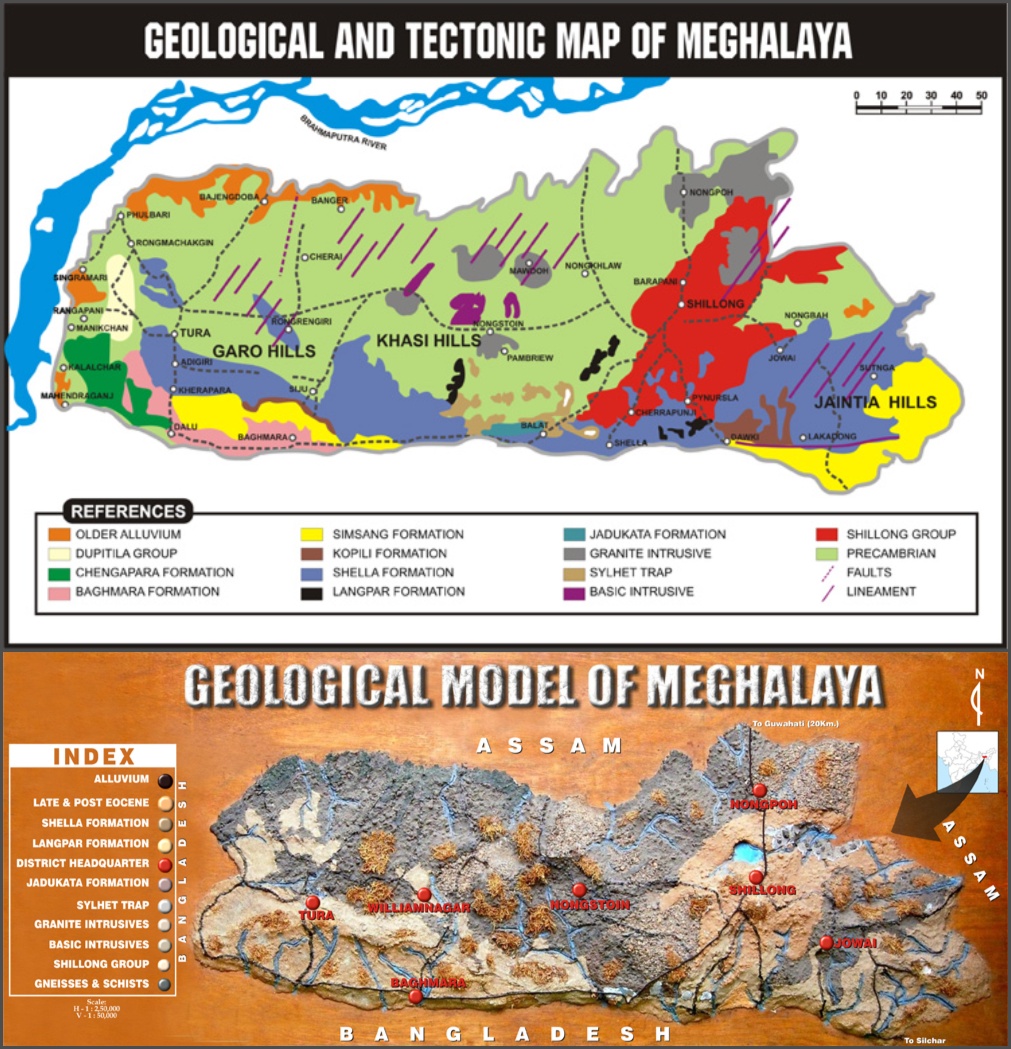
The West Khasi Hills is the largest district of Meghalaya and is the storehouse of minerals and reserves of coal, limestone, uranium, and granite, particularly in Domiasiat, Wahkayn, and Lostoin. In fact, uranium was discovered at Domiasiat in 1989 after five years of exploration.
Uranium mining in Meghalaya began to meet the country’s needs, but was always met with protests from local people and ethnic organisations, forcing a halt to the extractive activities.
Moreover, the Office Memorandum (OM) issued by the Union Ministry of Environment, Forest and Climate Change (MoEFCC) on 8 September 2025 exempts the extraction of atomic, critical, and strategic minerals—including uranium, thorium, lithium, and rare earth elements—from mandatory public consultation as part of the environmental clearance process.
The OM stated that “Fast-tracking of projects involving mining of critical/strategic and atomic minerals except for projects relating to national defence, security or other strategic considerations from public consultation, keeping in view the importance of critical/strategic and atomic minerals for meeting India's energy transition, defence preparedness, space research, and nuclear power programme.”
This rekindled protests against mining activities in the state. Further, the centre’s decision to bring uranium mining under the proposed Sustainable Harnessing and Advancement of Nuclear Energy for Transforming India (SHANTI) Act, 2025, generated further anxiety among local communities.
The Act, passed in December 2025, proposed reforms to India's civil nuclear sector by allowing private-sector participation and easing the nuclear liability framework.
However, many states feel that such legislation, along with the MMDR 2026, would only lead to intensification of resource extraction, with limited restrictions and oversight, which also have implications for the socio-economic well-being of the indigenous communities, especially in the north-eastern states.
It is clear that, though northeast India does not erupt in wider protests against the MMDR, 2026, other such legislations could accelerate resource extraction and impoverishment of its people.
Yet another political overreach?
The MMDR Act, 2026, is a visible manifestation of the central government's encroachment on the states' rights, autonomy, and the very idea of cooperative federalism.
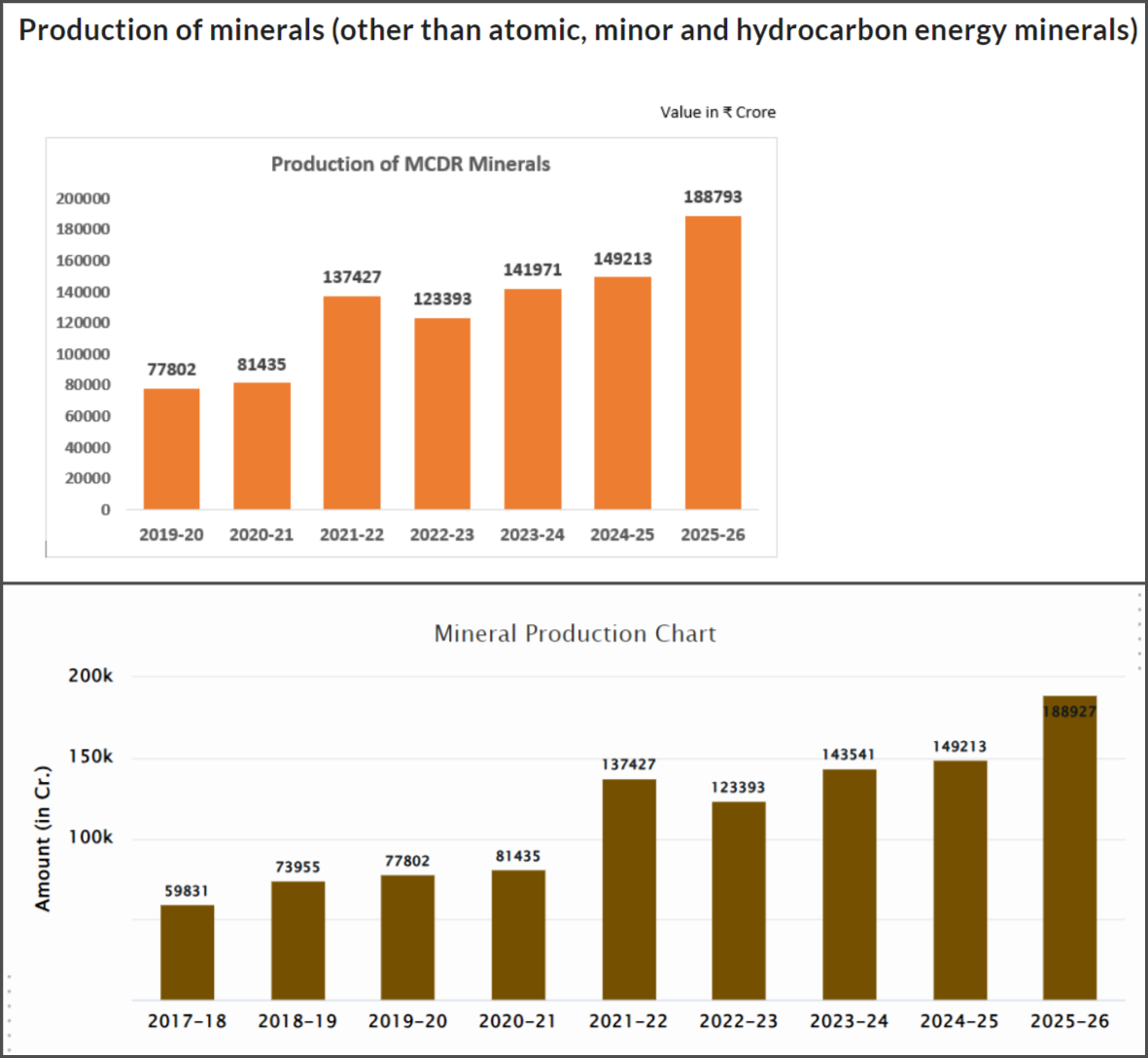
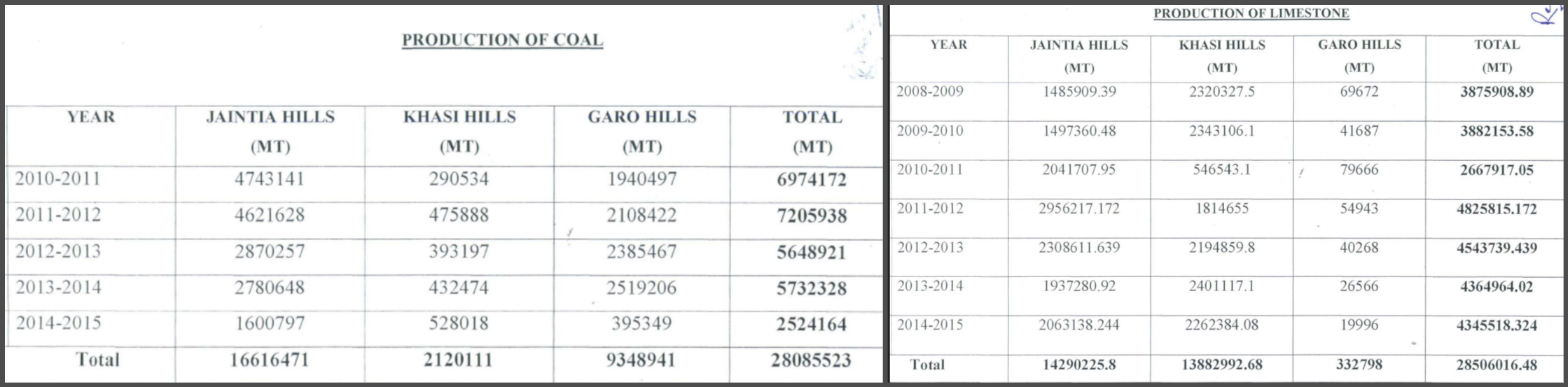
The Union Minister of Mines, G. Kishan Reddy, contended that the Act does not seek to interfere with the autonomy or revenue rights of states, but aims at ensuring uniform mineral rates across the country, especially on major minerals such as coal, limestone, iron ore, copper, and manganese.
The minister also claimed that the Act aimed at “increasing the production of major minerals,” and that the centre is working “for increasing investment and employment in the mining sector through whole of government approach.”
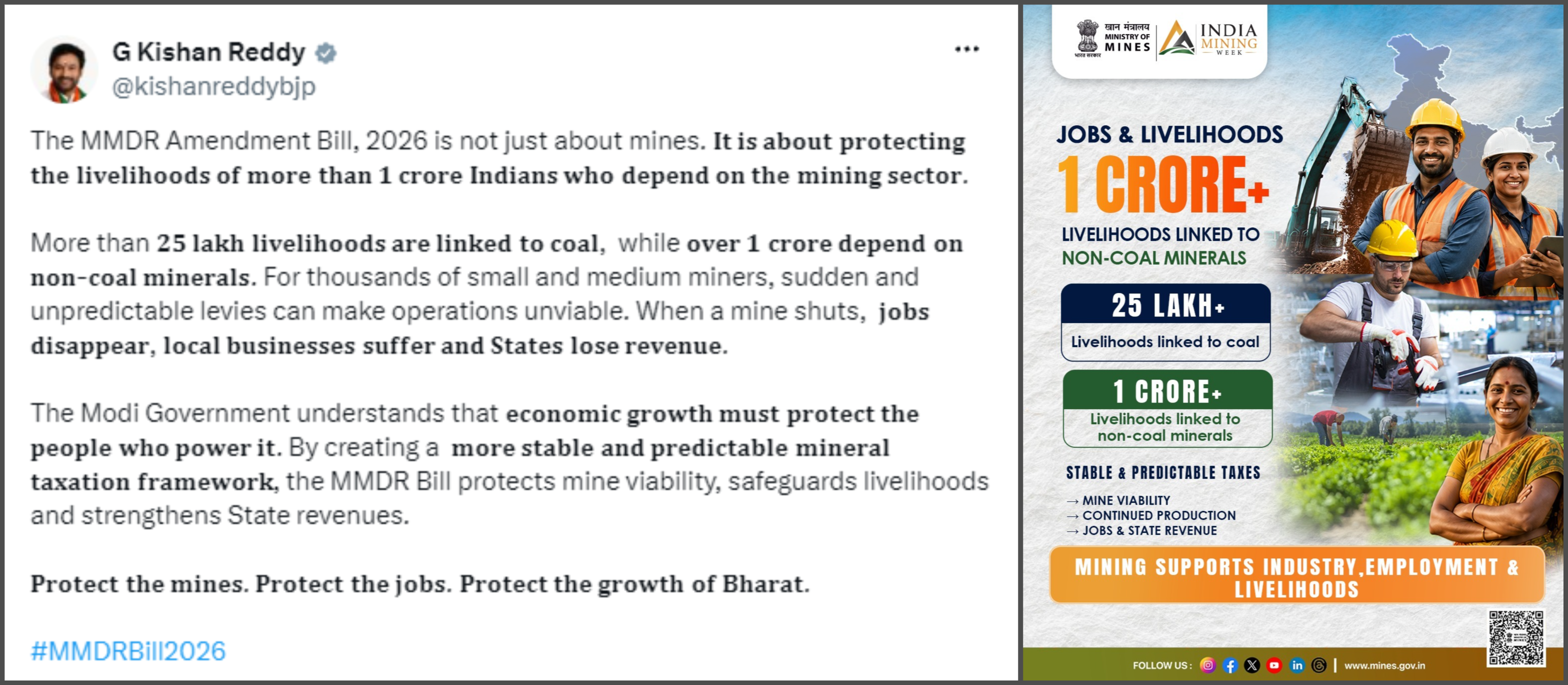
Countering arguments about states losing share of revenue from the sector, the minister insisted that the share of states has increased from 65 per cent to 85 per cent, and that the reforms brought through this Act had led to the increase of revenue of the states by 23 per cent.
Reddy claimed that the Act is part of the four pillars the government is working on: getting minerals, increasing employment, strengthening states financially, and reducing import dependencies on coal and minerals.
However, such statements have not eased the strong apprehension among the states against the Act. States, irrespective of which party is in power, fear that they would lose control over minerals and erode their power to impose taxes on mineral resources.
Such a condition, especially for the mineral-rich states, could imply financial precarity, which, in turn, could have detrimental effects for the states’ developmental projects and social security of the people, particularly those whose livelihoods are closely tied to this sector.
What evidently emerges from this legislation is not just a conflict between what is claimed to be a ‘reforms’ momentum and underlying concerns of industrial exploitation of mineral-rich regions across the country, which could have detrimental effects on the environment and livelihoods.
Rather, the rushed legislative action, ignoring concerns raised from across the political aisle and civil society, also has far-reaching implications for cooperative federalism in the country, particularly when the constitutionally guaranteed rights of the states are being impinged in this manner through a parliamentary overreach.
(Views expressed in this report are the author's own.)
Follow us on WhatsApp
Follow us on Facebook
Follow us on X @vudmedia
Follow us on Substack
