
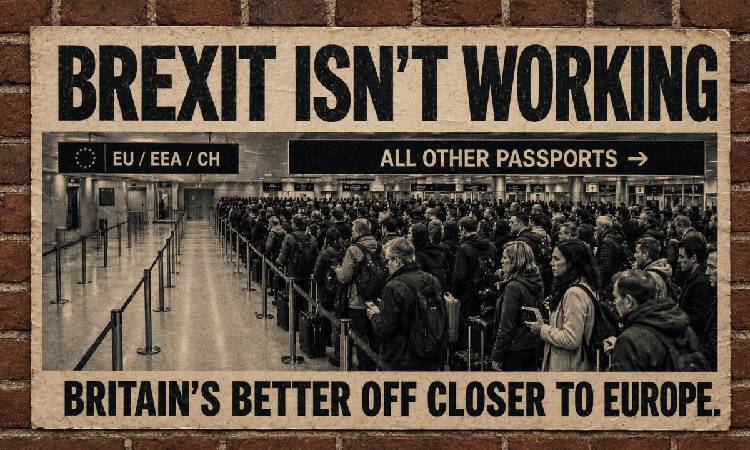
This June marked a decade since Britons voted, by a thin margin, in favour of leaving the European Union. The result was over half a decade of political turmoil, economic decline and socio-political undercurrents that could rip apart British society. Brexit revived a politics of division, turning immigrants into an ‘enemy within’ while echoing racial rhetoric that once devastated Europe. The campaign of ‘British jobs for British people’ is an example of the imitation of racial exclusion and supremacy in Nazi Germany. The importance of peace, human rights, economic cooperation, free movement and shared prosperity that shaped the European project is contrasted with the consequences of Britain’s departure from the EU. The contribution of immigrants to Britain’s economy, public services and communities is being suppressed in a climate of racial hostility and political exploitation of immigration, says the former Mayor of Cambridge, Baiju Thittala.
Home page and Banner images are AI-generated for representative purposes only
Text page image: An AI-generated image by the European Council on Foreign Relations, lampooning Brexit
After the first quarter of the 20th century, the exclusion of people based on their race, brutal killings, unimaginable brutality, torture, and even experiments on human bodies were carried out to create a racially purified and revitalised regime in Nazi Germany.
‘Racial policies’ and laws were introduced to ‘exclude Jews [on the basis of race] from public office’ and from ‘professions,’ even preventing them from marrying Aryans and from holding German citizenship. Racial persecution had become the slogan, and German supremacy became the norm of social and political life.
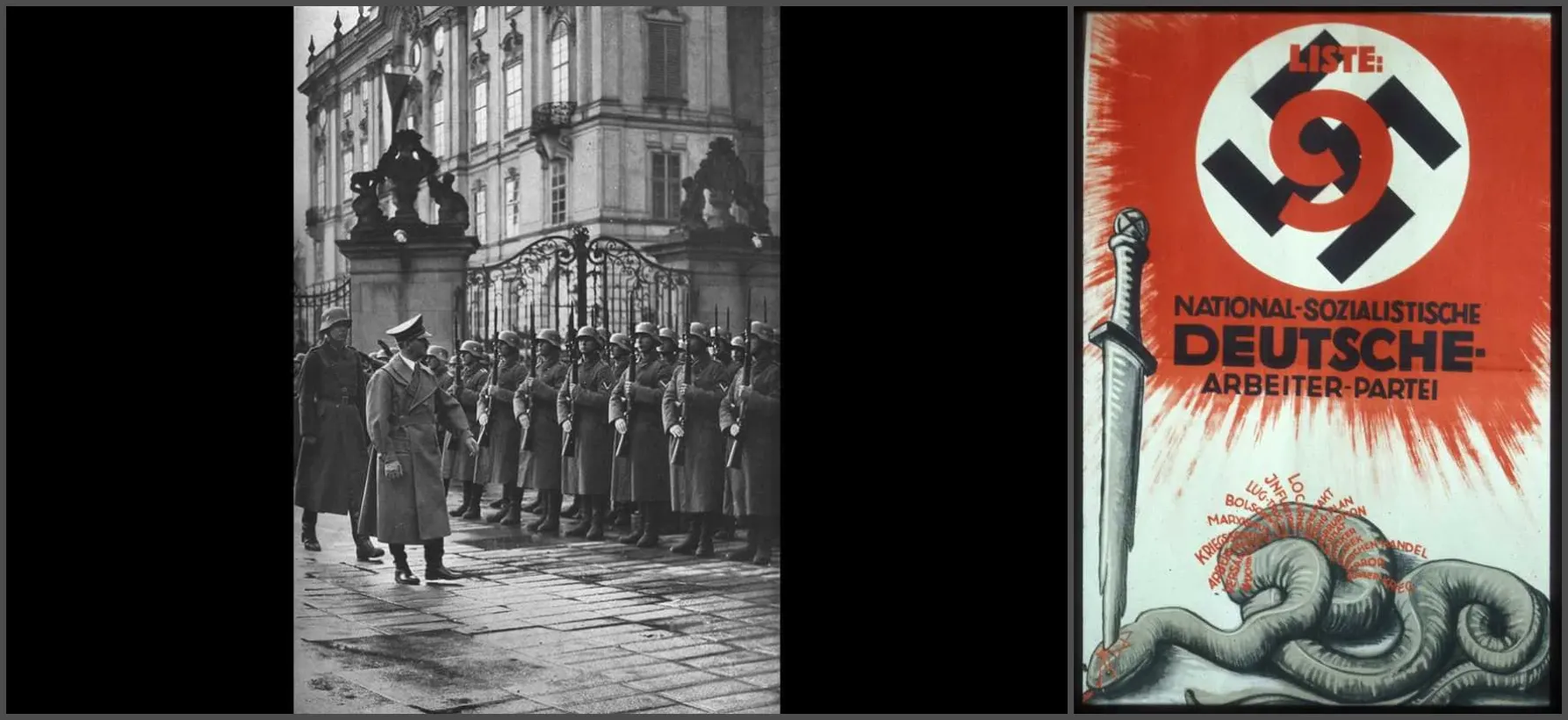
Adolf Hitler inspecting his troops (left), and an AI-generated image on Nazism or National Socialism (right)
The term ‘them and us’ became the regime's rhetoric, creating an enemy within to divide and rule and seize political control. It aimed at creating a so-called ‘racially purified state,’ a racial hegemony, because ‘Hitler believed that the Aryan or Nordic people were naturally superior and a master race, while others were an inferior race.’
Nonetheless, the human race had to pay a heavy price for it: ‘the killing of probably 30–40 million,’ ‘a million died of starvation in Leningrad between 1941 and 1944,’ ‘Germany may have lost up to 7 million,’ ‘87,000 soldiers from undivided India died while fighting in Europe,’ and these horrors are still haunting us.
Towards the second half of the 20th century, the world witnessed a brutal regime attempting to reshape the European continent with blood and human flesh. By the end of the Second World War, maintaining peace, economic cooperation, free movement, and political stability became a political necessity.
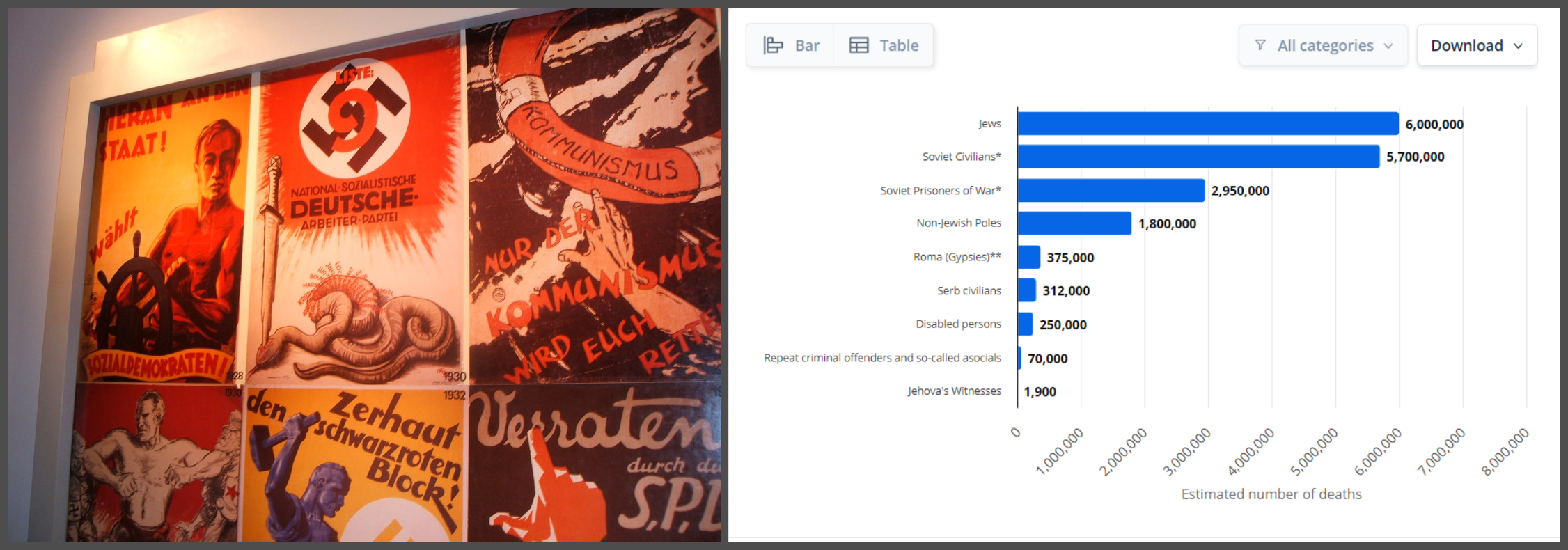
An AI-generated image of a 'racial purification poster' (left), and a Statista graph on people killed by Nazi Germany (right)
European Union as the pallbearer
Thus, the European Union (EU) was formed for security, foreign affairs, economic cooperation, free movement and justice. The core values of the EU were nothing but upholding the highest degrees of human values, protecting and safeguarding humans, not based on race or superiority, or domination of a colour or race.
This concept was meant to avoid conflict between European nations.
However, not all European nations seem to have adhered to these ‘core values,’ at least historically, in their statecraft, especially with the colonial occupation of Great Britain, France and the Dutch. Such legacies applied to some of their ‘modern-day’ leaders as well.
Besides the fact that Winston Churchill was described as a ‘butcher of India,’ any historian who studied colonial exploitation in India and, of course, the Bengal famine in 1942-43, would never see him as a 20th-century champion of peace and equality.
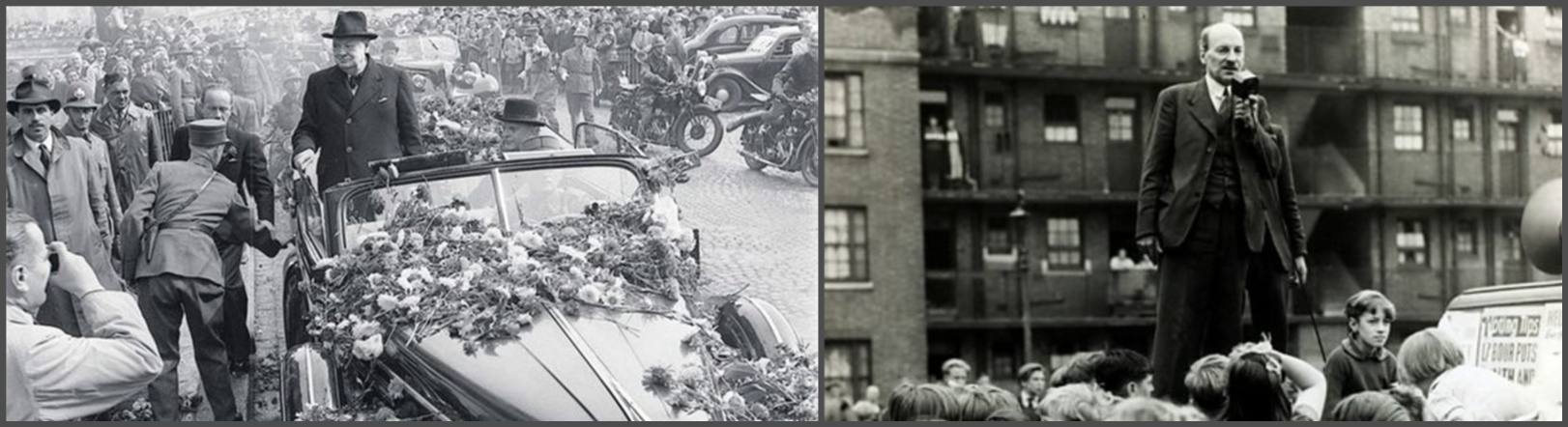
Winston Churchill in Europe (left), and Clement Attlee addressing a rally (right)
However, when we look at his campaigning for the creation of the European Union, Churchill could be seen in a completely different light. Churchill took the lead to avoid further wars in Europe and paved the way for the formation of the European Union.
Speaking at the University of Zurich in September 1946, Churchill proposed the creation of “’a kind of United States of Europe,’ a ‘European group’ which could give a sense of enlarged patriotism and common citizenship to the distracted peoples of this mighty continent,” points out The Churchill Project in Hillsdale College, adding that the British Prime Minister had put “his enormous personal prestige behind the cause of European unity.”
The subsequent Labour government led by Clement Attlee also contributed to this campaign. However, Churchill deserves the credit for his contribution to the formation of the EU.
The key idea behind the EU was the establishment of a governance consortium that could manage economic cooperation, foreign affairs and security, justice and home affairs. Above all, peace and human rights were given utmost importance.
Britain, claiming to be the bastion of civil liberties, considered being part of the Union to be beneficial for the country. The Treaty of Paris in 1951 signalled the establishment of the European Coal and Steel Community.
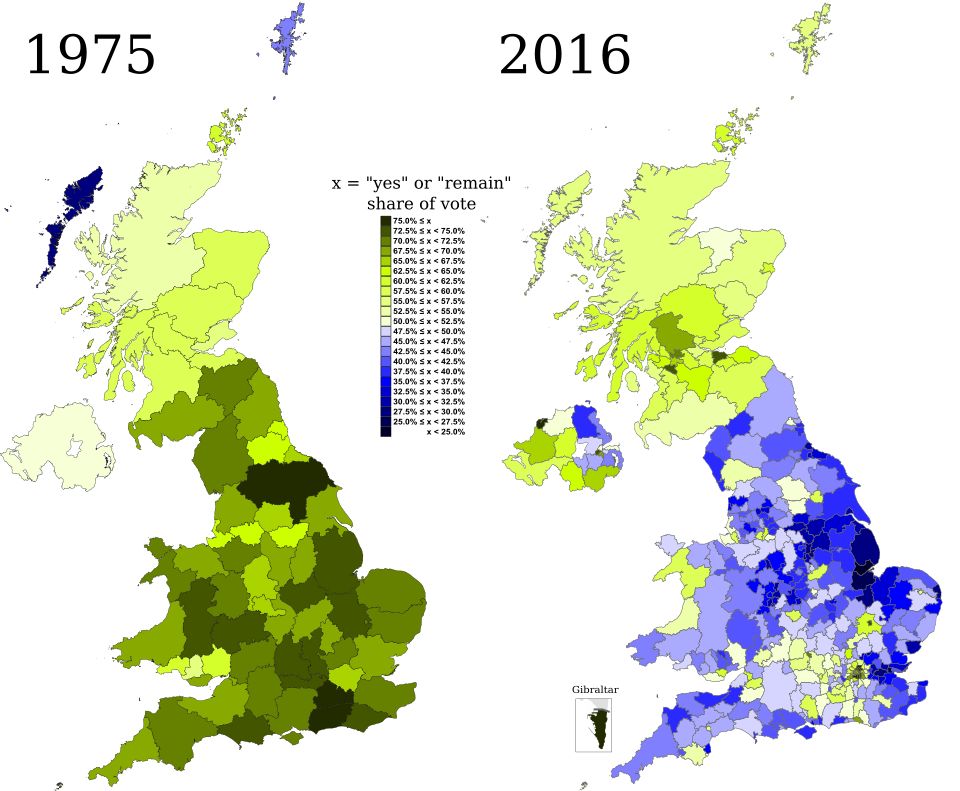
A comparison of the referendums in 1975 and 2016
Britain was not part of it. Considering themselves an integral part of Europe, British leaders like Harold Wilson, James Callaghan, Harold Macmillan, and other stalwarts understood what Britain could gain from being part of the EU, and vociferously advocated for it.
However, another set of political leaders like Tony Benn, Hugh Gaitskell and others opposed that view. Eventually, by virtue of the Brussels Treaty of Accession, Britain became part of the EU on January 1, 1973.
What EU integration meant for Britain?
Every person who lives in Britain must understand what they have gained from being part of the European Union: free movement of labour, free markets, lasting peace, shared economic prosperity, upholding universal values such as human rights and democracy, freedom of movement, shared rights, and security. And, of course, racial persecution and supremacy were not only forbidden, but criminalised as well.
The community became more cohesive; the immigrant community was shown to be a resilient labour force in this country, treated relatively equally.
The economy was progressing, and the standard of living was improving along with exemplary social care, education, and, above all, the National Health Service (NHS), which was an imitable model of the British welfare state.
On the other hand, community cohesion and integration were taking shape, becoming less communal as multiculturalism took deeper root in British society.
However, the hardcore right-wing populist leaders were restless. Seeking routes to disharmony in the community, they started to exploit various fault lines and paved the way for creating an ‘us versus them’ divide.
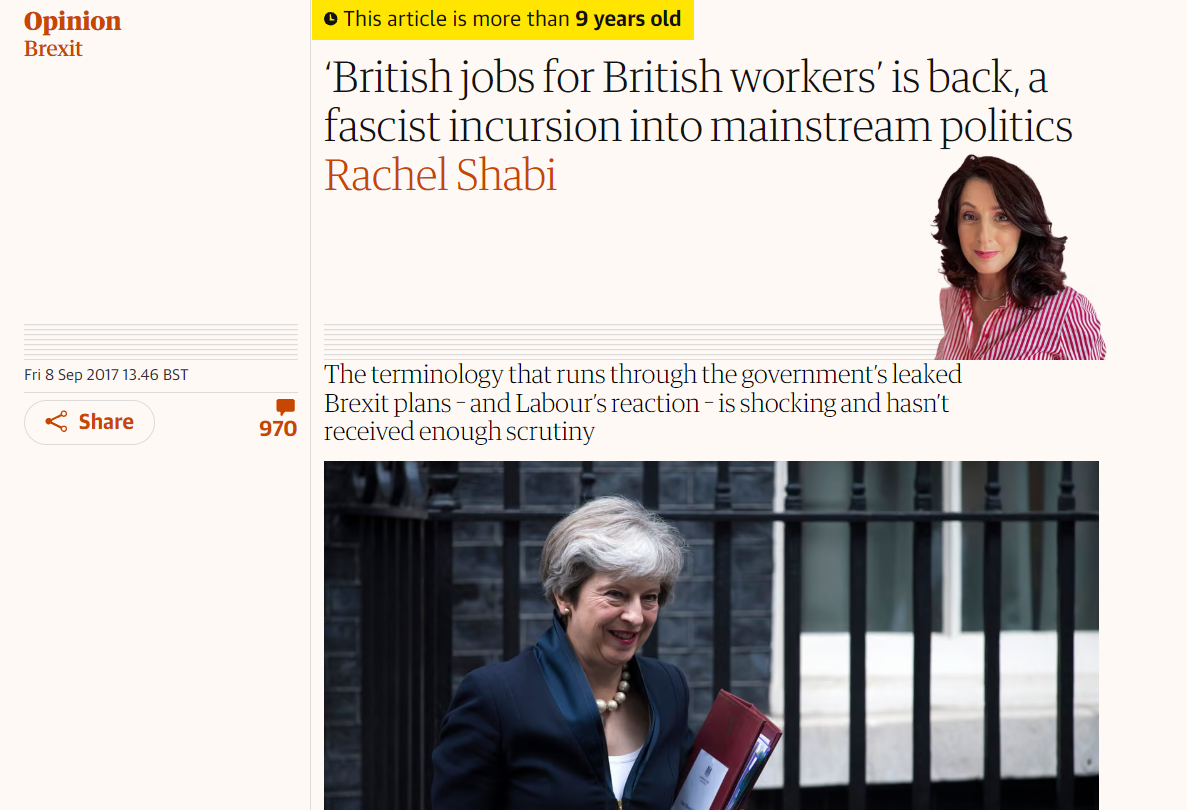
‘British jobs for British people,’ resembling Nazi Germany’s parochialism slogans about ‘non-Germans’ and ‘non-Aryan races’ to be excluded from jobs and ‘professions,’ began to be echoed by the right-wingers in Britain as well. What started as subdued murmurs in pockets grew into an organised political campaign and drove anti-immigrant sentiments.
The only difference with Nazi Germany is that instead of racial rhetoric, the term ‘immigrants’ was used. Interestingly, ‘immigrants’ are now creeping into the German political lexicon with the surge of right-wing politics, particularly the AfD’s historic win in Germany’s Saxony-Anhalt.
Nomenclature and descriptions apart, the objective of the British right wing was the same – creating a division between British people and immigrants, the same tactic of finding an enemy within. The concept of ‘British jobs for British people’ is akin to the slogan heard in the German process of racial ‘purification’ or ‘revitalised’ community.
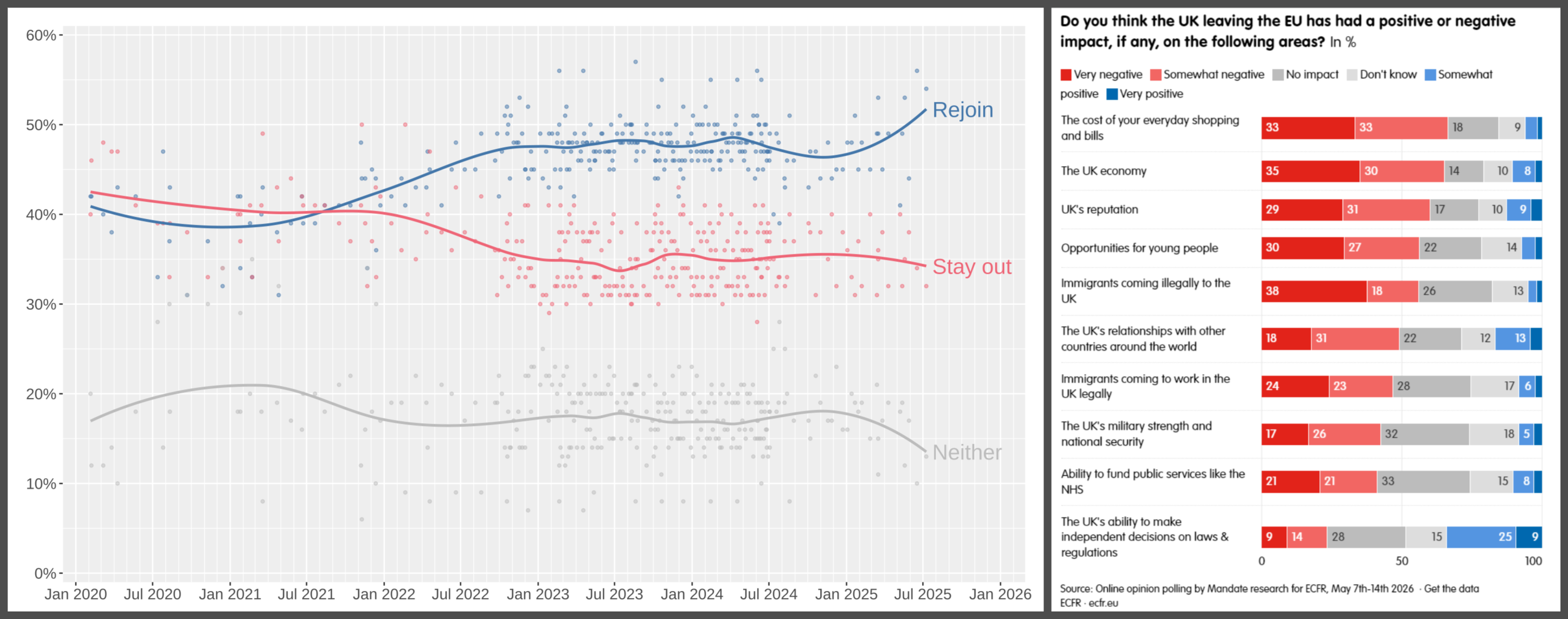
Brexit and its racial subtext
However, in Britain, this campaign took on a new form and campaign when the right-wing populists proposed the concept of ‘Brexit’ – a portmanteau of “British” and “exit,” implying Britain’s exit from the European Union.
On the surface, the reasons for the ‘leave’ campaign might have sounded reasonable: Euroscepticism driven by the perception that the EU membership ‘was not delivering’; the recession of 2008 causing cynicism about the economic benefits of European integration; call for ‘taking back control’ driven by perception that Britain’s sovereignty and parliamentary control was ceded to unelected bureaucrats in Brussels (EU headquarters); a democratic deficit when the European Commission was not accountable to the British public; and the free movement of people, especially from other parts of Europe, along with influx of refugees from West Asia as straining public services, and so on.
Adding to these were economic grievances, emerging from undelivered expectations of globalisation, especially with the working class and rural populations feeling ‘left behind,’ aggravated by the austerity measures of the 2008 global financial crisis, and the huge budgetary contribution to the EU not bringing expected returns.
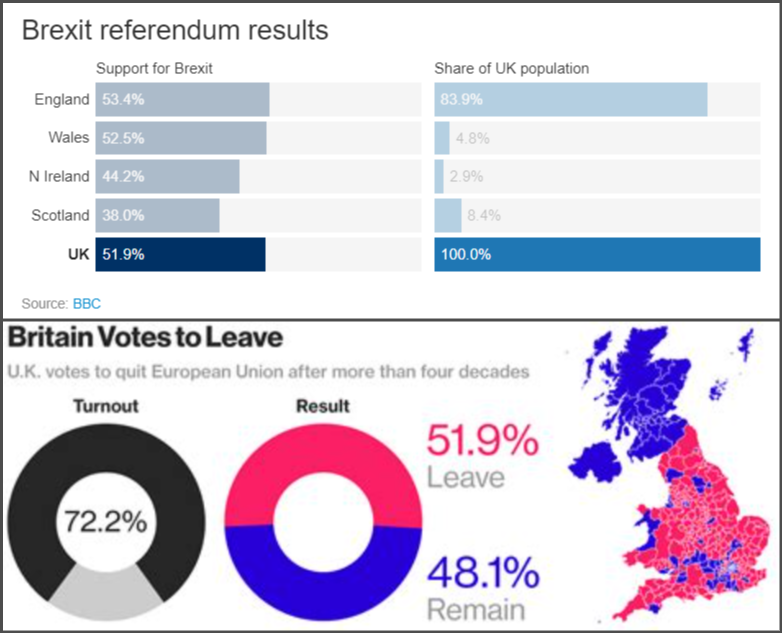
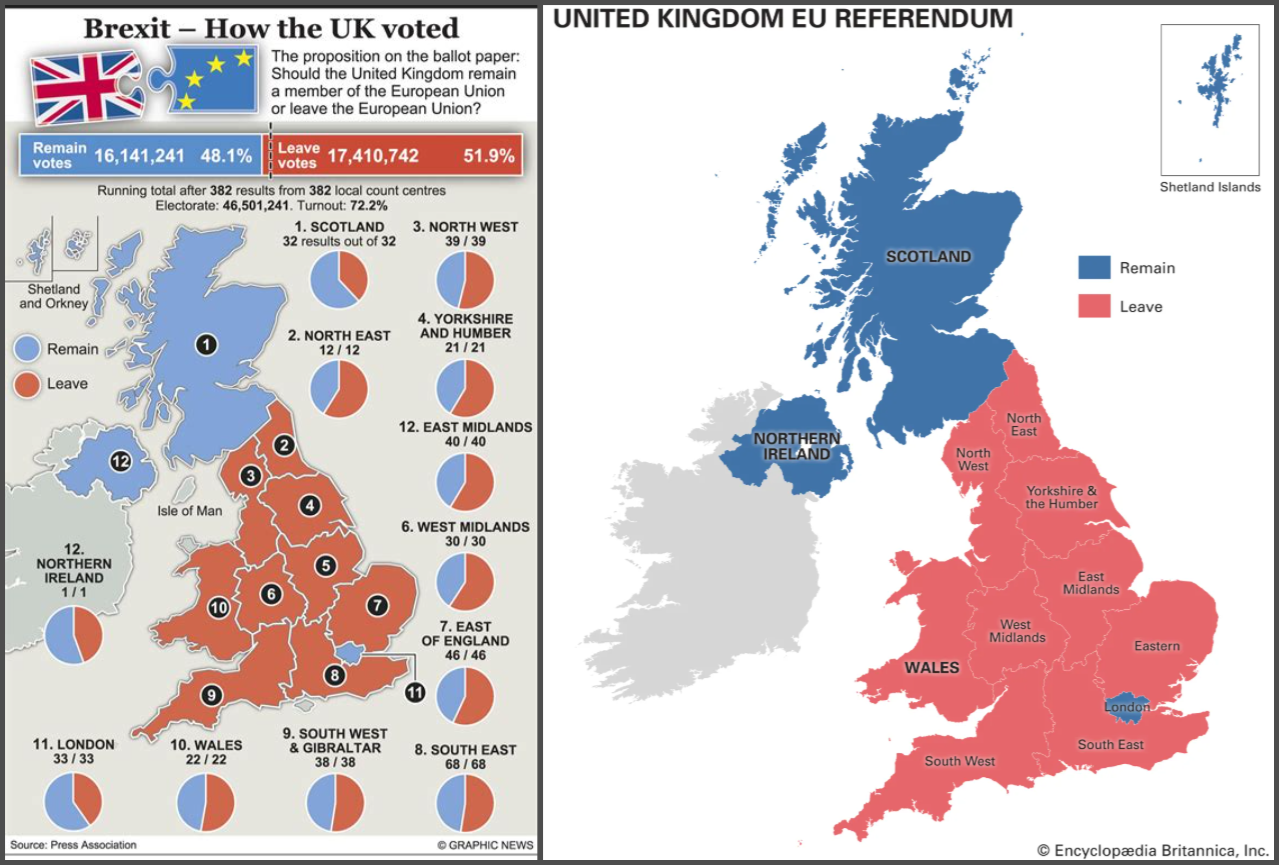
However, beneath these structural and governance-centric issues was the underlying racial sentiments that drove the ‘leave’ campaign, which had a close finish at 51.9 per cent to the 48.1 per cent that voted to ‘remain’ in the EU.
The Brexit campaign tapped into sentiments of national identity, nativism, English nationalism and the impulses of nativism. The heightening concerns over immigration and refugees had upped the ‘indigenous vs. immigrant’ debates, which conflated EU movement with global migration. A creeping xenophobia, especially against Eastern European and rising Islamophobia also added meat to the ‘leave’ campaign.
While Britain and its allies had fought this ideology in Germany, it was expected to fight the same in Britain too. Far from doing so, even after 10 years, Britons are still scared to expound this fact about racial purification being old wine in a new bottle.
The slogans of ‘British jobs for British people,’ ‘our community,’ ‘them and us,’ and ‘our wealth’ — were these not the same that were heard in Germany towards the second half of the 20th century?
Lessons of the colonial era ignored?
The slogan of ‘our wealth is for our people’ is rather an expression of the ignorance of these right-wingers: from where did Britain accumulate this wealth? ‘Simply by colonisation,’ ‘slave trade,’ ‘looting’ from those British colonies.
When the British arrived in India, ‘the wealth of India was 27 per cent of the global economy (the whole of Europe put together then); when Britain left in 1947, it reduced to 3 per cent.’
India was governed for the benefit of Britain. Britain’s rise for 200 years was financed by its depredations in India. The tax defaulters were confined in a cage and exposed to the burning sun; fathers sold their children to meet the rising tax; unpaid taxes meant being tortured to pay up, and wretched victims’ land being confiscated by the British, Will Durant had supposedly written in The Story of Civilisation.
In 1798, the invasion of Egypt by Napoleon Bonaparte was to threaten British power in India ‘to stop the source of its corrupting wealth.’ The irony is that France was not doing anything other than what the British were doing in India. It might be further irony that “appropriating property belonging to another, with the dishonest intent to permanently deprive” is still considered theft under British law.
Is it not naïve for the right-wingers even to argue that the wealth accumulated from colonial exploitation is meant for the benefit of ‘British people’ and must not be used for the welfare of the exploited? Is this not simply what Hitler did during his pursuit of racial purification?
Immigrants as the punching bag
Immigrants travelled all the way from either a European country or a Commonwealth country. Britain, as the self-proclaimed bastion of civil liberties – with traditions of the Magna Carta (1215) and the Bill of Rights (1689) – must take full responsibility and moral obligation for upholding the highest degree of protection of human values.
There could be many immigrants; perhaps they might have claimed benefits, but they definitely contribute to society. We must understand that second-generation immigrants are tax-paying members of the immigrant community, some of them standing in the House of Commons.
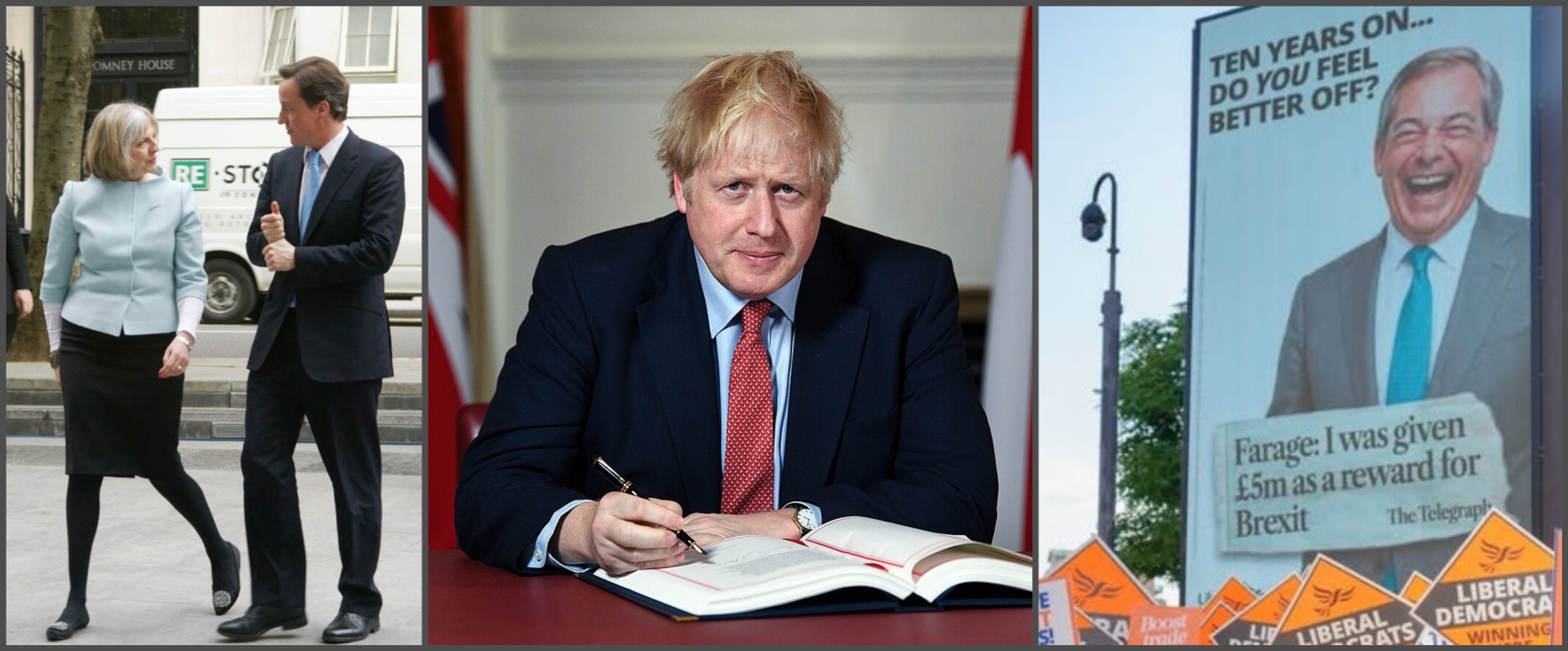
Prime Minister David Cameron and his successor Theresa May (left) had campaigned for 'remain,' while their conservative successor Boris Johnson (centre), and Nigel Farage of ReformUK (right) were most vocal supporters of 'leave'
Perhaps there could be people seeking refuge in this country because they have a genuine fear of political or religious persecution, or their homes were bombed by a Western country; communities have been destroyed, like in Afghanistan for some 20 years.
Despite relentless propaganda of hate, the right-wingers were of the view that they could never come to power, so they invented the term ‘Brexit’ and used it as a tool, as was used by the Nazi regime.
The campaign sought to place all the blame for all ills of the country on immigrants who are the workforce of this country: in hospitals, from cleaners to doctors; in restaurants, from catering staff to stewards; in care homes, from maintenance staff to managers.
In our local communities, from corner shops to pubs, restaurants to hotels, immigrants come and work tirelessly. It was neither the immigrants’ fault that they were born outside of Britain, nor was it the choice of those British people to be born in Britain; was it not fate?
The Brexit agenda, therefore, cannot be seen as yet another racially motivated propaganda intended to find an enemy within, and innately racial. If anything, the clarion call of ‘British jobs for Britishers’ seeks racial purification, on the lines of Nazi Germany.
Another slogan of the people who claim supremacy was: ‘immigrants are criminals.’ If a person is committing a crime, he is individually responsible for the crime committed. He must be prosecuted and sentenced, not their entire community or the family members of someone who committed a crime.
What about those white people who committed heinous crimes and, after serving their terms of sentence, are released? Does it not affect community safety, or are they white British, so none of us feels unsafe?
Does it only affect the community when an immigrant commits a crime, serves his sentence, and is then released? What about the criminal who even escaped from prison and wanders around Britain, who isn’t an immigrant?
Due criminal process, without discrimination, is the only solution for crime in society, not racially segregating them and blaming a whole community. Doing so underpins the failure of the system, not of the immigrant communities. The power-centric right-wingers have yet to absorb this basic understanding.
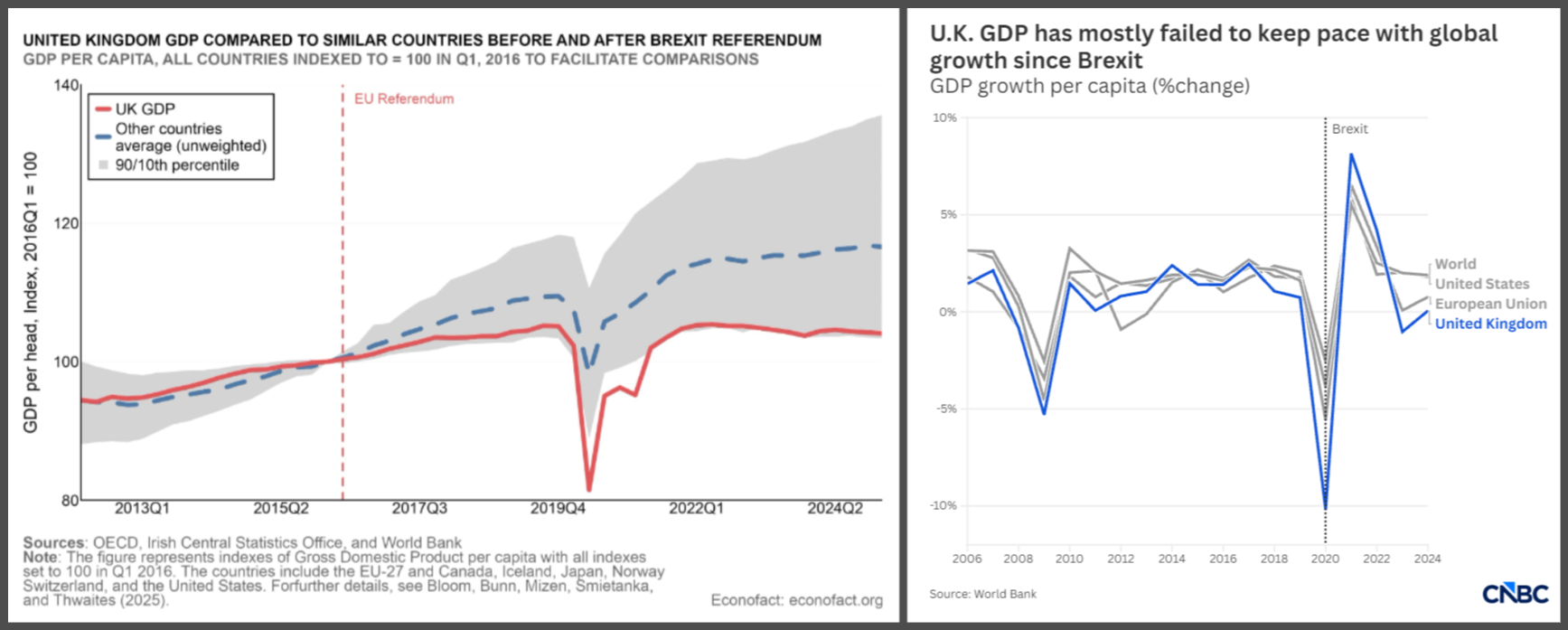
Look at how badly Brexit affected our economy. Brexit was nothing but propaganda for right-wingers against immigrants, as had happened in Germany.
In Britain, they managed to spread hate and instil fear in all migrant communities, creating a feeling of being unsafe and a shocking increase in the number of incidents of racial violence, similar to what we saw in Germany.
Going against our neighbours and finding them to be the enemy — that was the sole agenda behind Brexit. They have succeeded but failed to achieve anything that was promised as its benefits. This is a fact that has now reached most of the political establishment in Britain.
A decade of regret
Ten years after Britain voted in a referendum to leave the EU, and six years after it came into force, the sentiment of regret is palpable among Britons.
A CNN report states that the current leadership crisis that has gripped Britain – epitomised by changing prime ministers of the earlier conservative government led by the Tories and the current one led by the Labour Party- is an “iteration of the turmoil that Brexit inserted into the heart of British politics.”
The greatest impact has been economic, the area where miracles were promised on exit, with reduced gross domestic product (GDP) seen by some estimates as 4-6 per cent and by others as 6-8 per cent, compared with the scenario while in the EU.
Leaving the EU single market and customs union had led to greater trade barriers for British goods and lower investment for the economy, even as costs increased for imports, which decisively drove up the living costs – a factor in the recurrent political turmoil.
The promised spinoffs on immigration also turned out to be a cropper, with reports suggesting that whilst migration from EU nations dropped, those from non-EU countries marked a sharp increase in the initial years, with net migration averaging at 5.5 lakhs a year since 2021 as opposed to pre-Brexit levels of around 2.5 lakh in the previous decade.
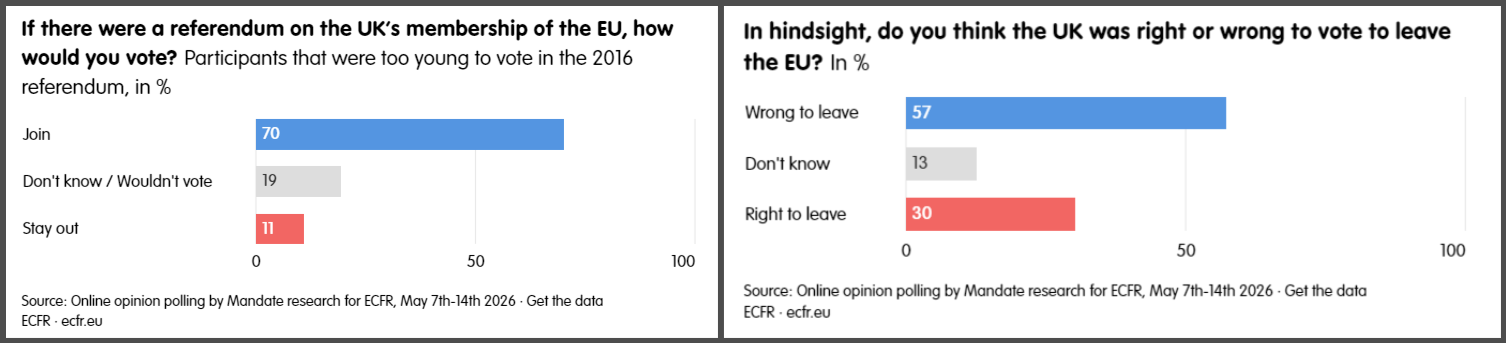
Amid widespread regret and disenchantment, younger Britons, especially the generation that did not have a say in the referendum, are reported to be uneasy about the economic conditions and political turmoil caused by Brexit.
A YouGov poll published this June states that 57 per cent of Britons think leaving the EU was wrong, which includes 23 per cent of the ‘leave voters’; six in ten believe Brexit was a failure, with Conservatives and Borish John seen as most responsible, and 55 per cent support rejoining the EU while 59 support a closer relationship without joining the EU.
It is evident that while nothing substantial has been achieved with Brexit other than political and economic turmoil, Britain, instead, lost a significant political, social, and economic stake by leaving the EU.
Maybe not in our lifetime, but our future generations will certainly correct this historic blunder and take Britain back to the EU. The future of Britain is in its integration with Europe – both in idea and structure.
(Views expressed in this report are the author's own.)
Follow us on WhatsApp
Follow us on Facebook
Follow us on X @vudmedia
Follow us on Substack
