
“Poriborton” (Bengali for change) holds significant historical and symbolic significance in Bengal's political discourse. More than an ordinary political slogan or an electoral tool, it demonstrates the promise of change or the pledge to destabilise the existing political order and replace it with a better and more robust model of governance – one that could, at least in rhetorical terms, provide respite to the dissatisfied electorate. With the BJP forming the government for the first time in West Bengal, after a controversial election to the 18th Legislative Assembly, the question of whether the promise of “Poriborton” unfolds into a governance reality depends on how well the new government can transform from symbolism to substance and convert its promises to performance, says Subhakshi Manna.
Home page image: West Bengal Chief Minister Suvendu Adhikari gifts a idol to Prime Minister Narendra Modi
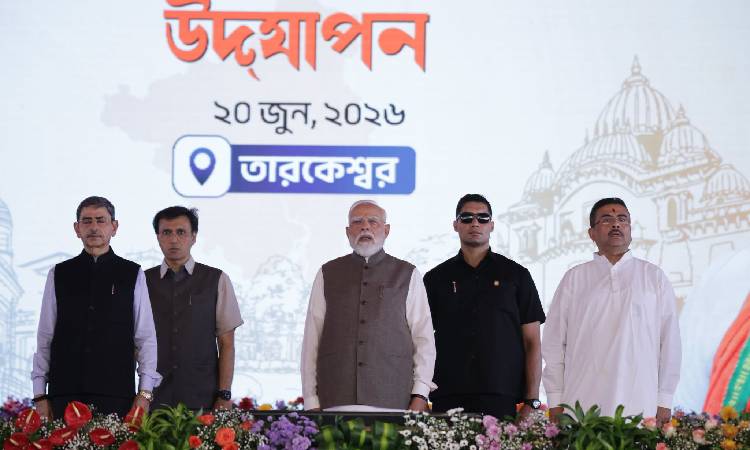
Text page image: Prime Minister Narendra Modi with West Bengal Governor R N Ravi and Chief Minister Suvendu Adhikari
Banner image: Chief Minister Suvendu Adhikari and West Bengal BJP chief Samik Bhattacharya with other BJP leaders at a party event
Does a change in government guarantee a change in governance? This is perhaps a question resurfacing in almost every political discussion in West Bengal as the state enters its second month under its new government after the legislative assembly elections.
Euphoric expectations of pathbreaking transformations in overall governance and service delivery often accompany electoral victories. This is mundanely common in India's electoral trajectory at large, and in Bengal’s in particular.
Almost more than a month after the electorate in West Bengal voted the BJP to power under the banner of “Poriborton” (Bengali for change), the euphoria of the electoral campaign confronts the ground realities of governance.
Therefore, Bengal's latest experiment with “Poriborton” makes room for deeper introspection into how far the new government will be able to translate promises into performance and rhetoric into reality.
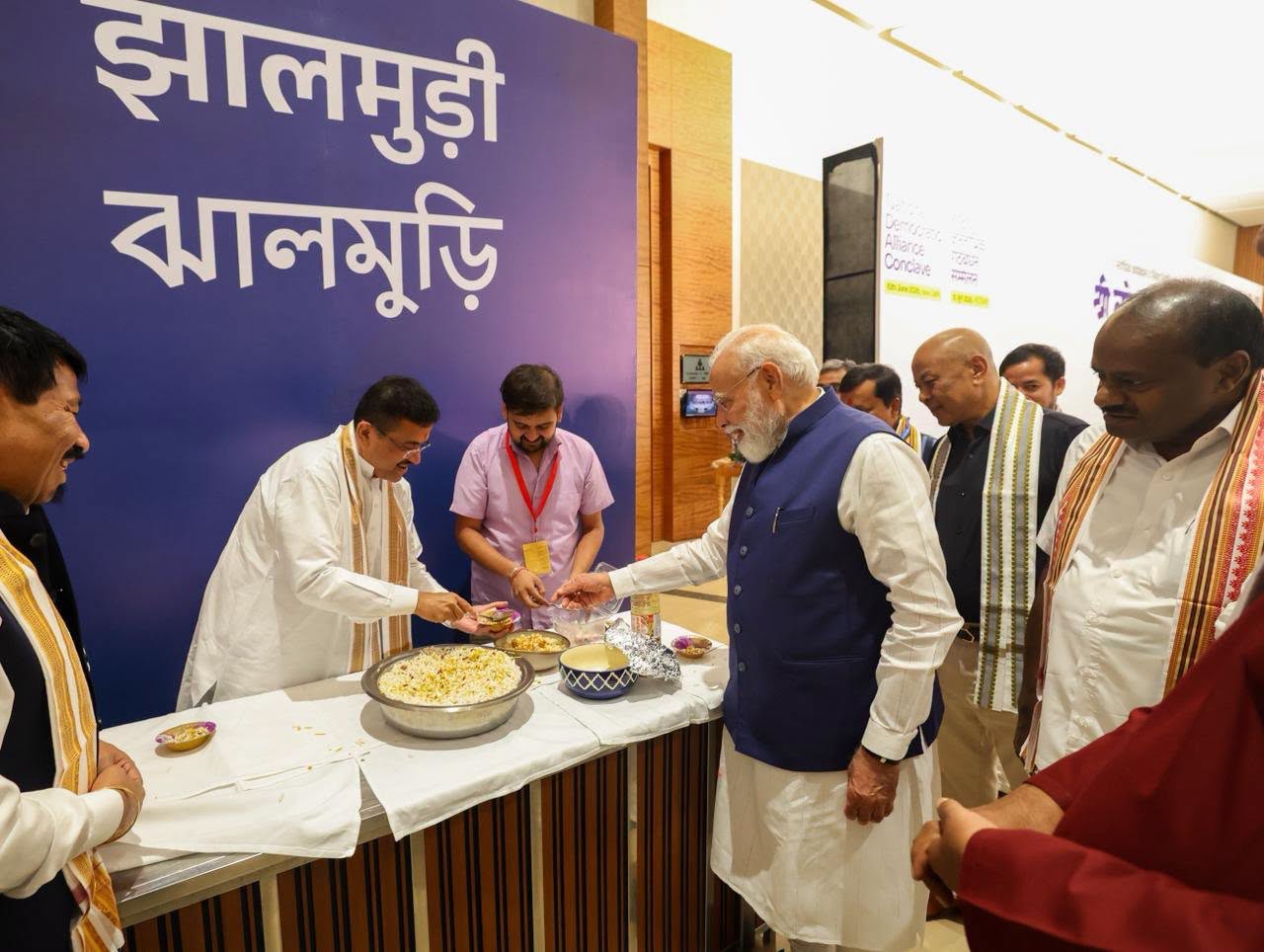
Suvendu Adhikari serves Jhalmuri to Prime Minister Narendra Modi during the election campaign in West Bengal
The political discourse of "Poriborton" in West Bengal
Within Bengal’s political vocabulary, “Poriborton” is neither new nor latent. Beyond being an electoral slogan, it represents an important political discourse in West Bengal’s electoral politics.
Articulating the promise of change in terms of destabilising the existing political order with an alternative model of (better) governance remains a salient feature of the state’s political history.
The term first gained prominence in 2011, before the 15th legislative assembly elections, when the All India Trinamool Congress (AITC or TMC) mobilised it against the 34-year-long Left Front rule, eventually destabilising the latter and driving it from power.
During that time, “Poriborton” symbolised the promise of “a change for a better and brighter tomorrow,” people-centric (grassroots-level) governance, political decentralisation, and development.
These promises were entrenched in the narrative of “Ma, Mati, Manush” to break away from the political culture of cadre domination and ‘liberate’ Bengal from the policy disorders generated by the Left Front rule.
Fifteen years after Poriborton first transformed Bengal’s political imagination, the discourse resurfaced with renewed vigour as the state entered another electoral contest, once again promising a decisive break from the past and a new era of governance.
From campaign to governance - the BJP ascendancy
Capitalising on the dominant anti-incumbency sentiment among the electorate, after 15 years of the TMC’s supposedly failed agenda of delivering development and welfare, its arch rival, the Bharatiya Janata Party (BJP), manoeuvred the election campaign around the central theme of “Poriborton” (change).
Accordingly, the BJP’s campaign focused on the promises of industrial revival, economic growth, social welfare, and human development, specifically emphasising women and youth.
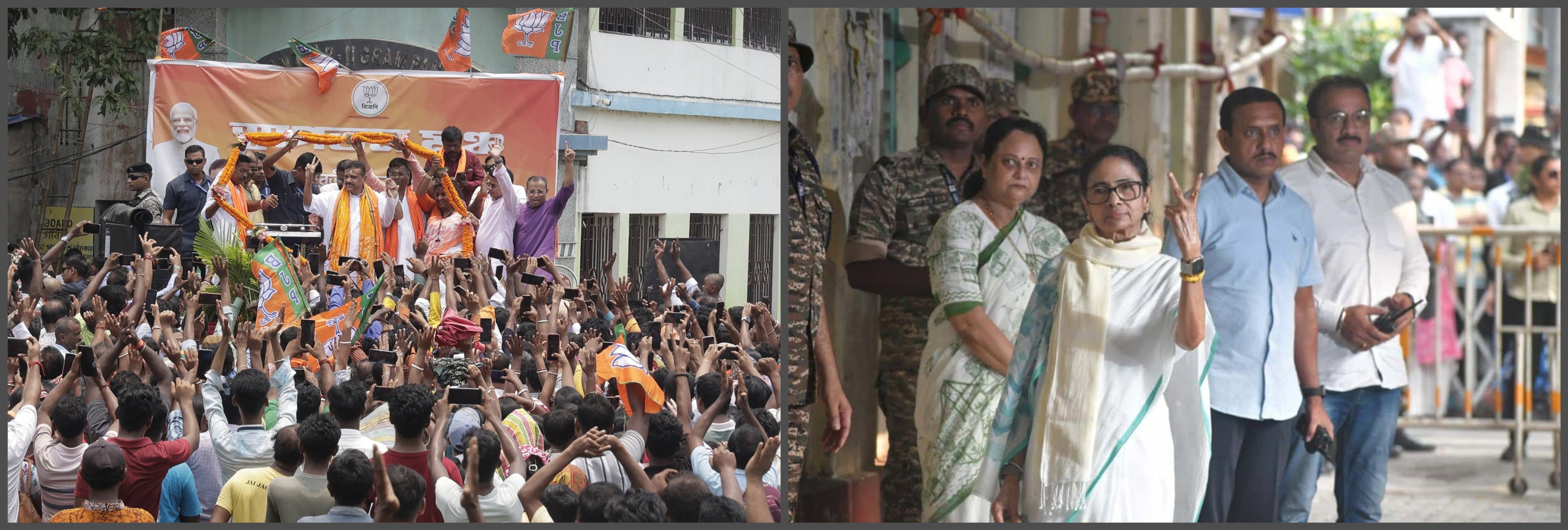
Suvendu Adhikari and Mamata Banerjee during their respective election campaigns
Throughout the high-voltage election campaign, the lofty promises of employment generation, industrial revival, administrative transparency, women's empowerment (financial assistance of INR 3000 monthly) and a crackdown on illegal infiltration (detect, delete and deport policy) resurfaced.
The BJP campaign also simultaneously disparaged the TMC government over the recurring recruitment scams, “Cut Money” culture, institutionalised corruption, the dominant “Syndicate Raj,” and the overall failure of the government in delivering justice, with particular emphasis on the R.G. Kar rape case.
After dismantling a decade-and-a-half rule by one of the largest regional political parties through its electoral victory in the 18th legislative assembly elections, the BJP formed the government for the first time in the state with a stunning majority, notwithstanding questions over large-scale omission of voters through the controversial Special Intensive Revision (SIR) drive of the Election Commission of India (ECI or EC).
The first month of BJP Governance: signalling change
In its first month of governance, the BJP has demonstrated remarkable potential to craft narratives and sustain optics, signalling change. The newly formed “double engine government” in West Bengal has actively sought to project an image of political transformation.
Through proactive administrative decisions and robust policy interventions, the new government has projected administrative assertiveness and a paradigm shift in the existing political order.
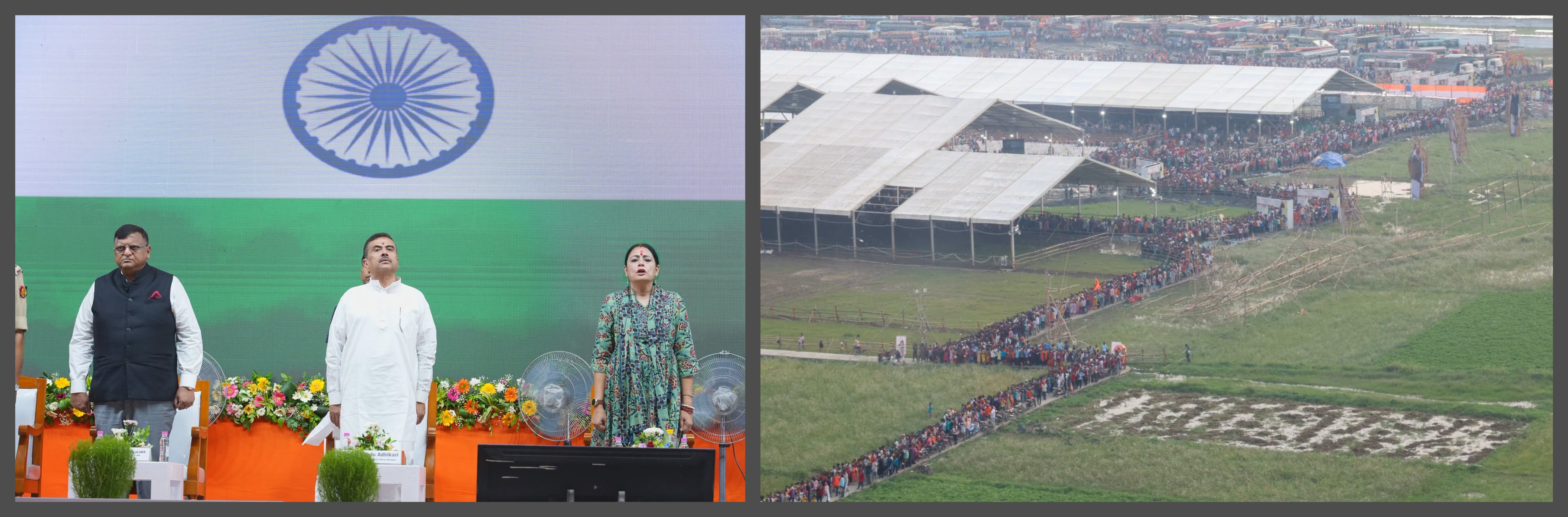
Chief Minister Suvendu Adhikari during the recital of the national anthem (left), and an unconfirmed picture possibly of Bangladeshi migrants in a holding area (right)
The most visible steps taken by the BJP government include launching a large-scale anti-corruption drive, transferring land to the Border Security Force (BSF) to fence the India-Bangladesh border, verifying beneficiaries of various welfare schemes, and subsequently deleting ineligible candidates to reduce leakages within the system.
However, the greatest departure from the state’s existing political tradition comes with the introduction of the “Bulldozer culture” in West Bengal. The deployment of heavy earth-moving machinery as tools of governance has become emblematic of the rise of right-wing forces with the ascendancy of the BJP in northern and central parts of India.
In most of the BJP-ruled states, bulldozers have emerged as instruments of sovereign retribution and exemplify muscular nationalism.
Despite having a majoritarian government at the centre for a long time (followed by a coalition rule from 2024 onwards), the BJP’s “Bulldozer culture” could not penetrate the socio-political landscape of Bengal hitherto.
However, with the BJP voted to power in West Bengal, this culture is no longer alien to it. Right after coming to power, the government has embarked on an aggressive anti-encroachment drive across urban centres involving the demolition of illegal structures, eviction of hawkers, tearing down structures of the opposition TMC party, and so on.
The intention of reclaiming public and railway lands might align with the state’s objective of decongesting urban spaces. However, without proper rehabilitation and financial compensation, and disregarding the due process of law, will generate significant negative externalities, particularly in terms of civil unrest and economic instability amongst the working-class populations.
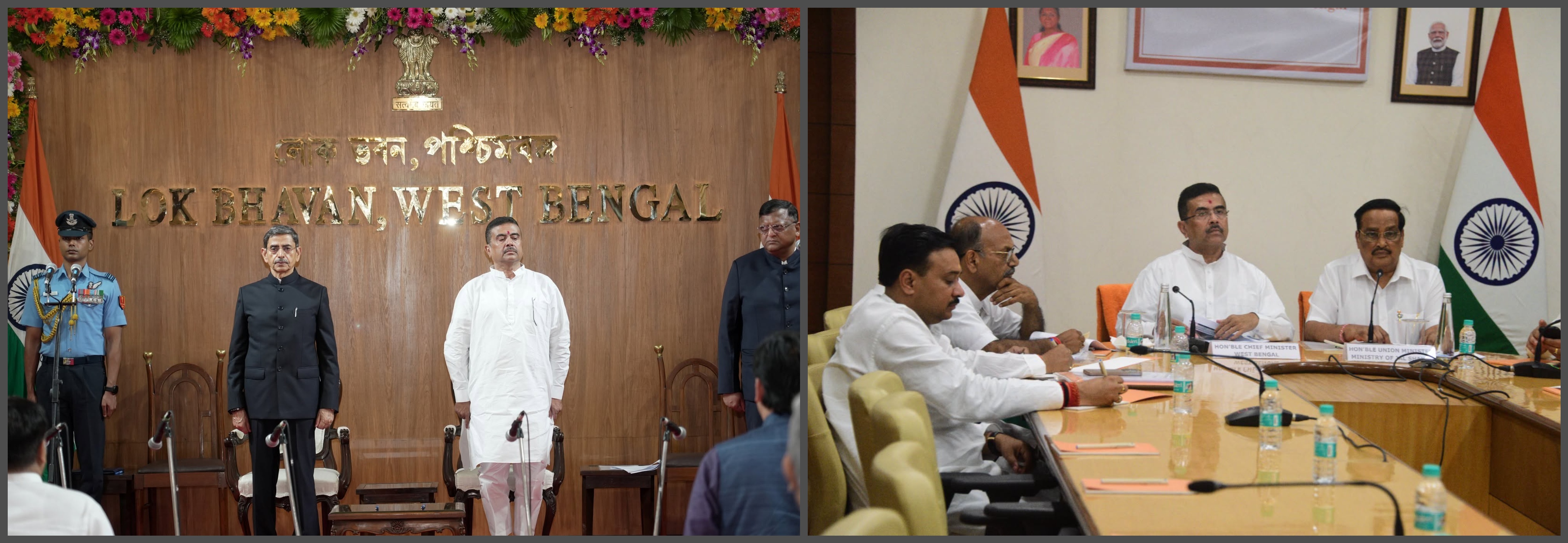 Suvendu Adhikari with Governor R N Ravi (left), and chairing a cabinet meeting (right)
BJP’s maiden budget: Fiscal populism vis-a-vis economic development
The presentation of the BJP government’s maiden Budget comes at a time when the electorate evaluates the government’s proactive execution of ruthless eviction of hawkers, demolition of illegal structures, hike in fuel prices (the cost of petrol and diesel has increased substantially after the election results), regulation of cattle slaughter and ban on street prayers, deleting “ineligible” candidates from welfare schemes, and so on.
The “expansionary” Budget, with its headline-grabbing announcements, appears to be an ensemble of political symbolism and fiscal populism. Among its headline announcements were a 20 per cent increase in dearness allowance for state government employees, the promise of one lakh government jobs, enhanced financial assistance under the Annapurna Yojana, 33 per cent reservations for women, and increased allocations for infrastructure and industrial development.
While a superficial reading of the Budget might lend itself to populist rhetoric and appear politically expedient, the fiscal sustainability and operational viability warrant closer scrutiny.
A welfare-oriented budget projecting a pro-people image confronts the realities of a state grappling with structural challenges, including long-standing industrial stagnation, increasing debt burden, declining private investment and chronic unemployment.
Welfare expansion predicated on populist rhetoric alone cannot sustain a crippled economy. Industrial revival requires long-term institutional reforms and planning.
Infiltration, citizenship and the politics of ‘belonging’
Politically, perhaps the most debatable aspect of the new government’s early priorities constitutes the question of illegal immigration and citizenship.
The BJP’s electoral promise of “Detect, Delete and Deport” has been the cornerstone of its electoral campaign in West Bengal’s legislative assembly elections. However, translating the promise into performance involves navigating a rugged terrain with significant complexities.
BJP’s landslide electoral victory to a large extent can be attributed to the Special Intensive Revision (SIR) exercise conducted by the Election Commission of India (ECI) just before the elections.
This Revision process, which is a verification exercise meant to update the electoral rolls periodically, eventually became a tool of large-scale disenfranchisement. The deletion of around 9.1 million voters as “ineligible” or “doubtful,” citing “logical discrepancies,” resulted in the substantial contraction of the Muslim electorate size, which for a long time constituted a relatively stable vote bank of the erstwhile TMC government.
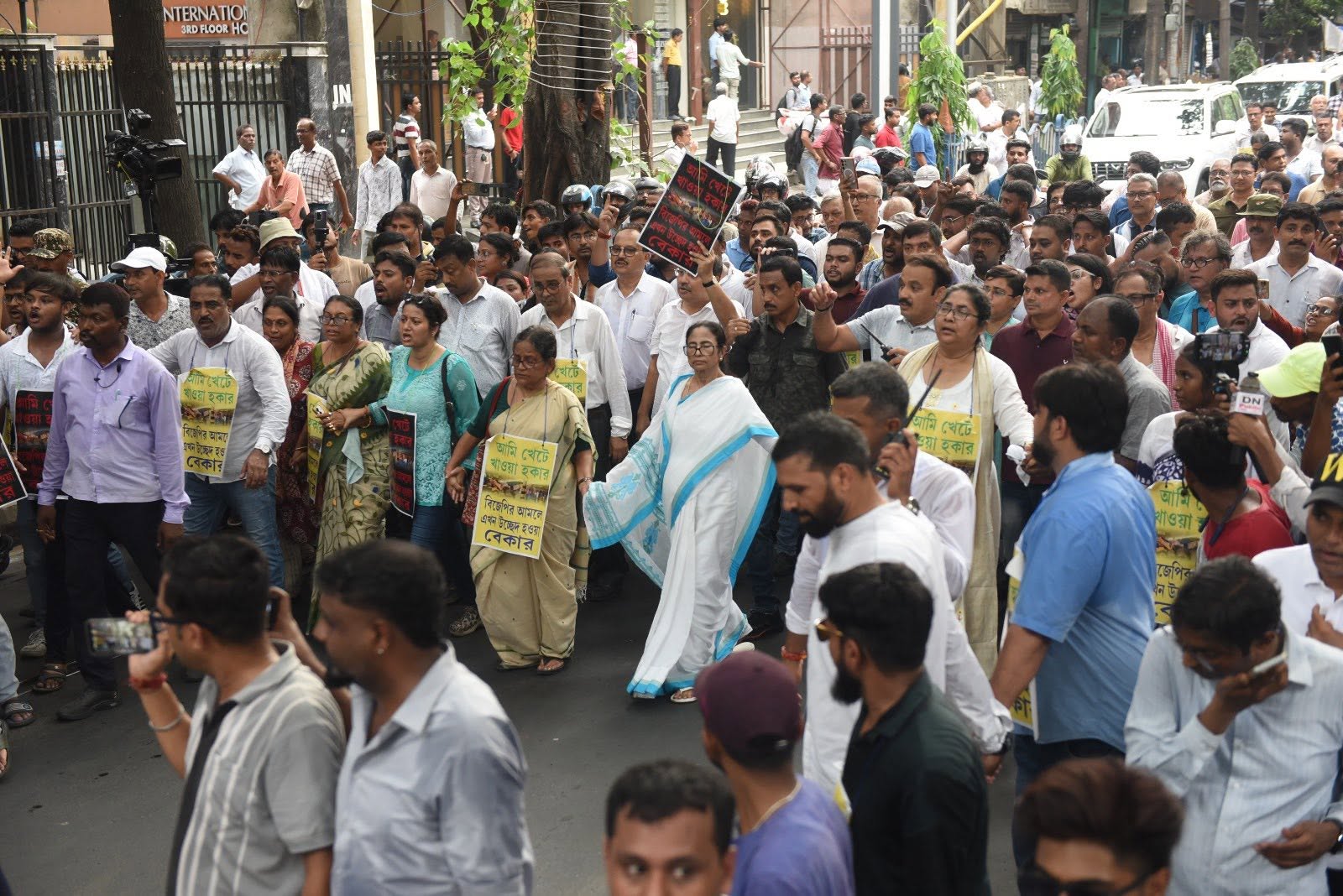
TMC leader Mamata Banerjee hits the streets to protest the eviction of hawkers by the BJP government
With the election season now behind us, the fate of those excluded from the SIR exercise remains in limbo, raising broader questions on citizenship, deportation and belonging.
Identification of undocumented migrants and the question of citizenship and deportation are complex issues which lie at the intersection of domestic political compulsions, security imperatives, electoral calculations, diplomatic concerns (particularly with neighbouring countries like Bangladesh) and regional security considerations.
Therefore, the debate centring around infiltration, citizenship and deportation extends beyond political rhetoric. The long-term execution of these policies depends not merely on electoral promise, but on administrative feasibility, transparency in implementation and viability of diplomatic conditions, rendering the policy’s long-term execution uncertain.
Whether the promise of “detect, delete and deport” is aspirational or operational is to be seen in due course.
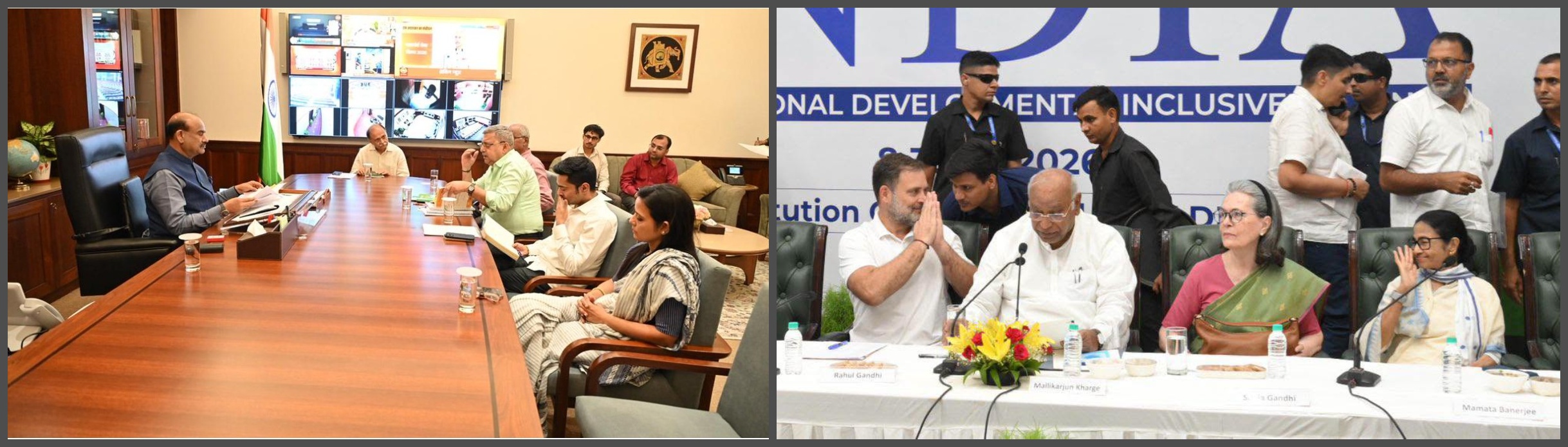
TMC leader Abhishek Banerjee with a party delegation meeting the Lok Sabha Speaker Om Birla demanding disqualification of the rebel TMC members of parliament (left), and Rahul Gandhi greets Mamata Banerjee during the INDIA alliance meeting. Following this meeting, the INDIA alliance reportedly wrote to the Chief Justice of India alleging that the Election Commission of India has manipulated election process to favour the BJP, especially in West Bengal
Redrawing Bengal’s cultural landscape
In the religio-cultural domain, the BJP election manifesto promised freedom of religious practice for all communities; however, the empirical reality presents a completely different picture.
The first month of the BJP government witnessed a cultural homogenising trend targeted against the minorities, with restrictions on street prayers, stricter regulations on cattle slaughter, etc.
The BJP government’s recent decision to entrust the preparation of the mid-day meals in schools in the Kolkata Municipal Corporation (KMC) area to the International Society for Krishna Consciousness (ISKCON) has triggered another fresh debate around nutrition and “imposed vegetarianism.”
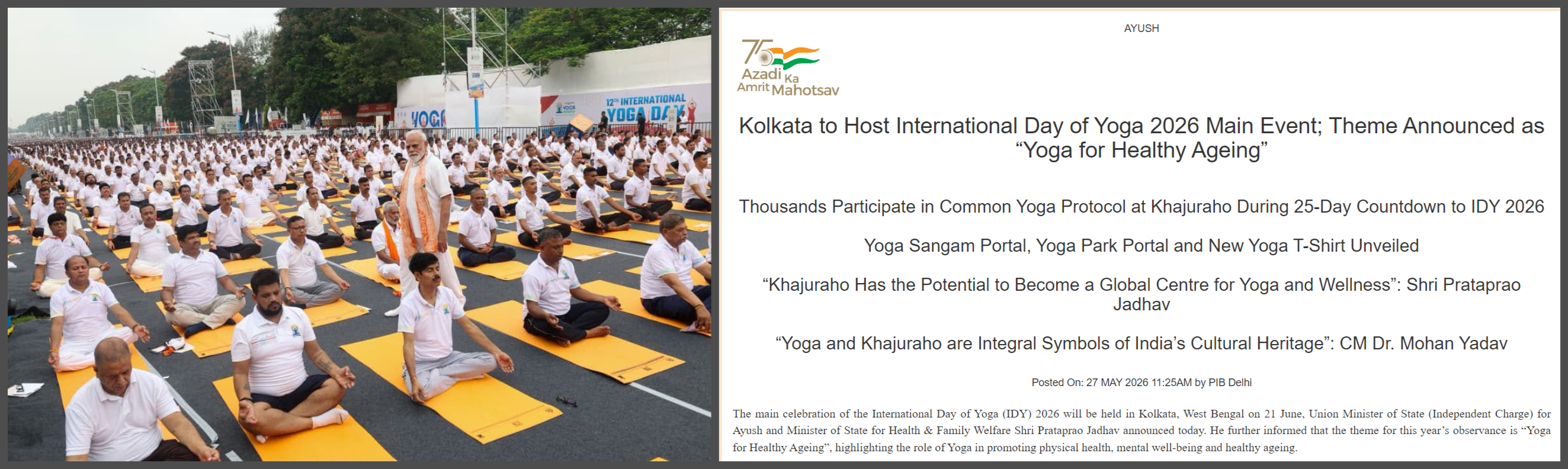
Prime Minister Narendra Modi walks among the participants of the International Yoga Day 2026 in Kolkata (left), and a Press Information Bureau release announcing Kolkata as the host of the International Yoga Day 2026 Main Event
The deliberate attempt at replacing eggs (one of the cheapest and most easily accessible sources of protein) with plant-based protein like rajma demonstrates the government’s intention of dictating food and culinary traditions of the state in congruence with the BJP’s ideological projects.
This paints a picture that is in stark contrast to the long and celebrated legacy of Bengal’s religious pluralism, linguistic diversity, and syncretic cultural coexistence. Such developments raise important questions about the nature of “Poriborton” (change) itself.
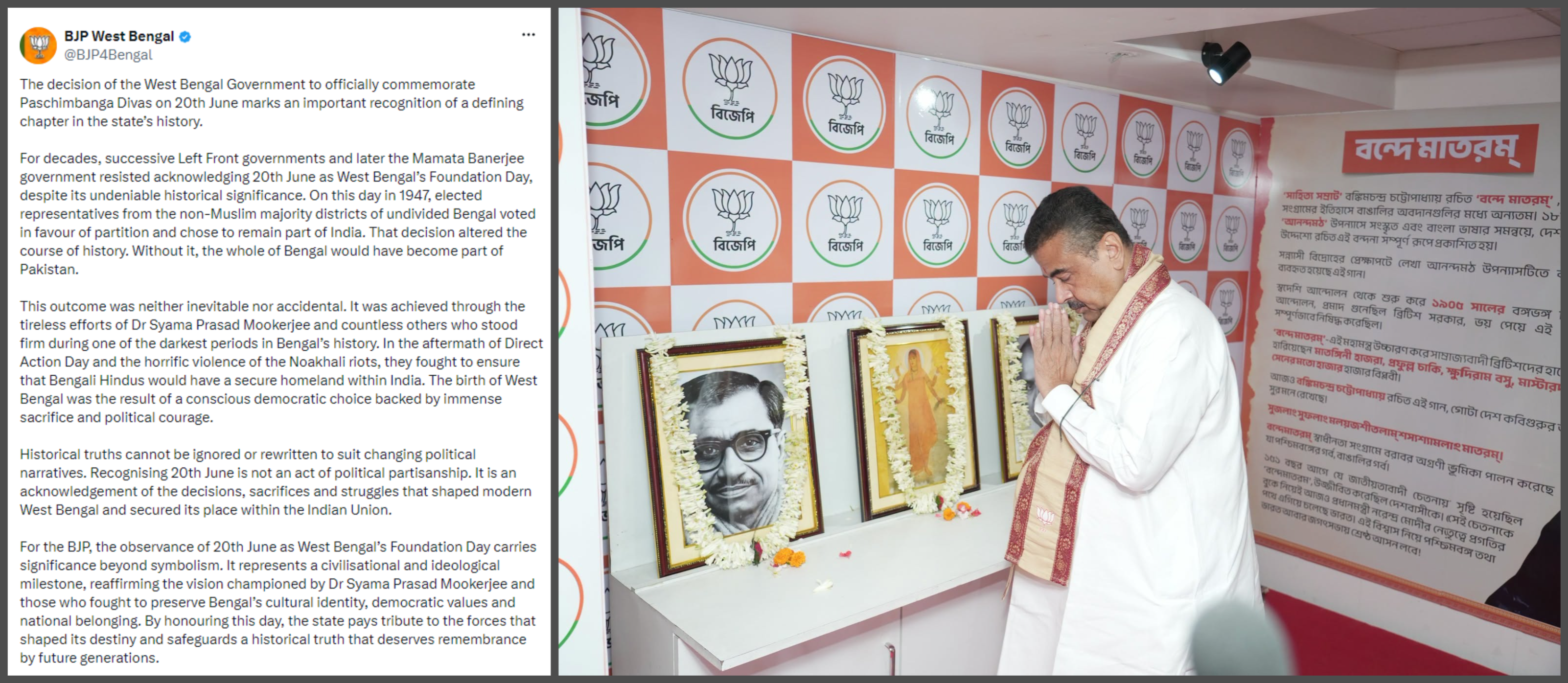
A BJP tweet on X on the Paschimbanga Dibas (left), and CM Suvendu Adhikari before the portrait of Shayma Prasad Mukherjee (right)
From promise to performance: An early assessment
Therefore, going back to the question as to whether a change in government guarantees a change in governance or not, the answer lies somewhere between the two responses of ‘Yes’ and ‘No.’
Yes, in the sense that we definitely witness a paradigm shift in the BJP government’s overall approach towards governance, with a profoundly significant emphasis on destabilising the institutionalised echelons of corruption and the politics of minority appeasement entrenched in the previous TMC government’s logic of functioning.
The consistent emphasis on crafting narratives and identity discourses reflects an attempt at reshaping the state’s cultural and ideological landscape.
However, when it comes to the tangible outcomes in terms of addressing the everyday concerns of the citizens, not much has changed.
Electoral promises of a seamless transition from Lakshmir Bhandar to Annapurna Yojana, guaranteeing INR 3000 financial assistance to women monthly, remain a distant dream for many, buried under the weight of an elaborate 12-page form and administrative impediments.
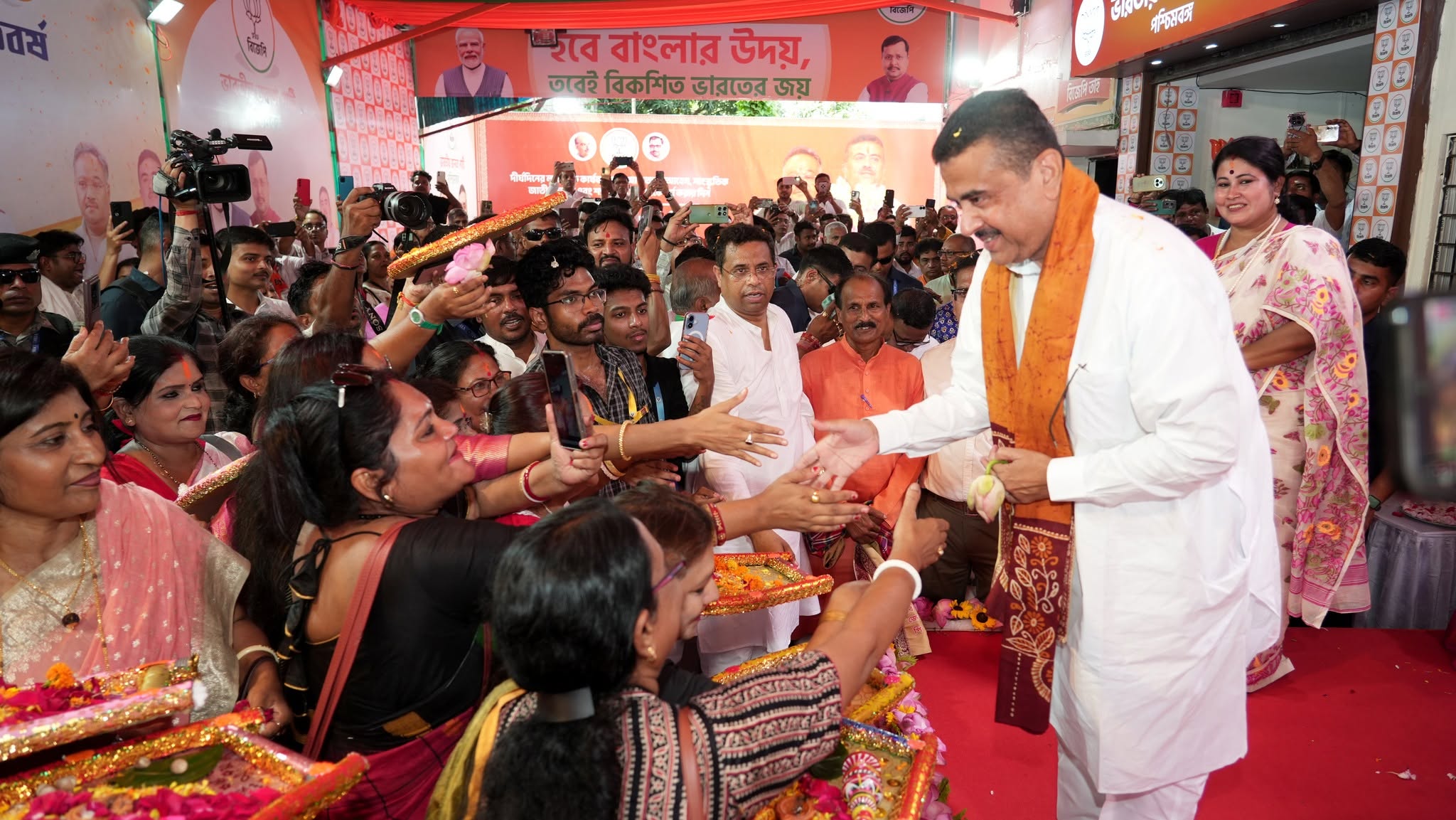
Women reach out to greet Suvendu Adhikari during the election campaign in West Bengal
Similarly, the promise of one crore jobs to the youth, rapid industrial revival, etc., are yet to materialise.
Though the BJP government has successfully transformed the language of governance in Bengal, governments are ultimately judged not by the narratives they construct but by the material realities they create.
Although one or two months is too early for an assessment of a new government, the initial policy initiatives reflect its broader political priorities for overall governance.
Whether “Poriborton” in Bengal would transcend the realm of political rhetoric into the reality of developmental outcomes depends largely on its ability to convert symbolism into substance and promises into performance.
(Views expressed in this report are the author's own.)Follow us on WhatsApp
Follow us on Facebook
Follow us on X @vudmedia
Follow us on Substack
