
During the Constituent Assembly debates in June 1949, Dr B R Ambedkar had admitted that it could not stop a government from choosing its own election referee, and that this question would become among the Republic’s “greatest headaches.” Ambedkar's fear was not about polling day, but whether a citizen would be allowed to reach the ballot box at all. While the Assembly agreed on the principle that elections had to be freed from any kind of interference by the executive of the day, it had passed over to the Parliament of a later day to decide the question. In the present day, the ruling party used its majority to circumvent the possibility of a ‘fairly’ chosen Election Commission, which now reflects in the controversial electoral roll revisions, contested election processes and a political and judicial system that has failed to come clean on questions of credibility and trust. As Ambedkar then warned, “however good a constitution may be, it will turn out bad if those called to work it happen to be a bad lot.” The kind of ‘capture’ he then feared is now unfolding, explains Rejimon Kuttappan, also suggesting urgent steps needed to restore faith in the electoral process.
Home page, text page and banner images are AI-generated
On the morning of 16 June 1949, B.R. Ambedkar rose in the Constituent Assembly to answer critics of an article he had moved the day before. The article created an Election Commission. It gave the Chief Election Commissioner the same protection against removal that a Supreme Court judge enjoys. By the standards of the time, it was a bold design.
And yet Ambedkar did something rare for the author of a constitutional provision. He conceded its central weakness. Security of tenure, he told the House, was worth little if the wrong person could be appointed in the first place.
There was, he said, “no provision in the Constitution to prevent the appointing of either a fool or a knave or a person who is likely to be under the thumb of the Executive.” He predicted that the question would become one of the Republic's “greatest headaches.”
He was right. On 23 September 2026, a two-judge bench of the Supreme Court split over whether the challenge to the 2023 law governing the appointment of election commissioners should be heard by a Constitution Bench.
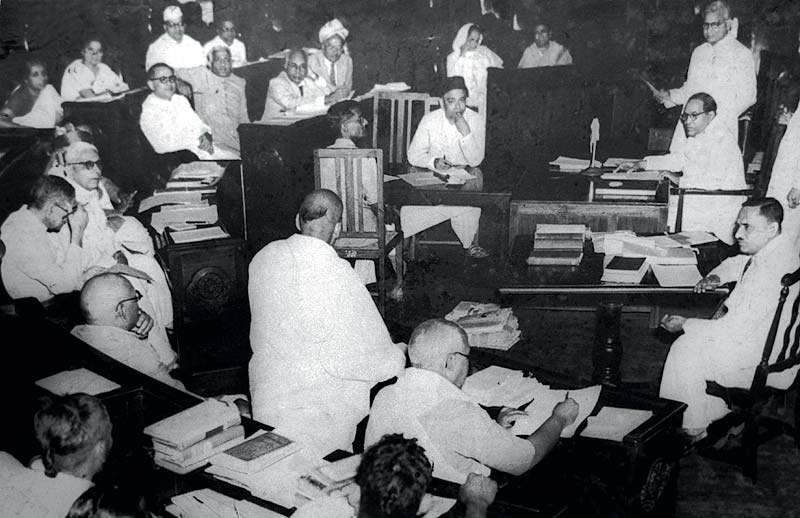
Ambedkar chairing a session of what seems to be a Special Committee comprising members of the Union Constitution Committee, Provincial Constitution Committee, Union Powers Committee, and the Drafting Committee itself (1948)
The papers now sit before Chief Justice Surya Kant. In the same period, the Election Commission has removed crores of voters from India’s electoral rolls through an exercise it calls the Special Intensive Revision, and the Leader of the Opposition has accused it of complicity in “vote theft.”
This is not a coincidence of headlines. It is the precise scenario the Constituent Assembly debated, worried over and, in the end, left unresolved. To understand where we are, we must go back to where Ambedkar began.
“We are making a constitution forever”
The Draft Constitution of February 1948 did not imagine a single national election authority. Article 289 in this draft provided a commission appointed by the President for elections to Parliament, and separate commissions for the provinces, appointed by their Governors.
On 15 June 1949, Ambedkar scrapped that design. He moved a new Article 289 placing the superintendence, direction and control of all elections to Parliament and to the state legislatures under one central Election Commission, with regional commissioners working under it. He described it as a “radical and fundamental departure” from the draft.
His reason was strikingly specific. Complaints had reached the Drafting Committee and the Central Government that some provincial governments were preparing electoral rolls in a way that kept out people who differed from the local majority in race, language or culture.
Ambedkar’s first fear, in other words, was not about polling day. It was about the roll itself: whether a citizen would be allowed to reach the ballot box at all.
Franchise, he told the Assembly, was “a most fundamental thing in a democracy.” No eligible person should be excluded from the rolls because of “the prejudice of a local government, or the whim of an officer.”
Ambedkar also reminded members that the Fundamental Rights Committee had considered making free elections a fundamental right. The House had decided to deal with the matter separately, but there had been no dissent on the principle: elections had to be freed from any kind of interference by the executive of the day.
That principle was settled in minutes. The hard part was the method.
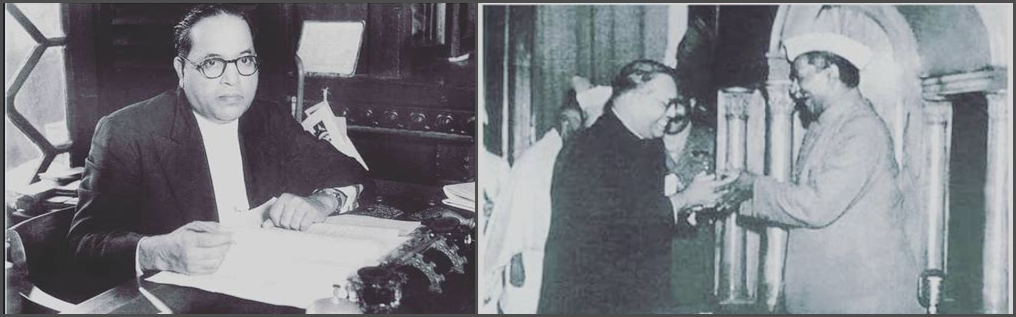
The warnings Ambedkar heard
Professor Shibban Lal Saksena of the United Provinces identified the gap at once. A secure tenure, he argued, would protect a bad appointment as firmly as a good one. A ruling party that wanted to win the next election “may appoint a staunch party man as Chief Commissioner.”
Then, protected from removal, that loyalist would be beyond correction. “We are making a constitution forever and not only for today,” Saksena said. He proposed that the President’s choice be confirmed by a two-thirds majority of both Houses of Parliament sitting together.
Mahavir Tyagi saw the flaw in that safeguard. A party with a large enough majority could simply whip its members into line. Saksena accepted that nothing would fully help. He was willing to trust the government of the day, he said, but he did not want that trust written into the Constitution as a permanent assumption about every government to come.
The next day, Pandit Hriday Nath Kunzru pushed the point further. Under a system of responsible government, the President acts on the advice of ministers. A ‘presidential’ appointment, therefore, would in practice be the Prime Minister’s appointment.
Kunzru wanted an Election Commission “of impartial persons” able to discharge their duties without fear, and proposed that the Parliament be empowered to regulate the matter by law.
Other members pulled in the opposite direction. H.V. Pataskar and Kuladhar Chaliha were uneasy about centralising so much power over state elections in a single body controlled from Delhi. Independence from provincial governments, they sensed, could become dependence on the Centre.
Ambedkar’s reply was candid. He agreed there was great force in Saksena’s criticism. He said he had weighed the American model, in which certain presidential appointments require the Senate’s concurrence, and found it slow and liable to drag party politics into appointments.
The Drafting Committee had also considered an Instrument of Instructions that would oblige the President to consult before appointing. In the end, he settled on a compromise: the President’s power of appointment would operate “subject to the provisions of any law made by Parliament.” The Assembly adopted the article that evening.
The framers did not miss the problem. They saw it clearly, argued about it openly, and handed it to future Parliaments to solve. That handover was an act of trust. The question is what Parliament did with it.
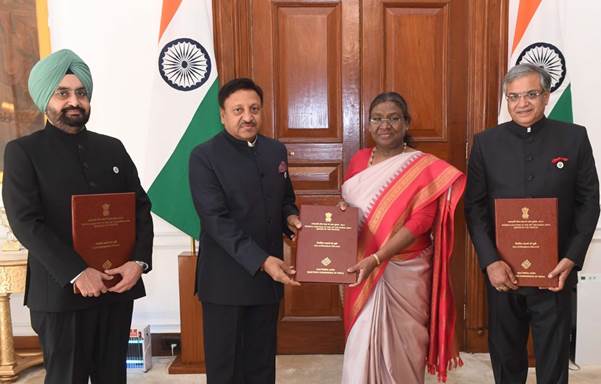
The then Chief Election Commissioner Rajiv Kumar (centre), and Election Commissioners Sukhbir Singh Sandhu and Gyanesh Kumar with President Droupadi Murmu in June 2024, informing the successful completion of the Lok Sabha election process
Seventy-three years of waiting
The short answer is: nothing, for a very long time. From 1950 onwards, the Chief Election Commissioner and, from 1989, the Election Commissioners were appointed by the President on the advice of the government of the day. No law laid down eligibility, a selection process or any role for the Opposition.
Reformers repeatedly pointed to the gap. The Dinesh Goswami Committee on electoral reforms recommended in 1990 that the Chief Election Commissioner be appointed in consultation with the Chief Justice of India and the Leader of the Opposition.
In March 2015, the Law Commission’s 255th report recommended that all election commissioners, including the CEC, be appointed by the President in consultation with a three-member collegium: the Prime Minister, the Leader of the Opposition in the Lok Sabha, and the Chief Justice of India.
It also recommended that elevation to Chief Election Commissioner follow seniority unless the collegium recorded in writing why the senior commissioner was unfit. None of these proposals became law.
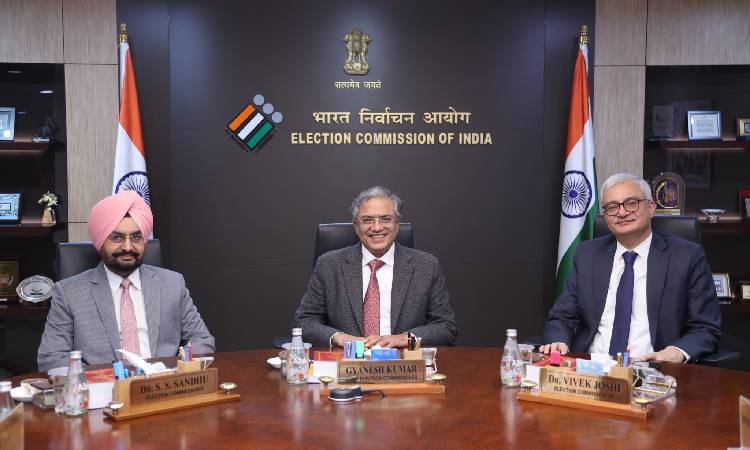
The current EC: CEC Gyanesh Kumar with Election Commissioners S.S. Sandhu and Vivek Joshi
Meanwhile, the institution’s internal life showed the strain. During the 2019 general election, Election Commissioner Ashok Lavasa recused himself from meetings on model code of conduct complaints. His dissenting views on complaints were not being recorded in the Commission’s final orders, he wrote, making his participation meaningless.
The then Chief Election Commissioner, Sunil Arora, replied that commissioners were not meant to be clones of each other, but called the public airing of the dispute avoidable. The Commission’s position was that dissent could be kept in internal files rather than in the orders communicated to parties.
Then came November 2022. Arun Goel, a serving IAS officer, took voluntary retirement on 18 November and was appointed Election Commissioner the very next day. A five-judge Constitution Bench hearing petitions on the appointment process asked for the file.
Justice K.M. Joseph noted that the application, clearance, acceptance and appointment had all happened on the same day. The bench made clear it was not questioning Goel’s credentials. It was questioning a system in which such speed was possible at all.
The court steps in, Parliament steps around
In March 2023, in Anoop Baranwal v. Union of India, that Constitution Bench finally did what Parliament had not.
Until Parliament made a law, it ruled, the Chief Election Commissioner and Election Commissioners would be appointed on the advice of a committee of the Prime Minister, the Leader of the Opposition and the Chief Justice of India. It was, almost exactly, the collegium the Law Commission had proposed eight years earlier.
Parliament responded within months. In December 2023, it enacted the Chief Election Commissioner and Other Election Commissioners (Appointment, Conditions of Service and Term of Office) Act. The law kept the three-member committee but removed the Chief Justice and put in a Union Cabinet minister nominated by the Prime Minister.
A Search Committee headed by the Union Law Minister prepares the panel of names. Section 16 of the Act also gives commissioners protection against civil and criminal proceedings for things done or said in the discharge of official duty.
Read the composition of the new committee against the 1949 debate.
The Prime Minister and one of his ministers form a permanent majority of two against one. The Leader of the Opposition can object, can write a dissent note, can be outvoted. Saksena worried that a party in power might appoint its own man. The 2023 law does not prevent that; it institutionalises the arithmetic that makes it possible.
The new law was soon tested. In March 2024, weeks before the Lok Sabha elections, Arun Goel resigned abruptly, with no public explanation. Gyanesh Kumar and Sukhbir Singh Sandhu were appointed in his place and to the other vacancy.
Petitioners sought a stay on the law. The Supreme Court declined, noting that the general election was close and that there were no allegations against the new commissioners.
On the night of 17 February 2025, the committee met to choose a successor to Chief Election Commissioner Rajiv Kumar. The Supreme Court was due to hear the challenge to the 2023 Act two days later.
Rahul Gandhi, the Leader of the Opposition, asked that the decision wait for the court. He was outvoted. Gyanesh Kumar was named Chief Election Commissioner late that night, the first CEC chosen under the new law.
In his dissent note, Gandhi argued that the process of choosing commissioners was the most fundamental guarantee of an Election Commission free from executive interference, and called the timing disrespectful to the court.
Nineteen months later, the bench hearing the challenge could not agree on how to proceed. Justice Dipankar Datta held that the independence of the Commission from exclusive executive control was already settled law, and that the selection panel “prima facie amounts to an effective veto in favour of the Union government.”
Justice Satish Chandra Sharma held that no authoritative ruling yet existed on the Act’s validity and favoured a larger bench. The split decides nothing on whether the law is constitutional. It does mean that India’s election machinery continues to operate under an appointment process whose legitimacy is formally in doubt.
The rolls, again
Here history turns on itself. Ambedkar centralised India’s election machinery because he did not trust provincial governments with the voter list. Today, the central Commission itself is in the dock over the voter list.
In June 2025, the Commission ordered a Special Intensive Revision of the rolls in Bihar, the first such exercise there since 2003. The draft roll published on 1 August left out about 65 lakh names, reducing the electorate from 7.89 crore to 7.24 crore. The Commission said 22.34 lakh of those people were dead, 36.28 lakh had shifted or could not be found, and 7.01 lakh were enrolled at more than one place.
When petitioners asked for the names and reasons, the Commission told the Supreme Court it had no legal obligation to prepare or publish a separate list. Only after the Court ordered it did the names appear on district websites. From the bench, Justice Surya Kant framed the issue in terms Ambedkar would have recognised: a voter who has been struck off “must be able to know that she has been deleted and why.”
The final roll, published on 30 September 2025, added 21.53 lakh names and deleted a further 3.66 lakh. Senior counsel for the Opposition parties told the Court that none of those 3.66 lakh received individual notice.
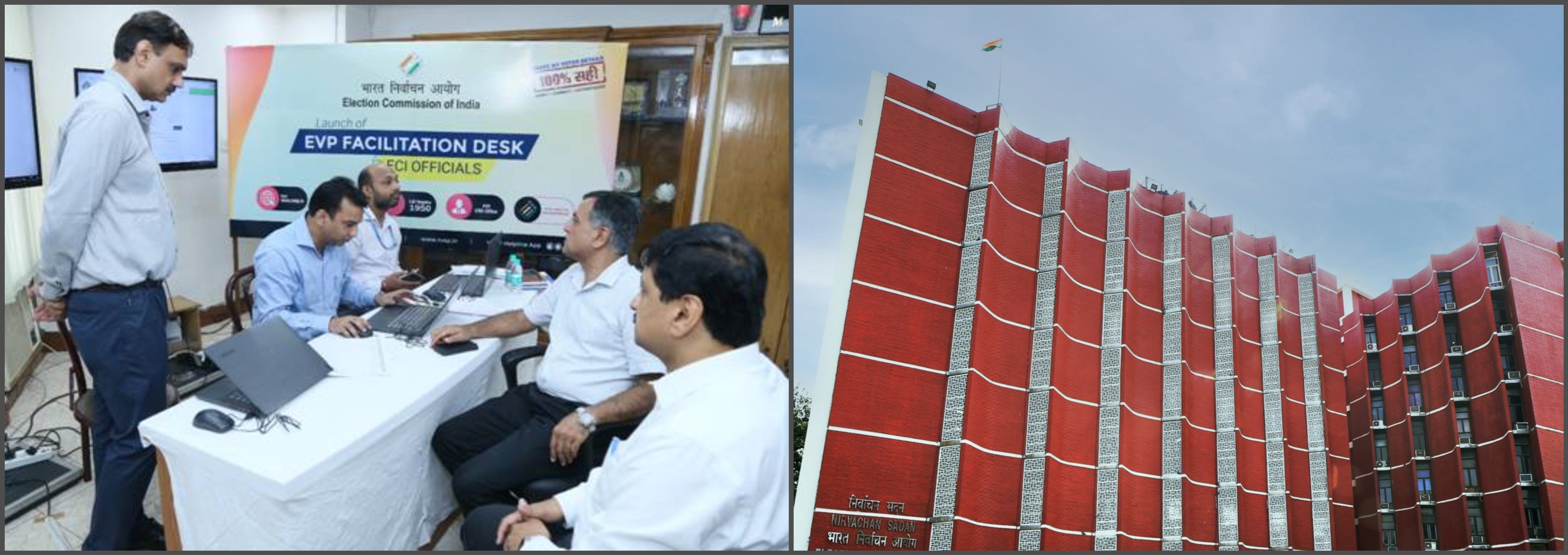
Election Commissioner Ashok Lavasa, who resigned over differences with the then CEC on the model code violation complaints in August 2020, at the ECI (left), and Nirvachan Bhavan, the headquarters of the Election Commission of India in New Delhi (right)
Petitioners also alleged that Muslims were disproportionately excluded, making up about a quarter of the draft exclusions and a third of the final deletions. The Commission rejected their method as unreliable.
Bihar was the pilot. In October 2025, the Commission announced a second phase covering nine states and three Union Territories with about 51 crore electors. Their draft rolls left out nearly 6.5 crore names, including 2.89 crore in Uttar Pradesh alone.
Tamil Nadu’s final roll had nearly 97 lakh fewer names; West Bengal’s revision removed more than 90 lakh. By one tally, more than 7.3 crore names have been removed across the first two phases, and a third phase has now been ordered in 16 more states.
Kerala, my own state, shows how the burden falls on the voter. About 24 lakh names were left out of the draft roll. Many were genuine voters who had made errors matching their families to the 2002 roll, and had to apply again as if they were new voters.
More than 14 lakhs were reinstated before the final list. According to the Chief Electoral Officer’s figures, 36.88 lakh voters were called for hearings, and 53,229 were excluded after them. The final roll still carried about 9 lakh fewer names than before.
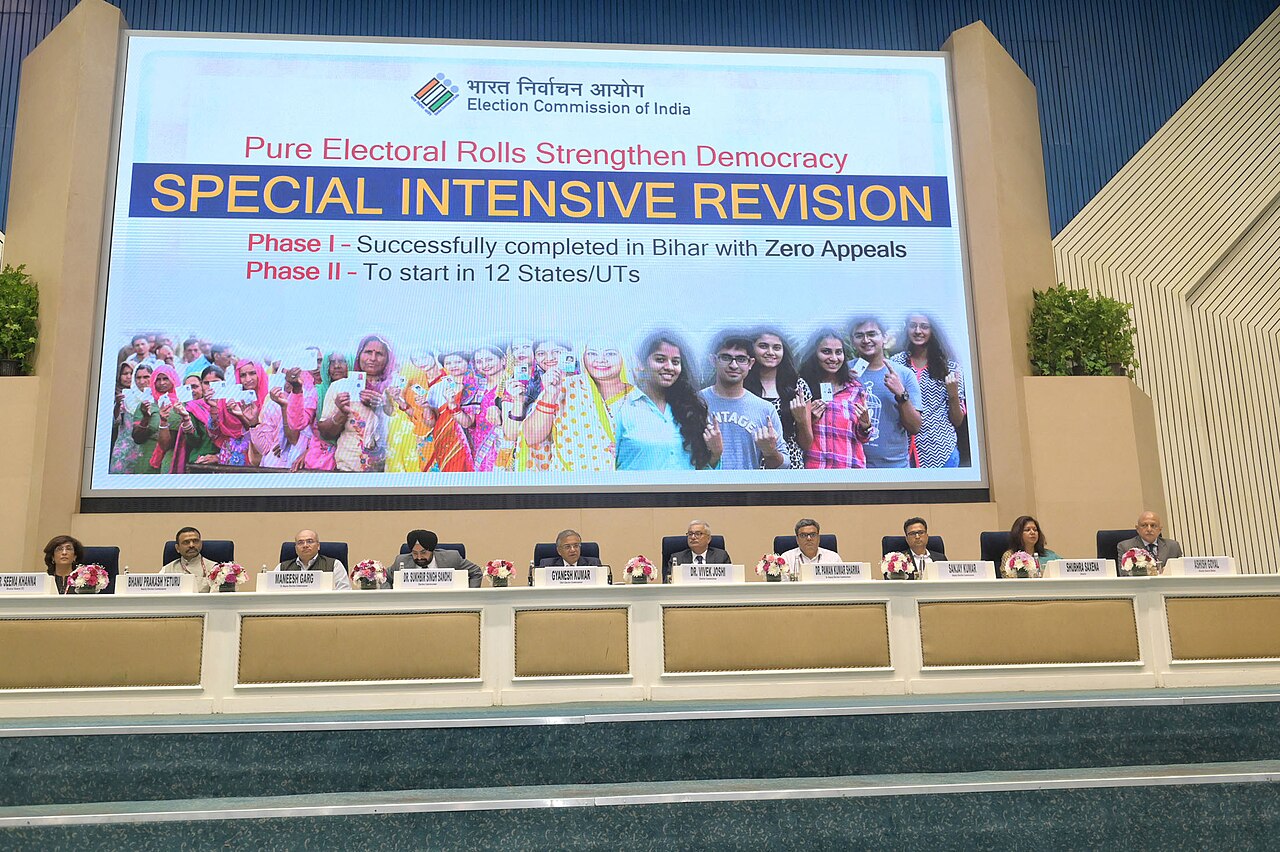
The CEC Gyanesh Kumar, addressing a press conference at Vigyan Bhawan, New Delhi, on October 27, 2025, announced the nationwide rollout of SIR
Kerala, with its high literacy, active parties and dense networks of booth workers, could fight its way back. A migrant labourer from Bihar living in a construction camp in Kochi, or a domestic worker in the Gulf, has far fewer resources to do so.
The Commission’s case deserves to be stated fairly. Most states had not intensively revised their rolls for two decades. People die, migrate and register twice, and stale rolls are their own threat to free elections. The Chief Election Commissioner has pointed out that Bihar’s revision drew zero appeals after the final roll was published.
But an appeal requires knowing that you have been struck off. A silence produced by missing notices is not proof of accuracy. And a Commission that resisted publishing deletion lists until a court compelled it has made its own case harder to believe.
The same pattern of defensiveness appeared in August 2025, when Rahul Gandhi alleged large-scale irregularities in the roll for Mahadevapura, an assembly segment in Bengaluru. The Commission’s response was not to open an inquiry, but to demand that he sign a declaration under oath.
At a press conference, the Chief Election Commissioner said Gandhi must give an affidavit or apologise, and that there was no third option. The allegations may be right or wrong. The point is that an umpire whose impartiality is in question should be the first to want them tested, not the last.
What Ambedkar would ask
Ambedkar’s warning was never about a particular person. It was about design. An institution whose head is chosen by one side can be trusted only on faith, and faith is not a constitutional safeguard.
In his closing speech on 25 November 1949, he warned that however good a Constitution may be, it will turn out bad if those called to work it happen to be a bad lot. His life's work was to build institutions that did not depend on that kind of luck.
Honouring that work does not require us to assume bad faith in anyone. It requires us to remove the need for good faith. Four steps would do it.
First, the Chief Justice should constitute the Constitution Bench without delay. An election authority whose appointment process is under a constitutional cloud cannot command the full trust of voters, losing candidates or the world.
Second, Parliament should finish the job Ambedkar left to it. A selection committee in which the government can always outvote everyone else is not independence; it is consultation. Whether the answer is a judicial member, as the Law Commission and the Supreme Court proposed, or a supermajority confirmation, as Saksena proposed in 1949, the test is simple: the government of the day MUST NOT BE ABLE to choose the referee alone.
Third, the legal shield in Section 16 should be revisited. Commissioners need protection from harassment, but not from accountability. Officials who decide whose vote counts must not be placed beyond the reach of the courts.
Fourth, no Indian should lose the vote without individual notice, written reasons and a real chance to appeal, before the roll is frozen, not after the election. Deletion lists, with reasons, should be published by default, not by court order.
Ambedkar gave the Election Commission a constitutional home because he feared what provincial governments might do to the voter list. He did not live to see that the threat could one day come from the Centre. But his own words in June 1949 show that he feared exactly that kind of capture, by whichever executive happened to hold power.
He told us the Constitution could not stop a knave from being appointed. He trusted Parliament to fix it. Seventy-seven years later, the least we owe him is to stop pretending he did not warn us.
(Views expressed in this report are the author's own.)
Follow us on WhatsApp
Follow us on Facebook
Follow us on X @vudmedia
Follow us on Substack
