
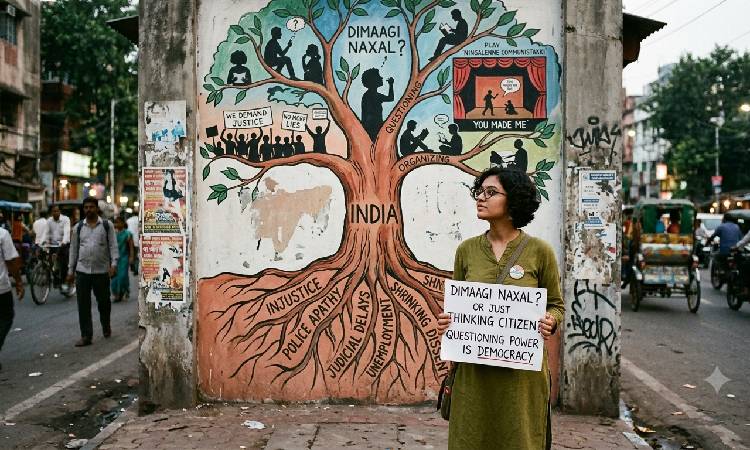
Is Prime Minister Narendra Modi right about “dimaagi Naxals”? Perhaps he is. But the more important question is how such minds are created, and whether the government is illegitimising dissent through such pronouncements and branding. Drawing a parallel with Kerala’s iconic play Ningalenne Communistakki (you made me a Communist) and the conditions that preceded Naxalbari, the advent of ‘dimaagi Naxals’ in India’s political discourse may embody ‘ripe socio-political conditions,’ including bureaucratic and judicial apathy, deep-rooted politicisation, unemployment and institutional corruption, among others, which alienate citizens from the state. Without romanticising Maoist violence, the fact remains that radical ideas often find fertile ground in real and unresolved grievances. In a democracy, perhaps the greater danger is not citizens who think, but institutions that stop listening, points out Pradeep Kaimal, reflecting upon how institutional failure, unresolved grievances and shrinking space for dissent can turn questioning citizens into the state’s enemies.
Home page, text page and banner images are AI-generated and for representative purposes
Ideas rarely arrive in a society from nowhere. They grow somewhere — in the cracks of everyday life, in the humiliation of the powerless, in the anger of people who have knocked on the doors of authority too many times and found nobody willing to open them.
Kerala knows something about this.
In 1952, Thoppil Bhasi's Ningalenne Communistakki — You Made Me a Communist — appeared on the stage. The play portrayed the transformation of a conservative upper-caste landlord as he came face to face with the poverty, exploitation and inequalities around him. It was not merely the story of one man’s political conversion.
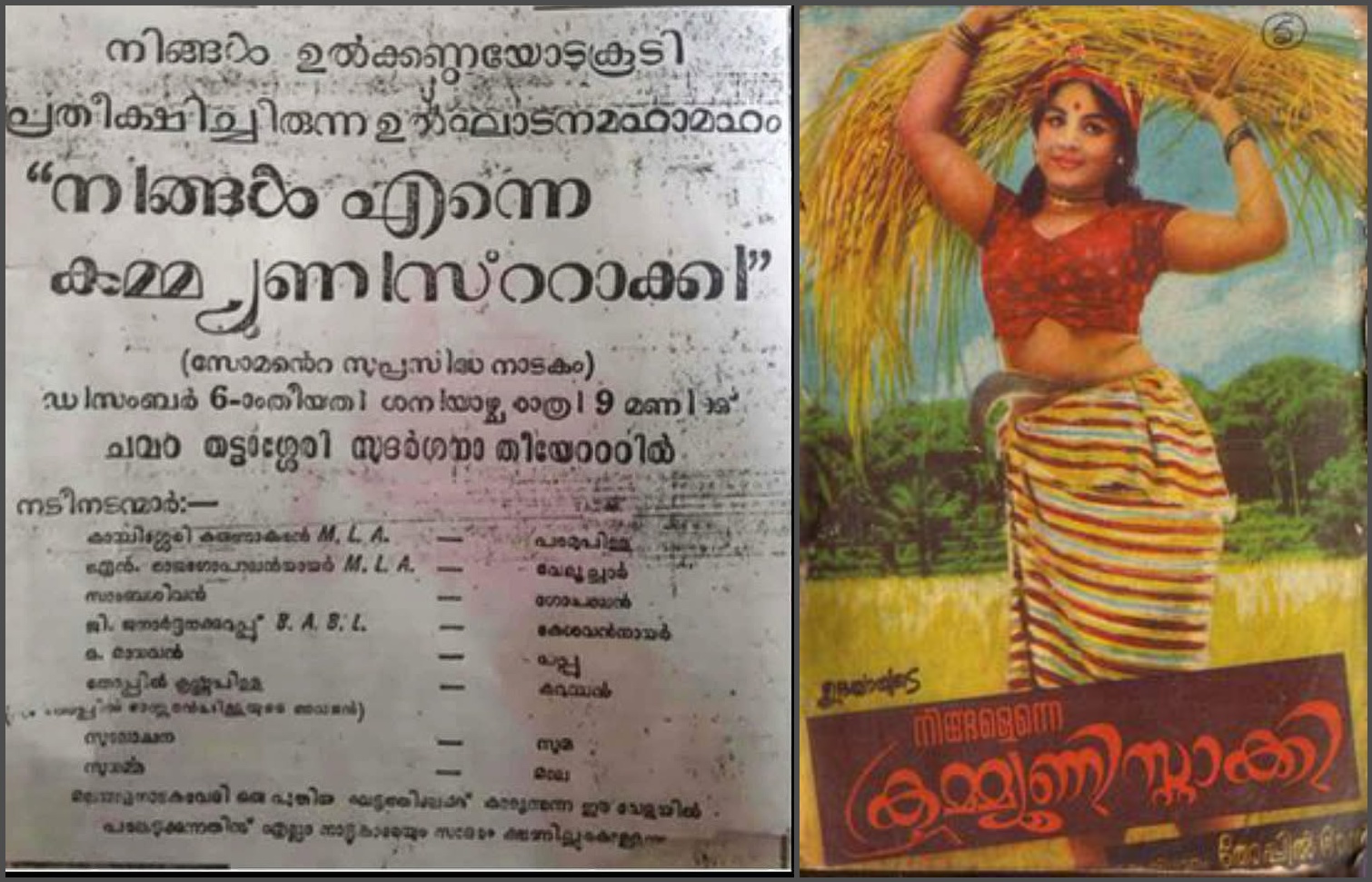
A poster of the iconic drama Ningal Enne Communistaki by Kerala Peoples' Arts Club (KPAC) (left), and a poster of the movie by the same name (right)
It was a story about the society that made such a conversion possible, or an imperative. The play became enormously popular, was performed thousands of times, and was even briefly banned by the government in 1953 for its allegedly subversive message.
Its title contained an intriguing question: You made me a communist. Who was this “you”? The Communist Party? The playwright? Marxist ideology? Or was it society itself — its landlords, its inequalities, its humiliations and its refusal to change?
Perhaps the answer was all of them.
A society does not normally become receptive to a radical idea simply because someone teaches it that idea. An idea becomes powerful when it gives a name to something people have already experienced but could not quite articulate.
That is what made Ningalenne Communistakki more than a play. It gave a political language to grievances that already existed.
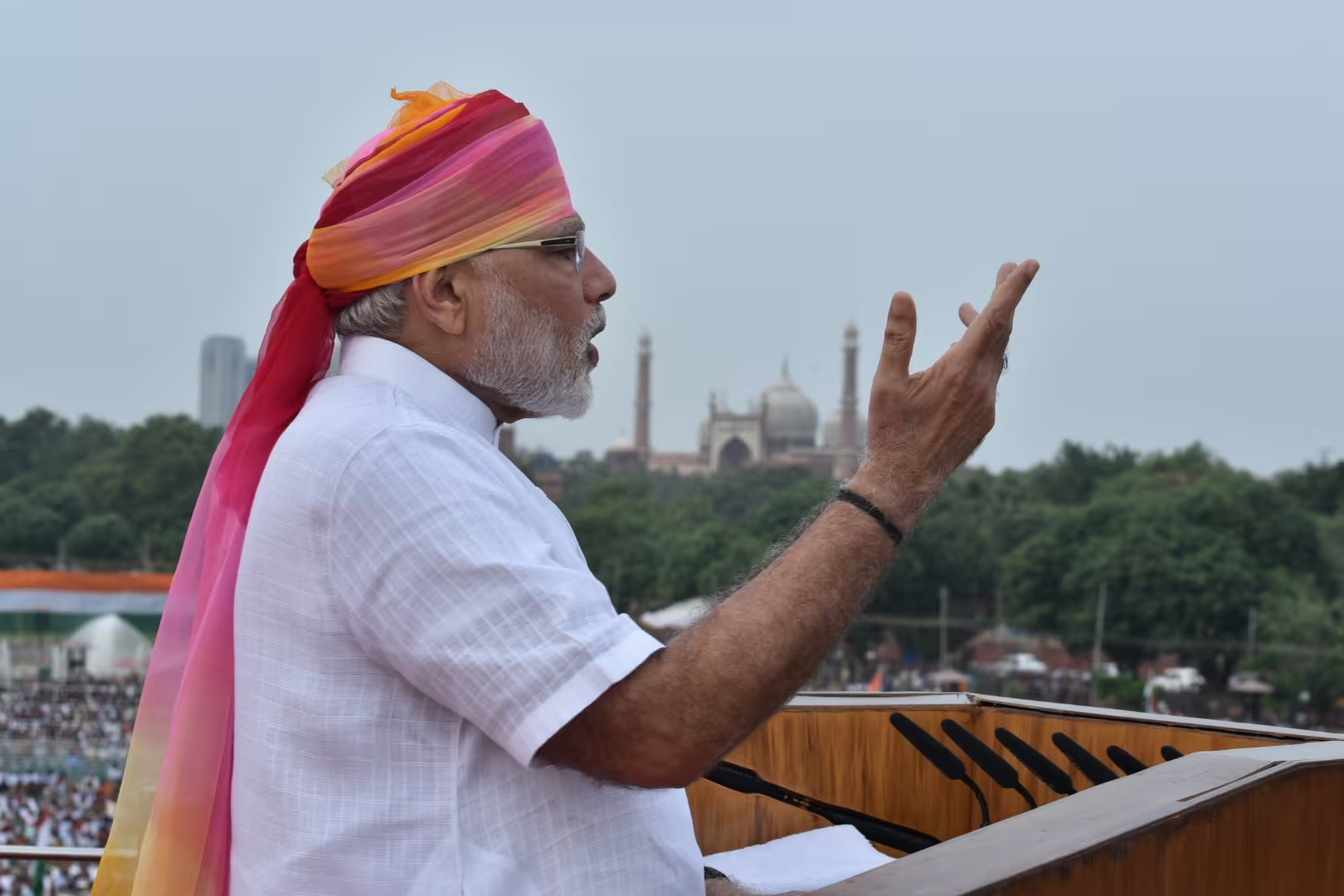
Prime Minister Narendra Modi addressing the nation from Red Fort on the 70th Independence Day
Seven decades later, Prime Minister Narendra Modi has given India another expression: “dimaagi Naxal.” In his Independence Day address on August 15, he said that armed Naxalism was nearing its end but warned that people with a Naxal mindset still existed and needed to be identified and isolated.
Perhaps he is right. Perhaps there really are dimaagi Naxals. But if there are, there is a more interesting question than identifying them: who made them?
Who makes a citizen lose faith in the policeman at the door? Who makes a young graduate wonder whether education has any meaning when decent employment remains uncertain? Who makes an ordinary person wait years for justice and finally begin to believe that justice belongs more easily to those who have money, influence or political connections?
One grievance can be endured. Two can be forgotten. But a lifetime of unanswered grievances can slowly change how a person sees the state itself.
India today is obviously not Naxalbari of 1967. The country, its economy, its institutions and its aspirations are vastly different. But history does not always return in identical form. Sometimes it returns as a question.
Why do people stop trusting the institutions around them?
The state we encounter
For most citizens, the state is not Parliament or the Constitution. It is the policeman at the station, the clerk behind the desk, the officer who signs the file, the judge who hears the case and the government office that is supposed to answer a complaint.
Not all of India’s institutions turn a deaf ear to their citizens. There are honest policemen, committed officials and judges who continue to work under extraordinary pressure. But a citizen does not judge the state by its best institutions; he judges it by the one he encounters when he is most vulnerable.
This distance between the promise of the state and the citizen’s experience is not merely a matter of perception. The numbers tell their own story. India’s courts carry an enormous backlog, with more than 4.5 crore cases pending in district and subordinate courts according to government data.
Meanwhile, more than 30 per cent of sanctioned High Court judge posts were vacant as of July 2026.
The bureaucracy is hardly more reassuring. Its failures are often less dramatic, but no less capable of exhausting a citizen. Barfi Devi, the 95-year-old widow of a freedom fighter in Haryana, died in 2024 after spending 12 years trying to secure a dependent pension, despite her eligibility having been acknowledged.
The file, in the end, outlived the person it was meant to help.
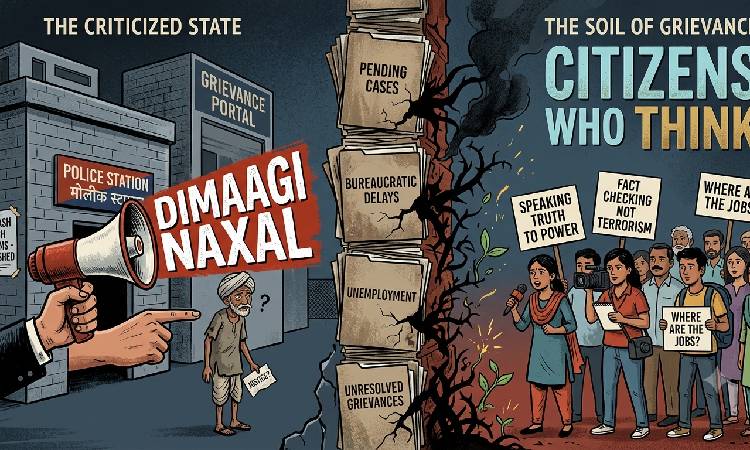
AI-generated image only for representative purposes
And then there is the police. The Supreme Court's Prakash Singh judgment of 2006 sought to insulate the police from political interference and establish greater accountability. Two decades later, important reforms remain unfinished.
The problem is not merely whether the police are overworked or poorly equipped; it is also the extent to which political interference continues to shape a system that is meant to enforce the law impartially.
For the person caught in this maze, however, these are not separate institutional failures or merely figures on a page. They become part of a single experience of the state.
A property dispute can consume a lifetime and pass from one generation to another; a pension can take years to reach the person entitled to it; and an undertrial accused under stringent laws can spend years behind bars, only to be acquitted for want of evidence.
Each such experience leaves its mark. When they become familiar stories rather than exceptional ones, they begin to erode the common citizen’s faith in the rule of law itself.
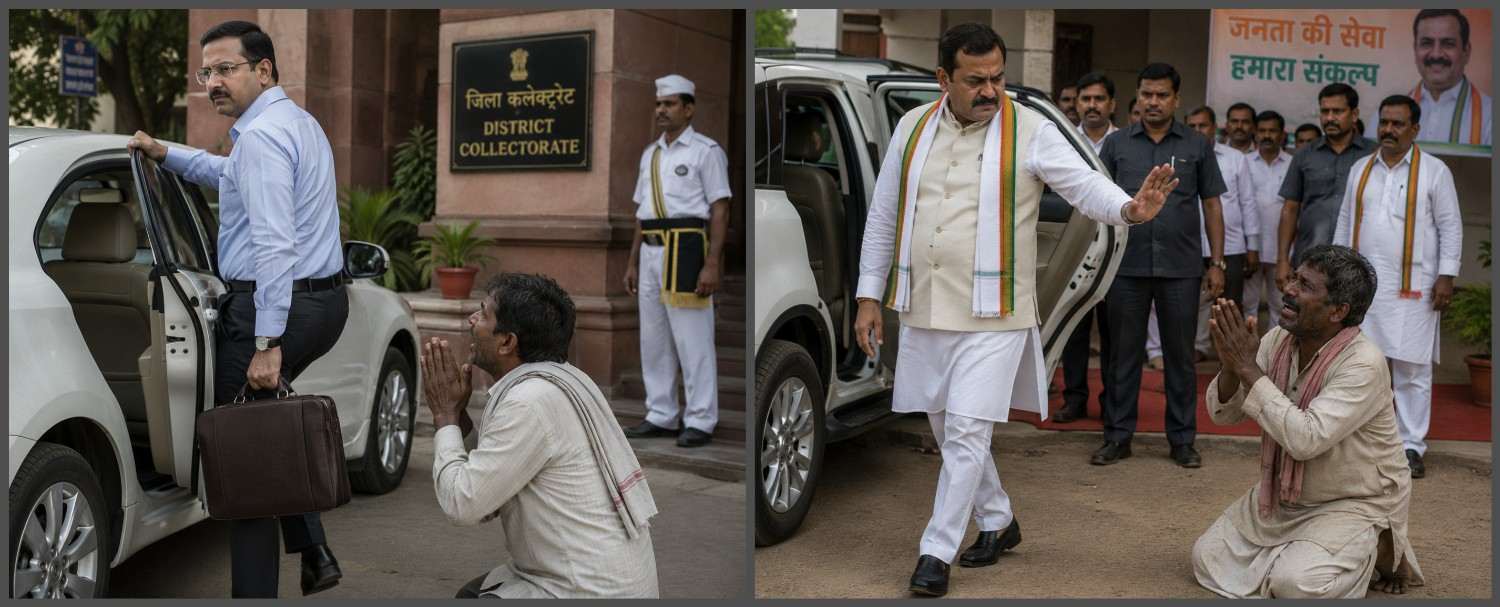
AI-generated images only for representative purposes
When grievances become a pattern
There is perhaps no better measure of a democracy than what happens when an ordinary citizen, with no influence and no powerful surname, asks a simple question: where do I go?
The Centralised Public Grievance Redress and Monitoring System (CPGRAMS) was built to provide an answer — a formal route for complaining about government services. On paper, that is exactly what a democracy should offer.
But there is a quiet paradox. The citizen complains to the state about the state, and his grievance is often sent to the very department concerned for examination and disposal. What happens when the institution being complained against is also the one deciding whether the complaint has been resolved?
This is not an argument against grievance portals; it is an argument for independent accountability.
A file may close within fifteen days, and the dashboard may show an impressive disposal rate. But a closed file and a solved problem are not always the same thing, particularly when the complaint concerns an official protected by the machinery of power.
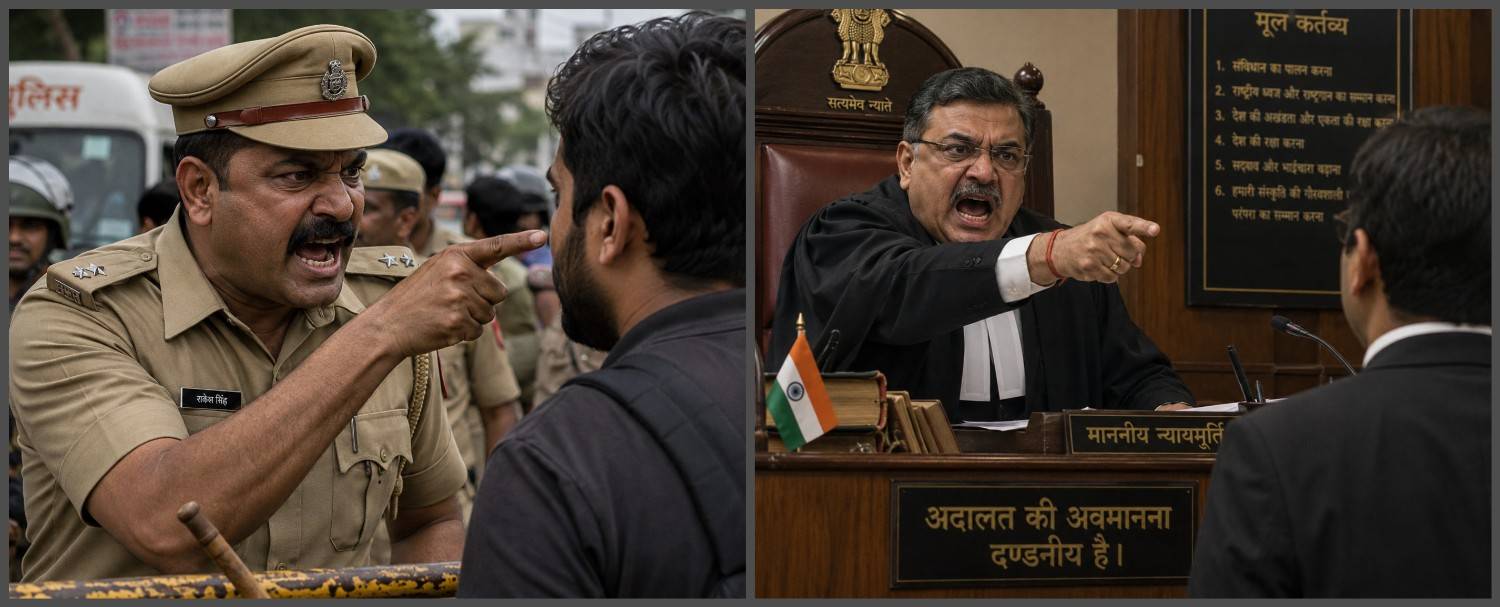
AI-generated images only for representative purposes
The citizen may still have a portal, a complaint number and an SMS. What he may not have is an answer.
Most people repeatedly ignored do not become revolutionaries. They simply give up. They stop complaining, stop expecting and eventually stop believing the system any more. The state can easily mistake that silence for satisfaction.
Sometimes, however, silence is what remains after hope has run out.
Before a citizen becomes a critic of the state, he is usually asking for something modest: that it do what it promised — listen, act, explain and correct. When these become difficult to obtain, criticism changes character. One unanswered complaint begins to confirm another; a political favour reinforces the suspicion that connections matter more than rules.
A system can survive many angry citizens. What it cannot easily survive is a growing number who have started to see their anger as a pattern. That is where politics begins.
What Naxalbari was saying
Whenever Naxalism is discussed, there is a temptation to begin with the guns. That is understandable because the movement eventually became an armed insurgency, and many may not find any justification for the violence that followed.
But if we begin the story there, we miss what came before it. Naxalbari began with something much more ordinary: land.
In 1967, poor peasants and sharecroppers in north Bengal were fighting over land and crops in a deeply unequal rural order. The movement spread through the countryside. Jangal Santhal became one of its prominent leaders. Then came the police, and on May 25, 1967, police firing at Bengai Jote killed villagers, including women and children.
The movement subsequently took a much darker road. Charu Mazumdar and other radical leaders supplied Maoist ideology and pushed the struggle towards armed revolution. Many of us may not romanticise any of it, either.
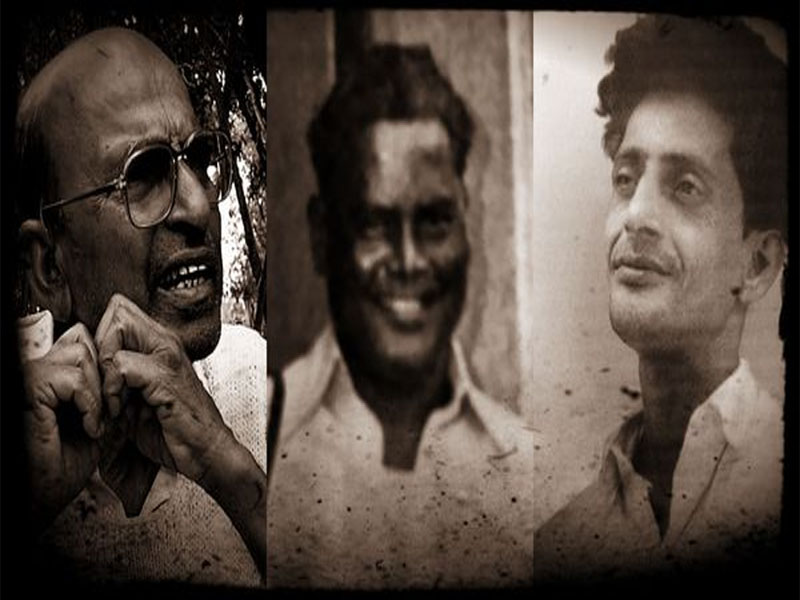
The leading lights of Naxalbari: Kanu Sanyal (left), Jangal Santhal (centre), and Charu Majumdar (right); image credit - Sachi Baat
But a genuine grievance and the political solution eventually attached to it are not necessarily the same thing. The grievance can be real even when the remedy is disastrous.
Naxalbari was telling India that land reform could not remain a promise on paper and that poverty and exploitation had political consequences. It was also demonstrating something that governments often discover too late: when legitimate avenues of redress appear closed, somebody else will eventually offer an explanation for people’s anger.
In Naxalbari, that explanation became Maoism. The guns came later.
That distinction is important today because it is very easy to condemn the ideology and forget to examine the soil in which it grew. The Naxalite movement’s eventual violence does not make the grievances that existed before it imaginary. Nor does acknowledging those grievances make the violence legitimate.
It simply means that a serious government must be capable of doing two things at the same time: fighting violence firmly and addressing the conditions that make radical politics attractive.
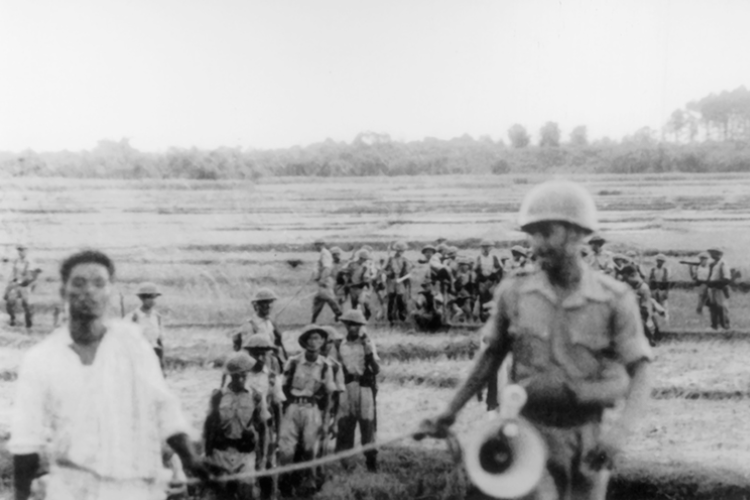
Police action in Naxalbari; image source - Indian History Collective/CPIML
When the critic becomes the problem
There is another way a democracy can lose its citizens: by making them feel that asking questions itself is suspicious.
Most of the questions citizens ask are not revolutionary. Why has my pension stopped? Why has the police not registered my complaint? Why has the examination been delayed? Why does a rule apply to me but not to the man who knows the minister?
These are ordinary questions of citizenship. Yet questioning power increasingly comes with labels. One person is called anti-national, another an urban Naxal; a journalist is dismissed as biased and an activist as an enemy of the state. Now we have dimaagi Naxal.
The problem with such labels is not merely that they insult the person being labelled. They change the subject of the argument. Instead of asking whether the criticism is correct, we begin asking whether the critic himself is legitimate.
It is a remarkably convenient arrangement for those in power. A difficult question requires an answer; a label requires only repetition.
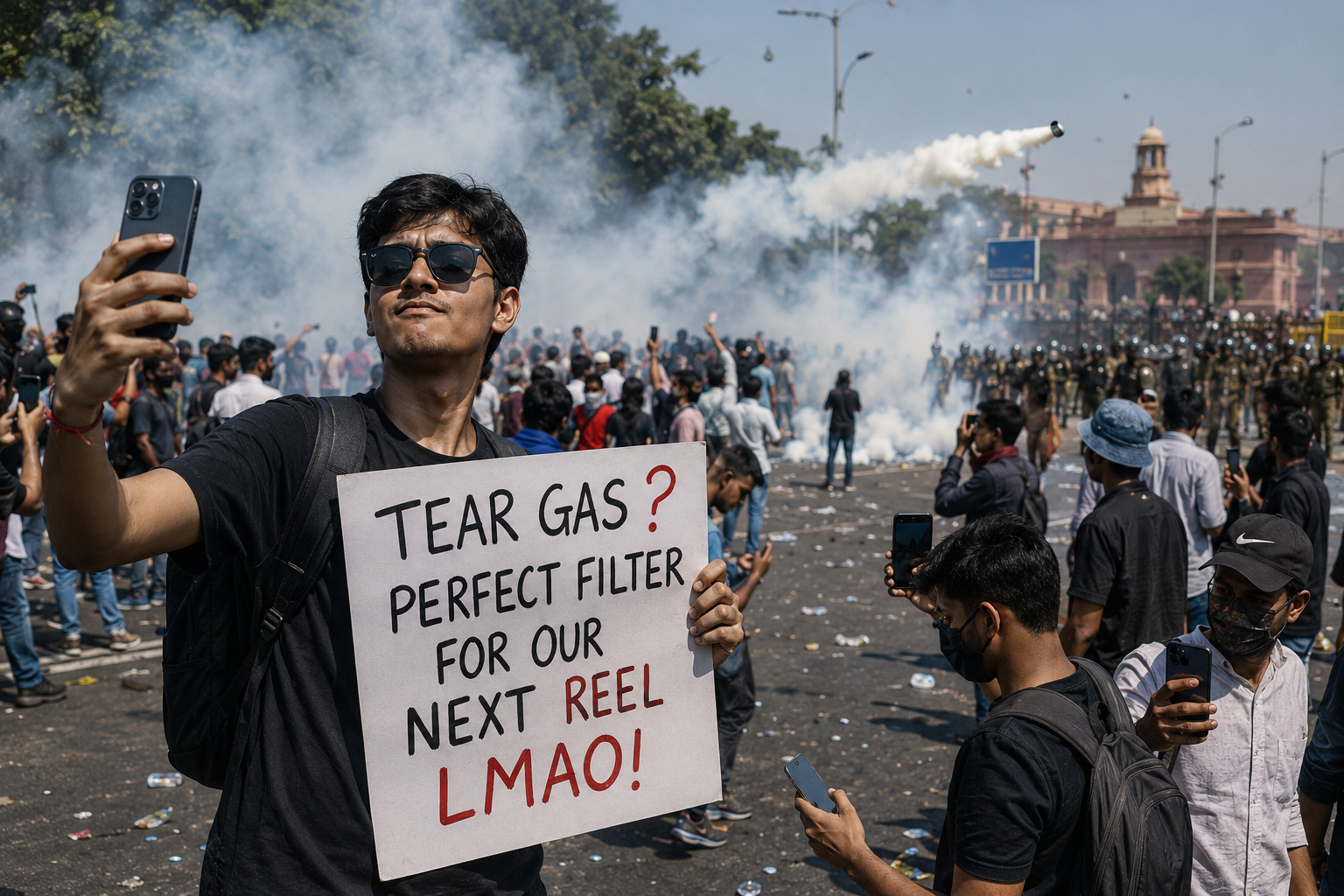
AI-generated image only for representative purposes
As a recent article in The Polity aptly noted, Gen Z has turned absurdist humour and viral reels into a political weapon, using laughter to defy repression and encourage critical thinking rather than emotional sympathy.
It is therefore hardly surprising that many may be willing to wear the label dimaagi Naxal if it is meant to describe intellectuals, critical thinkers, independent and investigative journalists, questioning teachers and students, truth writers, political comedians, human rights lawyers, RTI activists, fact-checkers, liberals and others who refuse to stop asking questions.
That, after all, is what dissent often begins with: not necessarily a grand ideological project, but a refusal to accept every official explanation without question. The government may be right, and the critic wrong, but the right to be wrong is not reserved for those who support the government.
Loyalty to the country and loyalty to the government of the day are not the same thing. A citizen who questions the government is not necessarily questioning India. Sometimes, they do so because they believe India deserves better.
This is what makes the prime minister’s phrase more consequential than it may appear. If a Naxal means an armed Maoist insurgent, the term has a clear meaning. But if it begins to include journalists, academics, activists and ordinary citizens simply because they question the government, the word loses its precision and dissent itself becomes suspect.
A government confident in its own legitimacy should be able to distinguish between an armed enemy and an inconvenient citizen.
Perhaps the prime minister is right
Perhaps, after all, the prime minister is right.
Perhaps India does have dimaagi Naxals — people who question government policy, examine the relationship between political power and wealth, challenge official explanations and refuse to accept that an election gives the government a permanent exemption from scrutiny.
If that is what the Prime Minister means, then perhaps there are many more of them than he imagines. But there is an irony here. A democracy should not be frightened by citizens who think. It should be concerned when citizens stop thinking altogether.
This does not mean every critic is right. Critics can be dishonest, activists can be ideological, journalists can be biased, and governments can sometimes be right. That is precisely why democracy requires argument rather than labels.
The answer to a wrong argument is a better argument; the answer to misinformation is evidence; and the answer to genuine grievance is justice.
This is where Ningalenne Communistakki returns to us.
The play did not create Kerala’s inequalities. It gave them a voice. Naxalbari did not invent every grievance of the people who gathered there; Maoist ideology gave those grievances a particular and ultimately violent direction.
The lesson for the present is not that India should tolerate violence. It is the opposite. If a government genuinely wants to prevent radicalism, it must remove the conditions that allow radical ideas to sound reasonable.
If unemployment is feeding anger, create meaningful work. If corruption is feeding cynicism, punish it. If police apathy is producing distrust, reform the police. If judicial delay is making justice seem distant, make justice accessible. If political patronage is weakening institutions, make power accountable. And if dissent is becoming uncomfortable, remember that the discomfort of being questioned is a small price for the privilege of governing a democracy.
The easiest thing for power is to identify an enemy. The harder thing is to examine the conditions that produced him.
History suggests that the second task is usually more important. So perhaps the Prime Minister is right. There are dimaagi Naxals.
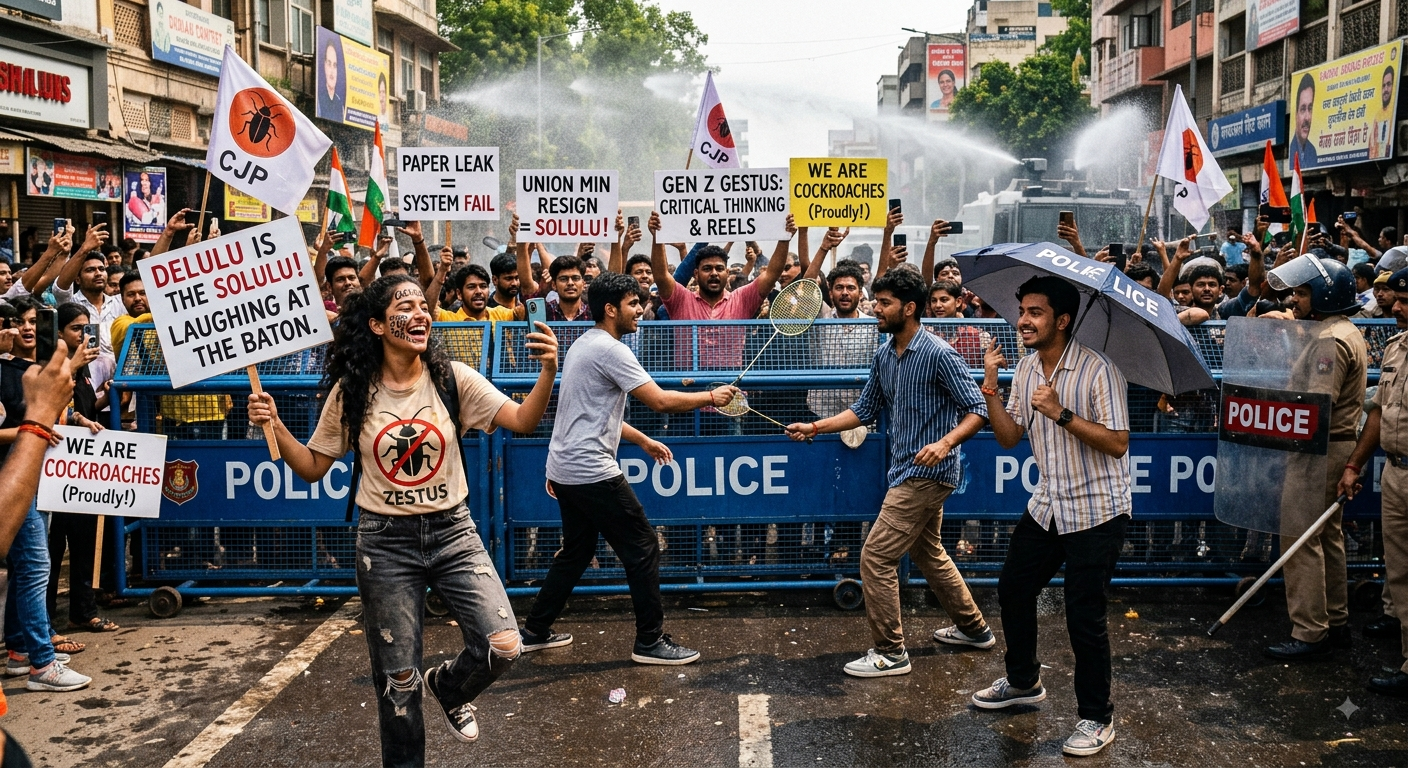
AI-generated image only for representative purposes
But before asking who taught them to think differently, perhaps we should ask a more uncomfortable question: what taught them to stop trusting the way we wanted them to think?
Perhaps the answer lies not in a secret ideological factory, nor in some university classroom, nor in a newsroom, nor in a forest. Perhaps it lies in those ordinary places where a citizen asked the state for justice, waited for an answer, and discovered that nobody was listening.
Follow us on WhatsApp
Follow us on Facebook
Follow us on X @vudmedia
Follow us on Substack
