
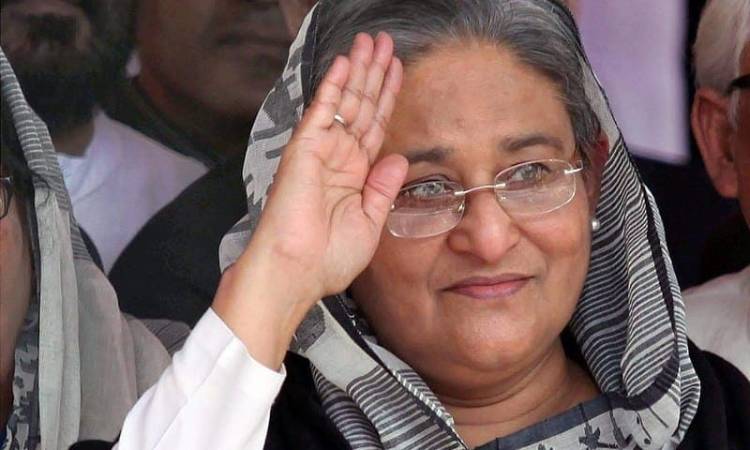
The death sentence for deposed Bangladesh leader Sheikh Hasina by a Crimes Tribunal, which is of her own creation, is an apt reflection of history repeating not as a tragedy but as a farce. For the International Crimes Tribunal not just repeated the same procedures that Hasina used to prosecute those accused of ‘war crimes’ during proceedings of the previous decades, but also used the death sentence as a message to convey that Hasina cannot think of a return to Bangladesh and its politics, at least in the current circumstances. Emerging out of the allegedly ‘rigged’ and ‘impartial’ proceedings is not just the end of the old political order but also the consensus among new political forces to drive the country towards a new direction of their liking, says Tapas Das.
On 17 November 2025, Bangladesh’s ousted prime minister, Sheikh Hasina, was sentenced to death for the “crimes against humanity” committed during the mass uprising of July-August 2024 that toppled her government. The sentence was issued by a domestic International (War) Crimes Tribunal (ICT), ironically, set up by Hasina herself in 2010, to prosecute “crimes against humanity” during the liberation struggle of 1971.
It was also on the same day, 58 years ago, that she had married M A Wazed Miah, an eminent Bangladeshi physicist. The verdict, incidentally, marked the first time in nearly 230 years that a female head of government had been sentenced to death. Previously, the French Empress, Marie Antoinette (wife of Louis XVI), was sentenced to death by guillotine.
Sheikh Hasina, who is now living in exile in India and was tried by the ICT in absentia, rejected the verdict by terming it “biased and politically motivated.” “The verdicts announced against me have been made by a rigged tribunal established and presided over by an unelected government with no democratic mandate. They are biased and politically motivated. It’s a guilty verdict against me was a foregone conclusion,” Hasina is reported to have remarked.
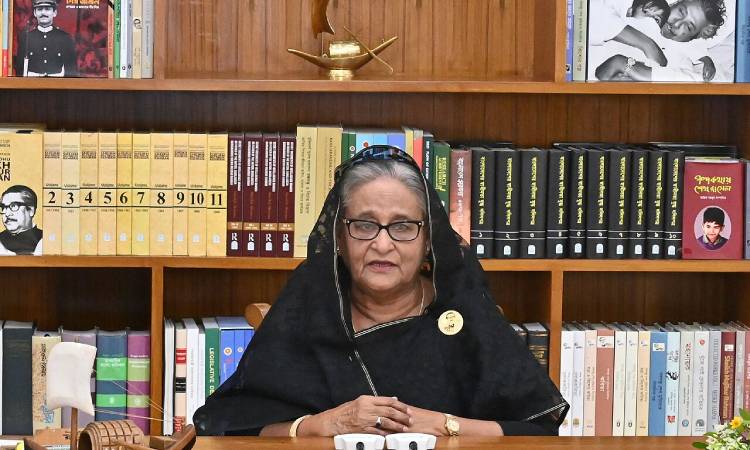
Image: Sheikh Hasina addressing the nation on 17 July 2024 amid the anti-government protests, photo source: Press Information Department, Government of Bangladesh
Denying that neither she nor any members of her government had authorised the killing of protestors, Hasina stated that she was not given a fair chance to defend herself in court or “have lawyers of my own choice to represent me in absentia.” Terming the proceedings as “rigged” with the judges and lawyers being those who had “publicly expressed sympathy for the current administration,” the exiled PM added that there was nothing ‘international’ about the ICT, nor was it impartial.
In its first reaction, the United Nations expressed ‘regret’ over the death penalty while stating that the verdict was an “important moment for the victims.”
The Secretary General Antonio Guterres “fully” agrees with UN High Commissioner for Human Rights Volker Turk on the position that “we stand against the use of the death penalty in all circumstances,” the UN chief’s spokesperson Stephane Dujarric is quoted as stating a day after the ICT verdict, citing an earlier remark by Turk in which he had called for “perpetrators, including individuals in positions of command and leadership, to be held accountable.”
Declaring that India is committed to the “best interests of the people of Bangladesh, including in peace, democracy, inclusion and stability in that country, India’s Ministry of External Affairs (MEA) stated that it will continue to engage “constructively with all stakeholders to that end.” It goes without saying that the death sentence will be meaningful as long as India, or any other country, decides to give sanctuary to the deposed Bangladeshi leader.
Both China and Pakistan declined to comment on the death sentence, stating that it is an “internal affair/matter” of Bangladesh.
Hours after the verdict, a group of students at Dhaka University reportedly held a banquet and a cultural programme to welcome the verdict. There were reports of sweets being distributed in the Khulna metropolis. The Khaleeda Zia-led Bangladesh National Party (BNP), Hasina’s arch-rival of earlier years, also reportedly distributed sweets in Natore.
But for such celebrations, the rest of the country reportedly was silent on the verdict. In the meantime, in an equally ‘silent’ manner, the Chittagong Port was handed over to a foreign company for 33 years on the same day.
Undoubtedly, Bangladesh’s political transition has entered a sharper phase. And with it, the domestic politics of Bangladesh, its relations with India, and the geopolitics of South Asia, have again been pulled into the centre of the crisis. This analysis examines three aspects: the nature and procedure of the verdict, the background of the lawyers, and the message it conveys for Bangladesh’s internal politics.
A few words on the ICT…
The International Crimes (Tribunals) Act, 1973, which provided the legal basis of the ICT, was passed by the Bangladeshi parliament on 20 July 1973. Its mandate was to investigate and prosecute suspects of the genocide committed in 1971 by the Pakistan Army and their local collaborators, including the Razakars, Al-Badr, and Al-Shams.
After Sheikh Mujibur Rehman's assassination, the Act remained dormant and hidden in the pages of the country’s Constitution. It re-emerged only after his daughter, Sheikh Hasina, became the Prime Minister of Bangladesh in 2008, leading the Awami League to power.
In 2009, Hasina sought to revive the 1973 law by amending it to facilitate modern trials. The growing caseload prompted the establishment of the ICT-1 on March 25, 2010, and the ICT-2 on March 22, 2012. They also amended this law twice in 2009 and 2013.
During Hasina's 15-year reign, the ICT has ruled on a total of 57 cases of crimes against humanity committed in 1971, and it executed six individuals after all legal processes were completed. Five of those executed were top leaders of Jamaat-e-Islami, and one was a top BNP leader.
The interim government has amended this law four times, with the last reconstitution of the Tribunal taking place on the 17th October last year. Before that, allegations were raised against Sheikh Hasina at the Tribunal on 14th August. The first amendment to the ICT Act by the interim regime was in November last year.
Earlier, the tribunal could consider only crimes committed within Bangladesh. On 24th November, it was amended to include a provision for the Tribunal to take into account crimes committed outside the country.
The second round of changes was implemented on February 10 of this year. The amendment was named the ‘International Crimes (Tribunal) (Amendment) Ordinance 2025.’ Whereas the earlier version provided the accused six weeks’ time to defend themselves, the amendment reduced it to three weeks, claiming that this would shorten the trial time.
Then, on 10th May this year, the ICT Act was amended for the third time. Accordingly, a provision was added to bring to trial political parties, organisations, or individuals affiliated with them. The fourth amendment came in the form of an ordinance on 6th October, which added section 20(c), enshrining that a person cannot be a candidate in elections if a formal complaint is filed against them at the ICT.
However, given that these amendments made after 5 August 2024 were enacted through ordinances, in the absence of a duly appointed executive and without Parliament's approval, their legality may always remain in question.
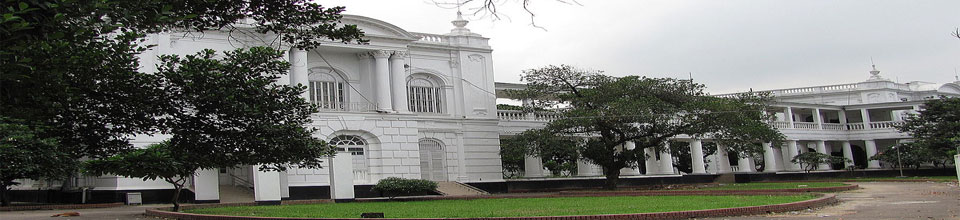
Image: The old High Court, where the International Crimes Tribunal of Bangladesh is situated
About the verdict…
On 17th November, the ICT in Dhaka passed the death sentence on Sheikh Hasina and her Home Minister Asaduzzaman Khan for their alleged involvement in the use of deadly force against protesters. The third suspect in the case, former police chief Chowdhury Abdullah Al-Mamun, having pleaded guilty, became a state witness.
Accordingly, the tribunal gave him a reduced sentence of five years' imprisonment.
Taking into account the five charges – incitement, instigation, ordering the killing of 1,400 people, and mutilation of 25,000 people in the July-August uprising, and ‘superior command responsibility,’ the International Crimes Tribunal-1 ordered the trial of the three accused, including Sheikh Hasina, on 10 July 2025.
This marked the start of the trial of the first case against Sheikh Hasina. The trial concluded on 23rd October after both sides presented their arguments. On 2nd July this year, the same tribunal sentenced Sheikh Hasina to six months' imprisonment for contempt of court. The charges against the defendants included murder, attempted murder, torture, and other inhumane acts.
The actions by the defendants that led to these charges being invoked included:
In its ruling, the tribunal's three-member bench also directed the government to provide substantial compensation to the victims affected by the attacks covered in the case. Additionally, the Tribunal emphasised the need for the government to ensure appropriate compensation for the injured, taking into account the severity of their injuries.
Following the verdict, various international human rights organisations and independent observers questioned the trial process and the death sentence. The Human Rights Watch, for instance, cited due-process gaps, while groups like Amnesty International condemned the use of the death penalty.
The Secretary General of Amnesty International, Agnès Callamard, acknowledged the need for accountability for violations during the July/August protests but argued the trial was “neither fair nor just,” insisting the death penalty is the “ultimate cruel, degrading, and inhuman punishment.”
David Bergman, who has been writing on the ICT proceedings for many years, pointed out in Prothom Alo that there are two problems with the Sheikh Hasina trial. First, the court-appointed defence lawyer failed to raise even the most basic questions about key pieces of prosecution evidence. Second, made even more troubling by the apparent weakness of the defence, is that the judges themselves failed, at least at times, to interrogate the evidence independently. Instead, they appeared to adopt per se the prosecution’s narrative of what the evidence supposedly demonstrated, he contended.
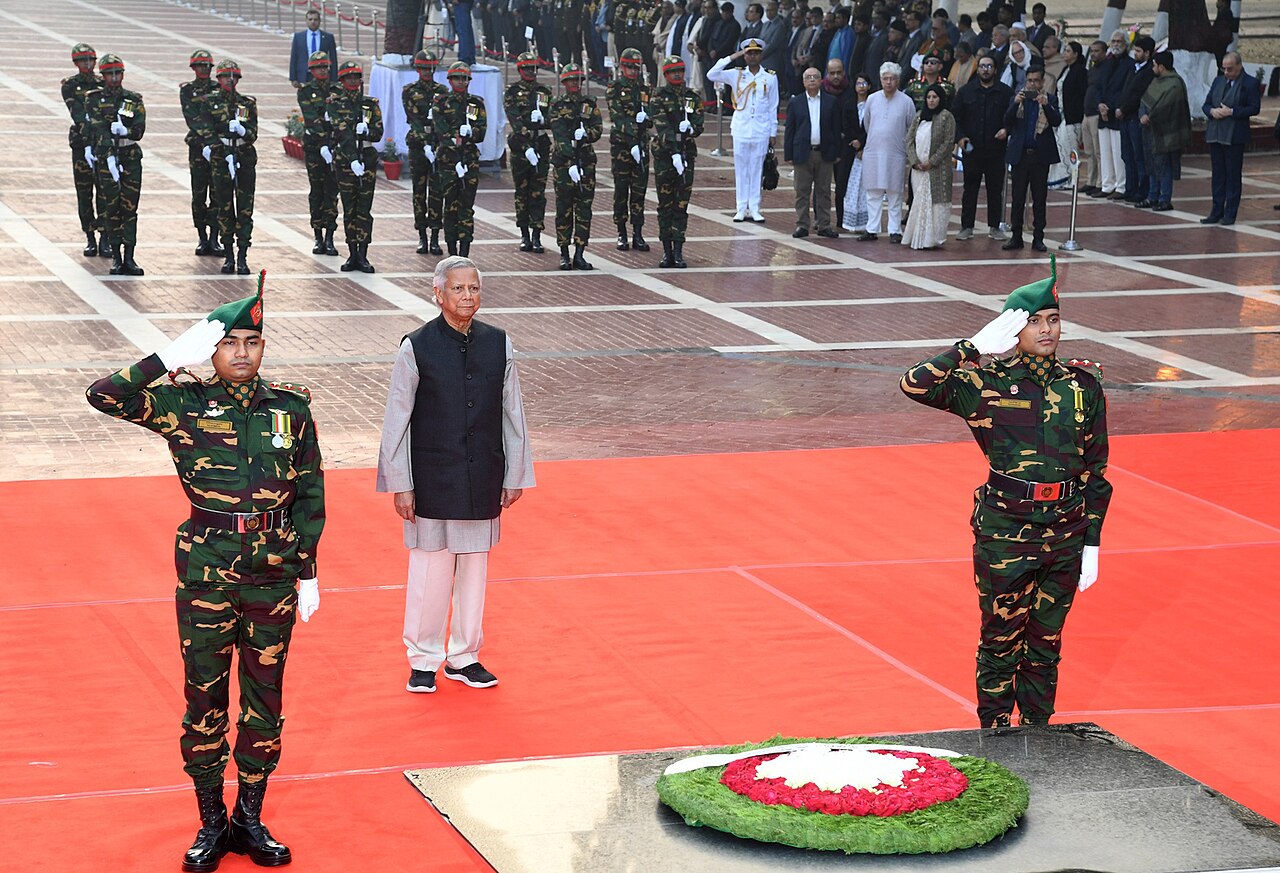
Image: Interim administrator, Professor Muhammad Yunus, at the Martyred Intellectuals Memorial, photo source: Press Information Department, Government of Bangladesh
In addition, on 17th June, the ICT appointed Mohammad Amir Hossain as defence counsel for Hasina, who was also deputed to defend Asaduzzaman Khan Kamal. Hossain has no prior experience with International Criminal Law. He is quoted as saying, “I did not attempt to (communicate with Sheikh Hasina).”
Strangely, the counsel did not request any adjournments or extensions despite being given only five weeks to review the detailed chargesheet against Hasina. Furthermore, he presented no defence witnesses.
An analyst at the International Crisis Group, Thomas Kean, points out: “In absentia trials are often a source of contention, and in this case the speed with which the hearings were conducted and the apparent lack of resources for the defence also raise questions of fairness... But they should not be used to downplay or deflect from Sheikh Hasina’s actions.”
Although the verdict against Sheikh Hasina has elicited mixed reactions from across the political spectrum, the country’s top legal officers, like the Attorney General Md Asaduzzaman and Law Adviser Asif Nazrul, immediately lauded the decision, describing it as a “landmark judgement” and a “historic moment for Bangladesh” that upholds the rule of law and justice.
Opposition figures and leaders of the July uprising celebrated the outcome. The BNP Secretary General Mirza Fakhrul Islam Alamgir remarked that the verdict marks the “burial of all forms of dictatorship.” The July uprising coordinator, Nahid, expressed a personal desire to see the sentence executed. Religious parties, including Khelafat Majlis and Islami Andolan Bangladesh, have also echoed this sentiment, viewing the sentence as a “historic precedent” against political persecution and a “milestone in resisting dictatorship.”
In sharp contrast, Hasina denounced it as the product of an “illegitimate extremist regime” and a “kangaroo-court judgement.”
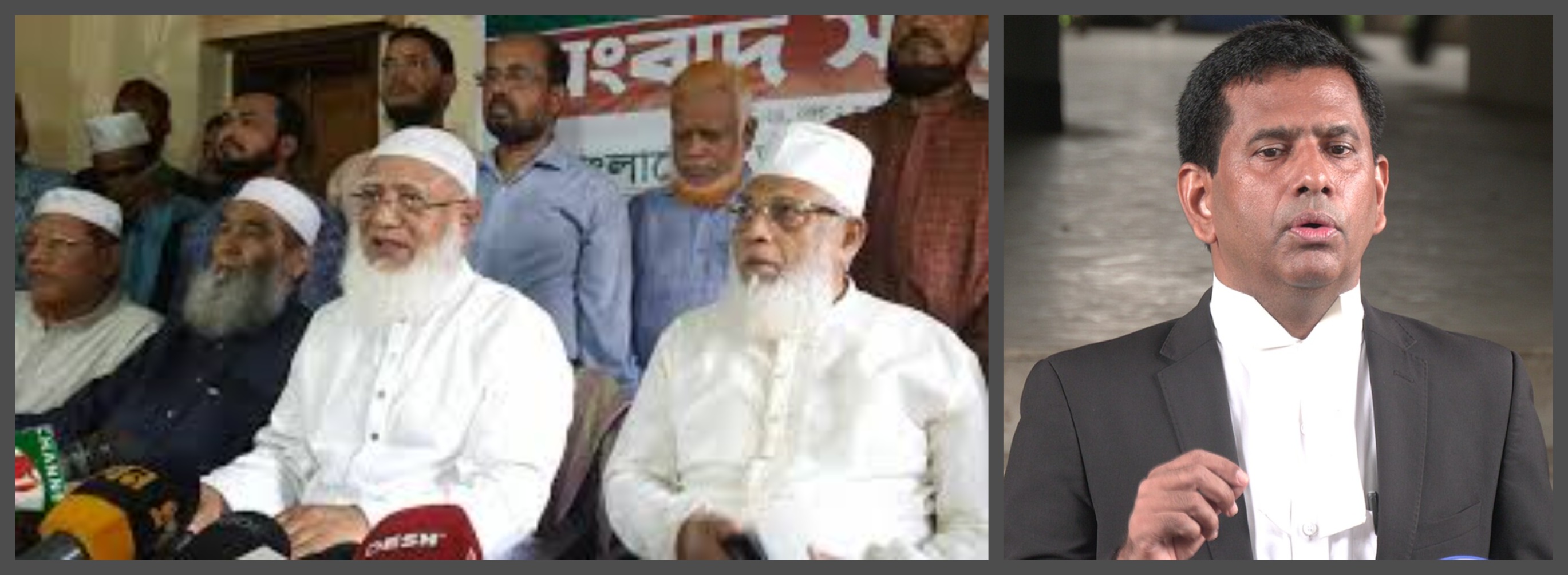
Image: Jamaat-e-Islami leaders (left) and Mohammaf Tajul Islam, the chief prosecutor appointed by the interim government for Sheikh Hasina's trial at the ICT (right), photo credit: Delwar Hossain
Who were the prosecutors?
The Muhammad Yunus-led interim government of Bangladesh appointed Supreme Court lawyer Mohammad Tajul Islam as the chief prosecutor of the ICT this September. Islam, incidentally, was the joint convener of Amar Bangladesh Party, a political offshoot of Jamaat-e-Islami.
However, he resigned from this post after this appointment, as eyebrows were raised given his affiliation with Jamaat, and by no standard was seen as a neutral lawyer. Islam had earlier defended Bangladesh Jamaat-e-Islami leaders in the war crimes cases at the ICT during the Awami League government as a defence lawyer.
The other ICT prosecutors appointed by the interim government included Md Mizanul Islam, Gazi Monowar Hussain Tamim and Abdullah Al Noman.
Islam was associated with Jamaat-e-Islami and has represented several high-profile Jamaat leaders, including former Amir Motiur Rahman Nizami, in cases before the ICT. Islam, currently residing in Rajshahi, has then publicly criticised the Tribunal’s judgments.
Tamim is also affiliated with Jamaat-e-Islami and has served as a defence attorney for several accused individuals, including Jamaat leaders, in cases before the Tribunal. His father, Maulana Gazi Abubakar Siddique, was a member of Jamaat’s Majlis-e-Shura in Bagerhat and ran for the national parliamentary elections three times from the Bagerhat-3 constituency on a Jamaat ticket. Tamim represented the plaintiffs in the ICT cases against Hasina and her aides.
No political ties were found for Noman.
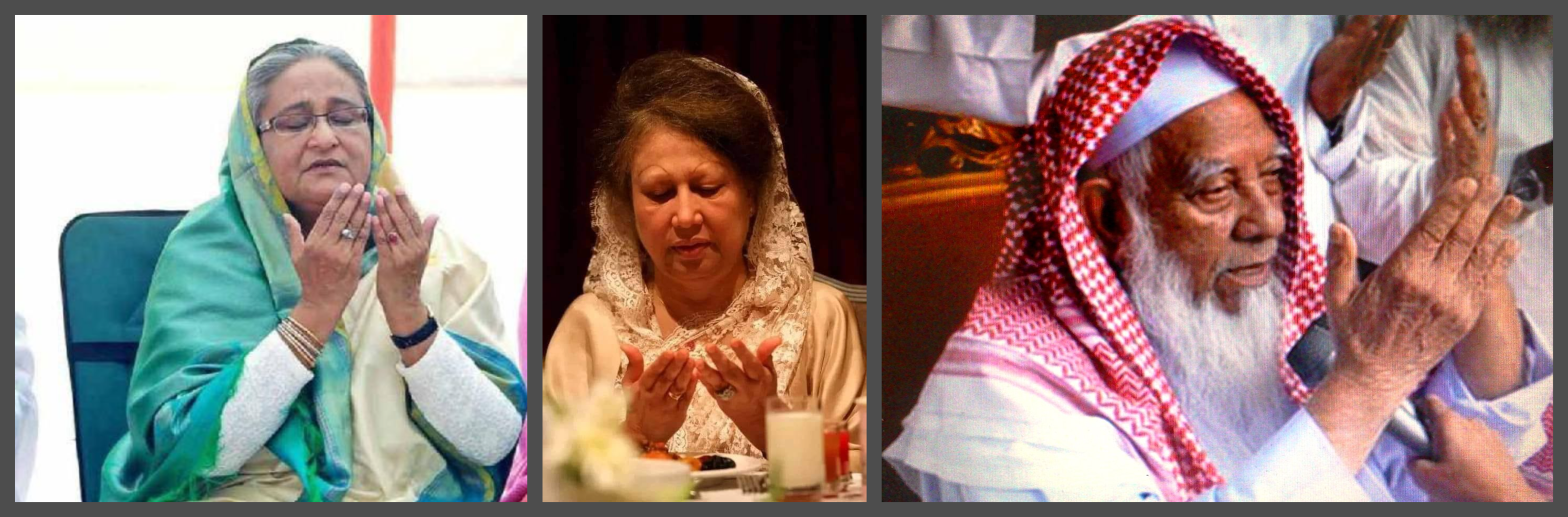
Image: The old guard of Bangladesh's politics - Sheikh Hasina (left), Khaleeda Zia (centre) and Shah Ahmad Shafi (right), a prominent Islamic scholar who was against extremism, and yet was alleged by the Awami League to be a front man for the Jamaat-e-Islami
After this panel, Masud Sayedee, son of Jamaat leader Delwar Hossain Sayeedi, who was the chief of Jamaat-i-Islami and sentenced to death in February 2013, expressed his excitement over the formation of the prosecution panel, with the remark: “The tribunal is ready, come now and let's play!”
Justice Md Golam Mortuza Mozumder headed the three-member bench of the ICT-1 that delivered the verdict. The two other members of the Tribunal were Justice Md Shofiul Alam Mahmood, a practising lawyer, and BM Sultan Mahmud, who was a Supreme Court lawyer and is affiliated with the BNP. Mahmud has never served as a judge and was, in 2019, elected to the Supreme Court Bar Association as a BNP representative and remains an active member of the Bangladesh Nationalist Lawyers’ Forum.
The appointment of Toby Cadman as a special adviser to the chief prosecutor of the ICT was also seen to be flawed. A British human rights lawyer and a co-founder of the London-based Guernica 37 Group, Cadman was, earlier, the lawyer for the Jamaat in the trials conducted by the Awami League government against them.
In early November, over 22 judges were made permanent within a year of service. Concerns have arisen regarding these appointments, as they were reportedly favoured by the Jammat-e-Islami, and the eligibility of some of them to be appointed as judges was also in question.
The aftermath…
Going by the proceedings at the ICT and subsequent reactions, it is evident that the death sentence for Sheikh Hasina was widely anticipated.
In a clear sign of resurging power, the Bangladesh Jamaat-e-Islami, which was previously banned from politics for a decade due to its opposition to the country’s 1971 independence, held its first-ever solo public rally at Suhrawardy Udyan on 19 July 2025. The substantial victories of Shibir-backed panels in the central student union elections across Bangladesh’s four major universities further confirmed the Jamaat's resurgence in the country’s politics, and especially among youth.
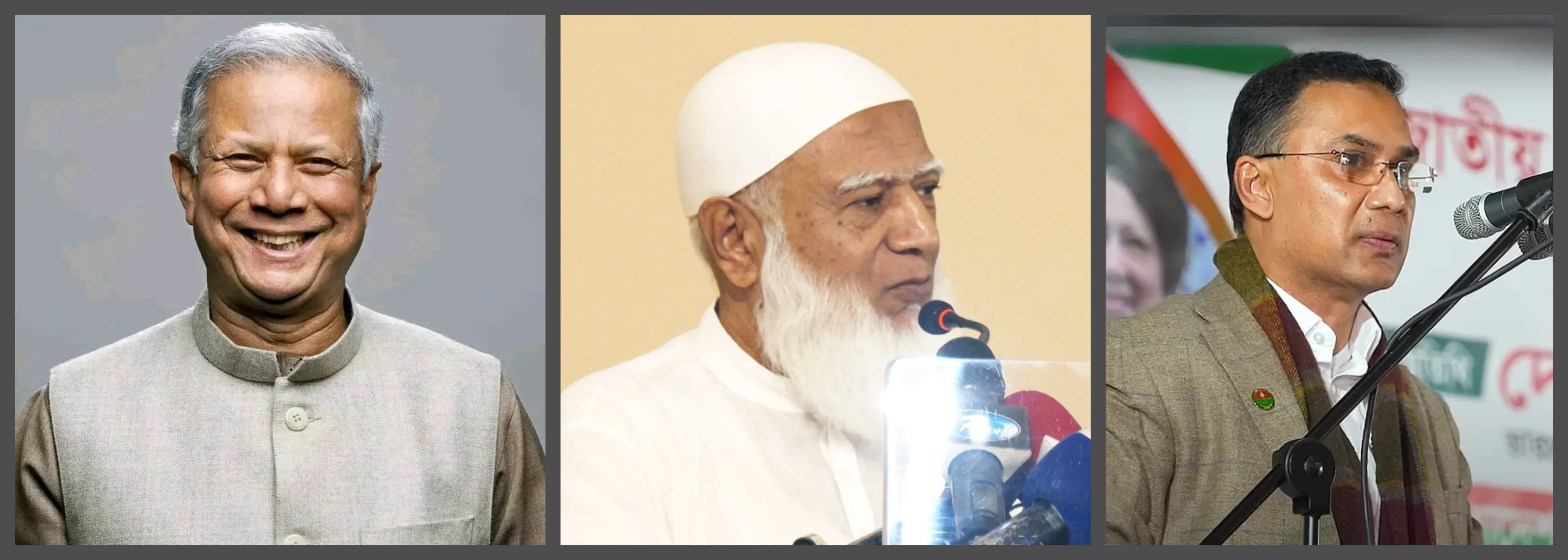
Image: The new guard of Bangladesh's politics - Muhammad Yunus, the interim administrator (left), Shafiqur Rahman, the Amir of Jamaat-e-Islami (centre), and Tarique Rahman, Khaleeda Zia's son and acting chief of the BNP (right)
The Islami Chhatra Shibir (student wing of Jammat-i-Islami) panel, which fought under the name “Oikkoboddho Shikkarthi Jote,” won 23 out of 28 seats in the Dhaka University Student Union elections. This win marked a historic high for the Shibir since the 1990 anti-Ershad movement, which had forced General Hussain Muhammed Ershad to resign as President and restore parliamentary democracy in Bangladesh.
At the Chittagong University, for the first time in 44 years, the Shibir-backed panel ‘Sampreetir Shikkarthi Jote’ won 24 out of 26 seats. Similarly, the Shibir-backed panel ‘Sommilito Shikkharthi Jote’ won a total of 20 out of 23 seats in the Rajshahi University elections, with high voter turnouts reported in these student elections.
It is noteworthy that the Shibir did not contest these elections under its own name. Instead, they chose alternative names like the Oikkoboddho Shikkarthi Jote (United Student Alliance), Sampreetir Shikkarthi Jote, Sommilito Shikkharthi Jote, and Somonnito Shikkharthi Jote. This strategy was supposedly employed to project a more neutral image and potentially conceal their core extremist ideological identity, thereby appealing to a broader range of voters.
Additionally, both the opposition and the interim government have noted this growing influence of Jamaat over state institutions. BNP Senior Joint Secretary General Ruhul Kabir Rizvi claimed that pro-Jamaat teachers now serve as Vice-Chancellors in over 16 public universities. Concurring with this assessment, the interim government advisor, Mahfuz Alam, confirmed that the BNP and Jamaat-e-Islami have aggressively appointed their people to crucial administrative positions.
On the other hand, the Jamaat is known to be engaging with ideologically adverse groups. On 18 September 2025, six Islamist parties — BJI (Bangladesh Jammat-i-Islami), IAB (Islami Andolon Bangladesh), Bangladesh Khelafat Majlis, Khelafat Majlis, Khelafat Andolan, and Nezame Islam Party — staged rallies and processions across Dhaka.
Historically, these groups have never coalesced. While the IAB has at times drawn smaller Islamist groups into its camp, the BJI had failed to forge Islamist alliances since 1979. Projecting a united front, the Islamist alliance has put forward a set of demands that includes elections under the July National Charter, proportional representation in both houses of parliament, and a level playing field for credible polls.
Unlike other parties, Jamaat also engages in international outreach. Over the past many months, Jamaat-e-Islami delegations led by its senior leaders visited the US, UK, Canada, China, Turkey and Egypt, among others. The JeI’s deputy chief, Syed Abdullah Mohammad Taher, in fact, accompanied the interim administrator, Muhammed Yunus, to the 80th session of the United Nations General Assembly this September.
While many of these visits were designed to reach out to the Bangladeshi diaspora in Western nations, there are reports of engagements with Islamic political movements like the Muslim Brotherhood in Egypt and other Arab nations. There are also unconfirmed reports that a section of the Jamaat leadership also seeks to establish contact with the Indian government.
It is evident by now that the Jamaat-led Islamic forces are the key drivers behind the verdict, using it to exhibit their raw power publicly. This leaves the Awami League as the only significant opposition, a position that may compel its traditional political rivals to offer their support quietly.
On the other hand, the BNP, Nationalist Citizens Party (NCP), formed by the students of the July uprising, and some Left parties have yet to display the ability to take on the Jamaat’s rise. Moreover, BNP is seen to be struggling with allies, with its candidate list for 236 constituencies causing unease among its allies. More importantly, the uncertainty over the return of Tarique Rahman, Khaleeda Zia’s son, to Dhaka is expected to create a sharp leadership crisis in BNP.
Surprisingly, the NCP had very little impact in the university elections. As in the case of the BNP, their expectation of Awami supporters joining their party in large numbers turned out to be misplaced.
The Left parties, on the other hand, continue to be fragmented and marginalised, despite seeing a resurgence following the July uprising. This momentum culminated in December 2024 with the formation of the Gonotantrik Bam Jote (Democratic Left Alliance), a new coalition uniting various left groups like the CPB, BASAD, and the Revolutionary Workers Party.
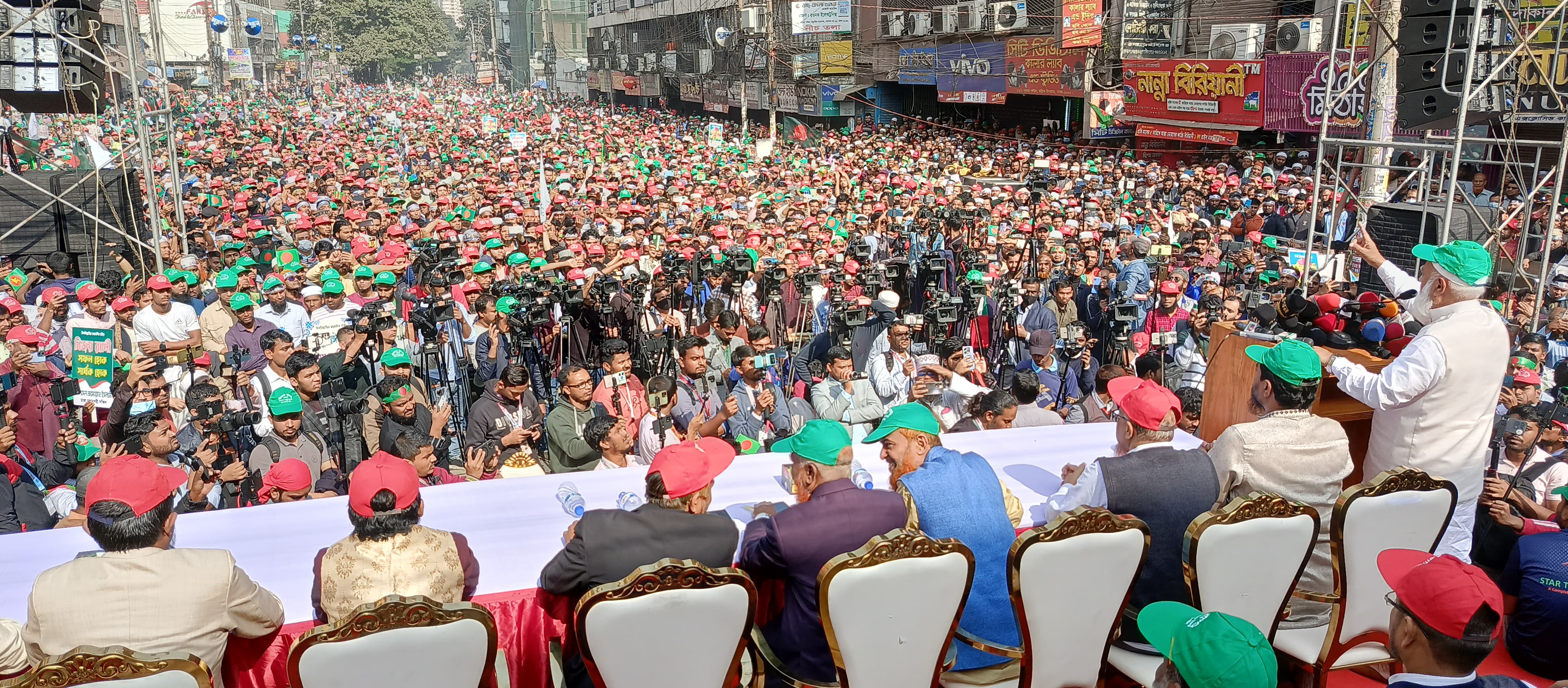
Image: A 'victory day' rally by Jamaat-e-Islami at the Dhaka City Centre in December 2024
The conditions for their renewed activity emerged from quiet preparations in villages and border districts, specifically in Meherpur, Chuadanga, Jhenaidah, and parts of Mymensingh. A movement took root in urban centres where Marxist student fronts in Dhaka, Chattogram, and Rajshahi established reading circles and publishing initiatives, circulating Bengali works of foundational thinkers such as Lenin, Rosa Luxemburg, and Charu Mazumdar.
On the labour front, radical trade unionists, supported by underground networks, organised wildcat strikes in industrial hubs like Gazipur and Narayanganj. At the same time, the Maoist-aligned peasant groups continue their resistance against land grabs by corporate agribusiness and the military.
In the absence of the Awami League, a proactive contest is expected among the BNP, NCP and the Left groups to dominate the opposition, even as the Jamaat-e-Islami and its Islamic alliance are likely to rise to dominance in the months to come.
(The views expressed are the author's own.)
Follow us on WhatsApp
Follow us on Facebook
Follow us on X @vudmedia
Follow us on Substack


#/media/File:Tajul_Islam_(cropped).jpg)