India’s rising power profile in the comity of nations has been a subject of debate since the time of India’s economic liberalisation, which also coincided with India’s demonstration of its nuclear weapon capability. On a parallel footing, many sections believe that India’s power profile is also substantially buttressed by its soft power – with elements like Yoga, Ayurveda, Buddhism and the pervasive imprint of the diaspora across the globe, among others, which also positions India as the claimant ‘Vishwaguru.’ However, there are limits to the leverage and impact of these ‘soft power’ tools, argues Ajaya Kumar Das, who points out the centrality of hard power instruments like economic and military power as integral to the 'great power' pursuits.
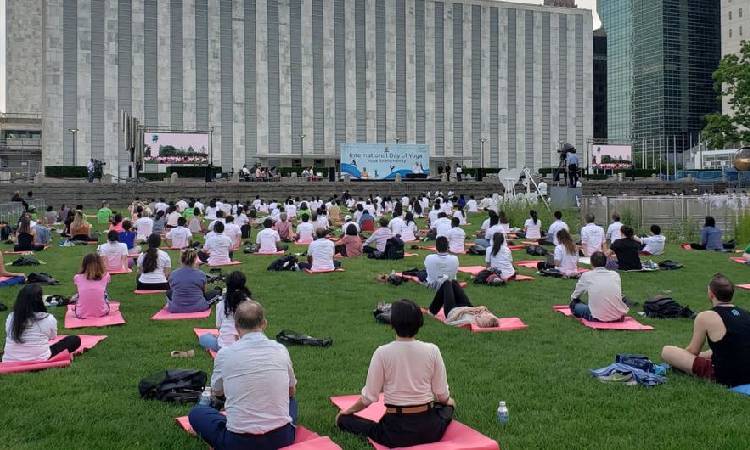
Text page image: International Yoga Day celebrations at UN Headquarters in New York, June 2022
Home page image: Namaste 2020 – the logo of Global Utsava of Indian soft power
India’s rise as a great power is now a topic of routine debate among observers of international relations.
Some say that it is New Delhi’s ‘delusions’ marked by its longing for multipolarity, shift towards illiberalism at home and relative power that will thwart its great power ambition. Some see its ‘reticence’ lacking ‘great power narratives’ as opposed to ‘actively rising to become great powers’ that have both marred its own growth as well as discouraged others, like the US, from helping its rise.
Still others view what India importantly lacks to become a great power: ‘state capacity’ and ‘human capital.’ In certain assessments, India ‘exceeds’ the threshold of a great power on two ratio metrics (GDP and military personnel) while it falls short on composite (GDP x GDP per capita) and military expenditure metrics.
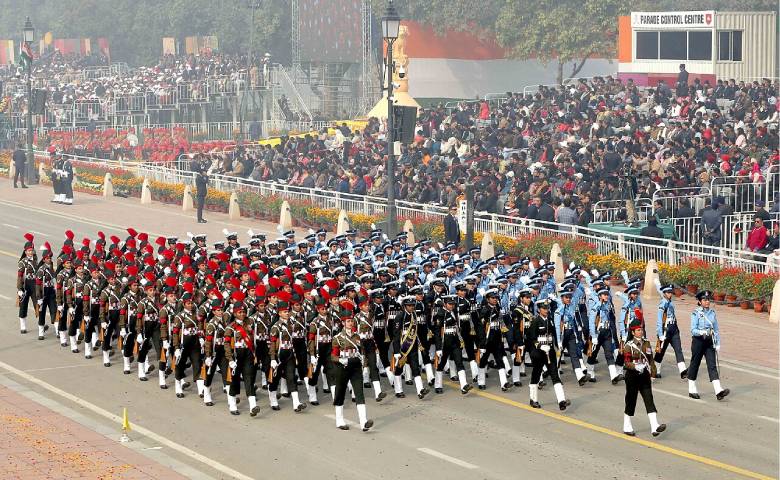
Image: An all-women contingent marches on the Rajpath/Kartavya Path on Republic Day
While this debate is relevant for India’s future growth as a great power, it is equally significant for India’s soft power—an additional measure of power and influence through attraction and persuasion as opposed to coercion, which has often been viewed very narrowly in terms of culture and political values and normative foreign policy.
The ‘over-estimation’ of these soft power attributes, ranging from yoga, diaspora, Buddhism, Bollywood and democracy to cultural and public diplomacy, has often created soft power delusions where it is less able to wield those attributes into influence. This has also resulted in not recognising how the economy and military are foundational for soft power, besides being hard or coercive.
The ‘hard’ elements of soft power
Understanding soft power in terms of its economic and military power is critical. Be it ‘fighting,’ ‘protection,’ ‘assistance,’ or ‘coercive diplomacy’—in all these military behaviours, soft power of attraction can be engendered when a nation is viewed as competent, legitimate and benign.
For instance, India’s military ‘restraint’ during the Kargil war following the South Asian nuclear tests of 1998 created legitimacy, producing an unambiguous response from the US.
But in India’s ‘calibrated use of force’ during ‘Operation Sindoor’ against Pakistan, which saw India maintaining ‘restraint under fire’ to ensure it does not escalate towards a broader conflict, the West seemed less concerned about terrorism having caused the crisis than about ending the conflict – much to India’s discomfort.
The subsequent elevation of Pakistan in American strategy must be seen as a response to its concern about the balance of power in Asia. As per the prevailing notions, Pakistan being too close to China is seen as not in America's interest as much as India’s reluctance to partner with America in this power transition.
India’s autonomous capacity to balance China is inhibited by its military expenditure constraints and the supposedly below-expected economic growth. In essence, India underperforms as a counterbalance to China.
India’s unwillingness for closer partnerships through the construct of ‘multi-alignment,’ while remaining embroiled in disputes with its neighbours, could entail a diminishing clout in the Asian balance of power. No surprise then that in the ‘State of South East Asia’ survey of 2024, India was listed among “partners of least strategic relevance” to ASEAN despite having cultural affinity with the region from ancient times.
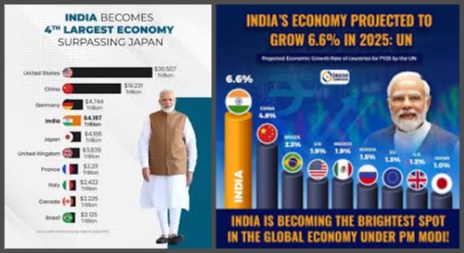
Economic prosperity is key to military power. Nehru’s India was economically poor, a “basket case of poverty and economic dysfunction” growing abysmally low at 3.5 per cent per year, with the population growing at the same time at 2.5 per cent per year. Hence, India was militarily weak, and, in the American view, an ‘exotic and bizarre place’.
Its democracy-based power of attraction was limited, and the American largesse of the post-independence decades was more about containing Communism than about India’s soft power. Its normative agenda in foreign policy was not so successful owing to a poor foundation of economic and military power.
The success story of India’s soft power in the West in the post-Cold War period could be attributed to its increasing economic power and its decision to bring its bomb out of the basement.
Following economic liberalisation of the early 1990s, India was increasingly viewed around the world as an ‘emerging market.’ But the real turning point was the nuclear tests in 1998, which – after an initial negative reaction from the US – led to a re-framing of the US view of India, which came to be seen in Washington as well as other prominent capitals as an ‘emerging power.’

India remaining a democracy for this long and making successful economic strides certainly helped. Prosperity alone without sufficient military power leads to ‘soft vulnerability.’ India is historically familiar with this prospect of being a lure to Islamic and European invaders who occupied and colonised it, influencing it culturally during most of late medieval and modern history.
There was a lingering ambivalence with respect to India’s power potential in the 1990s and the American pressure to contain its power and position until the nuclear tests. After that, India, in the dominant Western views, emerged as a responsible and benign power worthy to be cultivated for great power politics.
The limits of ‘culture’ as soft power
It is routine to assume the different manifestations of cultural life and their expansions abroad as aspects of soft power. Today, much can be said of the relative popularity of Indian culture, especially Bollywood, Yoga and Ayurveda.
These attributes are no doubt important in themselves, but whether they can be combined into the strategy of soft power, which influences the political attitudes and behaviour of other states, is questionable.
Some forms of culture disseminated from India are hardly recognised as Indian today. Buddhism, for instance, which has a very small number of followers in India, is widely followed in East Asian societies. However, few would consider it in the everyday sense as a measure of Indian influence.
The same is the case with yoga. The Pew Research Centre study of 2021 found that a majority of Indians, including Hindus, do not regularly practice yoga. In contrast, the study points out, Yoga has a wide following in the developed West in many different forms other than its ancient Indian “pure line that its adherents [Hindus]often claim for it.”
Again, other than successfully creating consensus on this already ‘multi-cultural’ construction through the UN-designated ‘International Yoga Day,’ it is not really a form of soft power in the context of the Indian state achieving its preferred outcomes of the highest order.
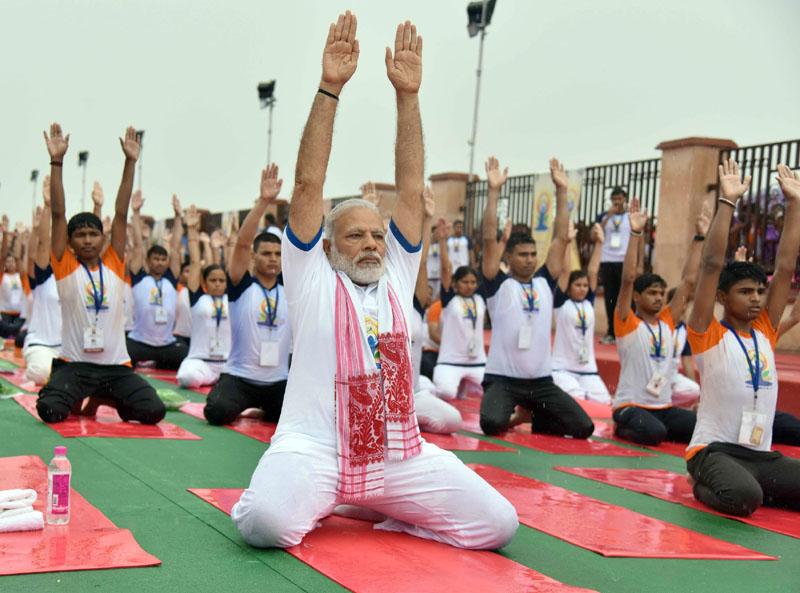
Image: PM Narendra Modi leading International Yoga Day celebrations in Lucknow, June 2017
More generally, interest in a specific culture or its various forms does not translate into soft power for a country. Nothing is more reflective of this gap than the commonplace reality that American popular culture, from Hollywood and MTV to American youth culture, is not necessarily accompanied by deference to American political preferences.
There is no evidence that the reality is any different with respect to Indian culture.
Culture creates attraction and influence only when it is, as Samuel P. Huntington writes, “rooted in material success and influence.” There has been a pattern as to why Western values and communist ideology appealed to the rest of the world. The power of attraction becomes power, as Huntington writes, “only when it rests on a foundation of hard power.”
Similarly, Stephen M. Walt has argued that the concept of ‘soft power ' is “a bit of an epiphenomenon,” which means that “you need a lot of hard power to produce much of the soft variety.”
The elusive diasporic dividend
From about 250 BCE to 1200 CE, stretching from the Hindu Kush to the Pacific, India ‘confidently’ exported its civilisation through its ‘merchants, astronomers and astrologers, scientists and mathematicians, doctors and sculptors’ as well as ‘holy men, monks and missionaries’—creating an ‘Indosphere’ where India’s cultural influence was ‘predominant’, notes William Dalrymple in The Golden Road: How Ancient India Transformed the World.
While there is international consensus among many today about India’s major power status, many question India’s credibility in imagining itself in the role of a ‘Vishwaguru’ or ‘world’s teacher’ when it is primarily an ‘importer of knowledge and technology’ and is ‘indispensable’ in many measures of power to stay in ‘global consciousness.’
India has not yet converted its economic growth and size into such prosperity and development to confidently project either its past or present and is rather waiting to take advantage of the “opportunities created by global contradictions,” as India’s External Affairs Minister (EAM), S. Jaishankar, notes.
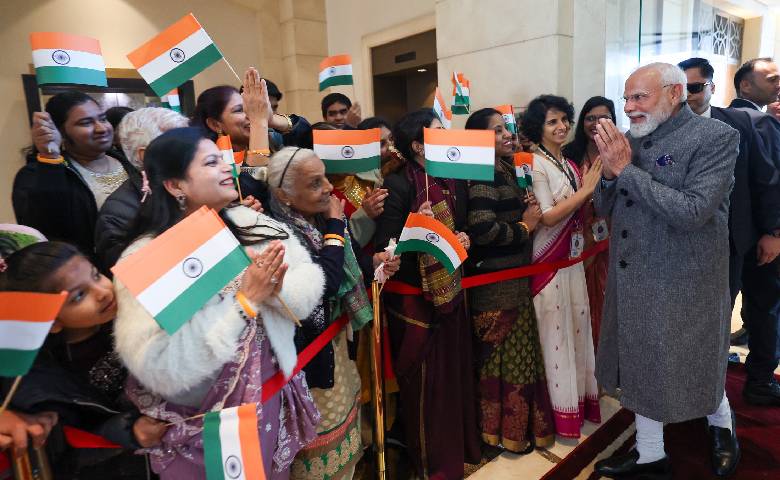
Image: PM Modi being received by the diaspora during his December visit to West Asia/North Africa
Some see in Indian-origin Zohran Mamdani’s victory as the Mayor of New York City as India’s ‘living’ and ‘moral’ soft power in terms of its pluralism. Hence, the successful Indian diaspora is seen as the ‘emissaries’ of India’s enduring values of tolerance and democracy.
Again, that is a delusion. How does their existence both in government and outside result in favourable American policies towards India?
There is a growing targeting of Indian communities in the West for being culturally ‘outsiders’ or ‘burdens on the economy.’ Second, true or not, the democratic ‘backsliding’ in India has become a Western consensus, with the growth of Hindu nationalism being seen in the West as a challenge to India’s pluralism.
The perceived authoritarian swings in both the US and India mean the relationship will be shaped by interests rather than values, which was otherwise the case during the last two decades. The era of standing up for democracy and human rights in American foreign policy has ended, notes Richard Hass in his analysis of Trump’s December 2025 National Security Strategy.
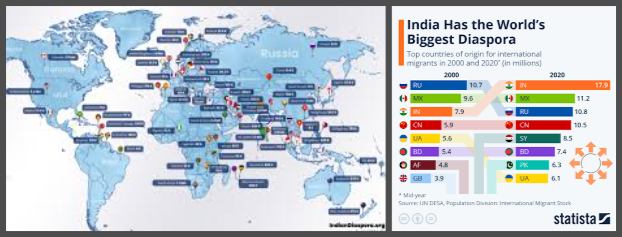
Instead of celebrating the rise of overseas Indians, India would be in an advantageous position if it could exploit, as S Jaishankar has argued, its ‘brain drain’ by turning diaspora networks into an advantage and creating conditions that discourage talented and wealthy Indians from leaving abroad.
Democracy alone is not soft power
Democracy on its own was not sufficient for India to convert its relationship with the US into perceptible benefits during the Cold War period. The two democracies were ‘estranged’ or ‘comrades at odds.’ The turnaround in the relationship that has benefited India in the first two decades of the twenty-first century has surely been facilitated by India’s adherence to liberal democracy.
However, if we take out India’s growing economic influence and military power from this equation, then democracy alone does not produce enough soft power of attraction to determine the relationship. The ‘tyranny of the majority’ in democracy has been a philosophical concern in the West and has practical consequences for every democracy.
The inherent soft power derived from India’s democracy will perhaps not be undermined, even while India turns quasi-authoritarian, if it can fast convert its growth into equitable and sustainable prosperity while remaining faithful to constitutional democracy at its core rather than aiming at pure democratic expansion leading to chaos and anarchy.

Therefore, any meaningful discussion on India’s soft power must begin by asking:
- Do India’s headline’ GDP figures perfectly correlate with HDI (Human Development Index) gains?
- Can India successfully balance between the benefits from its diaspora networks and talent retention as it pursues a developed economy?
- Is India, which is levelled as a major power in most accounts today, relevant in the balance of power in Asia when it struggles to shape its neighbourhood to its will and fails, especially, to deter the terror state Pakistan living on IMF credit lines?
- How does India balance its engagement with autocratic regimes like China and Russia through BRICs and SCO and the West by invoking shared liberal values?
- While India has many civilizational virtues, has India materially progressed enough to project its ‘Vishwaguru’ civilisation?
These are the defining questions and only credible answers to which will shape much of India’s soft power, rather than the nature of its current cultural and public diplomacy as it aspires to become a great power.
Follow us on WhatsApp
Follow us on Facebook
Follow us on X @vudmedia
Follow us on Substack
