
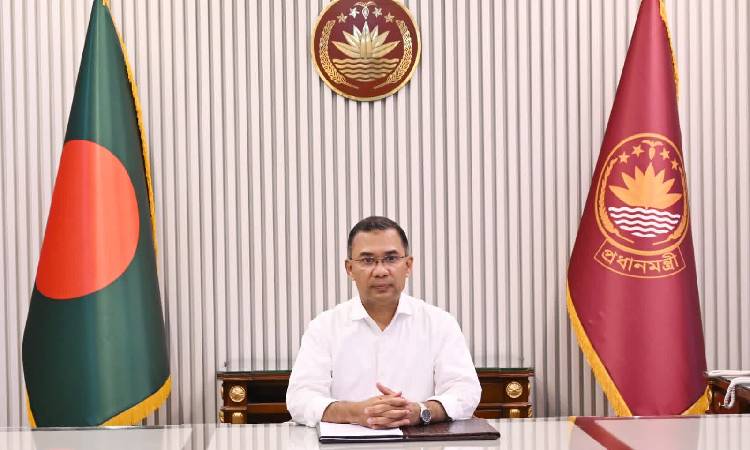
After months of turmoil and political instability, Bangladesh has chosen a new government, preferring a mainstream party over the new forces that had emerged in the country’s political scene. While questions persist about the credibility of the February 12 election, including notable gaps and alleged irregularities, Tarique Rahman, having led the Bangladesh Nationalist Party’s return to power, has his hands full in addressing the dual challenge of delivering on governance and pursuing political reconciliation. In this post-election analysis, Dipannita Maria Bagh and Tapas Das detail the prodigal son’s return and his persona, set against an evolving political landscape in which the Jamaat-e-Islami has emerged as the principal opposition force, and other Islamist groups jostle for greater relevance.
Home page image: Tarique Rahman in his office after taking over as Prime Minister of Bangladesh
Text page image: Tarique Rahman at the Shaheed Mihar at the University of Dhaka before swearing in as PM
Banner image: Newly elected members of parliament taking oath at the Jatiya Sangsad
As the adage goes, “He who rides a tiger is afraid to dismount.” The results of Bangladesh’s 13th parliamentary election place Tarique Rahman precisely in this position, and few political careers leave more open the question of whether the leader has learned to steer it.
Consider what it took to reach this moment. Tarique Rahman’s political career began in 1988. In 2002, during his mother Begum Khaleda Zia’s premiership, when he operated the Hawa Bhaban—the Bangladesh Nationalist Party (BNP) headquarters from which Rahman allegedly ran an alternative power centre during 2001-2006—his influence peaked as Joint Secretary.
Alongside his infamy, the shadow power centre became a shorthand term for patronage, graft, and impunity, all dressed in party colours.
In 2007, a military-backed caretaker government arrested him; he emerged the following year, reportedly bearing spinal injuries from torture. What followed was seventeen years of exile in London, measured not in political triumphs but in funerals, legal battles, and the slow, unglamorous work of survival.
During this period, he endured personal tragedy with the death of his brother, Arafat Rahman Koko, and took over as the BNP’s acting chairman after his mother’s 2018 imprisonment. He returned on Christmas Day last year, with his legal convictions cleared only because the party he had spent a career opposing was banned during his absence.
Five days before his first-ever election, he buried his mother, Khaleda Zia. He then won, aged sixty, in a country where abstention outran conviction. A majority did not vote against him, to be sure. But neither did they vote for him. What he received was not an endorsement, but an opening, an extension prompted by the exhaustion of alternatives.
Associates who knew him in his Hawa Bhaban years described him now as a man transformed, more measured than before. Whether exile has genuinely refined him or simply taught him to appear refined would be the question Bangladesh would spend the coming years trying to decipher.
While the winner of the recent election carries both the improbable romance of the comeback and the unresolved weight of what made exile necessary in the first place, his victory arrives at a moment when Bangladesh could ill afford another stumble.
The 13th parliamentary election unfolded against eighteen months of sustained turbulence. Since Sheikh Hasina’s ouster in August 2024, Bangladesh has endured the steady assertiveness of religious hardliners, vandalism, intimidation, and a contested renegotiation of cultural identity, while women, religious minorities, and activists absorbed the sharpest edges of the shift.
Business confidence retreated alongside public confidence, stalling investment and suppressing economic growth. The February 2026 result, despite its limitations, reflected an unambiguous preference for stability over the upheaval that preceded it.
A mandate with lingering questions
The Bangladesh Election Commission (EC) reported a final turnout of 59.44 per cent. Even if unlikely to admit publicly, the BNP understands that the result it received is a foundation rather than a mandate.
The empty polling stations visible throughout the morning were not merely an optics problem; they were a signal that the enthusiasm gap would need to be closed through governance rather than assumed away through incumbency.
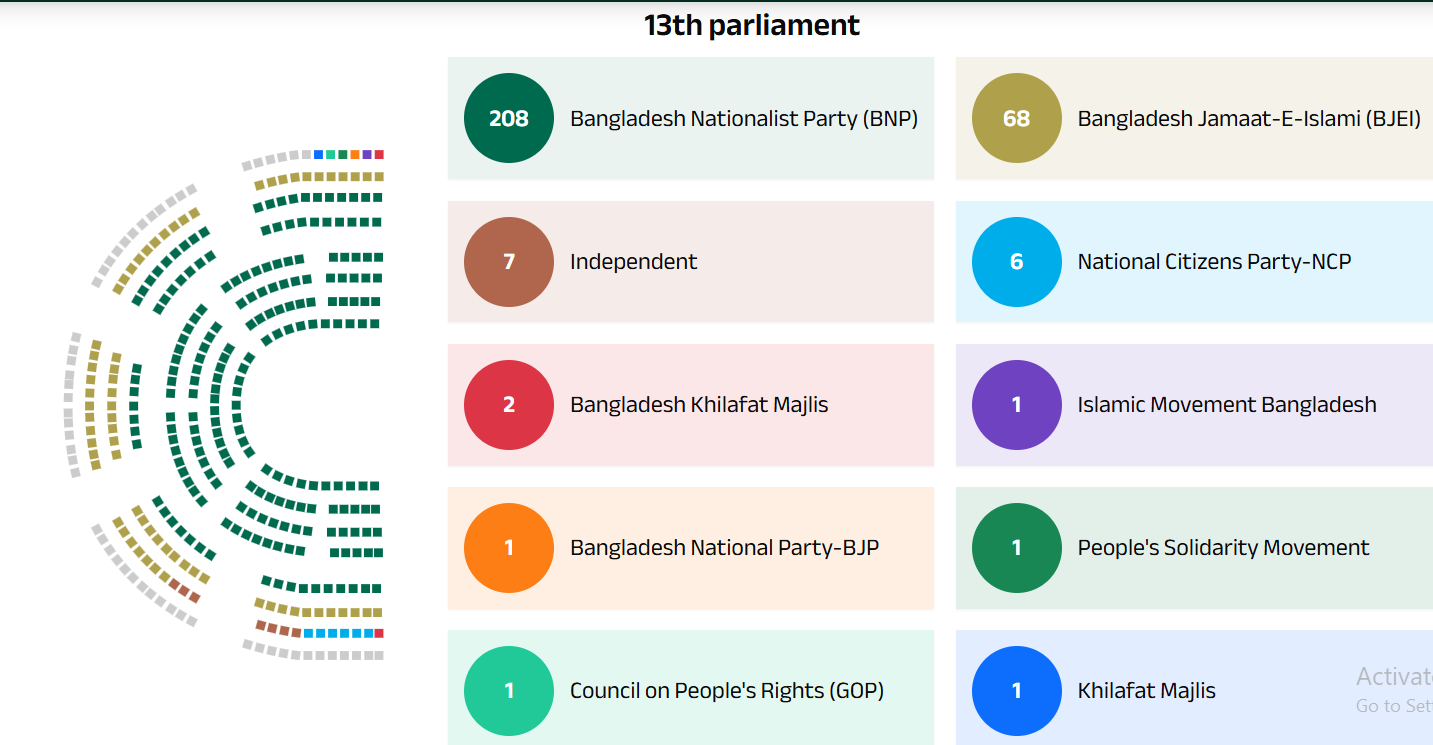
The BNP-led alliance secured a substantial majority, winning 212 seats. The newly formed National Citizen Party (NCP) won 6 seats, with three additional seats through alliance partners. Notably, the NCP’s Abdul Hannan Masud is set to become the youngest member of parliament after winning in Noakhali-6. The Jamaat-e-Islami (JeI) alliance secured 77 seats overall.
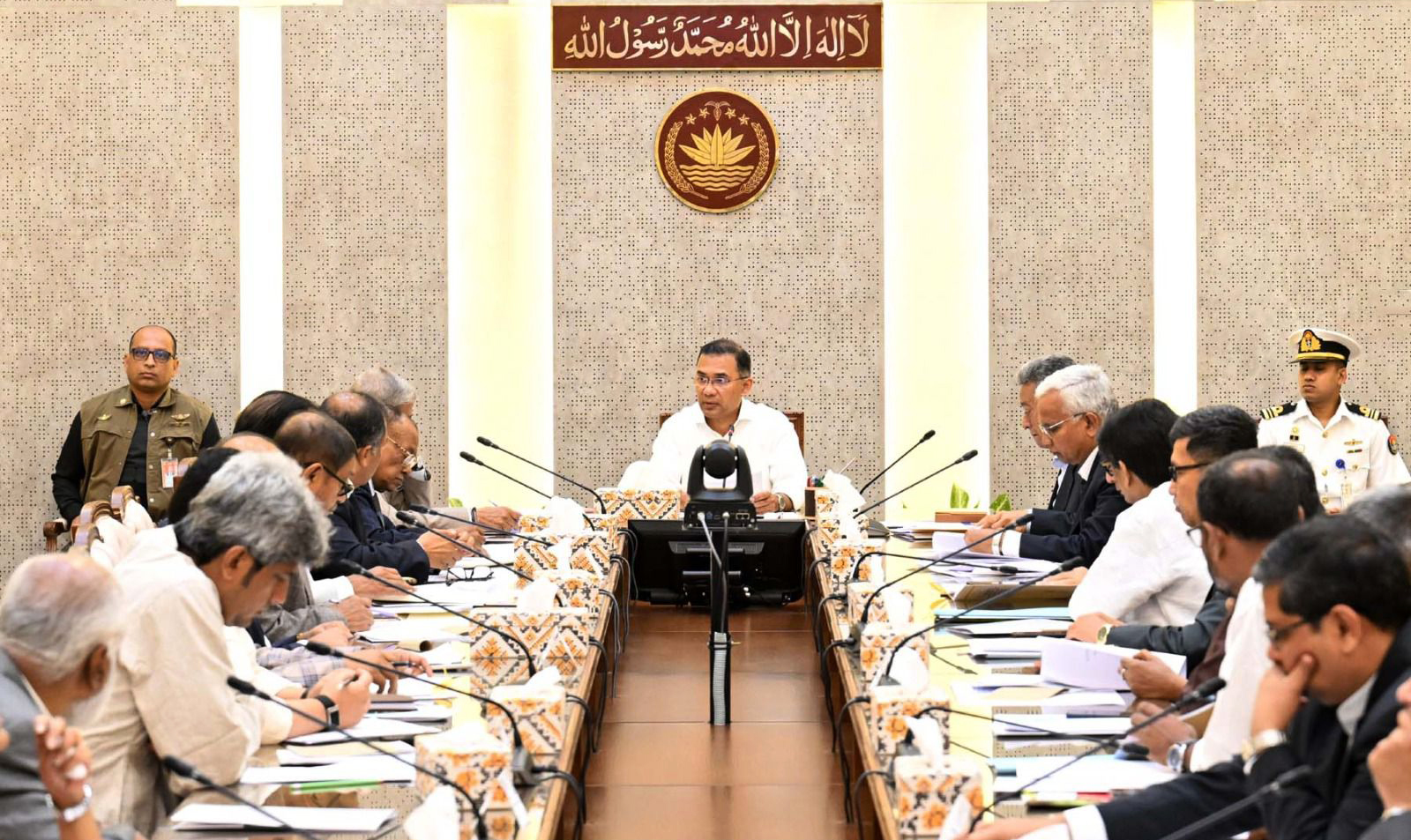
Prime Minister Tarique Rahman chairs the first meeting of his cabinet
The election doubled as a referendum on the July National Charter, with 48,266,660 voters casting ballots in favour of the referendum proposal, while 22,071,726 voted against it. A total of 7,422,637 ballots were declared invalid.
The results did not go unchallenged. The exclusion of the Bangladesh Awami League, which has historically commanded nearly 40 per cent of the electorate, led many observers to characterise the ballot as a “limited menu” rather than a genuinely open democratic contest.
Statistical anomalies deepened the unease: Rajshahi-4 recorded a turnout of 244 per cent, and vote counts in several constituencies exceeded the number of registered voters. The EC’s own figures showed turnout climbing from roughly 15 per cent before noon to nearly 33 per cent within the hour, a surge difficult to reconcile with the images circulating from polling stations that morning.
The concurrent referendum introduced complications of its own. Critics argued that bundling sweeping constitutional reforms into a binary “Yes/No” question oversimplified matters of national consequence. Technical irregularities, ballots lacking serial numbers, and ambiguous symbols in lower-literacy areas compounded the unease. The JeI and several other parties have since formalised these as objections in public protests.
New forces emerge…
The 2026 election marks a historic transformation in Bangladesh’s political landscape, most visibly in the dramatic resurgence of the JeI. After decades of fluctuating influence—from its first six seats in 1979 to outright exclusion from the 2014 and 2018 cycles—the JeI’s restored registration in 2025 translated into a record 68 seats and over 32 per cent of the vote alone.
The party was nowhere near a majority, constrained by the BNP’s outright win and supposedly owing to reservations many voters might have retained about its conduct in 1971. Yet the JeI’s newfound position as the primary opposition in the legislature and as an important political force in Bangladesh is no longer in question.
For a party that spent years on the margins of legality, its arrival in the chamber in the absence of the Awami League is a structural shift in the architecture of Bangladeshi politics.
Razor-thin margins underscore the depth of this shift’s competitiveness. In 22 constituencies decided by fewer than 5,000 votes, the JeI-led alliance prevailed in half. Across the 50 most contested seats, the JeI and the BNP ran neck and neck. Alongside this, the NCP, as a year-old entity, achieved a breakthrough that fractures a parliament long accustomed to binary competition.
The aggregate picture, however, was one of pluralism and fragility. Within this, female and minority representation fell to a two-decade low. Of 85 women who contested, only seven were elected—six from the BNP, one independent—a sharp decline from the 19 elected in 2024.
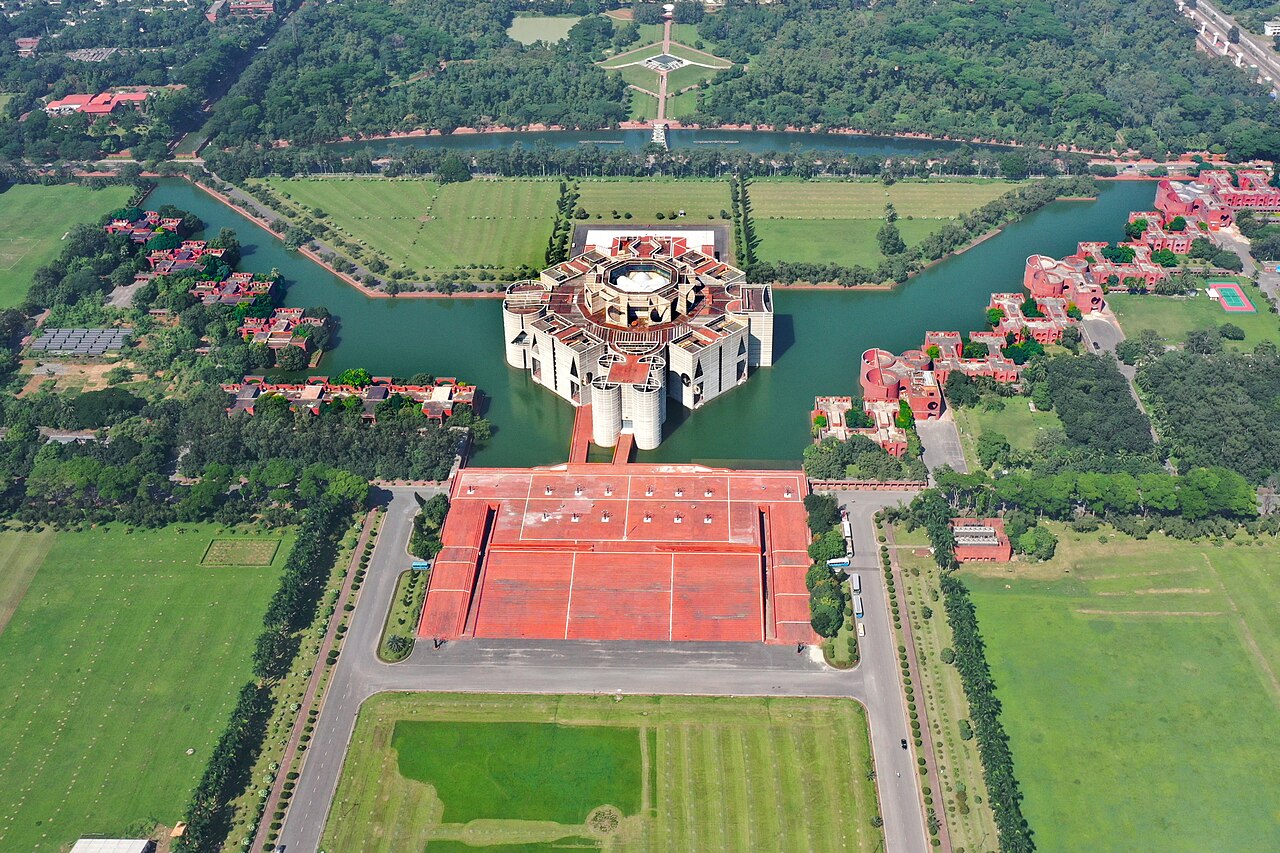
The legislative building of the Jatiya Sangsad complex
Among 80 religious and ethnic minority candidates, only four won, their victories largely secured by substantial margins, suggesting the persistence of local entrenchment rather than any broader opening of the political environment. Notable among them include Gayeswar Chandra Roy (Dhaka-3), Nitai Roy Chowdhury (Magura-2), Saching Pru (Bandarban), and Dipen Dewan (Rangamati).
Regionally, Rangpur delivered a historic rebuke to the Jatiya Party (Ershad), which fielded 196 candidates in its stronghold. However, it failed to win a single seat nationwide; its traditional base fractured between the BNP and the JeI. The erasure of the JaPa “plough” emblem from the parliamentary map has triggered intense debate over the party’s long-term political survival.
Against this, a set of gestures—small in themselves but without recent precedent— suggest an appetite, however tentative, for reconciliation. In Panchagarh, the Awami League office was unlocked in the presence of a local BNP leader, with supporters raising the national flag at the AL central headquarters.
Adding to this shift in tone, Sheikh Hasina’s son, Sajeeb Wazed Joy, indicated a willingness to open dialogue with Tarique Rahman. Tarique also took the initiative to visit JeI Ameer Shafiqur Rahman and NCP leader Nahid Islam soon after the election results were declared.
In a political culture historically defined by zero-sum tactics and institutional hostility, these scenes of dialogue and mutual recognition are exceptionally rare. Whether they become a pattern, or remain isolated gestures in the afterglow of a result, is a different question entirely.
A fresh start…
The newly elected members of parliament took oath on February 16, formalising the transition to the new government.
Tarique Rahman was sworn in as Prime Minister on February 16 as Bangladesh’s 11th and the country’s first male PM since 1991. Rahman leads a 50-member cabinet of 25 ministers and 24 state ministers, of whom 16 were taking office for the first time. In total, 41 of the 50 members, including the Prime Minister himself, were first-time holders of ministerial offices – a generational assertion of fresh faces, if not necessarily fresh politics.
The new council carries a distinctly dynastic overtone: Six cabinet members have stepped into portfolios that mirror their fathers’ political legacies, all of them first-time lawmakers. One has been elevated to a full ministerial post; the remaining five serve as state ministers.
Meanwhile, only three women decorate the new cabinet, a figure that, set against the already diminished female representation in the incoming parliament, offers little reassurance on the question of gender inclusion.
Geographically, nearly half the cabinet is drawn from the Dhaka and Chattogram divisions, with only two ministers representing Sylhet, a distribution that risks reinforcing a long-standing perception of centre-heavy governance. Rahman also appointed 10 advisers to his office, granting them the ranks of minister and state minister.
An examination of the ministers’ affidavits revealed that 19 full ministers and 16 state ministers identified themselves as businesspersons, making commerce the dominant professional identity of the new cabinet. Lawyers constitute the second-largest occupational bloc. Only two members—PM Rahman and Education Minister ANM Ehsanul Haque Milon—listed politics as their profession, while three are technocrats.
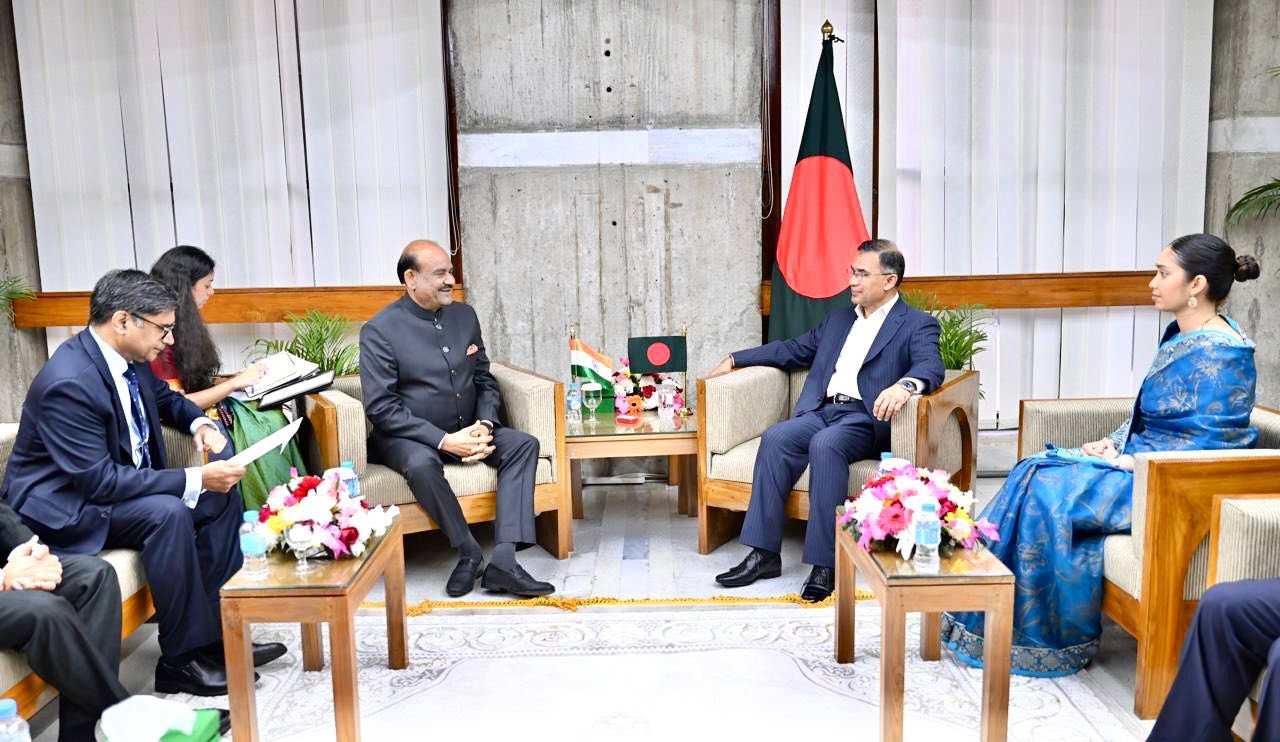 PM Tarique Rahman with Lok Sabha speaker Om Birla, who represented India at the swearing in ceremony
While PM Rahman retained direct control of the defence portfolio and oversight of the Armed Forces and Cabinet divisions, Khalilur Rahman, who served as the national security adviser under the interim government, has been appointed as the Foreign Minister.
Salahuddin Ahmed, a former victim of enforced disappearance during the previous Awami League government, has been assigned Home Affairs Ministry, a portfolio whose resonance is difficult to ignore given the ministry’s own history of abuse.
The other notable appointments include: Mirza Fakhrul Islam Alamgir as the minister for Local Government, Rural Development, and Co-operatives; Amir Khosru Mahmud Chowdhury holding the combined Finance and Planning portfolios; Major (Retd) Hafiz Uddin Ahmed heads Liberation War Affairs; AZM Zahid Hossain takes Women and Children Affairs alongside Social Welfare; Farhad Hossain Azad will serve in the Water Resources portfolio; and technocrat Md Aminul Haq will serve in the Youth and Sports portfolio.
Nitai Roy Chowdhury, a senior BNP leader, lawyer, and one of only four minority candidates to win a seat, has been appointed Minister of Cultural Affairs, a portfolio whose symbolic weight in the current political climate is difficult to overstate. Additionally, Dipen Dewan has been assigned Chattogram Hill Tracts Affairs, ANM Ehsanul Hoque Milon Education, and Sarder Md Sakhawat Hossain Health and Family Welfare.
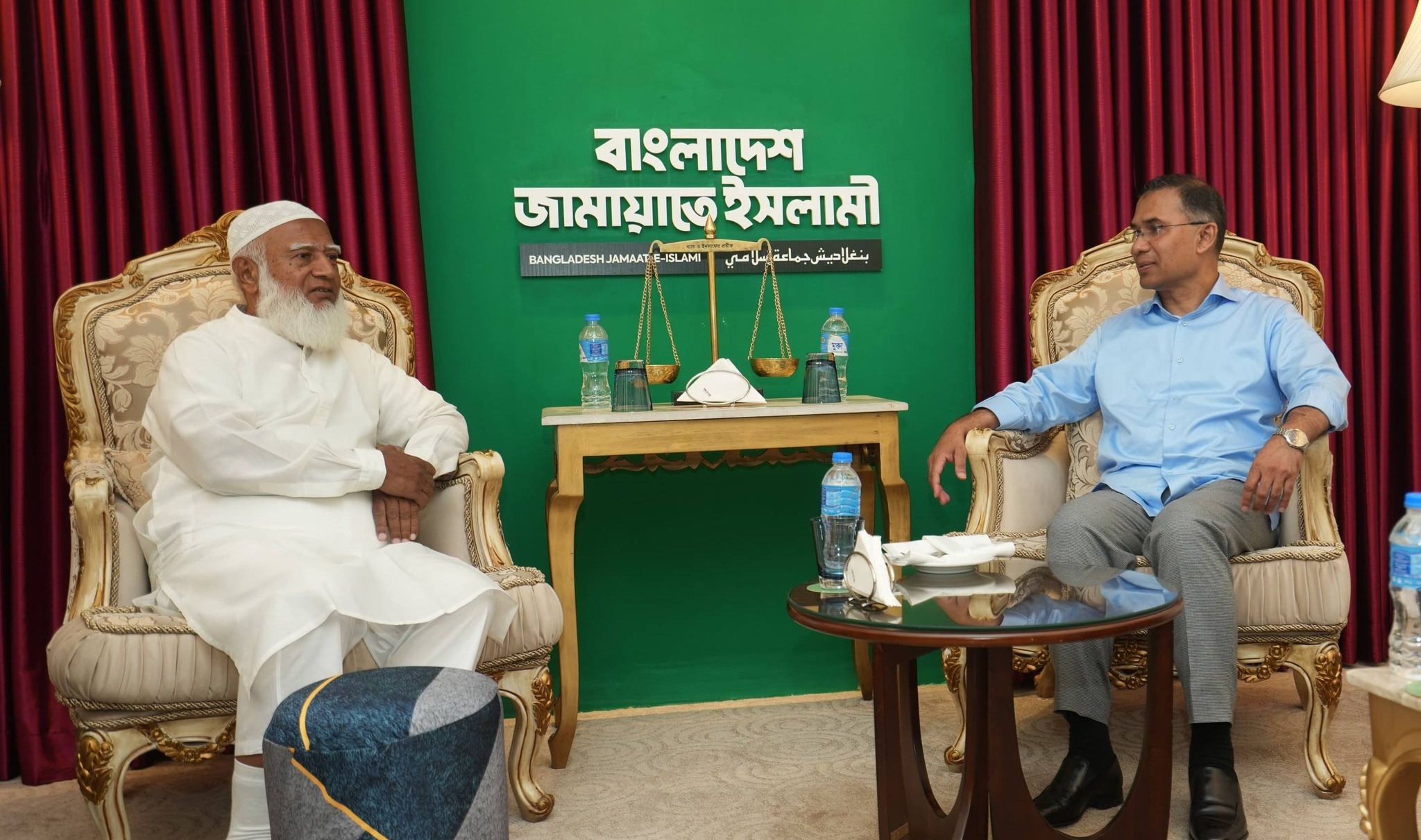 Tarique Rahman meets Shafiqur Rahman, the Amir of Jamaat-e-Islami, soon after the election result
And, new challenges…
This election victory is, above all, an opportunity—one that may not recur in the same form. Tarique Rahman’s most immediate test is the one closest to his own history: whether a party with a well-documented record of patronage and impunity can demonstrate that the new steward has genuinely broken with that inheritance.
A “top-down zero-tolerance” stance on corruption is not simply a moral aspiration; it is the prerequisite for the credibility on which everything else depends. The safety of minority communities and fostering national security will be the most visible indicators of whether the rhetoric of reconciliation is matched by the reality of governance.
The economic inheritance is formidable. Youth unemployment stands at 13.5 per cent, with nearly 2 million young people entering the workforce annually. The country’s GDP growth under the previous administration was unevenly distributed.
Such inequality, combined with frustrated aspiration, was among the conditions that led to the July uprising in the first place. The new government, hence, does not have the luxury of treating growth as a proxy for progress.
The BNP also faces an ideological reckoning made inevitable by its return to power. The JeI enters the chamber not as a compliant junior partner but as an alliance leader with 77 seats, its own electoral mandate, and an agenda that does not fully align with the BNP’s. How it chooses to deploy that position remains the central unanswered question of this new parliament.
The JeI’s leadership has spoken the language of constructive opposition and progressive governance throughout the campaign—promising institutional accountability, economic reform, and a politics rooted in public welfare rather than identity.
Whether that language survives contact with legislative reality, or gives way to the pursuit of an Islamist cultural agenda and the kind of pressure politics that has historically defined the party’s influence on the street, will determine whether its record parliamentary performance marks a genuine evolution or merely a more sophisticated iteration of the same instincts.
Managing a former ally that has become a principal rival—while simultaneously retaining millions of “disillusioned” former Awami League voters who have nowhere else to go, for now—demands a political dexterity the party has rarely demonstrated and cannot afford to improvise.
The ghost of 1996, when a government formed without AL lasted twelve days, remains the sharpest argument against governing as though inclusivity is optional. To retain these diverse sympathisers, the party must pivot toward a more inclusive “big-tent” platform that balances nationalist roots with the secular and progressive expectations of its new constituents.
Ramadan began shortly, offering the administration a brief respite from political pressure before the full weight of public expectation descends. This window, perhaps the BNP's most valuable political resource, should not be wasted on symbolism.
To secure its legacy, the new administration must prioritise economic recovery, the protection of minority communities, and the implementation of constitutional reforms mandated by the July National Charter referendum, which are not aspirations to be deferred. These are, invariably, the terms on which this government’s legacy will be judged.
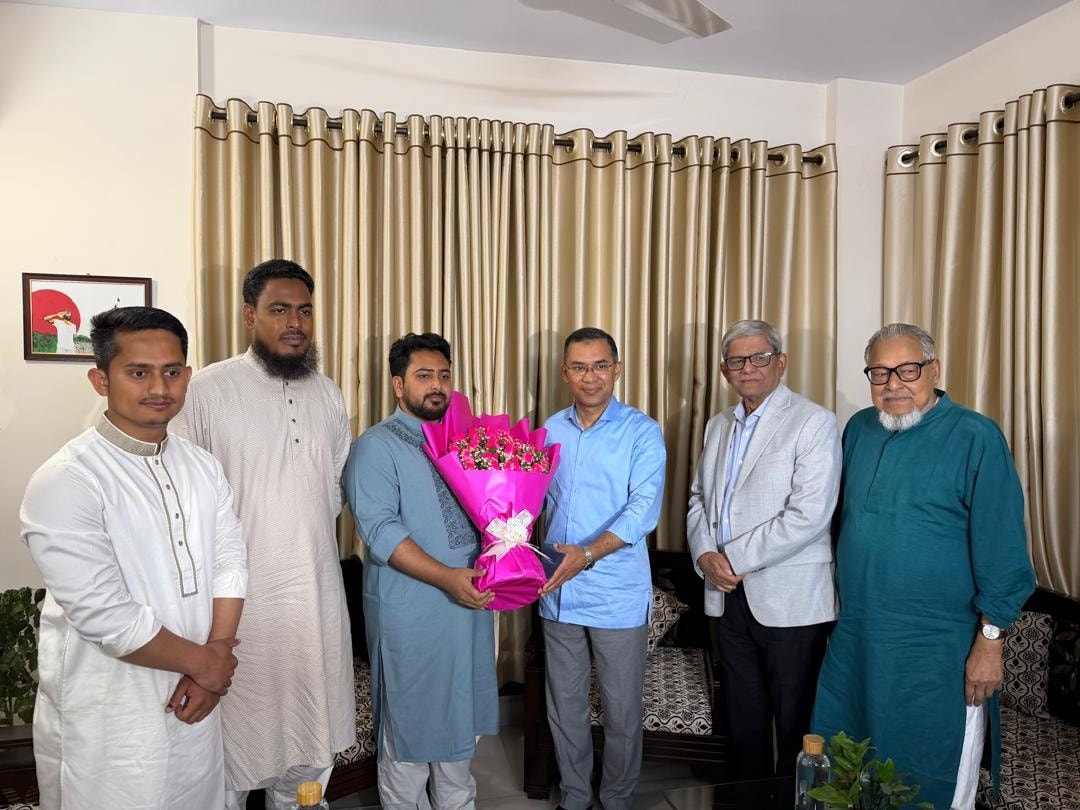
Tarique Rahman meets Nahid Islam and other NCP leaders soon after the election result
Bangladesh has stood at precisely such crossroads before, after 1991, after 2001, after 2007, and each time, the moment of possibility gave way to the same bitter cycle of reprisal, entrenchment, and democratic backsliding.
Tarique Rahman is not an abstraction. He is a man who was tortured by a government that feared what he represented, who lost his brother and buried his mother, who spent seventeen years watching Bangladesh from London, long enough, one would hope, to understand exactly what it looks like when it goes wrong.
Rahman did not endure all of that only to return home at sixty and govern with the Hawa Bhaban as a template. The distance between wanting power and knowing what to do with it has historically been where Bangladeshi politics may have time and again gone wrong.
(Views expressed in this report are the authors' own.)
Follow us on WhatsApp
Follow us on Facebook
Follow us on X @vudmedia
Follow us on Substack
