
In our December 2025 analysis on the Special Intensive Revision, we explained, based on the Bihar SIR, how the electoral roll ‘clean-up’ shifts the burden of legitimacy from the state to the citizen, making voting a conditional act of proof rather than a guaranteed right of democratic participation. When the SIR reached West Bengal, 91 lakhs were ousted, with 27 lakhs appealing and 66 lakhs still unaccounted for. When expanded nationwide, an astounding 13 crore adult citizens were deleted from the electoral rolls – by placing on them the burden of proof, not just of being bona fide voters but also of citizenship. From a constitutional body that went the extra mile to ensure every adult Indian voted, the Election Commission of India is now in the dock for democratic subversion. What were transparent templates for address changes to new voter registration and field verification, many of the established practices have been supplanted with questionable procedures and a refusal to come clean when challenged. An Indian Express report has led to the current uproar, protests, and calls for accountability. However, the real issues emerging from SIR are deeper, which we explore in this two-part series.
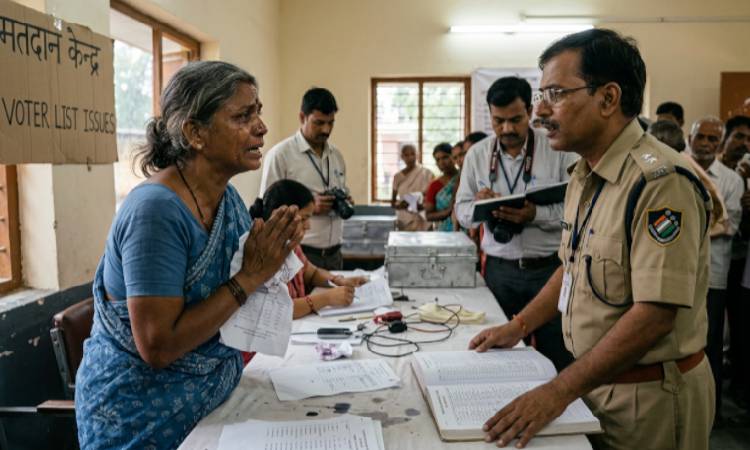
Text page and Banner images are AI-generated, for representational purporses
Deepthi (48) last voted in the 2020 Delhi assembly elections from the Delhi Cantonment constituency. She missed the 2024 Lok Sabha elections because she did not appear on the voter list for the Matiala constituency after shifting to Dwarka in 2021. She was also removed from the Delhi Cantonment voter list before the 2024 election. Her son Vishnu (20) voted in Matiala as a first-time voter in 2024 (both names changed).
Having missed the Booth Level Officer’s (BLO) visit to their new housing society in Dwarka during the enumeration drive in June 2026, both the mother and son find their names being struck off the voter list published by the Election Commission of India (ECI) in August 2026. as part of the Special Intensive Revision (SIR).
Having moved to Delhi after her marriage in 2003, Deepthi has no way to map herself to the voters' list prepared in the 2002 Intensive Revision in Delhi, as her spouse and parents are voters in Kerala. With both of his parents not figuring in the 2002 Intensive Revision list, Vishnu too has little chance of being mapped with this list.
An AI-generated image
In April 2026, the Chief Electoral Officer in Delhi issued an order/advisory in which it was specially stated that “those who have come from other states and have settled in Delhi after 2002, their name will not appear in the voter list of Delhi but will appear in the voter list of the last SIR held in their native state.”
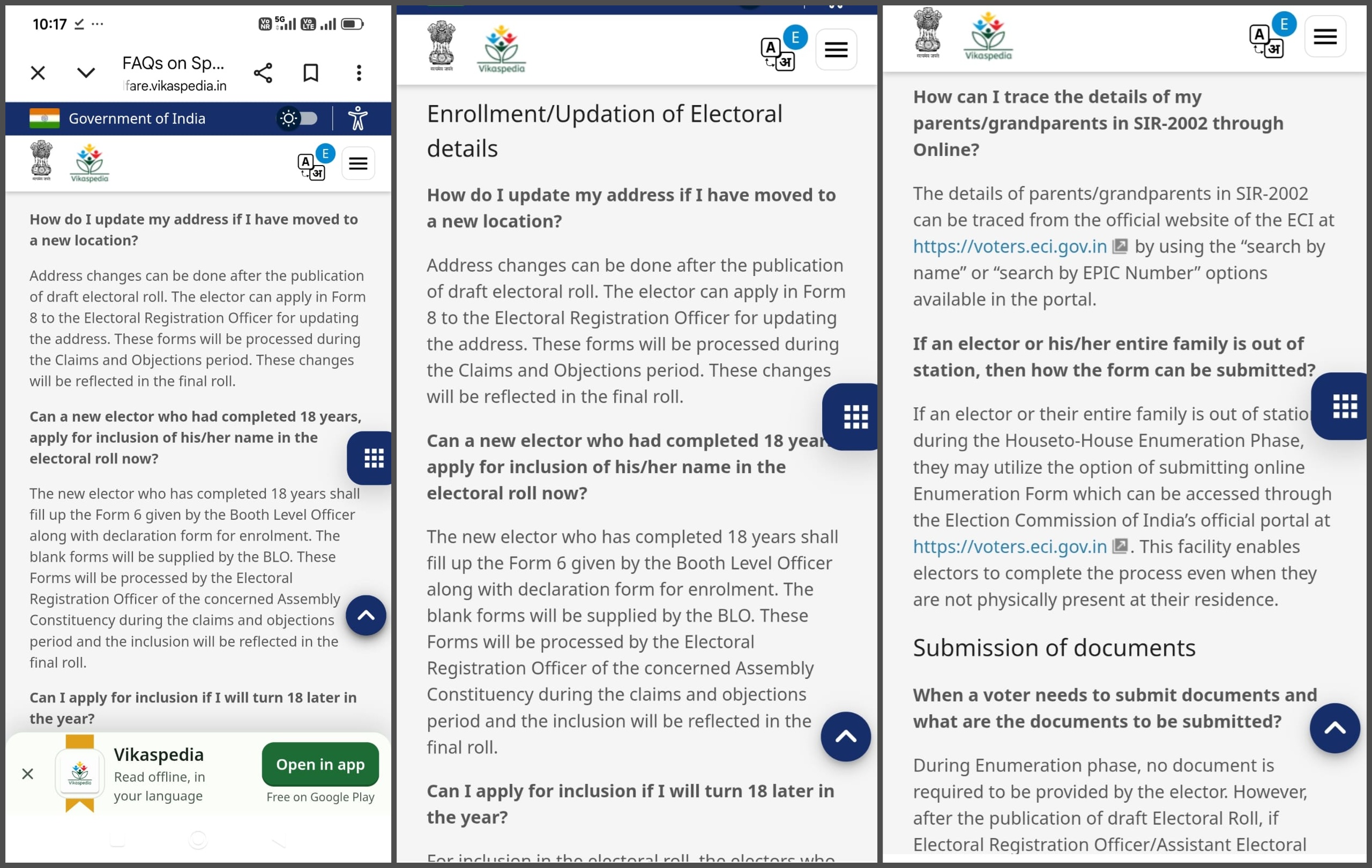
Deepthi had never voted in Kerala before and registered for the first time only in 2020. As for Vishnu, he turned 18 only in 2023. For voters not found in the previous SIR, the FAQ issued by the ECI states that, “in such cases, an elector can link himself/herself with his/her or relative’s entries in electoral rolls of the relevant last Special Intensive Revision of the respective States/UTs as the case may be.”
As per this instruction, this mother and son could only be able to link with their spouse’s/parent’s entries in Kerala, and not in Delhi. Both were not served notices, at their previous addresses. As per existing rules and practices, Deepthi and Vishnu should be furnishing Form-8 with their updated address in order to figure in the voters list.
However, Deepthi, having already been omitted from the Delhi Cantonment voter list, and Vishnu, not receiving any notice at his previous address, are only likely to be enrolled as new voters using Form-6, along with the controversial declaration wherein the newly registered voters have to declare that they are registering for the first time and were not issued an EPIC (Electoral Photo Identity Card) number earlier.
“I had used the online option to register in 2020, as did my son in 2024. Why should I now be in the queue for a hearing and be at the mercy of an official when I cannot show any of the listed documents to figure in the Delhi list?” Deepthi remarked to The Polity, adding that her Aadhaar was made in Delhi, but will not be accepted for domicile proof.
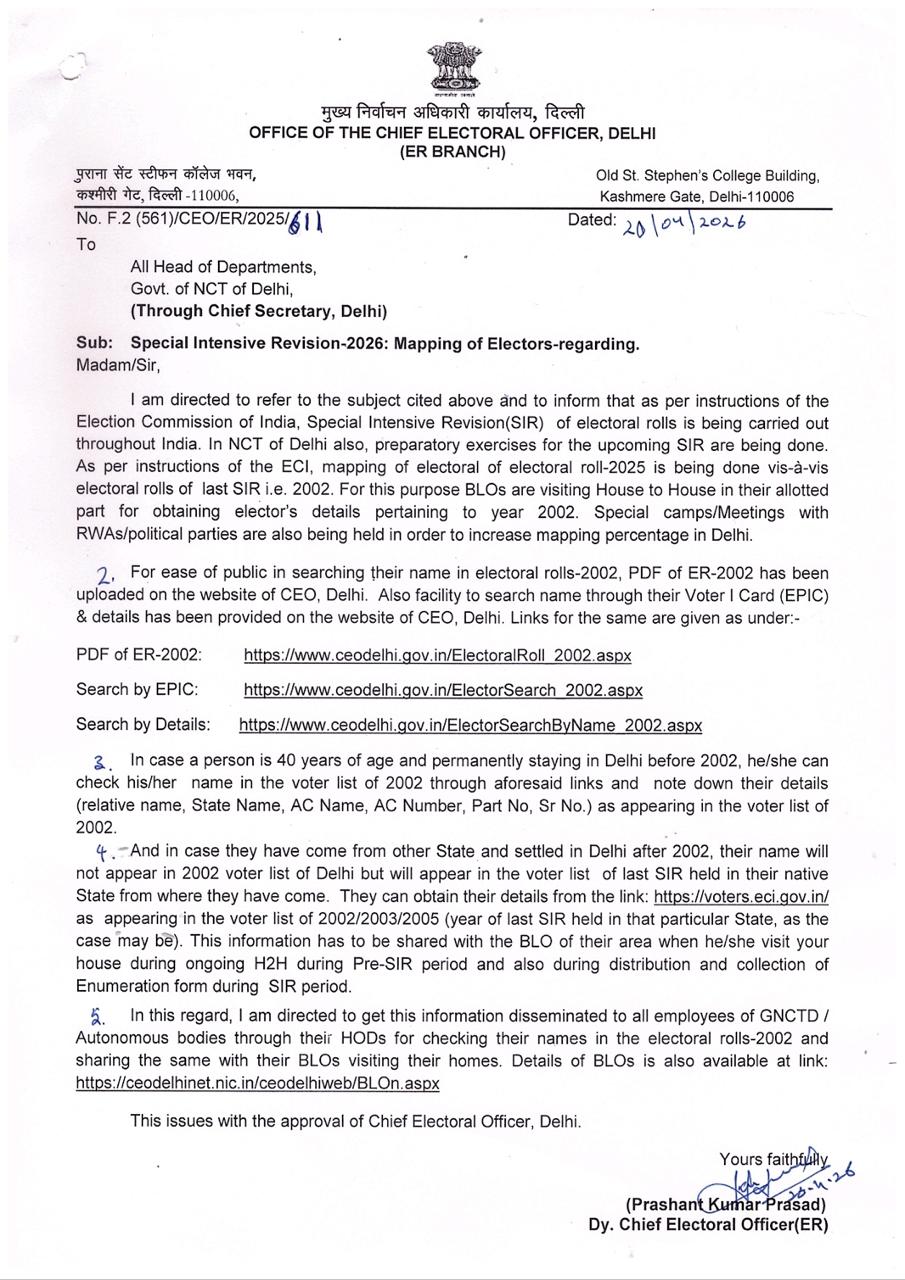
The circular issued by the Electoral Officer of Delhi before the SIR in the national capital. Note Paragraph 4.
Deepthi and Vishnu could be part of the roughly 47 lakh voters, accounting for around half of Delhi’s pre-SIR electorate, whose names have been excluded from Delhi’s draft electoral roll during the June SIR, or were part of the 13 lakh voters removed in the pre-revision window from early 2025 to mid-2026.
While the 47 lakh voters were placed in the ASDD (absent, shifted, dead or duplicated) or unmapped categories after the June enumeration, another 33 lakh voters on the draft roll have been reportedly flagged for “logical discrepancies” – a category controversially introduced by the Election Commission of India (hereafter, the EC) during the West Bengal SIR – and served notices for verification.
For voters like Deepthi and Vishnu, their sole hope now lies in the fresh ‘enrollment’ drive that has been announced by the EC for the ‘left out’ voters. This is following the controversy that emerged after an Indian Express report revealed a deep rift within the EC over the SIR and the unilateral actions alleged on the part of the Chief Election Commissioner (CEC), Gyanesh Kumar.
According to the Indian Express report, the two Election Commissioners, Sukhbir Singh Sandhu and Vivek Joshi, had complained about being kept in the dark on various steps, including additions and deletions in the voters’ lists, alleged to be directly controlled by the CEC and officials reporting to him.
The Election Commissioners had also reportedly objected to many actions taken as part of the nationwide SIR, which they have described as “unauthorised and illegal,” particularly the tampering of Form-6 for voter enrollment by adding provisions, in violation of the Representation of the People Act, 1950.
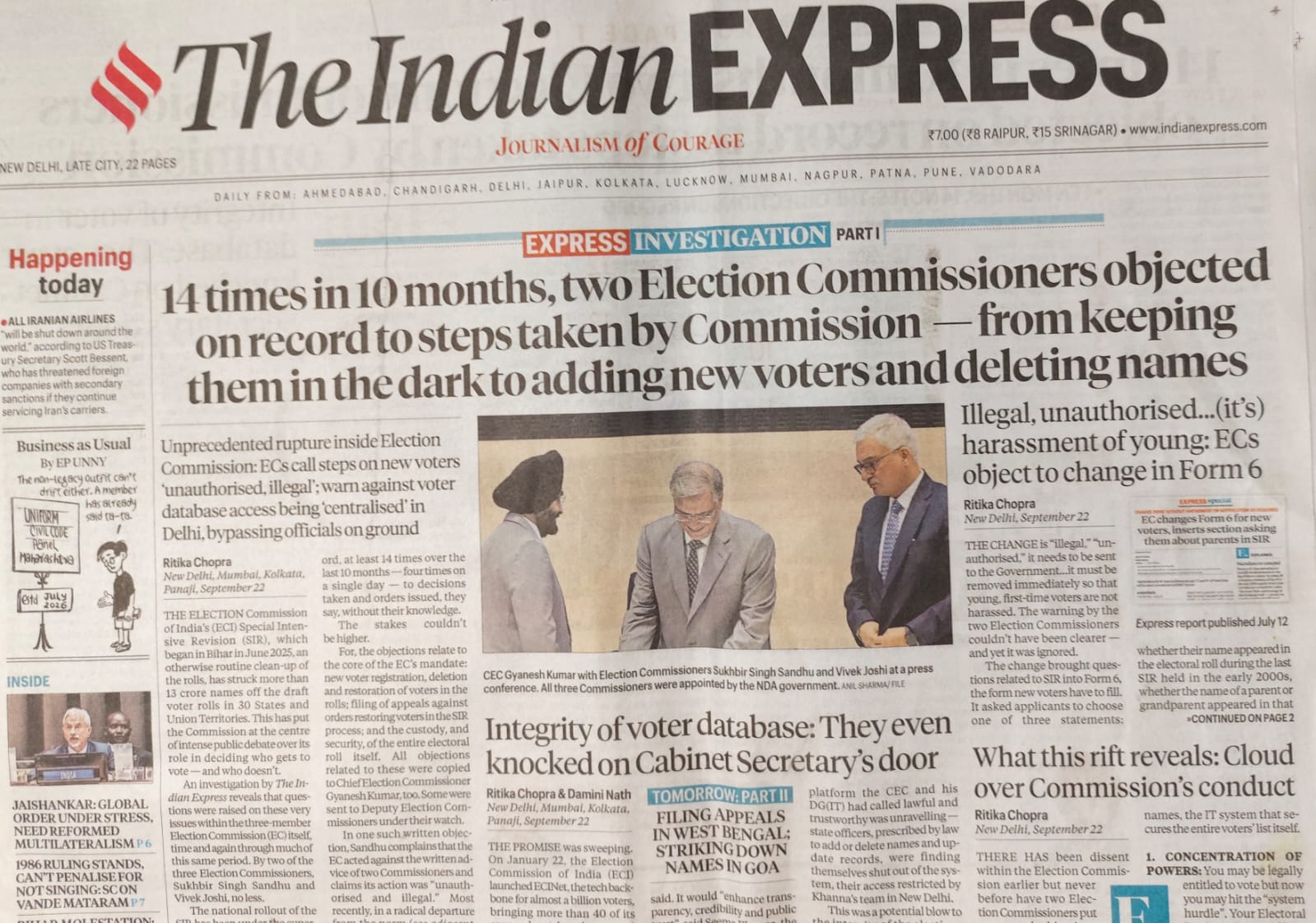
They had reportedly warned against the voter database being ‘centralised’ in Delhi, bypassing state officials, and raised concerns about the integrity of voter software (ECINet), stated to be operated by a private IT firm, allegedly with questionable tender allocation and lack of sufficient oversight over what is the software and data backbone of the electoral rolls.
Also highlighted in the Indian Express report were discrepancies in the SIR process in Goa, which added to the cloud already hanging over the controversial revisions and large-scale omissions in Bihar and West Bengal before crucial assembly elections in the preceding months.
As of September 2026, the SIR had deleted over 13.3 crore voters in the nationwide exercise, which not only raises questions on the objective of the exercise but also on what justifies this colossal disenfranchisement exercise, which could be the largest ever in the democratic world.
A press release from an EC official soon after the Indian Express report claimed these differences to be part of the EC’s internal deliberations. Following uproar and widespread protests, the CEC met with the two Election Commissioners on September 26th, and issued a press note with clarifications on the SIR and the controversial ECINet.
In the words of Yogendra Yadav, this two-page note was “a formal admission of guilt,” and a “sound legal basis to impeach the CEC,” as well as the other two Election Commissioners who approved this note.
The press note declared that the “agenda (for EC meetings) will be circulated in advance and minutes will be issued.” While this was supposed to address the grouse of the Election Commissioners that they were not consulted on crucial decisions, this statement is an acceptance that decisions are being arbitrarily taken by the CEC, as alleged by the two ECs.
However, this ‘admission’ had deeper connotations. In an earlier reply to a Right to Information (RTI) application by transparency activist Anjali Bhardwaj, the ECI had stated that no decision was taken to initiate a Special Intensive Revision, which implies that the SIR process was a unilateral exercise launched by the CEC, without following due process.
That raises fundamental questions about what drove the CEC’s decision to initiate the SIR, under whose instruction, if any, or what were the reasonable grounds to time it before the Bihar assembly election, and follow it up before the state polls in West Bengal, and above all, what were the justifiable objectives intended to be fulfilled by the exercise, especially when expanded and pursued at the national level.
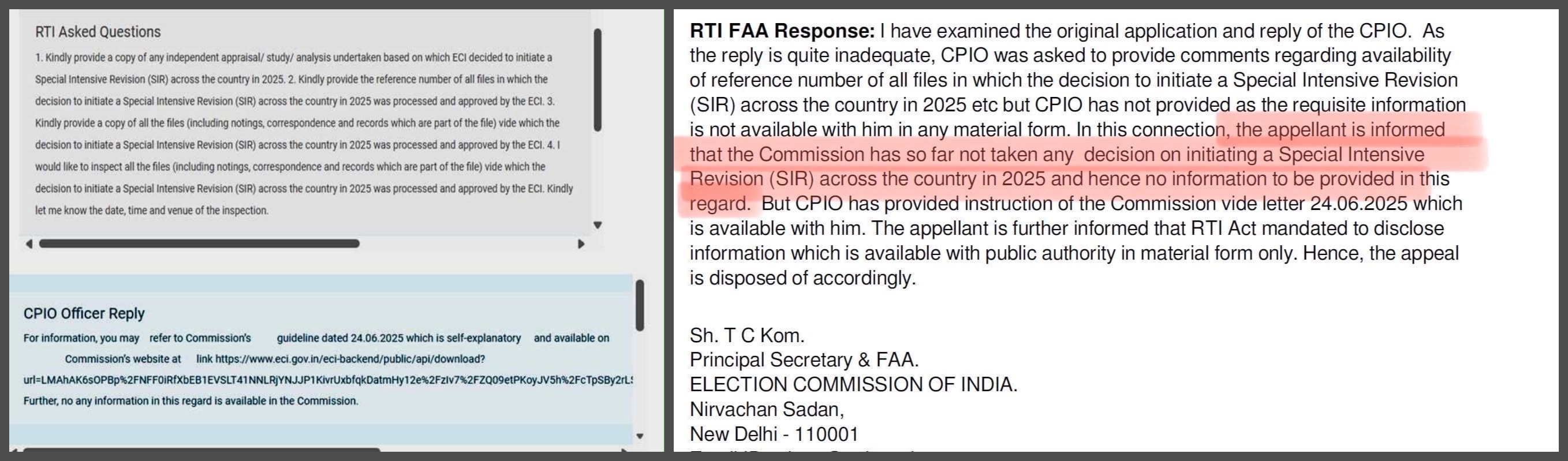
The questions raised in the RTI application by Anjali Bhardwaj (left), and the reply received from the ECI (right)
Vague objectives and dubious procedures
Until recently, the Election Commission was known to walk the extra mile to ensure that every adult Indian citizen gets the opportunity to exercise his, her or their franchise.
It is folklore in Indian democracy how election officials travel and trek to the farthest corners of the country to ensure every voter gets to vote. Celebrated are stories of one-man booths being manned in remote corners to ensure even the last voter does not miss out. Even the present-day EC pivots selfie-centric social media campaigns on voting days as a symbol of its ‘successful’ mission.
A former CEC, S Y Qureshi laments how the ECI once took pride in encouraging every Indian youngster who turned 18 on every January 1 to register immediately. The Union cabinet’s 2011 decision to mark January 25 as National Voters’ Day also reflects this approach.” The message, Qureshi asserts, was to ensure that no eligible citizen should “unnecessarily wait to exercise the franchise,” also asking what happened to it in 2024.
From ensuring every adult Indian citizen is enabled the opportunity to vote, the EC has turned the 2025-2026 SIR into an exercise that forefronts exclusion and mass disenfranchisement, besides casting aspersions on the credentials of voters, whose citizenship, mortal existence and fundamental political rights are being challenged.
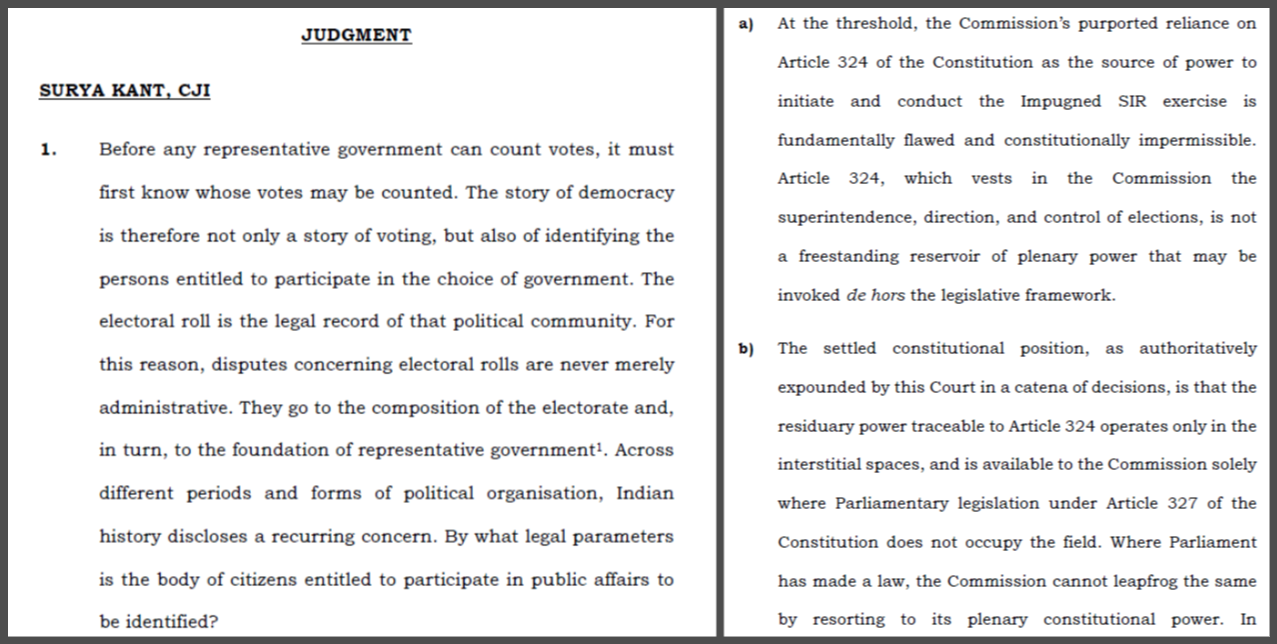
The opening statement by the Chief Justice of India in the order on the Bihar SIR (left), and first set of arguments raised by the petitioners (right)
In a late September 2026 letter to the Chief Electoral Officers of all States and Union Territories, the ECI instructed that preparation of a list of electors whose names had been left out, make door-to-door visits to ascertain their present status and ensure their enrolment through Form 6, “if the concerned person is found eligible.”
While every adult Indian is naturally ‘eligible’ to cast a vote, the purpose of every periodic electoral revision is to ensure three things: the voter is alive, does not figure in multiple voters lists and is a citizen of India, whether born or naturalised. All previous Intensive Revisions since the 1950s, and state-wise electoral roll revisions before upcoming elections, pursue these objectives.
Albeit the SIR 2025-2026 was also supposed to move along these lines, its declared objectives since the outset had clear political undertones. Equally disconcerting has been the unprecedented nature of procedures employed, which included cumbersome tiers of verification that placed the onus of proof on voters, with exclusion instead of authentication emerging as a dominant character of the exercise.
Where are the ‘infiltrators,’ and how many in the voters list?:
During a discussion on electoral reforms in the Lok Sabha on 10 December 2025, the Home Minister Amit Shah stated that SIR is about “removing names in case of death or if someone is registered in two places, adding names when someone turns 19 and selectively deleting infiltrators.”
He further added that “our party’s policy on infiltrators is: Detect, Delete and Deport,” emphasising that not even a “single infiltrator will be allowed to vote in the country.” The Home Minister thus confirmed the SIR to be a government-backed exercise, rationalised as a ‘cleaning up’ initiative but with clear awareness that larger sections of ‘eligible’ voters could end up losing their voting rights.
The question is moot whether the political leadership intended such large-scale exclusion and sought to accrue electoral benefits, especially in crucial states like Bihar and West Bengal, or even on a national scale.
Such questions aside, months after the SIR was initiated in two poll-bound states, Bihar and West Bengal, and then expanded nationwide, the ECI has not publicly shared any lists of people identified as “foreign illegal immigrants,” a term used by the Commission in its June 2025 announcement of the SIR.
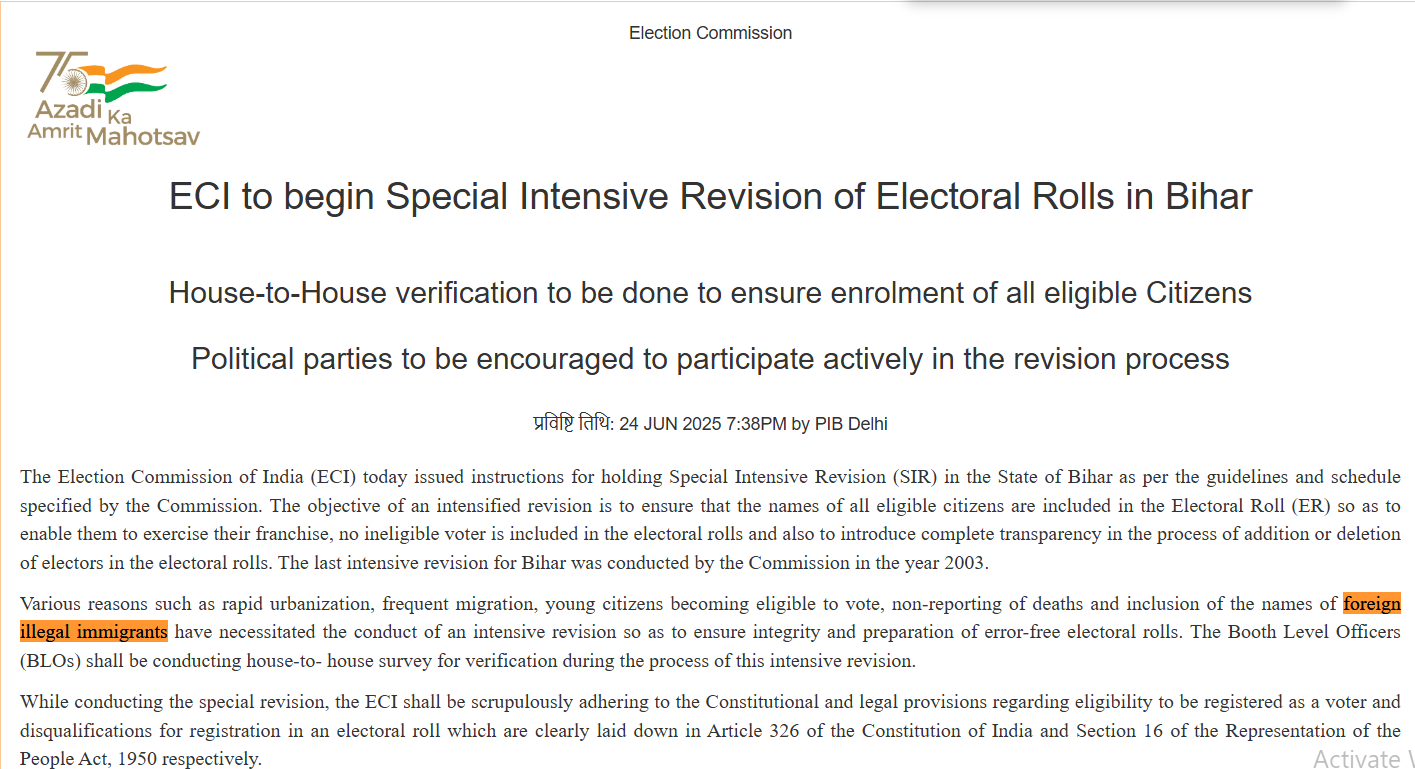
At a October 20 25 press conference in Patna, the CEC refused to provide any details about the number of “foreign illegal immigrants” found in the rolls, despite claiming “wrongful inclusion of foreigners” as one of the reasons for the SIR. Claiming that data is ‘centralised’ with electoral registration officers (EROs), the CEC stated that while deletions were on account of death, shifting or being untraced, foreign nationals were potentially included in the ‘untraced’ category.
Both are contentious claims. First, various reports from the Indian Express and other media platforms have described the heavy centralisation of the SIR process in the ECI, with the repeated requests by state electoral officials for access to the roll and related databases being denied or not receiving responses in time.
Second is the assertion made by the CEC that foreign nationals could be in the ‘untraced’ category, which implies that the claim has no substantiation and is made as a speculative statement. Such a claim or classification based merely on speculation raises questions about the credibility of the process and its objectives, especially when “weeding out infiltrators” is touted as the most significant one.
Despite no substantial list of ‘foreign illegal immigrants’ being identified in the SIR or of people thus identified being deported under the Foreigners Act, the BJP and Union government ministers continue to make statements around this aspect.
In March 2026, the BJP President Nitin Nabin claimed that ‘over 50 lakh infiltrators’ have been removed from West Bengal electoral rolls through the SIR. Nabin’s statement came after the revised electoral list of February 2026 showed the deleted voters as 63.66 lakh, as opposed to the 91 lakh in the first SIR list and after 27 lakh appeals were filed, of which the EC stated that 93 per cent of the voters have won their appeals.
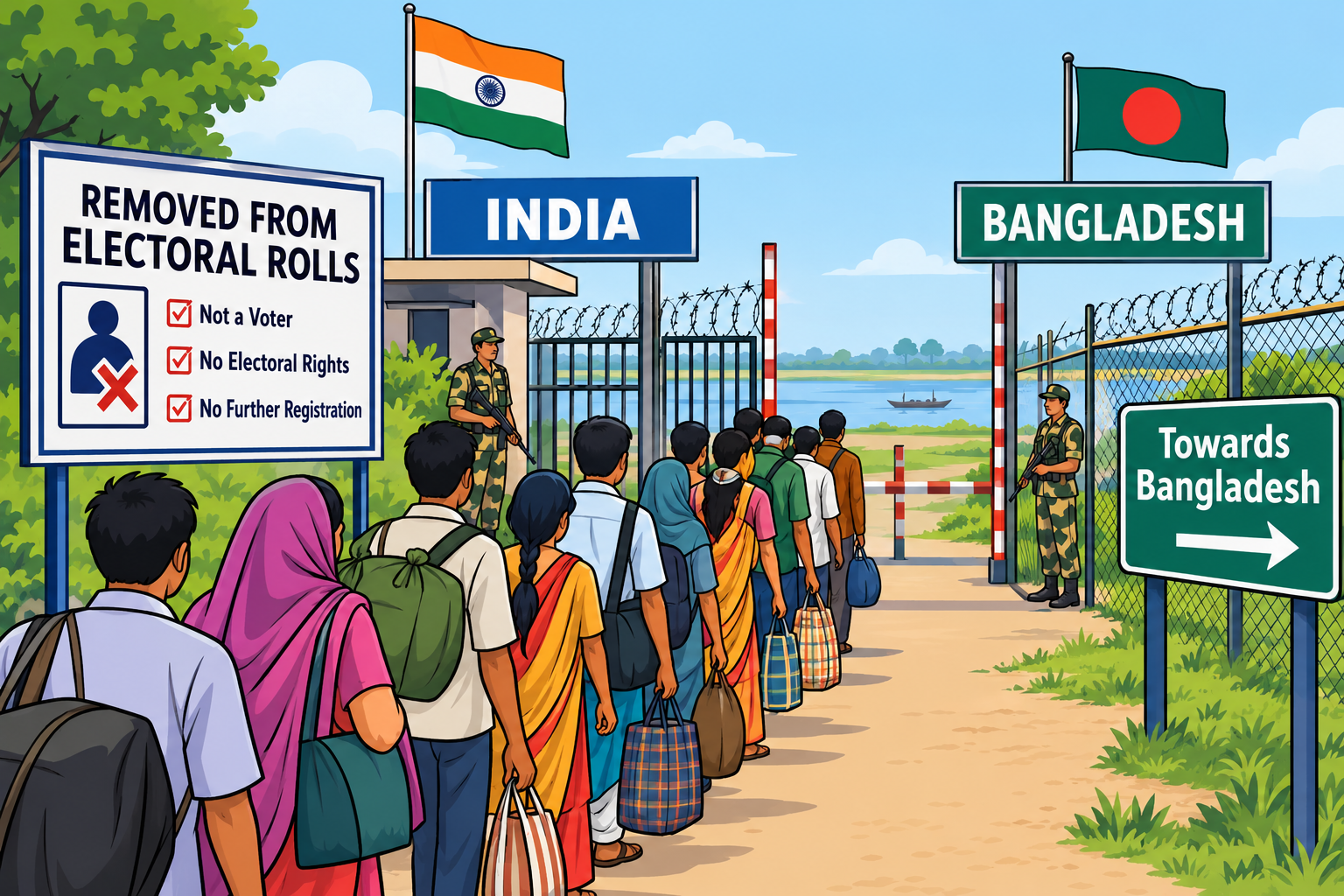
An AI-generated image for representational purposes
On 13 October 2026, the Home Minister Amit Shah accused the Leader of Opposition, Rahul Gandhi, of shielding “infiltrators” for “vote bank politics.” Shah repeated this charge on October 22nd in Punjab, despite many reports citing the lack of records on how many ‘illegal immigrants’ were identified by the SIR.
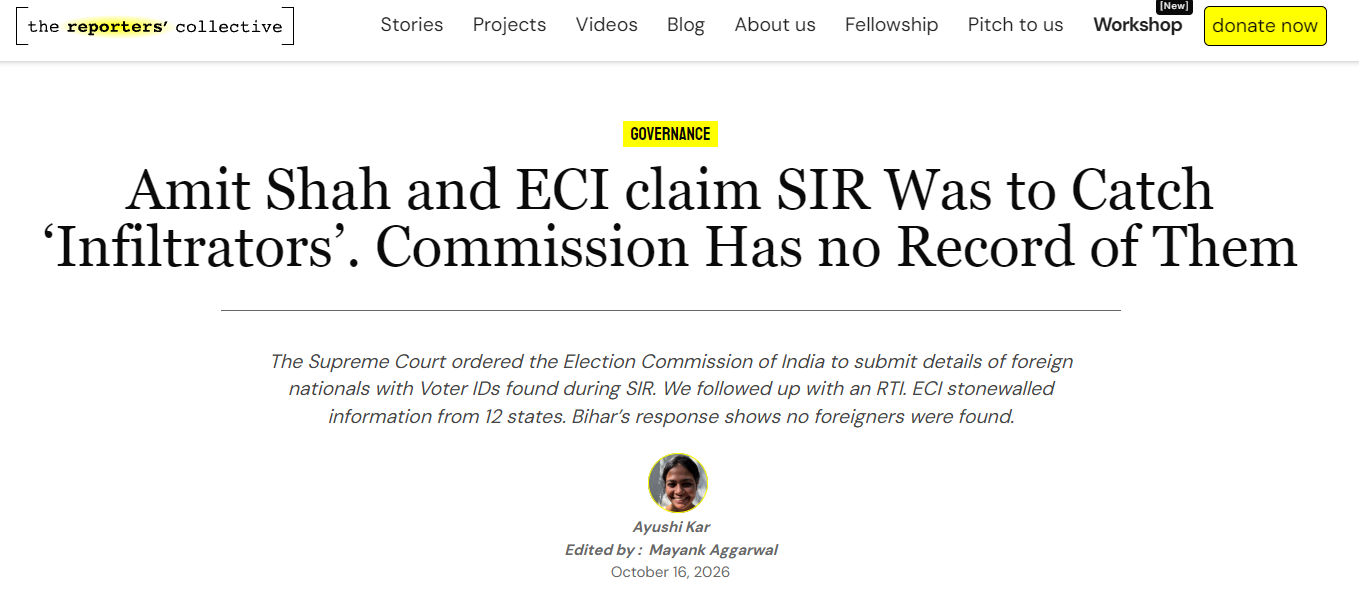
A Reporters’ Collective investigation, published on October 16th based on the ECI’s software and the Commission’s “response to our Right to Information (RTI) Act applications shows the ECI had no mechanism or process to tag any of the 13.39 crore deleted voters as ‘foreigners’.
The report cites the Supreme Court order of 27 May 2026, which instructed the ECI to refer, within four weeks, the “cases where people have been deleted on the grounds of being ‘not citizens’ to a competent authority under the Citizenship Act, 1955,” which is the Ministry of Home Affairs (MHA).
While there are no reports of the ECI submitting any such list to the court, the Home Minister continues to make statements about infiltrators being ousted by the SIR, and yet is not making public any such list shared by the ECI.
At the same time, in response to an RTI, the Home Ministry had stated that it does not have any centrally available data regarding the identification, arrest or deportation of infiltrators in the country. “The powers to detect, restrict movement, and deport illegal foreign nationals/illegal immigrants have been delegated under Sub-section (2) of Section 7, 13 and 29 of the Immigration and Foreigners Act, 2025 to all State Governments/UT Administrations,” the MHA said in its reply to this RTI.
Therein, a major political plank of the SIR, which the ruling BJP and the Narendra Modi government used to justify the exercise, loses traction. In fact, there were reports of people attempting to cross into Bangladesh following the initiation of the SIR. There were also reports of Bangladesh authorities sending back people ‘pushed’ across the border after the SIR, after reportedly identifying them as Indian citizens.
Following the BJP's victory in West Bengal and Suvendu Adhikari taking over as Chief Minister, there were reports of deportations and holding centres set up at various points along the India-Bangladesh border.
As per the official communication from the state’s Home and Hill Affairs Department, there were "necessary steps for housing individuals identified as staying illegally in the country, including those who have completed prison sentences and are awaiting deportation.” The directive also instructs authorities to act “as per the MHA framework on deportation and repatriation procedures for Bangladeshi nationals and Rohingyas found residing illegally in India.”
While this exercise comes months after the SIR and subsequent assembly election in West Bengal, there has been no means to establish the number of deported 'foreigners' having figures in either the voter list or in the deleted list as per the SIR.
With the Ministry of Home Affairs and the ECI passing the buck and refusing any consolidated list of the ‘foreign illegal immigrants’ identified by the SIR, it could be assumed that such numbers could be negligible or confined to one or two states, which could not justify using the same parameter for intense scrutiny of voter lists on a national level.
The fact that the ruling regime continues to resort to the ‘infiltrator’ argument to counter the opposition and justify the SIR indicates that this will remain a bulwark in the political campaign, instead of trying to defend the SIR on merit, if any. However, there is potential for this campaign to backfire, especially when the MHA has to formally answer questions on the actual numbers of ‘foreign illegal immigrants’ in the country, their origins, the level of deep assimilation, and on how many were identified and deported.
Flawed from the outset: By design?
Talking to The Polity, some political observers, who did not wish to be identified, indicated that the continuing reliance on the ‘infiltration’ argument, despite evidence to the contrary, might be a harbinger of a larger political game plan.
When read with the issues of citizenship documentation and disregard for Aadhaar (covered in Part-II) until the Supreme Court stepped in, the likely plan could be to prepare the ground for a new national identification framework or to revive a nationwide implementation of the National Register for Citizens (NRC), as measures to follow the SIR.
The Indian Express report of September 22, which had led to the nationwide uproar and protests against the CEC and the SIR, revealed only the differences between the CEC and the two Election Commissioners, along with indicating the unilateral actions of the CEC and his associates at the Commission.
However, the issues with the SIR and its implications have been in the public domain from the time it was first initiated in Bihar, followed up in West Bengal and expanded on a national scale.
The inherently and extensively exclusionary approach of the exercise, its customisation in ways that could be politically exploited, especially by some political parties, the disinclination of the Supreme Court to consider key flaws and glaring shortcomings in the procedures, as well as the question of whether a ‘Special’ Intensive Revision was permissible as per law were issues already in discussion, without being addressed by the concerned constitutional and political entities.
In Part-II, we will look at the Aadhaar imbroglio and the 11 documents for authentication, the Form-6 conundrum, the insights from Bihar and Bengal, the alleged political nexus and the judicial role.
Follow us on WhatsApp
Follow us on Facebook
Follow us on X @vudmedia
Follow us on Substack
