
For years now, Saudi Arabia has been seeking a respectable exit from the strategic swamp it had been locked in – as the regional actor in the Yemen conflict. The reported attack by the Houthi rebels on the Saudi capital, Riyadh, had called into question the operability of Saudi’s recent defence pacts, first with Pakistan, and then coopting Turkiye. With the Houthis drawing Saudi into an ‘asymmetric’ matrix, the current escalation reaffirms how easily an unresolved conflict can re-emerge with greater military sophistication. Initial signs from the partners indicate one message: collective defence need not mean collective war-fighting. While Pakistan does not seek to be involved in any expeditionary intervention that could be detested by Iran, for Turkiye, the pact is about strategic interdependence rather than battlefield solidarity. The crisis, thus, tests whether the envisaged collective-security mechanism could become a militarised bloc, with collective deterrence having potential for collective escalation and deepening regional polarisation, points out Professor Swaran Singh in this 32nd edition of Asia Watch.
Home page image is AI-generated for representative purposes
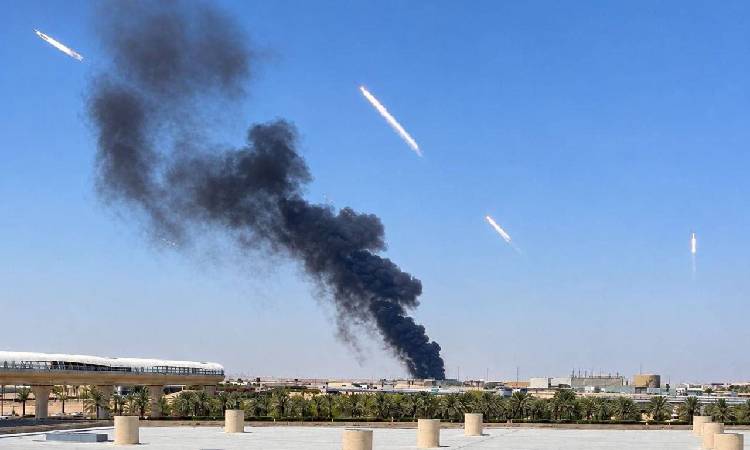
Text page image: An image released by Ansar Allah (the Houthis group) of missiles supposedly fired at Riyadh
Banner image: Collage images of Houthi fighters protesting an air strike (photo credit: Henry Ridgwell via Wikimedia Commons) and the signatories of the Mecca Accord
There is something deeply revealing about a missile streaking towards Riyadh. It is not merely a projectile crossing the Saudi skies; it is a question mark travelling at supersonic speed across a rapidly changing Middle Eastern security precipice.
On September 19, Saudi Arabia claimed that the Houthis had attempted to strike Riyadh with a ballistic missile — the first reported Houthi attack on the Saudi capital since the latest escalation began. Saudi Arabia also reported attacks or attempted attacks on other locations and energy infrastructure, while the Houthis have expanded their military reach along Yemen’s Red Sea coast.
For Riyadh, this presents a very uncomfortable moment. Saudi Arabia has spent the past several years trying to move away from the exhausting logic of permanent war. Having sought a negotiated political settlement with the Houthis in the past, Saudi’s Vision 2030 aims to shift toward economic diversification, tourism, foreign investment, and diplomatic outreach.
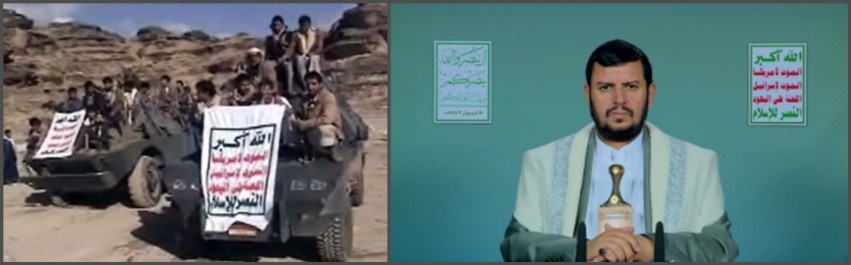
Ansar Allah (Houthi group) fighters (left), and their leader Al-Sayyid Abdul Malik Badruddin Al-Houthi (right)
But all this requires a region that is sufficiently stable to permit such a transformation, while the Houthis have brought the language of war back to Saudi skies.
Only this time Riyadh is not alone. In September 2025, Saudi Arabia and Pakistan signed a Strategic Mutual Defence Agreement. In August 2026, Saudi Arabia, Pakistan and Türkiye went further, signing the Makkah Joint Defence Agreement, under which an armed attack against one is regarded as an attack against all three.
This second agreement also seeks deeper defence cooperation and collective deterrence.
The Houthi attacks, therefore, pose a deliciously difficult question: when does a defence pact become a war pact? What has been the experience so far, and in what way are these two pacts likely to unfold in this evolving perilous scenario? These are factors that could determine the future of Gulf security architecture.
The pacts meet reality
On paper, the Makkah agreement sounds formidable. Saudi Arabia brings enormous financial resources, strategic geography and energy power. Türkiye brings a large military, a sophisticated and increasingly successful defence industry and extensive experience with drones and expeditionary operations. Pakistan brings one of the region’s largest standing militaries and decades of defence cooperation with Saudi Arabia.
Put together, this triangle looks like the beginnings of a new regional security ecosystem. But alliances are never tested by signatures in ceremonial halls. They are tested when the first missiles begin to fly. And the initial signs from Pakistan and Turkey in the wake of the Houthi attacks are loud and clear: collective defence need not mean collective war-fighting.
Pakistan has publicly reiterated its commitment to Saudi defence. On September 18, Pakistan’s military spokesman said that “his country will defend” Saudi Arabia and stressed that Pakistani personnel were already deployed in the kingdom.
However, as history shows, and as more recent responses confirm, Pakistan will not put its foot soldiers in Yemen unless Saudi Arabia does, which appears unlikely given its previous lessons on its limits and costs fighting the Houthis during 2015-2022.
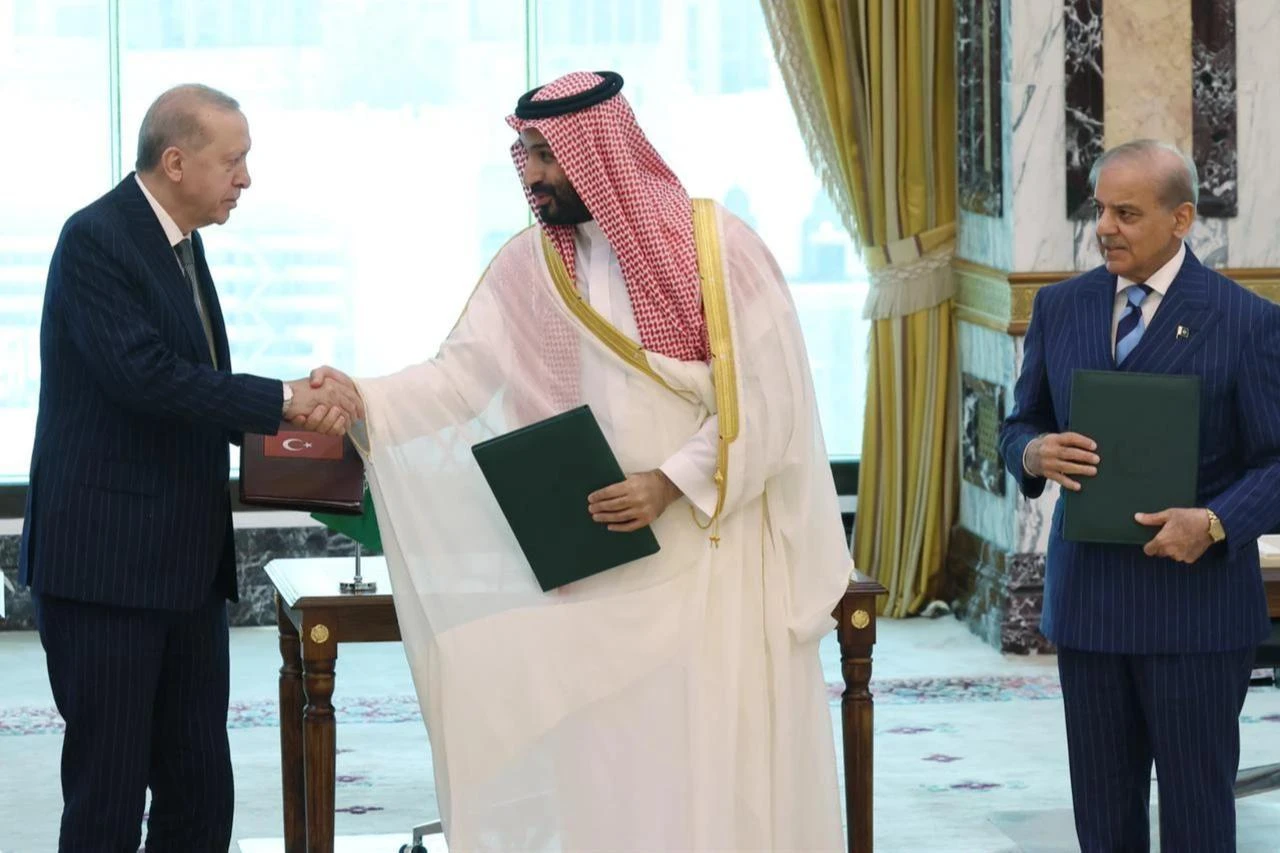
Saudi Crown Prince Mohammed bin Salman shakes hands with Turkish President Recep Tayyip Erdogan during the Mecca Accord signing, as Pakistan Prime Minister Shehbaz Sharif watches
Their recent Makkah Joint Defence Agreement describes itself as defensive. Pakistan’s Foreign Ministry has explicitly said that it is not directed against any particular country and is intended to strengthen collective deterrence and the defence of sovereignty and territorial integrity.
However, Riyadh could invoke the spirit of collective defence without asking Islamabad or Ankara to re-enact the old 2015 Saudi-led intervention in Yemen. That may define the pact’s emerging doctrine: Defend Saudi Arabia — but do not inherit Saudi Arabia’s Yemen war.
Yemen is the trap
The Houthis fully understand the limitations of this ambiguity. Their military strategy has increasingly sought to blur the distinction between the Yemen battlefield and the Saudi strategic space. Accordingly, the Houthis reiterate that they will attack only the Saudis.
These include attacks on Saudi territory and energy infrastructure that raise the cost of Riyadh’s support for Yemen’s internationally recognised government. Plus, the reported Houthi advances along Yemen’s western coast and around the Red Sea have added a maritime dimension to the confrontation.
Images via Wikimedia Commons
This is classic asymmetric strategy: the weaker actor does not need to defeat the stronger actor everywhere. It needs to create enough vulnerability, uncertainty and cost to change the stronger actor’s calculations.
Saudi Arabia learned this lesson painfully during its previous intervention in Yemen. And, thanks to Iranian backing, the Houthis today possess a much more substantial missile and drone capability than they did when the Saudi intervention began in 2015.
Despite overwhelming material superiority, years of Saudi-led military operations did not produce a decisive defeat of the Houthis. The 2022 UN-mediated truce had dramatically reduced violence, yet it never produced a final political settlement for this simmering crisis since the mid-1990s.
The current escalation only reaffirms how easily an unresolved conflict can re-emerge with greater military sophistication.
For Riyadh, therefore, another full-scale ground intervention would only mean stepping back into a strategic swamp from which it has spent years trying to find a respectable exit. As regards its newfound defence pact partners, Pakistan and Türkiye, entering that swamp would be even more complicated.
Islamabad’s strategic conundrum
Pakistan presents the most interesting piece of the puzzle in the new Saudi security strategy. Its relationship with Saudi Arabia is unusually deep — military, economic, political and societal.
The September 2025 Strategic Mutual Defence Agreement had reinvigorated that relationship, creating new formal security links. The International Institute for Strategic Studies had described the agreement as creating new security linkages between South Asia and the Middle East, although many of its operational details remain unclear.
Pakistan also has to confront another geographical reality: Iran. Islamabad shares a problematic border with Iran and has repeatedly sought to maintain workable relations with Tehran. Starting from its taking the mediation role in the US-Iran conflict, it has been attempting to play a larger diplomatic role amid the wider regional confrontation.
A Pakistani expeditionary intervention against the Houthis could, therefore, transform a delicate balancing act into a strategic collision.
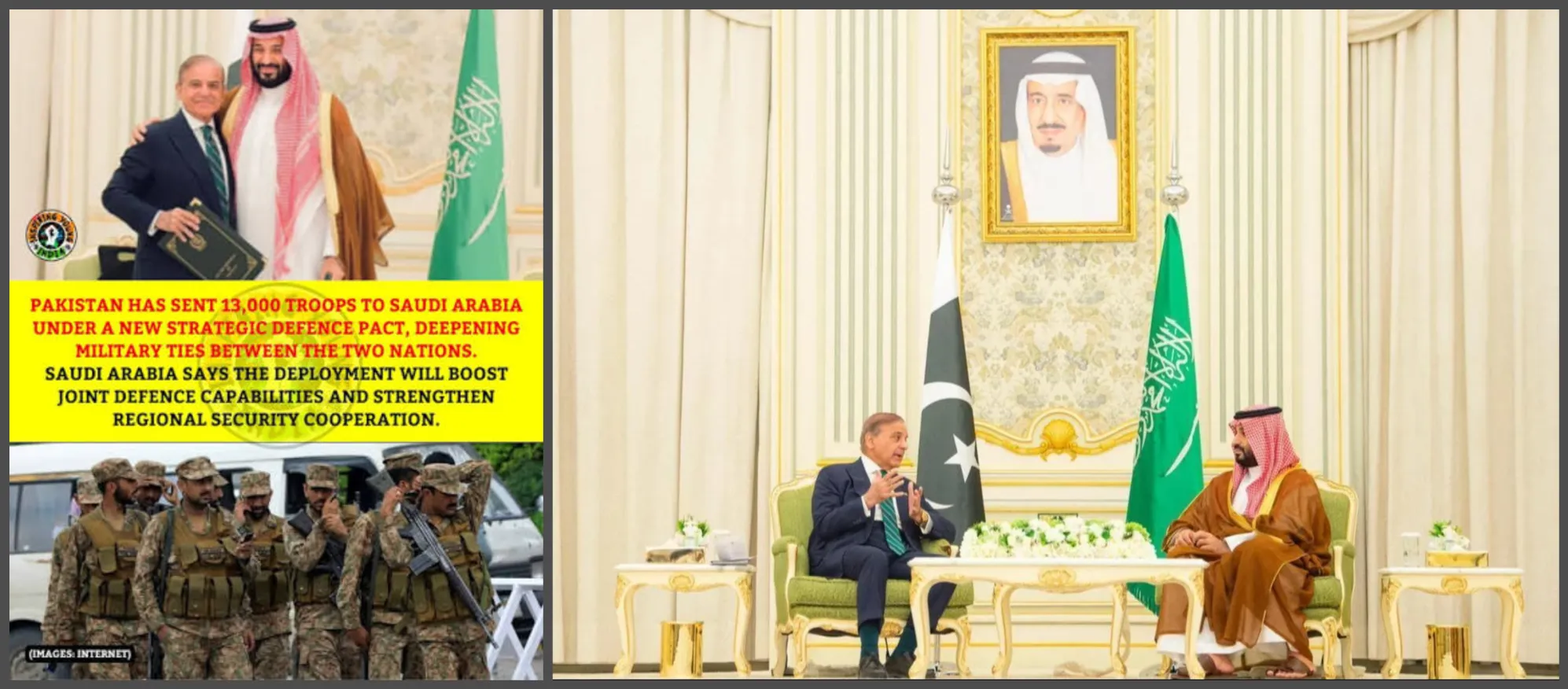
But Pakistan can also defend Saudi territory without directly fighting the Houthis in Yemen. With its 8,000 troops and 16 aircraft deployed in Saudi Arabia, Islamabad “may already be assisting” Riyadh’s air defence, intelligence, surveillance, logistics, military training, protection of critical infrastructure and reinforcement of Saudi airspace could all strengthen Riyadh without turning itself into a direct participant in Yemen’s civil war.
That is why Pakistan is more likely to ‘defend’ Saudi Arabia without waging a direct war on Yemeni territory. This difference is strategically decisive.
Ankara’s calculus
Türkiye’s position remains equally intriguing. The Makkah pact has brought Ankara much closer to the Saudi security equation. However, Türkiye has no obvious interest in becoming another combatant in Yemen.
The agreement was presented as defensive and open to deeper cooperation rather than as an anti-Iran military alliance. Its first committee meeting in Istanbul focused on collective defence capabilities, interoperability and defence-industrial cooperation. That was revealing in itself.
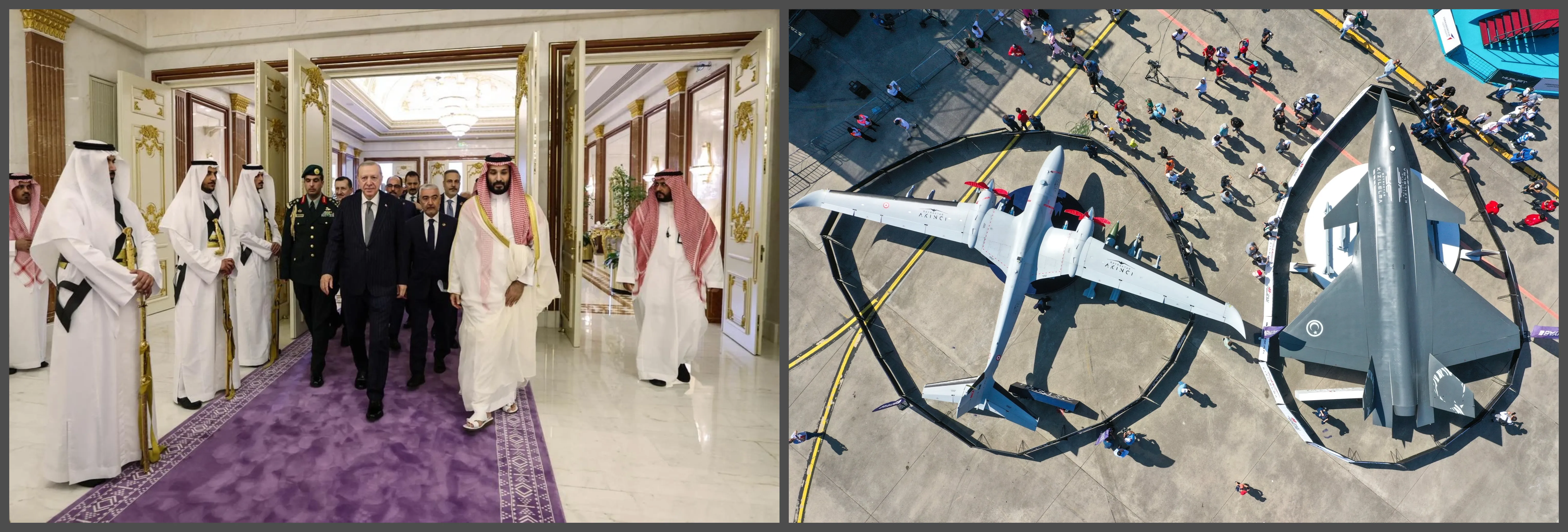
President Erdogan walks alongside Prince Mohammed bin Salman (left), and the Turkish drones Bayraktar K?z?lelma and Ak?nc? (right)
Türkiye may have much more to gain from supplying defence equipment, technology, drones, intelligence systems and military-industrial cooperation than from sending troops into Yemen. The emerging Saudi-Turkish relationship is, therefore, not necessarily about battlefield solidarity but about strategic interdependence.
And that could ultimately prove more durable. Saudi Arabia needs technology and diversified security partnerships. Türkiye wants markets, investment and a larger regional role for its defence industry. Both have incentives to deepen cooperation without allowing the Houthi conflict to dictate the entire relationship.
But even as Riyadh builds relationships with Pakistan and Türkiye, the ineffective and yet zealous United States remains deeply invested in Saudi security. This indeed is the sad paradox of the emerging Gulf regional security order.
Saudi Arabia wants greater strategic autonomy, but one which does not imply strategic escape from Washington DC. The kingdom still needs sophisticated missile defence, intelligence, surveillance, and other advanced weapons for which it needs American benefaction.
The Houthi crisis, therefore, does not simply ask whether Riyadh can replace Washington with Islamabad and Ankara. It asks whether Saudi Arabia can construct a layered security architecture in which Washington remains important but is no longer the sole external pillar of Saudi security.
That is a very different proposition.
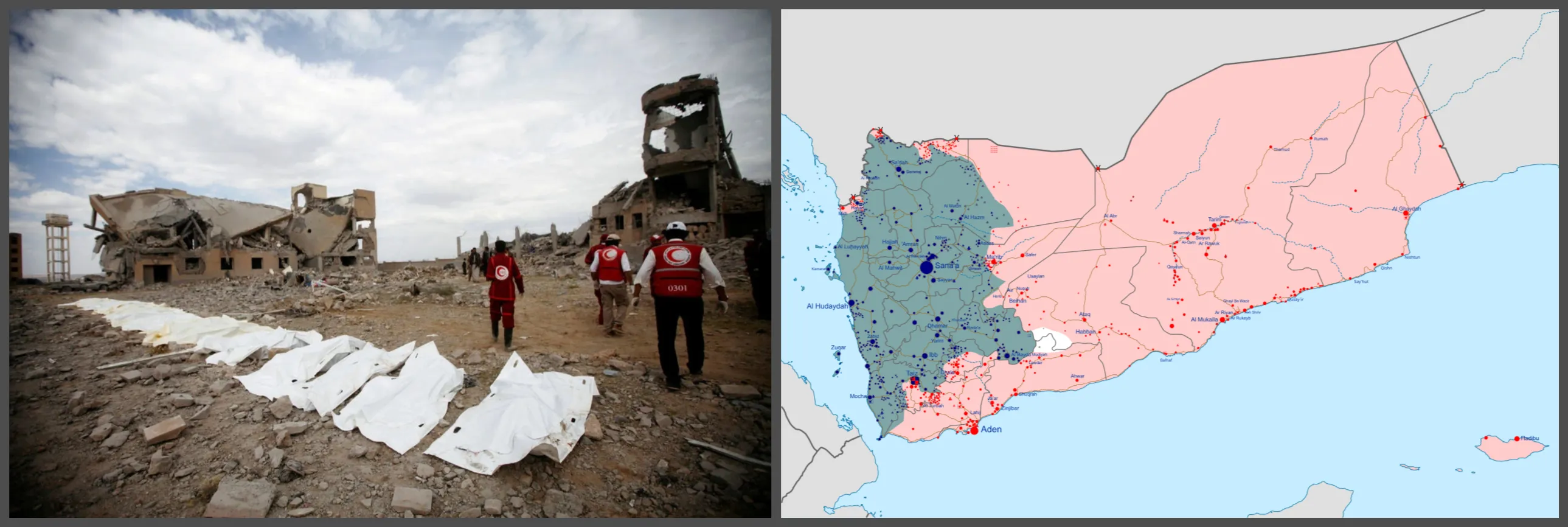
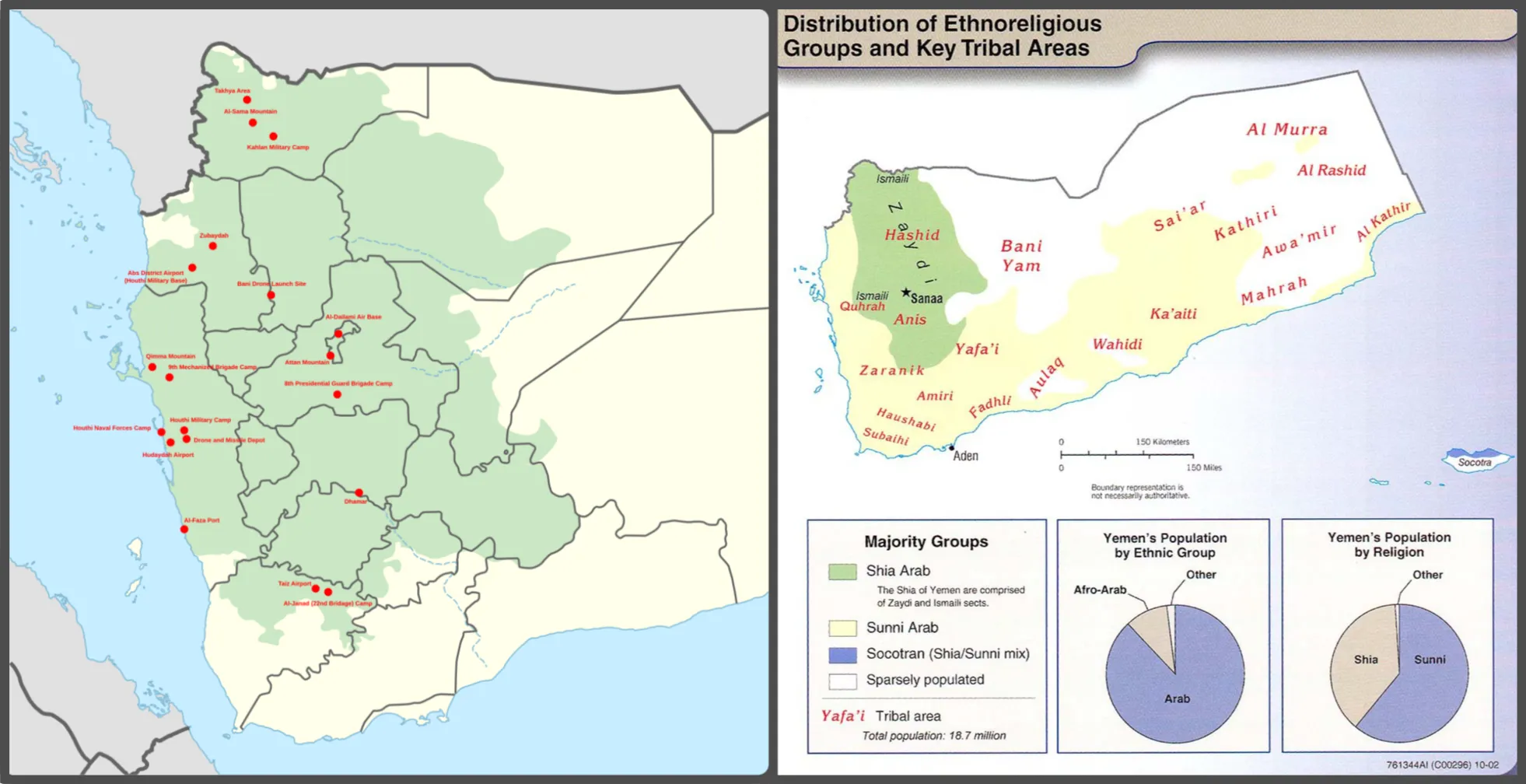
Saudi-led airstrikes on a university used as a detention centre by the Houthis in Dhamar, September 2019 (left); photo credit - Felton Davis via Wikimedia Commons, and territory controlled by Houthis shown in green (right); image credit - Ali Zifan via Sanaa Centre for Strategic Studies
A new security triangle
This is where the Houthi attacks acquire significance far beyond Yemen. For decades, Gulf security rested substantially on an American military security umbrella. The emerging architecture of these Saudi defence pacts seems to make it more dispersed as Saudi Arabia brings in capital and energy, Türkiye brings military technology and industrial capacity, and Pakistan brings manpower, military experience and a longstanding Saudi relationship.
Nevertheless, the United States remains the principal external military power. Then there is China that brings economic weight and diplomatic access to both Saudi Arabia and Iran.
Similarly, other regional powers such as Oman and Qatar continue to have their niche as they possess something military alliances cannot manufacture: channels of communication. In this fluid situation, the Makkah joint defence pact could consequently evolve in one of the following two directions.
It could become a genuine collective-security mechanism, gradually building interoperability, intelligence sharing, joint defence production and air and missile defence. Or it could become an increasingly militarised bloc whose very existence deepens regional polarisation.
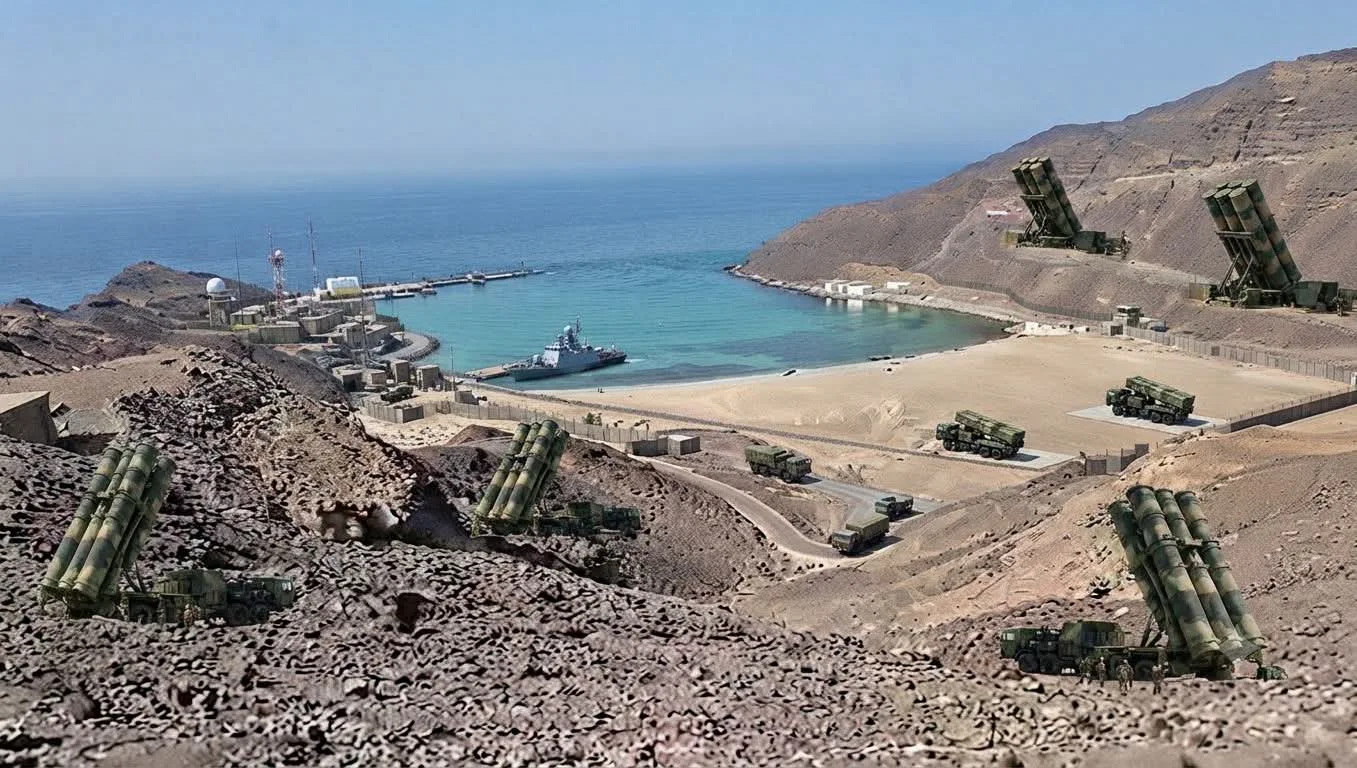
Air defence systems on the Bab el Mandeb coast; photo credit - Ali al Hilaly via Google Images
The difference will depend less on the words of the treaty than on how its members respond to crises like the ongoing Houthi attacks.
The Houthi attacks, therefore, are no longer merely about Yemen’s mountains or Saudi Arabia’s southern border. The Houthis ’ position along the Red Sea has implications for the Bab el-Mandeb, one of the world’s critical maritime chokepoints.
For nations like India, China, Japan and South Korea, this is not distant Middle Eastern geopolitics. It is an upfront energy and shipping problem.
The Persian Gulf’s oil flows and the Red Sea’s shipping lanes are increasingly interconnected theatres. Disruption in one can push pressure into the other, raising insurance costs, freight rates and energy prices. That is why the Houthi attacks deserve to be read as an Asian strategic story.
The real question is not whether Riyadh can shoot down the next incoming missile. It is whether the region can prevent the missile from becoming the trigger for a much larger regional war.
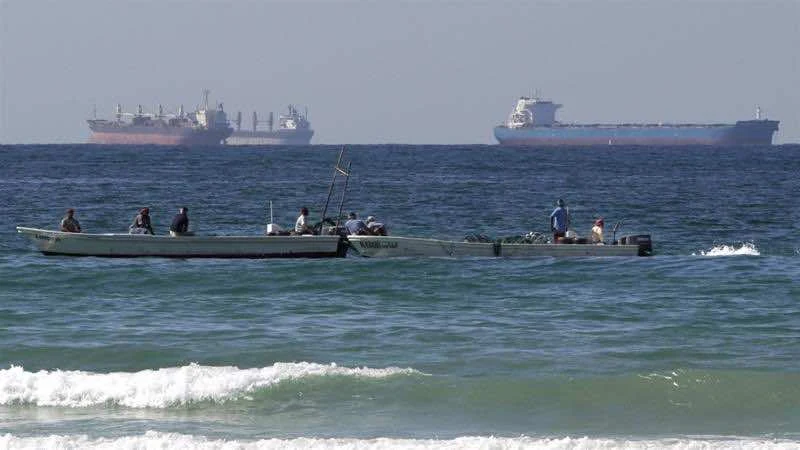
A panoramic view of ships passing through the Bab el Mandeb; photo credit - Dippu Narzary via Google Images
The ultimate test
The Makkah joint defence agreement has arrived at precisely the moment when the Middle East is searching for a new security grammar. But its promise of collective deterrence also involves the danger of collective escalation.
Saudi Arabia has every reason to want its partners standing beside it. Pakistan has every reason to demonstrate that its commitments are meaningful. Türkiye has every reason to prove that it is becoming an indispensable regional security actor in the region.
But none has an obvious interest in turning the Houthi confrontation into a three-country war in Yemen, which means that Saudis will have to fight the Houthis all alone. That is why the first test of the Makkah joint defence agreement may be more subtle than their battlefield participation.
Can Pakistan and Türkiye help Saudi Arabia defend itself without fighting Saudi Arabia’s war on its behalf?
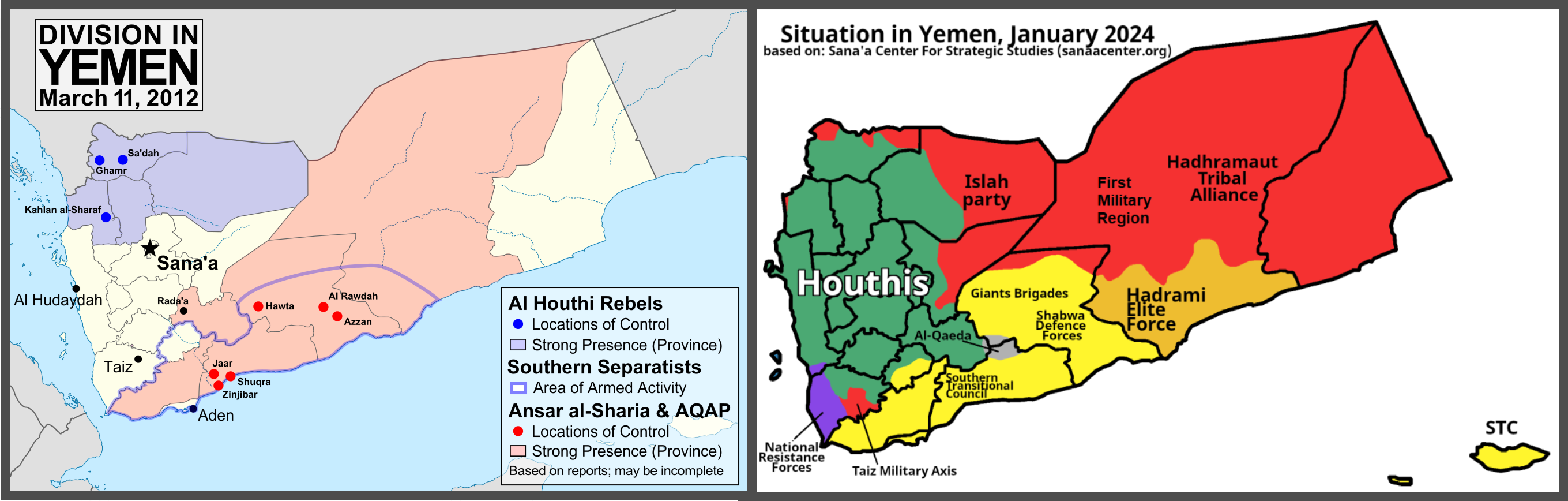
Images via Wikimedia Commons
If the answer is yes, the pact may emerge stronger — because it will demonstrate the ability to translate collective defence into calibrated, layered support rather than automatic escalation. If the answer is no, the pact could become another mechanism through which one local conflict acquires a regional cast.
The Houthis may therefore have inadvertently provided Riyadh, Islamabad and Ankara with something more valuable — and more dangerous — than a battlefield.
They have given their new alliance its first test. And as has always been the case in the Middle East, alliances are rarely judged by the elegance of their signatures. They are judged by what happens after the first missile lands.
Follow us on WhatsApp
Follow us on Facebook
Follow us on X @vudmedia
Follow us on Substack
