
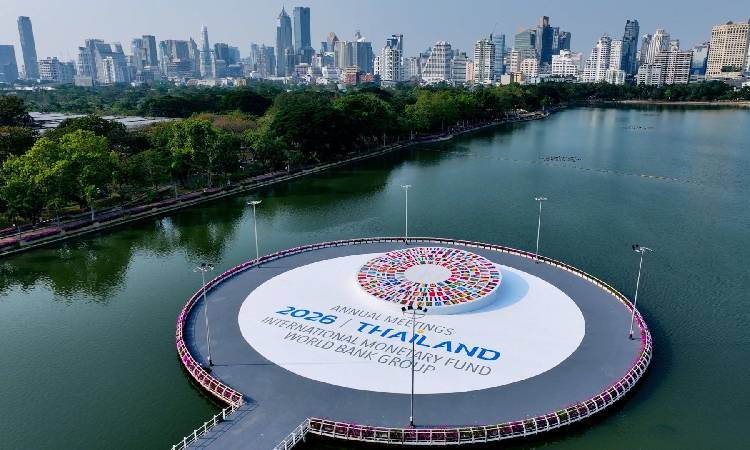
The Bretton Woods institutions were the vehicles of globalisation for Western economies to impose their economic order on the rest of the world. Years later, the Asia-Pacific economies, which were initially the means for cheaper production and markets for Western industrial majors, emerged as manufacturing and technological giants challenging Western domination. The result was the West increasingly seeking protectionism, which led to the Bretton Woods institutions relying more on the Asia-Pacific to uphold global economic interdependence. The Bangkok meeting of the IMF-World Bank this week comes at a time when protectionism is marked by weaponisation of tariffs, technology and critical minerals, even as the contest over AI emerges as the foremost disruptive force without any clear winners. The Bangkok meeting could, invariably, echo the power shift in the global economic order, with the Asia-Pacific not challenging the Western leadership but inventing post-Western Asian economic models that could rewrite the Bretton Woods stylesheet, along with changing the future trajectories of their processes and priorities, says Professor Swaran Singh in the 33rd edition of Asia Watch.
As more than 15,000 participants from 191 countries descend on Bangkok for the week-long International Monetary Fund (IMF)-World Bank Annual Meetings beginning Monday, Asia is no longer merely hosting the world’s two most powerful financial institutions. It is also challenging these institutions as dated and, therefore, less representative of our times.
In the midst of World War II, these Bretton Woods institutions were born in 1944 when global economic power was concentrated among very few nations of the North Atlantic. These were also major colonial powers, and soon the process of decolonisation, especially during the 1950s and 1960s, was to transform their power profile.
Now, ninety-two years later, Bangkok of 2026 represents a world where the global centre of gravity has shifted from the North Atlantic to the Asia-Pacific.
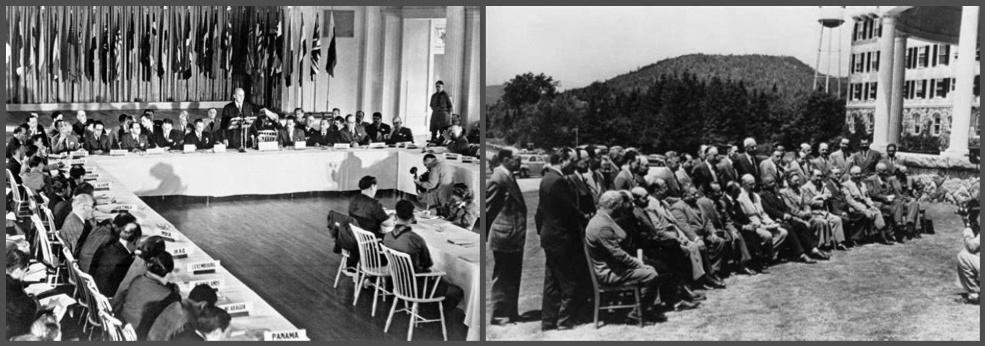
The United Nations Monetary and Financial Conference in July 1944, at the Mount Washington Hotel in Bretton Woods, New Hampshire (left), and Chairmen of the 44 country delegations at this Bretton Woods Conference (right); photos courtesy: Wide World Photos via World Bank archives
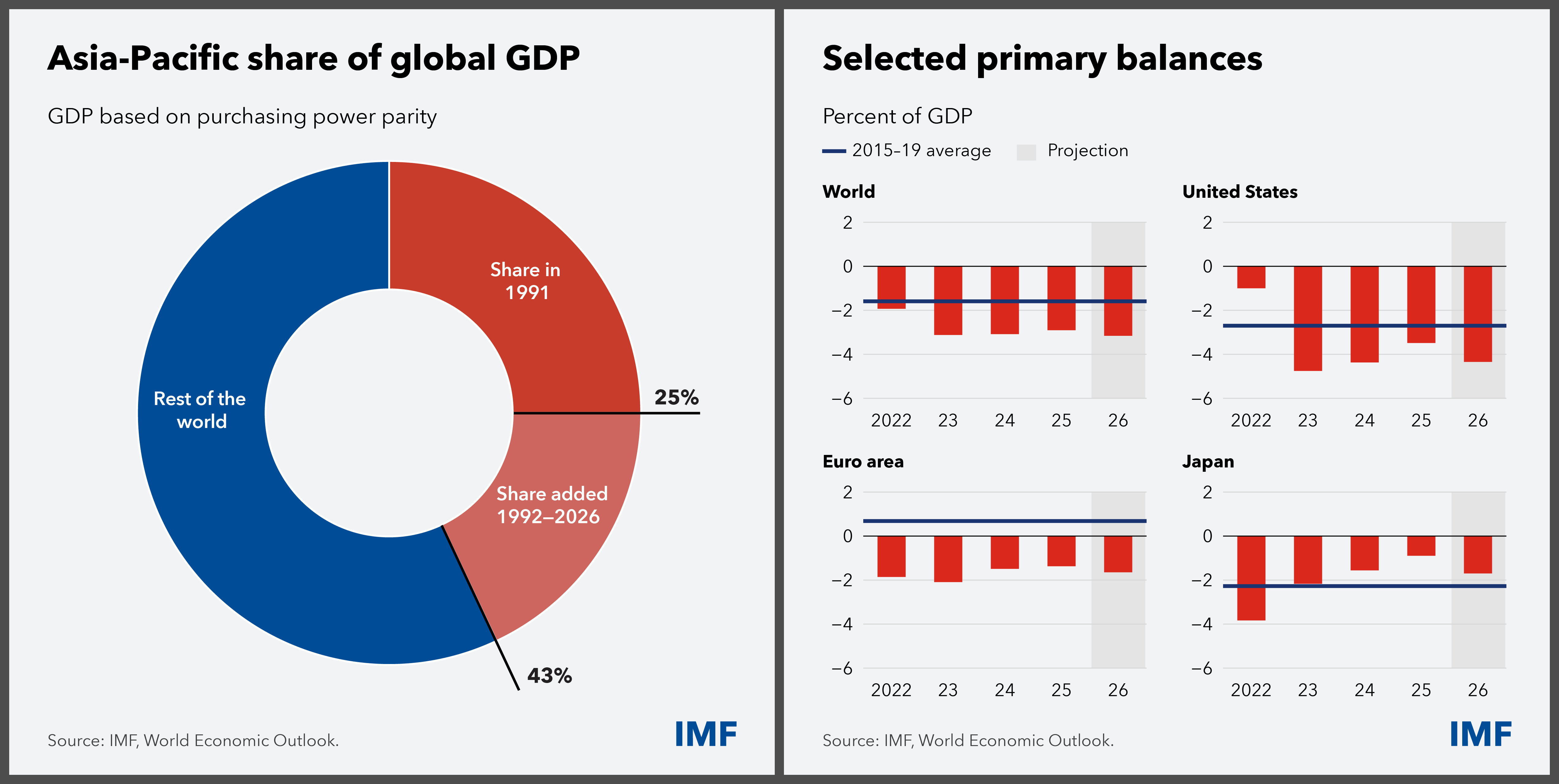
The Asia-Pacific region today accounts for 55 per cent of global population, 45 per cent of global Gross Domestic Product (GDP) in Purchasing Power Parity (PPP) terms and 60 per cent of global growth. The September 2026 report of the IMF describes Asia’s transformation through the pandemic, tariff wars, geopolitical conflict and the Artificial Intelligence (AI) precipice.
The Agenda of the IMF-World Bank meetings in Bangkok, accordingly, focuses on themes of economic fragmentation, turmoil in critical supply chains, Asian labour markets and AI, digital public finance, cross-border payments and the entire financial infrastructure.
These Asia-driven priorities at the IMF-World Bank meetings in Bangkok portend the beginning of Asia rewriting the Bretton Woods stylesheet.
Hence, the real question is no longer whether Asia has arrived economically. The real question is whether this economic weight of the Asia-Pacific now also drives this power shift from North Atlantic to Asia-Pacific and how far it is likely to change future trajectories of IMF-WB processes and priorities.
That is where the agenda and context become more important than the venue of these annual meetings.
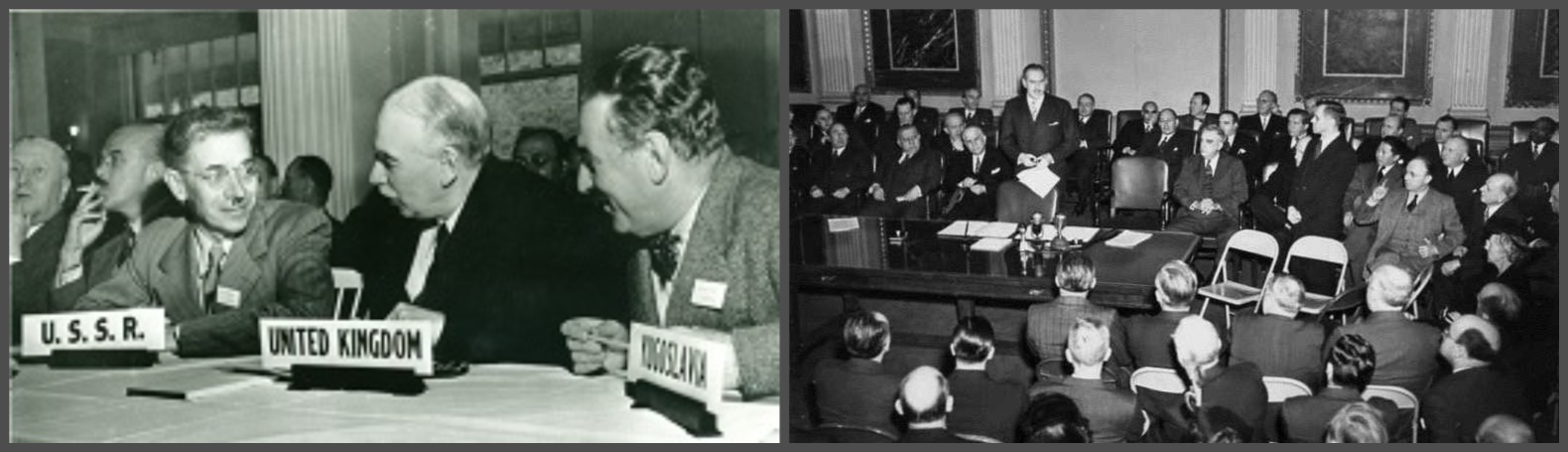
The leaders from the USSR, the UK and Yugoslavia at the Bretton Woods conference (left), and US Acting Secretary of State Dean Acheson addresses the representatives at the State Department in Washington, D.C. (right); photos courtesy: Wide World Photos via World Bank archives
Asia takes command
For decades, the equations of these Asia-Pacific nations within the Bretton Woods institutions had remained patently asymmetrical. The rules were written in Washington, D.C.; Asia-Pacific economies were told to adjust, liberalise, borrow, export and grow within themselves.
Recent decades of the Asia-Pacific region’s spectacular economic transformation, led by China’s exponential economic rise, have steadily eroded that hierarchy of their former colonial powers.
Asia-Pacific region now possesses enormous manufacturing and technological capability, foreign trade, foreign-exchange reserves, sovereign wealth and sophisticated financial markets. The skilled workforce of these nations is also driving growth in these former colonial powers, which depend increasingly on immigrants to keep production of their commodities and services going.
China is today the world’s manufacturing powerhouse; Japan and South Korea the world’s industrial giants; Southeast Asia a critical investment hub; and India has also been expanding its services economy, manufacturing base and digital infrastructure.
The IMF’s own pre-Bangkok assessment shows Asia-Pacific accounting for about three-quarters of global industrial-robot installations, with China alone accounting for 60 per cent of global industrial robot installations. China has also transformed into a powerhouse for electric vehicles, renewable energy, advanced manufacturing, rare earths processing and semiconductors. China today accounts for 32 per cent of global manufacturing.
This dependence of the developed West on China’s manufacturing had become shocking during the Covid-19 pandemic when citizens of North Atlantic nations had to wait for ships from China to bring masks and medicines. The West has since been talking of onshoring and friend-shoring various critical production lines.
The paradox is that economic power has moved from North Atlantic to Asia-Pacific faster than institutional power. This is especially true of these Bretton Woods institutions, and therefore nations of the Asia-Pacific have also begun work on exploring their alternatives.
Bangkok, therefore, brings this old economic order of the IMF and World Bank into the heart of this new economic geography of the Asia-Pacific region’s vibrancy.
Globalisation goes geopolitical
The second great shift lies in the very definition of globalisation that was once propagated by these developed economies of the North Atlantic in the name of seeking integration of the global economy. That old Bretton Woods logic had rested heavily on the proposition that economic interdependence could make the world more prosperous and perhaps more peaceful.
Capital crossed borders. Supply chains stretched across continents. But the distribution of its benefits was never universal and has created its own grievances, even amongst nations of the North Atlantic. This has since resulted in geopolitics stepping in, roaring.
The weaponisation of tariffs, sanctions, export controls, critical minerals, and advanced technology has more recently transformed this globalisation-driven interdependence from an economic virtue into a strategic vulnerability.
Weaponisation of advanced technologies by the US and of rare earths by China has since created tensions between these inordinately large-sized economies with implications for the global economy.
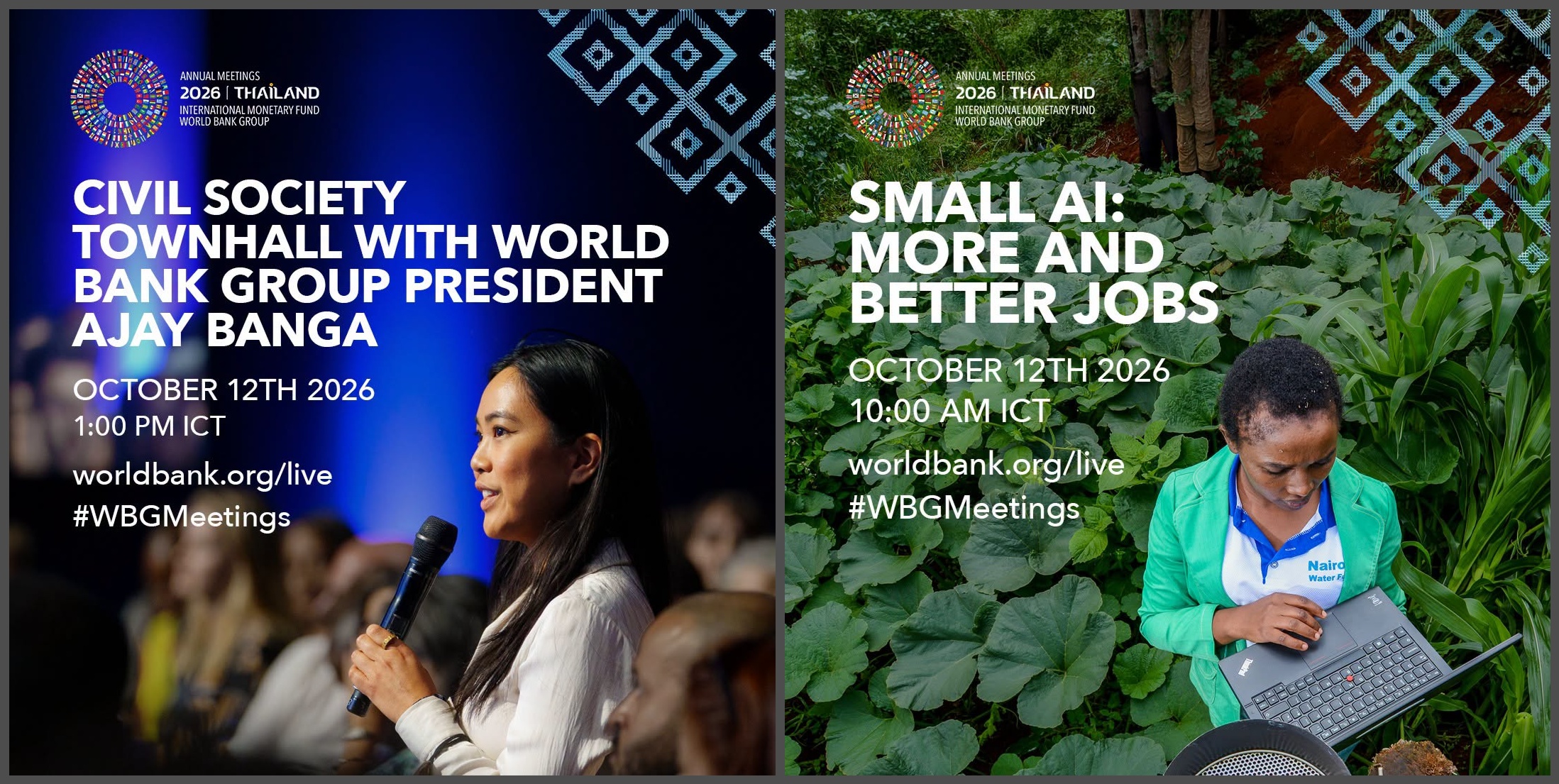
The Bangkok agenda recognises this. The opening day accordingly seeks to set the tone with sessions on ‘Future of Asia’ and ‘Labour Markets in Asia ’, raising questions as to how governments can strengthen economic security without paying an enormous price for this increasing menace of protectionism of powerful economies led by Washington DC.
The Asia-Pacific region’s production networks will lose the most if globalisation fragments. Only last week, American tightening of rules for immigration and imports revealed deeper implications for the Asia-Pacific countries.
China’s manufacturing dominance, India’s emerging industrial ambitions, Japan and Korea’s advanced technologies, Taiwan’s semiconductor centrality and Southeast Asia’s expanding role in “China-plus-one” strategies today face the Trump administration’s protectionist impulses.
This not only threatens the production lines of goods and services of the Asia-Pacific countries but also makes them the battlefield of this transforming nature of globalisation, where these nations of the Asia-Pacific aspire to equality with their former colonial masters.
This is where the power shift becomes menacingly precarious. The West once asked these Asia-Pacific economies to open their markets to globalisation. Today, the same West is falling prey to protectionist predispositions.
The Asia-Pacific Economic Cooperation (APEC) summit next month in China will also be guided by what happens at these IMF-World Bank meetings in Bangkok this week.
AI meets Asian labour
The third most consequential element of this power shift lies in the collision between artificial intelligence and the Asian workforce. Asian development story was powered by the movement of millions of workers from low-productivity agriculture into factories and services.
This rampant urbanisation of the Asia-Pacific region has created its own challenges. Yet, millions of jobs could be created because globalisation allowed production to migrate towards large and relatively inexpensive labour pools of the Asia-Pacific region.
This outsourcing of production – of commodities and services – to the Asia-Pacific region, as well as opening doors for their skilled manpower into Western economies, had initially been mutually beneficial. However, that started changing when manufacturing brands of Asia-Pacific began to challenge manufacturing brands of these Western countries.
On the other hand, AI today threatens to further disrupt that pattern. The AI race between China and the United States threatens to make exponential advancement in this technology uncontrollable for both sides. And, if AI begins to substitute for routine cognitive and manufacturing tasks, the traditional development ladder could shrink for both Asia-Pacific and Western economies.
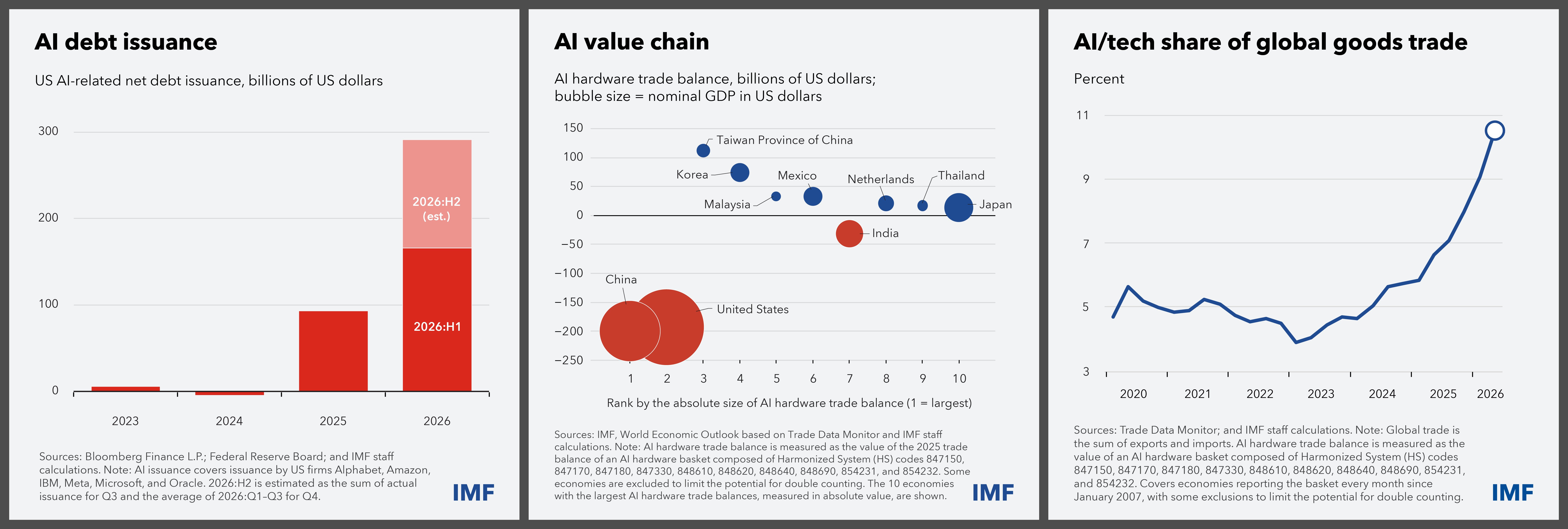
For instance, the Asia-Pacific region can no longer be assured that its cheap labour will continue to sustain its export competitiveness or continue to be welcomed as a skilled workforce for Western economies.
But the Asia-Pacific region also has its extraordinary advantages: it possesses the scale, technological ecosystems and digitally sophisticated populations needed for large-scale AI adoption. Historically, commercialisation and massification of new technologies have been the only guarantee that these new technologies will survive. That makes their adaptation across Asia-Pacific a prerequisite.
The deliberations at Bangkok therefore will not be facing the question as to whether Asia can catch up with the advanced West. The question instead will be how Asia can invent post-Western, Asian economic models for itself that can blend their large workforce with AI.
In this brave new AI-driven world, even taxation as a source of revenue needs to be remodelled, even reinvented. The IMF wants governments to recast extant taxation models for technology companies, labour and capital — keeping in mind the infusion of AI-related activities such as advanced computing, excessive energy use and how subscription-based profits could require new forms of taxation on wealth created by bots and machines.
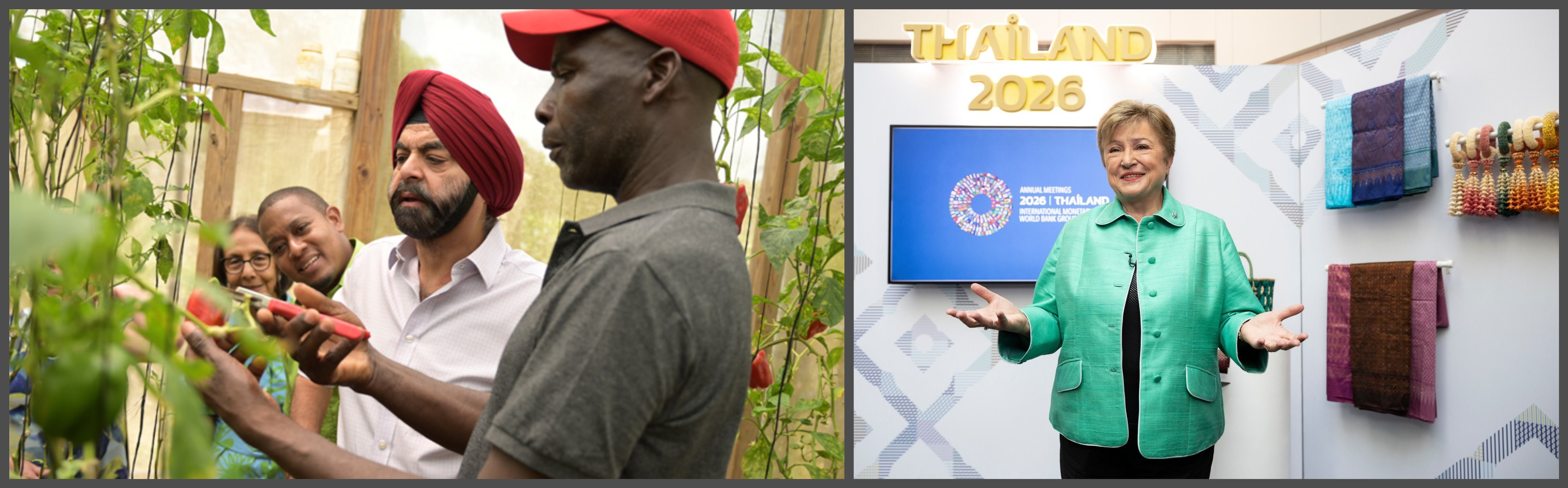
President of the World Bank Ajaypal Singh Banga (left), and Managing Director of the IMF Kristalina Georgieva (right)
India’s rulebook moment
This is where India enters the Bangkok conversation neither as the supplicant of the old Bretton Woods system nor as an outright challenger to it. India wants the system to work but wants it to work for a world that no longer resembles the world of 1944.
India’s own experience with digital public infrastructure, financial inclusion and instant payments offers precisely the kind of experimentation now becoming relevant to global monetary and financial governance.
India’s Unified Payments Interface (UPI), Co-Win, Jan Dhan, India Stack and other examples of its digital public infrastructure (DPIs) have received increasing recognition. Likewise, several other similar experiments across the Asia-Pacific also include cross-border payments, digital identity, fintech and digital payments, and these have transformed public finance in these countries.
For instance, Thailand brings into these IMF-World Bank meetings its own experience in digital public infrastructure like PromptPay and other cross-border QR payments. The Bank of Thailand and the Bretton Woods institutions have already developed a “Bangkok Blueprint” addressing fraud-resilient digital financial services.
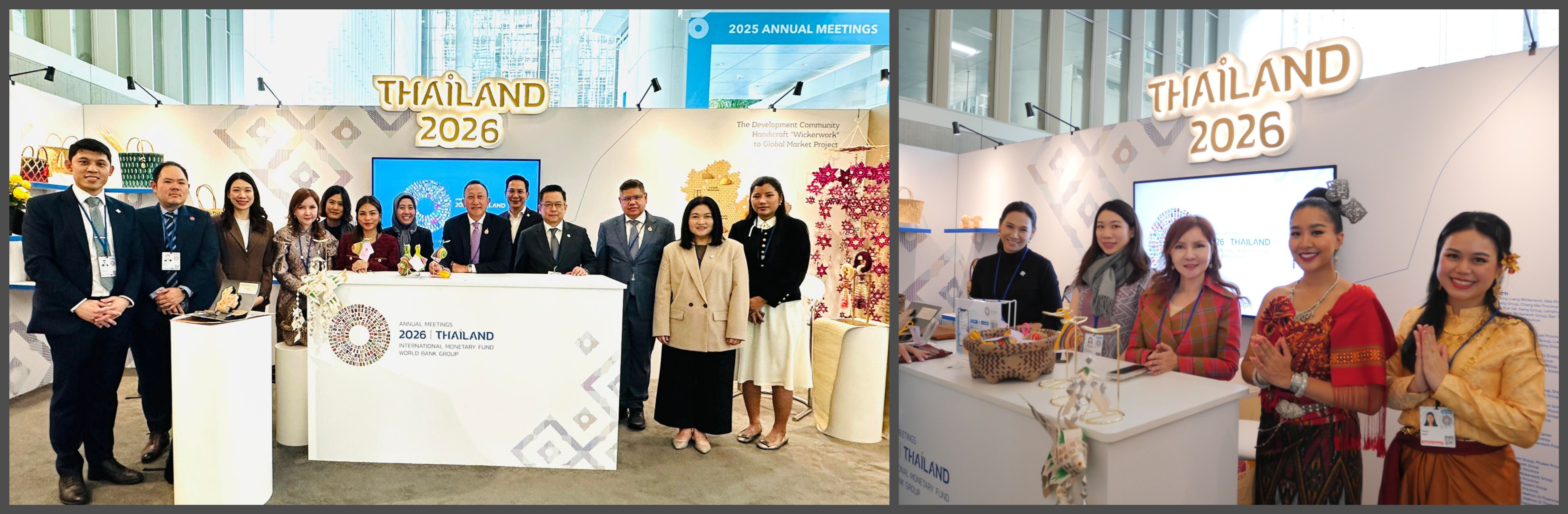
Today, supply-chain resilience can no longer be designed without the Asia-Pacific region. AI’s employment consequences cannot be understood without the labour markets of the Asia-Pacific. Digital finance cannot be discussed without these financial experiments across the Asia-Pacific region. Global growth cannot be managed without demand in the Asia-Pacific, where recent decades have witnessed not just production but also consumption growing at super speeds.
And global development finance cannot be rethought while ignoring the experiences of these Asia-Pacific economies that have also lifted hundreds of millions from poverty. World Bank reports itself certifies how, since 1978, China alone has lifted about 800 million people out of poverty, also claiming to have put an end to extreme poverty by 2022.
For much of the twentieth century, financial modernisation had flowed from the North Atlantic to the Asia-Pacific region. But the twenty-first century has witnessed these trends becoming more nuanced. Wars in Ukraine and Iran may have briefly drifted global focus away from that game-changing transition across Asia-Pacific, but IMF-World Bank meetings in Bangkok this week should bring back focus on these perennial priorities of co-opting this region.
In Bangkok, the tide may even reverse with thought-laboratories of the Asia-Pacific introducing newer ideas in the global policy conversations. But this week in Bangkok, Asia-Pacific will not be trying to dictate or diminish the Western leadership but demonstrate how the flow of intellectual traffic of development needs no longer be a one-way transaction.
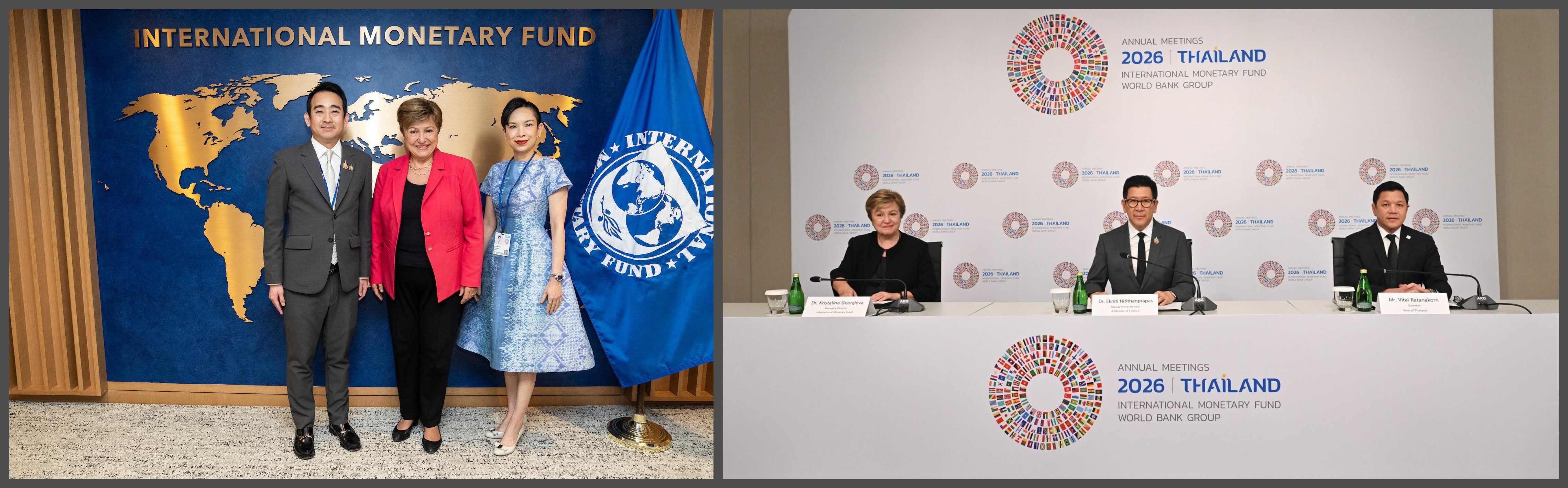
Power shift redefined
This is where the phrase “power shift to the Asia-Pacific” must be read with care. It does not mean Washington ceases to lead or the dollar collapses. It does not mean ASEAN, China, India, or emerging economies collectively are aspiring to take command of the Bretton Woods institutions’ decision-making.
It means something subtler — and potentially more consequential. The West increasingly needs Asia-Pacific to solve global problems that the West itself can no longer solve all alone.
Also, this is not the first time that the Asia-Pacific region is hosting these out-of-Washington meetings of the IMF and World Bank, which happens every three years by rotation in different regions of the world. Thailand last hosted these meetings in 1991, and Asia-Pacific has since hosted these annual meetings in Hong Kong (1997), Singapore (2006), Tokyo (2012), and Bali (2018).
But post-pandemic Asia today drives the global economy, and it aspires, and also deserves, its place in global financial decision-making.
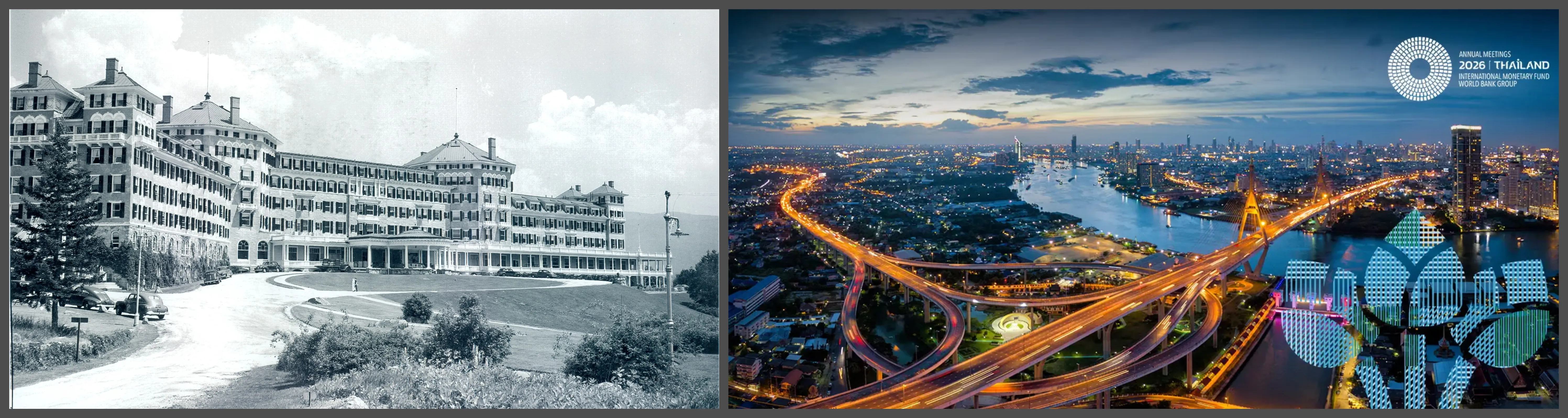
From the Mount Washington Hotel in Bretton Woods in New Hampshire (left) to Bangkok (right)
In 1944, Bretton Woods created these institutions for a purpose. Bangkok does not mark their demise or negate their role in the post-World War II history of their leadership in managing the global economy. It simply marks their encounter with a world in which economic gravity has moved decisively to the Asia-Pacific region and how the structures and processes of the IMF-World Bank duo need to recognise this transition.
The question, therefore, is not whether Asia will confront Bretton Woods leadership. It is whether Bretton Woods can co-opt this transformed and economically vibrant region before the Asia-Pacific begins to outgrow, and even defy, its traditional leadership of the global economy.
Follow us on WhatsApp
Follow us on Facebook
Follow us on X @vudmedia
Follow us on Substack
