
From its legendary soldiers in India and the UK to the workforce spread across West Asian and ASEAN economies, Nepal’s expatriates are a formidable contributor to the Himalayan nation’s economy, with its current USD 16.19 billion worth of remittances amounting to 30-33 per cent of its GDP. However, this scenario might change with the rapid decline in the number of Nepalese workers entering new overseas employment, raising questions whether the migration-dependent economic model could be sustainable forever. While the new government in Kathmandu promises a economic turnaround and more jobs at home, the decline in foreign labour approvals does not necessarily reflect brighter prospects within the country as much as the conflict-induced crises in traditional foreign labour destinations like the Persian Gulf. As foreign jobs diminish, the future for Nepal is neither to discourage migration indiscriminately nor to celebrate every increase in overseas jobs but to help in diversifying destination markets for its workforce while also harnessing remittances to create more productive employment at home, says Professor Swaran Singh in the 34th edition of Asia Watch.
Home page image: The office of Nepal’s Department of Foreign Employment in Kathmandu; photo courtesy – Kathmandu Post
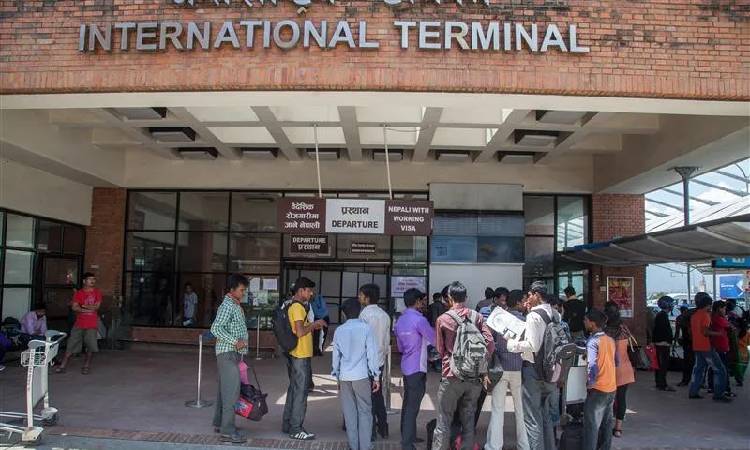
Text page image: The departure terminal at the Tribhuvan International Airport in Kathmandu, the sole gateway for the Nepali workforce headed to foreign shores; photo courtesy - ILO
Banner image: The DOFE office; photo courtesy – Nepal Khabar; and workers at a construction site in a GCC country
While the recent floods in Nepal have drawn enormous media attention across Asia and the world, another, even more threatening economic ‘tsunami’ is simmering and could irreparably disrupt Nepal’s livelihoods.
This needs urgent attention from Nepal’s new government, led by Prime Minister Balendra Shah.
Nepal’s personal remittances rose exponentially from 2 per cent in the early 1990s to over 32 per cent in 2025. However, its likely shrinkage at scale and speed has no easy solutions. This is because the jobs abroad — especially in their favoured Persian Gulf region, the main source of employment during the last 30 years — are now becoming increasingly harder to find and sustain.
To appreciate the centrality of remittances beyond mere statistics, it is important to understand that a Nepali migrant’s salary is rarely just a salary. It is a child’s school fee, a parent’s medicine, a loan repayment, a new roof or the savings that protect a family from its next emergency. It ensures sustenance of life across large sections of Nepalese society.
But ongoing policies of nationalisation of employment for citizens, the onslaught of violence from the US-Israeli war with Iran, and now Houthi attacks on Saudi Arabia have resulted in the sharpest decline in demand for Nepali workers, casting serious doubts on this pattern of Nepal’s household welfare.
In Nepal, migration is not merely a movement of labour across borders; it is an industrial-scale, organised system, largely by private entrepreneurs, ensuring Nepal’s household welfare system. Like other expatriate labour communities, Nepalese workers in the Gulf region are temporary residents, with their permanent stay being extremely restricted by law.
Most immigrants to the Gulf must return home, except for those extremely wealthy, who can buy citizenship in a few restricted places. Most Nepalese return home at the end of their employment, which means that their economic lives remain strongly anchored to home in Nepal, and so does much of the money they earn from this foreign employment.
Therefore, when employment opportunities abroad shrink, their vulnerabilities directly impact their homes, though it will be felt with a certain lag in the drying up of their savings.
Nepal’s latest figures capture this paradox with an unusual force. In fiscal year 2025-26, remittances reached Nepali Rupee 2.363 trillion, equivalent to USD 16.19 billion, a whopping 37.1 per cent increase over last fiscal year.
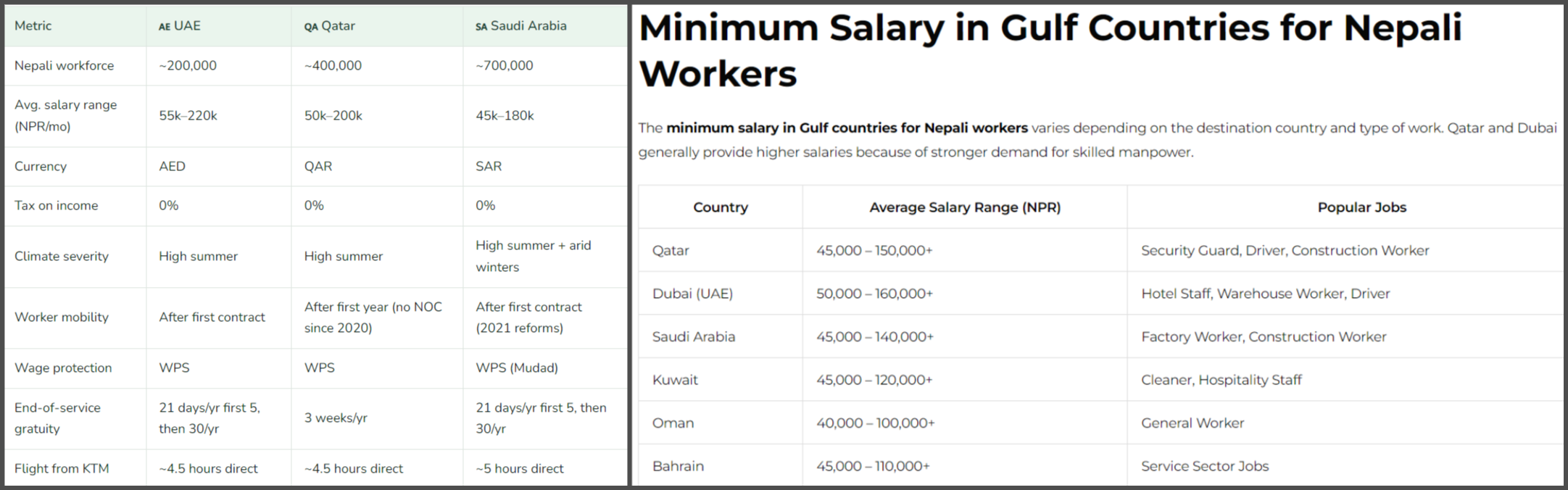
This inflow was larger than the Nepal government’s annual national budget for this year. But contrary to these trends, in 2025-26, Nepal’s Central Bank recorded only 406,519 Nepalis receiving approvals for foreign employment, compared to the much larger number of 505,957 in the previous year.
The money flowing home was seen rising while the number of new workers entering overseas employment has declined. This trend is likely to continue into the near future.
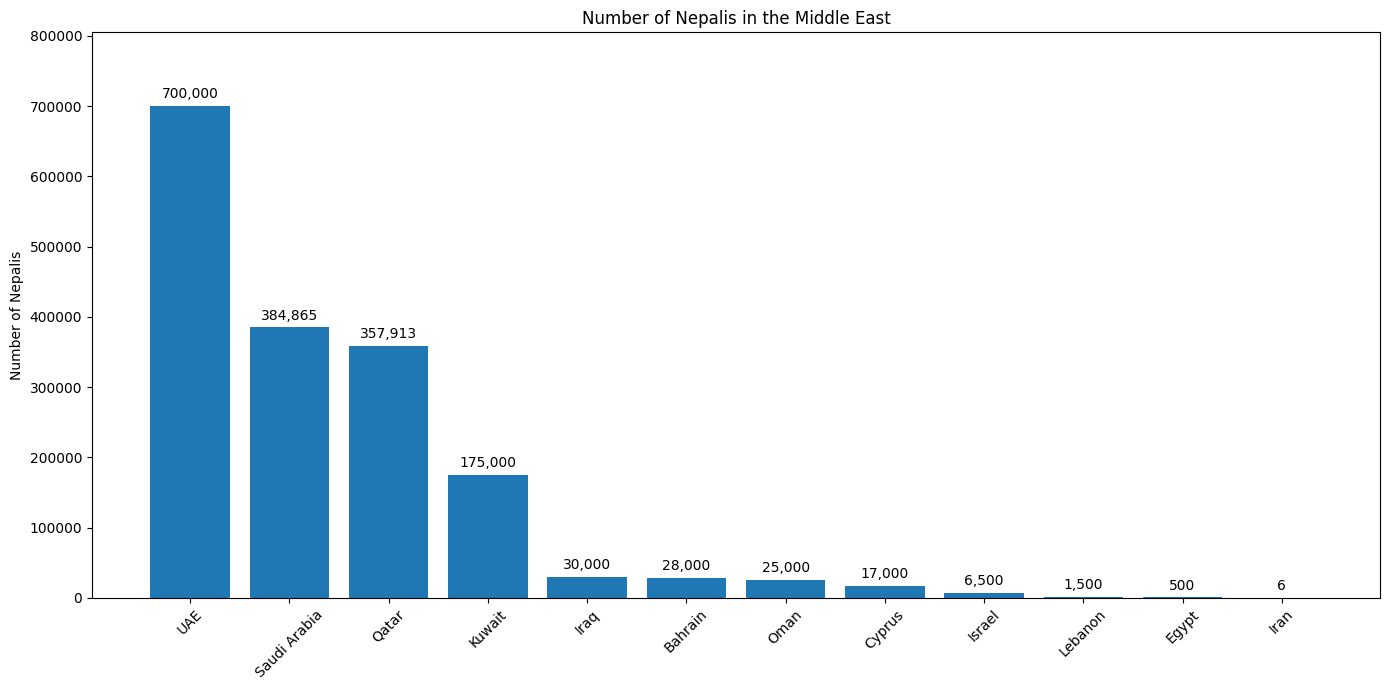
The Gulf region makes this contradiction especially consequential. According to Nepal’s Ministry of Foreign Affairs, of approximately 700,000 Nepalis who leave the country each year for foreign employment, nearly 65 per cent, i.e. around 450,000, are destined for the Persian Gulf.
Collectively, of the total of nearly 2.2 million Nepalis living abroad — about 60 per cent are in the Gulf region. The six Gulf Cooperation Council countries alone account for a huge concentration of Nepali workforce. Construction sites, hotels, transport networks, domestic services and other labour-intensive industries sustain livelihoods thousands of kilometres from their homes in Nepal.
The World Bank places the Gulf’s contribution at roughly 40 per cent of Nepal’s total annual remittances. Regional instability in the Gulf can therefore result in an economic shock and a national household crisis for the Nepalese.
What lies beneath the remittance boom?
The 37.1 per cent increase for 2025-26 over last fiscal year calls for an explanation.
First, it is essential to distinguish the currency in which growth is measured. In US-dollar terms, for instance, Nepal’s remittances rose by 28.1 per cent, to USD 16.19 billion, which is relatively lower but equally substantial.
The nine-percentage-point growth between dollar and rupee convertibility during this year indicates a substantial exchange-rate effect: foreign-currency earnings translate into more rupees when the Nepalese rupee weakens against the dollar.
But that dollar-rupee convertibility cannot be the only measure for this unprecedented rise in remittance growth. The existing overseas workforce continues to earn and send remittances. In the midst of regional wars, these immigrants — both returning home and those staying back — may be clearing all their local savings to ensure their economic security at home in Nepal.
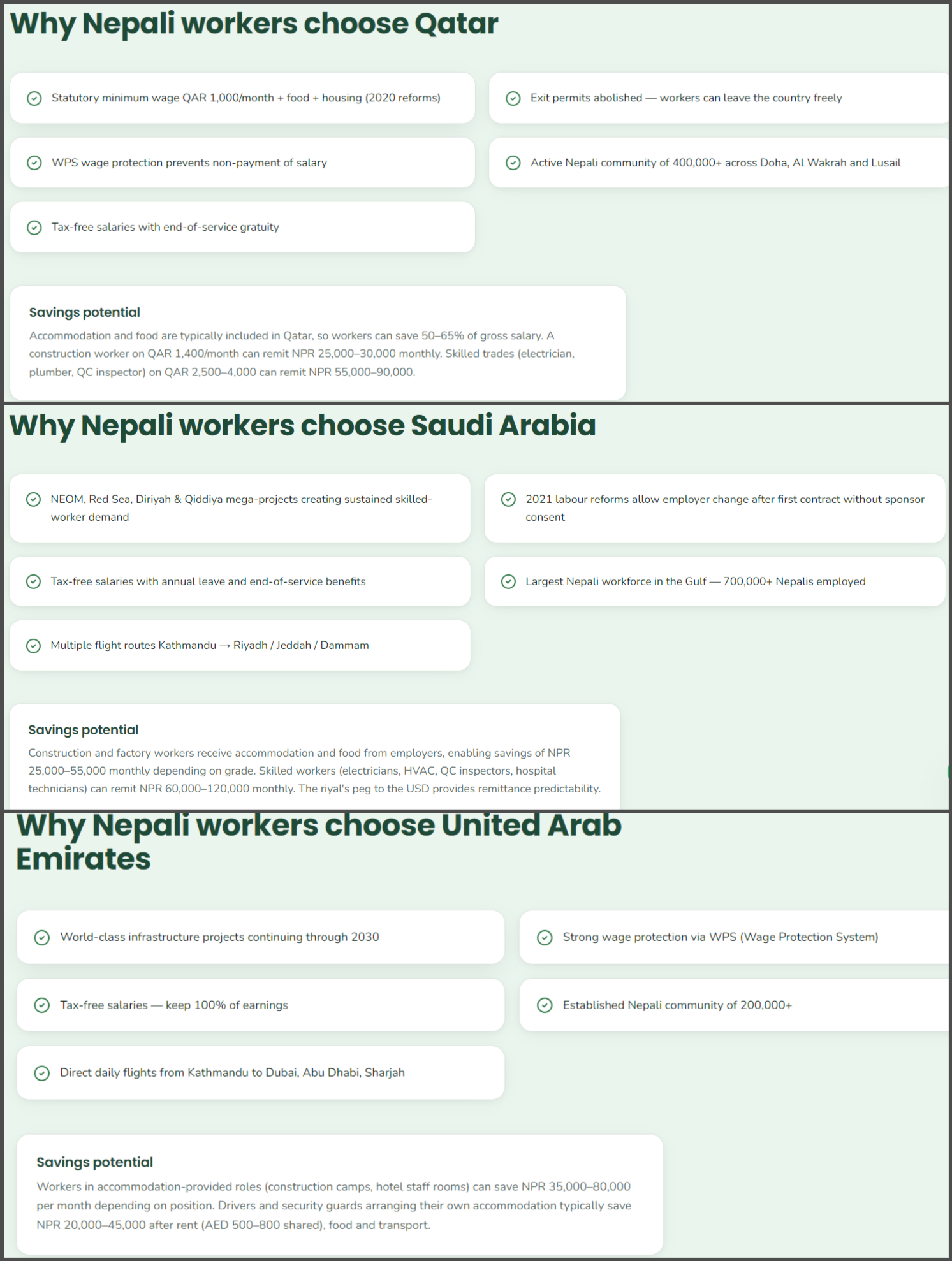
Trends in new recruitment, therefore, are only one part of the migration story. Workers who left Nepal in earlier years remain employed, and they continue to renew their permits and send money home.
In 2025-26, renewed labour permit approvals from Gulf states rose to 385,783 from 333,309 in the preceding year. So shrinking job opportunities for foreign workers are increasing the tendency amongst those Nepalese in the Gulf to continue to renew rather than leave jobs at hand.
These continued earnings, therefore, help explain why remittances can rise even as ‘first-time’ departures have begun to fall substantially. Then, one can also add the greater use of digital transfer channels resulting in improvement in the visibility of remittances entering Nepal.
Financial awareness, online banking access and regulated remittance services can encourage transfers that might otherwise travel through informal hundi networks. Yet the published figures do not quantify how much of the annual increase came from such a shift. It would be misleading to attribute the entire boom to any single factor.
Finally, remittances may have also risen given growing uncertainty from increased inter-state wars in Iran and Yemen, making workers clear their savings from local banking institutions in the Gulf.
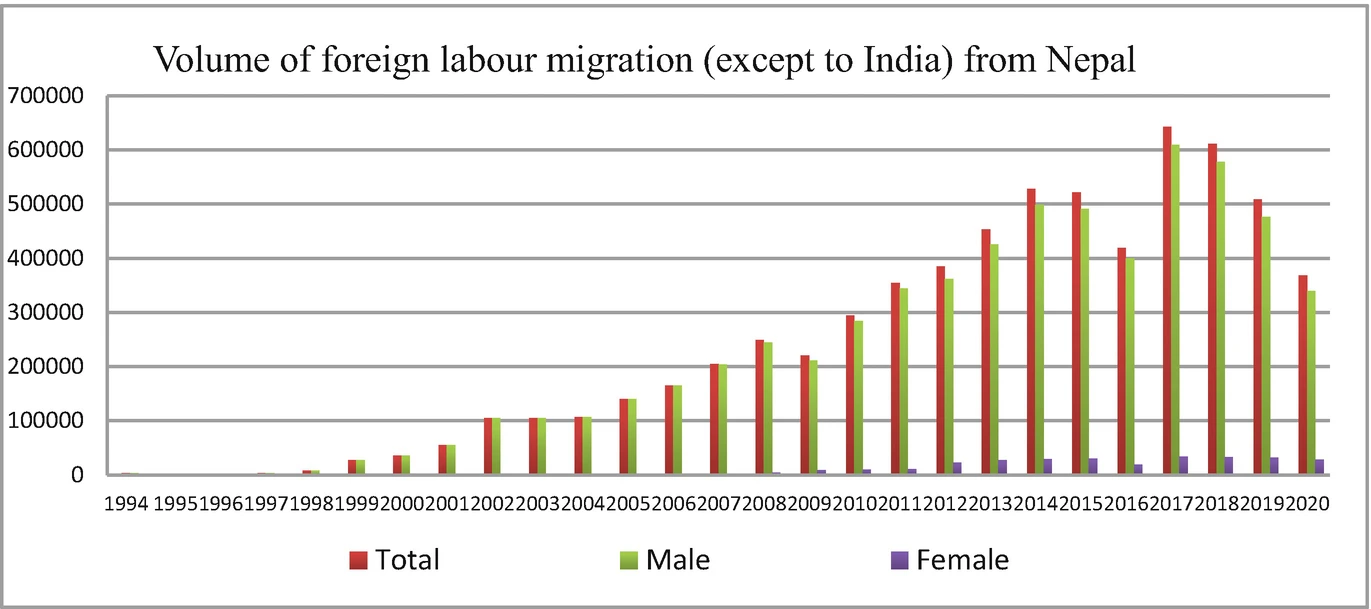
The deeper point is that remittances measure money arriving from a large stock of workers who are already abroad, whereas labour approvals by their employers — that are then processed through home and host bureaucracies for visa and banking purposes — offer a glimpse of the future supply of overseas employment for the Nepalese who continue to face limited employment opportunities at home.
For a brief period of time, these two indicators can move in opposite directions without contradiction. But soon, these negative trends in employment abroad will begin to impact remittances, making a serious dent in Nepal’s welfare economics.
Gulf’s shrinking job opportunities
That distinction becomes urgent when the rapidly changing nature of the global labour market is examined more closely.
According to Nepal’s Department of Foreign Employment figures, new approvals for Gulf-bound workers fell by 52.12 per cent between the beginning of the Iran war on 28 February 2026 and mid-September 2026, compared with the corresponding period a year earlier. In actual numbers, approvals declined from 228,165 to 109,249.
The decline was uneven across destinations, and it was not entirely driven by the number of Nepalese in these countries. Immigrants from other nations have also faced similar difficulties.
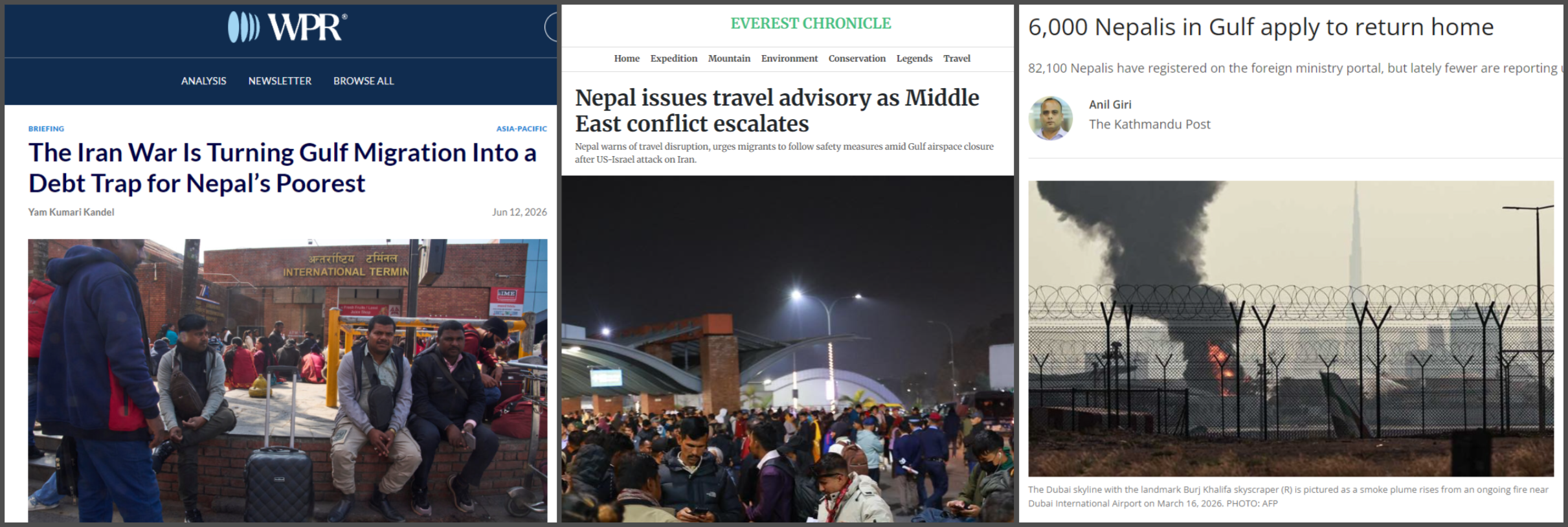
For instance, employment approvals for last year fell by 59 per cent for the United Arab Emirates and 57 per cent for Saudi Arabia, 45 per cent for Bahrain, 43 per cent for Kuwait and 35 per cent for Qatar. Oman, less impacted by Iranian hits, was the only exception to show a 24 per cent rise in new jobs for Nepalese. These differences also caution against treating the entire Gulf region as one uniform labour market.
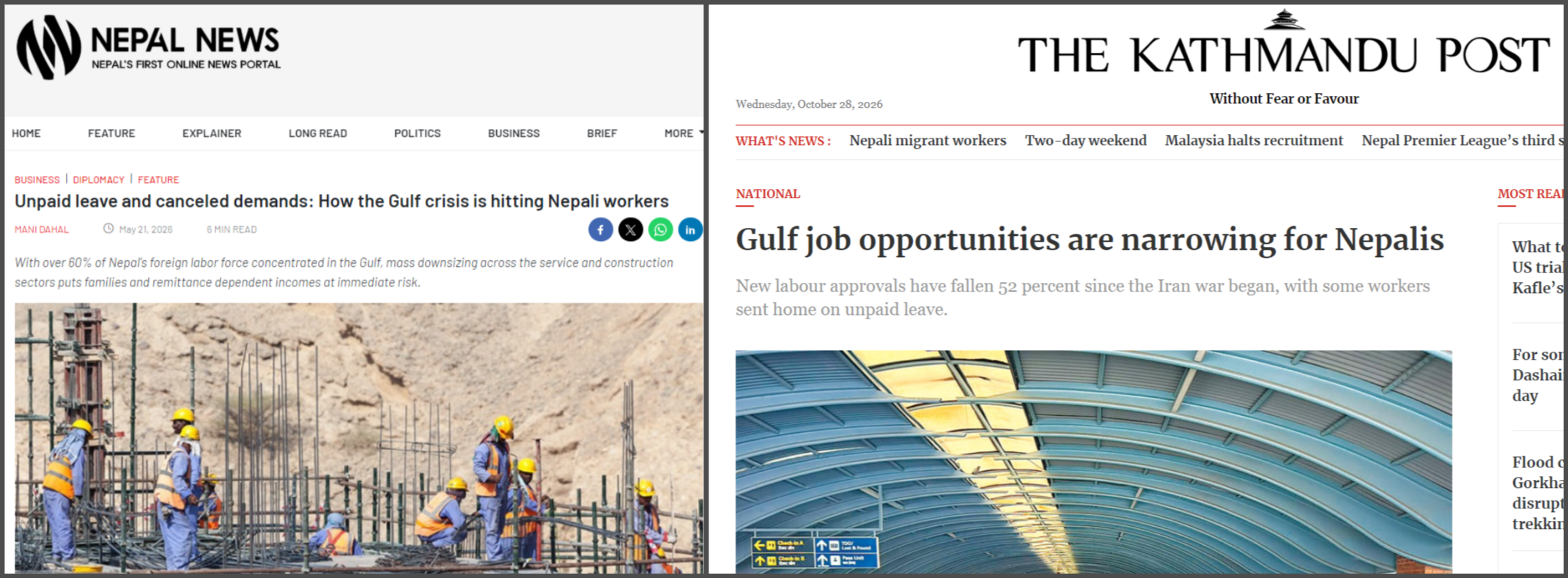
Similarly, the Iran war is not the only one reason though it remains the one most important and immediate trigger for this fall in job opportunities for Nepalese in the Gulf. Disruption to regional business confidence, tourism, transport and hospitality sectors has resulted in various employers postponing their recruitment drives, reducing staffing and even placing existing employees on unpaid leave.
The human stories of consequences are already visible in media reports about individual cases of Nepalese returning home. But these wars in the Gulf region are neither likely to end soon nor can they become a catch-all explanation for this sudden fall in job opportunities for Nepalese.
Gulf labour markets were already changing under national policies of these Gulf nations designed to increase employment for their own citizens. Saudi Arabia’s Saudisation, the UAE’s Emiratisation, Qatarisation or Kuwaitisation and similar localisation initiatives elsewhere have reshaped recruitment, particularly in selected occupations and sectors.
These structural changes clearly predate the current US-Israeli war with Iran or Houthi attacks on Saudi Arabia.
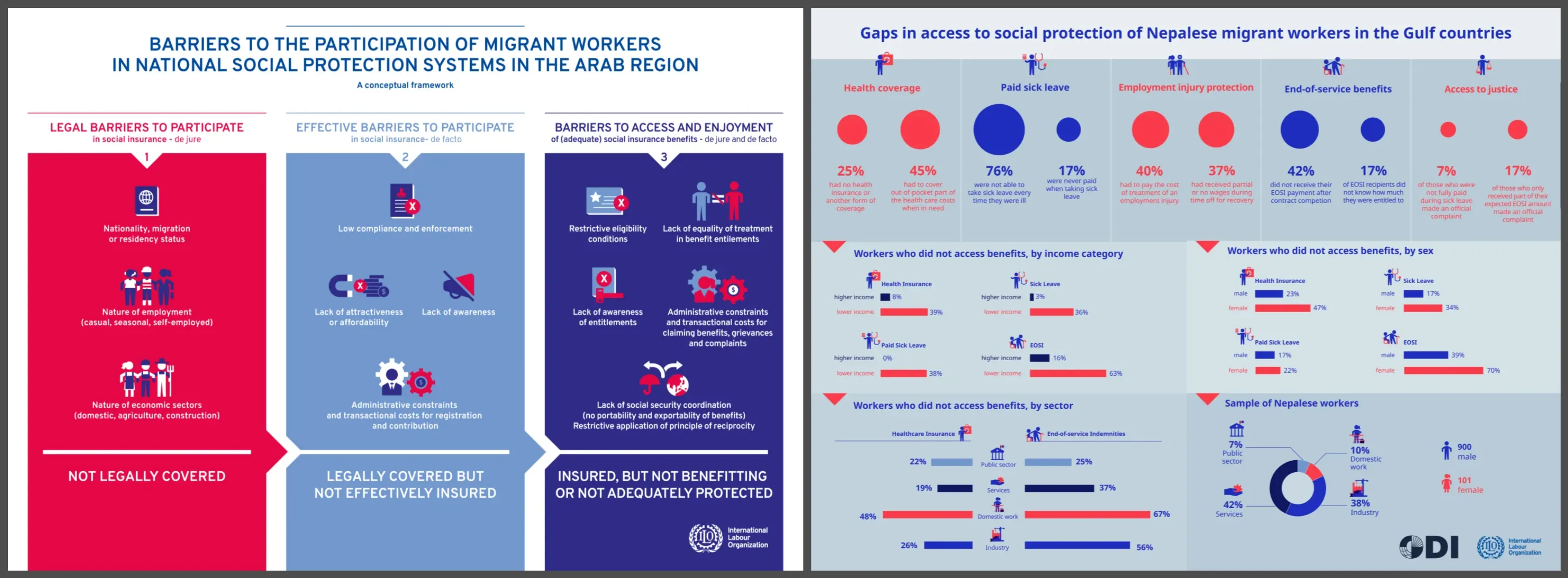
While the trending decline is too visible to ignore, the triggers for it remain multifaceted and persistent. For instance, none of the available statistics can establish any direct correlation on how much of the recent decline in job opportunities in the Gulf region can be attributable to nationalisation or war-related disruption, and how much to localisation, sectoral conditions or other factors of automation etc.
What is clear is that Nepali workers face both cyclical uncertainty and longer-term competition from other workforce exporting nations, from local demands for nationalisation and from Artificial Intelligence (AI) transforming job markets in the Gulf region and across the world.
India’s place in Nepal’s economy
A complete account of Nepal’s external earnings must also look beyond the Gulf. Here, along with Southeast Asia, Europe and North America, India has long employed Nepalis through a uniquely open and extensive cross-border relationship.
Nepalese nationals in India enjoy virtually all rights that an Indian citizen has in India except for electing political leaders or standing for political office. Earnings from work in India, along with pension and retirement payments to eligible Nepali residents, are economically significant.
The Reserve Bank of India’s Indo-Nepal Remittance Facility explicitly facilitates transfers by Nepali workers and payments relating to pensions for former Indian Army servicemen settled in Nepal. Nearly 32,000 Nepalese serve in the Indian Army’s Gurkha Rifles, with over 122,000 pensioners collectively receiving pensions from India in Nepal in addition to regular financial aid, assistance and investments.
Yet, it would be premature to conclude that India’s contribution is necessarily excluded from official remittance totals or that India is the largest source once pensions and other post-retirement benefits are added. The published aggregate data do not provide a sufficiently comprehensive, comparable breakdown to establish either claim.
The unique India-Nepal relationship is, nevertheless, a worthwhile question to address in the context of remittances. Nepal’s migration relationship with India differs from its relationship with any other nation, including in the Persian Gulf.
First of all, unlike the Persian Gulf, Nepalese citizens can buy property and settle in India. India and Nepal share an open border with established circular movement of people and long-standing employment and familial ties, which complicate conventional migrant and remittances counts.
Better data, in due course of time, would make the economic contribution of this relationship easier to assess and inform policy choices for both sides.
The bigger question is also whether Nepal should see these overseas jobs, including those in India, as proof of its migration-dependent economic model being sustainable forever. The country benefits enormously from its foreign workers’ earnings, but it also exports human labour because domestic employment opportunities remain insufficient or not as lucrative as overseas jobs are.
If foreign recruitment remains weak, the effects may appear gradually: fewer new salaries, greater pressure on returning workers, weaker household consumption and eventually slower economic growth for the Nepalese economy.
The way forward
The appropriate response for the future is neither to discourage migration indiscriminately nor to celebrate every increase in overseas job opportunities.
Future strategies for Nepal’s workforce export need stronger labour-market intelligence, transparent recruitment practices, better consular protection, effective mechanisms for recovering unpaid wages and effective reintegration programmes for returning workers.
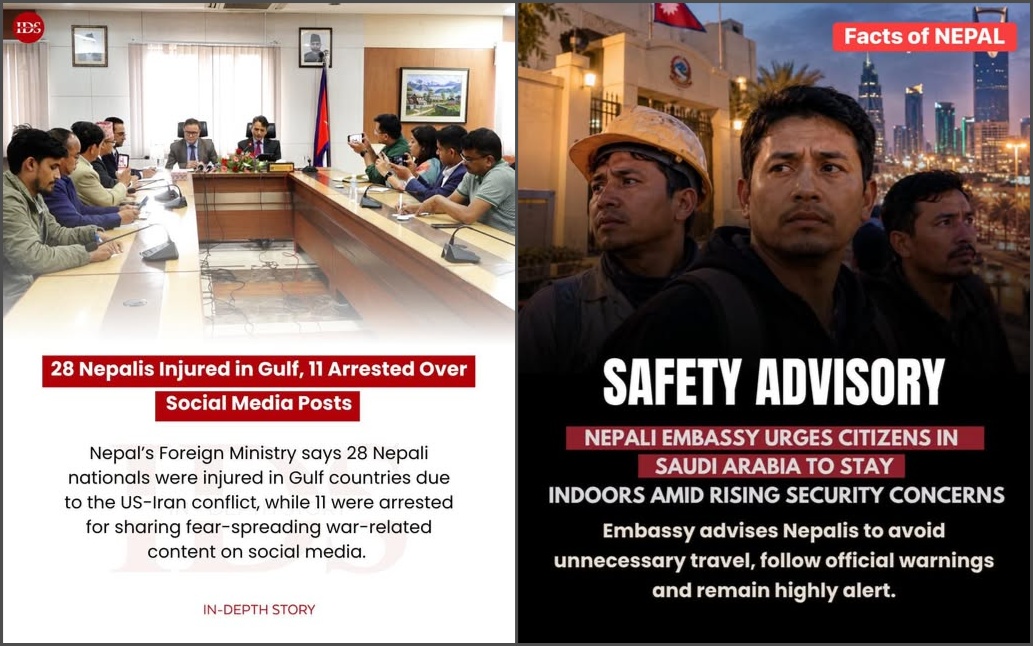
Nepali diplomatic missions abroad should help diversify destination markets for Nepal’s workforce, while the Nepalese government should also use these remittances not just for individual household consumption enhancement but also for creating more productive employment opportunities at home.
The National Dialogue on Strengthening Social Protection for Nepali Migrant Workers Across the Migration Cycle, along with the Social Security Fund (SSF) and International Labour Organisation (ILO), has already started this awareness drive in Nepal.
Labour migration remains central to the Nepalese economy; therefore, other than up-skilling its workforce for future job markets, there has to be constant focus on their challenges, from awareness to psychological distress from job-related injuries, wage-related disputes, access to health facilities or job losses.
For the immediate future, these Gulf governments, their employers and Nepal’s diplomatic missions all need to activate channels to identify the number of workers recently placed on unpaid leave and to clarify whether they retain jobs, wages and valid residence status.
In the end, Nepal’s remittance boom since the 1990s has brought Nepal foreign exchange, given Nepalese global exposure, sustained families and helped cushion Nepal’s external payments. But its resilience depends on constantly upskilling the people who can then benefit from job opportunities in coming times as well.
Today, Nepal’s central challenge is not merely to ensure a smooth flow of remittances. It is to ensure that overseas employment remains safe, fairly paid and fairly accessible — and that returning home is a choice that is made with dignity rather than as a consequence of a job suddenly disappearing with no planning to ensure social safety nets for returnees.
Record remittances tell us how much Nepal’s migrant workforce is contributing today. Shrinking overseas recruitment asks the more consequential question: who will be earning and sending money home in future?
Follow us on WhatsApp
Follow us on Facebook
Follow us on X @vudmedia
Follow us on Substack
