
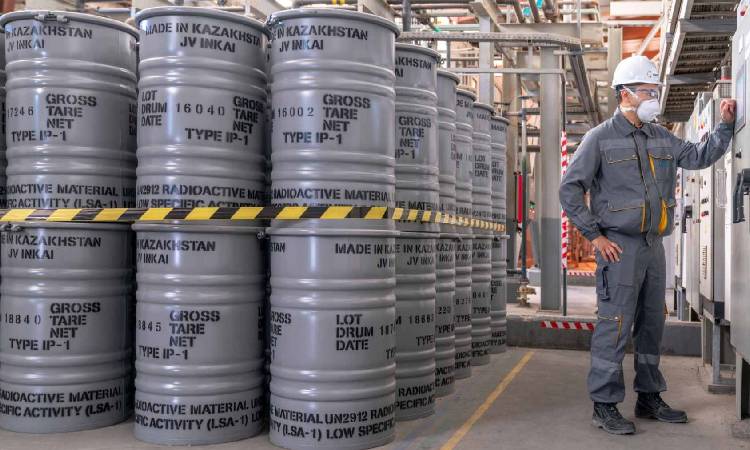
Like coal was in the 19th century and oil in the 20th, uranium is now increasingly acquiring strategic salience in geopolitics, as is evident in India’s recent biggest-ever uranium deal with Kazakhstan, and China’s acquisition of surplus stocks. As demand exceeds current supply, such deals and actions would have exclusionary effects as well, considering that access to this resource will be shaped by strategic considerations rather than market logic. Accordingly, unfolding in the global uranium landscape now is not simply a market adjustment but the early stages of a strategic competition over the nuclear fuel cycle, likely to be complicated with the entry of private players. Through its ten-year contract with Kazakhstan, New Delhi is not only addressing its own energy needs but also pre-empting competitors, says Professor Swaran Singh in the 23rd edition of Asia Watch.
Home page image: A billet of highly-enriched uranium recovered from scrap at the Y-12 National Security Complex; photo source - Wikimedia Commons
Text page image: Uranium containers at a Kazatomprom facility; photo source - techy44
Banner image: The Ranger Uranium Mine in Kakadu National Park, Australia; photo credit - Stephen Codrington
Late last month, India’s Department of Atomic Energy concluded what stands as history’s largest-ever deal for uranium procurement. While the deal has gone virtually unnoticed even in Indian media, the scale of this deal signed with Kazakhstan’s state-owned uranium giant, Kazatomprom, is striking.
This single transaction, valued at USD 4 billion, is more than half of Kazatomprom’s asset base. Also, this is nearly twice as much to the last largest deal ever made — China’s USD 2.5 billion uranium procurement deal with the same company that was signed in October 2024.
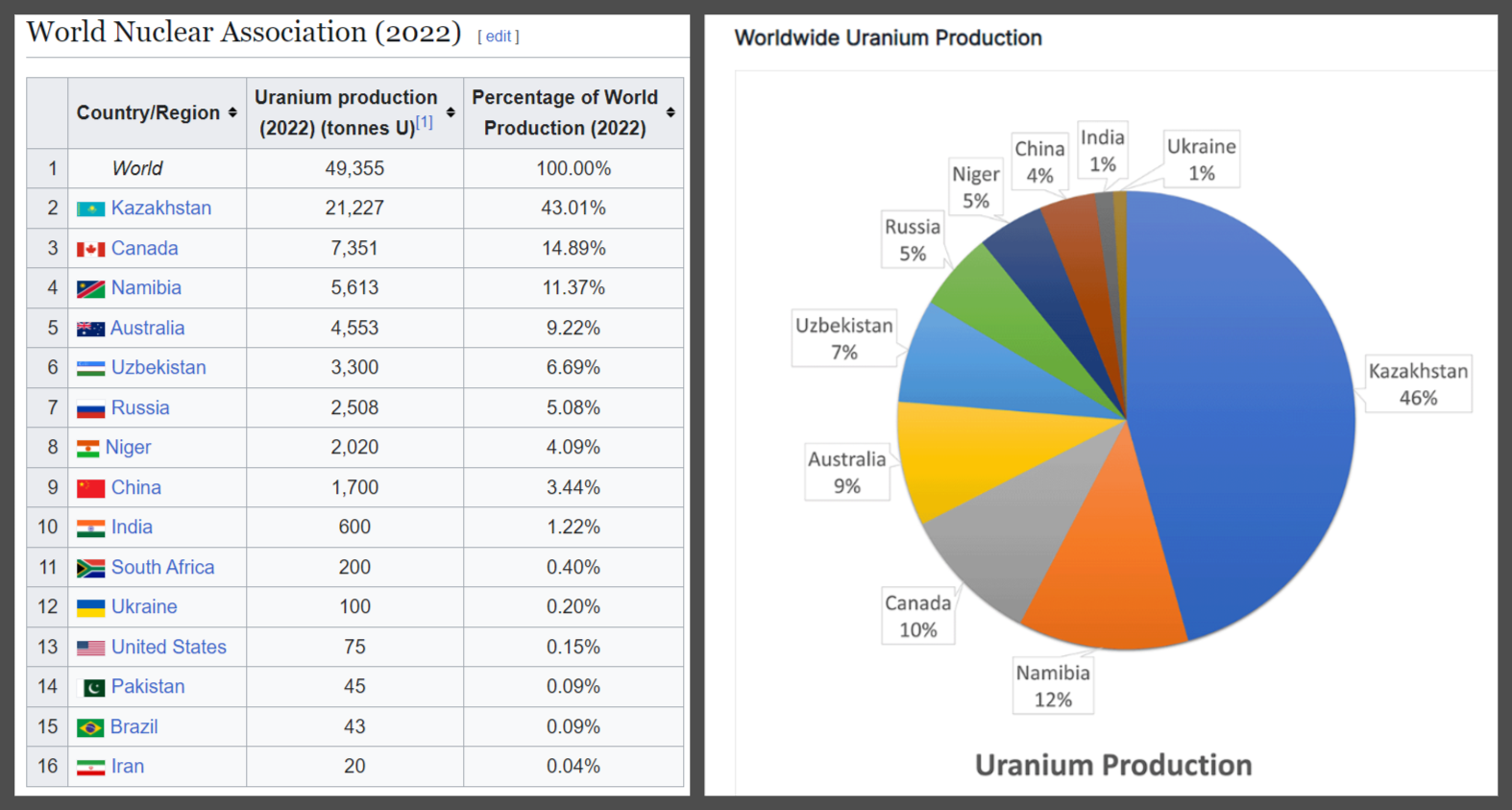
India’s uranium deal with Kazakhstan — that singularly produces the world’s 40 per cent uranium — has implications way beyond the world’s volatile energy markets. It is a signal not just to India’s Asian peers like China, Japan, South Korea, and Pakistan, but all other nations heavily dependent on uranium imports as well.
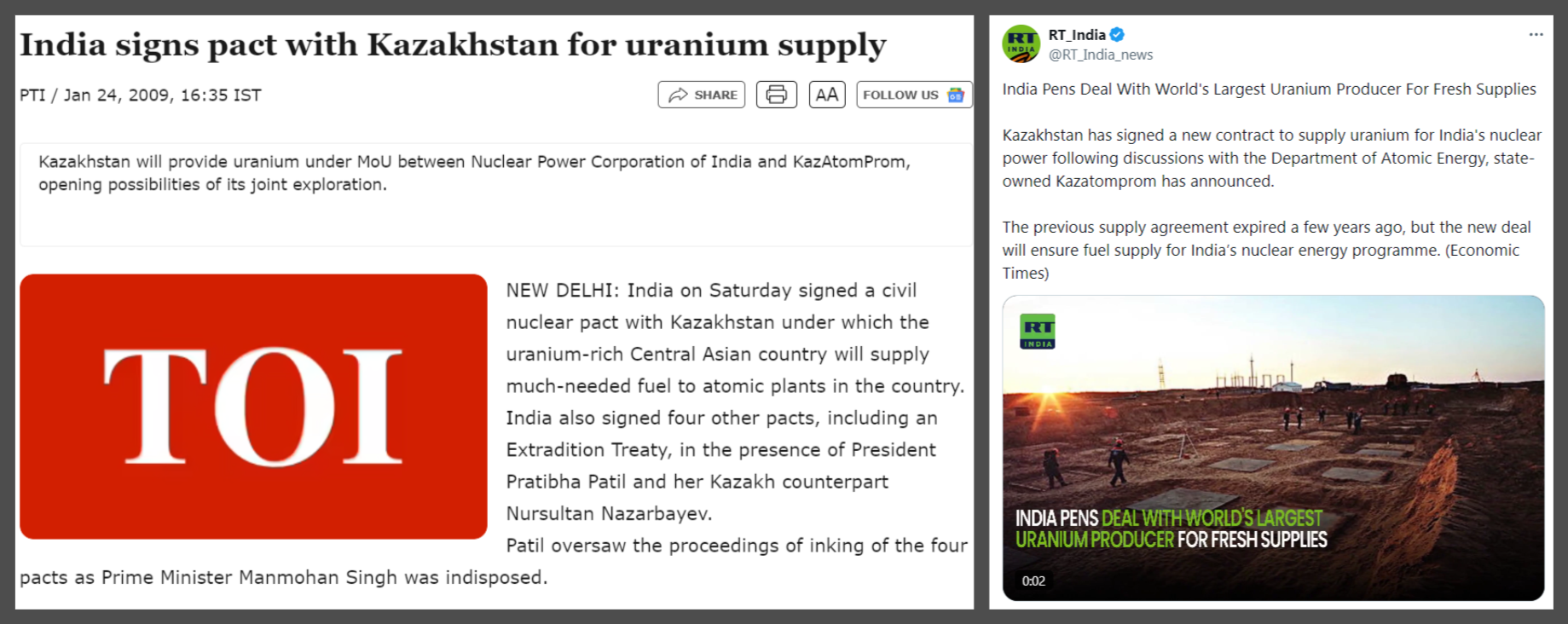
The previous uranium deal between India and Kazakhstan was in 2009
This has serious implications even for nuclear power generation, not only for the US but also for several European nations [1] that also remain import-dependent, as also for other aspirant nations thinking of nuclear power as part of their energy transition plans.
The Iran war-driven disruption in supplies of gas and oil, which has accelerated the quest for alternatives, alludes to this race for uranium already underway. Asia, in many ways, is now becoming its primary battlefield of sorts.
India’s USD 4 billion uranium procurement deal also comes more like India’s geopolitical signalling or positioning guided by its centennial goals. Among its centennial goals for the year 2047, India has announced to take its nuclear power generation from the current 8.8 gigawatt to 100 gigawatt.
In fact, way back in the year 2010, the Prime Minister, Dr Manmohan Singh, had also announced taking India’s nuclear power generation to 60GW by 2032.
This explains the significance of India's sustained focus in trying to secure access to upstream supplies in anticipation of the tightening of global supplies.
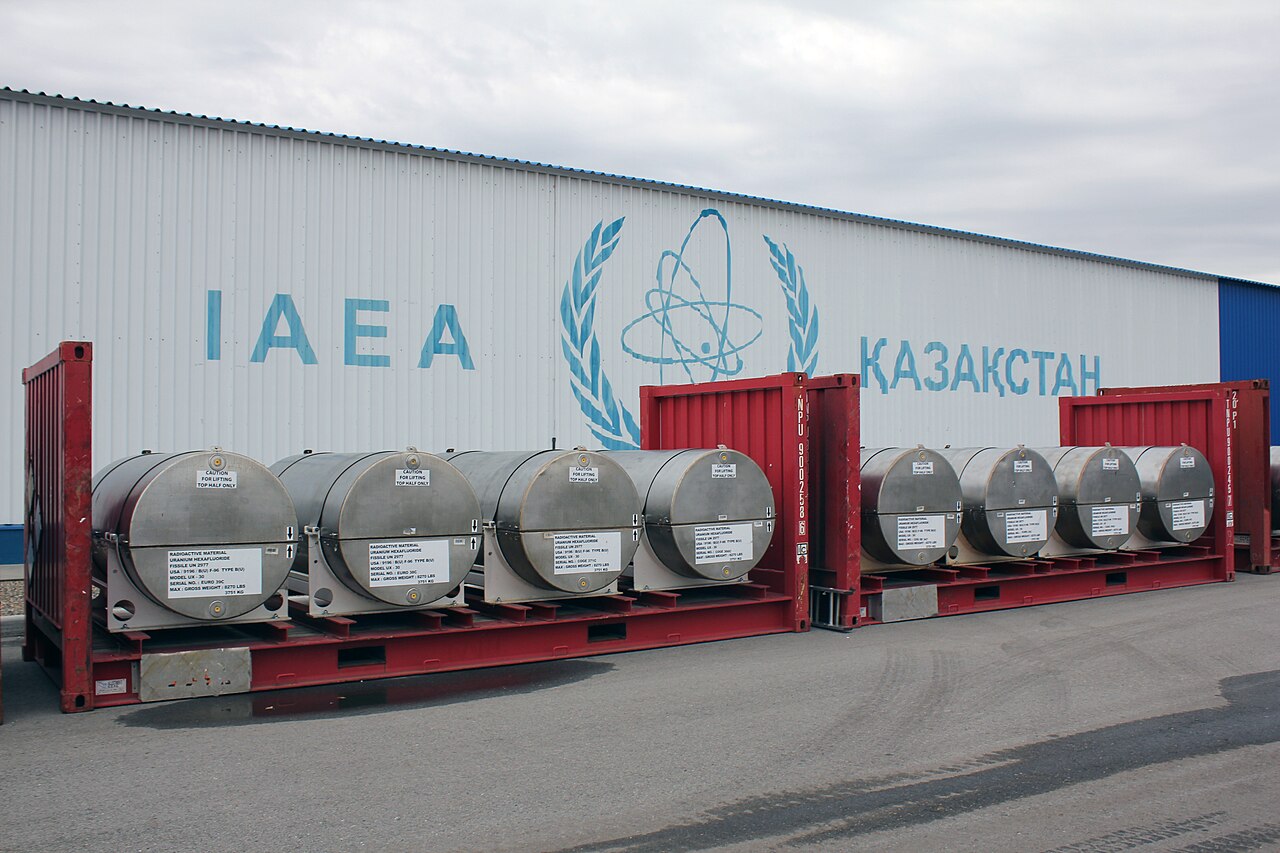
An International Atomic Energy Agency (IAEA) fuel bank in Kazakhstan
As the structural deficit manifests…
As was the case with oil in the twentieth century and coal in the nineteenth century, uranium is now increasingly acquiring a similar structural and strategic salience. This comparison is no longer rhetorical; it is systemic with even deeper implications.
As extant trends show, for some time now, the uranium market has been operating under a critical imbalance of demand and supply. In 2025, global uranium production stood at 173 million pounds, while demand had reached 204 million pounds.
This gap of over 30 million pounds is not cyclical; it reflects a structural precipice with geopolitical consequences. Projections suggest that this gap might widen even further as the demand for nuclear energy capacity building expands into the 2030s.
Several factors have converged to produce this tectonic shift. The irreversible climate crises have restored nuclear energy’s legitimacy, and the momentum after the post-Fukushima downturn is germinating new excitement amongst nations aspiring to build or expand their nuclear power generation capacity.
The rapid expansion of artificial intelligence and related or blended infrastructure, especially digital infrastructure, has also generated a gargantuan demand for stable, base-load electricity that intermittent renewables can only aspire to guarantee.
Governments across Asia and beyond — from Southeast Asia to the Middle East — are once again prioritising nuclear power as part of their long-term energy mix planning.
Among these Asian countries, China sits at the centre of this transformation. It is the world’s largest nuclear power generator with 112 reactor units: 62 in operation, 39 under construction, and 11 more approved to be built.
Together, these reactors represent nearly half of all reactors being built globally. China’s ambitious target of reaching 200 gigawatts of nuclear power by 2035 implies the construction of 150 additional reactors. These numbers can be mind-boggling.
Each of these reactors will, of course, require a steady uranium supply, transforming fuel security into a core strategic priority.
While nuclear power may be hoisted as ‘clean energy’ yet, evolving international regulations for monitoring, accounting, storing, and disposing of such large quantities of spent fuel and heavy water-related materials will also generate added threats and challenges.
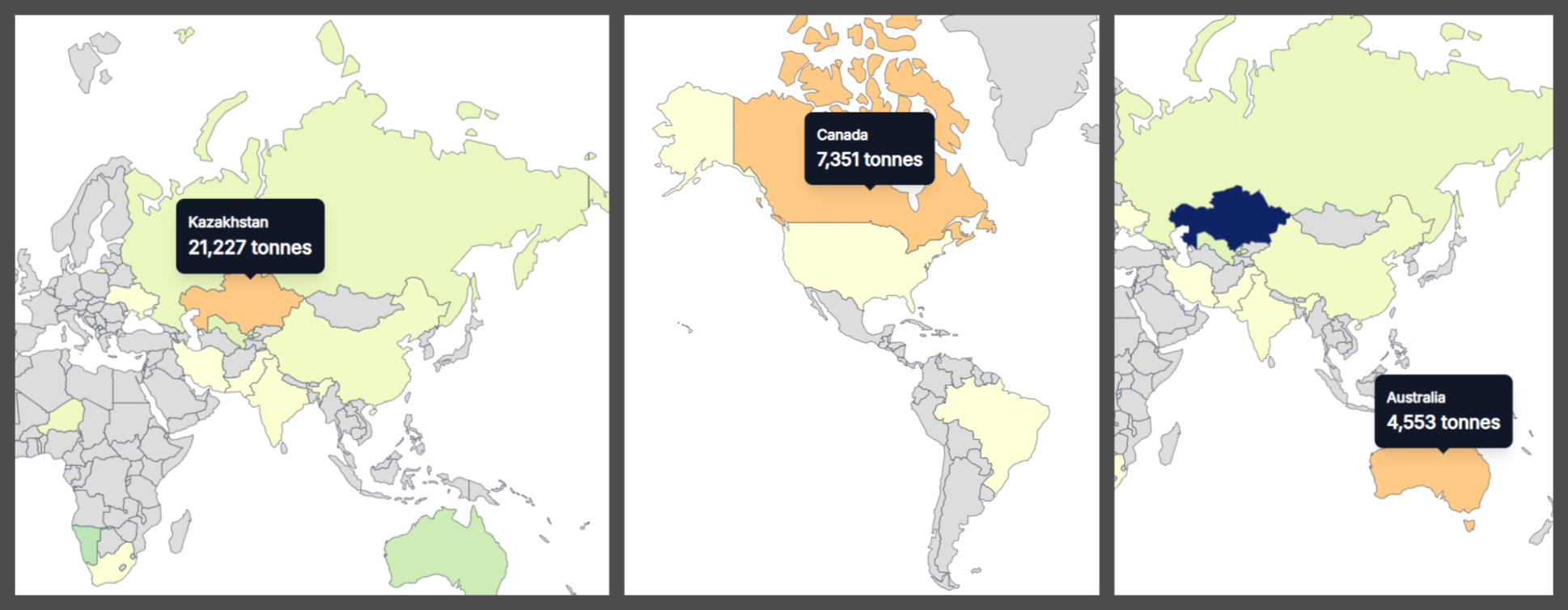
The three top uranium-producing nations in tonnage
Competing stockpiles, enrichment and supply
Several nations are already seen as responding to this perceived emerging uranium fuel supply scarcity.
China has moved aggressively to secure supply lines, importing uranium at volumes exceeding its immediate consumption needs, and building strategic reserves before the markets begin to price this scarcity.
According to one estimate, China had already stockpiled 120,000 tonnes of uranium by the end of 2021, which puts it in a different league. This is bound to inspire other nations to do likewise.
Russia, in contrast, dominates a different segment of the nuclear fuel cycle; it controls 46 per cent of global uranium enrichment or fuel fabrication. Raw uranium must undergo enrichment before it can be used in power reactors, and Russia retains a unique commanding position in this domain.
Russia’s state nuclear corporation, Rosatom, is the world’s leading supplier of conventional enriched uranium and also the primary commercial provider of high-assay low-enriched uranium, which is essential for next-generation small modular reactors (SMRs).
Even the United States depends on Russia for uranium fuel, which makes the latter a critical chokepoint in the global nuclear supply chains. The recent example of Iran blocking the Strait of Hormuz can trigger nightmares of Russia potentially holding nuclear power generation of some dependent nations hostage to its whims and fancies.
The United States, as a result, has begun to respond, allocating billions of dollars to rebuild domestic enrichment capacity. However, such infrastructure cannot be developed in a hurry; timelines extend several years, if not decades.
In the interim, dependence on existing suppliers persists.
This explains the value of ensuring long-term uranium procurement guarantees. By securing a ten-year contract of uranium supply from Kazakhstan, New Delhi is not only seen addressing its own energy needs but also pre-empting competitors as supplies hit scarcity, tougher terms and higher price.
In a tightening market of the coming times, such deals will have exclusionary effects as well: uranium supply secured by one actor is, by definition, unavailable to others.
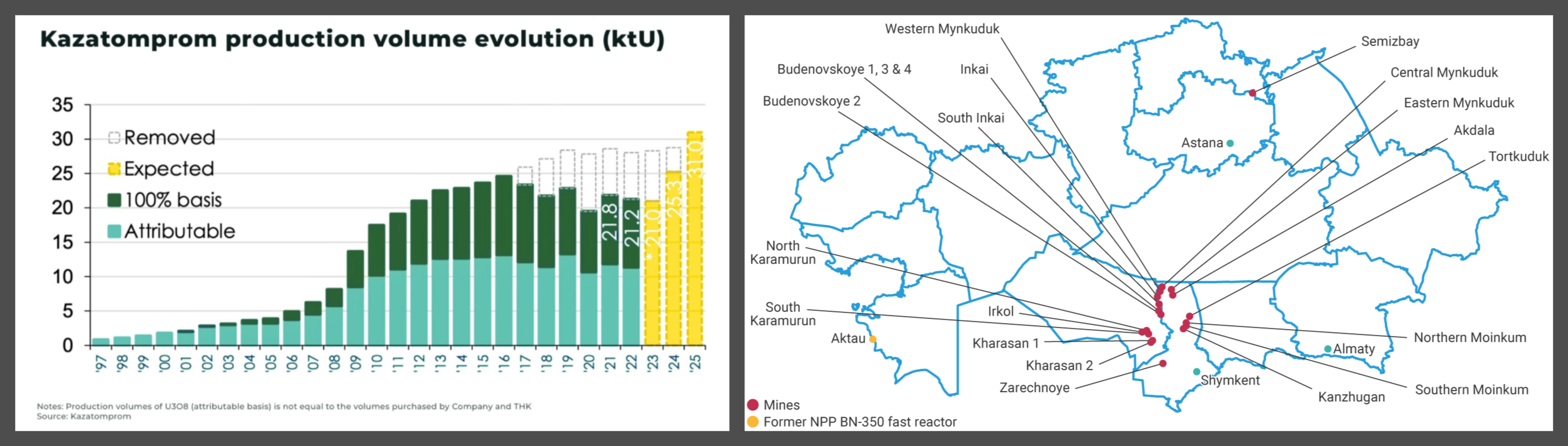
Kazatomprom's production volume chart (left), and uranium mining sites across Kazakhstan
Second-tier aspirants plus the private sector
This scarcity will especially impact nations that are only now aspiring to join the club of nuclear power-generating countries. A number of rapidly growing Asian states are entering this nuclear energy space, further increasing demand for uranium supplies. Vietnam, for instance, has resumed its nuclear energy programme since 2024, and its new legislation has set ambitious targets extending into the 2030s.
In partnership with Russia, Uzbekistan has also initiated plans for a hybrid nuclear complex combining large reactors, along with SMRs. Bangladesh and the Philippines are also exploring nuclear options, while established nuclear power-producing states such as Japan and South Korea are renewing long-term fuel contracts.
The United Arab Emirates is the leader in nuclear power generation in the Middle East. Its Barakah Nuclear Power Plant has four reactors with 5.6 gigawatt capacity and supplies roughly one-fourth of the country’s electricity.
Each of such reactors around the world is going to add incremental pressure to an already constrained supply base of uranium fuel-exporting countries. Moreover, geopolitically driven supply-side uncertainties are compounding these challenges.
Kazakhstan itself, with the world’s largest known uranium reserves, is considering domestic nuclear power generation, potentially diverting a portion of its uranium production inward for its own domestic needs.
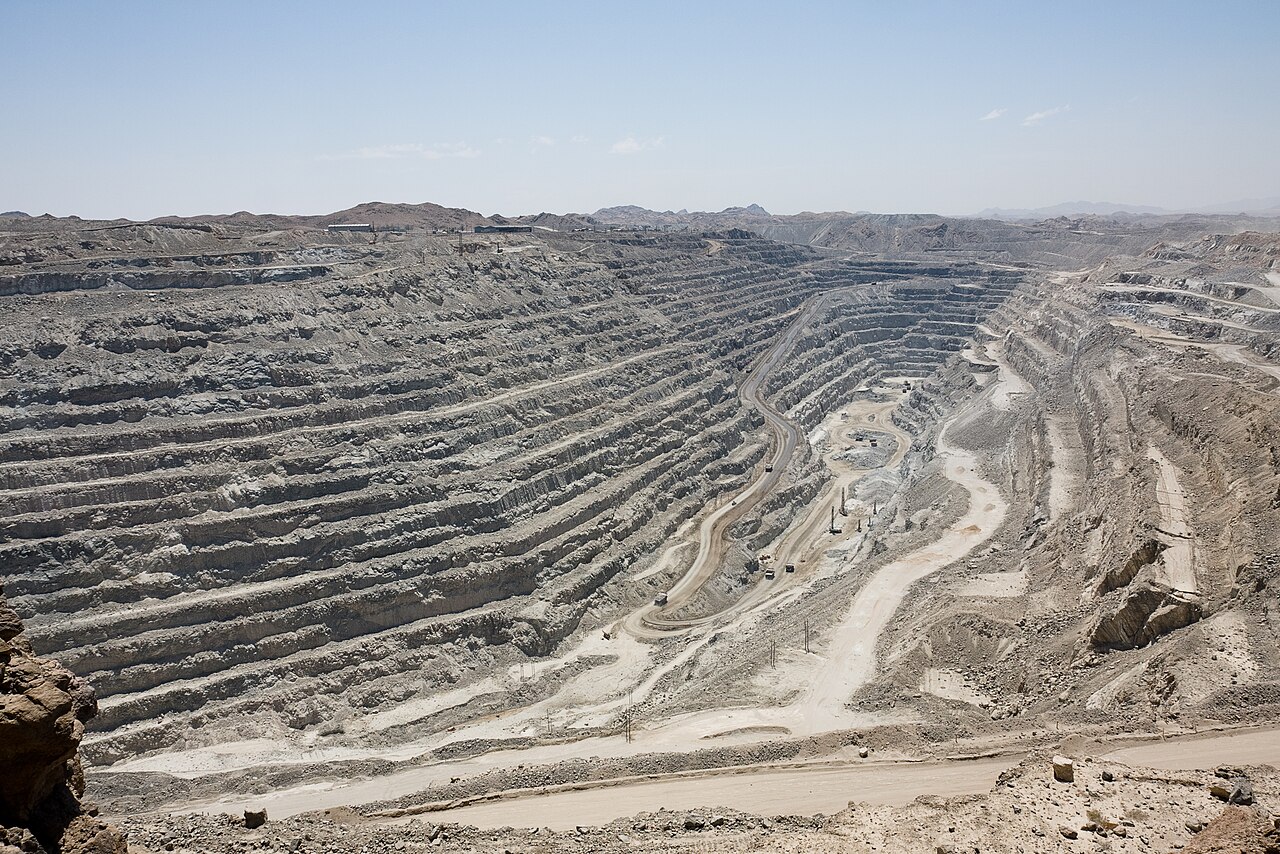
The Rossing open-pit uranium mine in Namibia; photo source - Wikimedia Commons
On the flip side, political instability in key uranium mining regions — such as Niger — has already disrupted output, further highlighting the fragility of supply chains. The result is a progressively uncertain market in which late entrants may face complex barriers to securing reliable uranium supplies.
Starting from the early 1990s, several European nations — Germany, France, Portugal, and Hungary — have also closed their uranium mines. This was driven largely by higher costs of extraction, resource depletion, environmental concerns and sometimes because of a change in political leadership.
The Dolini Rozinka mine in the Czech Republic is the only functioning mine in Europe, which, in fact, has, over the years, substantially lowered its uranium production.
Another under-appreciated dimension of this emerging landscape is the role of the private sector, particularly the major technology firms like Microsoft, Google, and Amazon, among others. The market valuations of these three multinationals being above USD 3 trillion, make them bigger than even the Gross Domestic Product of, for instance, Italy, the world’s eighth largest economy and a G7 member.
These technology firms are also increasingly investing in nuclear power solutions to meet their enormous electricity demand for their data centres and artificial intelligence-driven systems. Given their size, these investments are not merely commercial decisions; they carry geopolitical consequences as well.
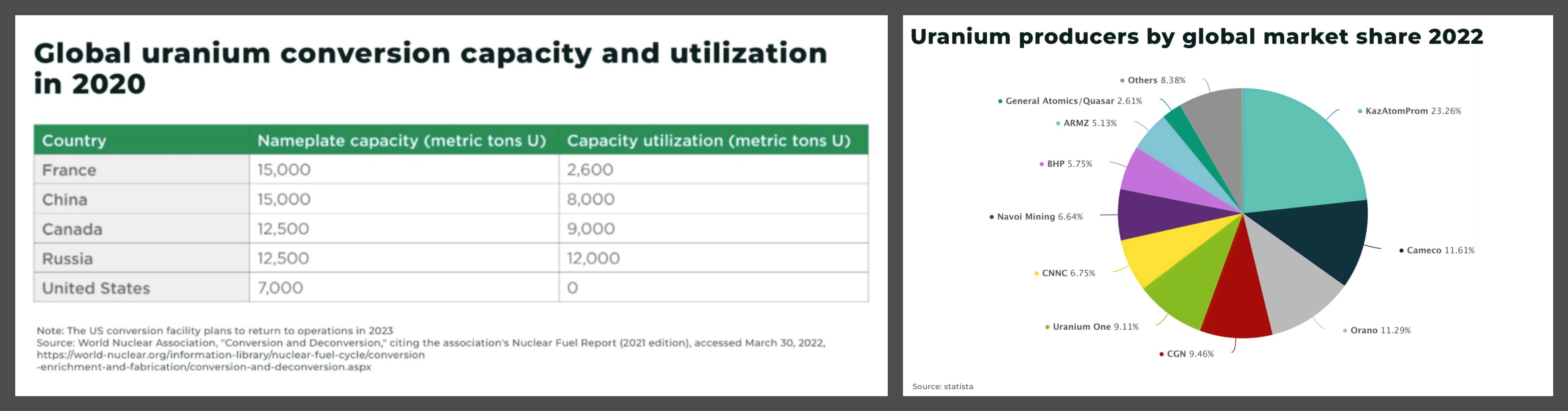
Also, as private actors enter long-term nuclear energy arrangements, they will also contribute to aggregate uranium demand, potentially competing with state-level procurement strategies.
In the US, for instance, this dynamic is already seen creating a strange paradox: efforts to secure energy independence are occurring alongside rising domestic demand driven by these American world leaders in technology.
Back to resource geopolitics?
The parallels with the oil geopolitics of the twentieth century and the coal dominance of the nineteenth century are becoming prophetic.
Uranium, just like oil or coal before it, is concentrated in a limited number of locations, processed through specialised tech-infrastructure, and is indispensable to modern economic systems. As demand for uranium rises and supply constraints tighten, access to this resource will also be increasingly shaped by strategic considerations rather than any pure market logic.
It is in this evolving landscape that India’s uranium deal with Kazakhstan illustrates how states are beginning to position themselves within this threatening geopolitical precipice.
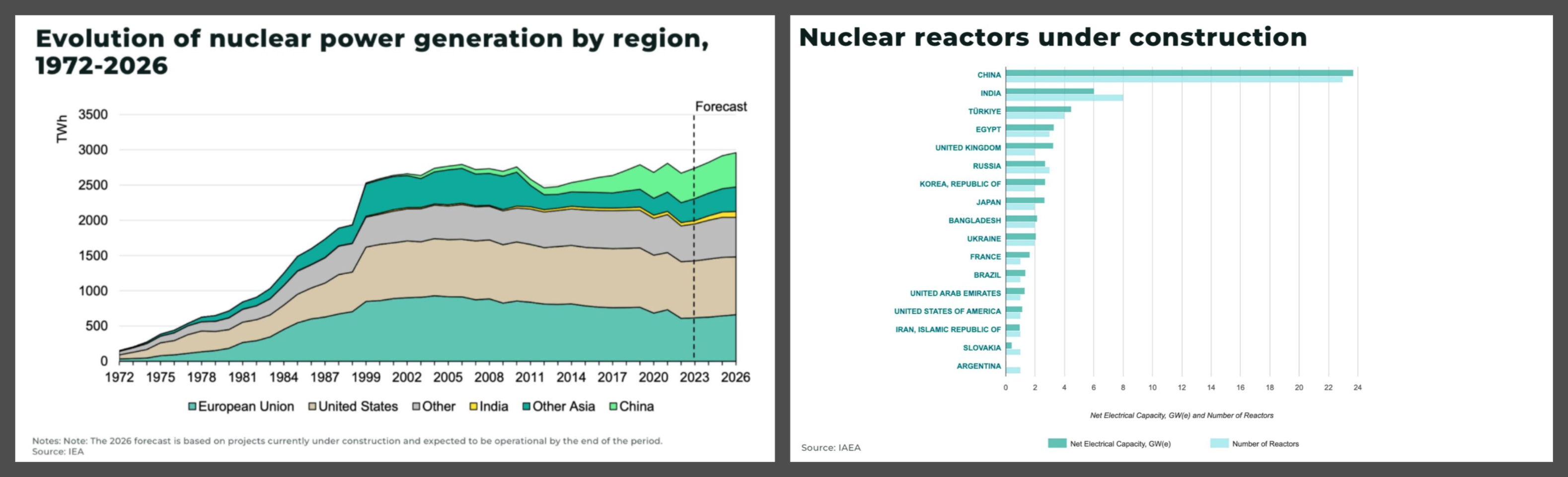
China’s stockpiling strategy, Russia’s dominance in enrichment, and the United States’ efforts to rebuild capacity, alongside investments by the private sector in their own nuclear power plants, all point to a broader reconfiguration of energy geopolitics.
In short, what is unfolding is not simply a market adjustment but the early stages of a strategic competition over the nuclear fuel cycle.
The lessons of the oil and coal eras — about dependency, leverage, and vulnerability — are clearly instructive. Whether this transition will lead to cooperation, germinate new cartels and intensify rivalries remains to be seen.
What is clear, though, is that uranium is no longer just a resource. It is becoming an instrument of statecraft with Asia emerging as the new theatre where its geopolitical significance is now being shaped most visibly.
Follow us on WhatsApp
Follow us on Facebook
Follow us on X @vudmedia
Follow us on Substack


