This week, the Defence Ministers of the Shanghai Cooperation Organisation (SCO) will meet in Bishkek to discuss regional security issues, as per its mandate. While Iran will be present at this meeting, the US-Israel war against the former is likely to remain a muted issue, thanks to the unique ‘strategic geometry’ of the Organisation, which emphasises principles like sovereignty but abstains from naming conflicts. Unlike at the last SCO Summit in Tianjin, when host China spearheaded a final communique that condemned the US-Israeli action against Iran in September 2025, at Bishkek, Central Asian ‘caution’ is likely to guide an institutional choreography that does not condemn the ongoing conflict by naming names. On the positive side, the meeting will provide space for numerous bilateral conversations that could help in de-escalation and a possible end to the conflict, says Professor Swaran Singh in the 22nd edition of Asia Watch.
Home page image: The logo of the Shanghai Cooperation Organisation
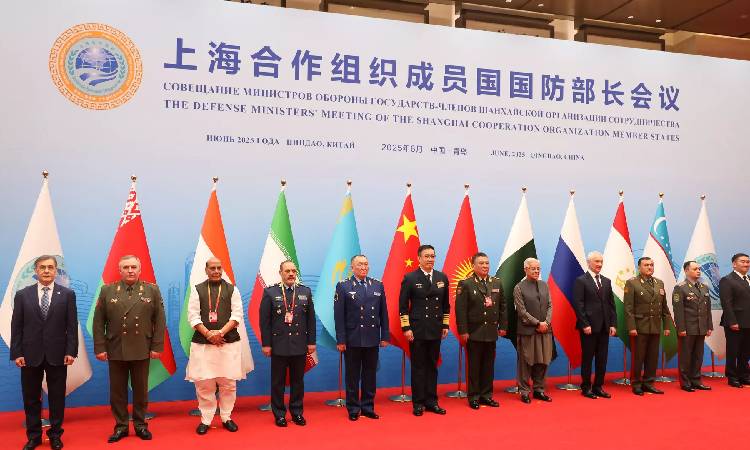
Text page image: A photo session at the 2025 SCO Defence Ministers meeting in Qingdao, China
Banner image: A photo session of the Heads of State at the 2025 SCO Summit in Tianjin, China
On the eve of the 27–28 April 2026 defence ministers’ meeting of the Shanghai Cooperation Organisation (SCO) in Bishkek, Iran’s foreign minister, Abbas Araghchi, has embarked on a carefully choreographed three-nation tour — Pakistan, Oman, and Russia.
The itinerary is revealing: Two of these three nations — Pakistan and Russia — are core members of the SCO, while Pakistan has also quietly positioned itself as mediator in the Iran-US talks.
This visit’s timing is even more telling: it is not merely shuttle diplomacy; it is intended to strengthen Iran’s regional alliances and shape the diplomatic landscape in its favour. Also, in the wake of the ongoing US-Israeli war with Iran, the SCO Defence Ministers Meet at Bishkek will be Iran’s first participation at an international ‘regional security’ forum.
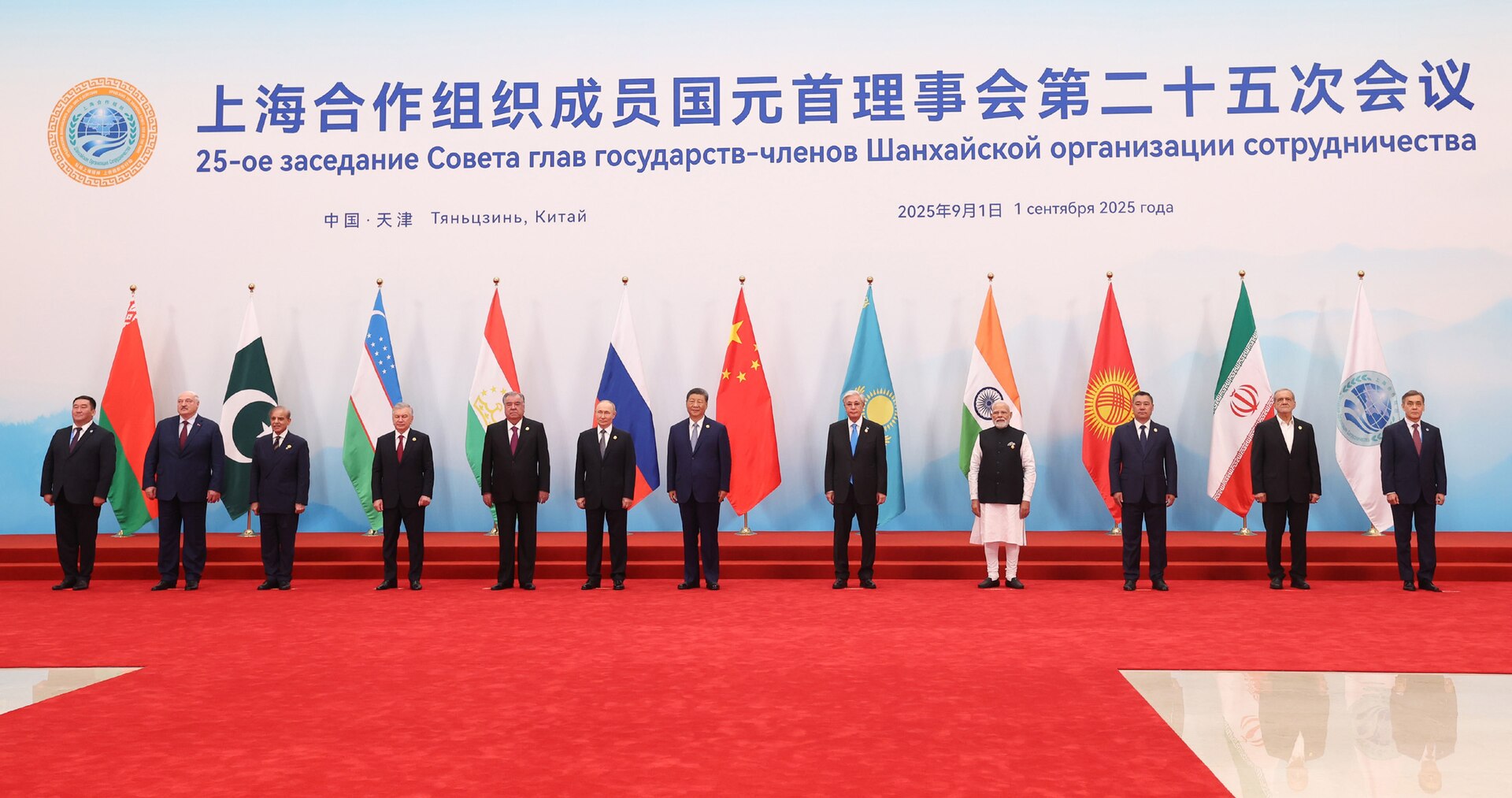
The SCO heads of state at the Tianjin Summit, August-September 2025
Meanwhile, Iran’s closure of the Strait of Hormuz and American naval blockade continue to have severe global implications, disrupting energy supplies for much of Asia and threatening a major food crisis for the Gulf nations. This adds credibility to Araghchi’s shuttling in ensuring peace.
Hence, as Bishkek, the capital of Kyrgyzstan, hosts Iran’s first major multilateral regional security platform appearance since the escalation of the US-Israel-Iran crisis in late February 2026, the Tianjin Declaration of the last SCO summit, which had “strongly condemned the military action against Iran,” will cast its shadow and ignite anticipations from this week’s outcomes.
However, unlike in China’s Tianjin Declaration, the SCO hosted in Central Asia is expected to remain politically cautious. Moreover, Iran’s fate as a full member of the SCO since 2023 will also remain subject to intra-SCO variations: Iran will be structurally central to the meeting, but may stay discursively subdued, and in the worst case, even absent from these deliberations.
The ‘silent centrality’ of Iran
Defining this ‘silent centrality’ of Iran in the SCO Defence Ministers’ Meeting, their deliberations will see Iran present in the room, though it is likely to remain invisible in their final communiqué, possibly even from their formal deliberations.
To understand the salience of this paradox, it is important to first understand how the structure and mandate of the SCO have evolved over the years.
Since Iran became a full member in 2023, the SCO has expanded into a formidable Eurasian bloc of 27 countries, way beyond its original Shanghai Five focus on Central Asia. Today, it comprises of nine full members that include China, Russia, India, Pakistan, Iran, and four Central Asian republics.
In addition, it now has three observer states (namely, Afghanistan, Belarus, and Mongolia) and 14 dialogue partners, ranging from Turkey to Saudi Arabia and Egypt, that share a closer relations with the United States but also have major stakes in ensuring an early end to the Iran war.
What should also make the SCO a significant voice in addressing global security threats is that it now constitutes nearly 42 per cent of the world’s population, with its share in global trade rising from 5 per cent in 2001 to 17.5 per cent in 2020, which was before its expansion.
This makes the SCO more than a mere regional grouping; it is an evolving geopolitical ecosystem. Nevertheless, in spite of its expanding physical footprint, its agenda remains anchored around two core themes of its founding mandate: countering terrorism and regional security.
The regional security matrix has, of course, since expanded to include issues of border security, drug trafficking, intelligence sharing, military exercises, crisis management, etc. And, it is within this expanding regional security-centric architecture of the SCO that Iran’s tensions with the US and Israel, and its blocking of the Strait of Hormuz, have reinforced Iran’s centrality in the SCO’s major concerns.
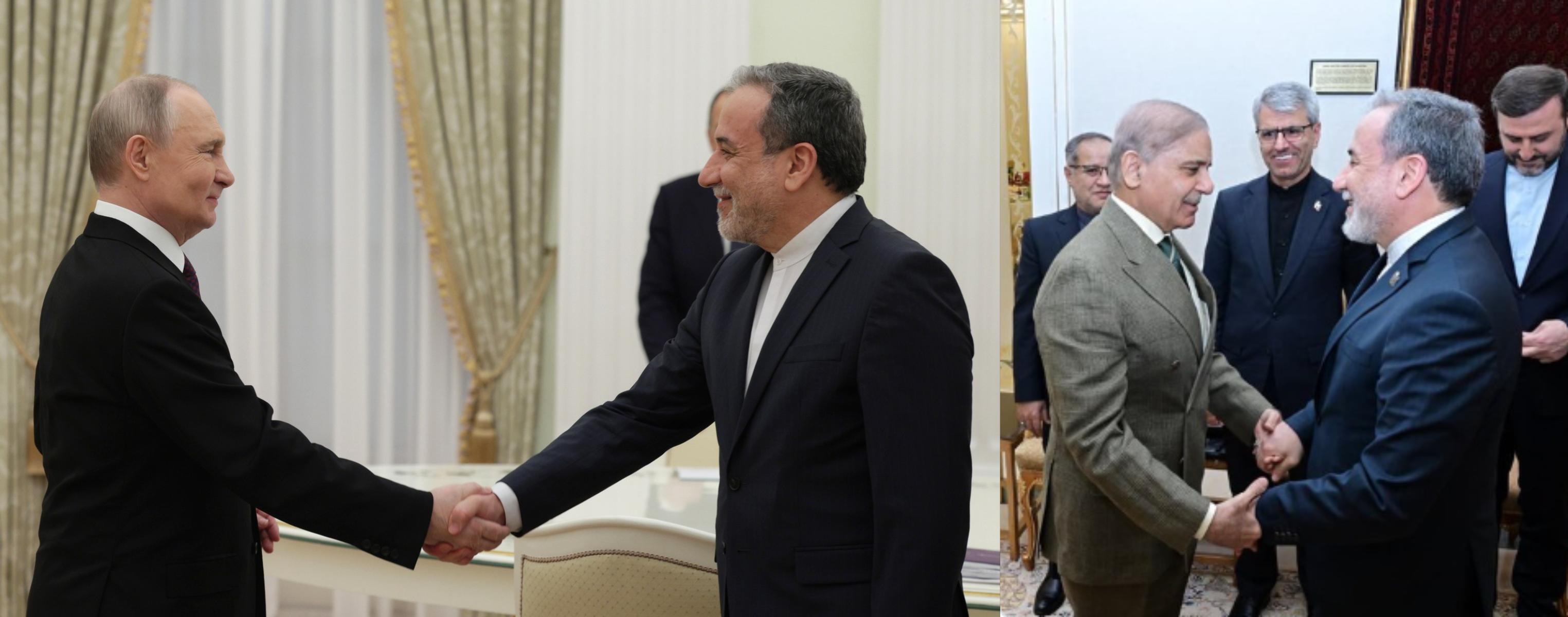
Iran's Foreign Minister Abbas Araghchi meets the Russian President Vladimir Putin (left), and Pakistan Prime Minister Shehbaz Sharif (right)
SCO on US-Israeli strikes
SCO’s stakes in the US-Israeli war against Iran have also become critical, given the transformation in its responses during the past year. The June 2025 US-Israel strikes on Iranian nuclear facilities, coming in the backdrop of the Israeli blitzkrieg on Gaza, had stimulated a decisive turn in the SCO that otherwise remains restricted to issuing normative statements.
With China being the host nation of the August 31-1st September 2025 SCO Summit in Tianjin, its final declaration strongly condemned these attacks as “violations of international law and the UN Charter” and “threats to nuclear safety and civilian infrastructure,” thus marking a clear break from its past.
This was understandable given China’s stature and its Comprehensive Strategic Partnership with Tehran since 2016, as well as its ever-expanding footprint as a new peacemaker in the Middle East.
However, this was not the routine diplomatic language for that SCO, and it can well return to its time-tested normative positioning, like a collective assertion of sovereignty, non-intervention and strategic restraint, and a call for holding ceasefire and talks.
But given that China and Russia remain closely aligned as the biggest partners of Iran, a return to such benign responses can further exacerbate the SCO’s deeper fault lines beneath their apparent camaraderie and consensus.
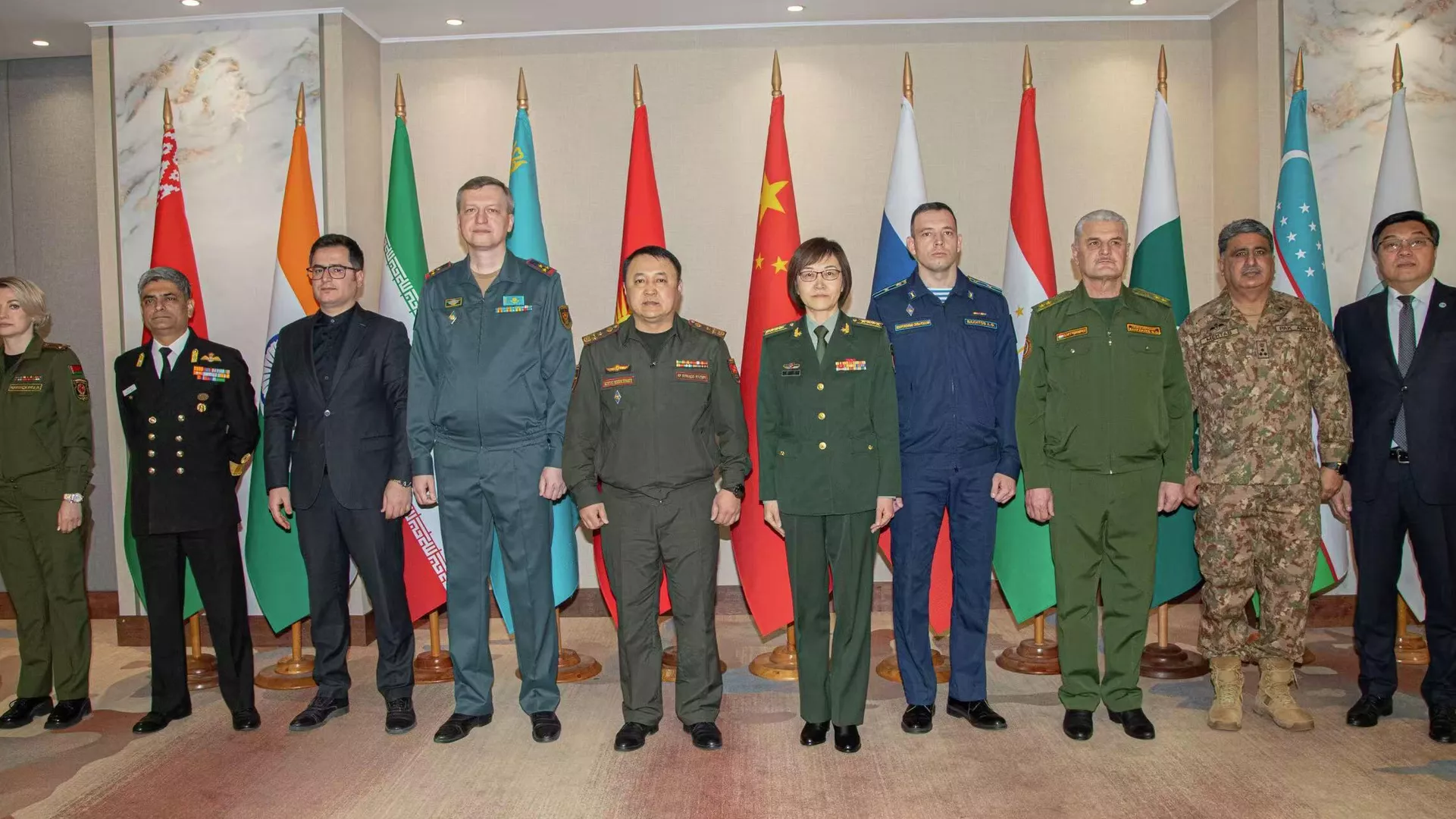
The Expert Working Group under the Meeting of Ministers of Defence holds a meeting in Bishkek
The via media could be their unity in words and divergence in strategy, leading to no actionable plans to address the ongoing conflict between the US, Israel, and Iran. But so far, the SCO’s response reveals a classic pattern of blending variations among its members.
Russia and China have openly backed Iran through defence cooperation and diplomacy. They frame Iran as a victim of Western unilateralism and as a responsible and stabilising regional actor. Their support to Iran in the face of US-Israeli strikes has not been merely rhetorical, but remains embedded in their defence cooperation, energy ties, and diplomatic coordination.
India, with friendly relations with all nations in the Middle East, has calibrated its multi-alignment in terms of balancing, largely driven by its concerns about its energy security and the safety of nearly 10 million Indians living in the region. They are a major source of India’s remittances: USD 58.2 billion of the total USD 135.4 billion for 2025.
India occupies a rather complex position: having strategic ties with Iran (energy, connectivity via Chabahar), deepening defence and technology partnerships with the US and Israel, and sensitivity to Gulf dynamics.
However, after distancing itself from the strong anti-US language in June 2025, India had also aligned with the consensus of the Tianjin SCO summit in September 2025, condemning the US-Israeli strikes on Iran. This duality is likely to persist in Bishkek and beyond.
As regards the Central Asian republics, they have largely remained security-cautious, with states like Kazakhstan, Uzbekistan, and Kyrgyzstan prioritising their regime stability. They have avoided entanglement in the West Asian conflicts and preferred a low-key consensus language and optics.
Their approach remains grounded in pragmatic hedging: support the collective line, avoid escalation even while remaining tilted towards the China-Russia axis.
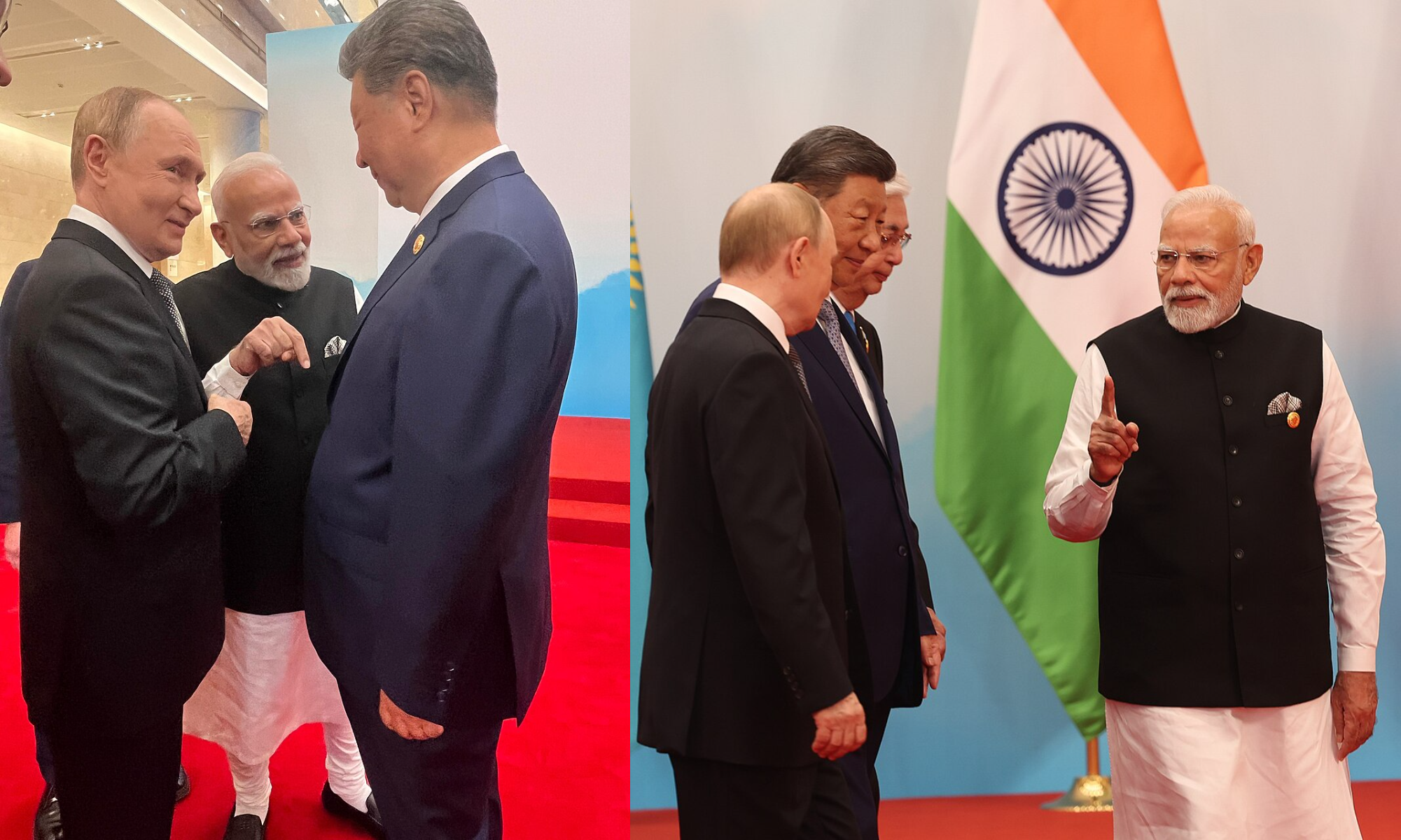 Prime Minister Narendra Modi's close interactions with Russian President Putin and Chinese President Xi Jinping during the Tianjin Summit 2025
The logic of ‘discursive muting’
Yet the pertinent question remains: why will Iran remain a muted issue at the SCO Defence Minister’s meeting in Bishkek this week, despite its obvious relevance and presence in all its meetings?
The answer to it may be found in the golden rules guiding SCO’s decision-making processes. These include avoiding naming contentious conflicts explicitly, framing crises in universal principles (sovereignty, stability, anti-terrorism), and eventually prioritising consensus over clarity.
Therefore, any reference to the ongoing Iran crisis at Bishkek next week is likely to appear as concerns over escalating geopolitical tensions or as threats to the nuclear infrastructure of Iran, or even civilian safety, all of which underline the need for de-escalation and dialogue.
Take notice of what will be missing in these speeches: Iran, the US, and Israel. Such abstinence from naming countries will not be an omission but will be by design. But such moderation at this SCO deliberation will not imply total non-action.
The action in Bishkek will not occur in the plenary sessions or in the communiques, but in their corridor diplomacy on the sidelines. Also, bilateralisation rather than multilateralisation will remain the key.
Earlier this month, for instance, India and China held their first bilateral consultations on SCO matters. This is what has also defined Iran’s defence engagement with the SCO member countries, whether it is Russia-Iran defence coordination, China-Iran strategic partnership or India-Iran connectivity-security dialogue.
These bilateral interactions have proved to be far more flexible, less constrained by consensus building and strategically substantive.
From this perspective, the SCO appears to function less as a multilateral decision-making body and more as a convening platform with flexibility and confidentiality that promises efficiency and efficacy in building bilateral partnerships.
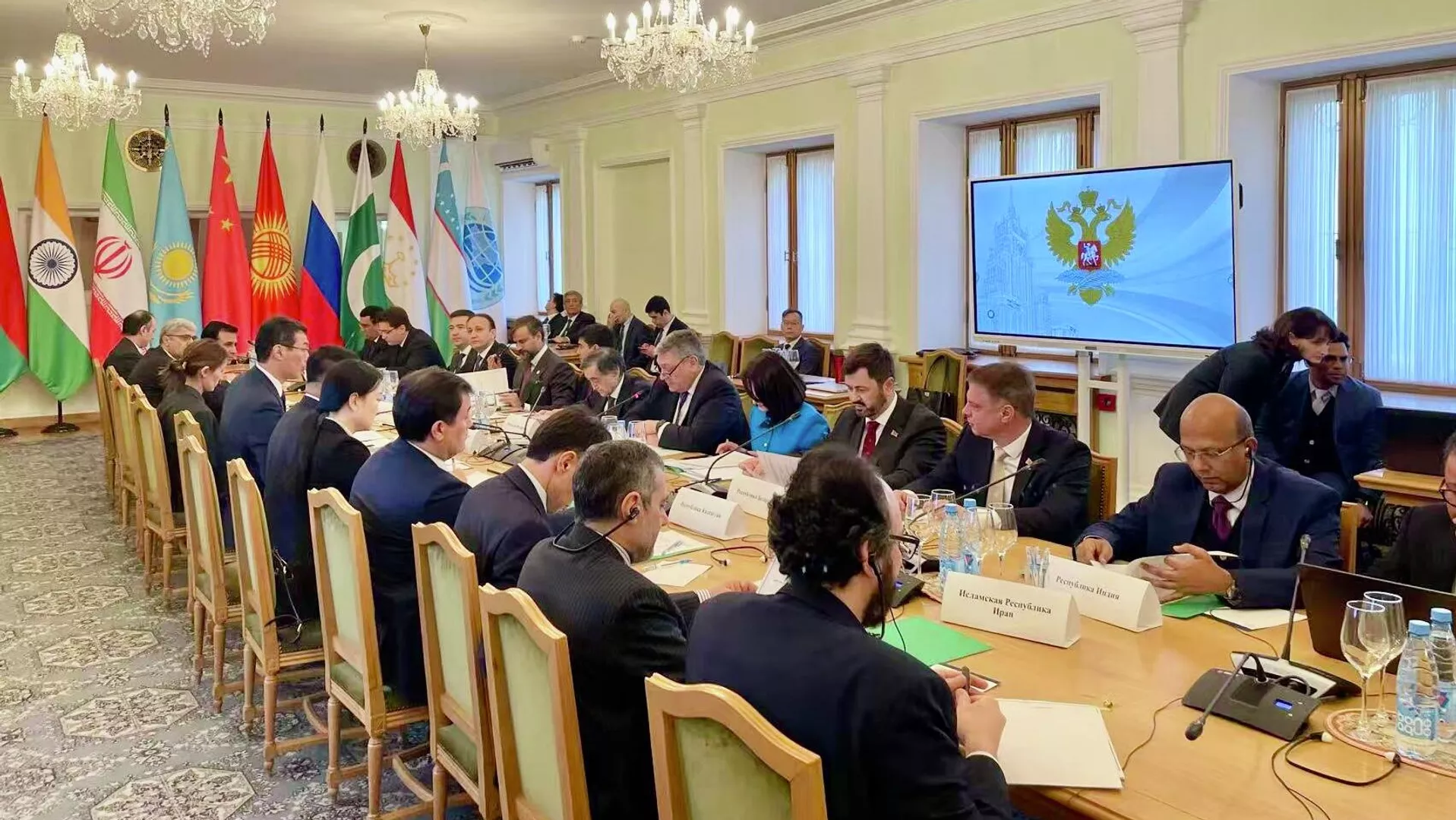
Consultations of Deputy Foreign Ministers of SCO Member States in Moscow, April 2026
The Abbas Araghchi’s prelude
This is what makes the three-nation visit by Iran’s Foreign Minister Abbas Araghchi before the Bishkek meet critical. Araghchi, for his part, could unleash his nudging diplomacy to catalyse the SCO’s outreach into the Iran war.
At the least, this can help Iran in positioning itself as well as in setting the stage to maximise favourable outcomes from this SCO Defence Ministers’ meet at Bishkek.
The significance of Abbas Araghchi’s three-nation tour cannot be overstated. In Pakistan, despite President Donald Trump cancelling the American delegation’s visit to Islamabad, the Iranian foreign minister was able to engage with Pakistan, a mediator in US-Iran talks, and will be prominently present at Bishkek as well.
Araghchi’s visit to Oman — the region’s traditional ‘back channel’ mediator between the US and Iran — recognises its active mediation behind the scenes. In fact, triggering speculations, Araghchi is now scheduled to return to Islamabad for his third round of talks with Pakistani leaders before travelling to Russia.
Indeed, his visit to Russia marks the most important leg of his three-nation tour, and is meant to further consolidate Moscow’s strategic backing for Iran’s preconditions for ending the war.
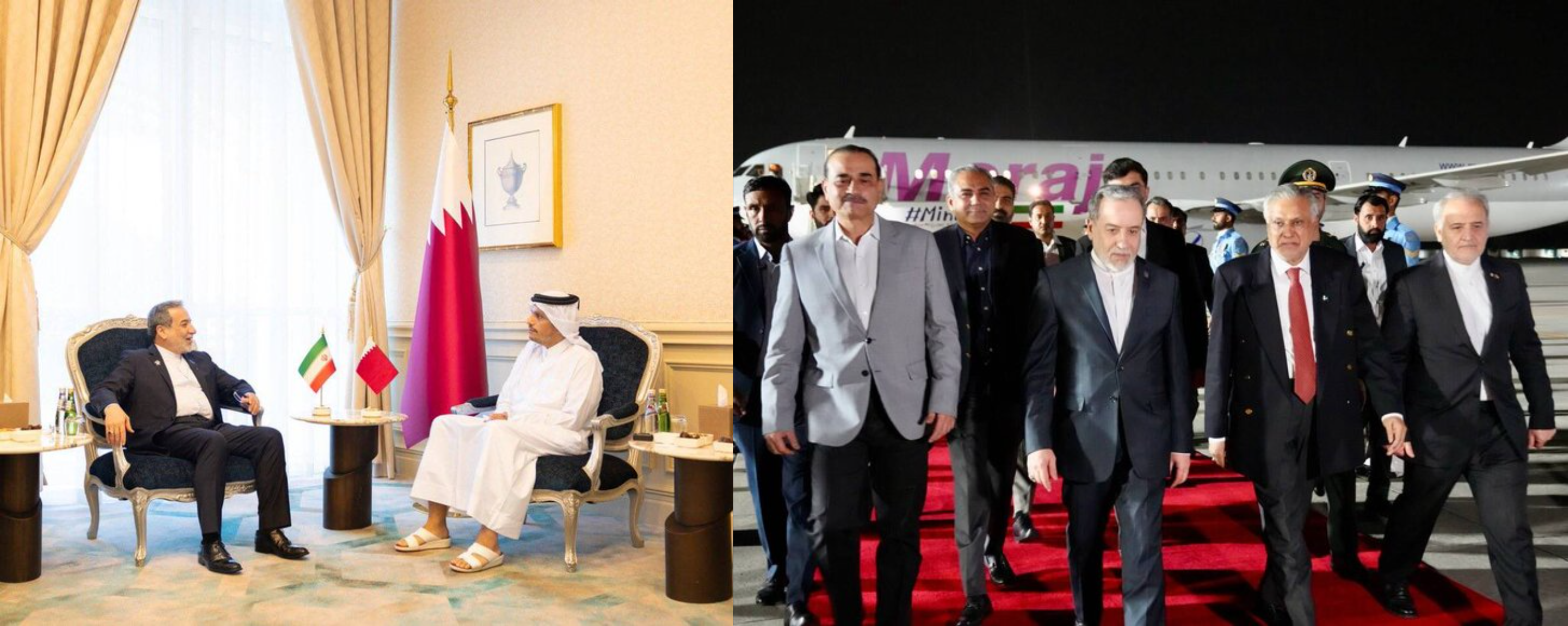
Iran's Foreign Minister with the Qatar Emir (left), and being received at the Islamabad airport by Pakistan's Chief of Defence Forces Field Marshal Asim Munir (right)
This hectic ‘pre-negotiations’ diplomacy of the Iranian foreign minister aims, among others, to shape the multilateral setting at the SCO Defence Ministers’ Meet. By the time Iran arrives in Bishkek, its positions will already be signalled, even tested, and, perhaps, partially negotiated.
Indeed, Iran has also been engaged in BRICS in a similar exercise, asking for condemnation of the US and Israel. Iran’s Special Envoy for the Middle East last week attended the BRICS meeting of the Sherpas and deputy foreign ministers of the Middle East and North Africa in New Delhi.
This, of course, could not produce a consensus and ended with the Chair’s summary-style statement expressing “deep concern”.
Does this mean that the SCO Defence Ministers’ Meet may also face a similar fate? Like SCO, Iran is also a full member of BRICS. However, one must appreciate the varying nature of the SCO and BRICS that remain respectively mandated to focus on regional security versus global financial governance.
This explains why these two forums have responded differently to the Iran crisis. The SCO had last year issued a direct condemnation of the US-Israeli military strikes on Iran, highlighting nuclear safety and sovereignty issues that remain embedded in regional security discourses.
The BRICS, by comparison, is a grouping of emerging economies and is, therefore, likely to stay guided by market concerns and restrained to broad calls for de-escalation; avoiding of specific attribution while focusing on global economic stability.
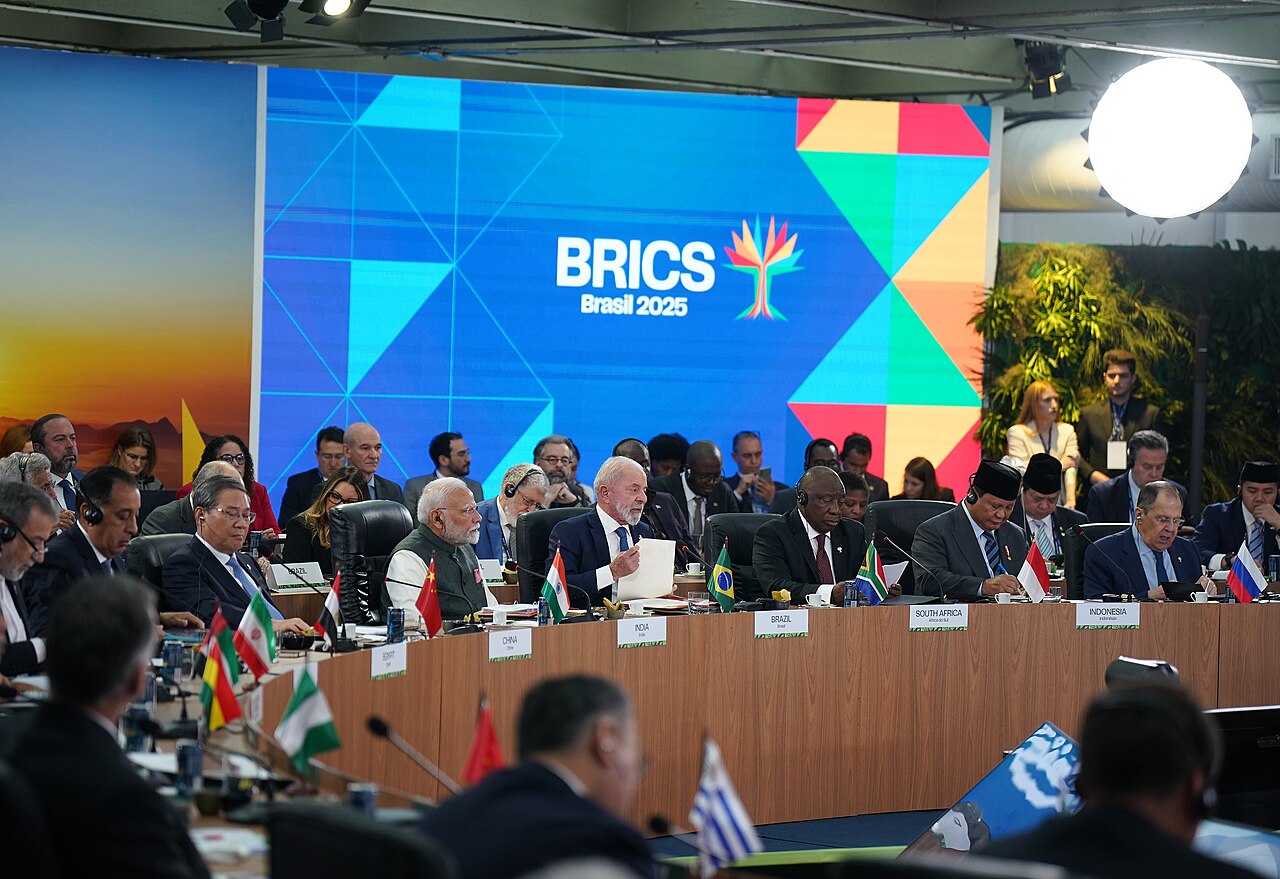
Brazil's President Lula da Silva leads a session at the BRICS Summit in Rio de Janeiro in July 2025 with PM Narendra Modi, Russian Foreign Minister Sergei Lavrov and Iranian Foreign Minister Abbas Araghchi, in attendance
This variance should also be instructive and will guide SCO’s respective responses to the Iran war: SCO deliberating it in terms of regional security with political signalling, and BRICS positioning its response in terms of its impact on the global economic precipice.
In other words, the SCO Defence Ministers Meeting in Bishkek is likely to be more vocal compared to the BRICS-MANA meeting last week. in New Delhi. However, it is also likely to be more constrained compared to last year’s China-backed Tianjin SCO summit’s final declaration.
India’s strategic equilibrium in motion
Any prognosis on India’s likely position at the Bishkek Defence Ministers’ meeting will be a study in calibrated ambiguity: Support for sovereignty and international law, emphasis on de-escalation and dialogue, yet the possible avoidance of any explicit anti-US or anti-Israel rhetoric.
At the same time, India is very likely to take this opportunity to engage Iran bilaterally on defence and connectivity, and reinforce ties with Russia, China and Central Asia. This is not an inconsistency. Rather, as India’s position on Ukraine and Gaza reveals, it is emerging India’s more nuanced multi-alignment in practice.
India had distanced itself from the SCO’s June 2025 statement that had strongly condemned the Israeli strikes on Iran. Since then, for most stakeholders of regional stability in the Middle East, Iran has remained structurally integral and yet discursively muted.
The paradox for Bishkek can be stated thus: Iran is structurally integral to the SCO’s security architecture, and yet it will remain absent in its formal communiques. This reflects nothing but deeper realities of today’s geopolitics.
The SCO cannot ignore Iran, and yet it cannot fully align with Tehran in its conflicts with the US and Israel. Hence, the ‘silent centrality’ of Iran in the SCO becomes the new sustainable equilibrium, and India will be home with this formulation.
The Bishkek Defence Ministers’ meeting is also likely to reinforce this being the truth about this inordinately large regional organisation. It will remain security active with regular anti-terrorist military exercises and regular meetings issuing strong normative statements.
However, it will remain politically constrained, especially in terms of its internal divergences on how to deal with President Donald Trump. Hence, while the SCO excels in agenda-setting, signalling and convening, it will continue to struggle with crisis resolution and unified strategic initiatives.
Presence without pronouncement
As the SCO Defence Ministers gather in Bishkek this week, Iran will sit at the high table — not as an outsider seeking entry, but as a full member shaping the room’s strategic geometry. And yet, when the final communiqué is released, Iran is hardly likely to be mentioned or the US condemned.
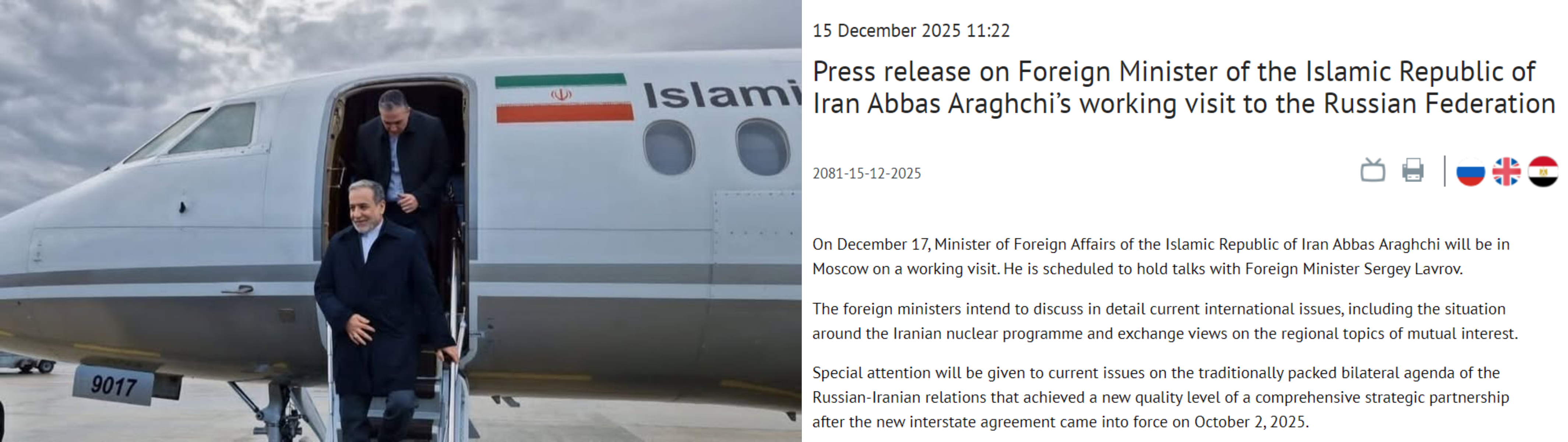
Iran's Foreign Minister Araghchi disembarks from his aircraft in Islamabad (left), and the press release after he met with Russian leaders
This is not a diplomatic failure. It is institutional choreography for sustenance.
The SCO will continue to speak in the language of sovereignty, stability and de-escalation. But beneath that language will lie the unmistakable imprint of a war that cannot be named, a member that cannot be ignored, and a crisis that defines the moment.
In Bishkek, Iran will not dominate the conversation; rather will define SCO’s boundaries.
Follow us on WhatsApp
Follow us on Facebook
Follow us on X @vudmedia
Follow us on Substack
