
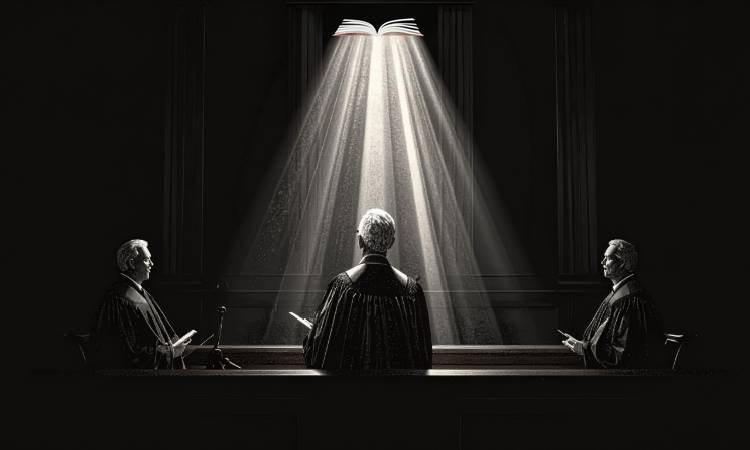
How can only one institution in a democratic polity be pedagogically untouchable? A nationwide prohibition of an academic textbook — particularly one designed for civic education — raises questions about whether powers exercised by India’s judiciary satisfy constitutional proportionality. If the NCERT textbook in question cannot be deemed as demonstrably false and malicious, why has the Apex Court, led by the Chief Justice of India, sought to invoke the doctrine of ‘scandalising the court,’ a colonial relic, to silence any discussion? If children learn that institutions face challenges, it is only weakened further when they are taught that questioning those challenges is impermissible.
When a constitutional court feels compelled to silence a school textbook, the issue is no longer about a paragraph in a classroom. It is about power — and its tolerance for scrutiny.
The recent controversy surrounding the Social Science textbook published by the National Council of Educational Research and Training (NCERT), which reportedly included references to judicial corruption and institutional challenges within the higher judiciary, has now escalated into something far more consequential.
A curriculum controversy has now become a constitutional test. The Supreme Court’s decision to ban the textbook forces a fundamental question: how does a constitutional court respond to criticism — with reason, or with restraint orders?
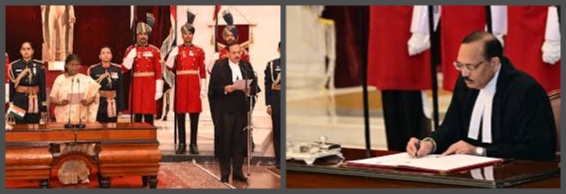
Justice Surya Kant being sworn in as the 53rd Chief Justice of India (left), and the CJI signing the Oath Register (right)
For in a democracy, reverence is not a constitutional principle. Accountability is!
The executive is questioned because it wields power and force. The legislature is criticised because it frames laws. The media is dissected because it shapes narratives. The judiciary, however, occupies a peculiar sanctum — clothed in institutional dignity, guarded by contempt powers, insulated from electoral consequence, and often opaque in its internal functioning.
Yet it exercises authority more definitive than the Parliament or the Cabinet. It can invalidate statutes, arrest executive action, decide on elections, and determine the liberty of citizens, among others.
Power this vast cannot ask to be spared the mirror.
Can the Supreme Court ban a textbook?
The Supreme Court of India possesses extraordinary constitutional authority. Article 129 declares it a court of record with the power to punish for contempt. Article 142 empowers it to pass any order necessary to do ‘complete justice.’
These are sweeping provisions — few apex courts in the world enjoy such textual amplitude. Yet, constitutional amplitude does not mean constitutional absolutism.
Article 19(1)(a) guarantees freedom of speech and expression. Yes, Article 19(2) permits reasonable restrictions, including for contempt of court. But the operative word is reasonable.
Over the decades, the Court itself has developed the doctrine of proportionality: any restriction on speech must be necessary, narrowly tailored and through the least restrictive means available.
A nationwide prohibition of an academic textbook — particularly one designed for civic education — is an extraordinary step.
The question is not whether the Court has power. The question is whether such power, if exercised, satisfies constitutional proportionality. Was the content demonstrably false and malicious? Or was it a discussion — perhaps uncomfortable, perhaps sharp — about institutional challenges?
In constitutional democracies, power must justify itself. Even judicial power!
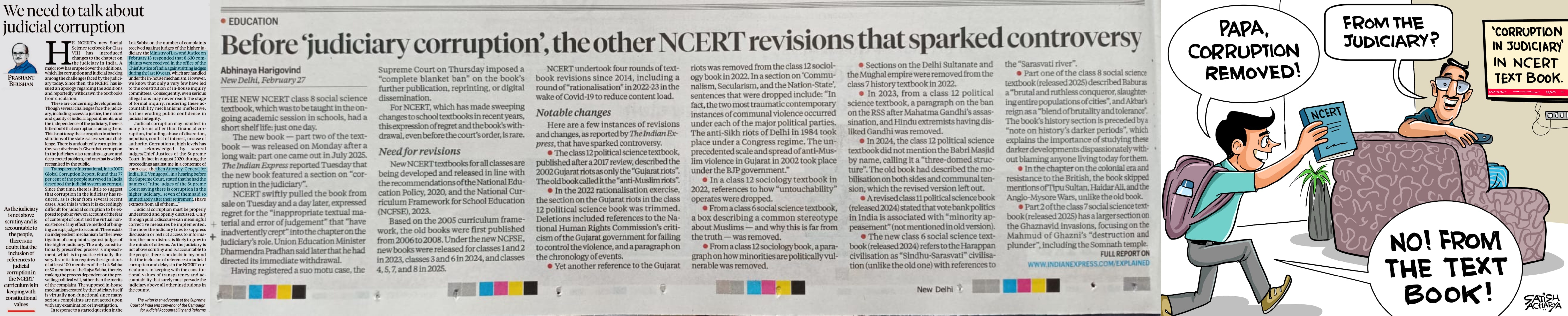 Some reflections in the Indian media on the Supreme Court ban on the NCERT book
Can judicial corruption be discussed in schools?
The deeper discomfort seems to lie not in legal doctrine but in pedagogy. Can students be taught that institutions, including courts, face corruption and accountability challenges?
If we teach about the Emergency of 1975, about executive excesses, about legislative failures, about bureaucratic corruption — are we to carve out one institution as pedagogically untouchable?
Education in a democracy is not indoctrination. It is preparation for citizenship. A mature civic curriculum must introduce students to the idea that institutions are human creations — capable of excellence and capable of error.
This is not defamation. It is democratic literacy.
The NCERT has historically included chapters on institutional weaknesses, on judicial backlog, on access to justice, on appointment controversies, and so on.
The inclusion of references to judicial corruption — particularly when supported by publicly available data about complaints, impeachment attempts, or transparency reports — is not a declaration of systemic rot. It is an acknowledgement that accountability mechanisms exist because fallibility exists.
Shielding students from this conversation does not strengthen respect for the judiciary. It infantilises the republic.
Contempt or suppression?
The doctrine of ‘scandalising the court’ — inherited from colonial common law — allows punishment for statements that lower the authority of the judiciary. It was born in an era when imperial courts feared native dissent.
Many modern democracies have abandoned it. The United Kingdom formally abolished the offence in 2013. The United States, under the First Amendment, permits fierce criticism of its Supreme Court. Textbooks routinely discuss controversial judgments, ideological leanings and institutional failures without attracting bans.
Institutional dignity in those systems survives criticism because it rests on transparency.
In India, however, contempt jurisprudence remains potent. The fear is not entirely imaginary: criticism of judges has led to contempt proceedings in the past. The chilling effect is real. When criticism — especially academic criticism — risks being equated with contempt, the boundary between judicial protection and academic suppression becomes dangerously thin.
The constitutional question is simple: Does discussion of corruption, framed in good faith and based on documented history, amount to contempt? Or does its suppression amount to suppression of academic freedom?
A democracy confident in its institutions should not silence textbooks. It should debate them.
Institutional criticism under Indian constitutional law
Indian constitutional law does not demand institutional infallibility. In fact, it assumes the opposite.
The framers inserted ‘contempt of court’ into Article 19(2) to preserve judicial authority, not to immunise it from scrutiny. The Supreme Court itself has repeatedly held that fair and reasonable criticism of judicial functioning is permissible. In Brahma Prakash Sharma and subsequent cases, the Court acknowledged that criticism made in good faith does not amount to contempt.
The line, however, has often been drawn subjectively.
This subjectivity becomes problematic when the institution under criticism is also the arbiter of whether criticism is permissible. The judiciary becomes, in effect, judge in its own cause — a constitutional tension that demands restraint.
To equate institutional criticism with institutional sabotage is to misunderstand the very idea of a republic. No organ of state stands above scrutiny. The Constitution begins with “We, the People,” not “We, the Institutions.”
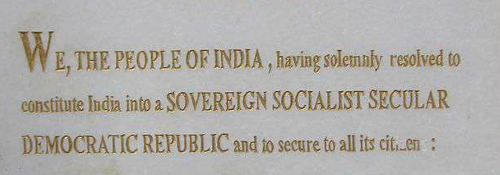 The preamble of the Constitution of India
The pattern of perception
The controversy does not exist in isolation. It unfolds against a backdrop of accumulated public unease.
Over the decades, impeachment attempts against judges have faltered. In-house inquiries have remained confidential. Transfers of High Court judges have occurred without detailed public reasoning. Collegium deliberations remain largely opaque, even as they determine the future of the judiciary. Post-retirement appointments of judges to gubernatorial or legislative positions have raised questions about optics.
Each episode may be defensible individually. But democracy functions on patterns, not isolated explanations.
Add to this the jurisprudence of bail. Article 21 guarantees personal liberty. The Court has declared bail to be the rule and jail the exception. Yet prolonged pre-trial incarceration under stringent statutes has become a recurring feature of public life.
High-profile political actors, including Arvind Kejriwal, have experienced repeated bail denials before eventual discharge or acquittal. When prosecutions weaken after months or years of incarceration, the constitutional discomfort deepens: liberty delayed is liberty denied.
This is not proof of corruption. It is fuel for perception. And perception, in constitutional democracies, shapes legitimacy.
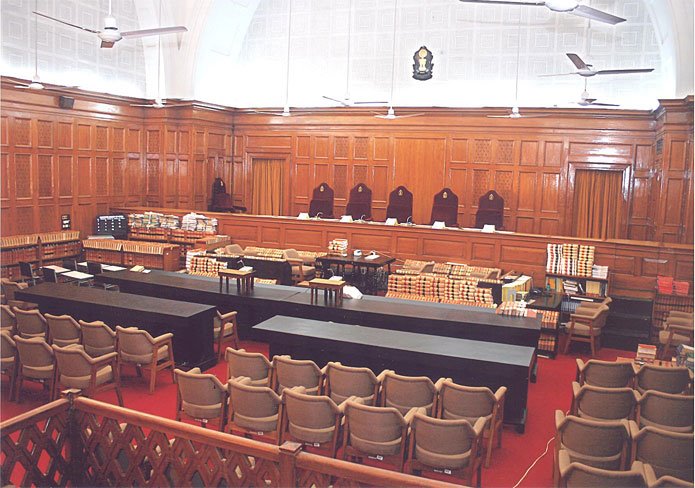 The court of the Constitutional Bench
Comparative constitutional lessons
In Germany, pre-trial detention is rigorously governed by proportionality. In the United States, even harsh denunciations of the Supreme Court are protected speech.
In South Africa, judicial appointments occur through public interviews before the Judicial Service Commission. In the United Kingdom, appointments are handled by an independent commission operating under published criteria.
These systems are not perfect. But they demonstrate a principle: institutional strength grows from transparency, not insulation.
India’s judiciary, forged in post-colonial fragility, may believe it must guard its authority carefully. But authority derived from public trust cannot be sustained by suppressing public conversation.
The deeper question
If a textbook mentions judicial corruption as a challenge faced by the judiciary, is the appropriate response prohibition? Or is it reform?
If thousands of complaints against judges have been received over a decade — even if most are unsubstantiated — does the existence of such complaints justify discussion? Or does it demand silence?
Children are taught that democracy requires checks and balances. Are we now to teach them that one check is exempt? The gravest threat to judicial dignity is not criticism. It is the erosion of trust through perceived defensiveness.
A confident court does not ban mirrors. It polishes them.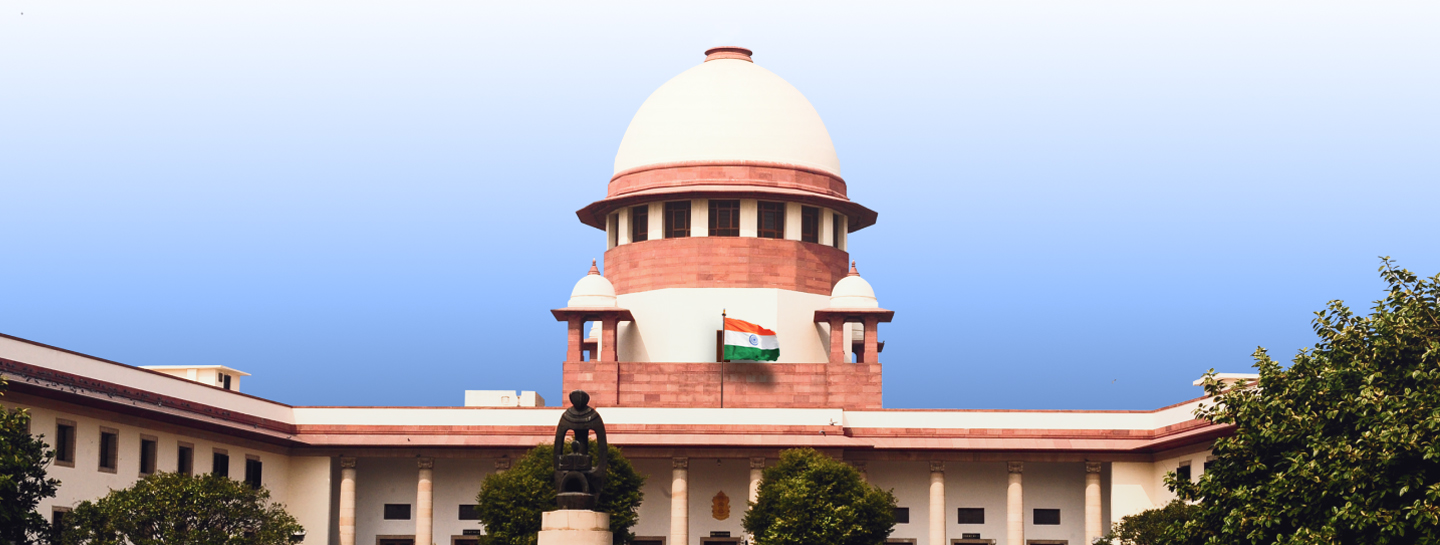 The dome of the Supreme Court of India
A lesson from democratic history
History offers a quiet lesson: institutions that equate scrutiny with disrespect gradually distance themselves from the citizenry they serve. The distance may be subtle at first — a banned textbook here, a contempt notice there, a defensive press remark elsewhere. But over time, insulation hardens into isolation.
Courts do not command armies. They command belief, and if belief weakens, authority becomes brittle.
The judiciary has, at crucial moments, expanded fundamental rights and defended the constitutional structure. It has been the sentinel on the qui vive (on alert, watchful and heightened vigilance). But sentinelhood requires moral capital. And moral capital cannot be preserved by suppressing discussion of institutional fallibility.
The republic is not weakened when children learn that institutions face challenges. It is weakened when they are taught that questioning those challenges is impermissible.
Thus, the Supreme Court must shed its self-fashioned adherence to a Platonic idea of infallibility, remain open to criticism, and embrace institutional fallibility with constitutional maturity.
Follow us on WhatsApp
Follow us on Facebook
Follow us on X @vudmedia
Follow us on Substack
