

The shoe-throwing attempt at the Chief Justice of India by a Supreme Court lawyer comes at a time when the Indian judiciary is going through a litmus test - of eroding faith among the citizens and an environment of political polarisation influencing its functioning. The decision not to press charges against the infringing lawyer, however, points to the pattern of a long rope given to judicial officers and the lawyer community when it comes to accountability and legal scrutiny. Questions need to be raised whether such differential treatment undermines principles of Article 14 of the Constitution, which enshrines equality before the law. So too are questions about judicial conduct that do not inspire much confidence either.
On 6th October 2025, a 71-year-old lawyer, Rakesh Kishore, allegedly threw a shoe, or attempted to do so, during a hearing by a Supreme Court bench comprising the Chief Justice of India (CJI), B R Gavai, and Justice Ujjal Bhuyan. The lawyer was immediately taken into custody and questioned for many hours, though subsequently let off as the Registrar General, reportedly, did not press charges.
In his immediate reaction, the CJI was quoted as stating that he had asked the lawyer arguing before him to “just ignore it,” and that he was “not distracted by all this.” Talking to the Indian Express, the CJI confirmed hearing the lawyer as stating that “maine Gavai saab ke taraf pheka tha.”
Later in the week, at another hearing, the CJI reportedly described the incident as a “forgotten chapter” even while expressing his shock, and remarking that “My learned brother and I were very shocked with what happened on Monday; for us it is a forgotten chapter.”
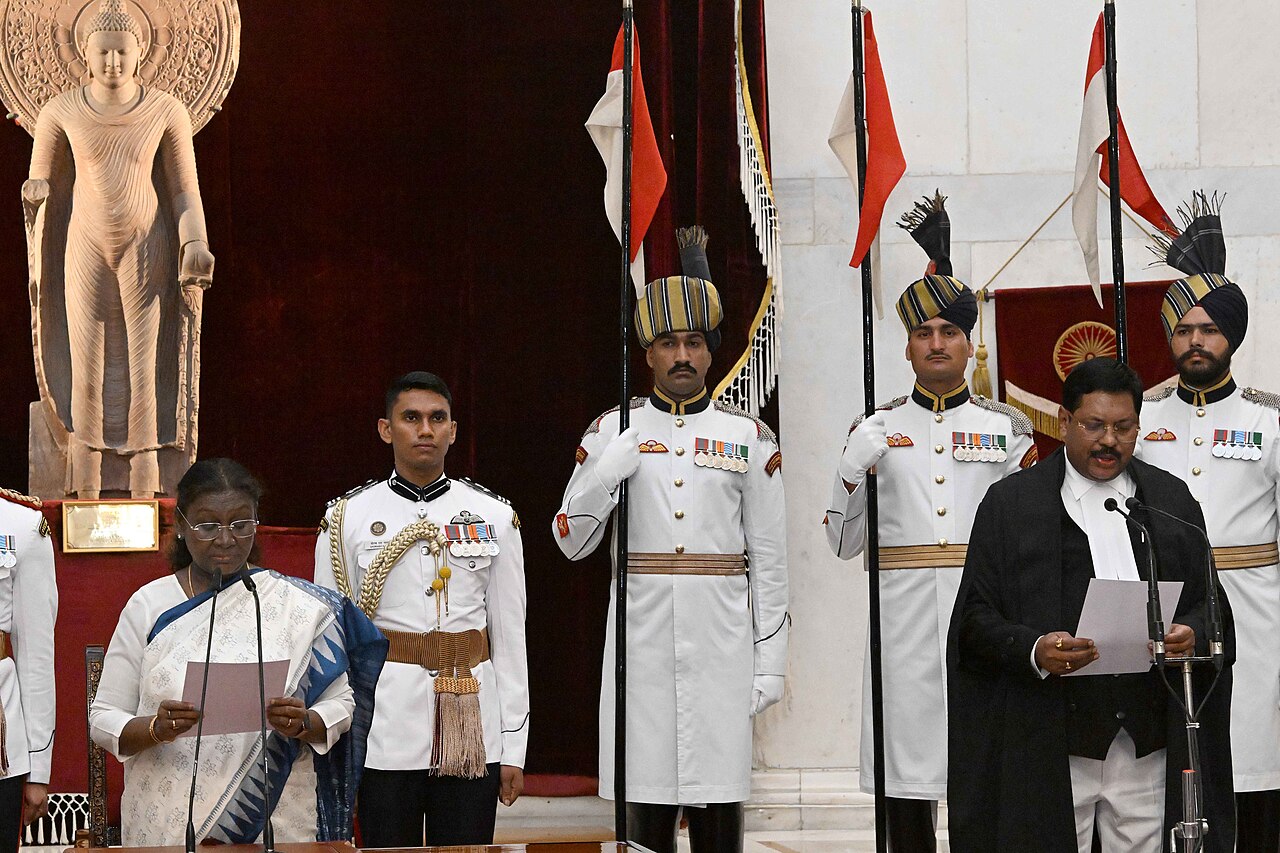
Justice Ujjal Bhuyan, who was part of the bench, termed the attack as an “affront to the institution.” Besides widespread condemnation, including from the Prime Minister and opposition parties, the Bar Council of India suspended the lawyer’s practice, while the Supreme Court Bar Association reportedly cancelled his membership.
Though the CJI or his ‘brother’ judge was not hit by the projectile, the incident assumed immense political significance for the fact that the accused lawyer justified his action as a response to the “insult to Sanatan Dharma.”
According to some news reports, the Delhi Police had received a note from the lawyer in which he writes: “Mera sandesh har sanatani ke liye hai… Sanatan dharma ka apmaan nahi sahega Hindustan (My message is for every sanatani… Hindustan will not tolerate an insult to sanatan dharma).” The reports cite witnesses stating that Kishore had loudly uttered these words while being escorted out of the court.
The lament was supposedly in response to the CJI’s reported remarks during a public interest litigation (PIL) hearing seeking directions to reconstruct and reinstall a seven-foot idol of Lord Vishnu at the Javari temple, part of the UNESCO World Heritage Khajuraho temple complex in Madhya Pradesh.
The CJI had reportedly termed the PIL as a “publicity interest litigation,” implying that the petitioner was merely seeking to gain publicity by filing the litigation. However, Chief Justice Gavai was reported to have asked the petitioner to approach the deity to do something, which, even if stated in a lighter vein, had the potential to be seen as offensive. “Go and ask the deity himself to do something. If you are saying that you are a strong devotee of Lord Vishnu, then you pray and do some meditation,” the CJI was reported to have told the petitioner.
Irrespective of any shreds of profanity one could have perceived in the CJI’s remarks, some perturbing questions have emerged from this episode, the response of the CJI and the judiciary to the incident, and the manner in which the lawyer was let off. More importantly, such an attack on the highest office of the judiciary portends ominous signs that cannot be easily glossed over.
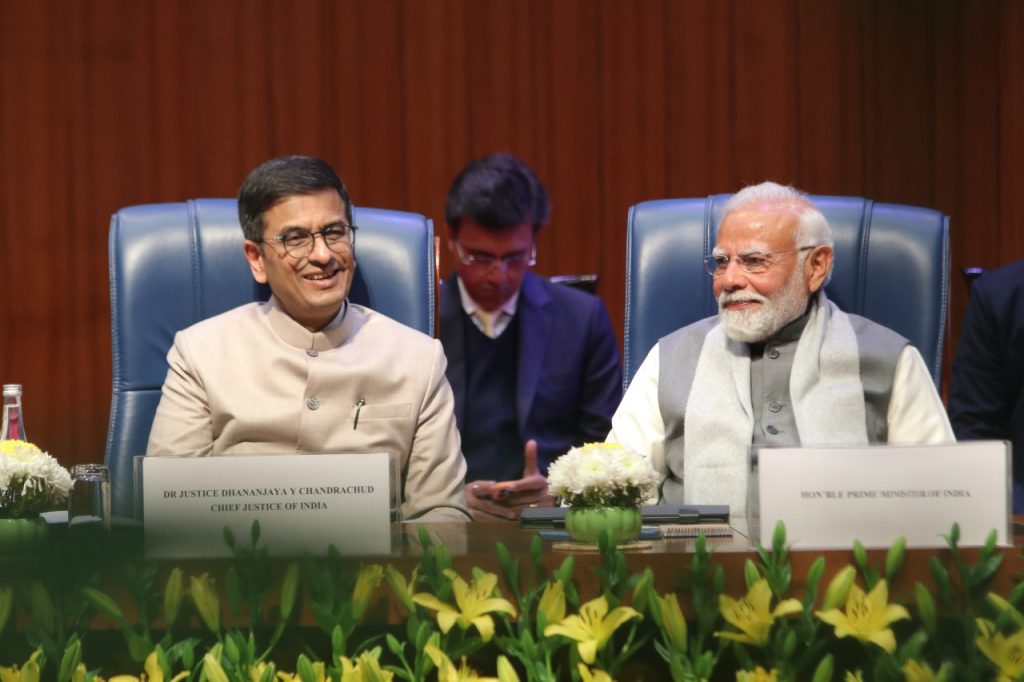
‘Brother’ judges pardon ‘brother’ lawyer
At the heart of the dissonance remains the fact that an unprecedented attack on the highest judicial officer in the country, on par with the constitutional equivalence given to the judiciary in the Indian political system, was met with a swift pardon and closure.
The CJI, evidently, had wanted a quick erasure of the incident from public conscience. A prolonged media gaze on the assault could have raised many troubling questions, not just about the political underpinnings of the incident, but also about the eroding credibility of the justice system as well as the state of the legal profession itself.
The deepening Hindutva-inspired vigilantism and violent posturing by sections of the lawyer community and politicisation of Bar Associations have been a notable phenomenon over the past decade.
Such dogmatisation and resultant posturing have often led to mob violence in the court premises – as was seen in the assaults by lawyers on the student activist from Jawaharlal Nehru University, Kanhaiya Kumar – which, incidentally, has been a recurring trend across the country. Instances of lawyer mobs attacking the accused in various cases in court premises have happened without any punitive action either by the courts or the respective Bars.
The decision not to press charges against Kishore highlights systemic biases in the Indian justice system, which protects both judicial officers and barristers from accountability for infringements and violations of the law. In practice, lawyers often evade consequences for perjury and other professional misconduct.
This is in stark contrast to the intimidating experiences ordinary citizens face, especially from judicial officers who present themselves as stern and unyielding. The pantheon of vocal citizens being threatened with contempt of court or awarded a token imprisonment for being deviant in the court would be a missing chapter in the annals of Indian judicial history.
That raises the question of whether an ordinary citizen could have been spared from criminal proceedings had he or she indulged in a similar attack in a court of law.
Any form of differential treatment to citizens, irrespective of their profession, official position, or social status, particularly for such instances involving a flagrant disrespect to the law and the judiciary, would necessarily entail a violation of Article 14 of the Indian Constitution, which enshrines equality before the law.
As a matter of fact, the Indian courts generally give the long rope to government officials when it comes to making them accountable to the law, including adherence to and implementation of court orders, with punitive actions against government officials for contempt of court being a rare phenomenon in the Indian justice system.
The Polity had, in its report of October 2024 - Are India’s babus above the law? At least, the government has no data to prove otherwise – provided a glimpse of how the Indian law and justice system operates with an intiutive bias in favour of bureaucrats, or officials that serve in the Indian civil services cadre.
The decision of the Supreme Court Registrar General, evidently on the instructions of the CJI, not to press charges against the infringing lawyer, and the courts' customarily turning a blind eye to violence by lawyers, both within court premises and outside, are testimony to the kid-glove treatment that lawyers are endowed with from their judicial brethren.
The manner in which the judge ensembles have come down to appease protesting Bar Associations in recent instances of spats between judges and the Bars underline the ‘Biraderi’ (brotherhood) bonds that tie up the judicial system, making it a compromised system that mocks at the very principle of Article 14.
Stigmatising Public Interest Litigations
Public Interest Litigations (PILs) have been a vital instrument for the citizenry to ensure accountability and seek the attention of the higher courts on matters of public and societal interest. Over the years, PILs have led to landmark verdicts and judicial interventions notwithstanding criticism about its rampant misuse, which, though, is the case with many instruments that were formulated for public welfare, social justice and democratic advancement.
An attempt to bring in a legislation that mandated a deposit of Rs fifty thousand for a petitioner to file a PIL was mooted in the 1990s. In recent years, the higher courts have pursued a practice of instructing petitioners to deposit a lumpsum amount, depending on the bench’s discretion, to file a PIL with the caveat that the deposit would be forfeited in case of the PIL’s dismissal.
There have been numerous instances when the higher courts have imposed hefty fines on petitioners for what the courts described as ‘frivolous’ PILs that eat into the court’s valuable time. While in one instance of 2023, the Supreme Court imposed a fine of Rs five lakhs on a petitioner who sought to challenge Darwin’s theory of evolution, another involved a PIL wherein the petitioner claimed that a high court chief justice’s oath was defective for not taking ‘I’ in the swearing-in.
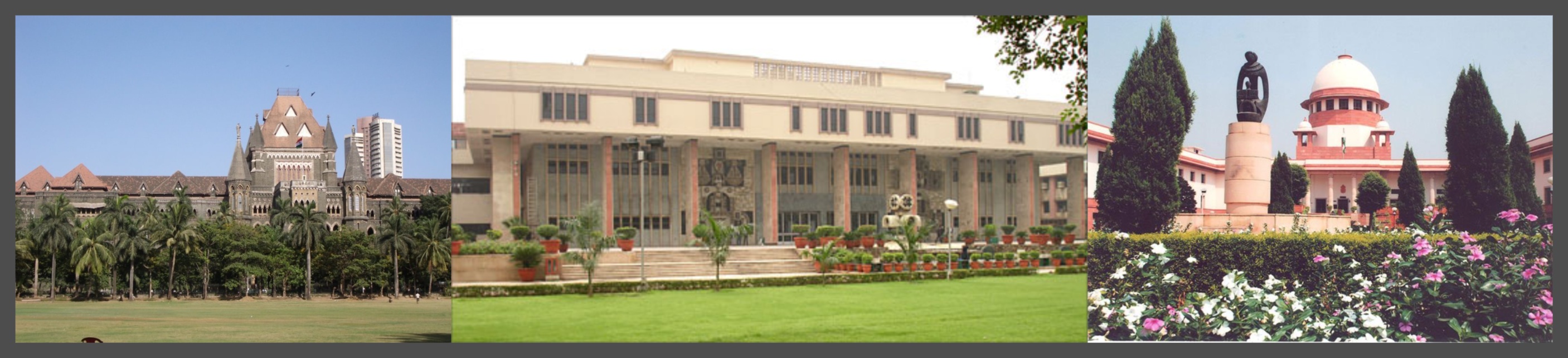
In another PIL before the Bombay High Court in 2023, the Court asked the petitioner to deposit Rs 2.5 lakh as a ‘precondition to hear the petition’ as the court felt the latter was not even remotely affected by the shifting of a fish market, which was the subject of the PIL. In a 2024 hearing on a PIL, the Madras High Court imposed a fine of Rs fifty thousand for the ‘disruptive behaviour’ of the litigant and the petition not being seen to have any ‘public’ element.
Even as such cases of ‘frivolous’ PILs abound, there are unreported instances when the higher courts might have deterred genuine public interest litigations through the demand of high deposits or through dismissal on various other grounds.
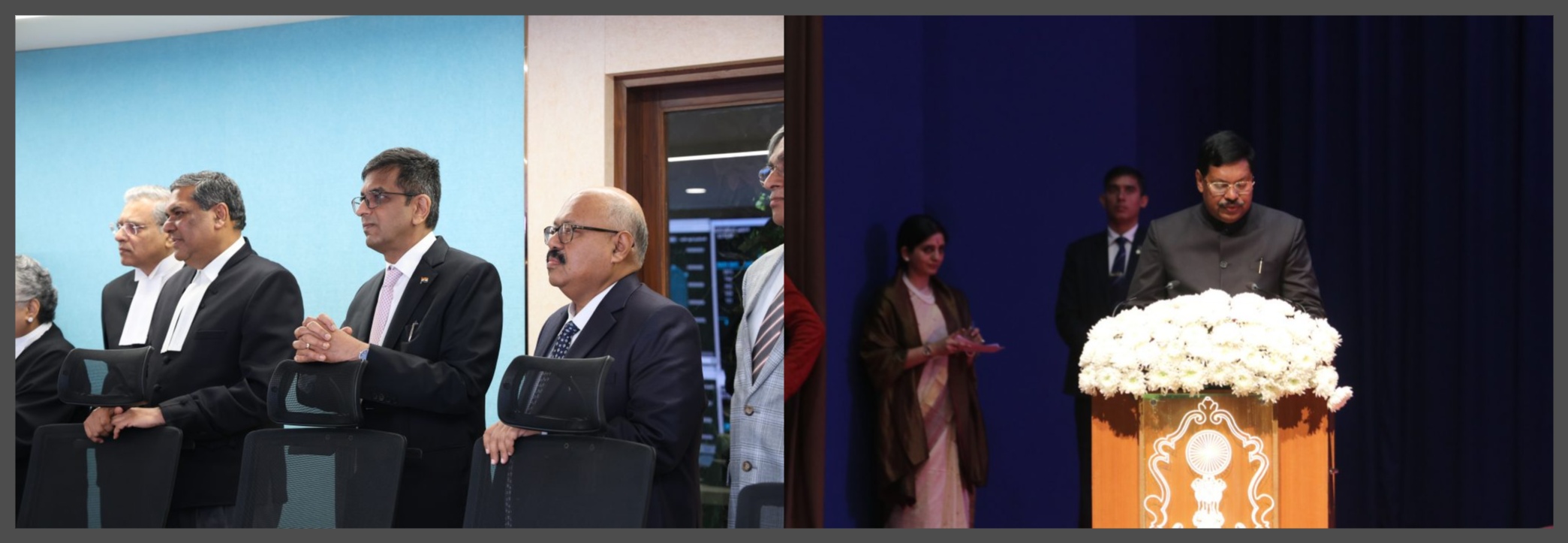
While a survey of dismissed PILs and their merits is not known to be available in public domain, The Polity is aware of at least one instance when a Supreme Court bench headed by then CJI D Y Chandrachud dismissed a PIL seeking intervention in the appointment to a research institution by the Appointments Committee of the Cabinet (ACC), headed by the Prime Minister, which was believed to be in violation of the governmental and that institution’s norms. The order of the bench stated that it “was not inclined to hear the petition” without explaining the reasons for doing so.
However, the petitioner confirmed to The Polity that he was asked to deposit a hefty sum as a ‘precondition’ to hear the petition. The SC bench, reportedly, did not bother to look into the merits of the petition, which involved not just a flawed verdict by a judge who had then recently moved into the Supreme Court from the Delhi High Court, but also had referred to a contradictory verdict by the same judge in a different petition involving the Delhi state government.
Though this particular case went unreported in the media, it will be reasonable to assume that PILs that seek to challenge decisions at the highest level of the government, particularly involving the Prime Minister’s Office (PMO) or key ministries, might not receive a favourable approach from the higher courts in the country.
On the other hand, the rampant dismissal of PILs, especially during the tenure of CJI Chandrachud, and his declared intention to reduce the number and time of litigations, had cast a shadow on the ability of vigilant citizens to effectively use PILs as an instrument for social justice and governance accountability. This unfriendly approach from the higher courts in recent years has led to the stigmatization of PILs, with its undermining leading to the further erosion of faith in the justice system.
Judicial conduct in question
Hell hath no fury like a temperamental judge, could be the saying that ideally describes the belligerence shown by the senior judicial officers in India’s higher courts. The lack of empathy, egos of judges being bruised when orders or remarks are questioned, and inherent biases emerging out of the political circumstances are trends that evidently define the functioning of the highest courts in recent times.
In a recent case where a divorce-seeking woman was alleged to be manipulating the proceedings by offering to stay with her husband in order to gain custody of the child, the two-judge bench was seen angrily admonishing the woman. “We will give the custody of the child to the father right now, she will come here tomorrow and will be handed over to the father in our presence…..how dare your client do this?” the judge is seen furiously asking the woman’s counsel.
Though the merit of such cases cannot be judged from such selective visuals of the proceedings, the bench’s fury was an instance of how the judges, being humans themselves, are prone to emotions and biases as opposed to the impassioned approach expected of judicial officers. Interestingly, in a 2024 case, the same Calcutta High Court was seen to be desisting from fining a woman petitioner, “considering her plight” despite her trying to mislead the court with false submissions.
While the Supreme Court is mandated to correct erroneous judgements from the lower courts, there has been numerous instances in recent years of the apex court stepping in to pull up various high court benches for what were seen as inappropriate comments.
In September 2024, a five-judge bench of the SC headed by then CJI D Y Chandrachud instructed the high courts to abstain from making casual remarks, in response to a description by a Karnataka HC judge of a Muslim-dominated locality in Bengaluru as ‘Pakistan.’ In the same month, a five-judge bench of the SC, led by the CJI, “took cognizance of objectionable remarks against a woman lawyer,” by yet another Karnataka HC judge.
In October 2023, the SC came down heavily on a Calcutta HC judgement for suggesting that female adolescents should “control sexual urges” and “protect her right to integrity of her body.”
The August 2025 face-off, when a two-member SC bench made scathing remarks against a judge of the Allahabad HC and instructed him to be removed off the roster on criminal proceedings, had led to protests from the Allahabad Bar Association, leading to the CJI’s intervention. In recent months, many controversies associated with questionable remarks and verdicts from Allahabad HC have come into the spotlight, particularly Justice S K Yadav’s allegedly communally-loaded statements at an event.
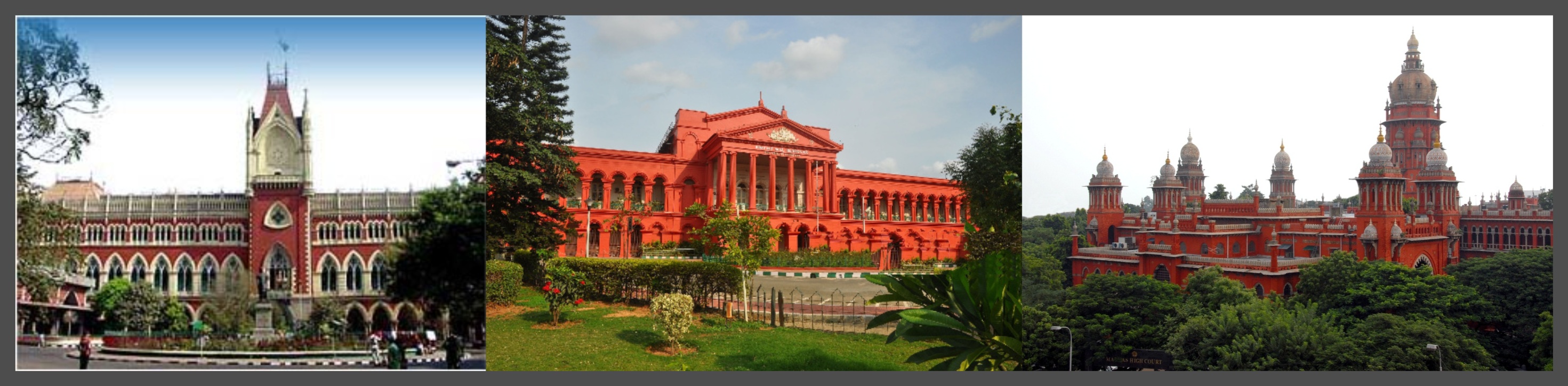
This being the general character of judicial conduct in the country, it is worthwhile to examine whether CJI Gavai’s dismissive remarks on the PIL seeking idol restoration at the Khajuraho temple had an inherent element of profanity and should have been avoided. Despite his comments being stated to be the provocation for the shoe-throwing, the CJI was not known to have expressed regret over his remarks while exclaiming that he respects all religions.
The CJI’s remarks on secularism reportedly came after heavy criticism on social media platforms, especially from right-wing groups.
In fact, the Solicitor General Tushaar Mehta opined in one of the hearings that such incidents are a result of social media misinformation. The SG was, however, disinclined to mention the fact that such social media misinformation is much aligned to the campaigns promoted on these platforms by the right-wing groups, which, of late, has also begun to be replicated by the supposedly ‘liberal’ sections as well.
Considering that the political climate has remained polarized in recent years and its spill-over into the judicial terrain is a foregone conclusion, such incidents should serve as an awakening call to the top echelons of the judiciary to address not just the eroding credibility of the institution in the eyes of the citizens, but also review the state of judicial conduct as complementing this systemic decay.
Follow us on WhatsApp
Follow us on Facebook
Follow us on X @vudmedia
