
By agreeing to open India’s agricultural markets to heavily subsidised American and European farm products, the government is pushing small Indian farmers, tilling their bare minimum farmlands with shrinking state support, into a deeply unequal contest. The result is predictable: falling prices, rising debt and deeper rural distress. This is not merely an economic shift but a political choice. It reflects a long-standing pattern in the ruling regime’s legacy—speaking loudly of nationalism while aligning comfortably with powerful imperial interests. The real cost of such decisions will not be paid in diplomatic circles, but in the fields of Vidarbha, Telangana, Punjab, MP and elsewhere, where farmers already stand on the edge, argues Dr Vijoo Krishnan, Polit Bureau member of Communist Party of India (Marxist) and All India Kisan Sabha leader.
Home page image: A market for farmers' produce, called the Mandi; photo source - AgriBazaar
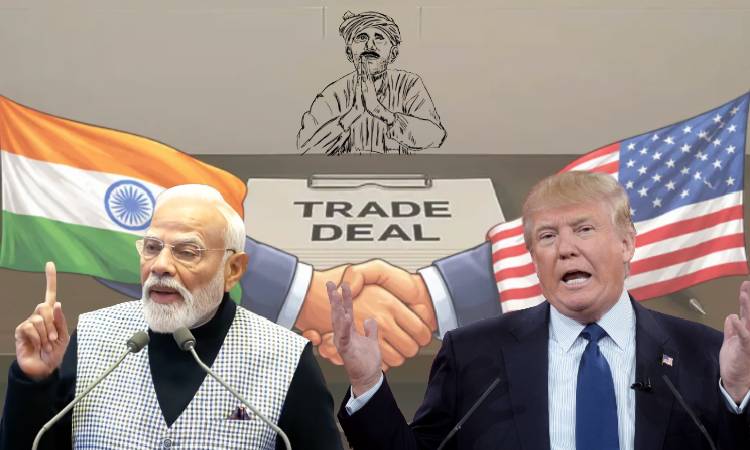
Text page image: Graphic by Vaishnav
Banner image: The author addressing a farmer and workers’ rally
Prime Minister Narendra Modi surrendered to the diktats of American imperialism and agreed to a humiliating lop-sided Trade Deal by seriously compromising India’s sovereignty. The ‘deal’ announced unilaterally by Donald Trump over his social media platform, Truth Social, and welcomed by Narendra Modi on X, seems more like extracted in a boot on the throat way.
The President of the United States of America (USA/US) announced that India’s Prime Minister agreed to stop buying Russian oil, and that the US will, in return, charge a ‘reduced’ reciprocal tariff of 18 per cent. According to the US President, India had committed to reducing its tariffs and non-tariff barriers to zero
Further, he affirmed that PM Modi had committed to “Buy American at a much higher level, in addition to over USD 500 billion of US energy, technology, agricultural, coal, and many other products.”
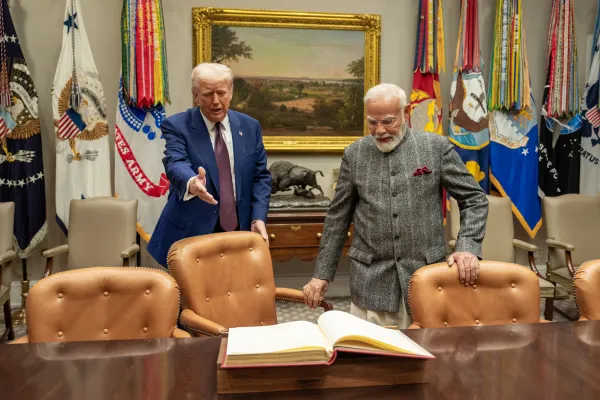
US President Donald Trump ushers in Prime Minister Modi to the visitors' book at White House during the latter's visit in February 2025
Rarely in history has such a sell-out been packaged as beneficial and an unequal deal been accepted with such servile gratitude. The deal was struck under a veil of secrecy without any discussion in Parliament or with the states; a deal of such far-reaching consequences was for the first time announced in the virtual space.
Countries that won their independence after a prolonged anti-imperialist struggle have had ample experiences wherein direct colonial rule infringed on their rights and ability to protect or promote domestic agriculture as well as industries. The deliberate neglect of agriculture and de-industrialisation was accompanied by colonial plunder, drain of resources and dumping of manufactured goods, often aided by military prowess.
The subjugation of countries, unbridled access to their markets, and turning their people into customers for their goods in the erstwhile era is now making a return in a different form. The difference today is that the Indian ruling class, represented by the BJP-RSS-led National Democratic Alliance (NDA) government, is rolling out the red carpet for imperialism.
This is done in exchange for a promise of unrestricted market access, unbridled profits, and an absolute absence of concern for the lives and livelihoods of the millions of peasants in India. If direct colonial rule was responsible for economic retrogression, then unequal trade deals are bound to create a similar effect now.
Unequal deal mortgaging lives of Indian farmers
The India-USA Interim Framework Agreement on Trade has been preceded by other unequal Free Trade Agreements with the United Kingdom (UK) and the European Union, and will be followed by a slew of FTAs.
The allocation for the Common Agricultural Programme is the largest item on the EU Budget. It was around 38 per cent of the total expenditure between 2014 and 2020, totalling 408.31 billion euros (INR 43.8 lakh crores). Whereas, the amount earmarked for 2021 to 2027 is about 387 billion euros (INR 41.5 lakh crores) or 31 per cent of the total budget.
In India, the latest Union Budget allocated INR 1.37 lakh crores, or merely 2.7 per cent of the Budget, to Agriculture and Allied Sectors.
The US Federal Government pay-outs for farm programmes in 2026 are forecast at USD 44.3 billion (INR 4,02,132 crores) for about 18.65 lakh farmers. This would imply per capita subsidies to the tune of USD 23,753 or about INR 21,56,000.
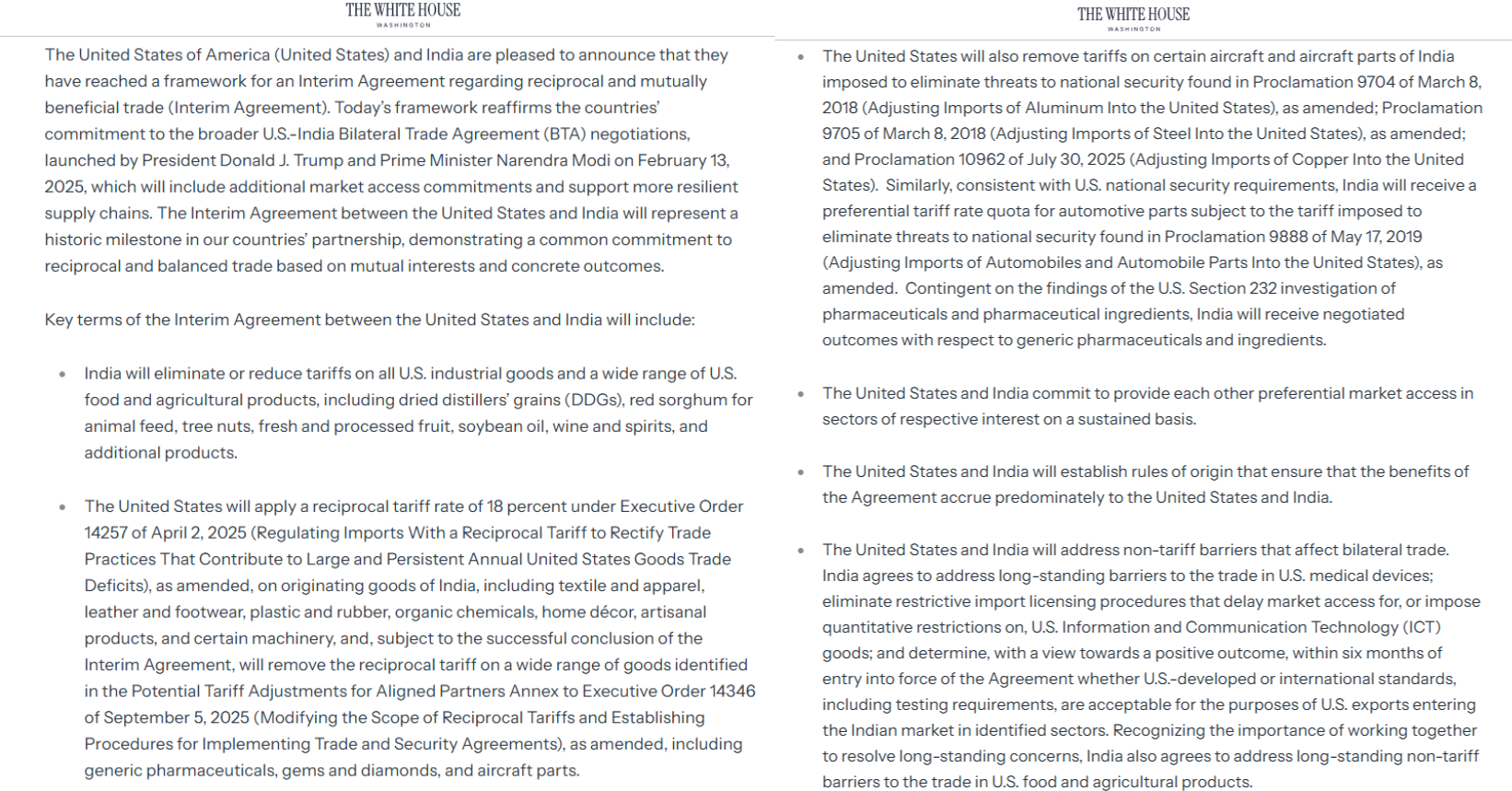
Excerpts from the Joint Statement on the Interim Framework Agreement issued by the White House
The average farm size in the US is 469 acres, while farms over 2000 acres control 61 per cent of all farm land. In the US, ‘Small Farms’ with less than USD 3,50,000 or around INR3.18 crores in gross cash farm income represent about 85 per cent of all operations.
In India, the average farm size is about 2.67 acres, and 86 per cent own less than 5 acres of land, earning less than INR 1,64,000 or about USD 1807, taking the Government claims to be true. The poor Indian farmer living in precarious conditions with fast-depleting state support will be put in direct competition with highly subsidised rich farmers and agribusinesses from the US.
The US-India Joint Statement confirms the worst fears of farmers. The BJP-NDA Government has mortgaged the lives and livelihoods of India’s farmers. It has once again demonstrated its absolute subservience to US imperialism and domestic monopolies.
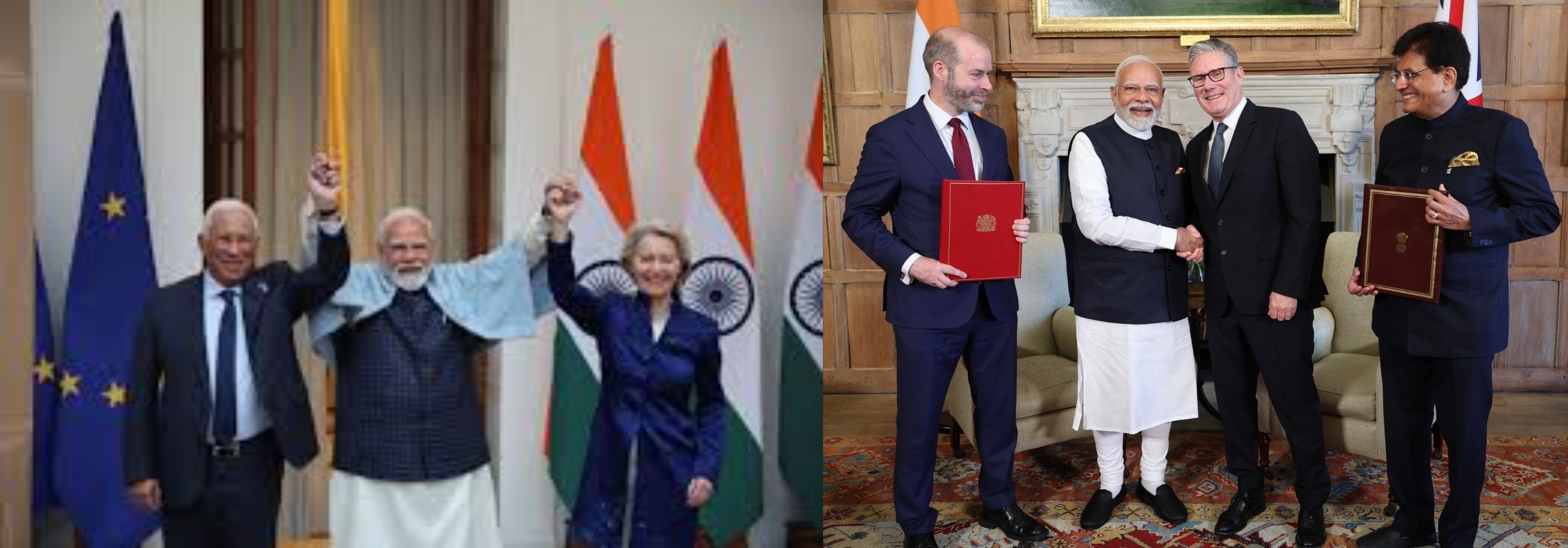
PM Modi with the European Union leaders during the latter's visit to New Delhi in January 2026 (left), and with UK PM Keir Starmer during the signing of the CETA in July 2025 (right)
This is despite earlier experiences of the deleterious impact of the India-Sri Lanka Free Trade Agreement as well as India’s FTA with the Association of South East Asian Nations (ASEAN) on Indian farmers, especially those growing rubber, tea, coffee, pepper and other spices. The duty-free imports had led to a price crash and suicides by many farmers, especially in the state of Kerala.
Already, India’s cotton imports reached an all-time high during the 2024-25 period (October to September), soaring to 4.13 million bales. The US emerged as the biggest exporter to India with 856,000 bales surging by 200 per cent between 2023-24 and 2024-25, closely followed by Brazil and Australia, which exported 854,000 and 849,000 bales respectively.
Buckling under the pressure of Trump’s Tariff war, despite the drastic increase in imports, the Union Government announced a corresponding 11 per cent import duty waiver on cotton in 2025–26, leading to a 95 per cent surge in imports from the US.
Continuing import of raw cotton from the US will lead to a further price crash for Indian farmers, and the crisis-ridden, suicide-prone cotton fields will witness intensifying indebtedness as well as greater peasant suicides.
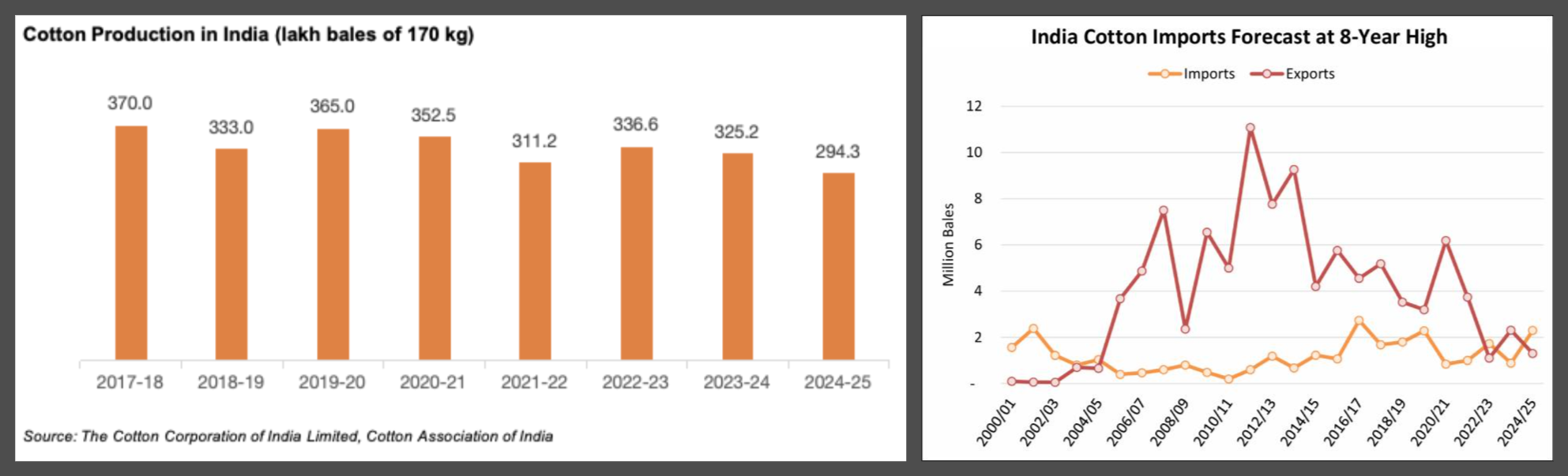
Tables showing cotton production coming down in India, even as imports have increased over the last few years
The Union Minister of Commerce and Industry Piyush Goyal made the BJP-NDA Government’s intentions clear when he stated that, “India has the facility to purchase raw cotton from the US, then its finished textile products exports will be accepted at zero per cent reciprocal tariff,” and “when the India-US Free Trade Interim Agreement is finalised, India will get it in fine print similar to the concessions extended to Bangladesh”.
This thoroughly exposes the lies that “agriculture is out of the ambit of US Trade Deal” and “the Prime Minister will never compromise the interests of the farmers. The government, instead, is clearly pursuing the interests of the ruling class by encouraging Indian industrialists to import cotton from the US.
The argument that farmers’ interests will not be harmed because the total US exports are relatively limited, and even if India fully removes import duties, domestic cotton consumption will not be significantly affected, is totally wrong. It ignores the impact that increased imports would have on domestic cotton prices – just as rubber farmers were devastated, especially in Kerala, after the India-ASEAN FTA.
Exposed to unrestricted global competition, India’s cotton farmers will not be able to compete with heavily subsidised and technologically advanced cotton producers in the USA.
It must be remembered that among the farmers driven to suicide due to the ongoing agrarian crisis in India, a disproportionately large number come from cotton-growing regions such as Maharashtra, Gujarat, Telangana, Karnataka and Madhya Pradesh.
Piyush Goyal resorted to lies and deceit to mislead the farmers; he claimed that no concessions were made to the US in the agrarian sector. Instead, the very first paragraph of the India-USA Joint Declaration shows otherwise.
In reality, cheap, highly subsidised products from big American agribusiness and farmers will flood Indian markets, causing prices to crash. It states: “India will eliminate or reduce tariffs on all US industrial goods and a wide range of US food and agricultural products, including dried distillers’ grains (DDGs), red sorghum for animal feed, tree nuts, fresh and processed fruit, soybean oil, wine and spirits, and additional products.”
It has been left to anyone’s guess as to what ‘additional products’ would include. Dangerously for the cereal farmers of India, there is no clear statement that tariff protection on cereals would be retained; this could mean a comprehensive opening up of India’s agricultural market to predatory agri-businesses of the US.
Any such eventuality will put farmers’ livelihoods in peril, and so will India’s food security be compromised. A return to the ‘ship to mouth’ days and dependence on humiliating schemes like PL-480 will be its consequence.
India has also committed to buying USD 500 billion worth of goods from the USA over the next five years, implying this agreement would require it to make USD 100 billion in purchases each year. Washington, clearly, is using the deal to overcome the trade deficit with India and has pressured India with such an unequal deal.
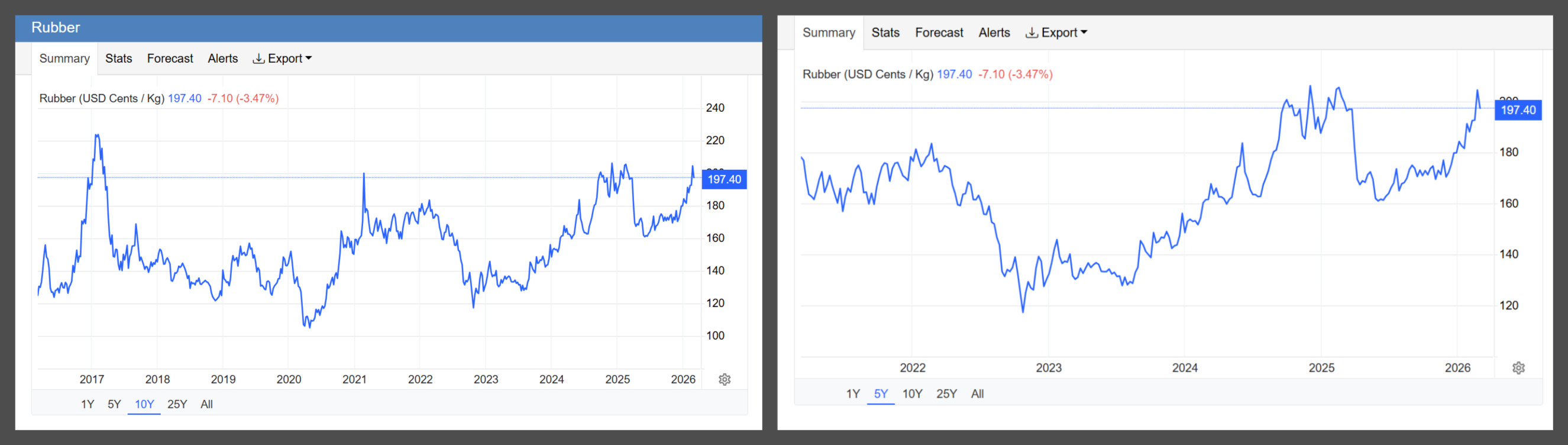
Graphs telling the story of rubber exports during five and ten-year periods
Even as the BJP-RSS are on an overdrive and celebrating an abject surrender, the US Secretary of Agriculture, Brooke Rollins, was emphatic that the deal would help “export more American farm products to India’s massive market, lifting prices, and pumping cash into rural America.”
Even as China, Brazil and other countries have refused to be cowed down by the coercive tariffs of Trump, the Sangh Parivar, true to its legacy of collaboration with imperialism, has once again betrayed the people of India. It is aggressively pursuing Trump’s plan of Making America Great Again.
These unequal trade deals will do what the three Farm Acts failed to do. It will result in the pauperisation and dispossession of the peasantry. They will be forced to migrate under precarious circumstances to urban centres, work at the bidding of the bourgeoisie in an atmosphere devoid of workers’ rights. It is the chains of such servitude that await us if we do not resist them.
It is a ‘do or die’ moment for millions of peasants. People across India came out on the streets on 12th February against these unequal trade deals.
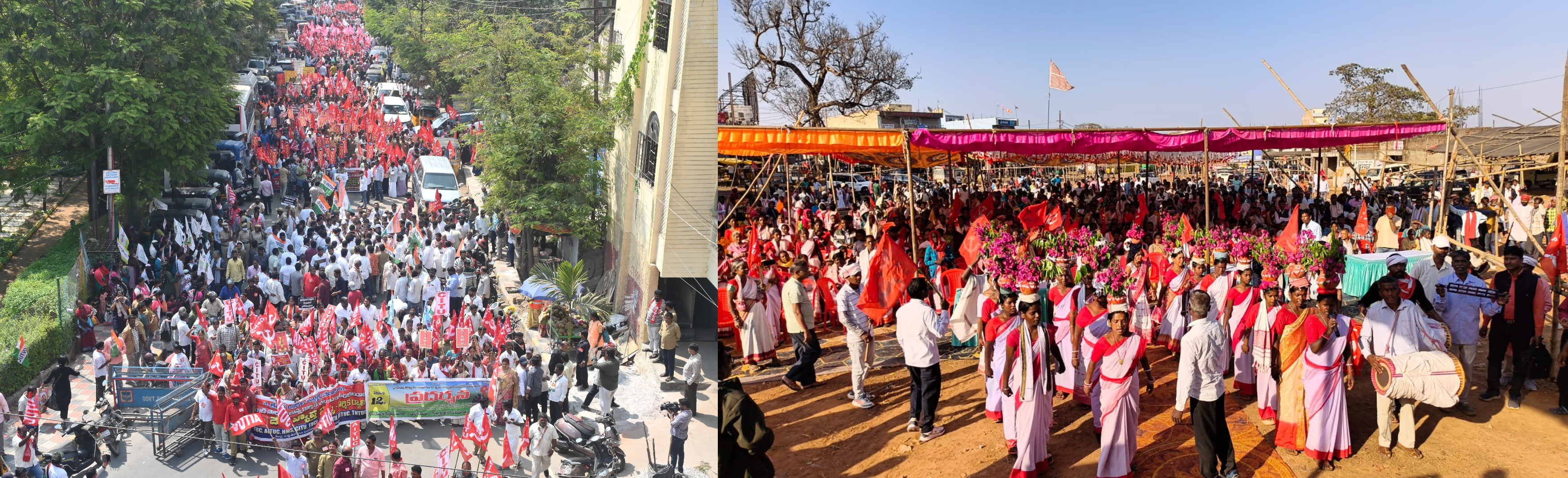
Broadest unity will be built, and all energies will be pooled to make the 24th March Delhi Chalo a massive success.
(Views expressed in this report are the author’s own)
Follow us on WhatsApp
Follow us on Facebook
Follow us on X @vudmedia
Follow us on Substack
