While public protests have returned to Iran in recent weeks, it also coincides with President Trump’s warning of taking severe action if Iran starts killing protestors. Meanwhile, amid deepening economic crises in the sanctions-hit country, the protests in Iran have taken an unprecedented turn with protestors raging against the Islamic regime and calling for the ‘death of the dictator’. While the regime has been trying to repress these protests, any likely action by external actors with objectives of regime change might have far-reaching implications for the region. It is in this context that the upcoming visit of the Iranian Foreign Minister to Delhi has placed the Indian government in a peculiar situation – balancing its interests in Iran as well as the region while anticipating sweeping political changes in Iran, explains Professor Swaran Singh in the 15th edition of Asia Watch.
Home page image: Iran’s supreme leader, Ayatollah Khamenei lead prayers with Hajj authorities in this 2018 photograph
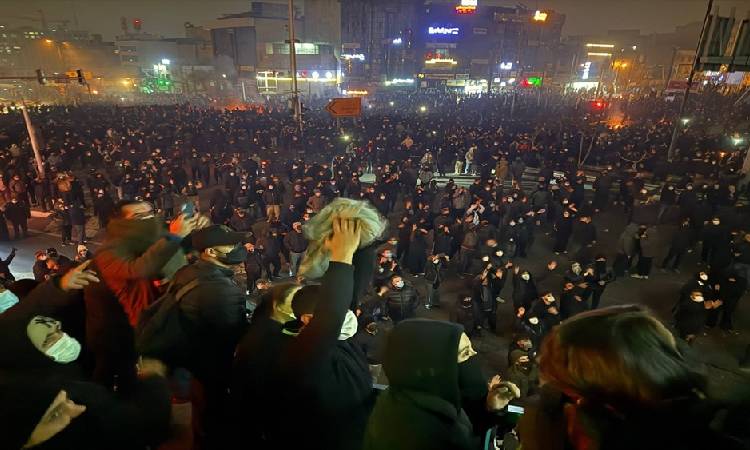
Text page image: Massive protests in the Punak district of-Tehran on 9 January 2026; photo source – National Council of Resistance of Iran
Banner image: An Ashura Demonstration in Tehran during the Islamic Revolution, December 1978; photo source - IICHS, Tehran
Next week, New Delhi will host Iran’s Foreign Minister, Syed Abbas Araghchi, to take stock of bilateral ties and kickstart the year-long events marking the 75th anniversary of India-Iran diplomatic relations.
Araghchi’s landing in Delhi will be the first since his last combined visit to Islamabad and New Delhi barely hours before the Indo-Pak military standoff of May 2025, urging “both parties to exercise restraint and avoid increasing tensions.” The visit also comes months after the Israeli and American strikes on Iran last June, and in the backdrop of the nationwide protests in Iran since last month.
More recently, last week’s American action in Venezuela has triggered speculations of Iran being the next, followed by India issuing an advisory to its citizens “to avoid non-essential travel to the Islamic Republic of Iran.”
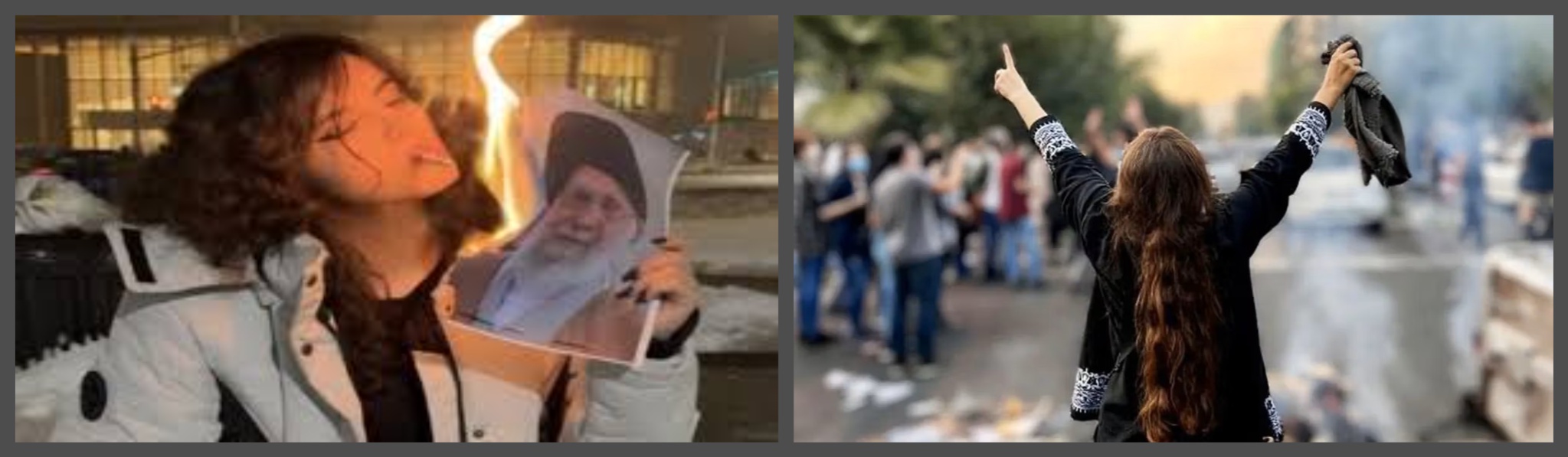
Image: In what could be iconic images from the Islamic Republic, a woman protestor lighting a cigarette from a burning picture of Ayatollah Khemeni (left), and a woman protestor without a hijab (right)
All this is not only going to cast a shadow on their next week’s bilateral parleys but also puts India on the dock about what New Delhi has to say about Iran’s internal turmoil. Much of the West will be carefully watching the scale and style of India’s engagement with the Iranian foreign minister, as well as its stance on the widening protests in Iran.
Especially, in the midst of President Trump’s exasperating quips and tweets on Iran and India, this will be one more test for India’s strategic autonomy: engaging Tehran while balancing its relations with the US, Europe, Gulf states, and broader West Asian partners, including Israel.
From ‘Bazaar’ to nationwide protests
Since late December 2025, what began as modest shop closures in Tehran’s historic Grand Bazaar along the famous Jomhouri (Republic) Avenue and nearby commercial enterprises like the Aladdin Shopping Centre against the Iranian currency, “rial’s free fall,” has quickly metastasised into nationwide protests involving traders, workers, students, and ordinary citizens.
According to reports, protests have since spread “to 111 cities and towns across all 31 provinces” with “34 protestors and four security personnel having been killed” and “2,200 protestors arrested” across the cities of Tehran to Mashhad, Shiraz, Isfahan, Hamadan, Qeshm and beyond.
Fars news, believed to be close to the Iranian Revolutionary Guard Corps (IRGC), reported that over 250 police officers and 45 members of the IRGC’s volunteer Basij force were hurt in demonstrations.
The immediate triggers for protests may have been Iran’s rapid economic deceleration, but it has sparked the Iranian people’s long-simmering undercurrents of socio-political angst and frustrations. Inflation, for instance, had soared to an unprecedented 52.6 per cent by December.
The Iranian rial hit record lows of roughly 1.4 million to the US dollar, eroding the lifetime savings of the populace and fuelling widespread discontent. Soaring living costs, with food prices reportedly up to 72 per cent year-on-year, have amplified citizens’ grievances.
Vital to grasping the power of these protests is the need to appreciate these underlying simmering undercurrents. While these may have been sparked by economic dysfunction, protests in Iran have quickly evolved into broader political dissent.
Street chants include not just complaints about living costs but direct anti-regime slogans like ‘death to dictator’ and ‘Long Live the Shah.’ These calls to end the clerical rule and especially support for the pre-1979 monarchy mark a dangerous break from all earlier protest narratives under the Islamic Republic since 1979.

Image: Then and now - Pro-Shah demonstration organised by the Resurgence Party in April 1978 (left); photo source - Mashruteh, and protestors chanting 'Long Live the Shah' in the ongoing protests (right); photo source - NCRI
Regime legitimacy and fractures
Exacerbating the problem has been the harsh government response to these protestors. Nationwide internet shutdowns recently saw connectivity plummeting to as low as 5 per cent. This was aimed at controlling the spread of information, weakening the organisation of protests and their external visibility.
This pattern echoes past waves like those of the 2022 “Woman, Life, Freedom” protests to the water scarcity demonstrations in 2025.
For some time now, the Islamic Republic’s domestic politics have been facing an unprecedented crisis of legitimacy, with fault lines erupting on multiple fronts. With half of today’s population being post-1979 born, their faith in the doctrine of a Shia cleric ruling as Supreme Leader or Wilayat al-Faqih (Guardianship of the Islamic Jurist) has lost its shine, facing questions of youth unemployment and inflation.
Long-standing issues such as financial mismanagement, economic sanctions, and structural stagnation have hollowed out the credibility of Iran’s political elite.
Scholars like Abbas Maleki and others have long highlighted Iran’s fiscal policy weaknesses. Long-running economic sanctions have also impacted the eviscerated middle class, shrinking Iran’s faith-based socio-economic stabilisers and prosperity-driven general goodwill for Iran’s leaders.
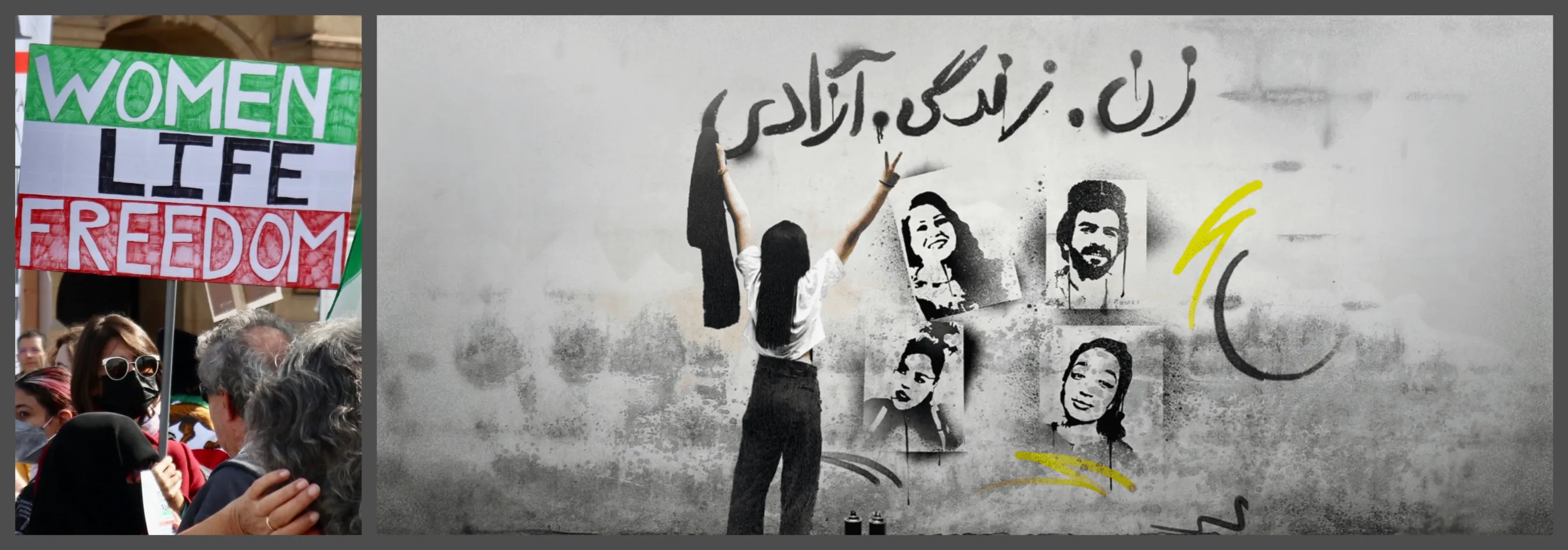
Image: Protestors and posters representing the Women, Life, Freedom protest of September 2022, following the death of Jina Mahsa Amini, who was arrested by the moral police, allegedly for not wearing the hijab properly
Even within the regime, figures like President Masoud Pezeshkian have been oscillating; shifting blame while urging unity and castigating external enemies for domestic troubles, deflecting internal tensions between pragmatists and hardliners within Iran’s political establishment.
The 86-year-old Supreme Leader Ayatollah Ali Khamenei’s hardline rhetoric — viewing protests as threats to the Iranian nation — contrasts with more measured calls for dialogue from the other corridors of political power. This below-the-radar tug of war within the ruling elite further complicates their political incoherence.
Though lacking a structured leadership, these protests by civil society groups, university students, workers in strategic sectors, with statements from the exiled prince Reza Pahlavi expressing his support, signify a normalisation of protest as a political rather than purely economic movement — a shift that observers view as a test of the ruling regime’s grip on Iranian political power.
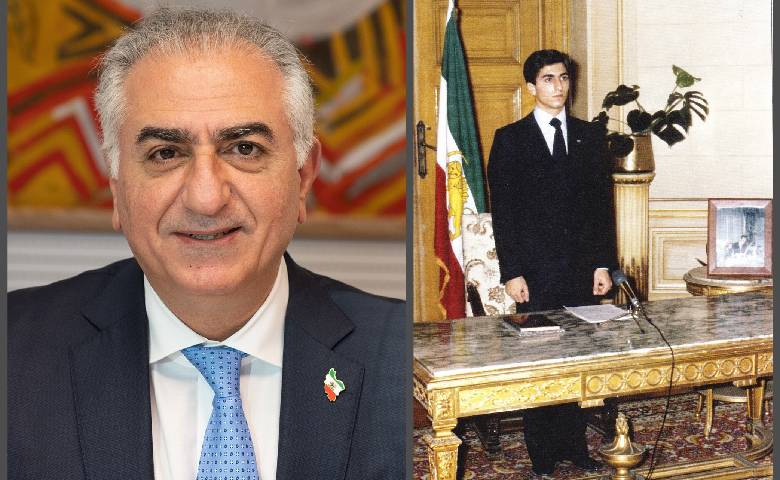
Image: Scion of the Shah dynasty, exiled prince Reza Pahlavi (left), and his swearing in as the King of Iran, while in exile in Cairo, October 1980 (right); photo source - Creative Commons
Iran unravels the West Asian mosaic
The protests in Iran represent not just a domestic challenge but potentially a geopolitical avalanche for several other West Asian monarchies and theocracies that may have lessons. This alludes to the larger external linkages and implications of this ongoing turmoil inside Iran.
a) U.S.-Iran Strategic Calculations
Iran’s repeated clashes with the United States and Israel — including their last 12-day military strikes during June 2025 — and subsequent American sanctions snapbacks have deepened Tehran’s international isolation, further tightened economic pressures and bolstered protestors’ grievances as well as their confidence.
But signals from the United States and its allies have also not been straightforward.
Political narratives in Washington, for instance, have also oscillated between engagement and hostility — warning Tehran against lethal crackdowns on protestors while hinting at possible wider repercussions if ‘human rights abuses’ escalate.
The Trump administration keeps meandering between regime change and diplomatic negotiations, creating greater uncertainty for all stakeholders.
Amongst others, this dynamic also affects Iran’s nuclear negotiations, where Tehran’s continued recalcitrance on enrichment and sanctions relief has become intertwined with domestic unrest, complicating any diplomatic thaw.
b) The Gulf and Persian Gulf states
In building a post-OPEC (Organisation of Petroleum Exporting Countries) energy landscape to better manage strategic competition for regional influence, nations like Saudi Arabia and the United Arab Emirates (UAE) have lately been recalibrating ties with Tehran, including partial diplomatic reset efforts.
Now, the domestic Iranian instability threatens to further dampen the confidence of these Gulf capitals in engaging robustly with Tehran’s leadership, especially if ideological rhetoric overshadows their pragmatic cooperation.
Similarly, Iran’s proxy networks — in Iraq, Lebanon, Syria, and Yemen — could feel uncertain of continuing Iranian support, affecting their morale and operations. A distracted Tehran might reduce logistical support to these allied militias or shift focus inward, opening opportunities and spaces for the US, Saudi Arabia, and UAE to engage deeper in these theatres.
c) Turkey and Russia
For Ankara, Iranian instability recalibrates security calculations in its bordering Kurdish regions and the broader Middle Eastern arena as well. It also complicates Turkey’s rising profile as peacemaker.
Russia, a key strategic partner for Iran, has also been working on balancing its interests in preserving stability against leveraging Iranian distractions to cement Eurasian strategic integration, particularly in energy and military cooperation.
Likely trajectories of the protests
The persistent Iranian protest cycles have become the subject of extensive academic debates on regime sustainability and potential regional impact.
Studies on the structural roots of Iranian economic grievances highlight how cycles of sanctions, state mismanagement, and socio-economic inequalities have, over the years, degraded the political legitimacy of Iranian leadership and complicated its foreign relations.
Meanwhile, reports from the United Nations allude to a cyclic repression-backlash pattern between protestors and authoritarian regimes, thereby underlining their essential regime repression dilemma: where excessive force can suppress dissent in the short term but risks long-term erosion of regime credibility, especially where protests have penetrated Iran’s cross-class strata.
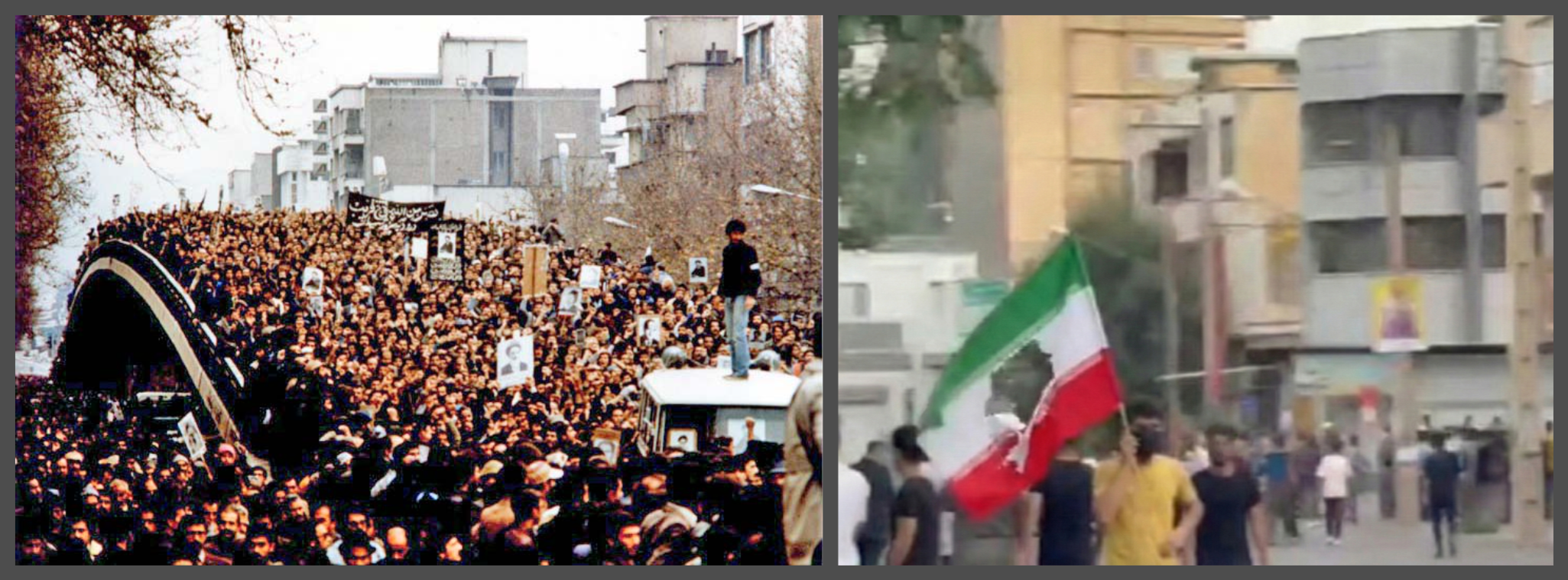
Image: Then and now - Protestors march during the Islamic revolution in 1978 (left), and protestors now waving a flag with the emblem of the Islamic regime being torn out (right); photo source - Wikimedia Creative Commons
This dilemma is clearly visible in the current wave of protests in Iran, where protests by bazaar merchants, students, civil society actors, as well as by other prominent actors, mark a notable deepening and widening of Iran’s structural challenge way beyond any singular demographic grievance.
Historical analogies — from the Green Movement of 2009 to the Women, Life, Freedom uprisings — suggest that Iranian protest movements often animate latent fissures in the political order rather than emerge ex nihilo.
Each successive wave has expanded the repertoire of resistance modalities while testing the boundaries of state coercion or manipulation.
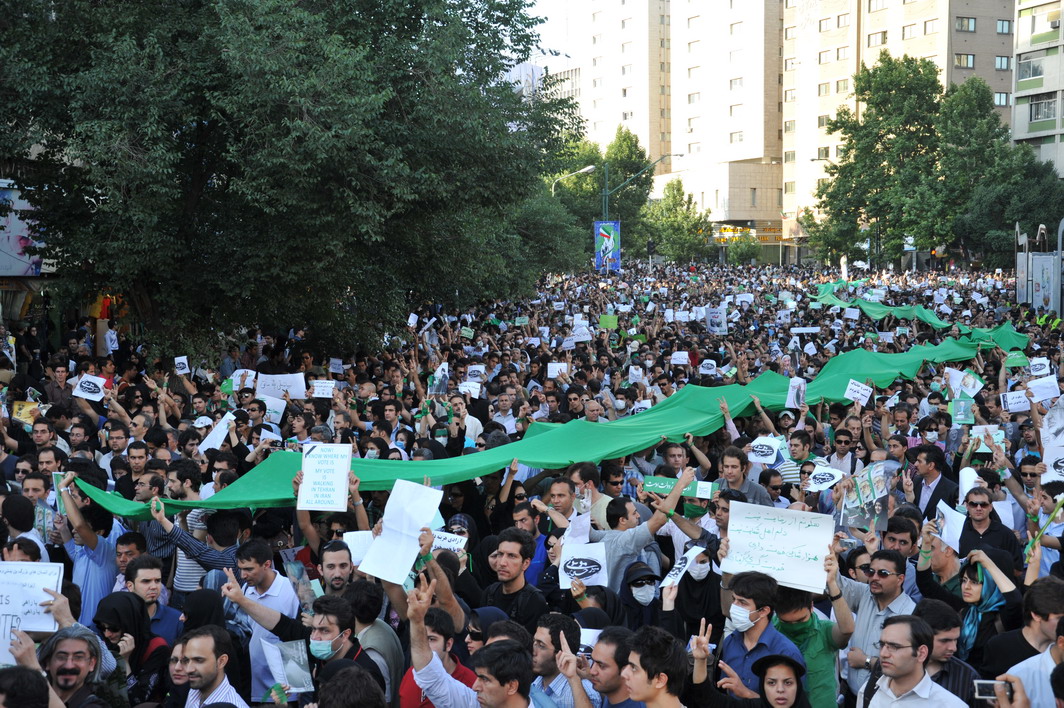
Image: The 'green' movement of 2009; photo credit - Milad Avazbegi
The imperatives for India
The last three weeks of Iran’s nationwide protests signal a profound internal shift in the Iranian and the West Asian political order with ramifications for Tehran’s regional engagements. This also reinforces the need for a nuanced, multipolar diplomacy by other nations like India that seek to ensure stability, growth, and constructive engagement across the West Asian landscape.
For India, from its Chabahar port cooperation to dialogue within the Shanghai Cooperation Organisation (SCO) and the BRICS frameworks, India’s engagement with Iran has historically been rooted in multifaceted strands of politics, culture, energy, connectivity, and regional balance.
But episodes of Iran’s expanding domestic turbulence over the years today threaten to fundamentally recast India’s strategic calculus. As the mandarins in New Delhi work overtime to assess the future of the current leadership in Tehran, the protests have continued to rage across Iran, drawing a warning from the Trump administration.
In this backdrop, what can one expect from India hosting Iran’s foreign minister next week?
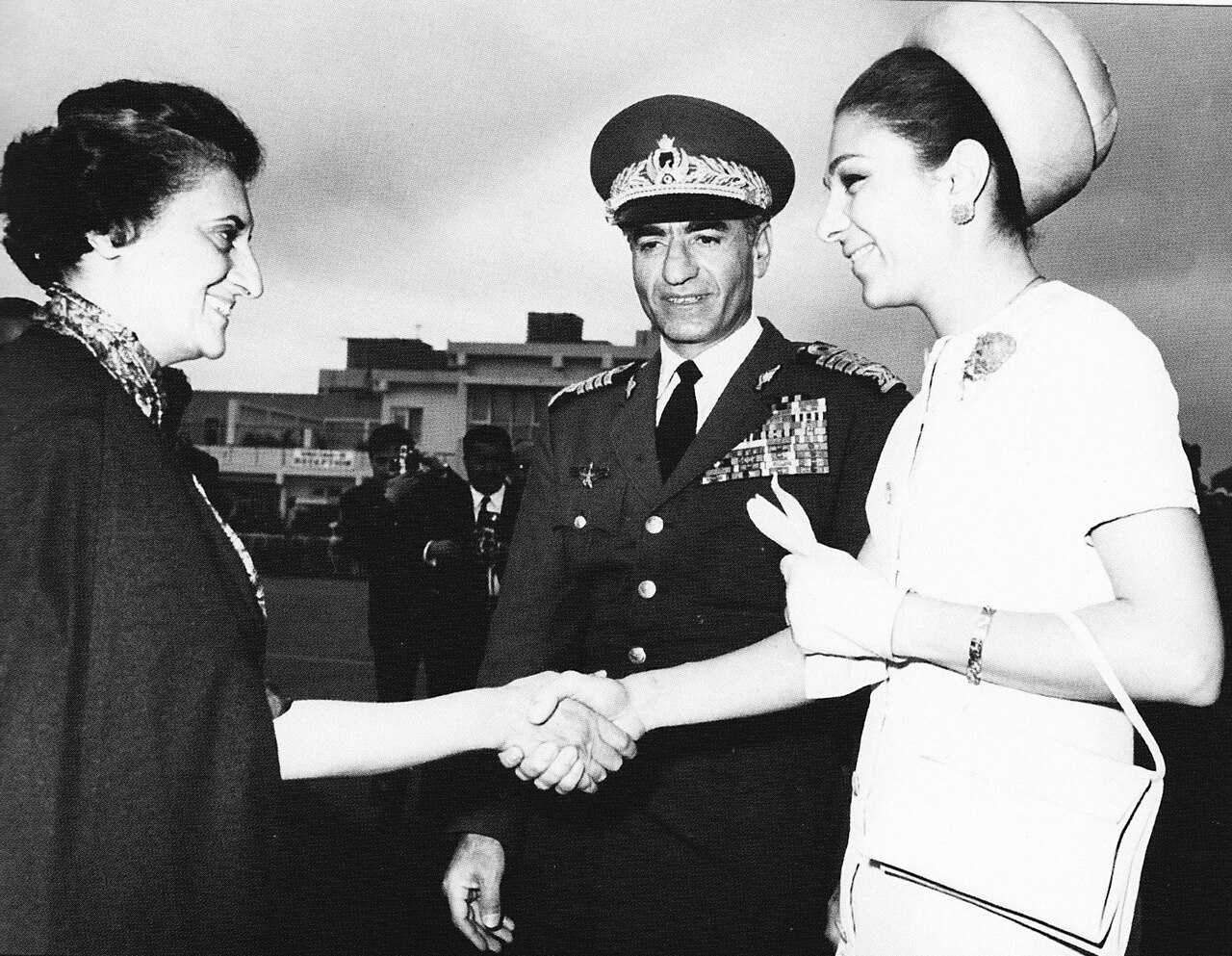
Image: The Shah and his wife with Mrs Indira Gandhi during their state visit to India in 1970; photo source - Wikimedia Creative Commons
Prime facie, given that it has avoided condemning Russia in Ukraine, Israel in Gaza and the United States in Venezuela, it may tread cautiously on the issues of Iran’s human rights or political reforms. Instead, India is likely to prioritise conversations on economic and security cooperation, such as energy imports and regional connectivity projects.
Iran’s internal instability, however, is also likely to nudge New Delhi to take stock of Iran’s political environment, gauge its regime’s future and focus on deepening and diversifying partnerships across West Asia — hedging against any volatility of any single predominant partner.
As Tehran seeks to explain and address these protests to its friendly nations, New Delhi’s calibrated engagement, respecting Iranian sovereignty while reinforcing stable economic and security partnerships, will be a measure of India’s broader strategic finesse in a turbulent West Asia, marked by competing powers’ shifting alliances and domestic-political undercurrents.
Follow us on WhatsApp
Follow us on Facebook
Follow us on X @vudmedia
Follow us on Substack

.jpg)


.jpg)
