
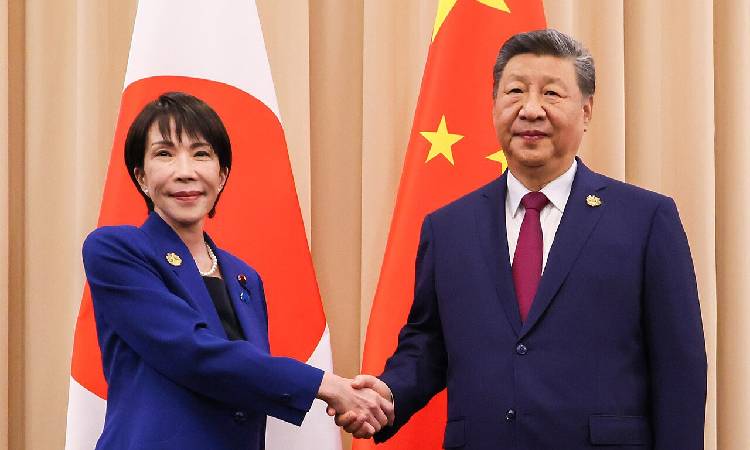
Japan and China have for long been peaceful neighbours despite their historical baggage of animosities and festering wounds. That fragile peace was disturbed earlier this month with a provocative statement by Japan’s recently-appointed, conservative prime minister, who indicated Japanese intervention if China invades Taiwan. The statement touched a raw nerve in Beijing, which sees Taiwan not only as its integral part but also its integration with the Chinese nation as a ‘national rejuvenation’ project by 2049. Beyond diplomatic rhetoric, the Japanese leader's comment indicates her country’s intention for a new security role, leaving behind its long-running pacifism. Revealed by this evolving diplomatic crisis is a larger strategic gameplan that promises an inevitable churn in the Indo-Pacific with US as the lynchpin, says Professor Swaran Singh in the 12th edition of Asia Watch.
Text page image: Japan PM Sanae Takaichi with Chinese President Xi Jinping during the APEC summit in South Korea in October 2025
Home page image: Sanae Takaichi on being elected as PM by Japan's Diet on 21 October 2025
Banner image: A slogan proclaiming 'One Country, Two System' in Xiamen, China, since 1999
Rarely has East Asia witnessed a diplomatic firestorm ignite as quickly — and with as many strategic implications — as the current China-Japan confrontation over Taiwan. What began as a single, blunt remark by the Japanese Prime Minister Sanae Takaichi — declaring that any Chinese assault on Taiwan would be an existential threat to Japan — has now snowballed into a full-blown geopolitical precipice.
It is not just another rhetorical exchange between two uneasy neighbours. It is a moment of structural recalibration with consequences that will long reverberate across the Indo-Pacific region.
The deeper risk lies in the widening gap between China’s internal political impulses and Japan’s external strategic aspirations. China can ill afford to appear weak and Japan cannot live with strategic ambiguity anymore.
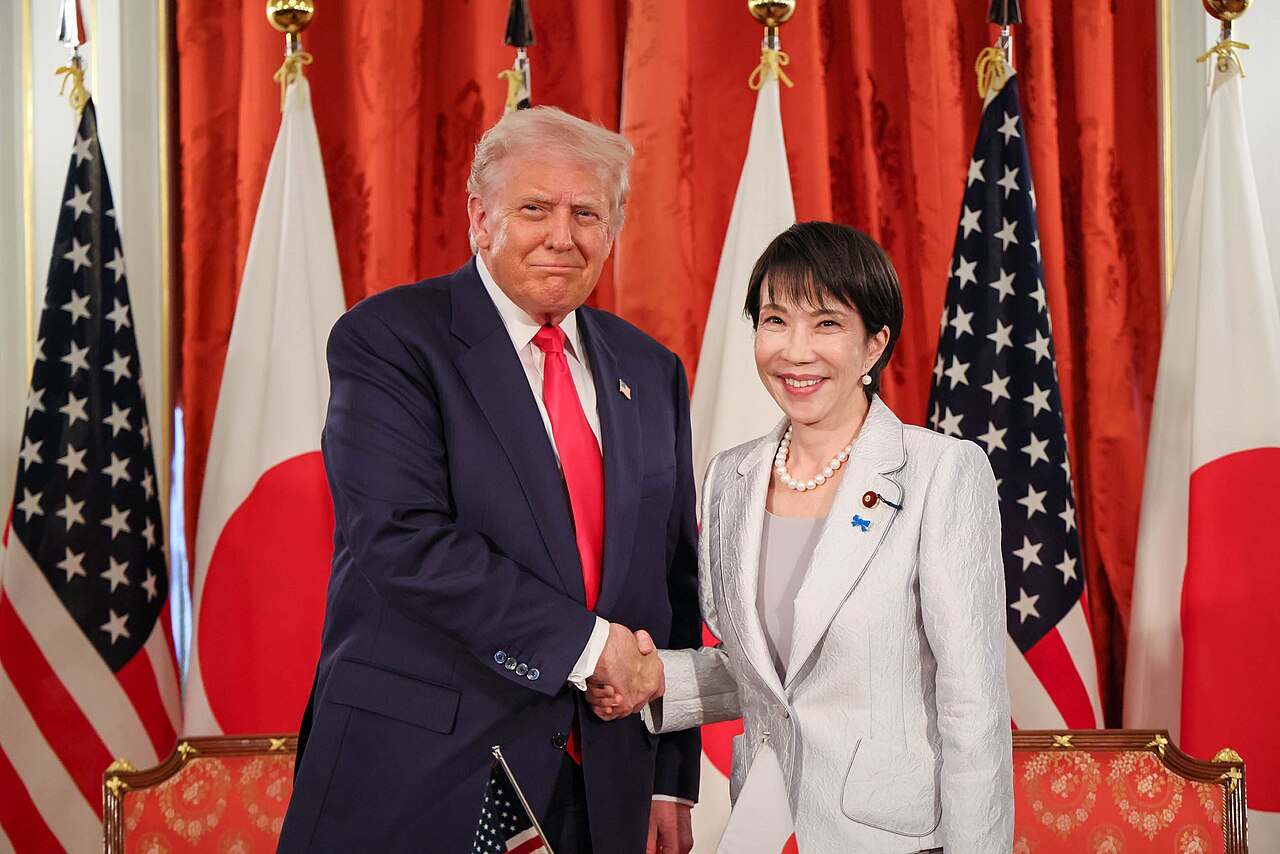
Image: US President Donald Trump with the Japanese PM during their bilateral in Tokyo on 28 October 2025
Both see the Taiwan question as core to their national futures. But neither can afford a direct war. Their economies are intertwined, their populations wary of conflict, and their regional ambitions ultimately constrained by geography.
But what they do want — and increasingly demand — is strategic space. Japan wants room to redefine its security posture without being labelled revisionist; China wants room to pursue reunification without foreign interference.
This is where Prime Minister Takaichi’s assertion embodies a political shift: from a pacifist postwar restraint toward normative assertiveness, grounded in both deterrence and alliance politics. Her brand of conservatism ties into a broader effort to remake Japan’s security architecture — and perhaps its identity — in an age of resurgent great-power rivalry crafting the larger regional security architecture.
China does not have an option other than to respond.
Strategic ambiguity shattered
Prime Minister Takaichi’s comments in Japan’s Diet (parliament) on 7 December 2025 marked a decisive rupture from the country’s long-held posture of strategic ambiguity on Taiwan. Successive Japanese leaders have carefully refrained from committing to explicit military involvement in a Taiwan contingency.
In contrast, Takaichi is seen to have telegraphed a far more proactive and muscular deterrent posture by invoking the 2015 revised Self-Defense Law and the Response to Armed Attack and Existential Threat Law. This revision codified a significant reinterpretation of Japan’s pacifist constitution (Article 9) by allowing its Self Defence Forces (SDF) to exercise ‘limited collective’ defence of allies in case a “survival-threatening situation” emerges.
For Japan, this marks an inflection point in its long-brewing tectonic shift. For nearly two decades, Tokyo has been inching away from post-World War II pacifism. Takaichi’s statement comes as the most explicit articulation of that strategic mindset where Taiwan’s security is seen as Japan’s own security.
This is not merely an ideological posturing; it is geographic fact as well. Critical sea lines, semiconductor supply chains, and frontline US military deployments all bind Japan’s fate to what happens across the Taiwan Strait. But it also entails much more than territorial claims.
Unlike past episodes — such as those over the Senkaku/Diaoyu Islands or the 2012 nationalisation crisis — this confrontation is not just about territory. It is about regional order.
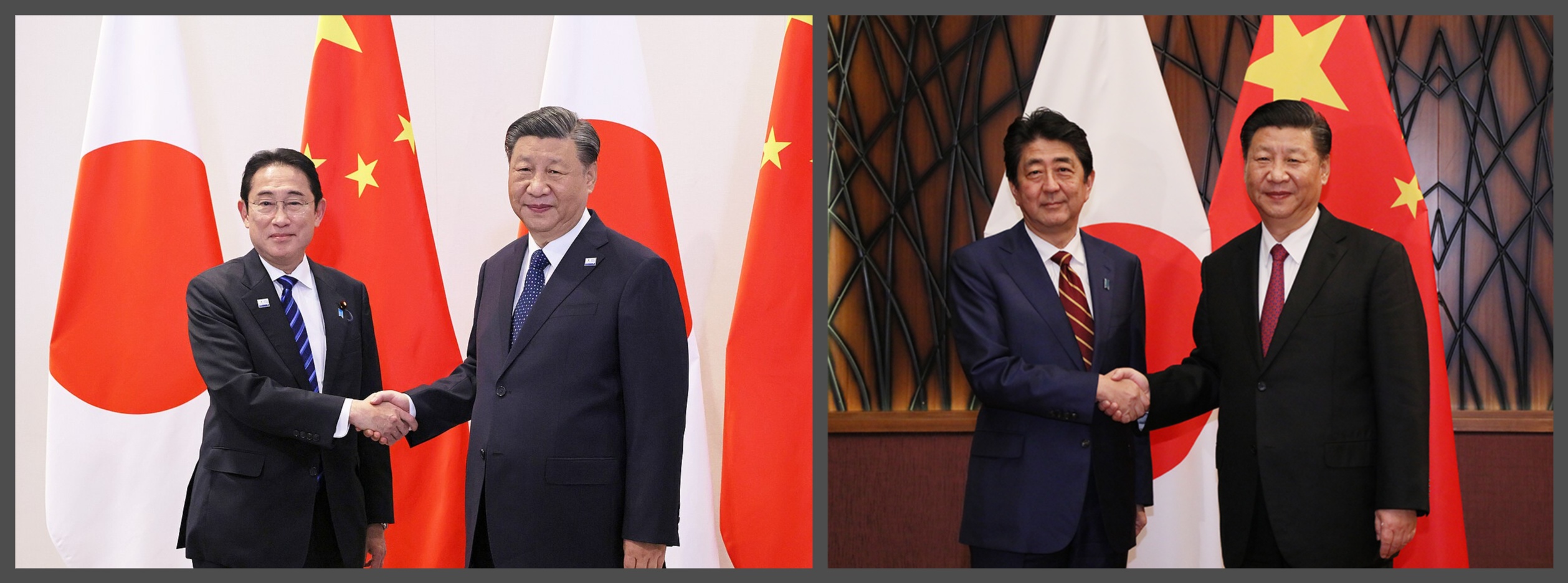
Image: Chinese President Xi Jinping with Japanese Prime Ministers - Fumio Kishida (left) in November 2023, and Shinzo Abe (right) in November 2017
Takaichi’s statement and her decision to stick by it signals moves Japan from cautious hedging to a clear strategic assertion. The Japanese Prime Minister has not only redefined Tokyo’s risk calculus, but stirred raw nerves in Beijing.
China’s leadership sees Taiwan as an inalienable part of its territory and treats external involvement — especially military — as a red line. Accordingly, Beijing’s counter-moves reveal that it is prepared to economically punish Japan for even a verbal alignment with Taiwan.
What can make Takaichi’s position slippery is the Trump presidency deserting international commitments and putting the onus for regional security on regional powers. This partly explains Japan’s Self-Defense Force expanding its regional security role. But for [1] Beijing, Tokyo is no longer merely re-arming but becoming a strategic co-conspirator in what it calls the American Cold War mindset of containment of China.
China’s furious backlash
Beijing has responded equally swiftly including its most seasoned foreign minister Wang Yi calling Takaichi comment “shocking” and “crossing a red line.” The Chinese Foreign Ministry lodged a formal protest and summoned Japan’s ambassador to register its “strong dissatisfaction.”
China’s envoy at the United Nations, Fu Cong, wrote to Secretary General calling Takaichi’s remark “provocative” and “extremely dangerous” and how “despite China’s repeated demarcated and protests, the Japanese side refuses to repent or retract it wrongful statement.”
Xue Jian, China’s Consul-General in Osaka, posted a now-deleted tweet on X: “…the dirty head that recklessly sticks itself in must be cut off without a moment’s hesitation.”
Beijing has since escalated its economic retaliation. On 19 November 2025, it reimposed a ban on Japanese seafood imports, just months after it had partially lifted the 2023 ban (originally imposed after the Fukushima nuclear wastewater discharge), allowing some Japanese exports again.
Mao Ning, spokeswoman for China’s Foreign Ministry explained this in terms of Takaichi’s “erroneous remarks … [having] caused strong public outrage,” and that “…there would be no market for Japanese seafood.” The Chinese market, including Hong Kong, accounted for more than 48.6 per cent of Japan’s seafood exports for 2023.
Beijing has also issued a travel advisory, warning its citizens of “risks to the personal safety” in Japan. The advisory was seen as a “politically motivated” signal rather than a purely security-based warning.
The fallout was immediate: state-owned airlines offered total refunds, and hundreds of thousands of Chinese tourists canceled flights. Furthermore, cultural exchanges slammed into reverse: Japanese films pulled out from Chinese cinemas, cross-cultural events canceled, and even student exchanges are now eyed with suspicion.
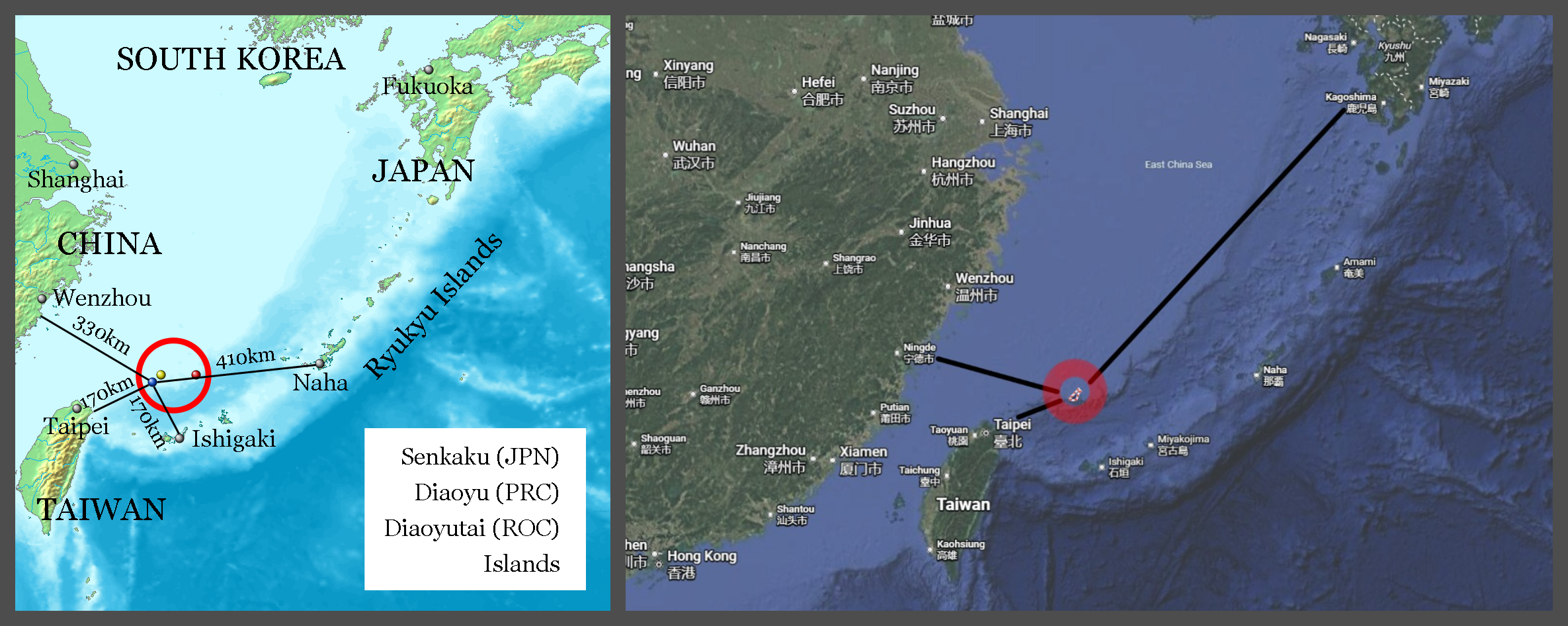
Image: Maps of the Senkaku, Diaoyu and Diaoyutai islands and their distances from their mainlands and other terrorities of Japan, China and Taiwan
Amid diplomatic and economic pressure, China has also flexed its maritime muscle: Chinese Coast Guard vessels are once again sailing through the contested waters around the Senkaku/Diaoyu Islands (disputed territory controlled by Japan), asserting they were conducting “lawful patrols.” China’s military drones flew near Yonaguni Island, Japan’s westernmost territory — a potent reminder of Beijing’s reach.
Nationalism meets memories
This buildup of the latest China-Japan crisis resonates with deep historical and ideological undertones. In Beijing, Takaichi’s hawkish tone has revived memories of the Japanese imperial aggression — the “century of humiliation” is a frequent motif in Chinese nationalist discourse – which even echoed at the recent 80th Anniversary parade in Beijing.
State media commentators, including People’s Daily, have seized on her remarks to argue that Japan is slipping back into its early 20th century militarism.
From Tokyo’s vantage, this is not nostalgia but survival. Takaichi represents a new-generation of the conservative leadership that aims to prepare Japan not just for deterrence, but for possible confrontation.
Under her watch, Japan is accelerating its defence capabilities: there are plans to raise its defence spending to 2 per cent of GDP by 2027, a dramatic shift from its historical constitutionally driven under-1 per cent ceiling that was followed since 1951.
For Beijing, such moves evoke both psychological insecurity and strategic threat.
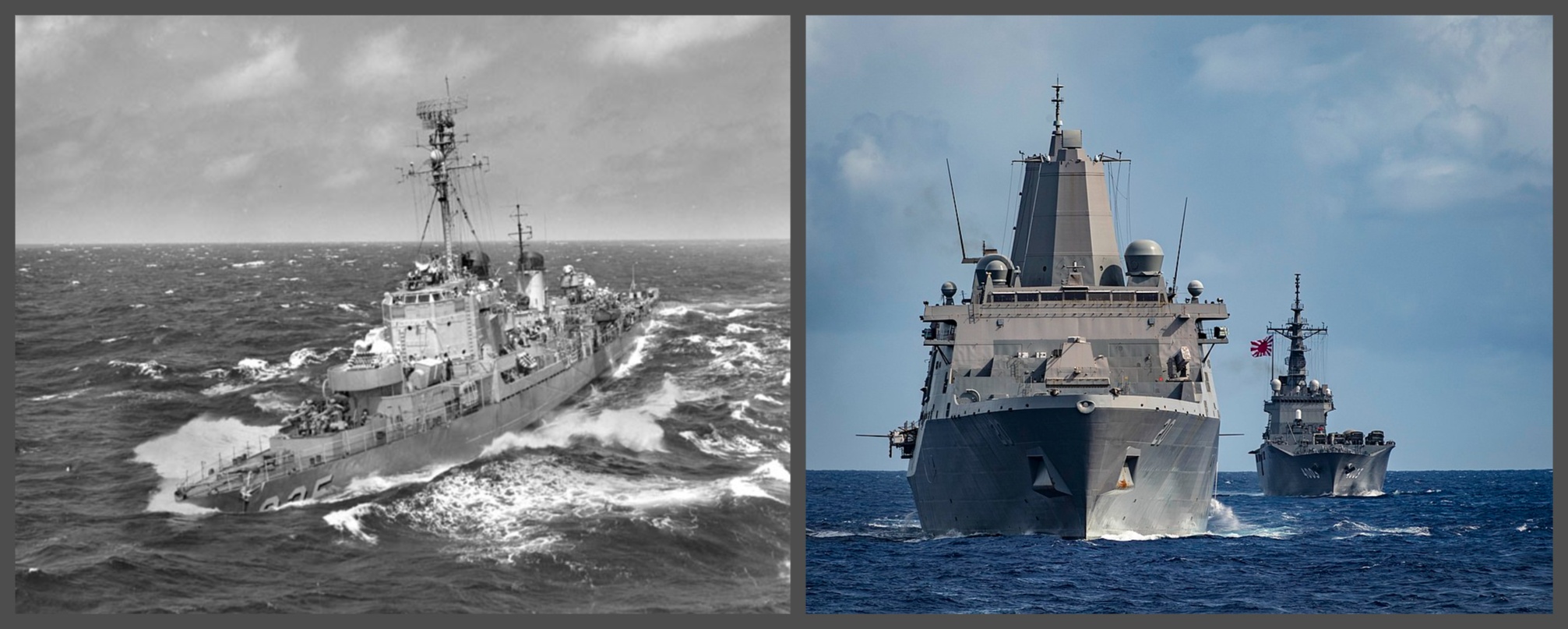
Image: US battleship, USS Carpenter (right), during a partol in the Taiwan Strait in August 1953, and the US aircraft carrier, USS Independence (right), during the Third Taiwan Strait Crisis
As of now, however, Japan’s “existential threat” logic is premised on its geographical proximity to Taiwan — a potential flashpoint. Taiwan is located just over the horizon from Japan’s Okinawa that is home to the largest American military base outside the Americas.
Taiwan, therefore, is not a mere democratic partner; it is a lynchpin of the US-led regional security architecture. A Chinese takeover of Taiwan could, hence, inevitably bring the US-China military confrontation to the Japanese soil.
Admiral Philip Davidson, a former commander of the US Indo-Pacific Command, had ominously warned in a 2021 Senate hearing of a so-called “Davidson Window” (2021–2027) — a period during which China might attempt to seize Taiwan. Under Takaichi, therefore, Tokyo aims to weave an even tighter security fabric — both in terms of deterrence and credible resolve to fight.
Complicating it further, the United States has publicly backed Japan’s position. In the midst of rising China-Japan tensions, the White House deputy spokesman, Tommy Pigott, reiterated that American support for Tokyo remains “unwavering,” warning against any unilateral attempts to change the status quo in the Taiwan Strait, East China Sea, or South China Sea.
The message is clear: this is not bilateral bluster but a triangular pivot in which Washington, Tokyo, and Taipei are increasingly aligned — a geopolitical posture Beijing cannot ignore.
Domestic and global risks
One of the most striking things about this crisis is that, in spite of its growing naval and amphibious capabilities, Beijing’s has not invaded Taiwan so far. China instead has preferred to use economic coercion, diplomatic warnings, maritime intimidation, and wolf-warrior diplomacy, i.e. escalation through power projections without war.
China is likely to rely on grey-zone tactics by using civilian cargo ships, maritime militia, coast guard ships, makeshift piers (like floating Shuiqiao bridges), to project power. The People’s Liberation Army (PLA), in fact, has been investing heavily in amphibious capabilities: landing ships, marines, and logistical infrastructure that could facilitate over-the-shore operations.
Conversely, China’s leaders seem to be waiting patiently for a day when, in face of their declining numbers, when there will be zero number of nations recognising Taiwan as a sovereign nation. This may be because of the slowing of the Chinese economy that has been igniting domestic discontent. Amid purges of several military leaders, its leadership is increasingly reliant on nationalist politics to preserve internal stability.
Nothing unifies domestic opinion in China quite like invoking the spectre of a resurgent, militaristic Japan. But such scenario entails real risks for Beijing as well. Any half-hearted intervention in a slippery situation would invite international condemnation, embolden a US military response, and massively destabilise trade and global markets. A misjudgment could entail high casualties or failure.
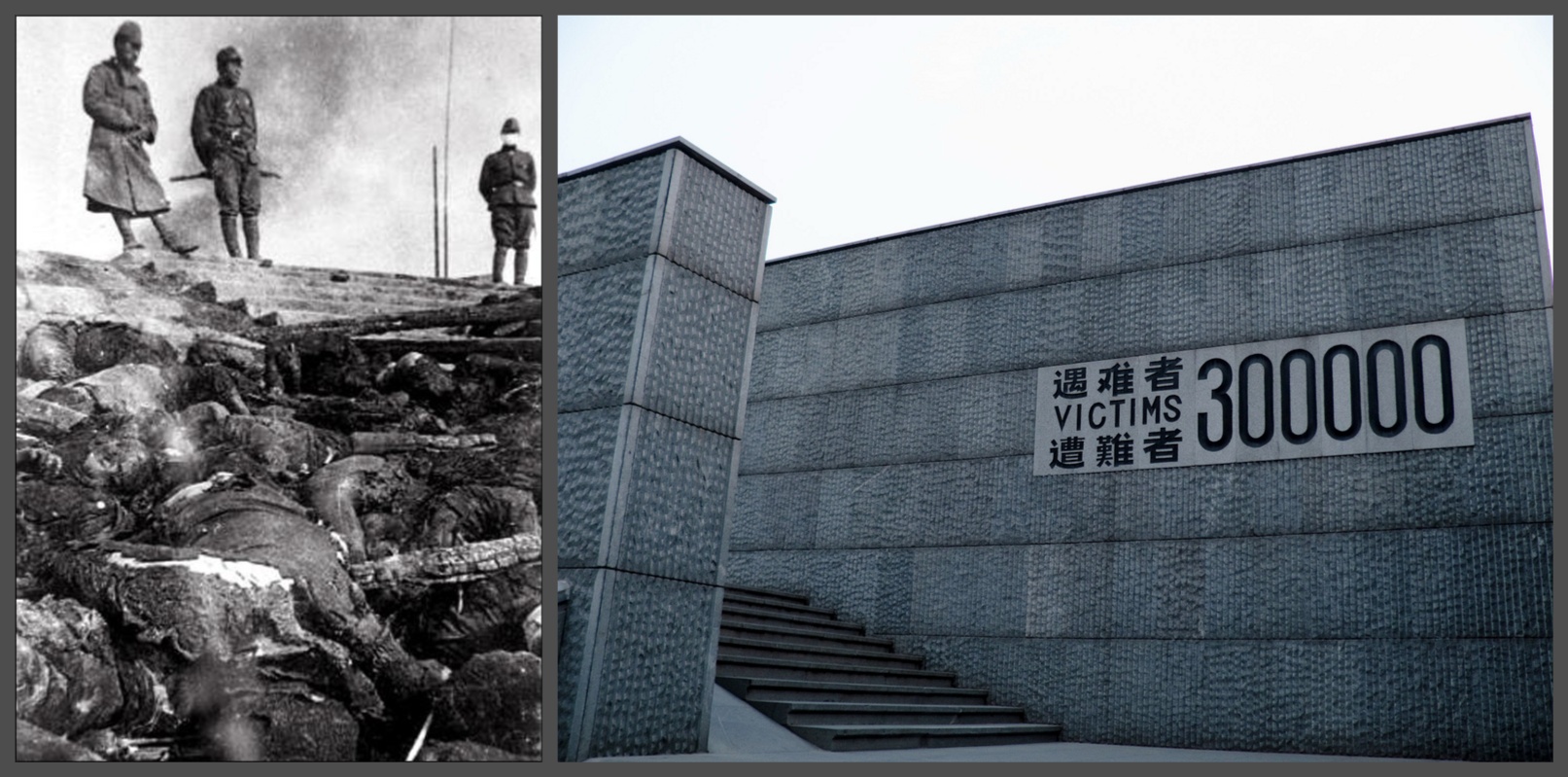
Image: Japanese soldiers watch bodies of the Chinese along a river in Nanjing (left), photo credit: Moriyasu Murase; and a figure of 3 lakh victims etched on the wall of the Nanjing Massacre Memorial Hall
Several trajectories now appear possible:
1. De-escalation via retract and concessions: China demands that Takaichi retract her “egregious” remarks. If Tokyo complies — for instance, clarifying that her 7 November remarks were hypothetical and not policy — Beijing may ease economic pressure. This would restore stability temporarily, though not erase the underlying distrust.
2. Prolonged coercive pressure: If Tokyo stands firm, China may continue its use of economic levers — more trade bans (perhaps beef, official exchanges), further travel curbs, even diplomatic isolation. Continued maritime activity could normalise as a means of signalling displeasure.
3. Strategic realignment and military buildup: Japan may accelerate its force posture: more defence spending, advanced missile deployments, integration with US force posture, joint exercises. The sense of rivalry could evolve into a long-term bi-polar competition in East Asia.
4. Crisis escalation: In the worst-case, a Taiwan contingency may trigger crisis. If China blocks or attacks Taiwan, Japan may invoke its revised 2015 self-defence laws. Chinese coast-guard or militia escalation could lead to military strikes. The US would be dragged in, and the region could face open military conflict — though this remains a remote, high-cost pathway.
National humiliation vs rejuvenation
This dispute is also a contest over historical memory as agency. For Beijing, reclaiming Taiwan is framed not just as reunification, but as part of its “national rejuvenation” – a mission to be completed by 2049, the centennial goal of the People’s Republic.
In this narrative, a Japanese interference is not just strategic; it resurrects the darkest chapters of Japanese colonialism and wartime aggression, and its occupation of Taiwan and other parts of northeast China.
But it also has its costs. The cancellation of cultural events, disruption of tourists and students, and Japanese films out of Chinese theatres, have already exacted a heavy toll on Japanese soft power. Tourism has taken a sharp hit: nearly 543,000 flight tickets (almost 40 per cent of all Chinese bookings) were canceled after Chinese airlines offered free refunds.
Meanwhile, in the commodities markets, Japanese seafood exporters — especially those dealing in high-end scallops and sea cucumbers — now face steep losses.
For Beijing as well, such hard line risks reputational costs abroad. Its coercion reinforces fears of China having unleashed its “wolf-warrior diplomacy,” on Japan damaging its soft power credentials even as it flexes muscle.
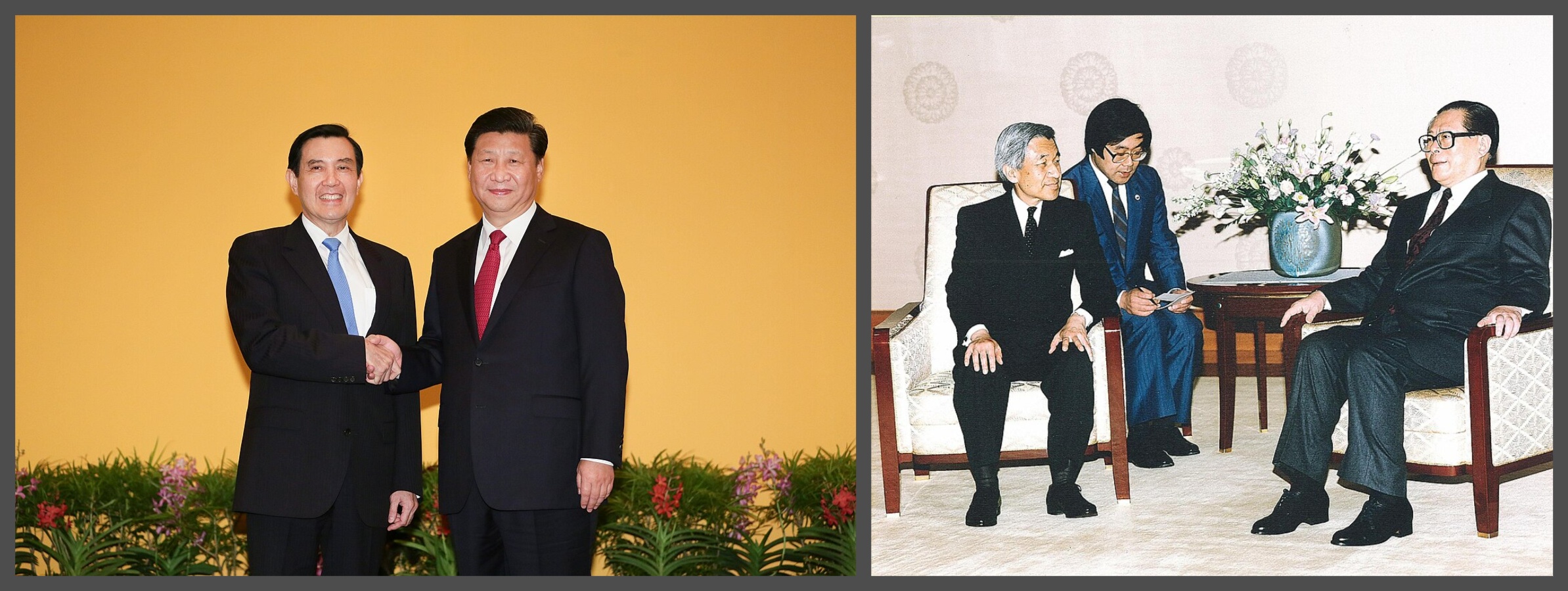
Image: Chinese President Xi Jinping meets with his Taiwanese counterpart Ma Ying-Jeou (left) in Singapore, 2015, and Japan's Emperor Akhihito meets Chinese leader Jiang Zemin (right), in April 1992
Moreover, this diplomatic storm is not happening in isolation. Japan and China are central pieces in a rapidly changing Indo-Pacific chessboard.
India, for instance, watches closely — Tokyo’s shift toward a more confrontational posture resonates deeply with New Delhi’s own strategic concerns about Chinese power. India-Japan cooperation — under frameworks like Quad — gains greater salience when Tokyo appears ready to back its words with strategic weight.
This crisis also presents an acid-test for American global leadership. For the United States, confrontation between its military ally and military adversary can be a moment of strategic opportunity or risk. Its support for Japan would underscore a commitment to deterring coercion but could also bring Washington into sharper rivalry with Beijing.
The balance is delicate: too aggressive backing risks direct confrontation, too passive a posture erodes deterrence.
A storm unleashed, but war not inevitable
What began with a bold parliamentary intervention by the Japanese Prime Minister has spiralled into a full-spectrum diplomatic confrontation. China’s response — summoning ambassadors, deploying coast guard, issuing travel advisories, and slapping economic bans — reveals how deeply threatened Beijing feels.
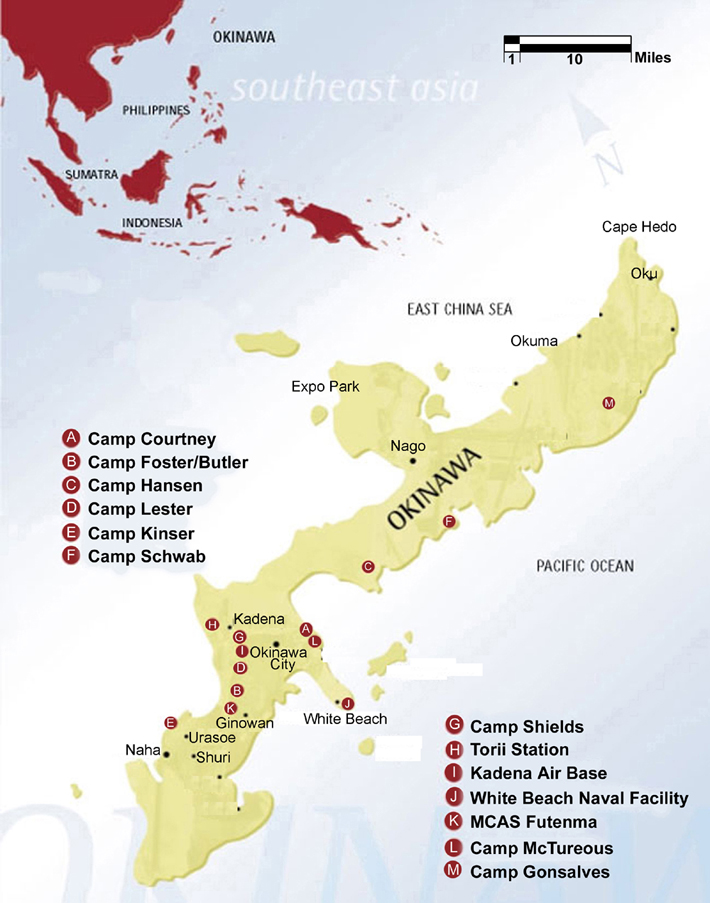
Image: Map showing US military bases in Okinawa, Japan
Tokyo, for its part, has also signalled that it is no longer willing to hide behind ambiguity; it is preparing both rhetorically and materially for a new security role.
This is where miscalculations, domestic political pressures, or unintended confrontations at sea could rapidly spin into danger. This is where the coming weeks will reveal whether Beijing and Tokyo can compartmentalise their differences or whether this episode will mark the start of a new cold peace in East Asia — one defined not by open hostility but by permanent, structural suspicion and coercion.
Either way, Takaichi’s remark has altered the diplomatic landscape forever. And that is why this diplomatic row, however small in origin, is destined to shape the wider Indo-Pacific strategic order for years to come.
Follow us on WhatsApp
Follow us on Facebook
Follow us on X @vudmedia
Follow us on Substack

.jpg)


_01.jpg)
.jpg)
_underway_in_heavy_seas_on_20_August_1953_(80-G-628675).jpg)
_underway_at_sea_on_10_March_1996.jpeg)
_01.jpg)


