
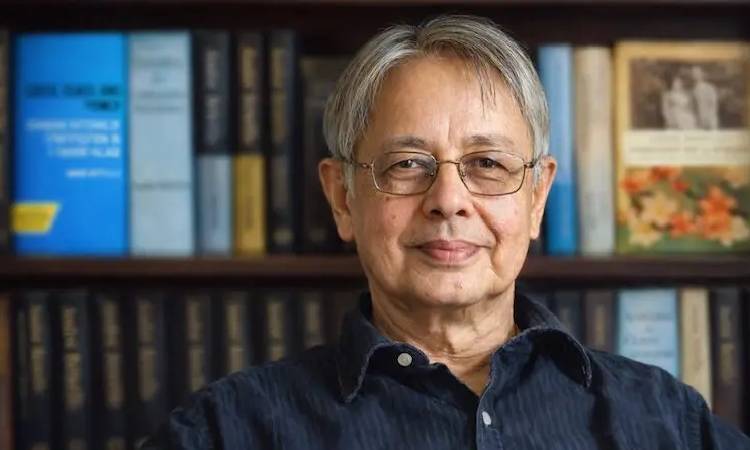
Note by Stig Toft Madsen: India has lost one of its great sociologists, André Beteillé. I have not known him personally, but I remember from my student days in Meerut that he was a respected, senior sociologist in the mid-1970s. He was only in the beginning of his forties, but he had already established himself as someone who could write meaningfully about village life and its modes of production and consumption without forcing it into the Marxist straitjacket. His ancestry remained hazy to me. I knew he had a French-sounding name, and I thought that he might hail from Pondicherry. I did not realise he was a Bengali from Chandernagore.
On 3 February 2026, the global sociological community mourned the loss of a preeminent scholar and teacher, André Béteille, who redefined our understanding of human society and its distinctiveness. Of all his works, Béteille is known for his “alternative methodology,” which challenged traditional views on social stratification.
In a televised dialogue with author Rajiv Mehrotra, Béteille distilled the essence of the sociological vocation into a single mission: to understand the specific circumstances under which social relations are formed. While many early post-independence sociologists focused on prescriptive models for social development, he argued that the scholar’s role is to present choices in circumstances of society.
Béteille believed that people change their ways of living only when circumstances allow, seeking better ways to organise their lives and relationships.
Béteille’s perspective was distinct in its scepticism of pure “social engineering.” He maintained that meaningful social change is driven not just by policy, but by the organic interplay between markets and civil society.
Crucially, he advocated protecting these spheres from undue outside interference. To him, sociology’s primary task would be to constantly negotiate with the evolving social systems, in the Indian context, through which the state, its markets, and democratic politics emerged. By balancing these forces, he established a framework for a society that evolves from within rather than being imposed from outside.
This tribute aims to explore the dialectical elements of his works, particularly his methodological approach.
The Pathbreaker
André Béteille’s illustrious career spanned over five decades of teaching and research at the University of Delhi’s Department of Sociology within the Delhi School of Economics.
His prolific academic output redefined the study of social stratification, encompassing seminal works on theories and methods, affirmative action, social inequality, and the complex interplay between caste, class, and power.
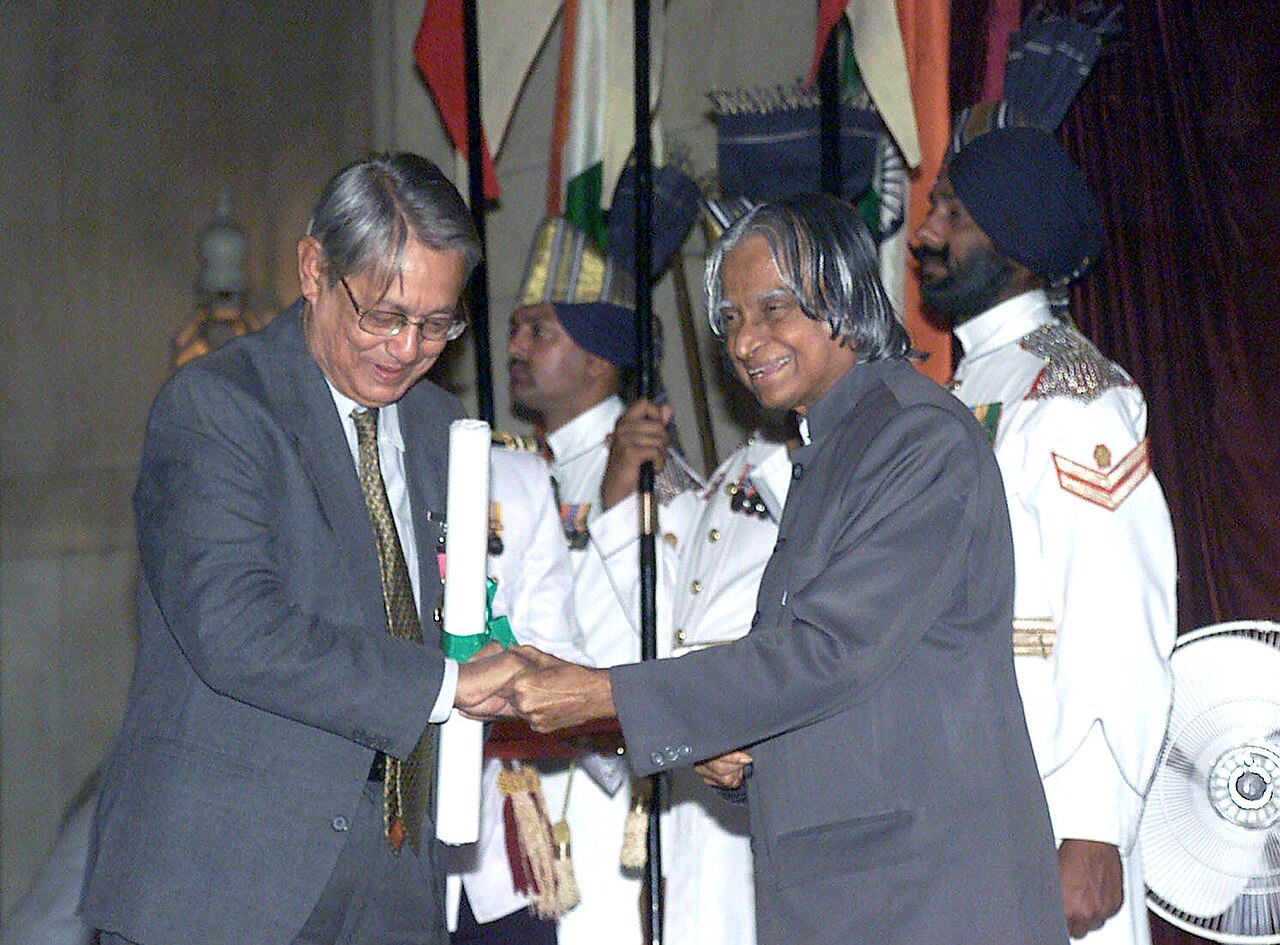
Dr Andre Beteille receives the Padma Bhushan from President Dr A P J Abdul Kalam on 28 March 2005
Beyond the classroom, he held several prestigious administrative roles, including serving as the Chairman of the Indian Council of Social Science Research (ICSSR), the Chancellor of North Eastern Hill University, and the Chairman of the Centre for Studies in Social Sciences, Kolkata.
In recognition of his intellectual depth, the government appointed him a National Research Professor in 2007, and he served as Professor Emeritus at the University of Delhi from 2003 onwards. A trailblazer in Indian academia, Béteille was among the inaugural recipients of the Jawaharlal Nehru Fellowship (1968–1970).
This fellowship granted him the freedom to pursue independent research, leading him to investigate the intricate agrarian relations in West Bengal during a period of significant social and political turmoil. His work during this era remains a cornerstone for understanding rural dynamics and the evolution of modern Indian society.
Scribbled thoughts
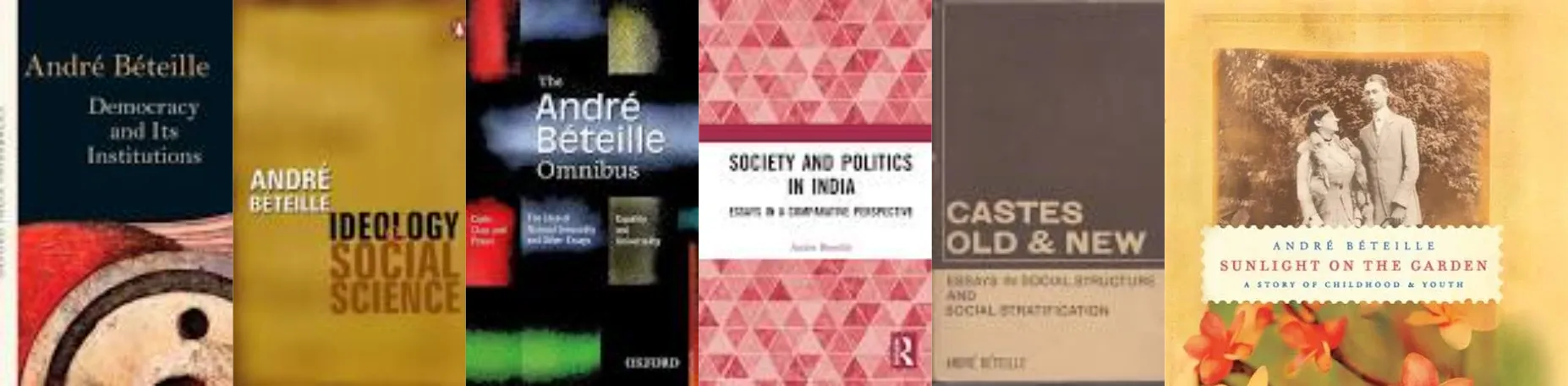
In his seminal work, Caste, Class, and Power: Changing Patterns of Stratification in a Tanjore Village, André Béteille demonstrated that the hierarchical arrangement of caste is not merely a textual category but a lived reality of privilege and subordination.
In the Tanjore village he studied, social interactions among Brahmins, non-Brahmins, and Adi-Dravidians (Untouchables), alongside economic relations among landowners, tenants, and labourers, formed a complex tapestry where traditional tenets met modern values.
Béteille identified two significant power shifts in Tamil Nadu: first, the transfer of power from one dominant caste to another; and second, the shift of power from the traditional caste structure toward modern institutions such as the Panchayat, thetaluka, and political parties.
As a sociologist and social anthropologist, Béteille’s vision extended beyond the state and the market, focusing on how village society interacts with institutions in a globalised era. He observed that traditional institutions like caste often shape the collective psyche by simultaneously resisting and adapting to global cultures, a tension he attributed to a “fear of modernity.”
Instead of placing absolute faith in a political system that frequently intervenes in the social fabric, he sought to nurture the organic elements of society. His intellectual journey was deeply rooted in his heritage: born in the French colony of Chandannagar to a French father and a Bengali mother, he grew up in a multicultural environment that sparked a lifelong curiosity about ethnicity, tribe, class, and gender.
Béteille’s transition from the “book view” to the “field view” of Indian society was heavily influenced by his mentor, M. N. Srinivas, and his early exposure to Nirmal Kumar Bose’s comparative approach to tribes. Although he began his studies in anthropology at Calcutta University, he eventually established himself as a premier sociologist who viewed the two disciplines as an integral whole.
Drawing heavily on Max Weber’s distinction between "status and power" rather than Marxist frameworks, he examined social stratification as a multifaceted process. In his autobiography, Ourselves and Others, he noted that while Western academic institutions are highly specialised, India offered a different, more generalised landscape for intellectual development.
Ultimately, Béteille argued that historical data and ethnographic research reveal the difficulty of categorising communities solely based on stages of cultural development. He believed that economic development and policy formulation are the true catalysts for social integration.
In Tanjore, he discovered that "backwardness" was deeply embedded in the social structure, where the interplay of stratification and mobility challenged the pursuit of equality.
Countering the dominant intellectual tradition
André Béteille was a prominent figure among those who employed contestation as a core intellectual tradition. This tradition, characterised by a rigorous preoccupation with formal theory, moved away from viewing society as a simple, unilinear construct. This shift allowed sociologists to move from the abstract hierarchy of Varna to the lived, regional complexities of Jati, using local languages to describe the nation’s intricate social stratification.
As a researcher and lecturer at the Delhi School of Economics, Béteille worked extensively on the intersections of caste, democracy, and modernity. Much of his work coincided with the era of the Mandal Commission and the subsequent debates over reservations for “backward castes.”
Béteille navigated these sensitive topics by noting that in the Indian context, “equality” is often acknowledged as a collective pursuit rather than an individualistic one. However, he remained cautious about over-generalising entire civilisations, insisting on nuanced distinctions between classes, religions, races, genders, and linguistic groups.
For example, his work acknowledged the massive scale of India's social engineering; the Mandal Commission eventually identified over 3,743 castes and communities as “Backward Classes,” representing approximately 52 per cent of the total population at the time.
Over time, Béteille’s analysis suggested that caste should not be viewed merely as an antithesis to democracy, but rather as an evolving participant in India’s democratic advancement. This anthropological inquiry further evolved by examining the “caste society” in direct relation to “tribal society,” breaking down rigid silos.
By shifting the focus to regional social realities, Béteille and his contemporaries transformed Indian sociology into a discipline capable of accounting for both the traditional roots and the modern aspirations of a diverse nation.
An unconventional sociologist
André Béteille organised his analyses to explore the intricate social relations of caste alongside the institutions of the democratic process, applying rigorous anthropological scrutiny to the Indian context.
He argued that sociology plays a vital role in public discourse, emphasising that academic endeavours must be both inclusive and methodologically sound to effectively bridge the gap between knowledge and practice.
Béteille’s approach reshaped the field’s orientation in India. While the village studies of the early 1950s primarily viewed economics, politics and religion as embedded within a morphological or structural framework of caste, Béteille identified other critical intervening factors.
In works such as Caste, Old and New, he introduced class and power as distinct pillars, examining how agrarian relations, specifically the interactions among landlords, tenants, and landless labourers, evolved across the country.
In his writings, Béteille also engaged with the concept of “Sanskritisation,” noting that while it was traditionally concerned with improving social status, the post-independence era transformed this pursuit. For many groups, Sanskritisation was a tool not just for status elevation, but also for political mobilisation and contesting privileged groups based on social identities.
Béteille argued that asserting identity is less about seeking a higher ritual rank and more about reinforcing the status of being historically disadvantaged to secure political gains. He drew a parallel to the United States of America, noting how Black Americans, who constitute approximately 12-14 per cent of the US population, have historically leveraged their identity to overcome systemic disadvantages through political organisation.
In this way, he moved beyond treating caste as a purely societal element, framing it instead as a political issue akin to “ethnicity.”
In his later works, Béteille advocated for a deeper understanding of “constitutional morality” within the study of human societies. He critically examined the weaknesses of Indian democracy, citing diminished influence of civil society, the subordination of political parties to dynastic and kinship ties, and the lack of diverse social representation within the judiciary.
Béteille maintained that the essential functioning of a pluralistic democracy depends on both anthropological rigour and a steadfast constitutional commitment. These elements, he has always contended, are necessary to navigate the persistent tensions between social identities, religious beliefs and competing political interests, in order to ensure that caste identity, even if changing in manifestation, is understood within the broader framework of a modernising nation.
Ultimately, André Béteille’s intellectual journey acts as a bridge between the traditional “book view” of Indian society and a modern, empirical “field view.”
By moving beyond a singular focus on caste to include the distinct aspects of class and power, he offered a strong framework for understanding a country in transition. His work showed that although the ways identity manifests may change, from ritual status to political ethnicity, the core social structures stay resilient.
Béteille’s legacy rests in his dedication to “constitutional morality” and his conviction that a healthy democracy depends on an active civil society. He emphasised that sociology is not just an academic pursuit but a crucial tool for managing the tensions of a diverse world.
Having closely observed the development of Indian politics and markets, his thorough anthropological analyses provided a blueprint for a society aiming for equality, rooted in the real experiences of its people rather than external plans.
Follow us on WhatsApp
Follow us on Facebook
Follow us on X @vudmedia
Follow us on Substack
