

It might be a sheer coincidence, or something more, that a suicide bomber killed over 12 people in Islamabad hours after a similar number of people were killed in a car bomb explosion outside the Red Fort last week. The irony is that Pakistan, known as the global hub of terrorism, blamed ‘India’s proxies’ for the suicide bombing even as India exercised restraint in pinning blame on Pakistan for the Red Fort blast, and a huge arms cache find on the same day, despite indications of the module’s links with Pakistan-based groups. Such paradoxes underline the constraints the Indian government could face on its assertions of another terror attack being treated as an ‘act of war.’ At the heart of these complexities is the apparent revival of ‘homegrown’ terror modules as a strategy by Pakistan, and as a means to maintain plausible deniability.
Home and text images are AI-generated and only for representational purposes
Banner: The scene after the terrorist attack on the CRPF convoy in Pulwama, February 2019, photo source: Kashmir Observer
The car that exploded with explosives outside the Red Fort early last week, by now designated as a terror attack, reminded Delhiites of the dreadful first decade of the millennium. During the second half of the 2000s, Delhi too, like many other cities of India, were regularly targeted by serial bomb blasts, with the explosions in Sarojini Nagar market during the festival season of 2005 seen to be one of the gruesome such attacks that left lasting scars on the city’s residents.
While cross-border terror groups have been operating against India from Pakistan soil since the 1980s, the years after the attack on the Indian Parliament in December 2001, and India’s subsequent Operation Parakram, saw Pakistan-backed terror groups developing ‘sleeper cells’ in India, which led to the phenomenon of ‘home-grown’ terror groups.
From the infamous Indian Mujahideen (IM) to an assortment of groups that were tracked to splinter sections of the proscribed Students Islamic Movement of India (SIMI), ‘home-grown’ terrorism operated like an octopus with youths being radicalised, recruited and trained in improvised explosive devices (IEDs) and permeating sleeper cells across the country.
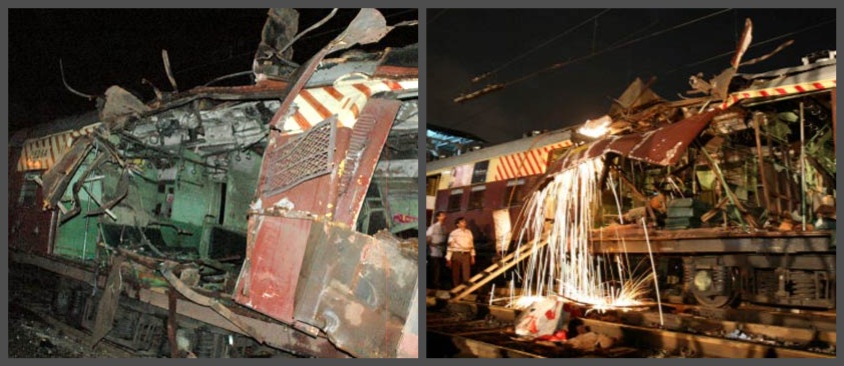
Image: Visuals of serial bomb blasts on trains in Mumbai in 2006, photo credit: Manoj Nair
The masterminds of these groups were often traced to handlers across the border, associated with Pakistan’s Inter-Services Intelligence (ISI), who had supplied financial and material resources. At one point, Indian security forces found youths from Kerala operating with militants in Jammu and Kashmir.
It was the nationwide crackdowns by the police forces and security agencies that led to key breakthroughs – including the arrest of the Bhatkal brothers, who were supposed to be heading the IM – tackling ‘home-grown’ groups and wiping out their sleeper cells.
However, this had not stopped the Pakistan-based groups – chiefly the Lashkar-e-Taiba (LeT) and the Jaish-e-Mohammed (JeM) from continuing their operations with the aid of ISI, which is resulted in many terrorist attacks over the past decade, including the attacks in Uri, Pathankot, Pulwama, and lately Pahalgam. Most of such attacks resulted in Indian military retaliation like the Surgical Strikes of 2016, the Balakot operations of 2019 and Operation Sindoor in 2025.
With the Financial Action Task Force putting Pakistan in the ‘grey list’ in 2018, and the Pakistani government placing curbs on terror groups operating on its soil, major groups formed proxies that continue the terror campaign against India. While the LeT was known to have formed The Resistance Front, JeM’s proxy turned out to be an entity called the Peoples’ Anti-Fascist Front (PAFF), both visibly taking new forms and names with an attempt to portray new identities.
The Islamic State Khorasan Province (ISKP), meanwhile, is also known to be deployed by the ISI for missions on multiple fronts – against India in the East, against Baluch rebels in Pakistan’s West and against the Tehreek-e-Taliban Pakistan (TTP), which is alleged to be operating from Afghanistan.
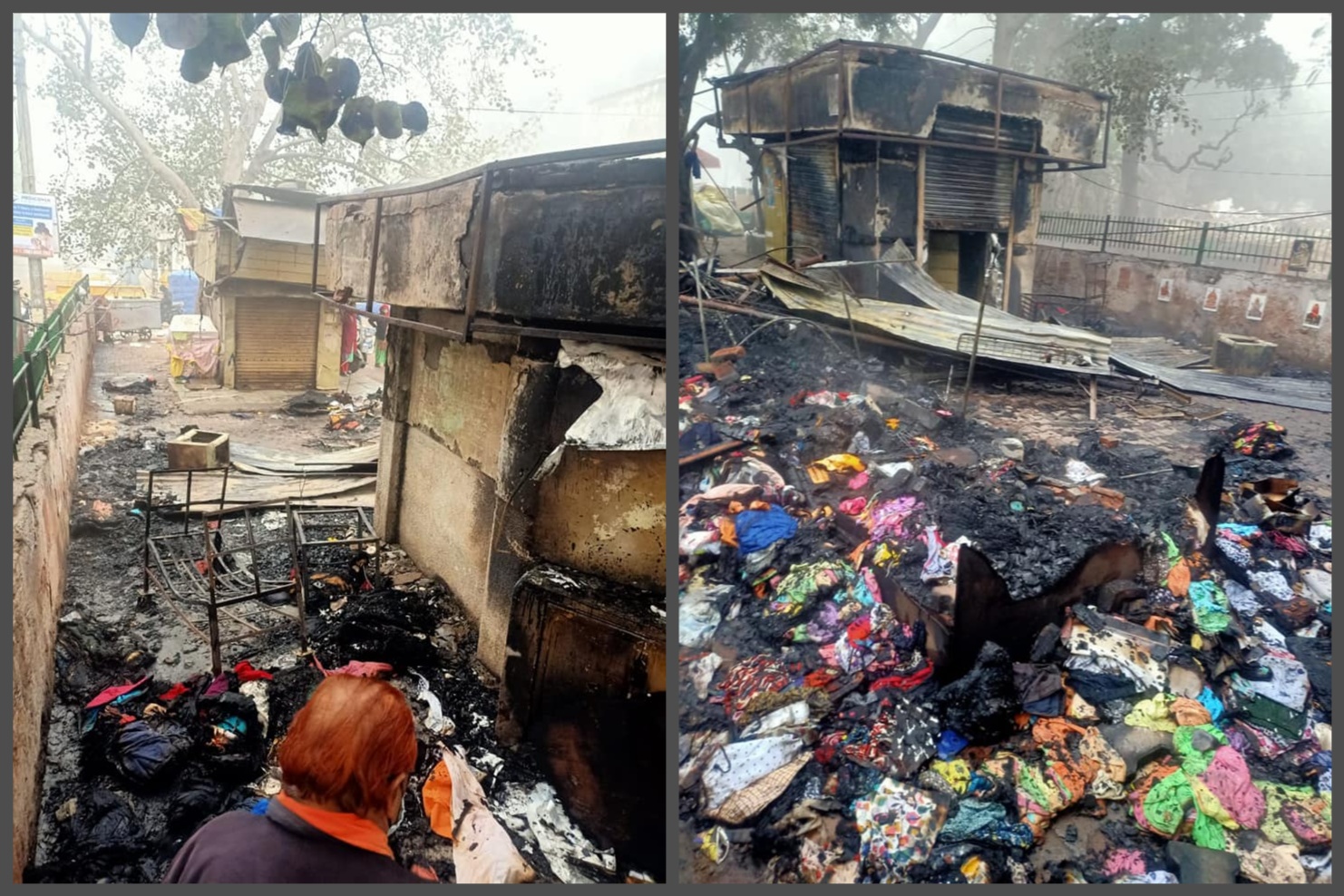
Image: Visuals from the bomb blasts in Sarojini Nagar Market, October 2005
India banned both these organisations, along with other proscribed organisations, in 2025, with others like the US following suit. Yet, the 2019 attack in Pulwama, which followed many terrorist strikes in J&K by the JeM in the previous months, was a testament to the fact that being on the FATF ‘grey list’ had not stopped the Pakistani security establishment from aiding these proxies in their operations against India.
The removal from the ‘grey list’ in 2022 seems to have emboldened Pakistan-based groups and their sponsors to mainstream their anti-India activities, as was evident in the Pahalgam operation. The change of guard in the Pakistan Army, with hardliner General Asim Munir taking charge, also became a shot-in-the-arm for this campaign.
The targeting and precision strikes by the Indian armed forces on the LeT and JeM headquarters in Muridke and Bahawalpur, respectively, during Operation Sindoor had reportedly impelled these groups to shift their camps to deeper locations inside Pakistan, in the provinces of Balochistan and Khyber Pakhtunkhwa (KPK).
Following Operation Sindoor, the JeM is reported to have formed a women’s wing to support the terrorist operations in J&K, and, possibly even in the Indian heartland. Called the “Jamaat-ul-Mominaat” (assembly of the women faithful), the wing is headed by Azhar’s two sisters, Sadiya Azhar and Samaira Azhar. In a 21-minute video to a gathering, Azhar is stated to have detailed the plans for recruitment and indoctrination of the women cadre, on the lines of training for the JeM men, and declaring that the women will “go straight to paradise,” by participating in the ‘global jihad.’
While the formation of the women’s group was reported in late October, it might come as a shocker that the Lucknow-based lady doctor arrested as part of the arms cache find in Faridabad in the National Capital Region (NCR), hours before the Red Fort blast, was initially stated in media reports as being a member of this JeM, though not clear if she was part of this newly-formed women’s squad.
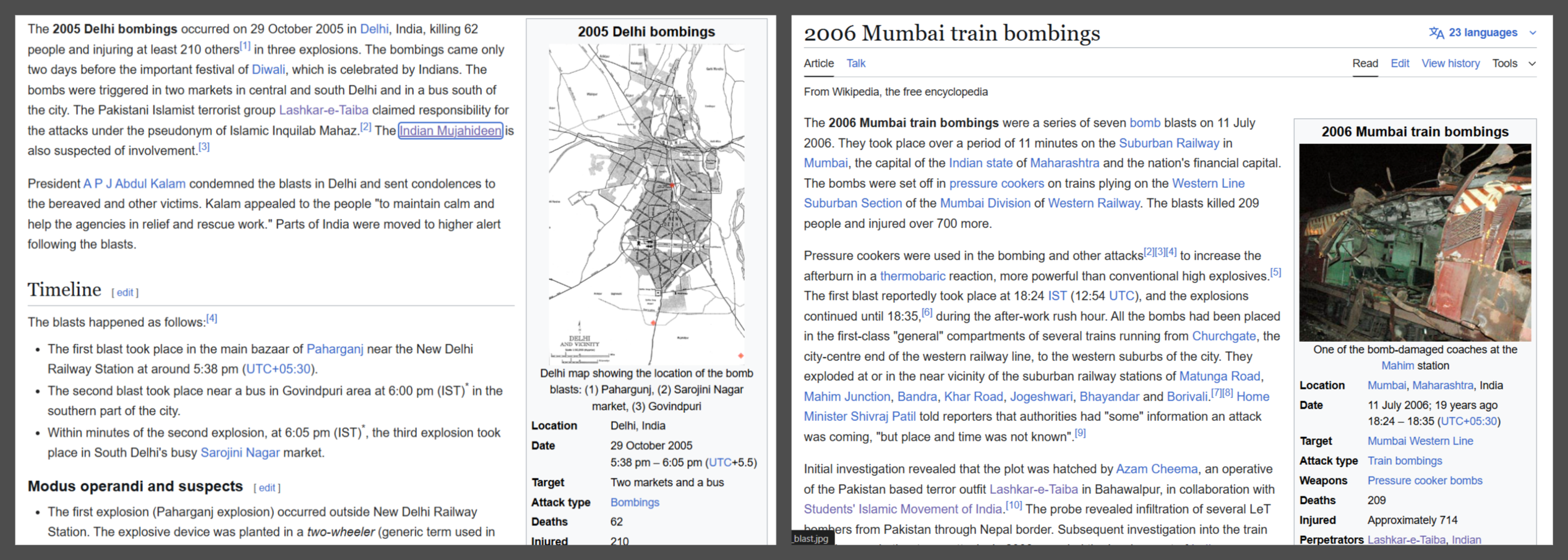
Is ‘home-grown’ terror back?
Initial investigations into the Faridabad arms cache and the Red Fort blast, as reported in the national media, indicate the return of the ‘sleeper cells’ phenomenon and the strategy of Pakistan-based terror groups to revive the ‘home-grown’ terrorist networks through theological outreach, indoctrination, militarising and, if possible, even regimenting through sleeper cells and disparate, organised groups.
The signs that emerge from the arms cache and the Red Fort blast are disconcerting for a handful of reasons.
White collar and coat: The revelation that the people associated with the ‘sleeper cell’ that stored the arms cache and triggered the car explosion were medical practitioners led to the usage of the ‘white collar’ tag to describe the latest round of home-grown terrorist modules. The more apt tag, however, could be ‘white coat’ as home-grown groups have earlier indoctrinated engineers or educated youths with technical qualifications to join the jihadi groups that were operating within the country.
The NCR-Lucknow module, hence, would be the first instance of a group of doctors being roped in for a terrorist module. Ongoing investigations may reveal whether even students and faculty of the private university in Faridabad, as well as other institutions where some of these accused have worked or studied, have also been indoctrinated in a similar fashion.
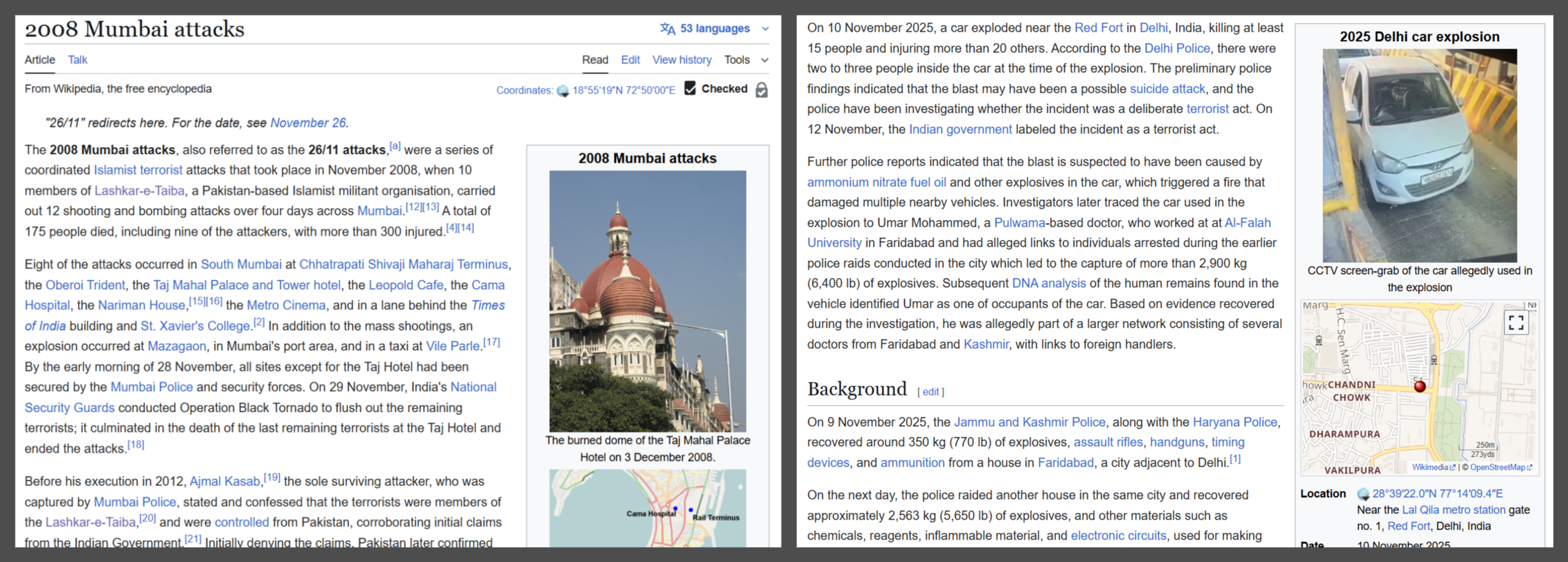
If seen in the ‘white collar’ perspective, the scope of indoctrination might extend to technical institutes, scientific institutions and even the corporate sector. However, to place all Kashmiris or members of minority communities under a scanner owing to one module will be self-defeating, notwithstanding the fact that sections of the Hindutva right will use such instances to drive further alienation and social ostracisation.
Car bomb comes to town: The blast outside Red Fort was the first such instance of a car bomb being exploded as part of a terrorist plot in the national capital, with the 2019 attack on the CRPF convoy in Pulwama stated to be by a vehicle-borne suicide bomber.
This has dangerous proportions, especially in a huge city like Delhi, which has over 9 million vehicles. According to news reports, the perpetrator, identified as Dr Umar Nabi, had driven for over 11 hours across the national capital before pulling the trigger (be it timed or accidental) around late evening during peak rush hour traffic.
Multiple reports indicate that the triggering might be a result of a panic action by the perpetrators of the arms cache haul earlier on the same day in Faridabad. There were reports pointing to one of the occupants of the car exiting before the ‘lone wolf’ went on to explode near the Red Fort, before parking at a nearby metro station for many hours.
Car bombs have been a menace for counterterrorism, with many global terror hotspots witnessing the usage of passenger vehicles as a tool to create mass casualties and urban catastrophes. In the case of the Red Fort blast, the car could have easily passed through sensitive locations like Raisina Hill or thickly populated areas without detection and could have caused massive destruction to lives and property.
Any amount of barricading and methodical vehicular monitoring will be difficult in metropolitan cities, which makes it easier for lone wolves to carry out such attacks, with only effective intelligence operations backed by a robust CCTV monitoring system able to provide realistic mitigation opportunities.
It may be recalled that during the first decade of the millennium, when serial bomb attacks were frequent, IM operatives were seen to have placed IEDs in buses, marketplaces and even dustbins in crowded places, which evidently are the easiest ways to execute such plans without much scope for detection.
Apart from a return of such crude methods, the possibility of using passenger vehicles, including two-wheelers or planting devices in civilian and commercial vehicles, including one that could become innocuous carriers, will be among the methods that terror modules could attempt in order to execute their plans for urban chaos and rampage.
Furthermore, investigative agencies have revealed that groups like the JeM might also use tools like drones, which are now widely available in the open market, to target urban centres.
Hence, the scenarios for the security agencies to contemplate are vast, and the potential for use of such a variety of methods and instruments is likely to be the greater stress on the security grid in the days to come.
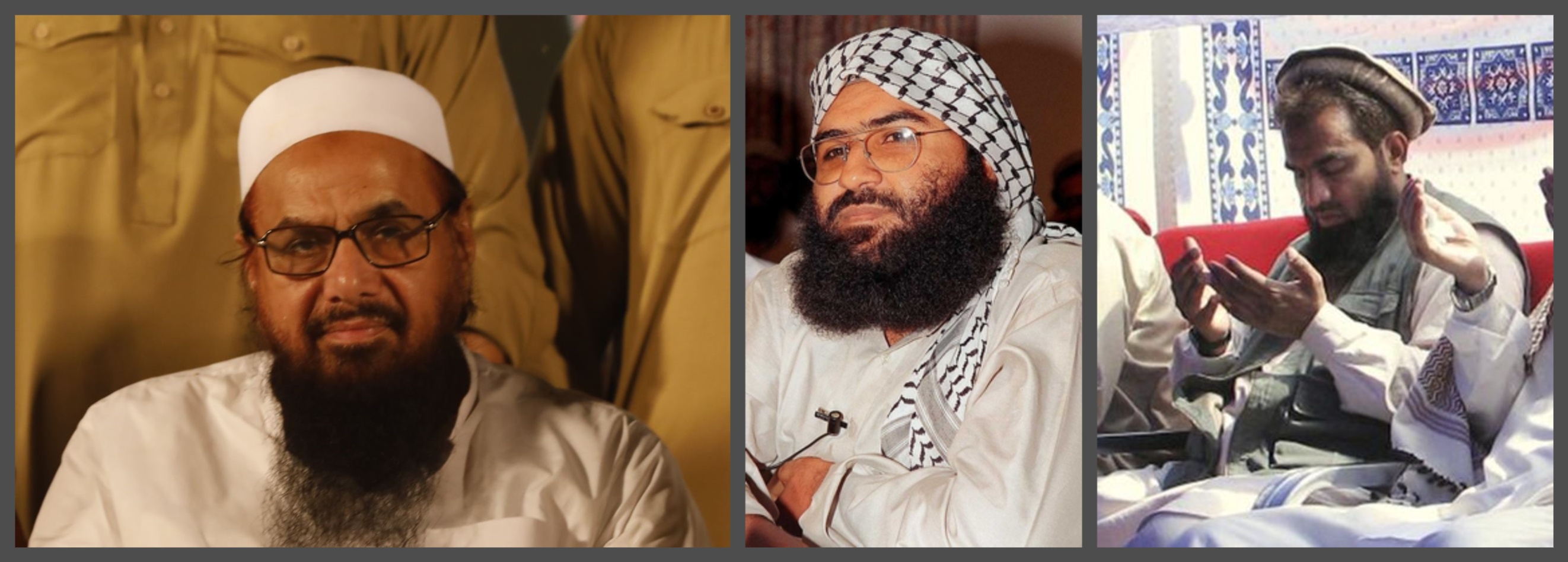
Image: The terror mastermind trio of Pakistan - Hafiz Saeed of LeT (left), Azhar Masood of JeM (centre) and Zakiur Rehman Lakhvi (right), of LeT
Radicalisation is a Damocles Sword: Media reports suggest that the medical practitioners who formed the sleeper cell behind the arms cache and Red Fort blast were indoctrinated by a cleric in Kashmir. Media reports indicate that it was an alert officer of the J&K police who detected the module’s trail when he followed up on JeM posters in his jurisdiction.
That a lady doctor from Lucknow was found to be part of the module suggested a larger network was being built, without some reports quoting investigators as indicating that she was the kingpin of the module. Days after the blast, J&K police also reportedly arrested more suspected members of this module and recovered an arms cache, including 2900 kg of IED materials, from hideouts in Kashmir.
Investigators have reportedly established that they were part of a JeM project to establish modules or sleeper cells in India. With their hubs being destroyed in Operation Sindoor and key members taken out in the precision strikes, it is a foregone conclusion that both JeM and LeT, as well as their proxies, would seek to unleash a terror campaign by targeting population centres or major cities across India.
Going by the ISI propaganda and fake messaging that is rampant on social media, the attempt will be to target disenchanted youth, especially from sections that have been at the receiving end of the Hindutva surge over the past decade.
The revelation about even educated men and women from Kashmir, as well as the Hindi heartland, could be ‘brainwashed’ into jihadi activities, is a harbinger of how handlers from Pakistan will be seeking to exploit vulnerable sections of communities that are resentful of the political environment in the country.
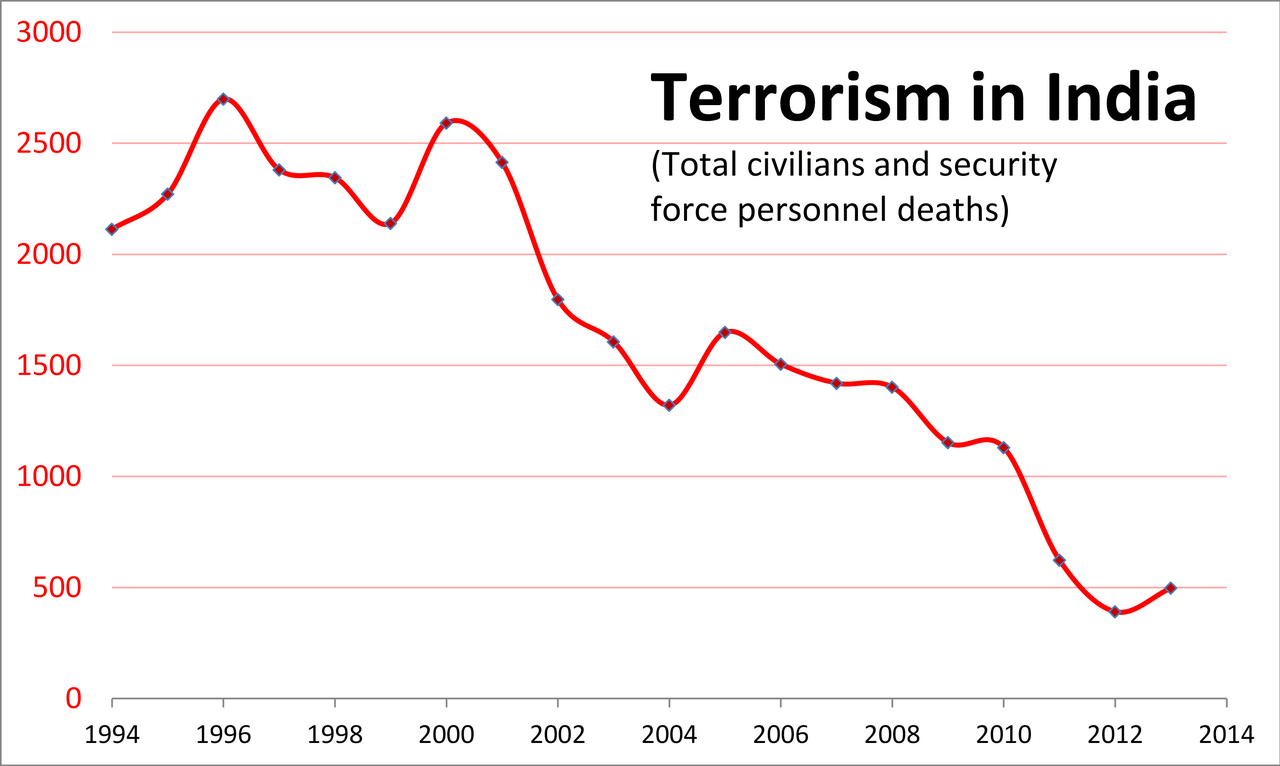
Image: Graph showing civilian and security personnel deaths from terrorism in India, 1994-2014, courtesy: AmyNorth
Religious radicalisation was a serious socio-political and national security challenge in the first decades of the millennium, especially owing to the global reverberations of the 9/11 attacks, the rise of al Qaeda, Islamic State of Iraq and the Levant (ISIS) and Pakistan’s emergence as a global hub of terrorism. Within the country, the scars of the Babri Masjid demolition and the rise of Hindutva were among the key catalysts that drove Islamic fundamentalism and radicalisation.
The Indian government had then combined a proactive internal security strategy along with active community engagement to redress these challenges in the previous decade.
However, it remains a fact that the risk of radicalisation remains potent when various sections are vulnerable to being exploited in the name of historical grievances and religious polarisation. At least, this is evident from the fact that the Faridabad-Lucknow module had reportedly planned strikes across India on the upcoming anniversary of the Babri Masjid demolition.
Why no response to ‘act of war’?
In the immediate hours after the Red Fort blast, television channels quoted the government sources as denying any link between the blast and the arms cache find earlier in the day in Faridabad. Hours later, it was found that the car was driven by a doctor identified with the same module. Within the next few days, the national media quoted investigators to confirm the module as being part of a JeM project.
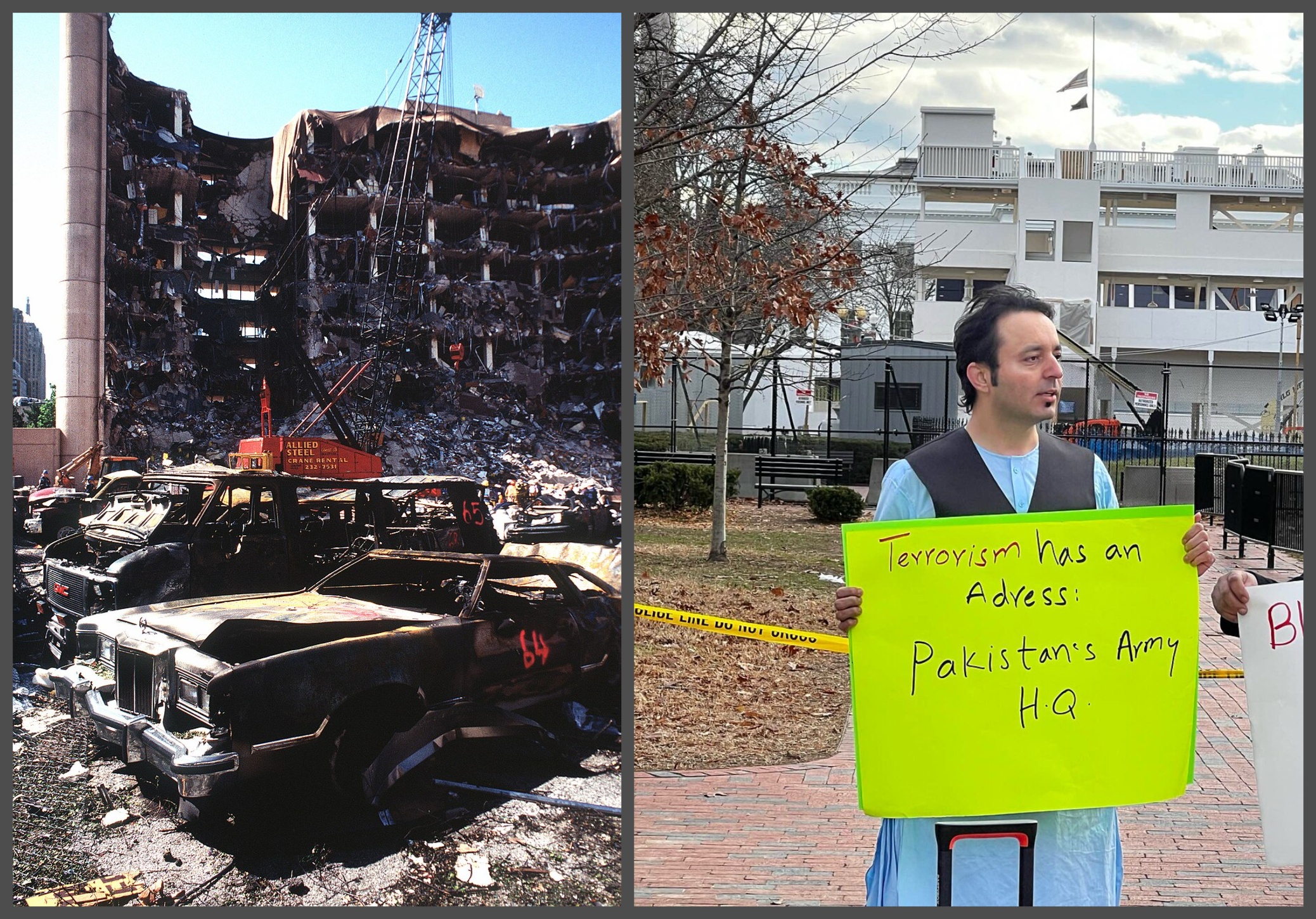
Image: Destruction after a truck bombing in Oklahoma City in 1995 (left), and an Afghan (right) protesting against Pakistan-backed terrorism in Washington, photo courtesy: Wikipedia
In the days after the four-day conflict with Pakistan over the Pahalgam massacre, the Prime Minister had proclaimed that any future terror would be treated as an ‘act of war.’ In subsequent months, the senior ministers as well as senior officials of the Indian armed forces had declared that Operation Sindoor “is not over,” and that future acts of terrorism on Indian soil will invite a stern military response.
However, the Indian government is yet to officially pin the blame on Pakistan-based groups for the Red Fort blast, with the Union Cabinet resolution of November 12th terming it as an act by “anti-national forces,” without specifying any particular groups.
“The country has witnessed a heinous terror incident, perpetrated by anti-national forces, through a car explosion near the Red Fort on the evening of 10 November 2025. The explosion resulted in multiple fatalities, and caused injuries to several others,” stated the Cabinet resolution, which reiterates “India’s unwavering commitment to a policy of zero tolerance towards terrorism in all its forms and manifestations.”
The resolution also instructs the investigation to be pursued with “utmost urgency and professionalism so that the perpetrators, their collaborators, and their sponsors are identified and brought to justice without delay.”
The question is moot on why the Indian government refused to pin the blame on Pakistan-based groups and was reluctant to declare it as an “act of war.” Government sources who spoke to The Polity, on condition of anonymity, said that investigations are still on and, hence, it is too early to attribute the source and perpetrators behind the blast, especially since Indian nationals, or home-grown groups, were behind the module and the blast.
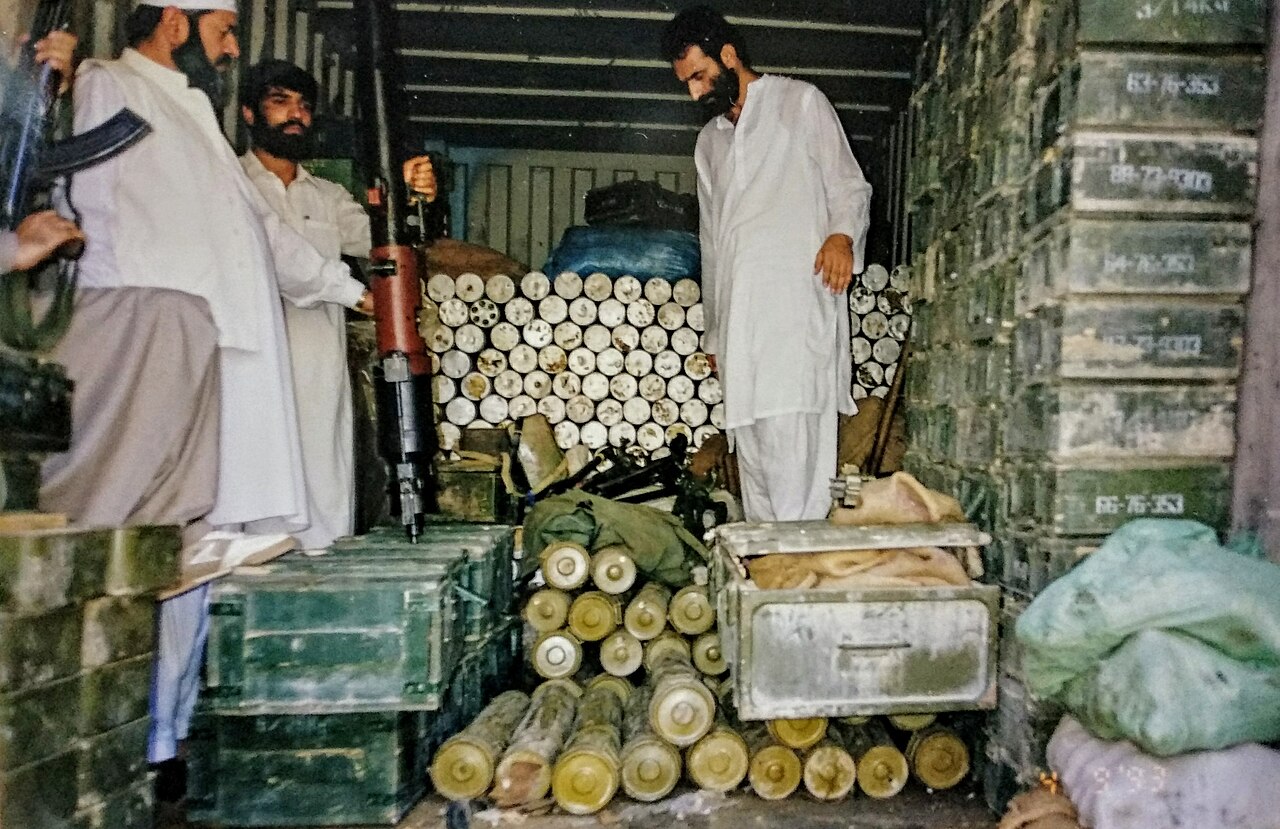
Image: Hizbul Mujahideen leader Abdul Majeed Dar with an arms cache in an undated picture, photo credit: Wikimedia Commons
There is, however, a general feeling in government circles that a declaration of ‘act of war’ will entail India having to prepare for another military mobilisation and precision strikes, even as opposition parties have asked why the government has not declared the blast as ‘act of war,’ and whether the doctrine still stands.
On the other hand, the Indian Chief of Army Staff, General Upendra Dwivedi, had made a statement that indicated a girding of the loins by the armed forces. Terming Operation Sindoor as “just a trailer which ended in 88 hours,” the CAS took Pakistan by name to declare that “we will teach it how to behave responsibly with a neighbouring nation,” adding that terrorists and their sponsors will be treated alike.
While the investigators are still connecting the dots that could establish the cross-border links, the complexity lies in the fact that the perpetrators and related seizures are tied to the home-grown modules and Indian nationals, notwithstanding the genesis of investigations leading to the arms cache recovery, which was linked to JeM elements in the Kashmir valley.
Meanwhile, a leader from Pakistan-occupied Jammu and Kashmir (PoJ&K), Chaudhry Anwarul Haq, claimed that Pakistan had attacked India from the “Red Fort to the forest of Kashmir.” “I had earlier said that if you (India) keep bleeding Baluchistan, we will strike India from Red Fort to the forests of Kashmir, and our Shaheens have done it,” Haq is quoted as stating.
Irrespective of whether the cross-border links are established in a way that could rationale a military action, the discovery of the Faridabad-Lucknow module and its denouement in the form of the arrests and the blast is an indication that the ISI is reverting to the strategy of instigating a ‘home-grown’ group in order to maintain plausible deniability and avoid direct military confrontation with India.
On the other hand, there are sections that feel that India will respond through the Red Fort blast through an unconventional or ‘covert’ manner. As a matter of fact, hours after the arms cache recovery in Faridabad and the blast outside Red Fort, a suicide bomber exploded outside an Islamabad court, killing 12, almost the same number of casualties as in the Red Fort explosion.
Unlike the restraint India exercised, Pakistan squarely blamed India’s proxies for the attack, which India termed as baseless and as a diversionary ploy. While the Pakistan media reported the Jumaat Ul Ahrar, assumed to be a splinter group of the Tehrik-e-Taliban Pakistan (TTP), to have claimed responsibility, the latter denied any role in the attack.
It might sound amusing that Pakistan now alleges the Taliban factions to be India’s proxies, thanks to the recent reconciliation between Delhi and the Taliban regime in Kabul, following the latter’s fallout with its erstwhile mentor.
However, many observers feel that the Indian intelligence has now made deep inroads into the region with the ability to endow decapacitating strikes on terror leaderships and network operating inside Pakistan, without, however, having to seek similar routes of terrorist methods and mass killing events.
Nonetheless, the irony of these events of last week is that Pakistan, once known to be a global hub of terrorism, is now openly blaming India for terror attacks in its territory, whereas India, despite being conscious of the Pakistani link to the renewed home-grown terror scourge, has restrained itself from naming Pakistan as the source and catalyst of the Red Fort blast.
Follow us on WhatsApp
Follow us on Facebook
Follow us on X @vudmedia
Follow us on Substack


