
When the Narendra Modi government launched the Ministry of Cooperation in 2021, with Amit Shah as its minister, many eyebrows were raised. With deep influence and inroads in rural India, the cooperative sector is a key vehicle to shape social and developmental outcomes, with inherent political spin-offs. No wonder then that detractors view the 2025 National Cooperation Policy as Delhi's overreach, with states like Kerala fearing its vibrant cooperative sector as vulnerable to the Centre’s political interferences, says Professor V. Biju Kumar, who points out that such fears are rooted in the inherent politicisation of the sector.
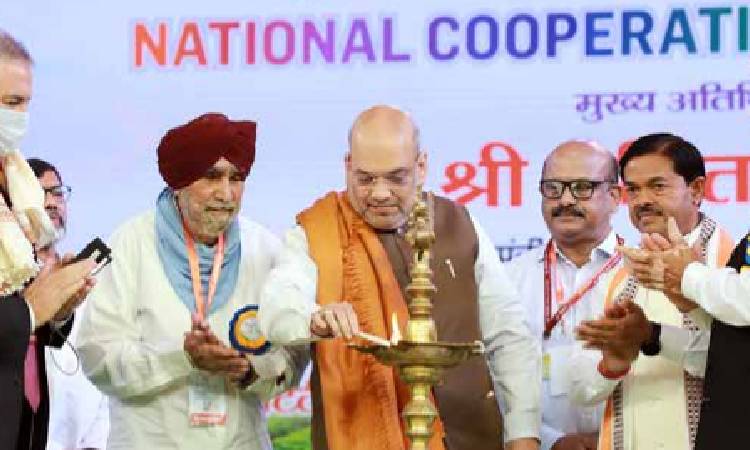
Home and text page images: Home and Cooperation Minister Amit Shah at various events of the Ministry of Cooperation
Banner image: Workers at a unit of the Kerala Dinesh Beedi Cooperative
The National Cooperation Policy (NCP) 2025, announced on 2 July 2025 by Amit Shah, the Union Minister for Cooperatives, is the second of its kind and replaces the first one, brought out in 2002 during the Atal Bihari Vajpayee government.
The objective of the NCP 2002 was to facilitate all-round development of the cooperatives in the country and ensure their functioning based on “basic cooperative values and principles” enshrined in the declaration of the International Cooperative Alliance Congress, 1995. Apart from revitalising the cooperative structure, particularly in the agricultural credit sector, the policy aimed at reducing the regional imbalances through provisions of support measures by the central and state governments.

Image: Women pouring milk into containers (left) at a collection unit of the Gujarat Cooperative Milk Marketing Federation Limited (right)
The NCP 2025, premised on the goal of Sahkar se Samriddhi, declares the roadmap for the government's vision to Viksit Bharat 2047. It focuses on legal reforms, digitalisation, and financial empowerment, besides promoting inclusive participation of women, youths, and the Scheduled Castes and Tribes.
The latest policy has the declared vision of strengthening the cooperative movement across India, encouraging cooperatives to create new infrastructure and a vibrant, self-sustaining ecosystem, promoting inclusivity, and encouraging the entry of cooperatives in new and emerging sectors. It also envisions making cooperative institutions as inclusive and decentralised engines of development and shaping the young generation for cooperative growth.
Accordingly, the policy holistically envisages the development of a cooperative business ecosystem.
The NCP 2025 recognises the need to promote the cooperatives as an effective instrument for economic growth by virtue of their inherent characteristics of mutuality, community orientation, equitable distribution of profits, and democratic functioning. It also acknowledges the critical role of national federations/unions in the overall development and growth of the cooperative sector.
The Policy also promises to create an enabling legal, economic, and institutional framework that will strengthen and deepen the cooperative movement at the grassroots level. This, the Policy claims, will facilitate the transformation of cooperative enterprises into professionally managed, transparent, technology-enabled, vibrant, and responsive economic entities to support production by the masses.
These objectives are supposed to be achieved through six strategic mission pillars, such as:
Soon after the release of NCP 2025, voices of opposition and protest came up from various quarters. The Samyukt Kisan Morcha (SKM), a platform of several farmers’ organisations, for instance, alleged that the NCP violates the Constitution by centralising power and snatching rights of state governments.

Image: Collage photos of women participants of self-help groups (SHGs)
Alleging that the new policy is intended to “seize people’s resources, and make cooperatives serve corporate interests,” the SKM contended that it lacks the perspective to protect the rights of farmers and workers on livelihood, minimum support price, minimum wage and sharing of surplus.
The farmer's body pointed to the Supreme Court ruling that declared the 97th Amendment IXB – which provided a special status to cooperative societies, with the right to form one being made a fundamental right – as unconstitutional as it pertains to cooperative societies within a single state. The apex court, according to the SKM, found that part of the amendment required ratification by at least half of the State legislatures as per Article 368(2) of the Constitution, which was not done.
While opposition leaders had protested the formation of the Ministry of Cooperation in 2021, the dissenting voices on the NCP 2025 are not as vocal from the opposition-ruled states, other than in the case of Kerala, which has a vibrant cooperative sector. Why is Kerala opposed to the NCP?
Kerala’s difficult relations with the centre
It would be relevant to note that the Left Front-led Kerala government has, for quite some time, been at loggerheads with the Union Government, especially on issues that allegedly amount to infringing on state rights and eroding cooperative federalism. Such confrontation is not merely to replicate the ideological imperatives of the ruling parties at the state and union levels, but also to accommodate states’ interests in the Union government’s policies and approaches.
Kerala’s confrontation with the Centre in recent years has mostly centred on fiscal policies, and the Centre has been alleged to be denying its financial share. The state government had raised concerns over the Goods and Services Taxes (GST) dues and compensation, public debt, off-budget borrowing and disbursal of disaster relief funds.
In recent months, Kerala has been confronted with a serious liquidity crisis attributed to the declining share of union transfers. Kerala’s share in the Central divisible pool steadily declined from 3.875 per cent during the Tenth Finance Commission to 1.925 per cent. This affected Kerala’s fiscal management and capital expenditures, besides its impact on social security initiatives, as in the case of pensions to 62 lakh beneficiaries.
The Constitution of India decentralises revenue and resource allocation between the Union and the states. The 15th Finance Commission gives 15 per cent weightage to the state’s population for calculating its share from the Union government’s divisible pool of taxes.
The five southern states together collected more than a quarter of the country's direct taxes and 28.5 per cent of its goods and services. They also saw consistent net direct tax collection growth from the fiscal year 2018-19 to 2022-23. According to various assessments, for every rupee collected in Karnataka, only 0.15 rupees is returned to that state, with Tamil Nadu receiving only 0.29 per cent and Kerala 0.57 per cent.
While the Finance Commission decides the funds for the union government, states have no control over development funds. The transition from a planned economy to a market economy and the GST made an adverse impact on the states in South India.
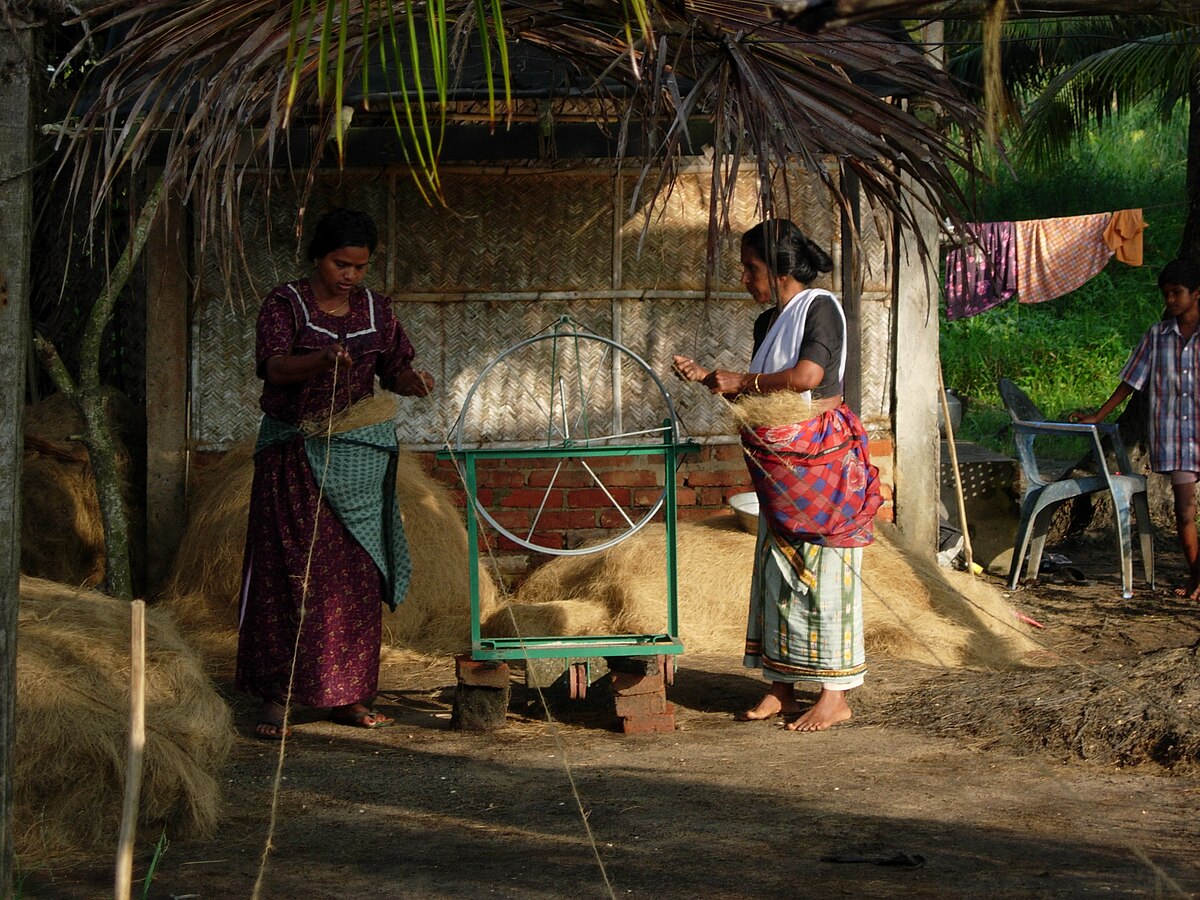
Image: Women workers at a coir unit in Kerala, photo credit: Wikipedia
The introduction of GST is alleged to have created a precarious situation in the state finances. The revenue of the states from sales taxes disappeared with the states having no role in GST, and seen to be incurring losses as a result of the GST’s implementation. States have no role in determining the subnational components of the GST.
However, the centre-state confrontations are seen as reflecting the democratic spirit of the politics of bargaining and accommodating the interests of federating units in the constitutional framework, as it ultimately leads to democratic dialogue and negotiations at the governmental level.
Why Kerala opposes the NCP?
The Kerala government views the NCP as unconstitutional, against the federal spirit, and the Union government's incursions on the state’s rights, and a challenge to the state's development. Kerala sees the Union government's undue interference in state cooperatives – through the demonetisation of 2016 and the creation of the Union Ministry for Cooperation in 2021, supposedly to strengthen the cooperative movement across India, but seen to be having political underpinnings.
Since then, the Union government has been closely monitoring the cooperatives across the country, especially those controlled by the opposition parties, claiming that such involvement is essential for cleansing the corrupt cooperatives. On the other hand, the union government is supposedly viewing the cooperative sector in the opposition-ruled states as being highly politicised.
In Kerala, the Communist Party of India (Marxist) is alleged to be dominating and monopolising the cooperative sector.

Image: Farmer Producer Organisations (FPO) in Tamil Nadu (left) and Kerala (right)
Second, the Multi-State Cooperative Societies (Amendment) Bill, 2023, introduced by the Union government, aimed at amending the same legislation of 2002. The centre then contended that the Act would strengthen governance, enhance transparency in functioning, increase multi-state cooperative societies, increase accountability, and reform the electoral process and regular democratic elections at bodies to prevent nepotism in appointments.
Further, the Amendment also envisaged the merger of the existing state cooperative societies with the multi-state bodies.
Kerala views this Act as against the cooperative principles of autonomy and independence. With these multi-state bodies able to offer higher interest than the cooperative societies in Kerala, the latter feared that it might bring down deposits in the state’s cooperative sector.
Third, Kerala expressed strong resentment against the Union government’s recent decision to prepare a national cooperative database.
Such actions of the Union government, it was argued, would dilute the Seventh Schedule (Entry 32) of the Constitution, which lists cooperatives as an in-state subject. Moreover, through NCP 2025, it is widely felt that the Union government wants to push the ‘Gujarat cooperative model’ across India, especially in Kerala.
Furthermore, the NCP was seen to be challenging the spirit of the Kerala Cooperative Act 1969, which brought a uniform law replacing disparate Travancore, Cochin, and Malabar rules.
Kerala’s vibrant cooperative model
Kerala is known for its strong cooperative movement and a vibrant cooperative sector. Like social and political movements, cooperative movements have made an indelible mark on the state’s globally acknowledged development model.
Kerala's cooperatives constitute India's highest and account for about 17 per cent of India's total cooperative membership, giving employment to many people in rural and urban areas. Known for its democratisation and inclusivity, access to credit for small farmers, ensuring fair prices through cooperatives, labour welfare, and contributing to poverty reduction and overall rural development, it has a legacy of egalitarian politics, political action, and people's movement.
Kerala cooperatives are closely linked with the anti-colonial and anti-caste mobilisations, social reform movements, and subsequent class mobilisations as well.
The state has over 23,000 registered cooperative societies as of March 2023, contributing approximately 6-8 per cent to the state’s total Gross Domestic Product (GDP). Also, Kerala cooperatives work in diverse fields – be it agricultural, dairy, fisheries, banking and credit, housing, industrial and artisans, consumers, workers, writers and Publications, consumer details, cafe, etc.

Image: Kudumbashree units at work
Cooperatives in the state serve the rural and urban people by disbursing credit, small loans, investment, and gold loans, which have emerged as a great source of solace to the rural people. Many cooperatives are also empowering the rural people and strengthening governance in the state. Such banks in Kerala grant over 70 per cent of agricultural loans, with their holistic activities in the agricultural sector ensuring food security, particularly in rural Kerala.
Over the years, the state produced many successful cooperative models. The Brahmagiri Development Society (BDS), a social alliance of peasants and workers, in Wayanad district, is recognised even by the Food and Agriculture Organisation of the United Nations. Similarly, the Uralungal Labour Contract Cooperative Society (ULCCS), which made strides in Kerala’s construction sector, is seen as an ideal example of a workers’ cooperative.
The MILMA (Kerala Cooperative Milk Marketing Federation), which mobilised the dairy farmers in the state, Kerala Dinesh Beedi Cooperative, India Coffee House, which had a popular chain of restaurants across India, and the Sahitya Pravarthaka Cooperative Society in the publishing sector are among the unique models of cooperative societies in and from Kerala which have made their valuable imprints not just in the state’s social, cultural and economic development, but also created national footprints.
The Women's Self-Help Micro-Finance Cooperatives also exemplify the achievements of the Kerala cooperative sectors. A collective movement that emerged from the Self-Help Groups (SHGs) with the initiative of the state government is the Kudumbashree, though not a cooperative as such, is seen as one of the most effective collectives for women empowerment, poverty alleviation and rural development.
Further, the cooperative banks are often seen as the backbone of Kerala's rural and semi-urban local economies and are known for their governance, member welfare, and social mission. They provide credit for agriculture and thereby contribute to the rural economy.
The Kerala State Cooperative Bank, popularly known as the Kerala Bank, functioning under the RBI’s close monitoring and known for its financial inclusion and community banking, is yet another stellar example of the Kerala cooperative sector. Recently, the Kerala government initiated the Cooperative Revival Fund Scheme 2024, providing financial assistance through grants and loans to revive financially weaker cooperatives.

Image: The headquarters of the Uralungal Labour Contract Cooperative Society (left) and a Delhi office of the Indian Coffee House (right)
Yet, this sector has taken a beating...
Though Kerala is known for its vibrant cooperative sector, it is often criticised for its overt government intervention, acute partisanship and politicisation. Issues like lack of professional management, aggressive trade unionism, and low resource base are also often cited as among the shortcomings of the sector in the state.
The political appointment of administrative members in the cooperatives, political interference in banks, recurring financial irregularities in cooperatives, growing instances of corruption, favouritism, nepotism, etc, have considerably dented the image of the cooperatives in the state, of late.
A series of scams in the Karuvannur Cooperative Bank in Trissur district and financial irregularities in the Brahmagiri Development Society in Wayanad district, allegedly involving the CPI(M) leaders, have considerably caused public resentment and concerns about the cooperative sector in Kerala.
Yet, despite these scars, the Kerala cooperative sector continues to be a shining model for the rest of the country and even the world. The growing interference of the Union government through its actions and policies further stifles this unique model and its social and financial vibrancy.
(The views expressed in this report are the author's own.)
Follow us on WhatsApp
Follow us on Facebook
Follow us on X @vudmedia
